

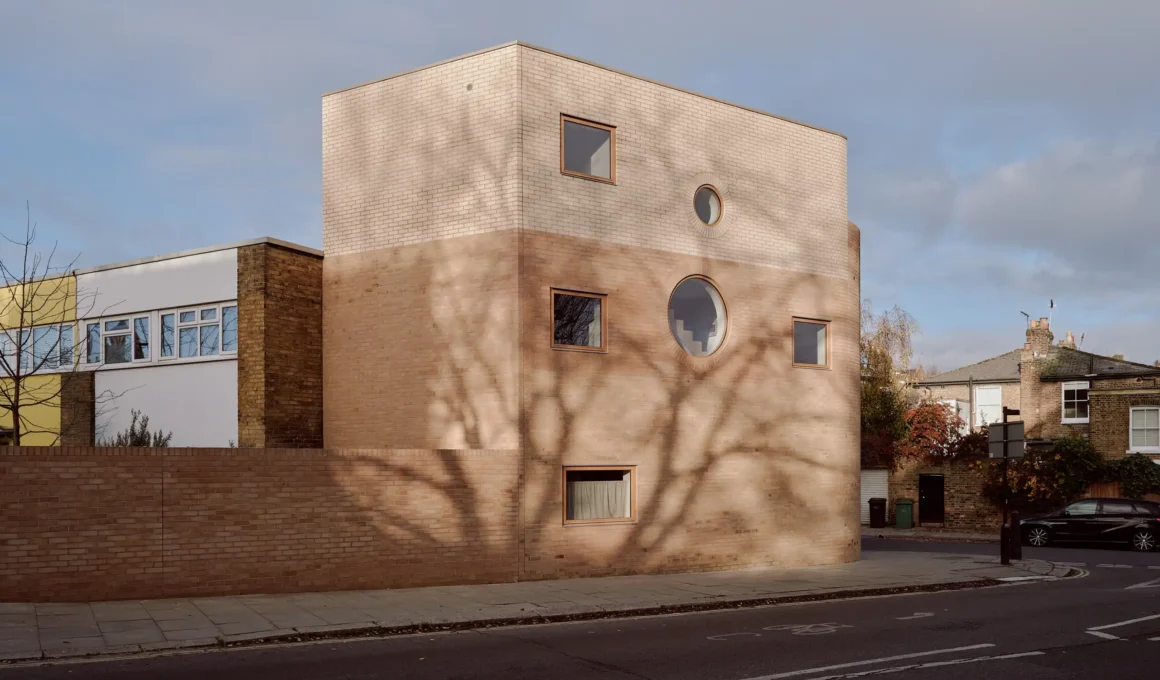
In the dense architectural fabric of North London, where Victorian terraces often dictate the rhythm of the street, a new protagonist has emerged that prioritizes soft geometries over rigid lines. Runda, a three-story family home nestled in Gospel Oak, represents a masterclass in how restricted urban “gap sites” can be reimagined through the lens of craft and sustainability. Designed by Nikjoo in a rigorous collaboration with developer Flawk, the project replaces an overgrown corner lot—once a brick-firing plot—with a timber-framed structure that feels less like a building and more like a sculptural response to the neighborhood’s industrial ghost.

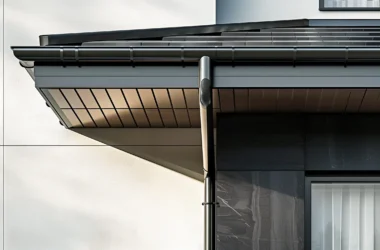
The conceptual vision for Runda was dictated by the site’s own eccentricities. A distinctive curved boundary on Lamble Street served as the project’s North Star, moving the design away from the traditional box and toward a language of ellipses and arcs. This isn’t merely an aesthetic whim; the curves allow the building to negotiate its proximity to the adjacent 1960s Lamble Street Estate, designed by Powell & Moya. By tracing the height and tonality of the neighboring brickwork with a sophisticated double-toned façade, Nikjoo has managed to reduce the visual mass of the three-bedroom home, ensuring it sits in a quiet, respectful dialogue with the London skyline.

Technical innovation and environmental stewardship underpin the home’s material soul. While the exterior references the site’s heritage through tactile brick cladding, the core is a lightweight timber frame, a choice that significantly lowers embodied carbon. Combined with an air-source heat pump and a lush green roof, Runda achieves a projected 62% reduction in emissions compared to standard UK building regulations. This marriage of high-performance engineering and “refined playfulness” is perhaps most visible in the circular and semi-elliptical windows that puncture the skin, inviting a rhythmic play of light that shifts throughout the day across the internal timber surfaces.

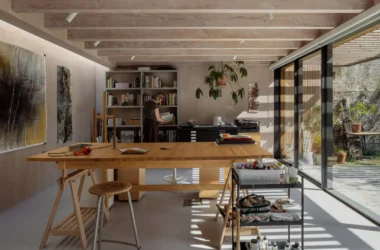
The sensory experience of the interior is defined by a warmth that only raw, honest materials can provide. Upon entering the open-plan ground floor, the scent of wood and the coolness of bespoke concrete create an immediate sense of sanctuary. Flawk’s in-house fabrication team has treated the kitchen as a piece of fine furniture, blending pine, oak, and cherry cabinetry. This focus on the home as a place for gathering and ritual mirrors the philosophy seen in successful Victorian renovations designed for entertaining, where the kitchen becomes the emotional heart of the residence. In Runda, a bespoke “bean” shaped concrete counter anchors this living space, encouraging a fluid movement between the hearth and the hidden courtyard garden.

A narrative of craft unfolds as one ascends the curved staircase of oak and stainless steel. The first floor acts as a private retreat, where the palette shifts to smooth polished plaster and travertine mosaic tiles. Here, the commitment to resourcefulness becomes tangible; the bathroom vanities are crafted from sapele, while the marble ledges are fashioned from reclaimed off-cuts. Every touchpoint has been considered, from the circular porthole on the mid-landing that frames the UK capital’s urban textures, to the master suite on the top floor which opens onto a terrace furnished with Six Dots design pieces.
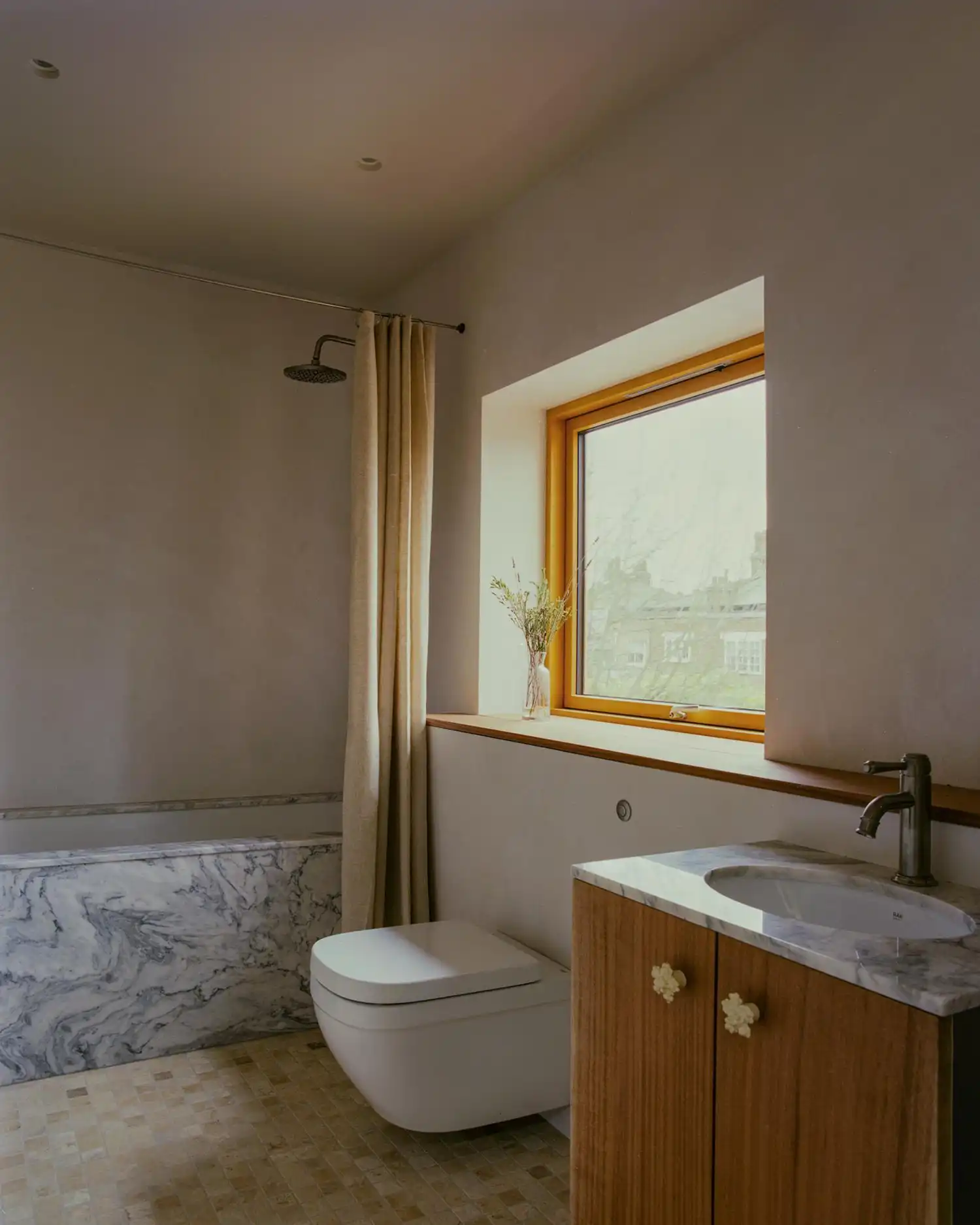
Community and collaboration elevate Runda from a private residence to a social catalyst. In a poetic nod to the site’s history as a kiln, the architects partnered with STORE Projects to involve local youth in the creation of the home’s hardware. The ceramic knobs and handles—the “handshakes” of the building—were 3D scanned and cast by students, embedding a layer of social legacy into the fabric of the house. Curated with artworks from Miłość Gallery and vintage furniture, Runda stands as a testament to the idea that sustainable architecture in London does not require the sacrifice of character. Instead, it proves that when we design with a light footprint and a heavy focus on craft, we create spaces that are profoundly human.