


Studiio Dangg has transformed a challenging, narrow site in New Delhi into No Vacancy, a high-concept bar that utilizes a singular, tubular volume and a palette of industrial textures to create an immersive, sonic-driven environment.
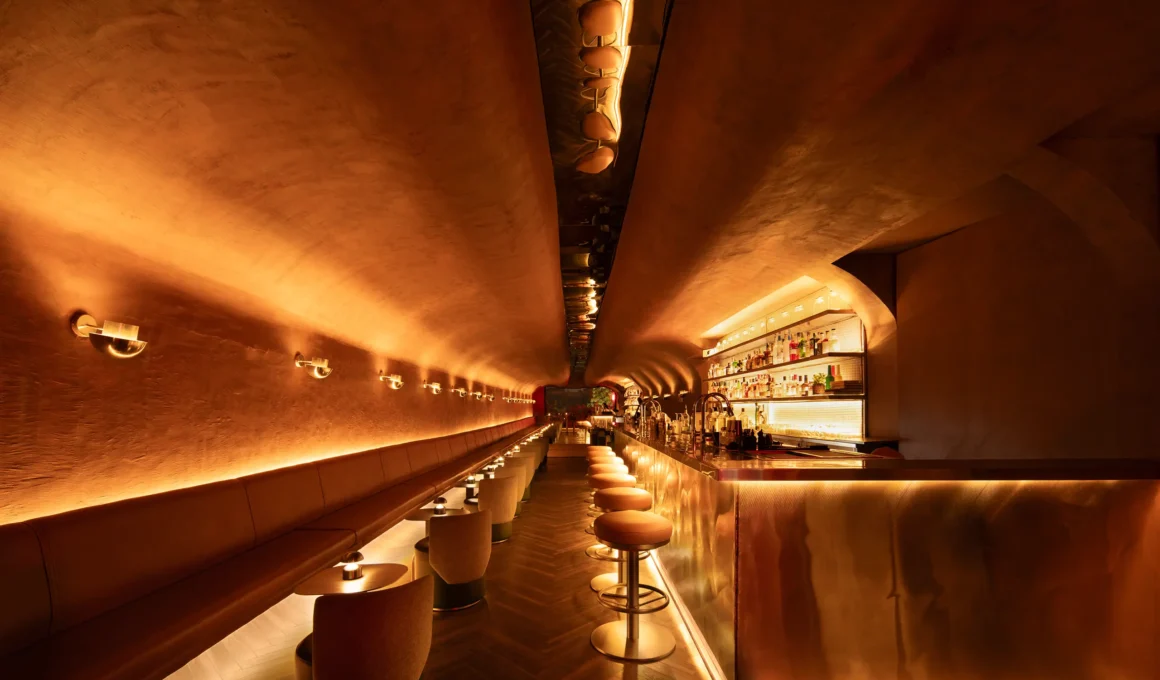
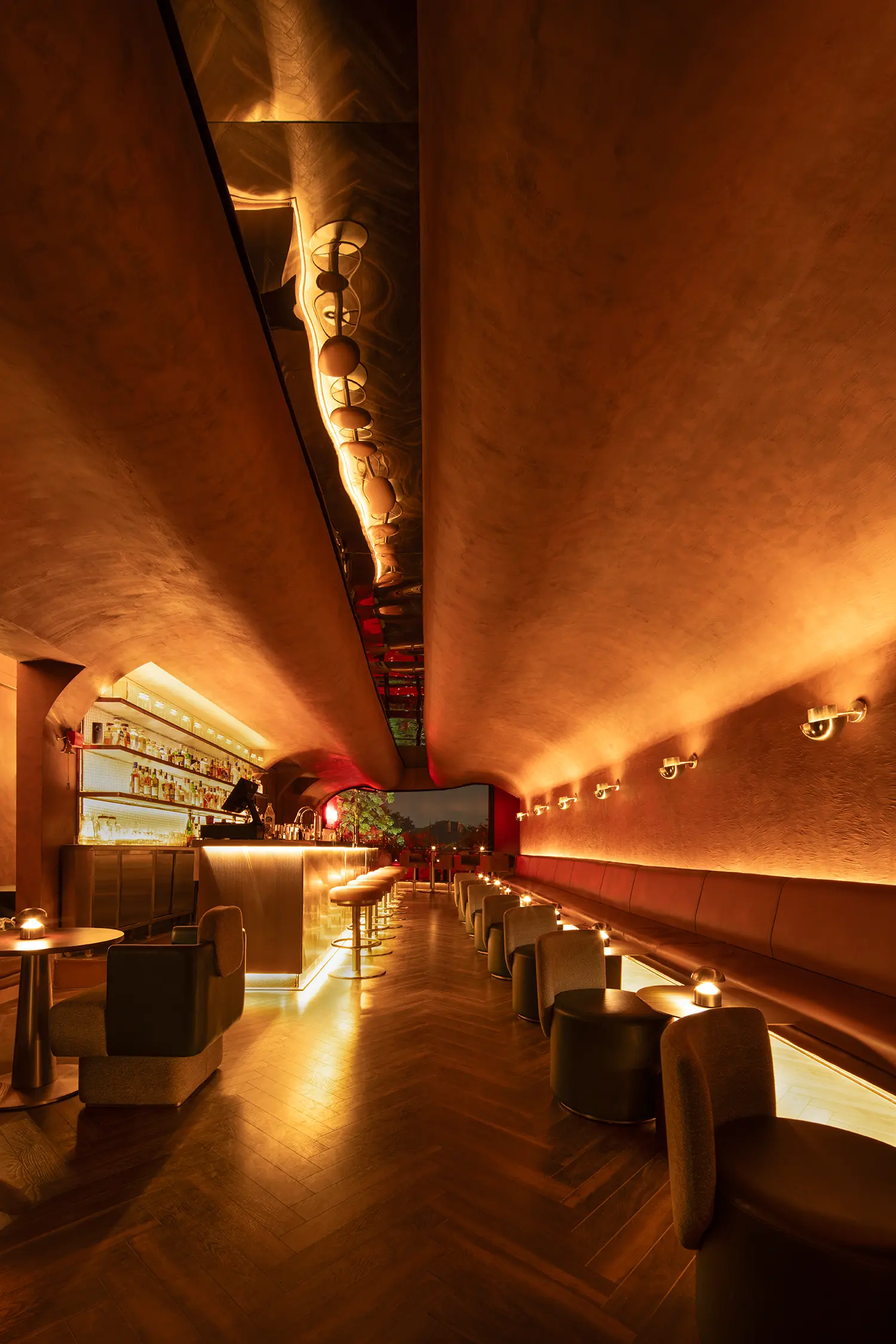
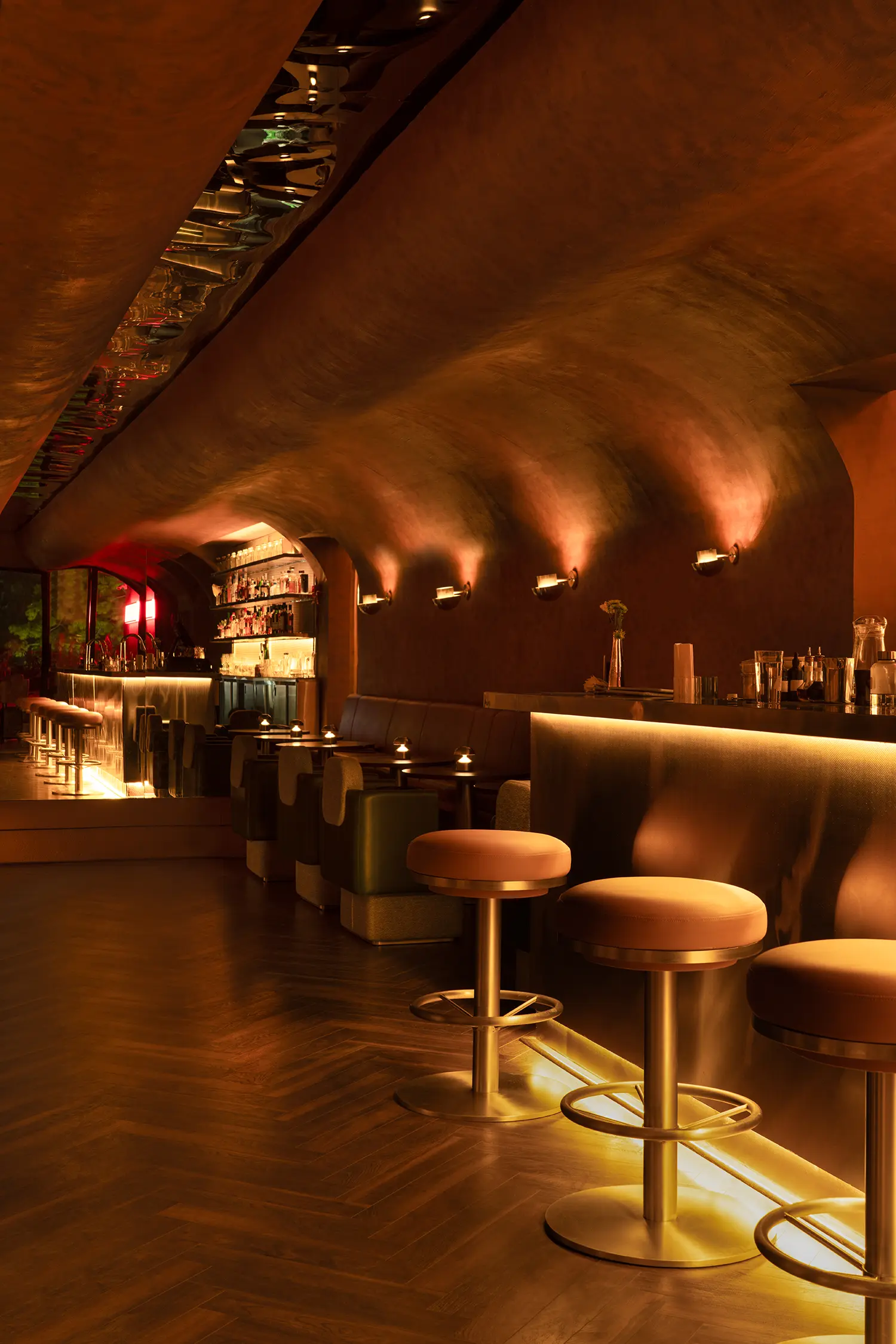
A deliberate embrace of spatial constraints defines the initial encounter with the venue. Rather than attempting to mask the long, slender proportions of the site, principal designer Manav Dangg leaned into the linear geometry. The result is a tubular interior that feels like a cross between an experimental science laboratory and a subterranean dive bar. By eliminating sharp corners and smoothing the transition between walls and ceiling, the studio has created a sense of infinite elongation, a feeling further amplified by a full-height mirror at the far end that effectively doubles the visual depth of the room.
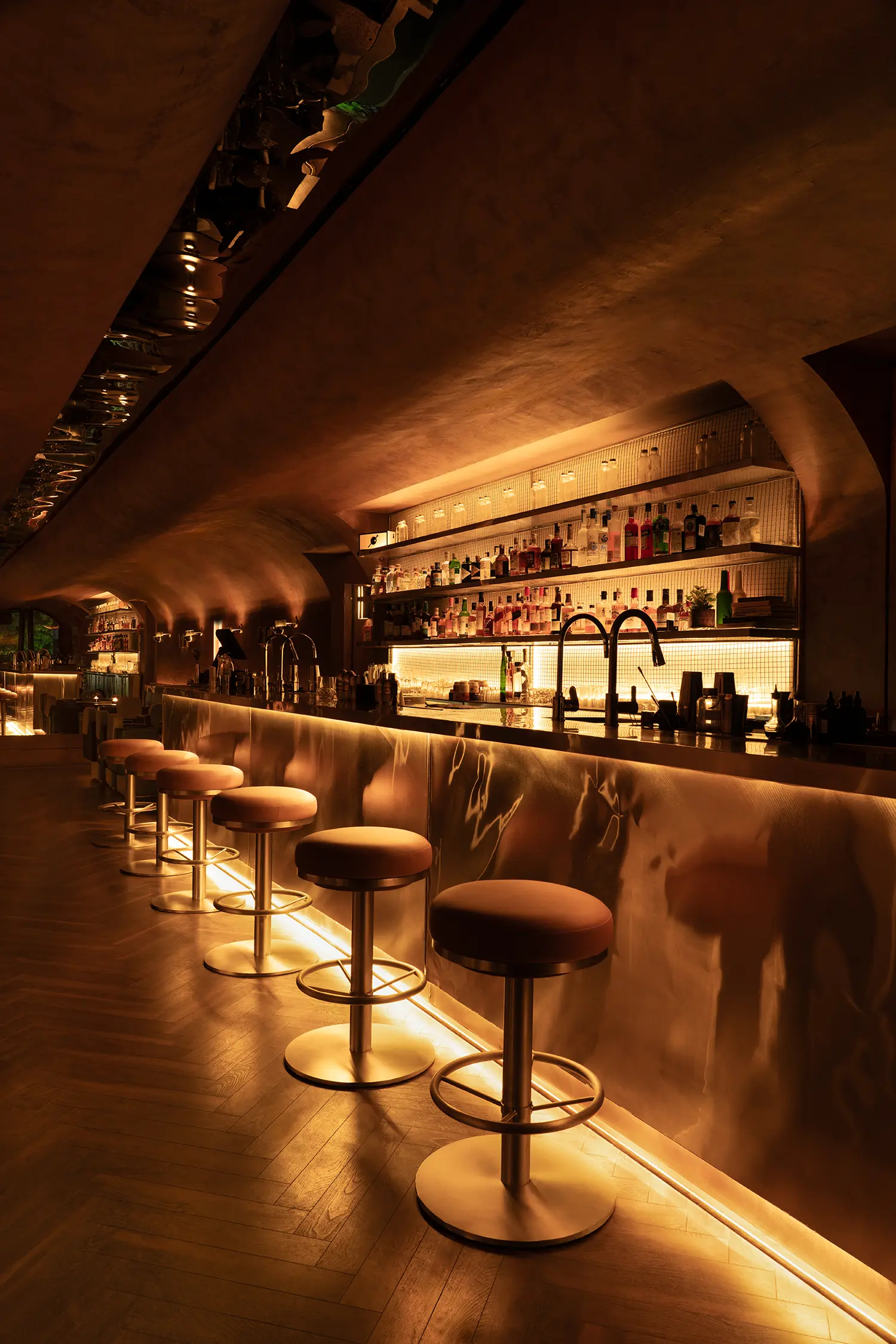
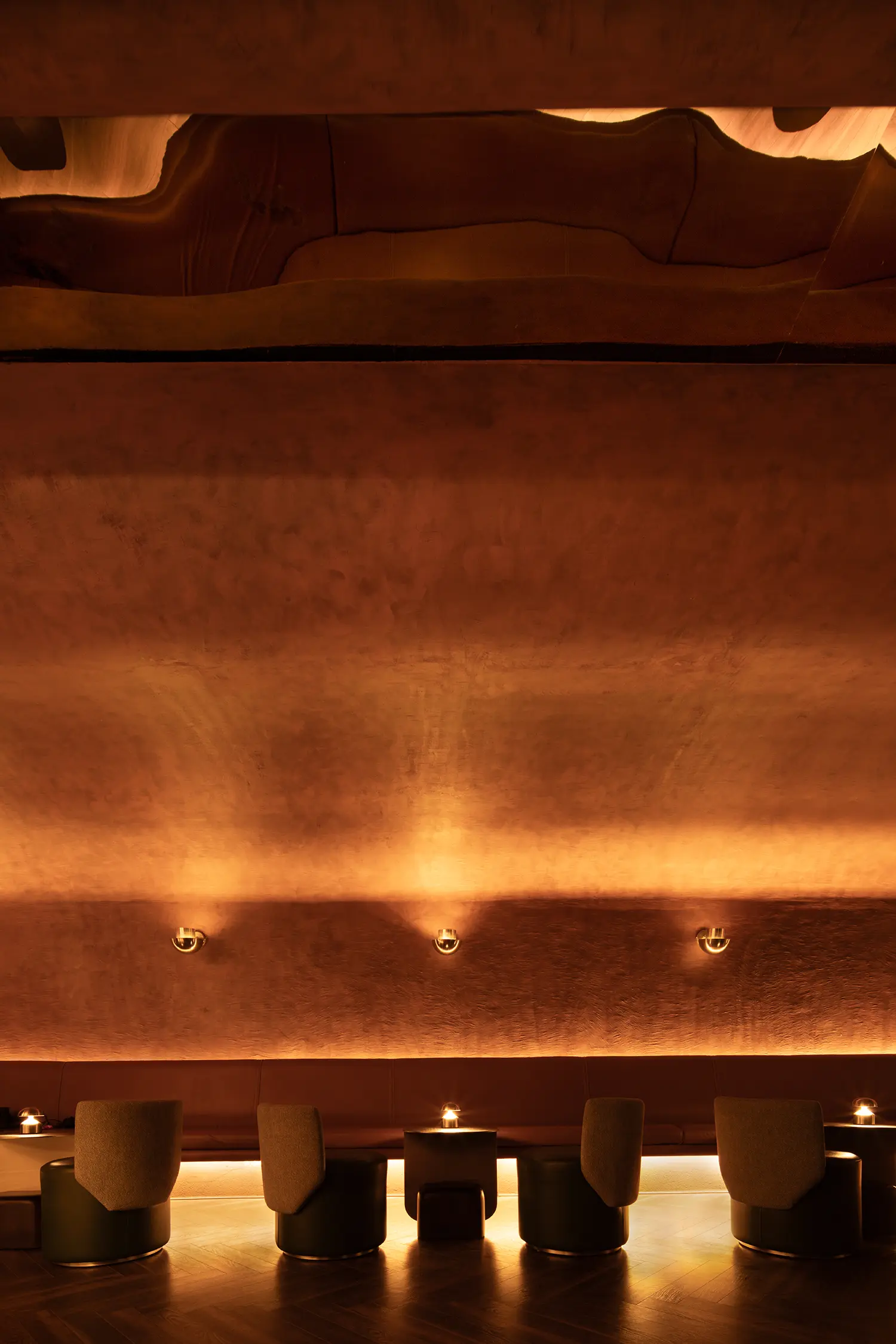
The material narrative is a study in industrial contrast, where the warmth of corten-steel-inspired finishes meets the clinical precision of stainless steel. This interplay of textures creates a layered sensory experience; the rugged, weathered look of the walls provides a dark backdrop for the “ornamental exhaust”—a reflective steel spine that runs the entire length of the ceiling. This ceiling element doesn’t just serve an aesthetic purpose; it acts as a visual guide, pulling the guest deeper into the metallic tunnel while concealing the technical infrastructure required for a high-fidelity acoustic space.
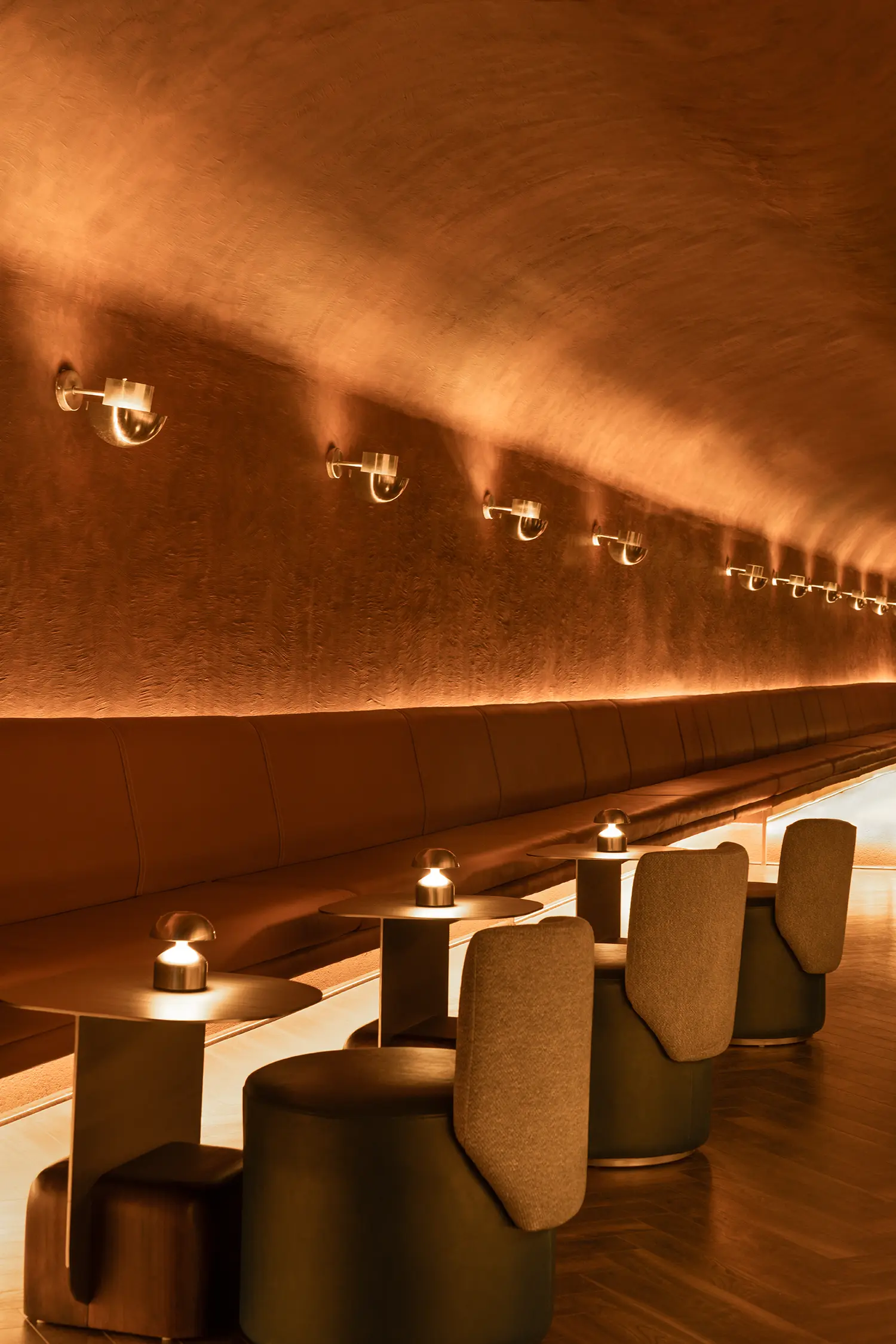
Lighting serves as a tool for spatial sculpting rather than mere illumination. In No Vacancy, the light is intentionally restrained, emerging from concealed coves that trace the soft curves of the volume. This glow grazes the textured surfaces, highlighting the tactile quality of the walls while leaving the center of the room in a moody, enigmatic shadow. Precisely placed stainless-steel wall sconces and sculptural lamps provide localized shimmers, ensuring the bar back—layered with steel mesh and backlit acrylic—acts as a glowing beacon of “alchemic” activity at the end of the corridor.
The social choreography of the bar is dictated by its unusual form. A continuous long bench runs along the wall, encouraging a communal atmosphere that rejects the fragmentation of traditional booth seating. Sage-green stools and chairs provide the only punch of color, their boucle backrests and leather seats adding a domestic softness to the otherwise hard-edged environment. This layout naturally directs all attention toward a single focal point: the artist’s station. Whether it is a vinyl set or a live DJ, the proportions of the room create a concentrated energy reminiscent of a boiler-room setting, where the boundary between the performer and the crowd dissolves.
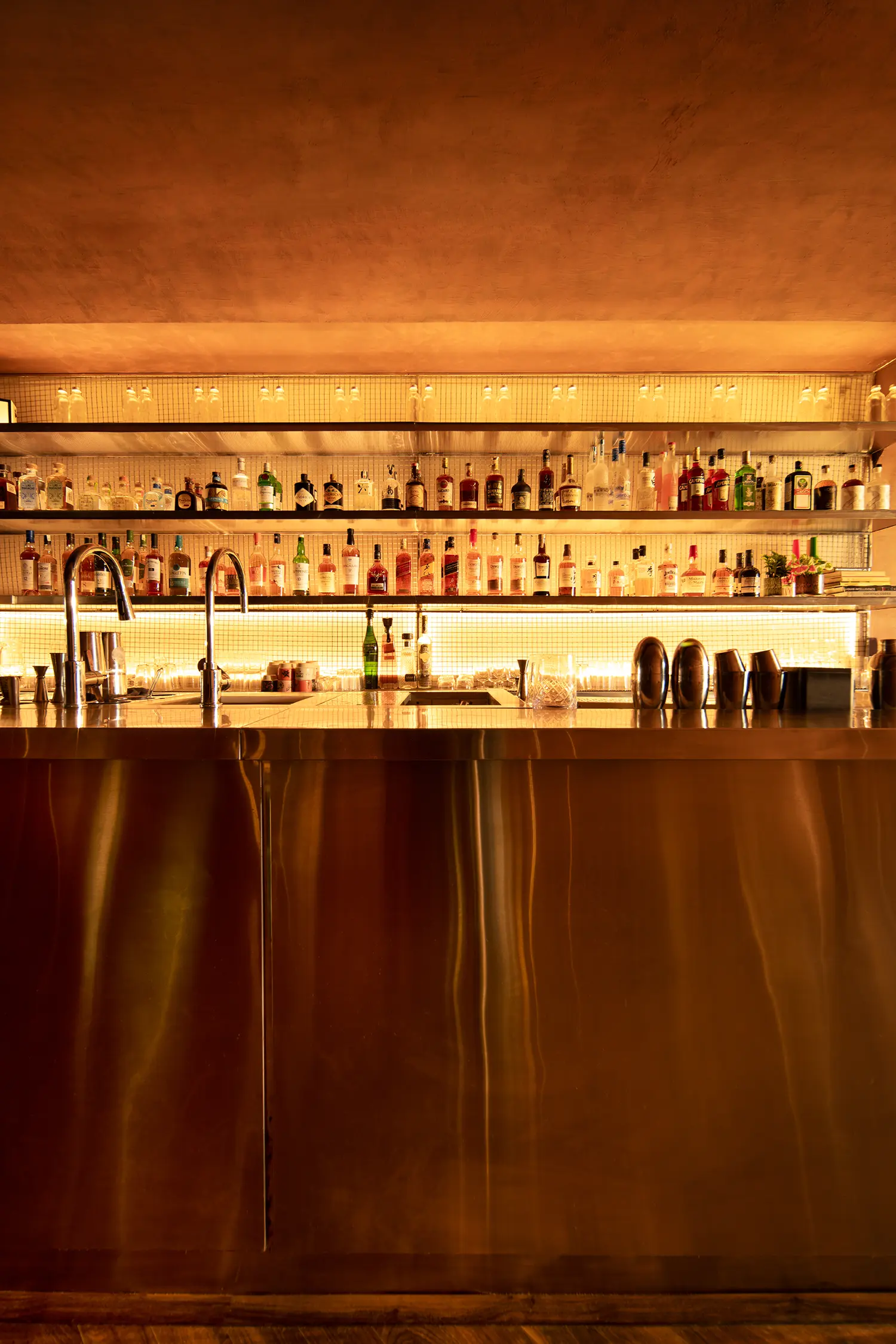
An alchemic approach to the menu mirrors the experimental nature of the physical space. The cocktail offerings at No Vacancy are designed to surprise, featuring unexpected pairings like strawberry cheesecake and gin that challenge the palate in the same way the industrial aesthetic challenges the eye. The stainless steel bar counter serves as a stage for this liquid mixology, where bottles are treated as glowing ornaments under integrated spotlights. It is a space that functions as effectively for a solitary drink at the bar as it does for a high-energy music gig.
The evolution of hybrid hospitality is increasingly defined by projects that refuse to be categorized by a single function. No Vacancy belongs to a growing global movement of spatial experimentation where the focus shifts from traditional service to a more holistic, immersive experience. We see a similar spirit in projects like Reno’s Bistrot in Adelaide, where the intimacy of the layout dictates the social rhythm, or the Atelier Sun-designed bar in Toronto, which uses material minimalism to create a specific emotional resonance. These spaces are no longer just places to consume; they are curated environments that prioritize atmosphere and sound as much as food and drink.
A shift toward atmospheric storytelling is also evident in larger-scale hubs like the Locke in Copenhagen, where hospitality is reimagined as a fluid, multi-sensory hub. In Delhi, No Vacancy achieves this on a more intimate, surgical scale. It proves that a fixed, narrow volume does not have to be restrictive. Instead, through the clever use of illusionary mirrors, acoustic planning, and industrial materiality, it becomes a breathing entity that responds to the people and the music within it.
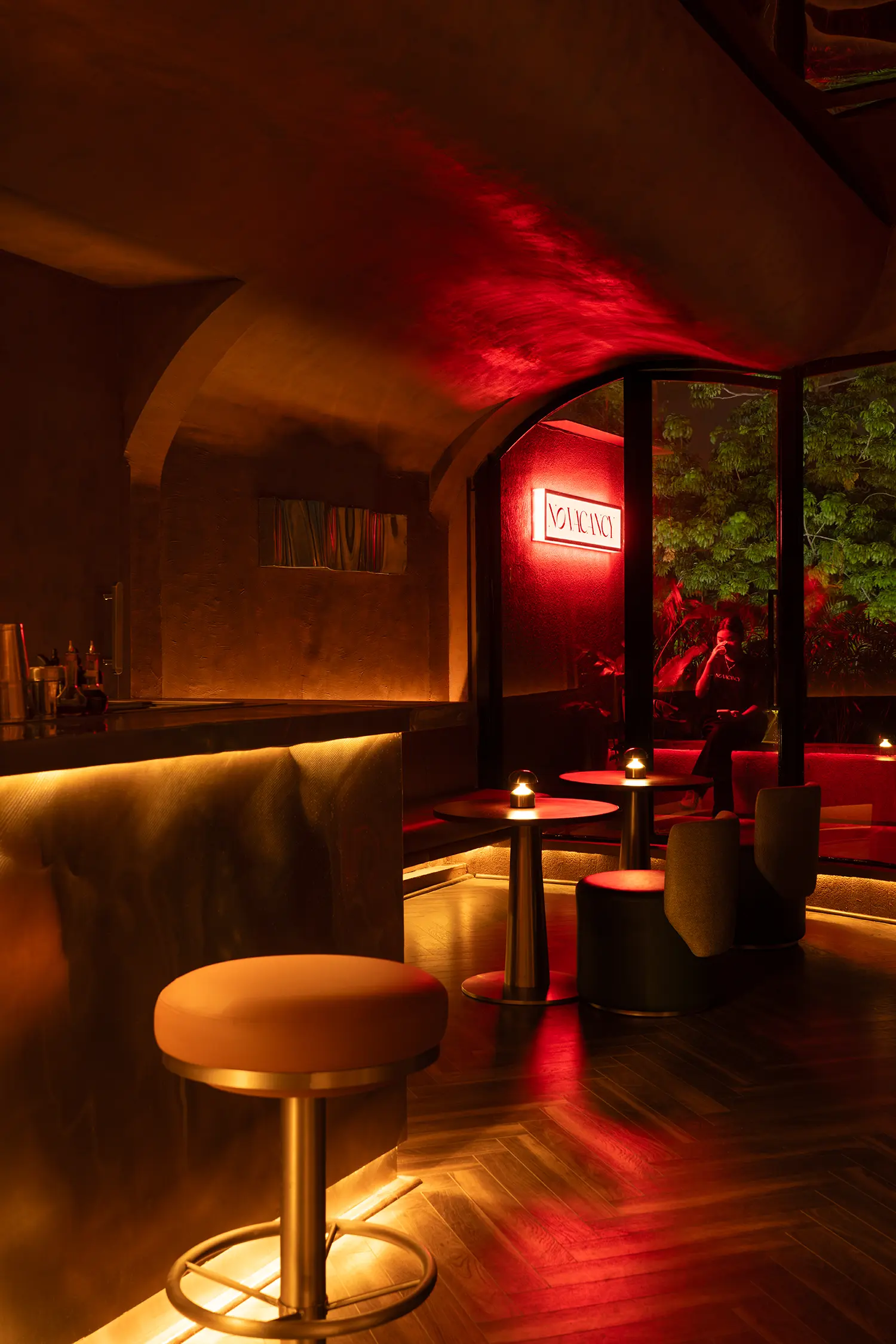
The project stands as a testament to the power of leaning into a site’s perceived weaknesses. By treating the volume as the primary protagonist, Studiio Dangg has moved beyond typical bar tropes to deliver a venue that feels both permanent and fleeting. It is a space of deliberate contrasts—cold steel and warm light, industrial grit and refined cocktails—that ultimately rewards the curious visitor with an experience that shifts and breathes long after the first drink is served.