


The Atrium Villa in Zurich, Switzerland, designed by Italian practice NOA Network of Architecture, reimagines a minimalist 2019 residence in Küsnacht through a sophisticated interplay of eucalyptus greens, curated textiles, and strategic structural interventions that adapt the original “house for books” into a vibrant, multi-generational family home overlooking Lake Zurich.
A Dialogue with Pre-existing Geometry. The project involves the transformation of a 610-square-meter L-shaped villa originally conceived by Swiss firms LOT-Z and Meyer Dudesek. While the bones of the building—defined by exposed concrete, oak parquet, and industrial glass blocks—remained intact, the internal soul required a shift. The new owners, a young couple with a daughter, sought to transition the space from a scholarly retreat into a home that pulses with vitality. NOA* approached this not by erasing the past, but by layering it with a contemporary, tactile warmth.
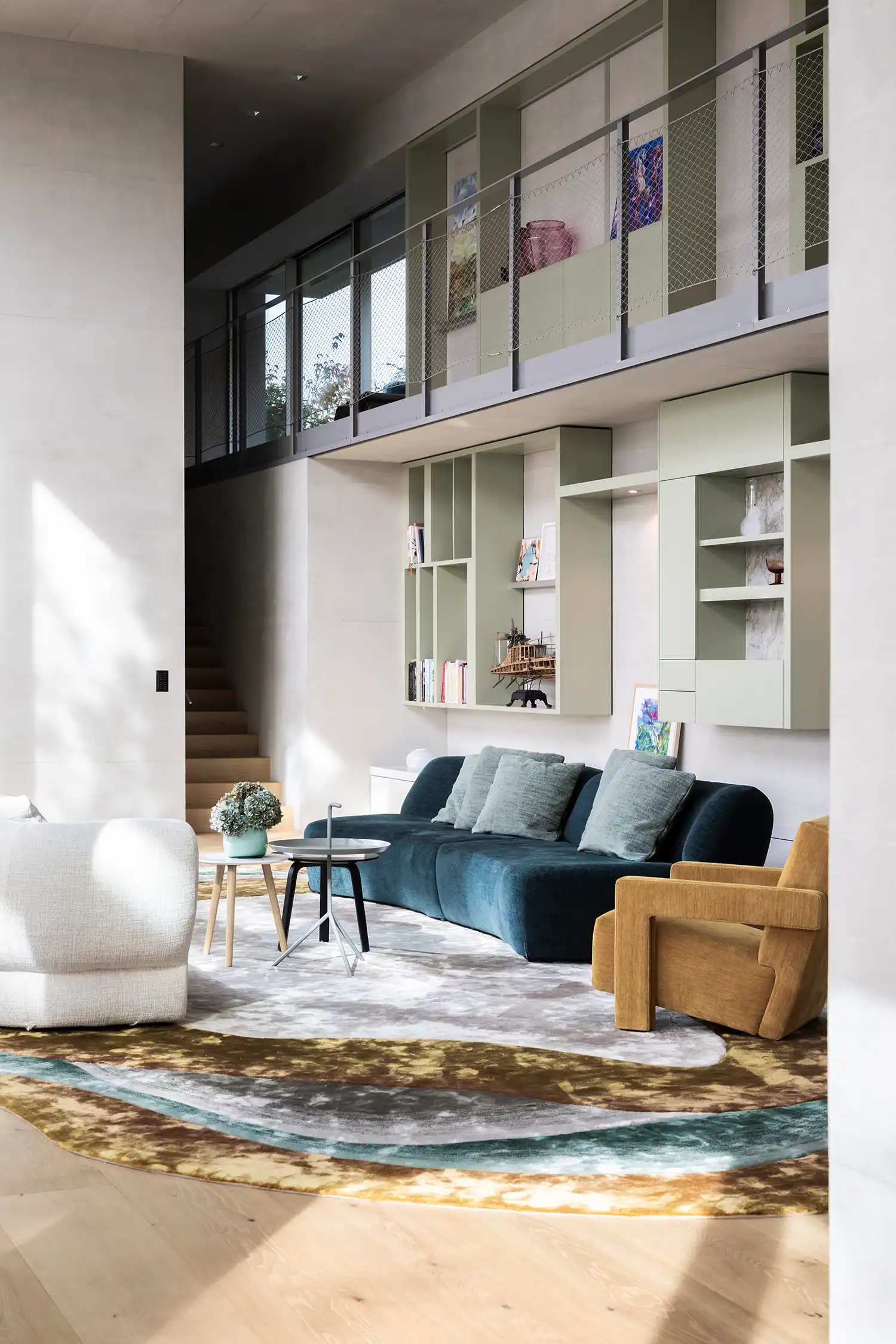
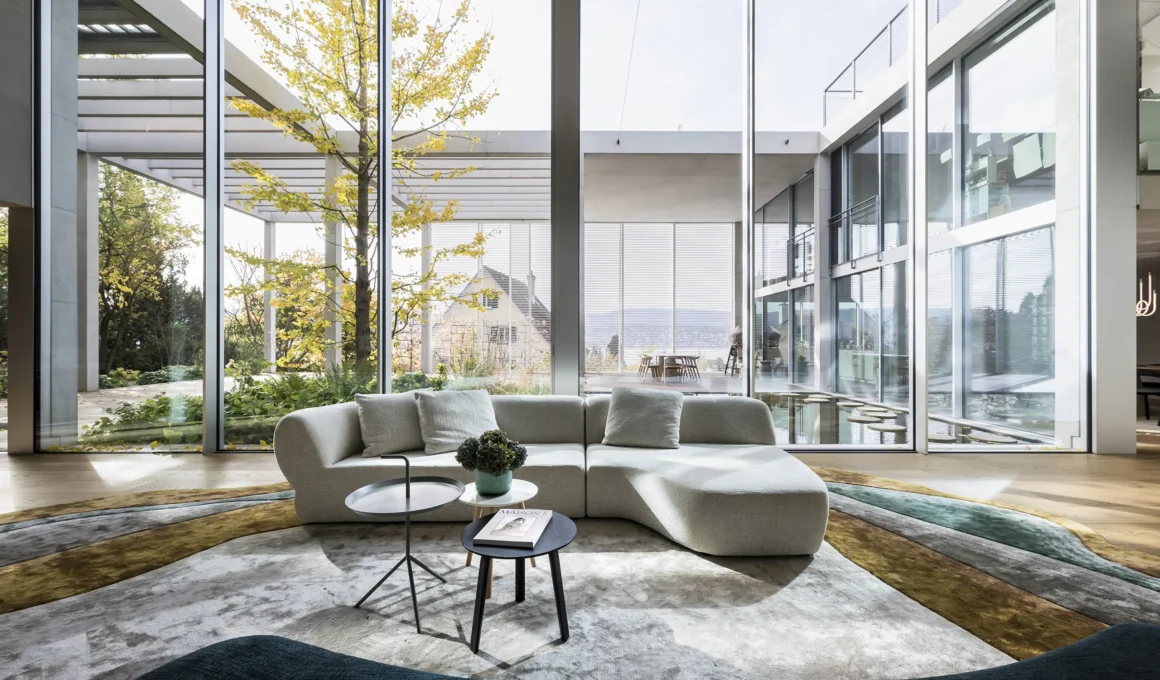
The Heart of the Atrium. Upon entry, the volume immediately expands into a five-meter-high living area. Where a monumental library once stood, NOA has introduced a bespoke, vibrant wall unit finished in eucalyptus green. This choice serves as a visual bridge to the surrounding landscape. “The building and its interior design were originally tailored to the first owners,” notes Florian Marsoner, interior designer at NOA. “As the large library wall no longer met the needs of the new residents, we designed a new, vibrant wall unit for displaying art, travel souvenirs, and family photos that also creates a clear design accent.”
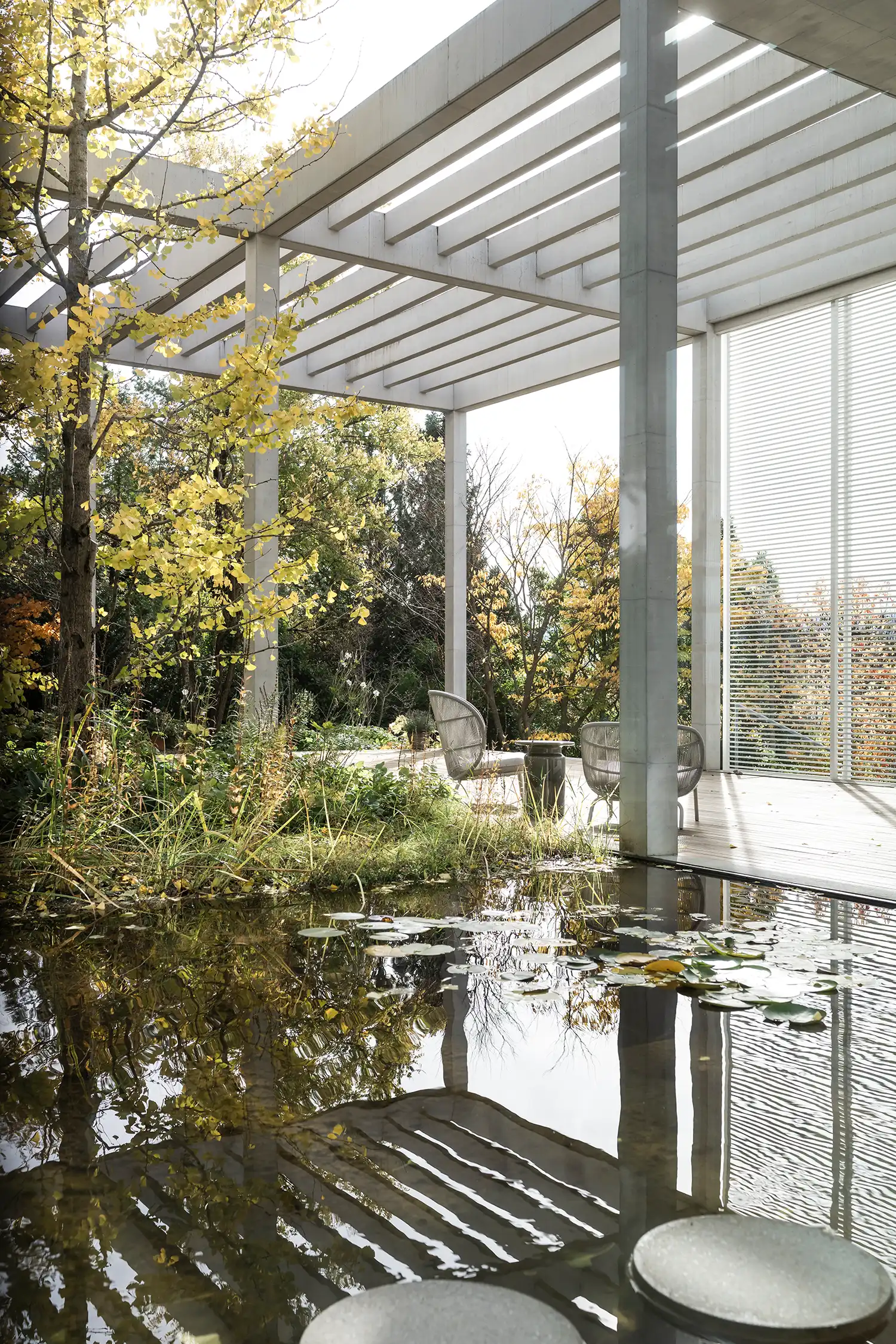
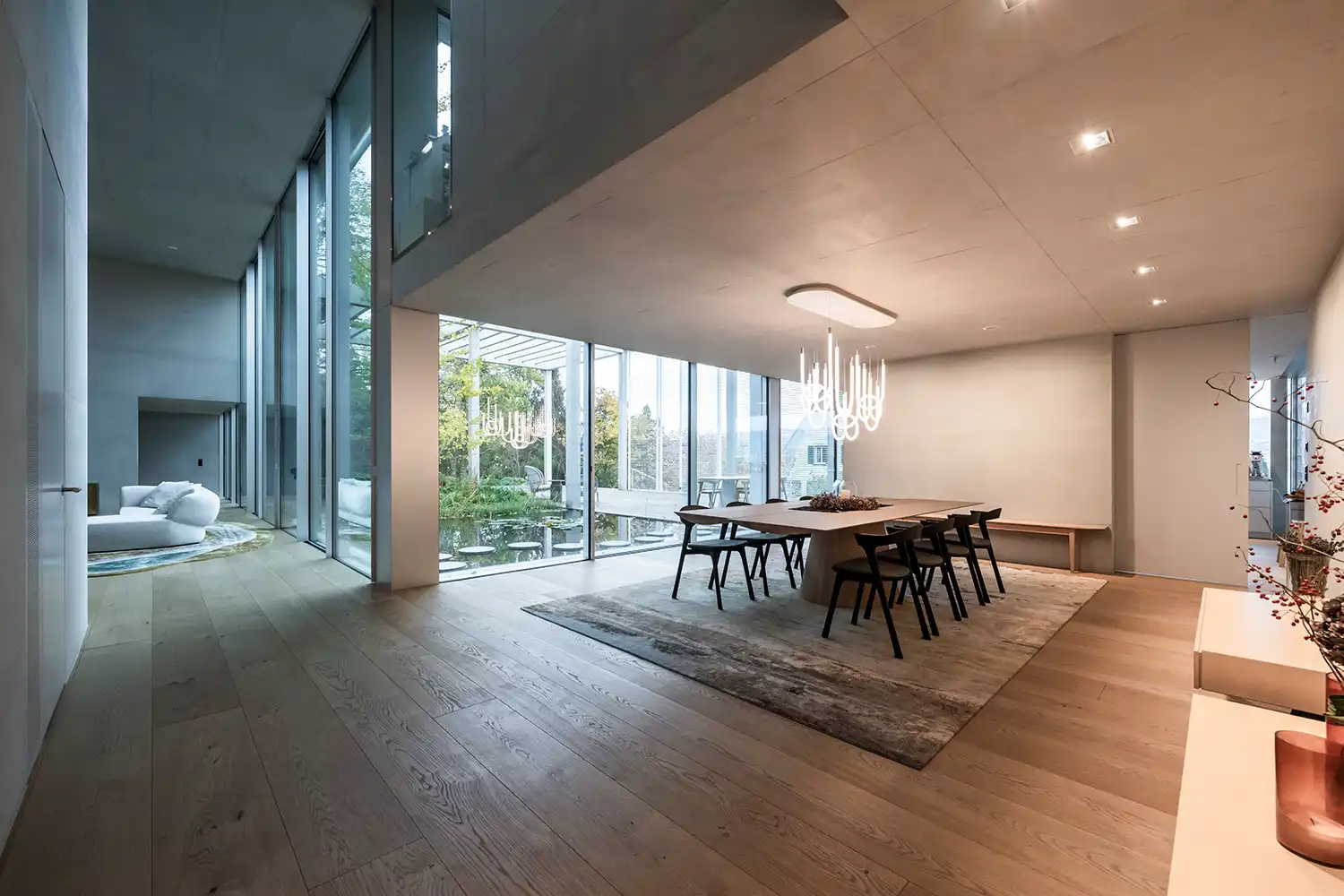
Materiality and Sensory Comfort. To soften the inherent coldness of the concrete surfaces, the studio integrated a meticulously selected palette of textiles. Rugs by Loominology and Nanimarquina define functional islands within the open plan, improving the acoustic quality of the cavernous rooms. In the dining area, a substantial table by Van Rossum paired with Ethnicraft chairs creates a grounded center of gravity for social gathering. The transition between the indoor lounge and the external water basin—home to a ginkgo tree and water lilies—is rendered almost invisible by slender aluminum frames.
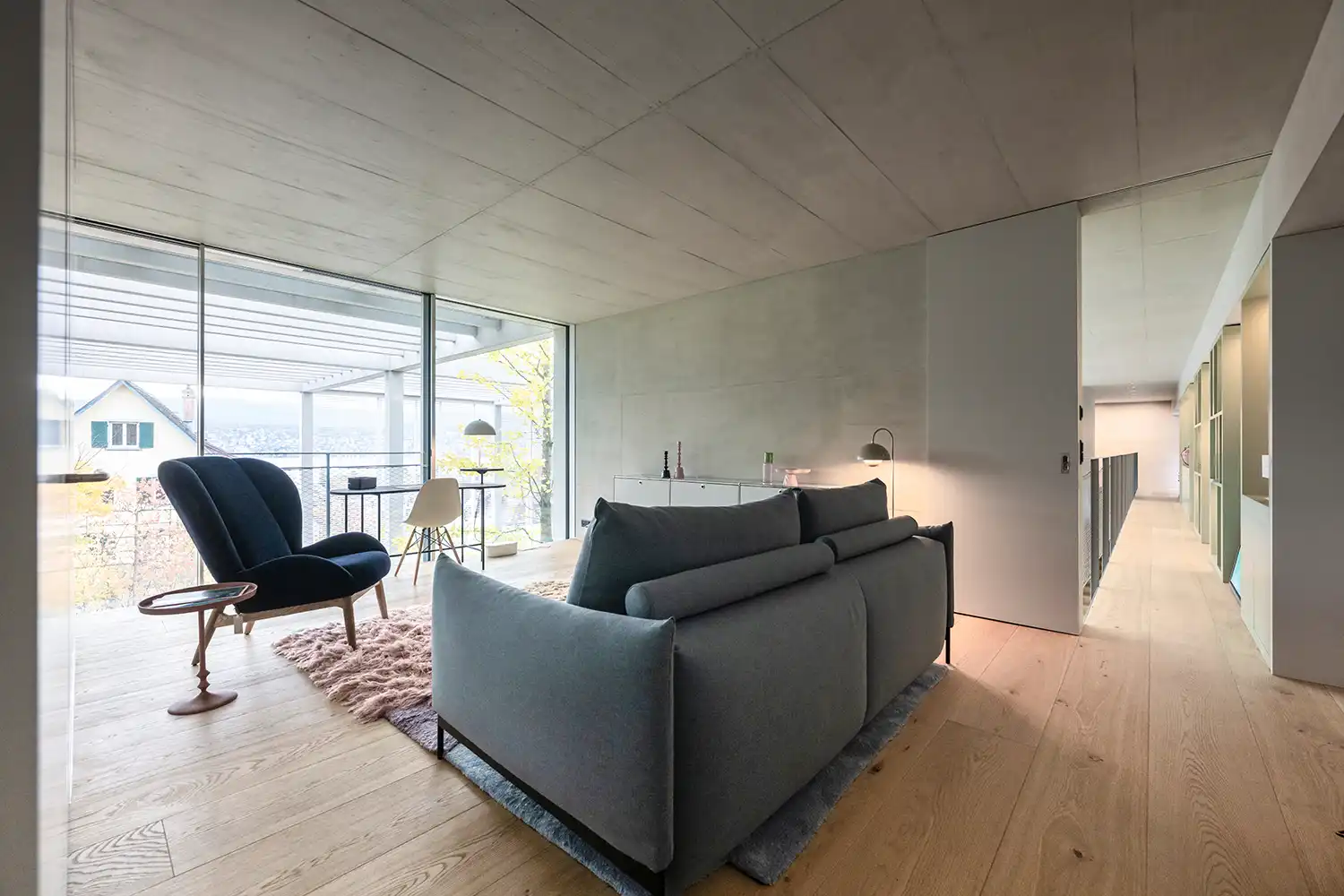
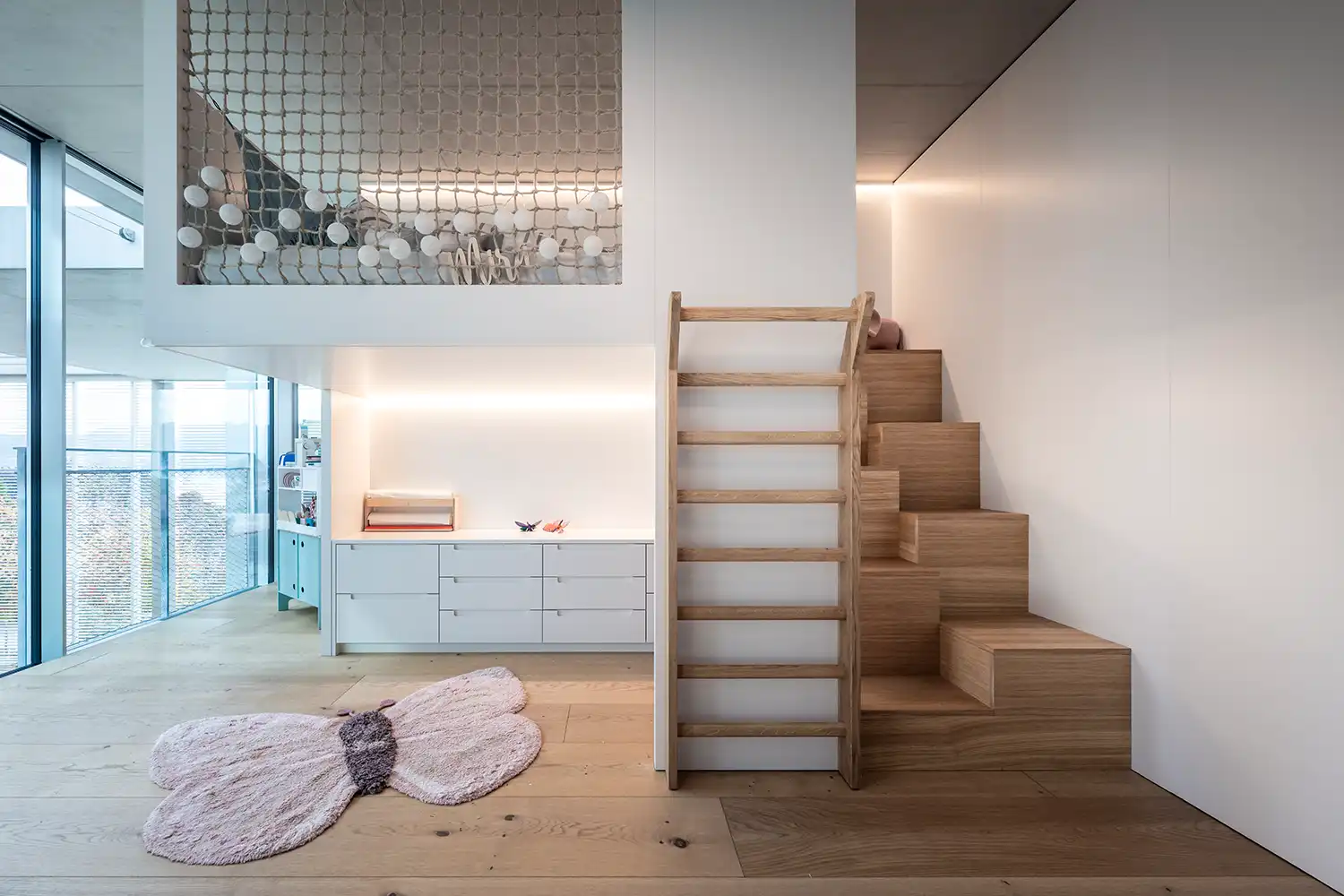
Technical Ingenuity on the First Floor. One of the most significant challenges involved the insertion of a child’s bedroom and en-suite bathroom where no plumbing previously existed. To avoid invasive structural work, NOA utilized a clever architectural “sleight of hand,” routing the necessary installations through a kitchen cupboard on the ground floor. This floor also features multifunctional furnishings in the two existing studies, allowing the rooms to pivot seamlessly into guest quarters, ensuring the floor plan remains as flexible as the family’s lifestyle.
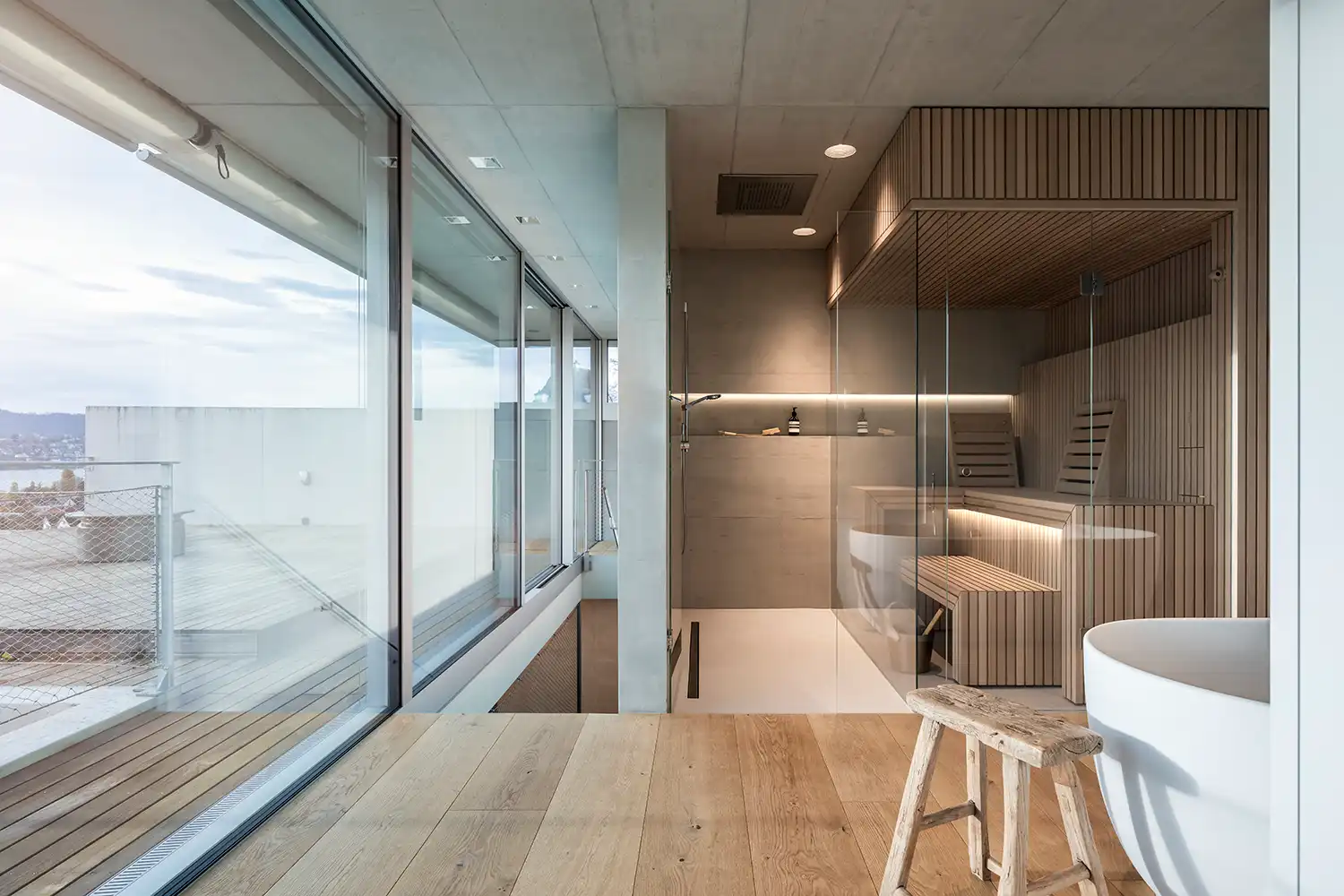
The Wellness Sanctuary and Private Retreat. The uppermost level is dedicated to a holistic sense of well-being. Here, the open-plan layout was reconfigured to include a private sauna, a bathtub, and a dedicated fitness zone. A “boudoir corridor” serves as a transitionary space, connecting the master bedroom to the spa area while maintaining a sense of rhythmic flow. Functionality is tucked into custom furniture elements that double as partitions, allowing the space to feel expansive yet private.
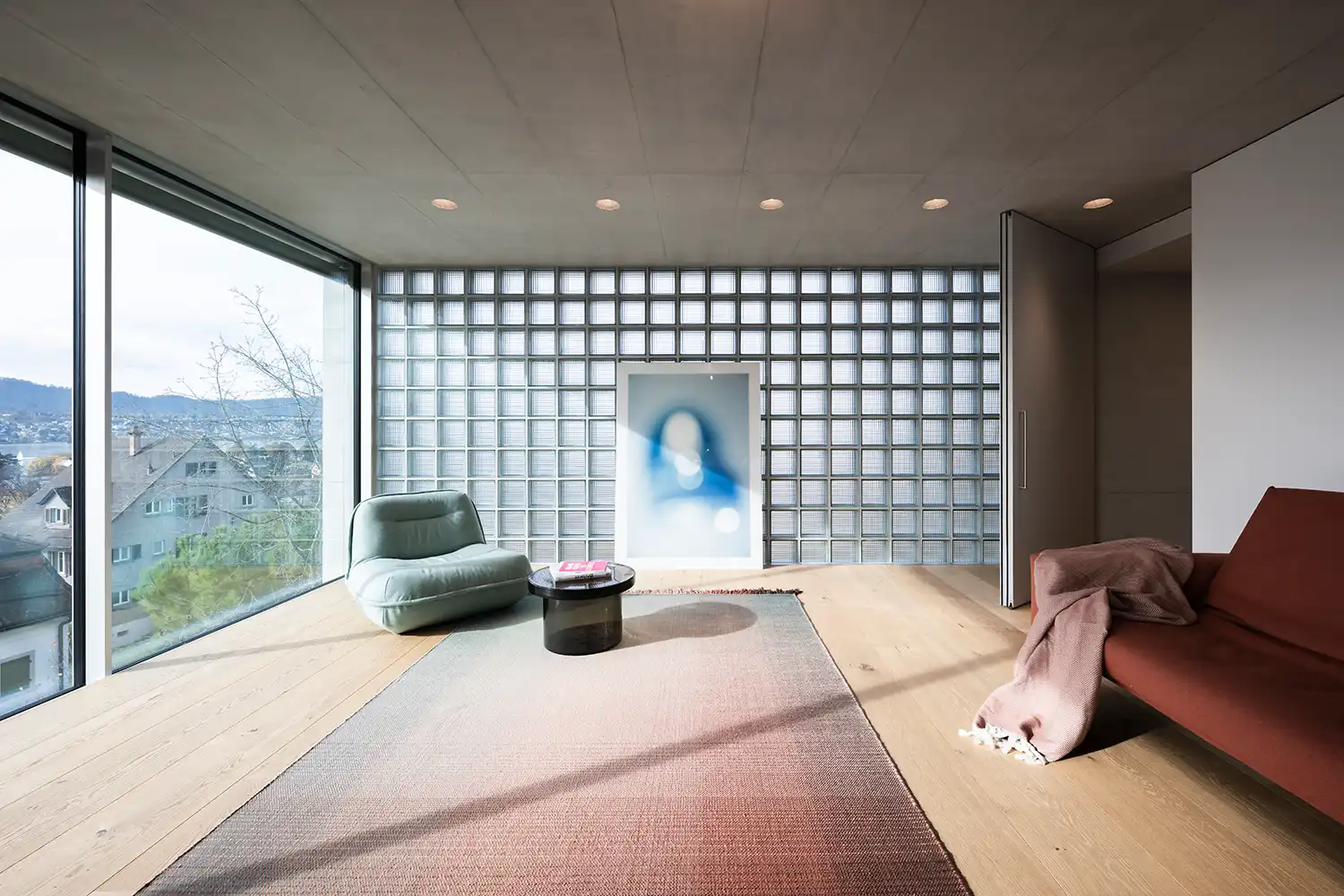
The Connection to Water. Throughout the villa, the proximity to Lake Zurich remains a constant thematic anchor. “The connection to the lake has always been central to our planning,” says Marsoner. “The house is consistently oriented towards the water, allowing the calming presence of the lake to be felt in every room.” This is echoed in the outdoor “islands” of seating on the ground floor, where Vincent Sheppard pieces offer intimate pockets for contemplation amidst the lush greenery designed by Uniola landscape architects.
An Oasis of Greenery. Moving to the first-floor terrace, the atmosphere shifts toward a more secluded, Mediterranean sensibility. Equipped with a pizza oven and Gommaire teak furniture, this space is designed for slow living. The dense planting creates a buffer from the outside world, reinforcing the home’s role as a place of retreat. It is a space where the rigorous lines of Swiss minimalism meet a softer, more emotive approach to domestic life.
The Evolution of a Design Language. While NOA is widely recognized for their expansive hospitality projects—such as the transformative Goldene Rose Hotel or their own innovative Additive HQ—the Atrium Villa demonstrates their ability to scale that same “hospitality DNA” down to the intimate residential level. By applying the same rigorous attention to guest experience and sensory storytelling seen in their commercial work to this private residence, they have created a home that feels like a curated destination, proving that the most successful living spaces are those that treat everyday life as an extraordinary event.