



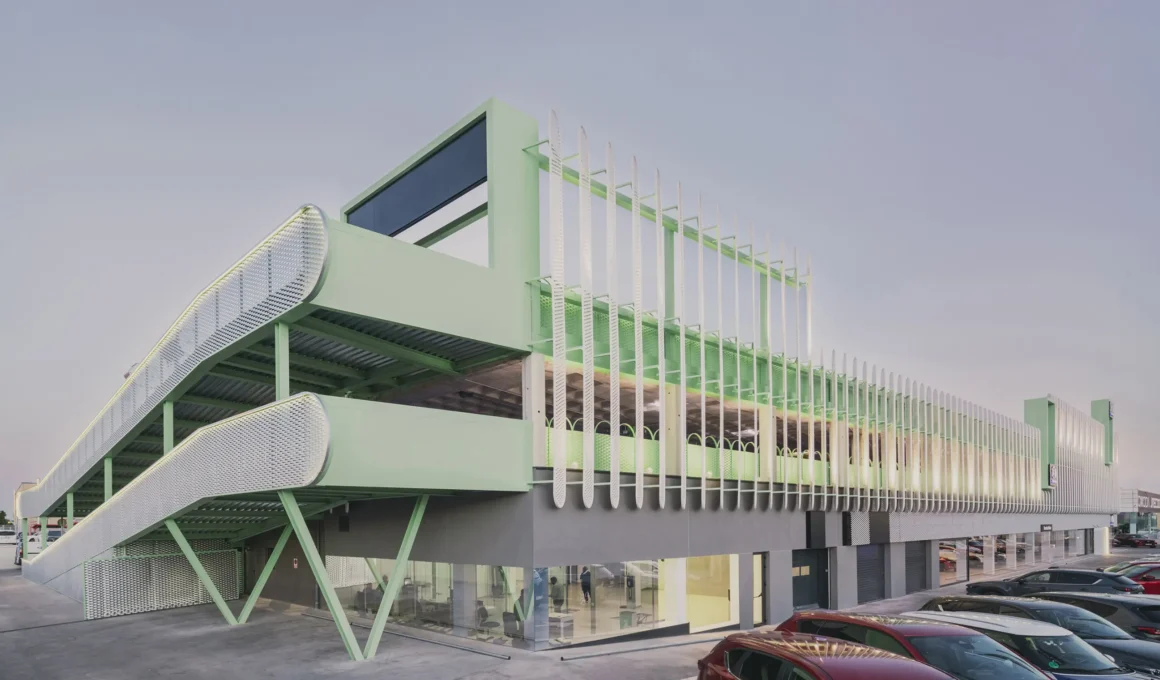
OOIIO Architecture repurposes an abandoned factory in Leganés, Madrid, wrapping the original industrial skeleton in a permeable skin of vertical slats to transform a logistical typology into a sophisticated automotive hub.
The adaptive reuse strategy serves as the project’s primary intellectual driver, intentionally bypassing the “demolish and rebuild” cycle typical of Madrid’s industrial outskirts. By treating the existing derelict structure as a foundational resource rather than a liability, the studio minimizes the project’s carbon footprint while retaining a sense of historical continuity. This approach proves that even in a landscape defined by generic warehouses, there is significant potential for high-quality architectural intervention through the layering of new identities over old bones.
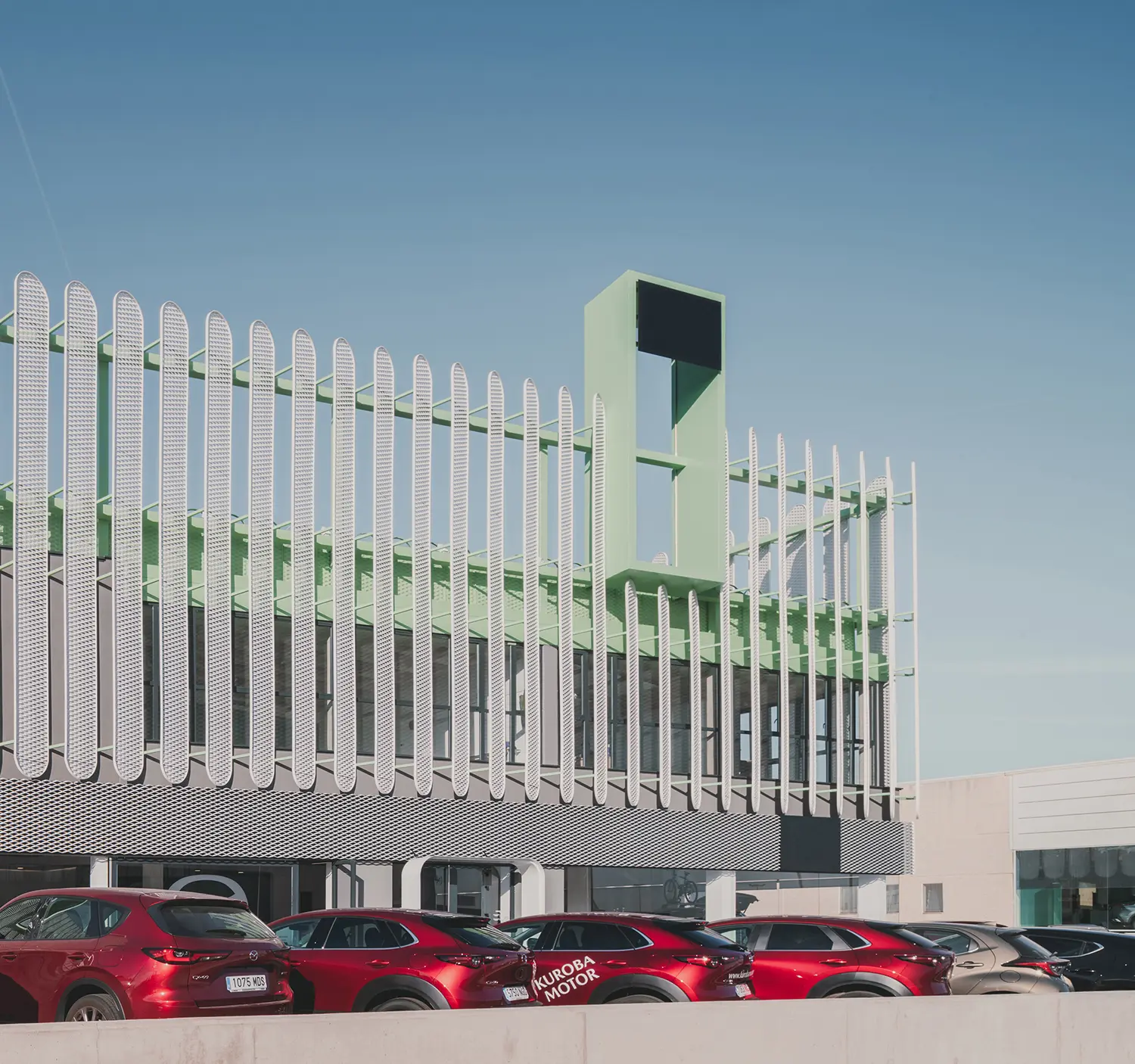
A rhythmic envelope of vertical slats defines the building’s new character, acting as a sophisticated filter between the automotive functions and the harsh sunlight of the Spanish capital. This skin does not merely hide the past; it creates a volumetric depth that shifts in transparency as visitors move around the site. The result is a structure that feels light and kinetic, a stark departure from the heavy, opaque metal boxes that typically populate this industrial zone.
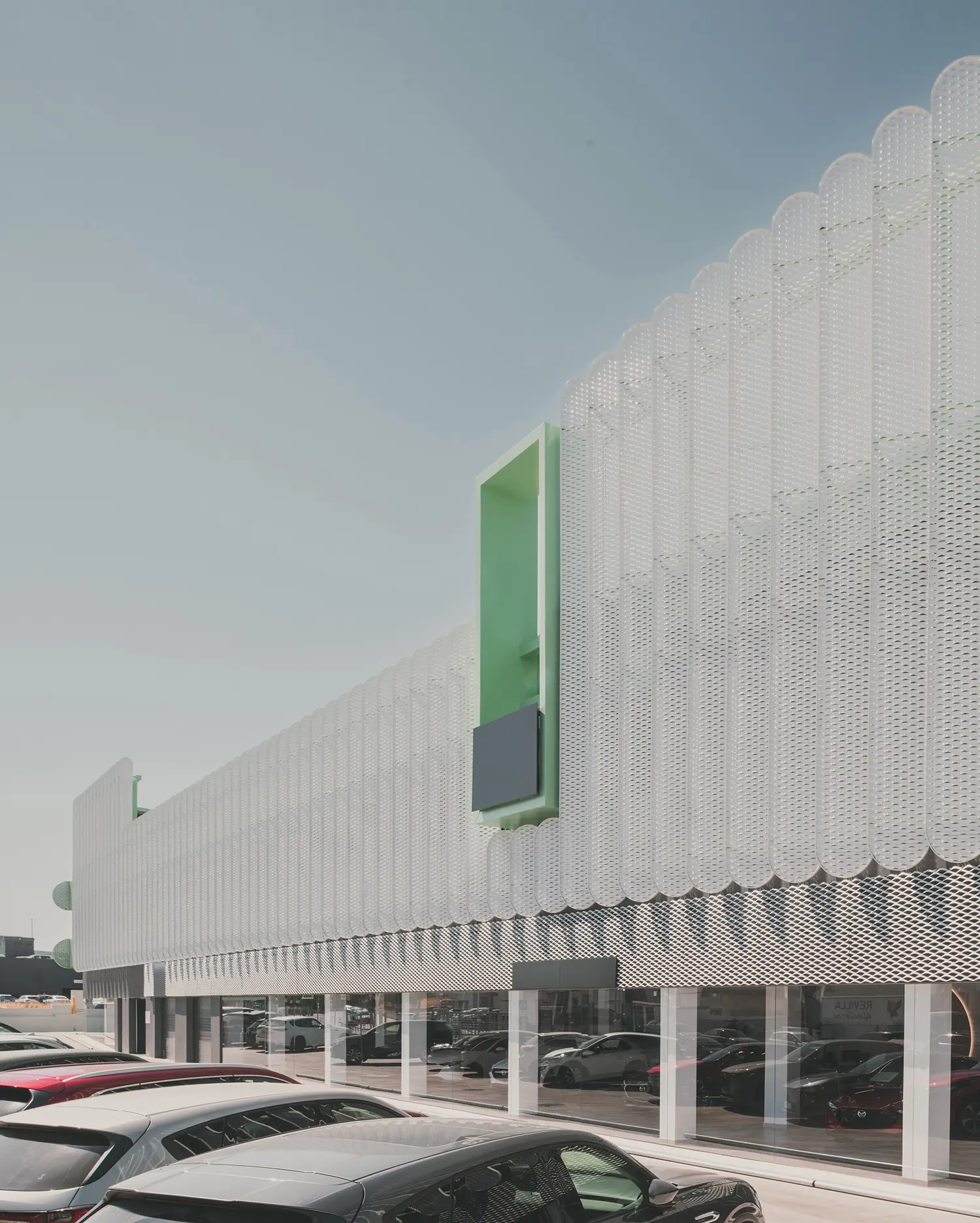
Technical honesty replaces traditional ornamentation throughout the facility. Rather than concealing the mechanical systems and structural reinforcements, OOIIO Architecture integrates them into the visual narrative, celebrating the raw, industrial nature of the site. This transparency creates a workspace that feels authentic to its purpose, where the aesthetic value is derived directly from the functional elements and the precision of their assembly.

The sensory experience inside the workshop is characterized by a deliberate play of light and shadow. The perforated nature of the exterior skin ensures that the interior is flooded with soft, natural light, drastically improving the environmental quality for the technicians working within. There is a palpable sense of atmospheric calm that is rarely found in automotive centers, suggesting that the dignity of the workspace is as important as the efficiency of the service provided.
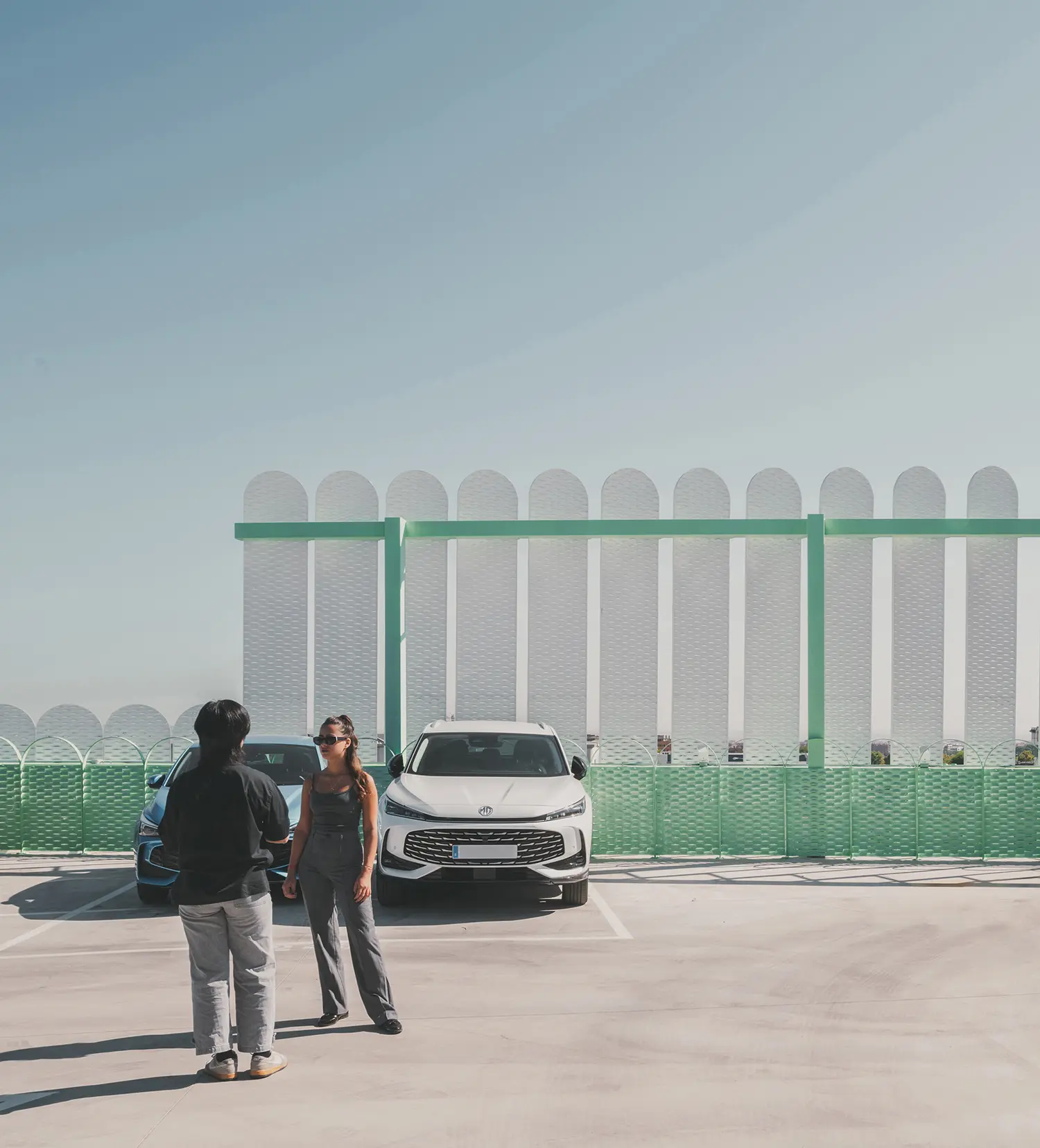
Contextual resonance is achieved by providing a visual landmark within the anonymous grid of Leganés. This project challenges the standard urban planning of Madrid by demonstrating that utilitarian architecture can possess a distinct presence and personality. By elevating the aesthetic stakes of a car repair center, the building encourages a broader conversation about the quality of our everyday urban environments, as seen in other transformative projects across Madrid.
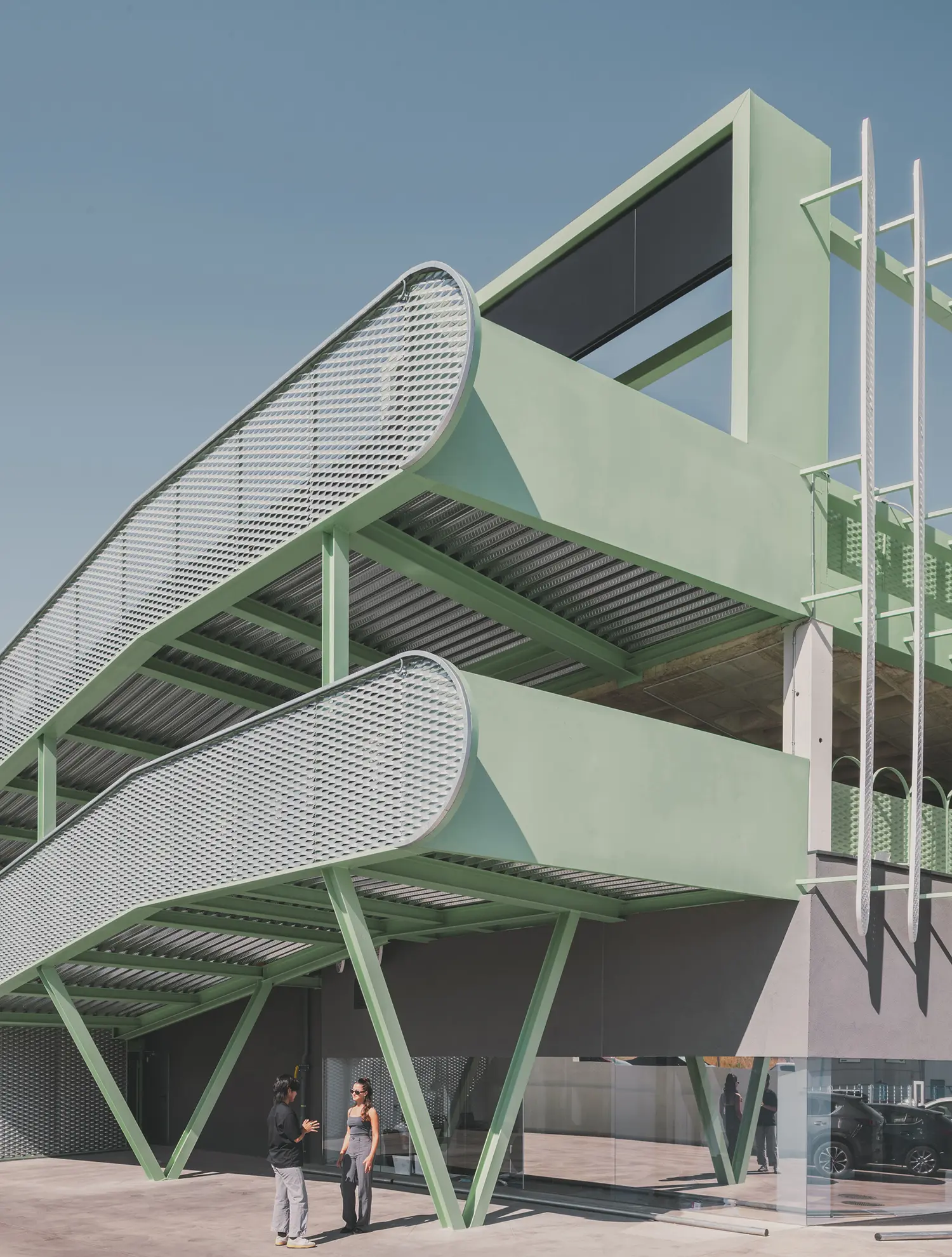
Material sustainability is baked into the decision to maintain the primary structure, but it is also reflected in the choice of lightweight, recyclable elements for the new facade. The project operates on a logic of “maximum impact, minimum extraction,” showing how strategic additions can extend the lifecycle of aging buildings. This methodology offers a scalable solution for the revitalization of declining industrial parks throughout Europe.
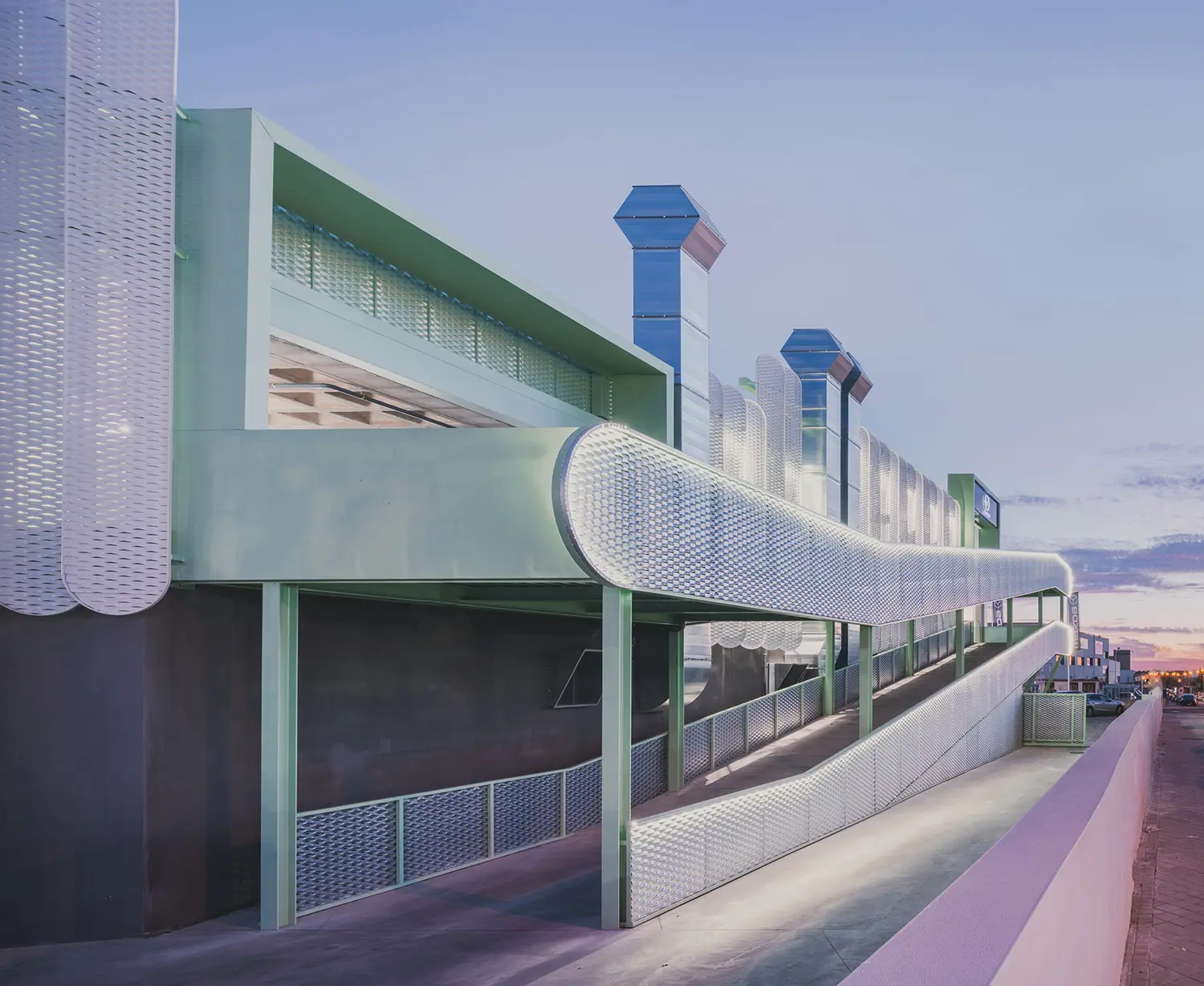
The internal layout flows with logistical precision, yet it remains sensitive to the human scale. The transition from the graphic exterior to the expansive, airy interiors is handled with a restraint that emphasizes volume and light over decorative flourishes. Each slat and opening is positioned to foster natural ventilation, creating a self-regulating environment that reduces the need for energy-intensive climate control.
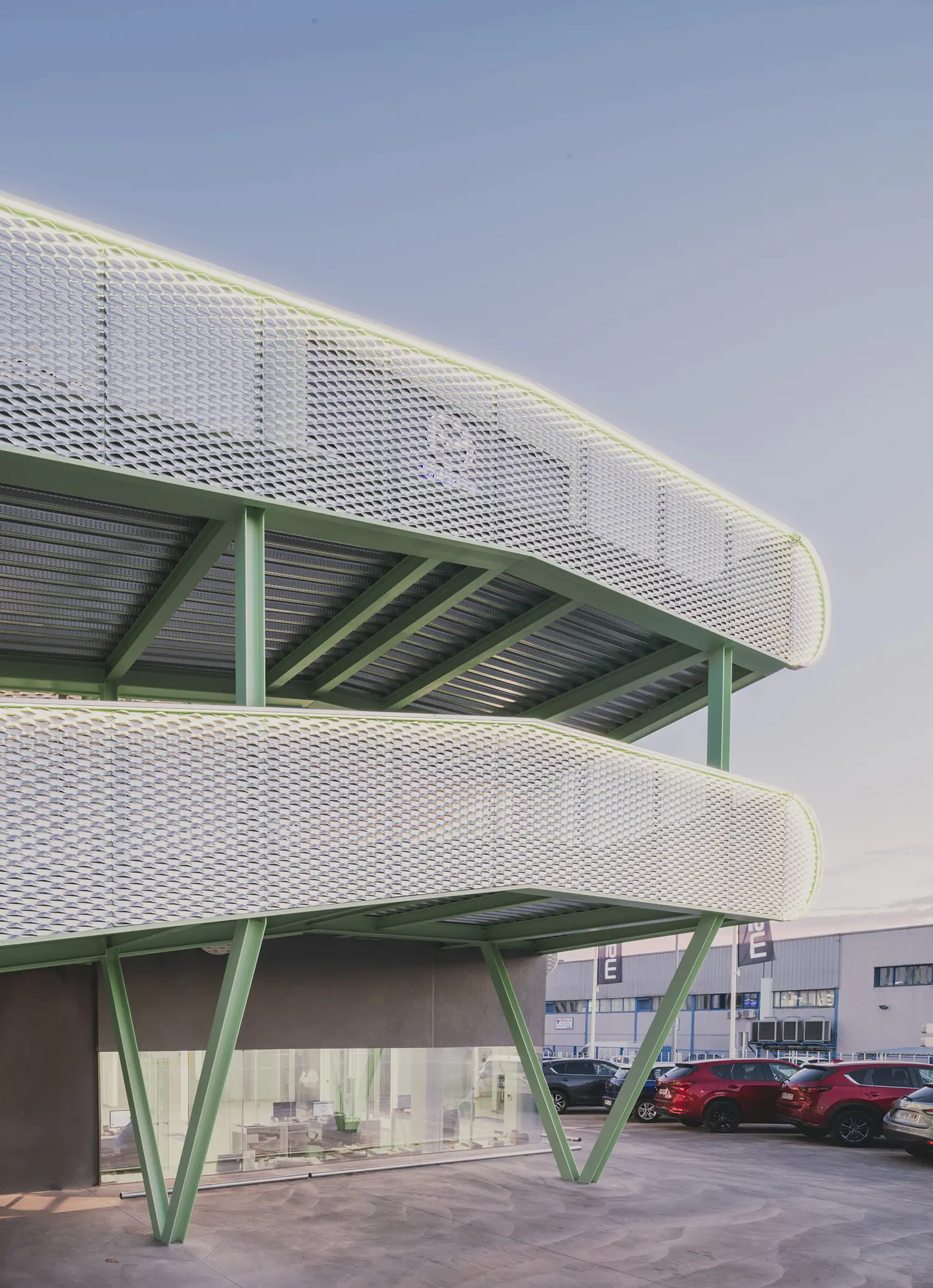
The Leganés Auto Center redefines what we should expect from service-oriented architecture. By focusing on the interplay of transparency, rhythm, and the thoughtful preservation of existing structures, the project elevates a mundane program into a compelling study of urban renewal. It is a clear indication that when design is applied with analytical rigor, even the most overlooked typologies can contribute meaningfully to the character of the city.