


In Milan, local practice OOOH Studio transforms Nino – Osteria con Cucina into a narrative-driven social space that subverts traditional dining codes through the clever repurposing of fashion runway materials and personal cultural artifacts.
A departure from rigid formality defines the spatial logic of Nino. Rather than adhering to the predictable structures of a classic Italian eatery, the project embraces a hybrid, dynamic identity. It is a venue designed for movement, where the boundaries between a quick drink and a long meal are intentionally blurred. This spontaneity is reflected in a layout that prioritizes flow, allowing the act of dining to feel unscripted and deeply connected to the rhythm of the city.

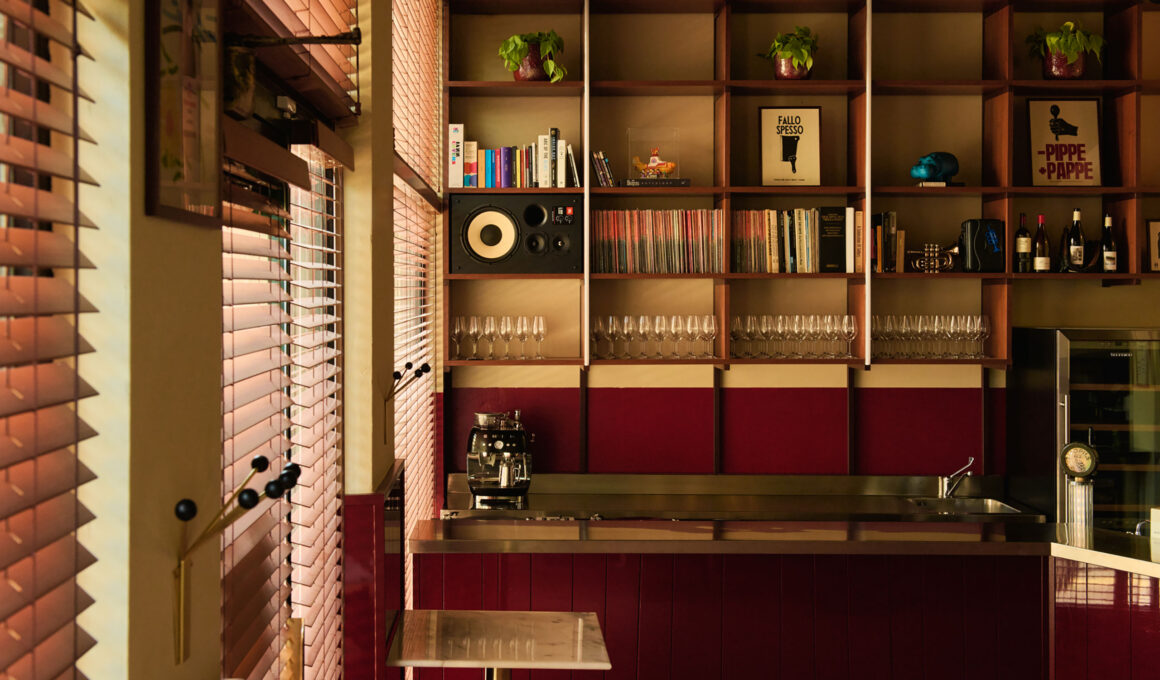
The material narrative centers on a radical act of upcycling where the walls and the central counter are clad in timber paneling salvaged from a decommissioned catwalk used during Milan Fashion Week. Instead of erasing the past, the designers chose to preserve the physical imprints of the industry—the distinct marks left by stiletto heels. This choice transforms the interior surfaces into a tactile archive, lending the space a textured authenticity that feels both rugged and sophisticated, while the multifunctional counter accommodates both high-energy standing patrons and those looking to linger.

A layered domesticity is achieved through the curation of personal objects that bypass the coldness of commercial minimalism. The walls feature a rotating display of jazz vinyl from the private collection of Enricomaria Porta, paired with original Italian posters from the 1970s. These elements act as storytelling devices, creating a backdrop that feels more like a private studio than a public restaurant. This focus on “vibe” over mere aesthetic polish allows the social dynamics of the osteria to take center stage, encouraging conversation through a sensory atmosphere that is intentionally warm and intimate.

Technical precision underpins the studio’s approach to the existing site. By working with the site’s original constraints and layering new interventions over recovered elements, OOOH Studio avoided the sterile feeling of a total gut renovation. This method of adaptive reuse not only minimizes environmental impact but also ensures that the new identity of Nino feels as though it has evolved organically within its urban context, emphasizing a commitment to sustainability that doesn’t sacrifice the project’s narrative depth.

A shifting culinary landscape sees Nino joining a sophisticated movement of Milanese venues that prioritize character over convention. Much like the nostalgic playfulness of Da Nonna or the experimental materiality found in projects like Sandi, this new osteria represents a move toward more personal, narrative-led environments. These spaces reflect a city that is increasingly comfortable blending its high-fashion heritage with the warmth of its traditional social rituals, signaling a new era for local hospitality.

The enduring impact of this project lies in its refusal to remain static. By integrating elements of the city’s fleeting fashion history with the permanence of a neighborhood haunt, the studio has created a dialogue between the temporary and the timeless. It is a reminder that the most compelling spaces are often those that allow the ghosts of the past to leave their mark on the present, creating a rich, sensory backdrop for the simple, daily act of coming together.