



Brooklyn-based architecture studio Peterson Rich Office has completed the Condé M. Nast Galleries at the Metropolitan Museum of Art in New York, subtly peeling back plaster to reveal historic brick and limestone masonry while carving out a highly advanced, 12,000-square-foot contemporary sequence. Occupying a previously unutilized, interstitial exterior courtyard nestled between Calvert Vaux’s 19th-century brickwork and Richard Morris Hunt’s neoclassical Great Hall, the intervention establishes a dialogue between the museum’s layered structural evolution and a refined, modern layout designed to host the institution’s rotating Costume Institute exhibitions.
The stratifications of a historic landmark. The primary architectural ambition of the intervention was not to impose a sterile, white-box gallery on the historic landmark, but rather to reveal the physical reality of the building’s 150-year evolution. The site chosen for the galleries was once an open-air light well and service space, hemmed in by three distinct phases of construction. By transforming this raw void into a series of highly controlled interior rooms, the renovationproject chose to embrace the uneven textures of the past. In doing so, the raw, structural brickwork of Calvert Vaux’s facade and Arthur Lyman Tuckerman’s late 19th-century pilasters have been exposed to the interior, framing the contemporary installations with a deep sense of historical continuity.
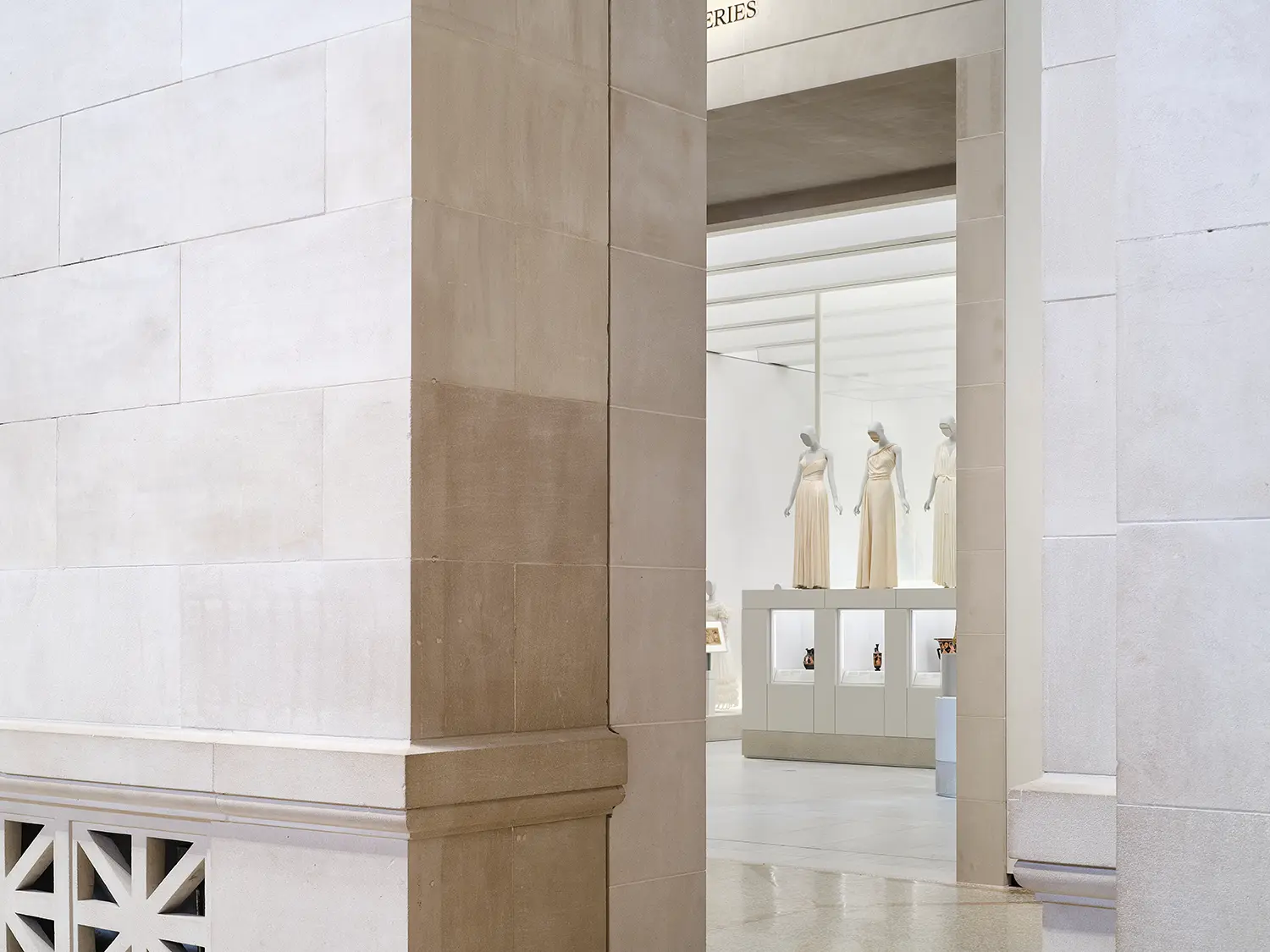
Slowing the museum pace. The journey begins directly adjacent to the soaring, stone-clad volume of Richard Morris Hunt’s Great Hall, where the visitor enters the Orientation Gallery. This vestibule, scaled to ease the transition from the bustling public entry to the intimate exhibitions within, is fronted by 19-foot-tall limestone openings that echo the monumentality of the surrounding galleries. The walls of this initial space are finished in a traditional, cool grey marmorino plaster, providing a tactile, hand-burnished surface that mirrors the classical antiquities nearby. Glass casework windows are cut into the plaster, establishing immediate sightlines into neighboring wings and rooting the new intervention within the broader grid of the museum.
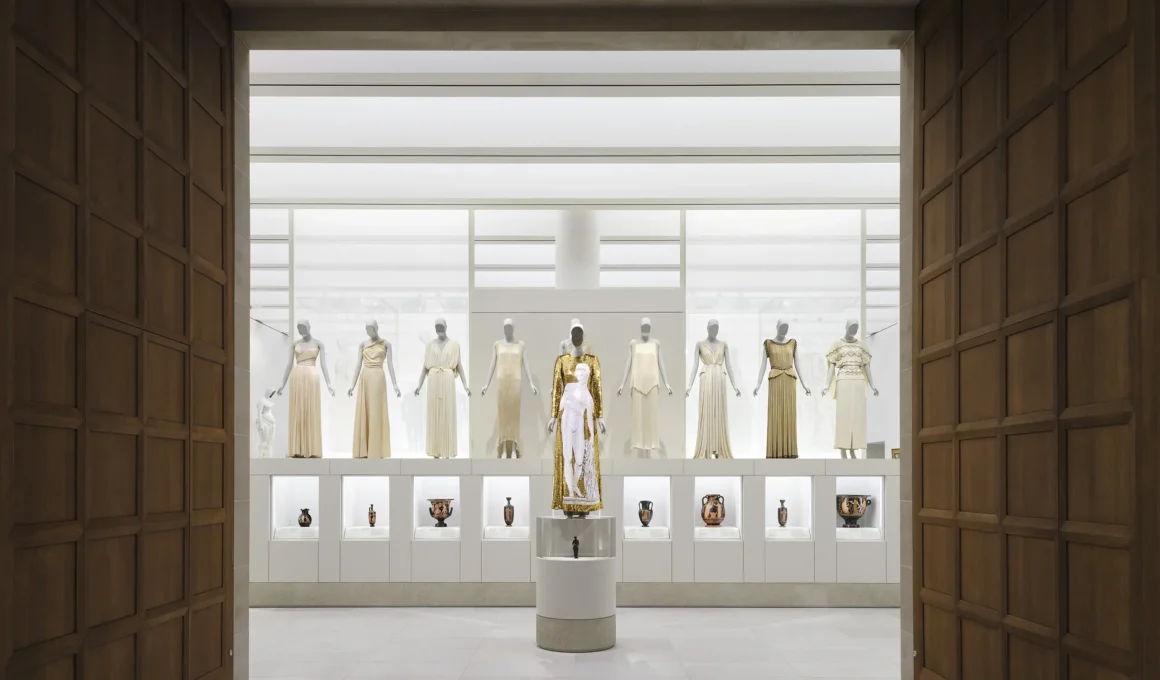
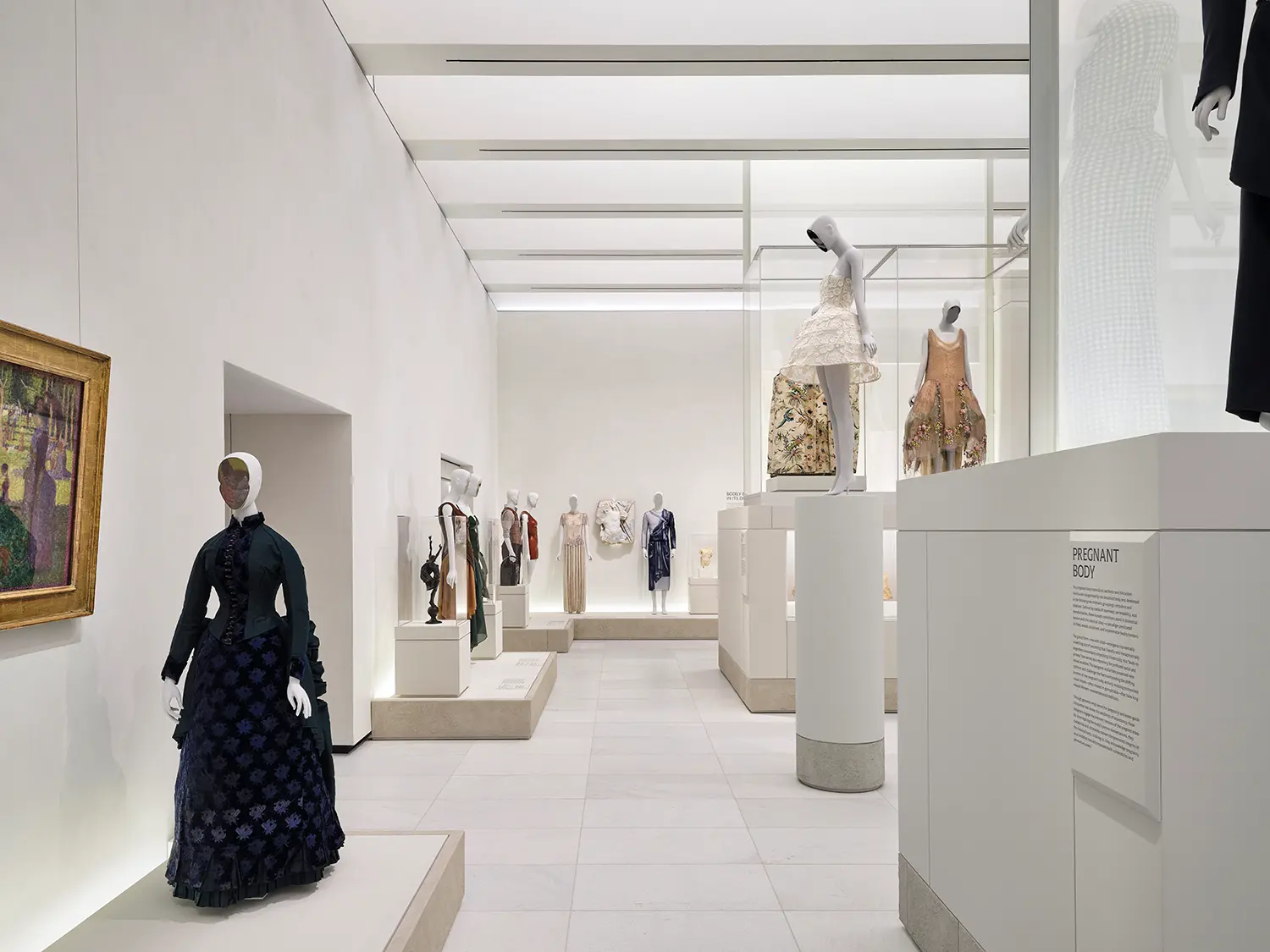
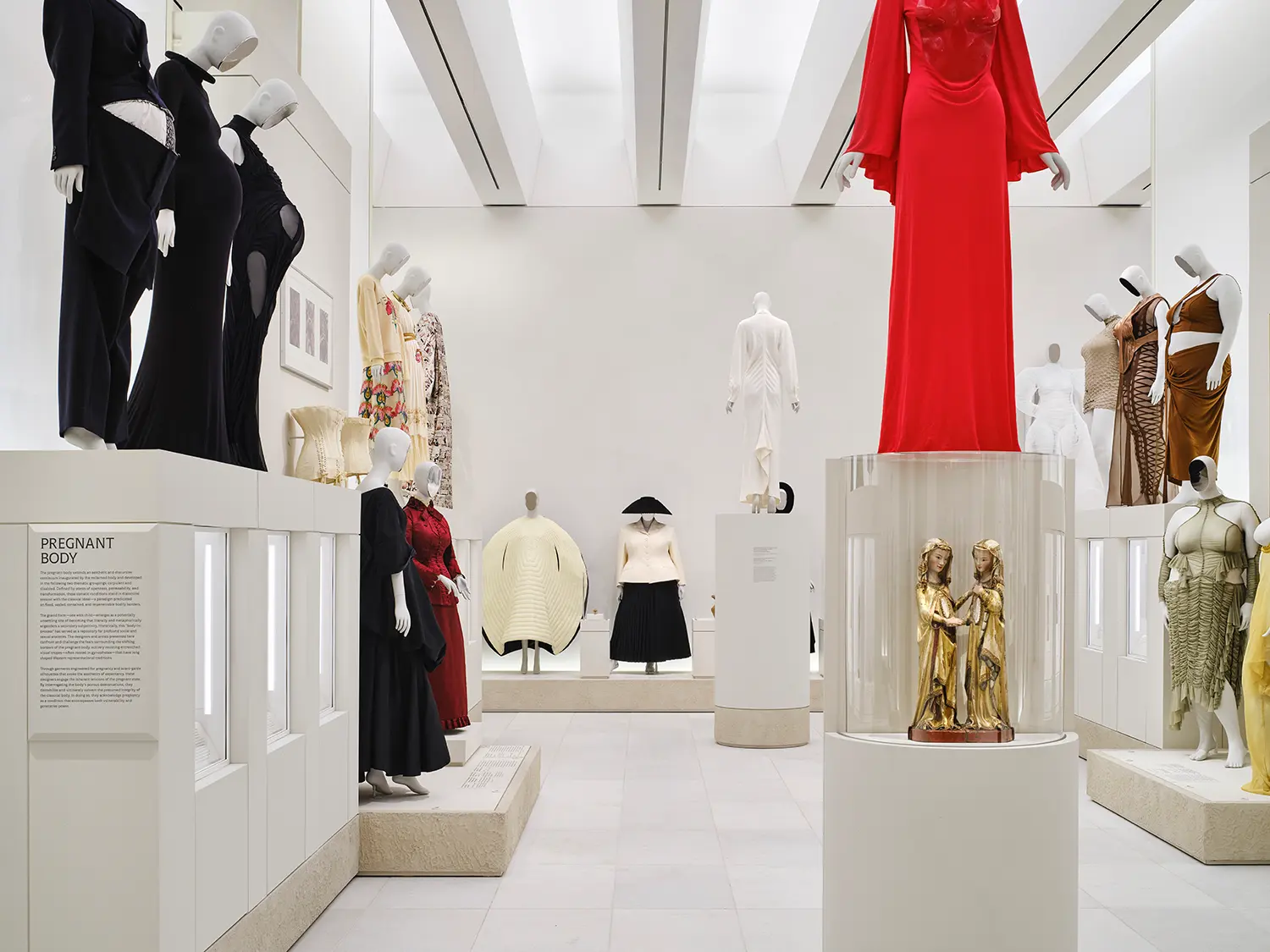
The threshold of scale. Passing through two colossal, pivoting oak doors, visitors enter the High Gallery, where the spatial volume expands dramatically. The ceiling soars to 21 feet, utilizing a sophisticated overhead system of deep, structural rafters. These structural beams are engineered to hide all necessary mechanical, HVAC, and security systems, while supporting a clean plaster ceiling plane above. This structure functions as an integrated reflector for an indirect, diffuse lighting program, washing the upper reaches of the gallery in a soft, even glow that simulates natural northern daylight without the damaging ultraviolet rays of actual windows.
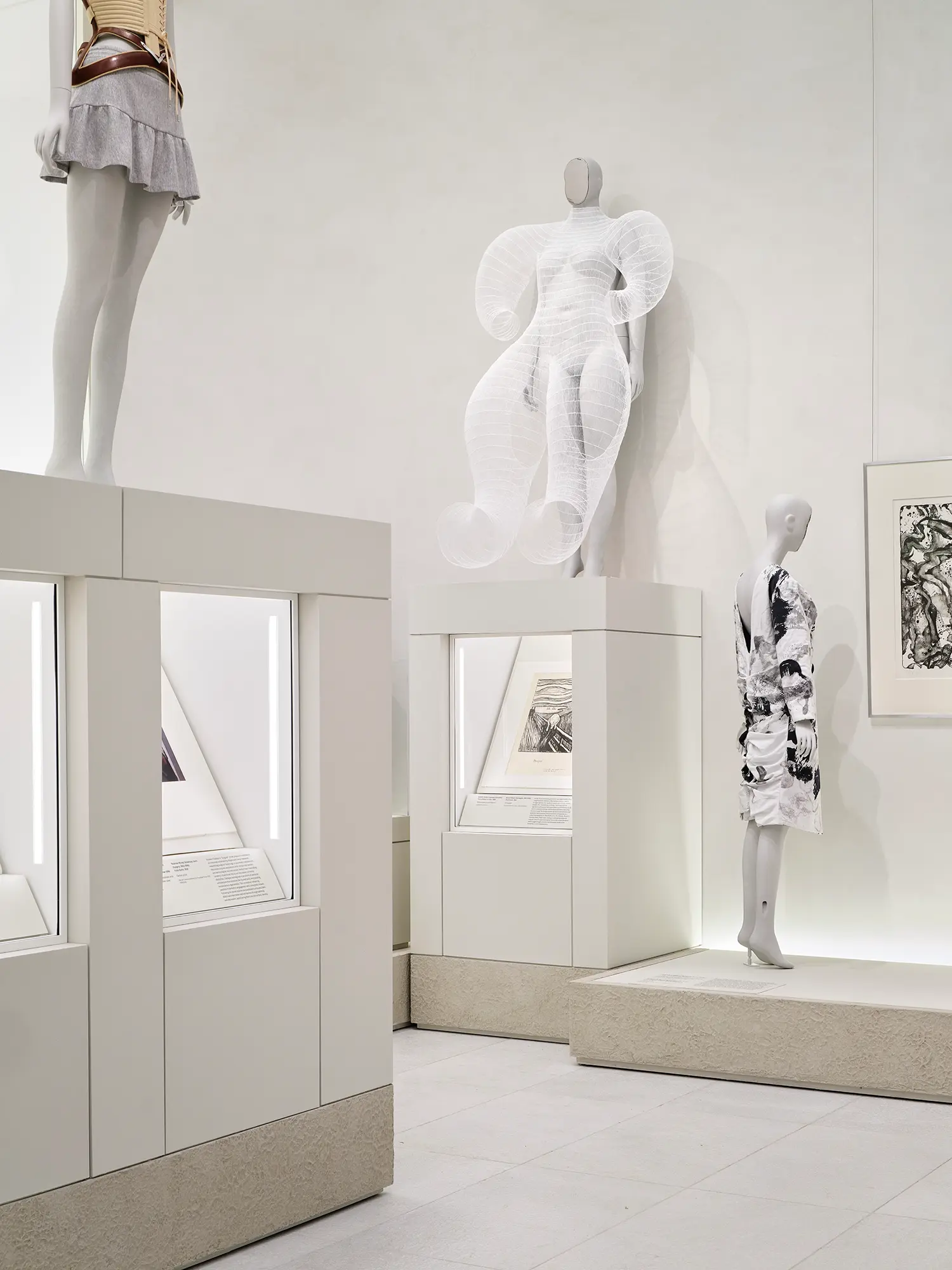
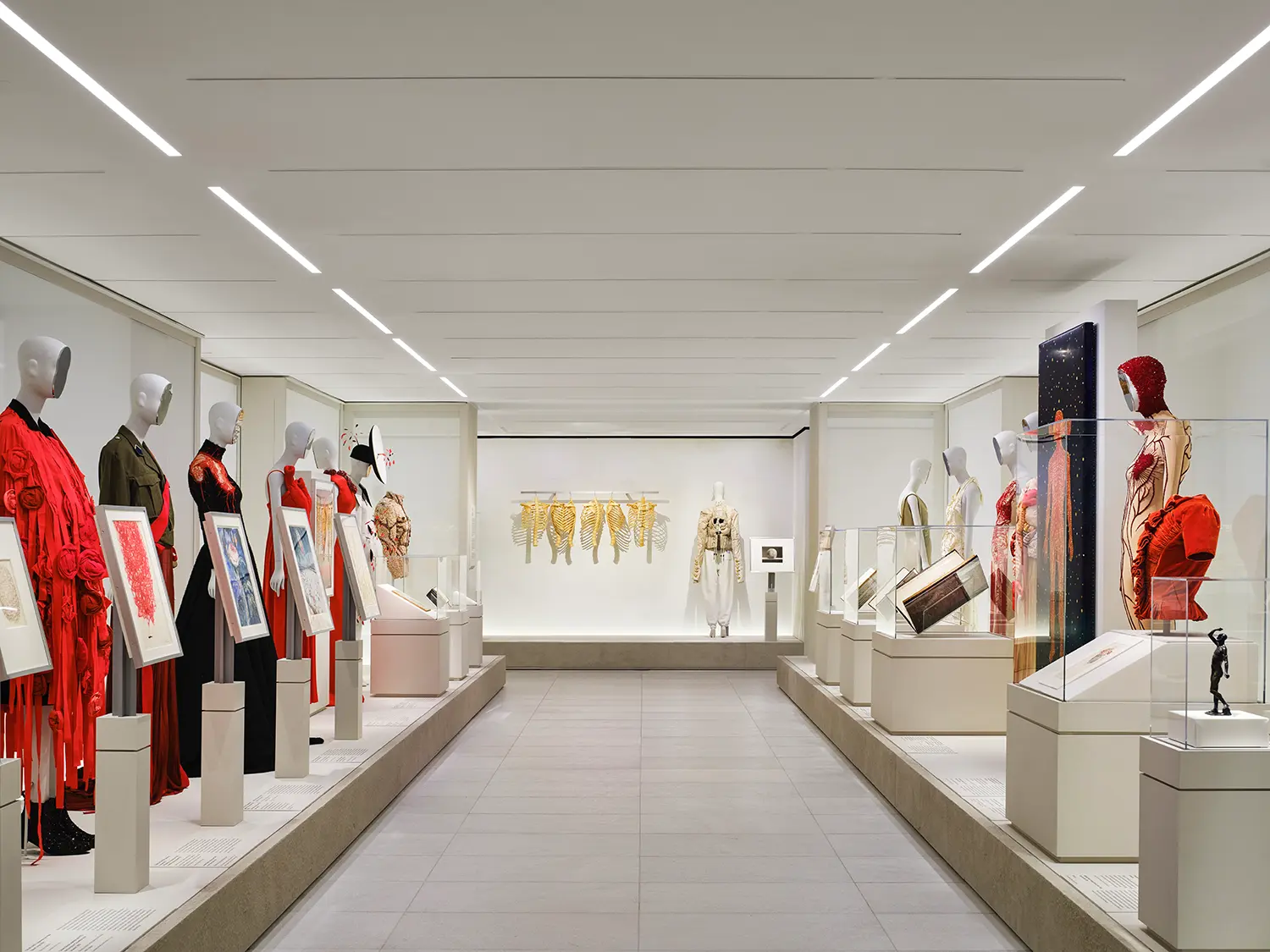
An inaugural curatorial dialogue. This precise lighting and structural strategy was essential for the inaugural exhibition, Costume Art, which juxtaposes nearly 400 historical and contemporary fashion objects directly with masterworks from the museum’s permanent fine art collection. The soft illumination creates an optimal environment for delicate textiles, ensuring that historical garments from The Costume Institute are preserved while being placed in direct conversation with adjacent paintings, drawings, and sculptures. The exhibition design provides a serene backdrop where the material form of the dressed body can be explored in relation to representations of the human figure across five millennia.
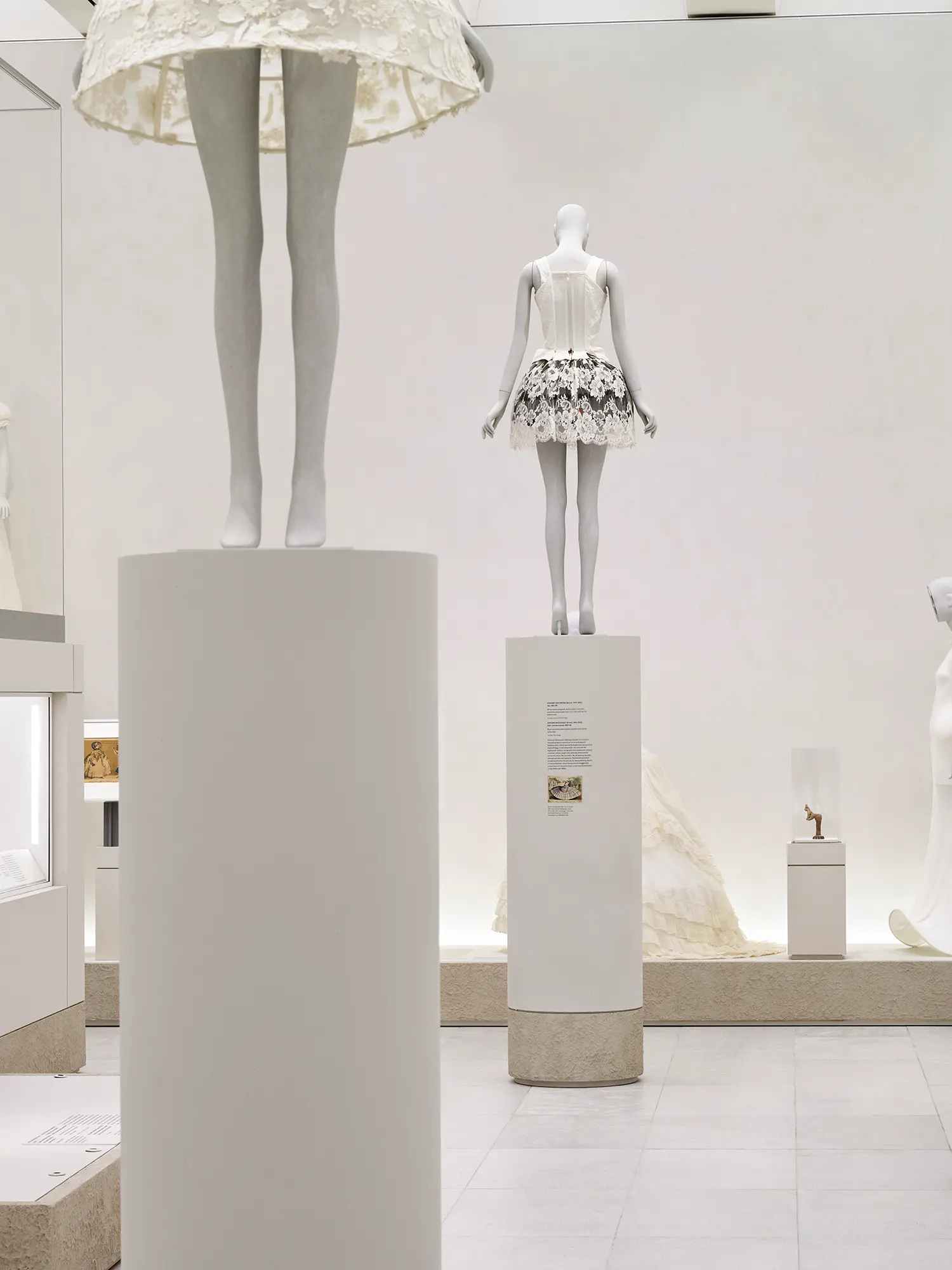
Compression and intimacy. To the side of this expansive main hall, the spatial envelope deliberately compresses into the entrance of the Low Gallery. This transition represents a shift in scale and sensory experience, bringing the visitor into an environment designed for close, meditative viewing. While keeping the same material palette of honed grey stone flooring and crisp white ceilings, the room drops to a standard residential ceiling height. Here, the soft, indirect lighting of the High Gallery is replaced by precise museum track lighting, casting focused beams that highlight individual objects and encourage close, intimate inspection of delicate, hand-stitched detailing.
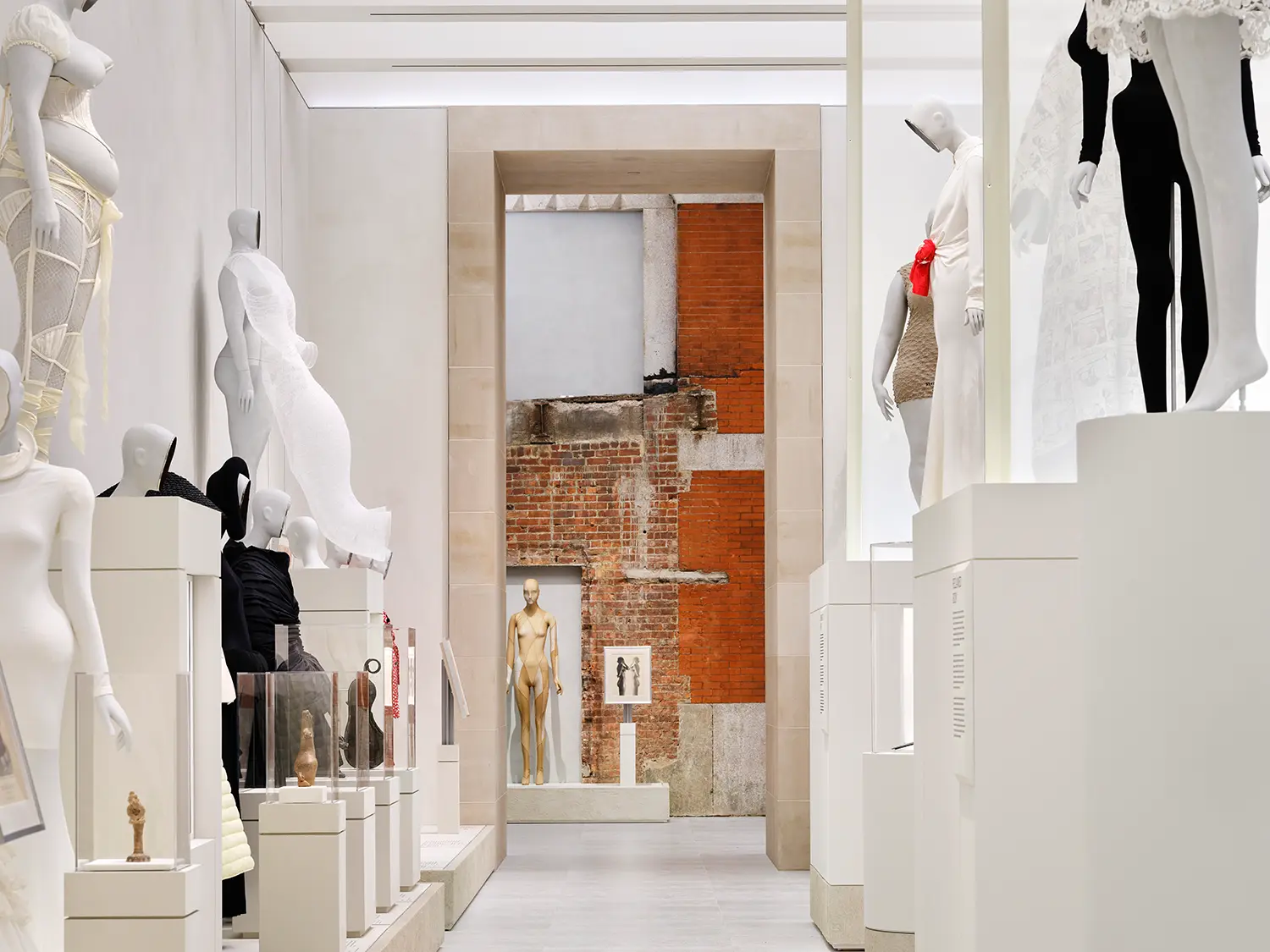
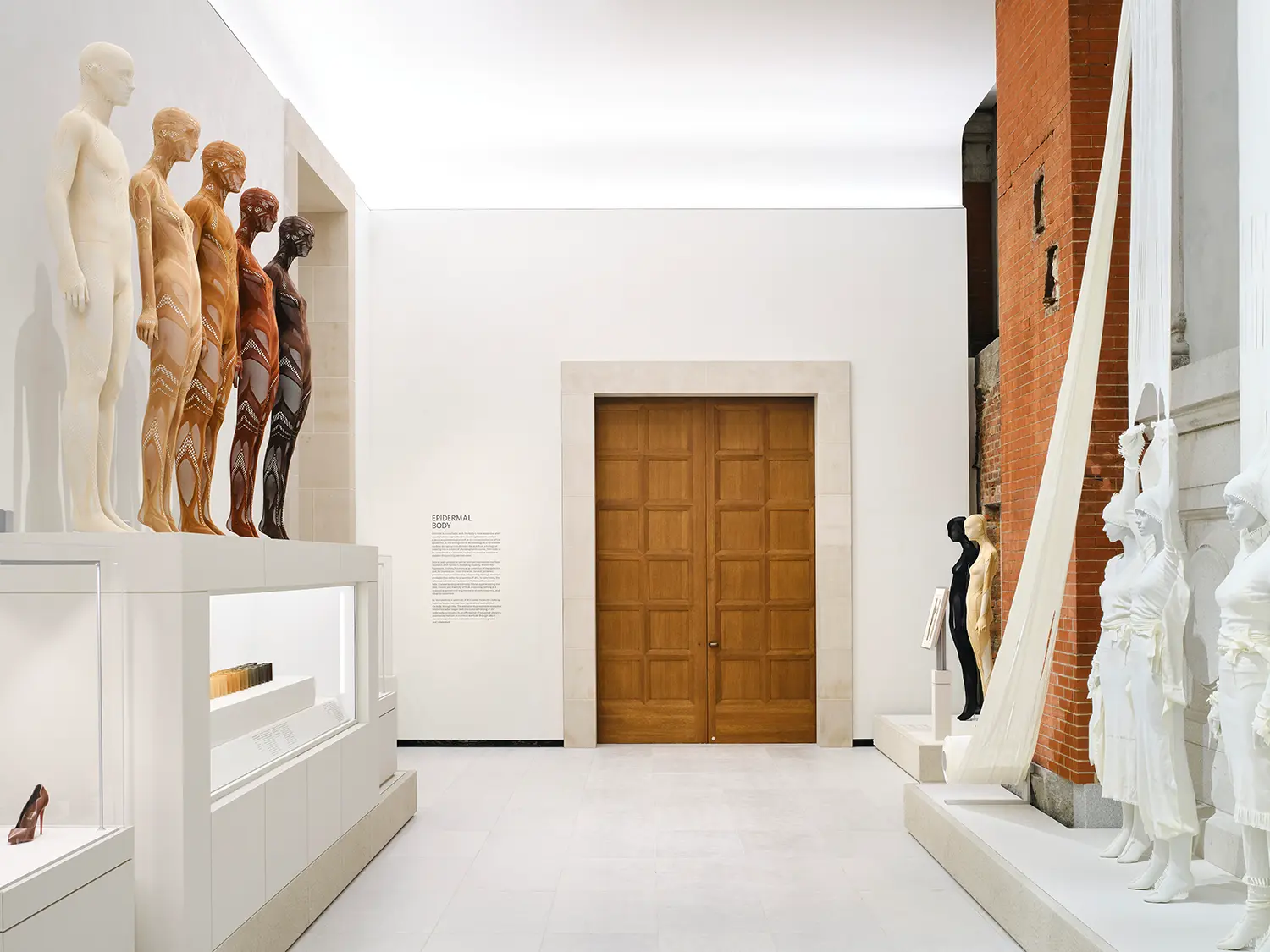
The material synthesis. Continuing back through the high hall and into the Finale Gallery, the studio’s concept of structural hybridity is brought to its most dramatic realization. Along one side of the room, the wall features the same sleek, contemporary plaster finish that characterizes the new galleries. On the opposite wall, however, the architects have stripped back layers of historic plaster to expose the original exterior historic brickwork, complete with weathered mortar joints and structural pilasters from the 19th-century buildings. This raw, red-clay surface serves as a powerful reminder of the gallery’s former life as an outdoor courtyard, establishing a rich textural contrast with the smooth, grey stone underfoot.
Functional refinement and retail. Beyond the primary exhibition circuit, the program compresses once more to accommodate a dedicated exhibition shop. Designed to support the rotating themes of the gallery, this retail space is integrated directly into the visitor flow, featuring custom oak shelving and minimalist metal fixtures that mirror the architectural detailing of the adjacent galleries. The retail area maintains the same structural restraint as the exhibition spaces, ensuring that the transition from viewing art to browsing literature and exhibition merchandise feels like a natural continuation of the spatial journey.
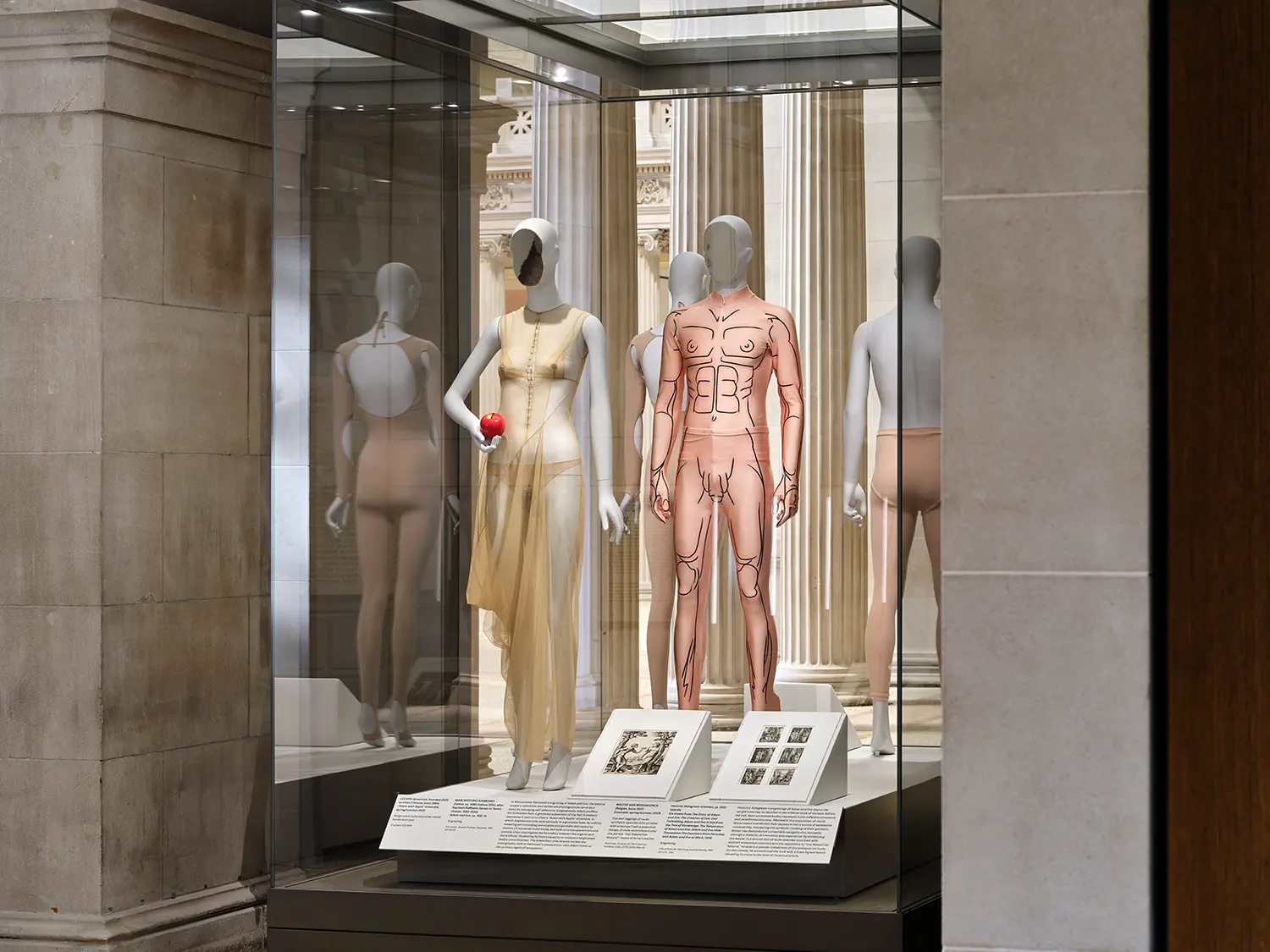
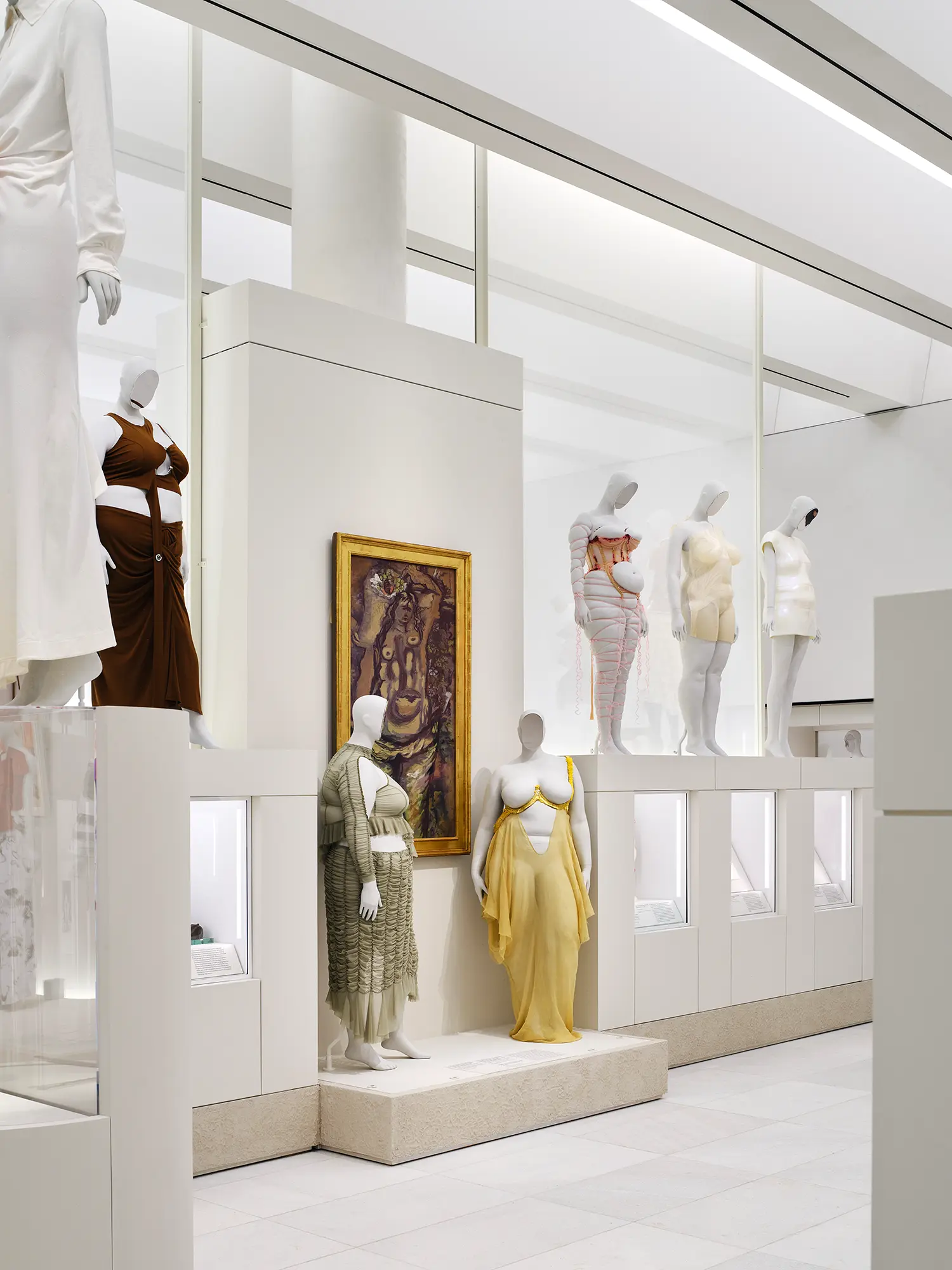
A framework for the body. The inaugural exhibition, designed in tandem with the gallery’s completion, explores how fashion transforms, constructs, and regulates the human form. By placing garments by designers like Jean Paul Gaultier, Vivienne Westwood, and Rudi Gernreich alongside classical Greek and Roman sculptures, the galleries highlight clothing as an active agent in shaping human identity. The raw materiality of the exposed masonry walls offers a stark, grounding contrast to the fluid, diaphanous tulles, structured corsetry, and sculpted leather breastplates on display, amplifying the sensory tension between the soft curves of the dressed body and the hard lines of the surrounding historic structure.
Unified complexity. The architectural achievement of the project lies in its ability to solve a complex puzzle of circulation and structural alignment. By weaving through the gaps of a sprawling, historic landmark, the spatial intervention creates a cohesive, highly functional gallery sequence that honors the museum’s architectural heritage. Rather than attempting to match or mimic the classical ornament of the surrounding wings, the studio chose to lay bare the construction history of the museum itself, treating the structural layering of the building as an exhibit in its own right.
Standing before the towering, exposed 19th-century brickwork in the Finale Gallery, one realizes that Peterson Rich Office’s true achievement is not the creation of new space, but the unearthing of a dormant dialogue. Here, the raw, weathered masonry of Calvert Vaux’s original facade stands illuminated by a modern, silent lighting program, casting long shadows across the contemporary couture displayed below. In a museum where every corridor is a timeline, this calculated museum expansion does not merely host the transitory art of dress; it frames the physical passage of time itself, turning the very walls of the Met into an active participant in the ongoing narrative of human form and creative expression.