



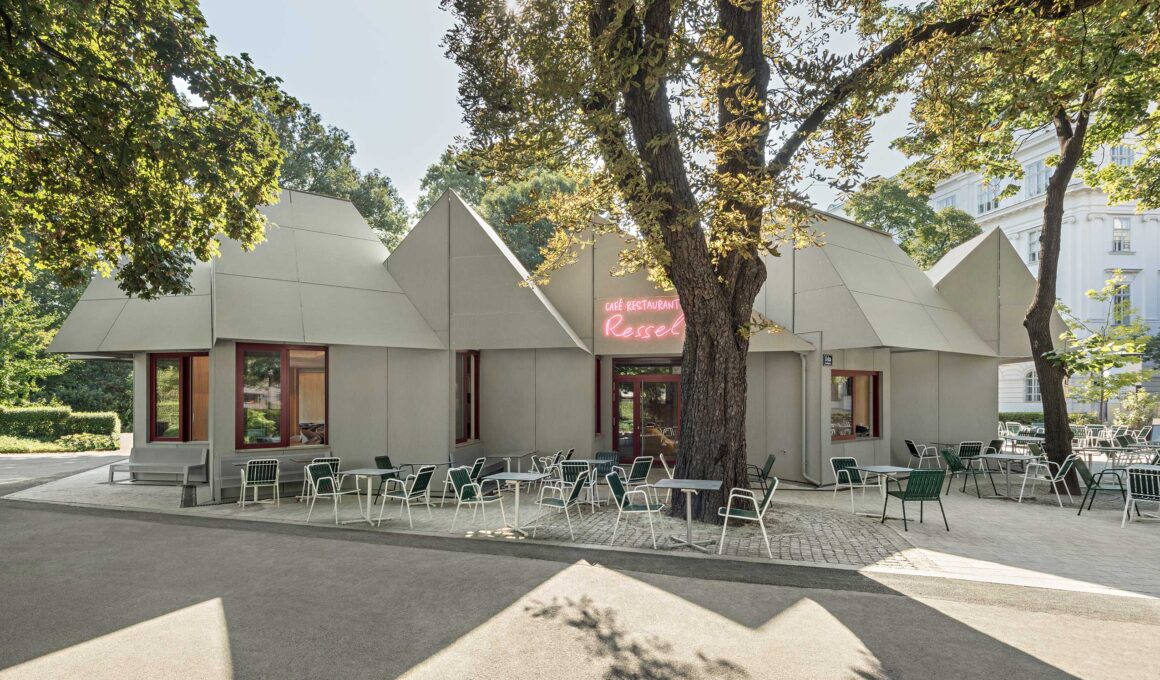
Located on the historic grounds of Vienna’s Karlsplatz, just steps from the iconic Karlskirche, the new Café Restaurant Resselpark by PPAG architects replaces a dilapidated 1950s structure with a transparent, human-scaled pavilion that harmonizes with its sensitive urban parkland.
A legacy reborn. Since 1958, this site has served as a cornerstone of the Karlsplatz culinary landscape. However, the original building fabric eventually began to fail, lacking the necessary accessibility for a modern metropolitan audience. The Trattner family, who have long held the tenancy, recognized that a spatial overhaul was essential to preserve the venue’s relevance. Following a decade-long journey of planning and navigating the complexities of urban approvals, the transition from a failing structure to a purposeful new building has successfully revitalized this corner of the park.
Urban permeability. The intervention began by reorganizing the spatial layout within the characteristic oval of the park, which is defined by a perimeter hedge. By reactivating multiple passageways and integrating the listed Tilgner fountain, the project dissolves the barriers between the private restaurant and the public space. The ground has been unsealed and unified, allowing the outdoor seating area to blend into the surrounding environment, creating a sense of continuity that invites passersby to engage with the site.
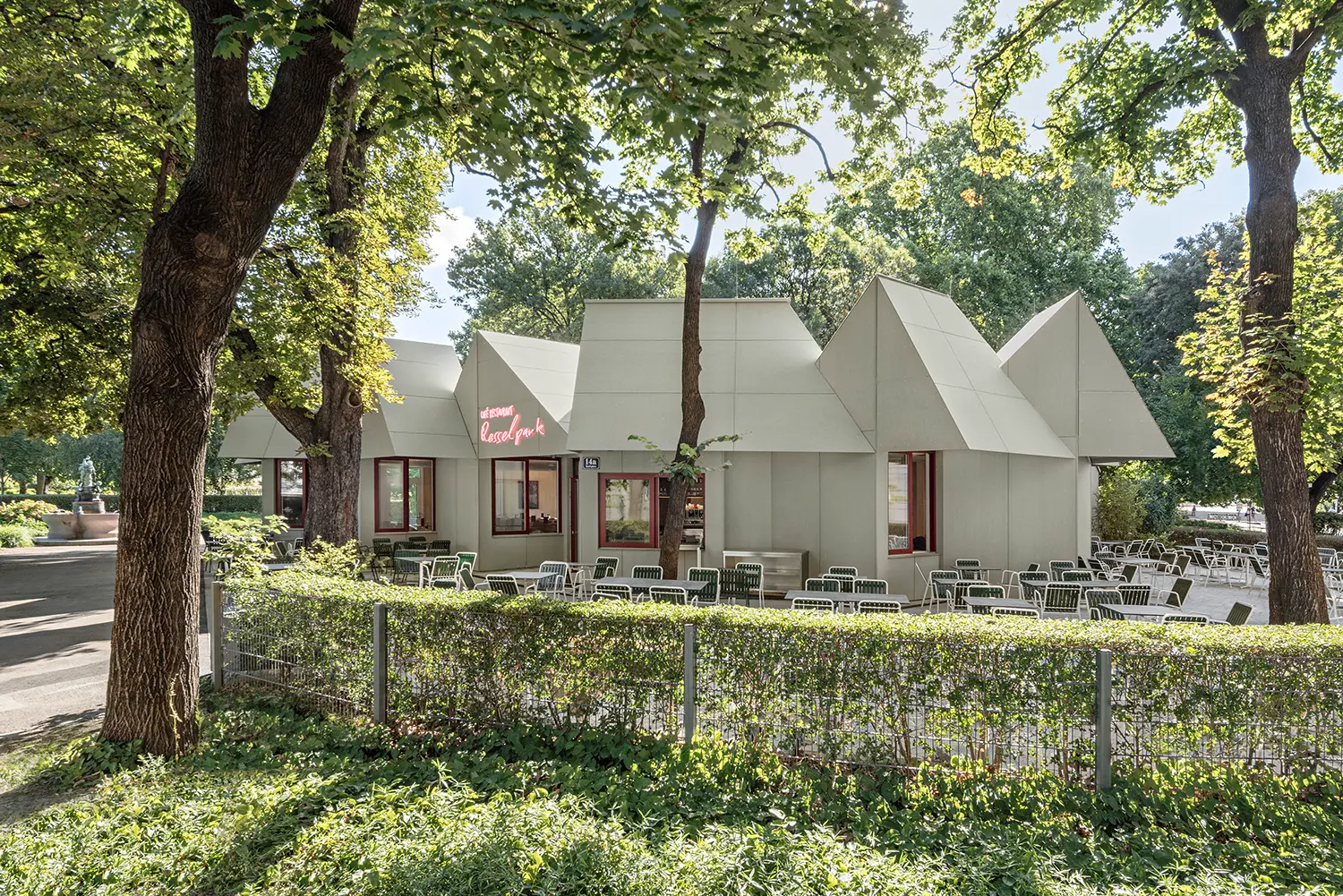
Human-centric geometry. The form of the building was dictated by a strict commitment to tree preservation, resulting in a footprint that mirrors the volume of its predecessor while feeling entirely more approachable. PPAG architects discarded the traditional concept of a “back side,” ensuring that every facet of the pavilion functions as a primary facade. From the outside, the structure appears as a rhythmic cluster of small, interconnected houses, a strategy that successfully breaks down the massing to achieve a welcoming, human scale.
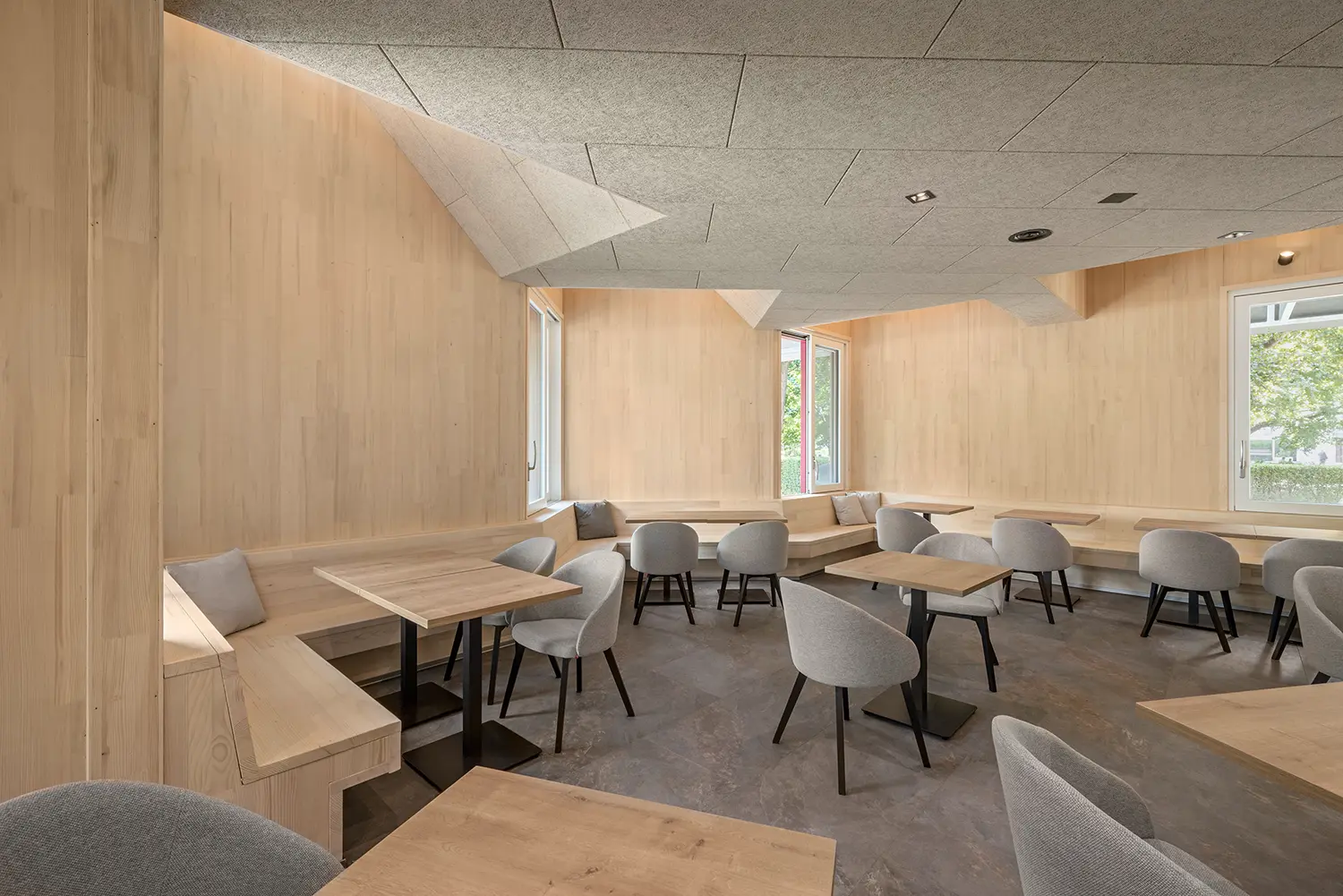
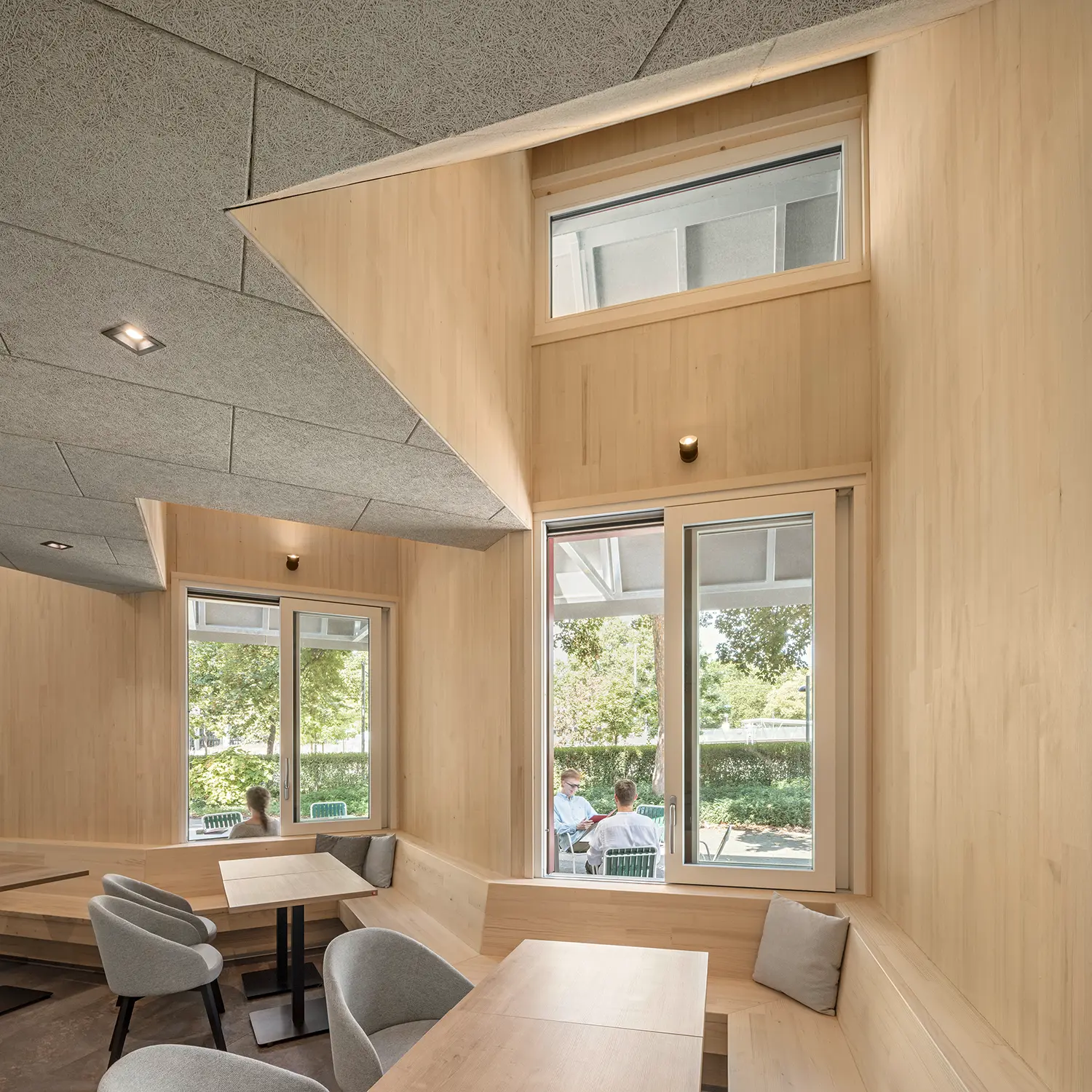
Interior intimacy and transparency. Within this collection of “house fragments,” the cafe reveals a series of defined niches, each organized around a central table and a continuous peripheral bench. These pockets of space offer a sense of privacy and ownership for guests—a literal “house for eating”—while remaining part of the larger whole. The slanted roofs above these niches emphasize their individuality, while innovative sliding windows in each niche offer unique perspectives on the park, encouraging a constant dialogue with the outside world.
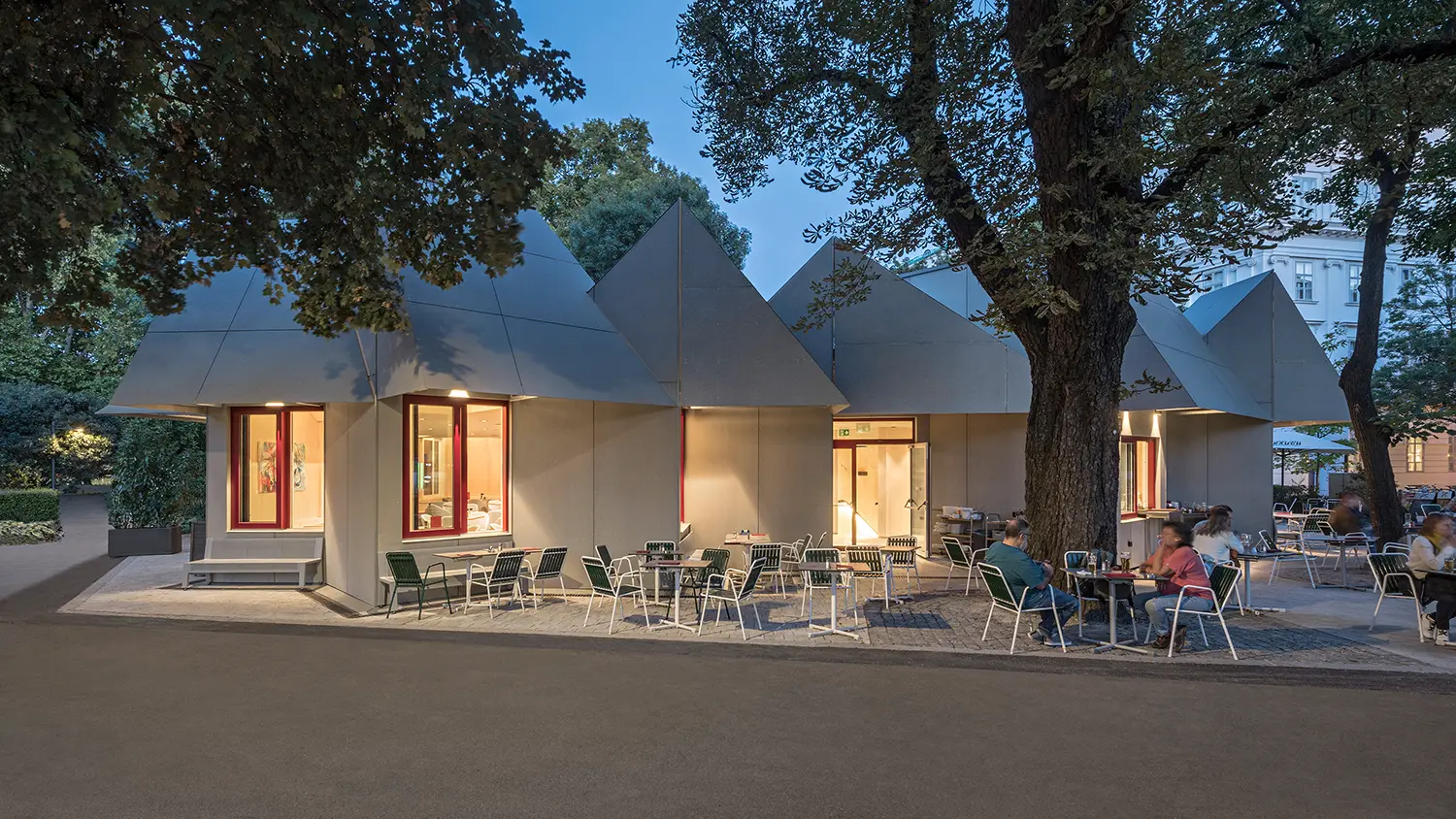
Tactile materiality and climate adaptation. To foster a warm environment, the interior is constructed and clad in silver fir (CLT), providing excellent acoustics for diverse activities. Outside, a sober facade of gray panels contrasts with expansive sunshades that serve as vital tools for climate adaptation. As the sun sets, the integrated lighting turns the pavilion into an oversized bedside lamp, casting a soft glow across the square and cementing its role as a cultural anchor for students, regulars, and visitors alike.