

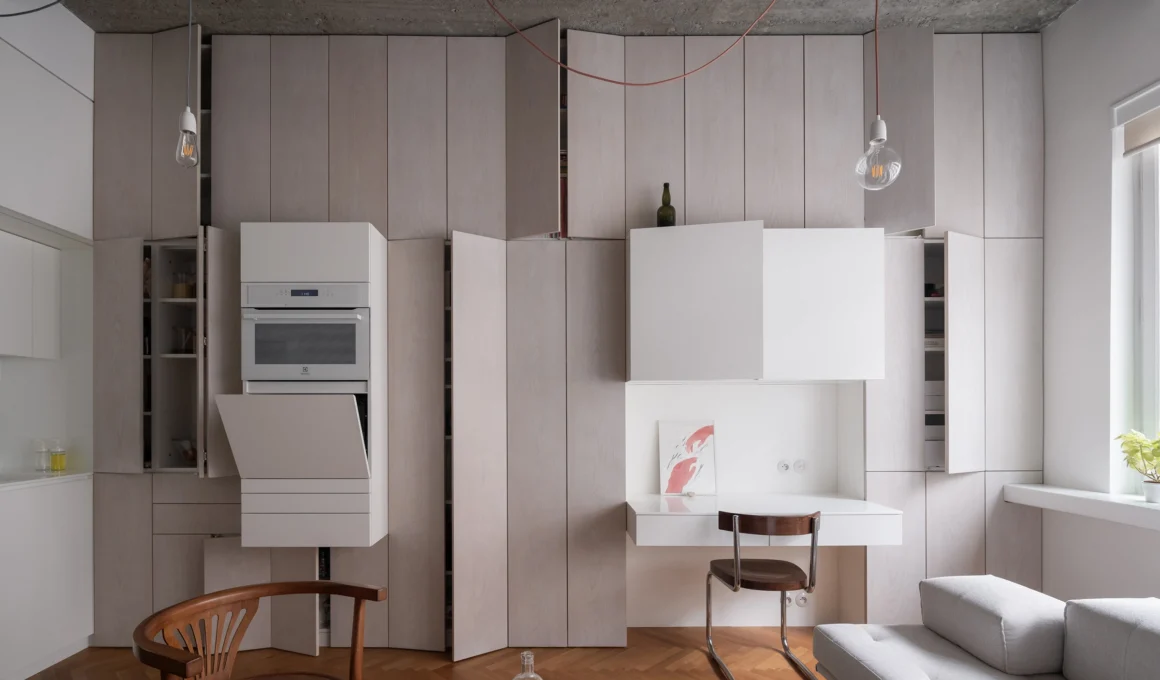
The renovation of an architect’s own apartment is a unique crucible, often more demanding than any client brief. This ten-year-long project by Martin Cenek Architecture in a classic late-1930s Prague tenement house serves as a fascinating case study in balancing architectural preservation with the imprint of personal identity. Located in a structure originally designed by Ladislav Šimek, this functionalist apartment presented the architect with a profound internal conflict: how to honor the powerful spirit of the existing building while introducing a new, yet harmonious, layer of contemporary life. The resulting space is a testament to meticulous detail and an ongoing dialogue between past and present, a masterclass in Czech design.
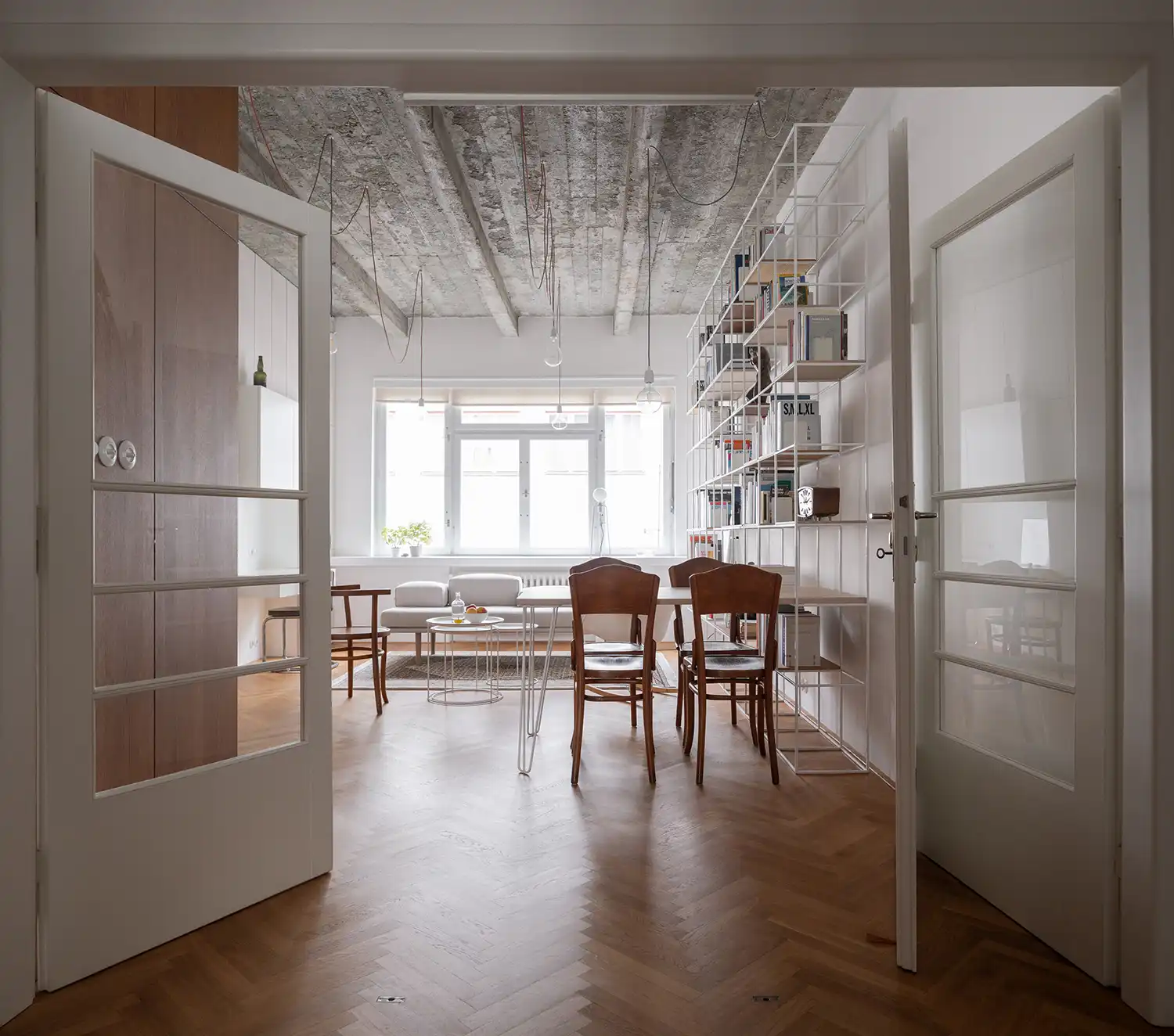
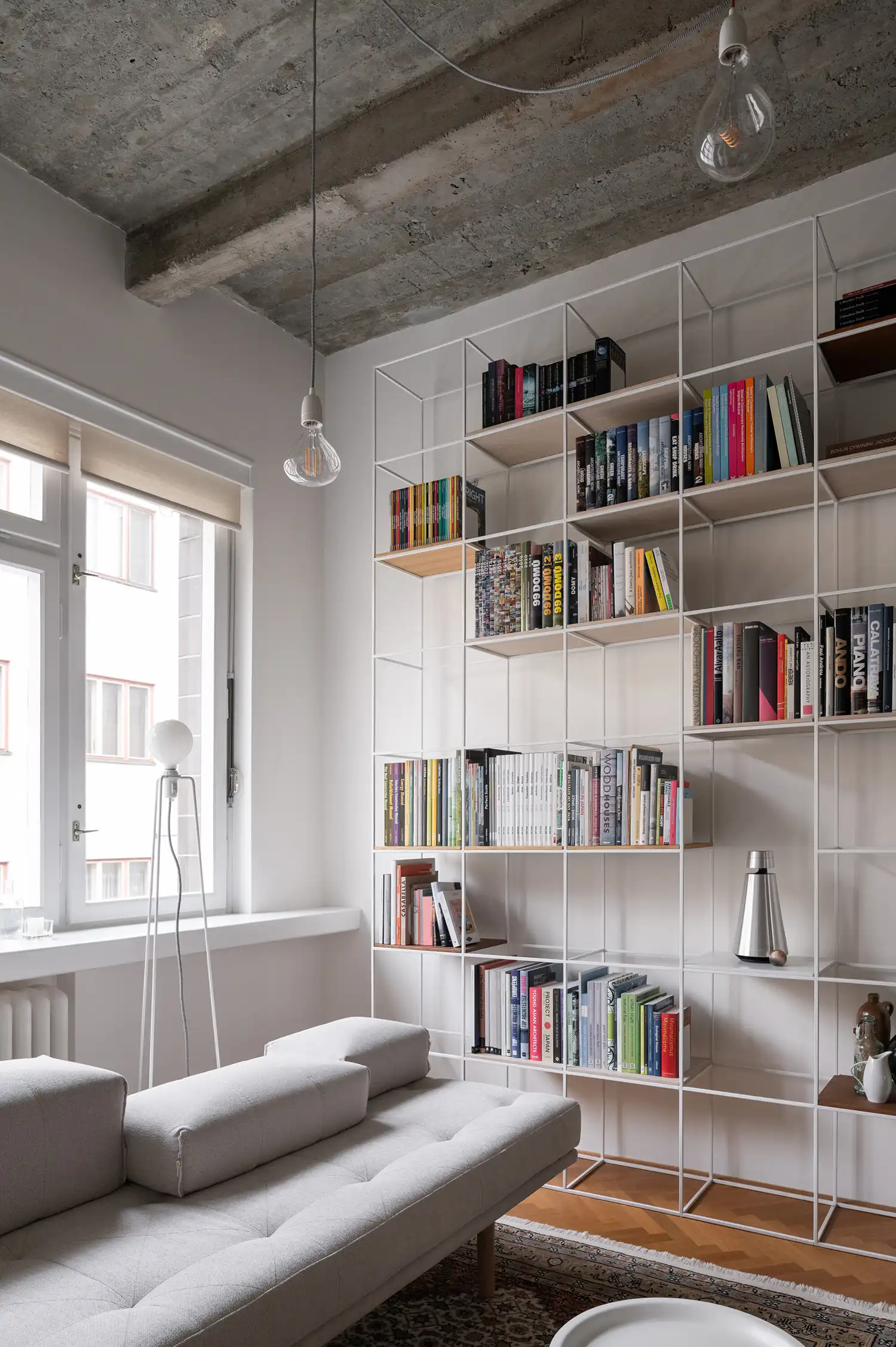
The project was a complete architectural overhaul, updating all technical equipment, floor constructions, and surfaces. A key design move involved exposing the existing reinforced concrete ceiling in the living room, stripping it of its plaster soffit to transform it into an original, textural artistic element. This raw, honest material choice provides a bold counterpoint to the more refined historical elements. Elsewhere, the commitment to authenticity is clear: the original windows, doors, and all their respective fittings were painstakingly renovated, and the existing oak parquet flooring was replaced with an exact replica, faithfully preserving the apartment’s 1930s character.
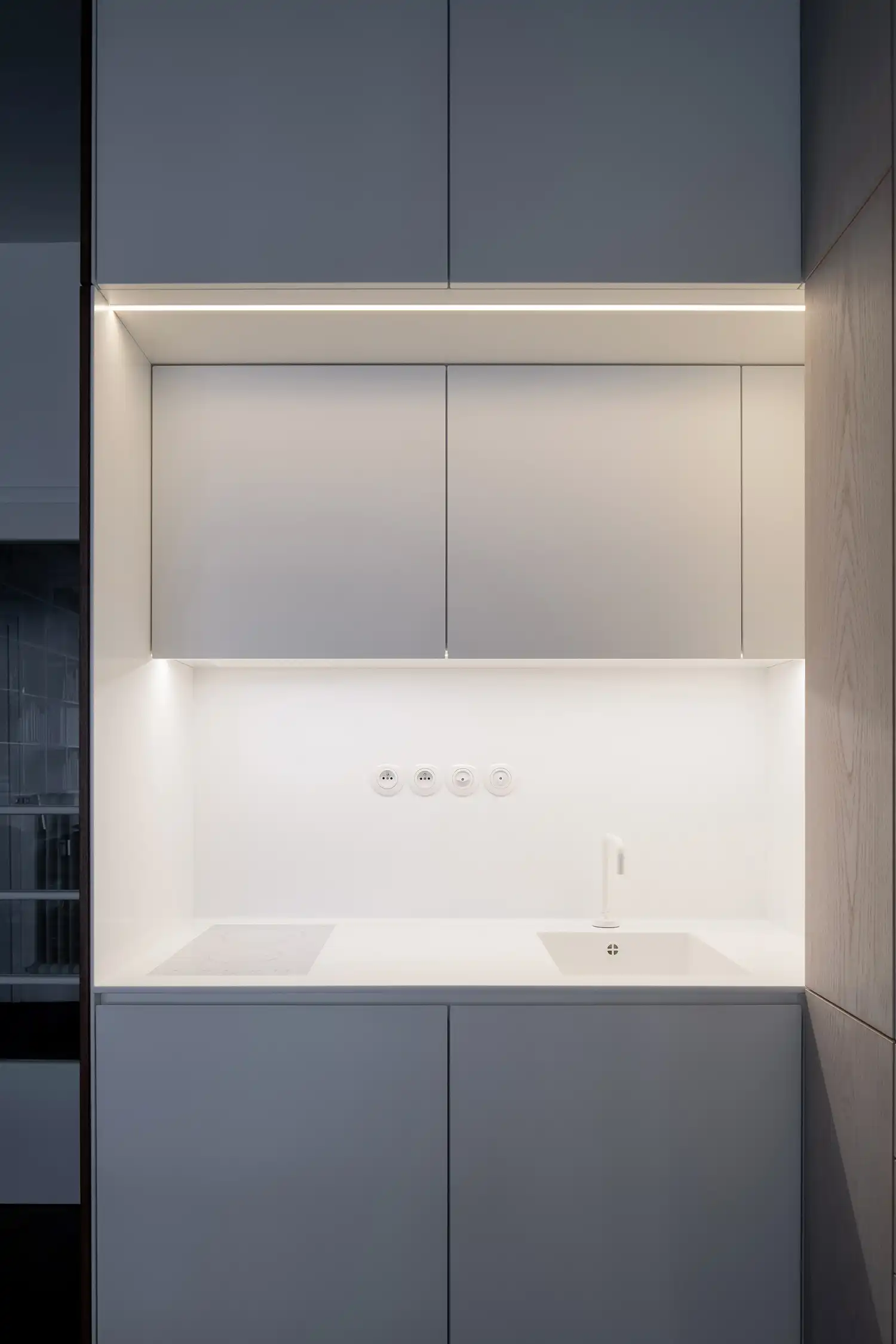
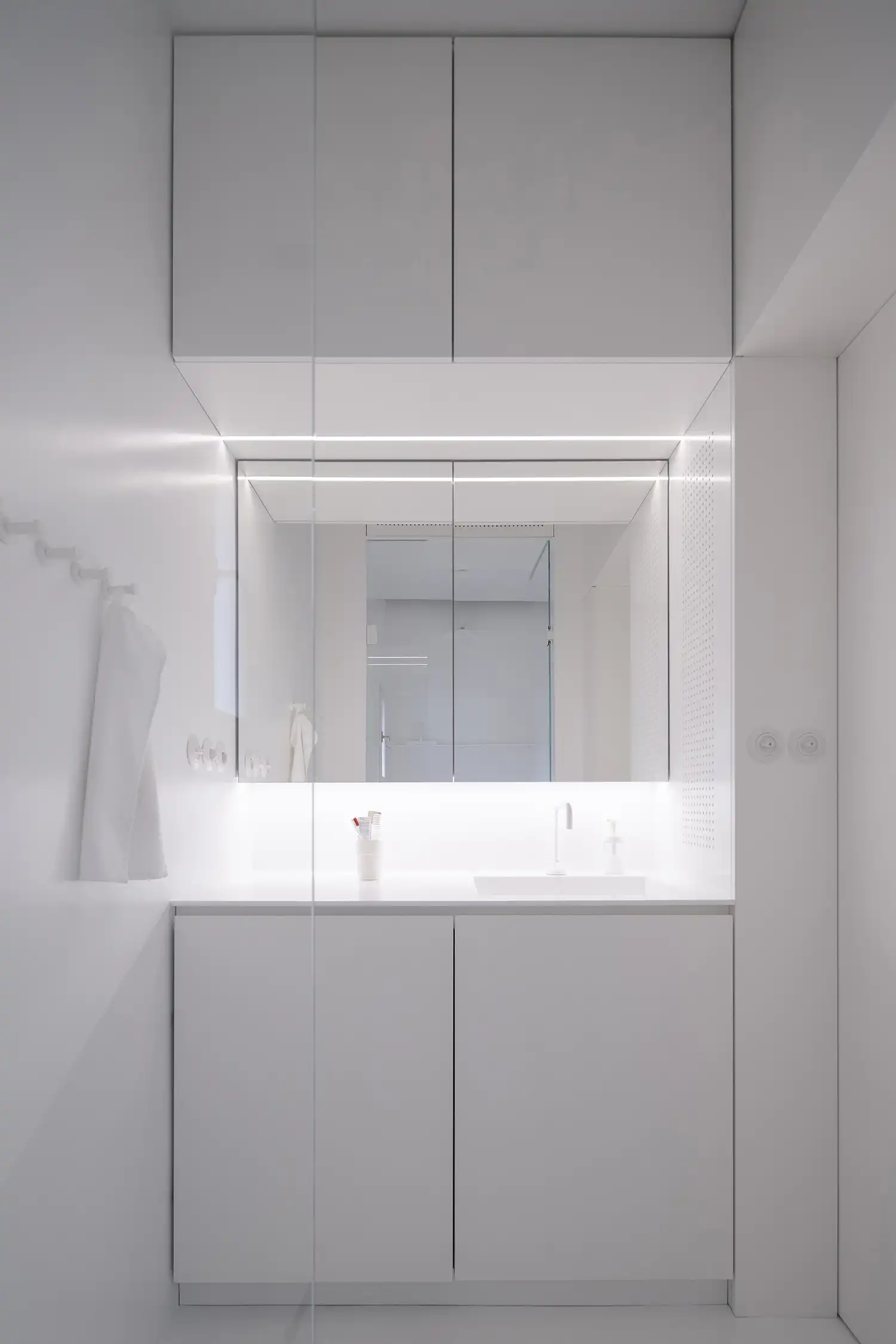
The core of the layout change is the introduction of a monumental new element: an inserted furniture block that redefines the compact interior. This sleek, modern intervention replaces the original pantry and bathroom, seamlessly integrating ample storage spaces, a hidden generous bathroom, and a section of the kitchen. Clad in a combination of rich stained oak veneers and crisp white lacquer, this block establishes a clean, minimalist new spatial layer. This careful layering of materials and functionality embodies the best of contemporary minimalist design while respecting the historic shell.
The furnishing of the apartment is a carefully curated interweaving of personal history and modernist design. Numerous pieces carry a strong family story, such as a set of Thonet dining chairs inherited from great-grandparents, a Thonet armchair, and an Anýž table lamp from the 1930s, all connecting the space to the architect’s functionalist heritage. These heirlooms are accompanied by significant historical pieces, including the Ez12 tubular chair by Karel Ort and works by Czech sculptor Jaroslav Horejc. This rich collection of vintage furniture is contrasted with resolutely contemporary products, such as the minimalist Fusion sofa by studio Nendo, creating a dynamic visual tension.
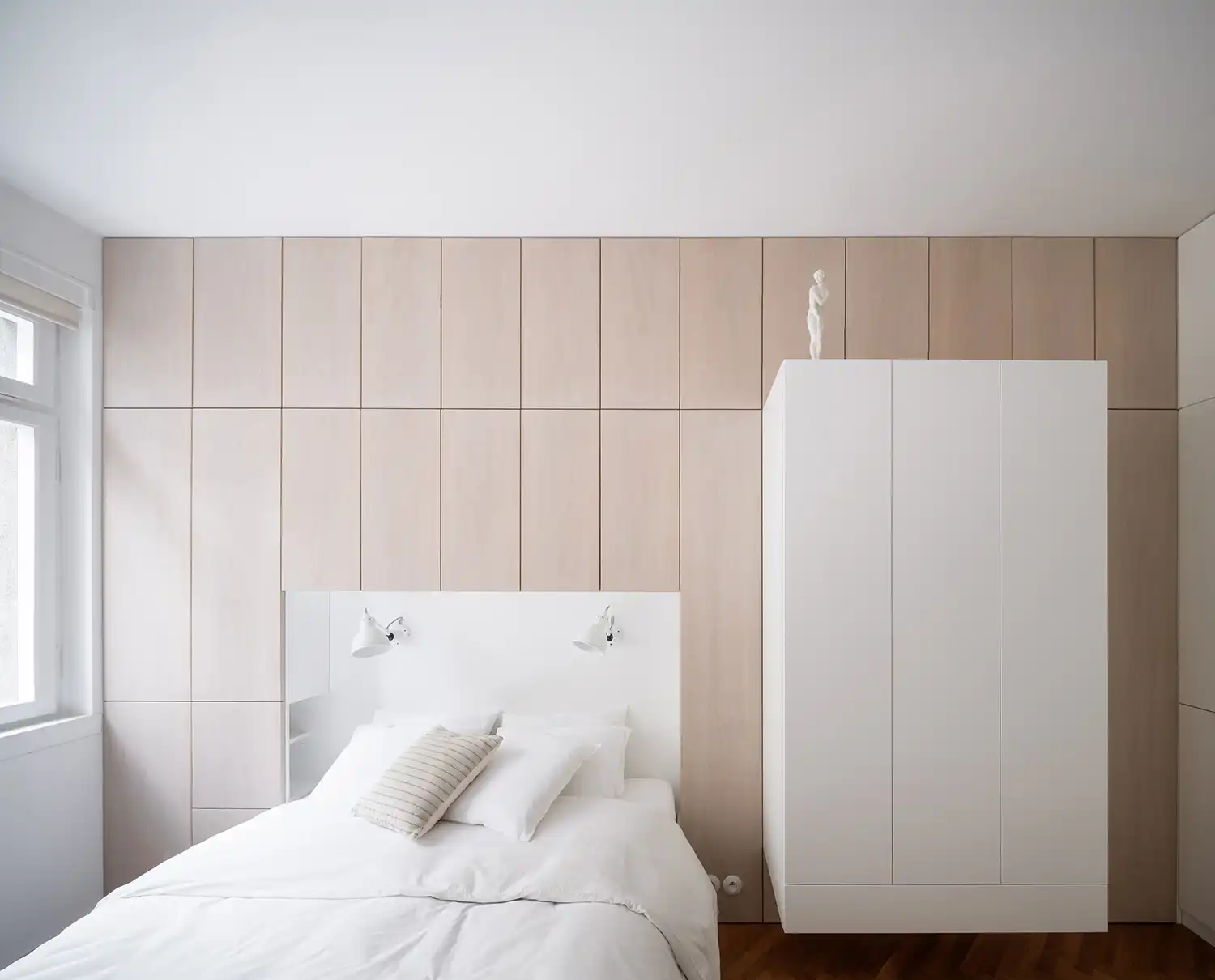
Great care was taken in establishing appropriate combinations of original architectural elements and new, custom-designed built-in furniture. The choice of materials for these new additions, which determine the use and articulation of the spaces, reflects a commitment to quality and timelessness. The dialogue here is not just between eras, but between functionality and aesthetics, ensuring that every element serves both a practical purpose and contributes to the overall elegant interior design. The result is a highly functional space that avoids feeling like a museum, despite the reverence shown to its history.
A subtle, yet telling, detail introduces a welcome touch of levity to the otherwise meticulous design: a playful pink piglet stool positioned in the hallway. This gift from friends serves as a humorous reminder that even architects, who often approach their work with the vigilance described by Alain de Botton, can embrace whimsy. This final touch of humor perfectly encapsulates the apartment’s success: it is a deeply personal and professionally rigorous exploration of residential architecture that ultimately allows its inhabitant to live comfortably, surrounded by history, art, and a refreshing lack of pretension in the heart of Prague.