



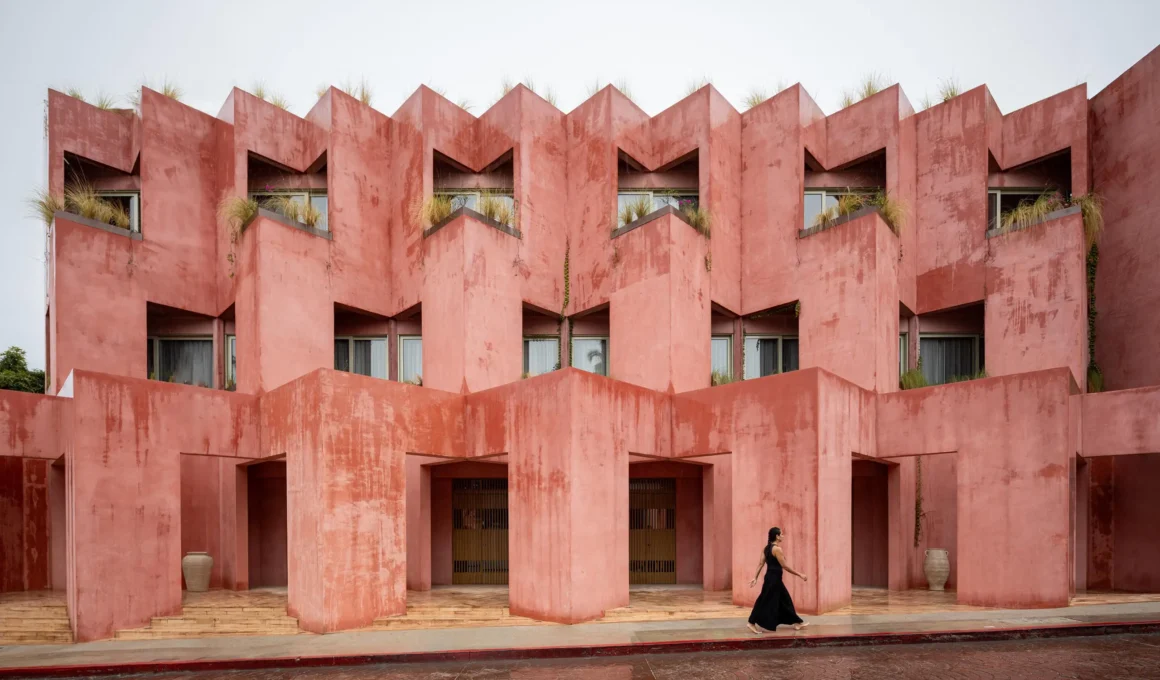
Conceived as a rhythmic extension of the pedestrian fabric by Mexico City-based practice RA!, the Laiva Hotel San Jose by Tasman synthesizes vernacular sensitivity with a stepped, porous volume that prioritizes civic intuition over private isolation.
An Urban Threshold. The project rejects the traditional boundary of the hospitality typology, choosing instead to function as a purely urban gesture. By setting the primary structure back from the street, the creators have carved out a public atrium that breathes with the city. This shaded passage acts as a climatic and social mediator, drawing the natural flow of the street into the building’s core. It is less a lobby and more a curated transition where the heat of the Mexican sun is tempered by a sequence of shadows and cross-ventilation.
Cultural Rhythms. Visually, the building pays homage to the vibrant materiality of its surroundings without falling into pastiche. The staggered levels and interwoven walls are inspired by the geometric repetition of papel picado—the traditional cut paper flags that canopy the local streets. This creates a facade that feels kinetic; as the sun moves, the deep recesses and handcrafted stucco surfaces produce a shifting play of light that mirrors the cultural energy of the Baja Peninsula.
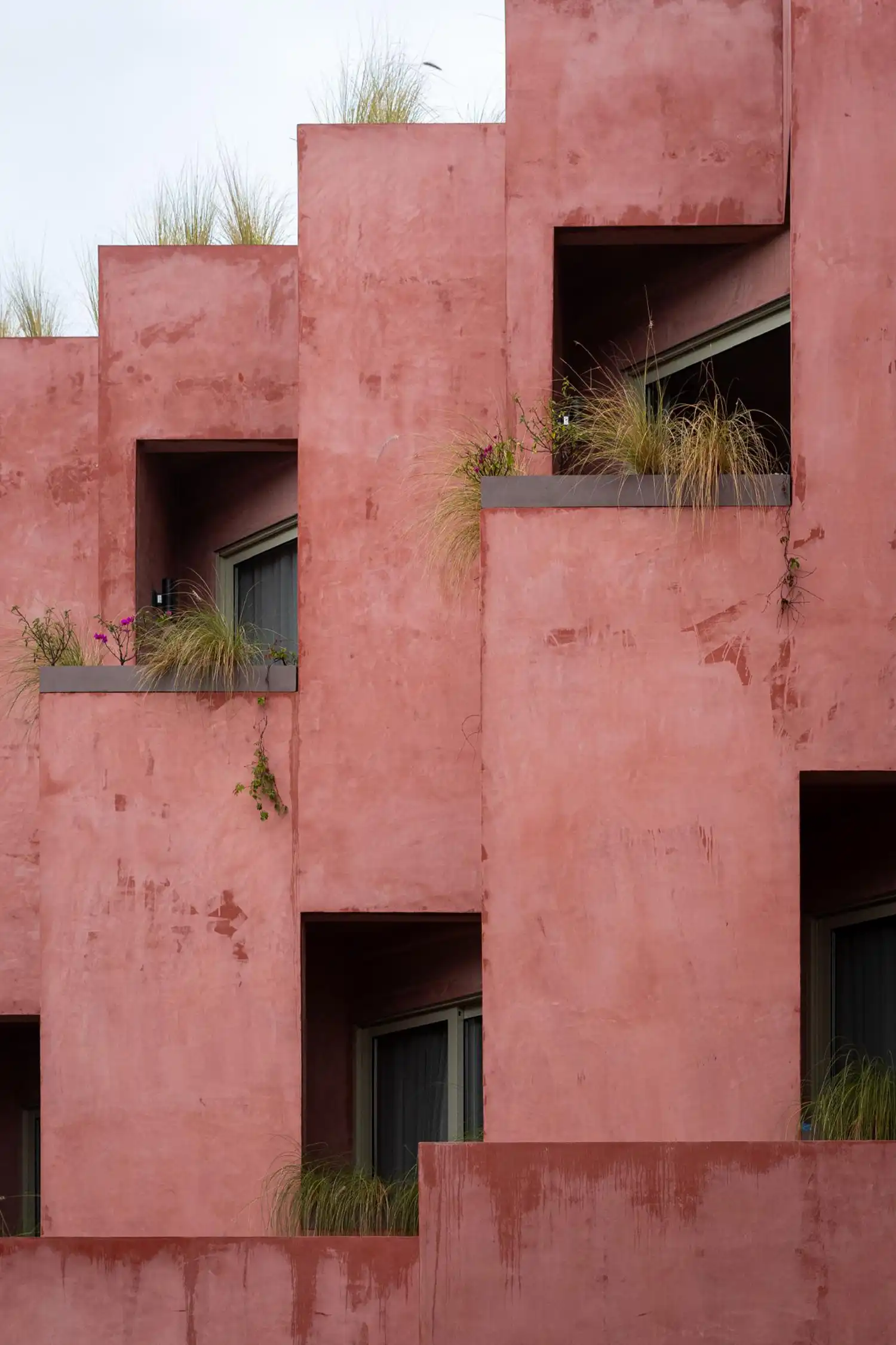
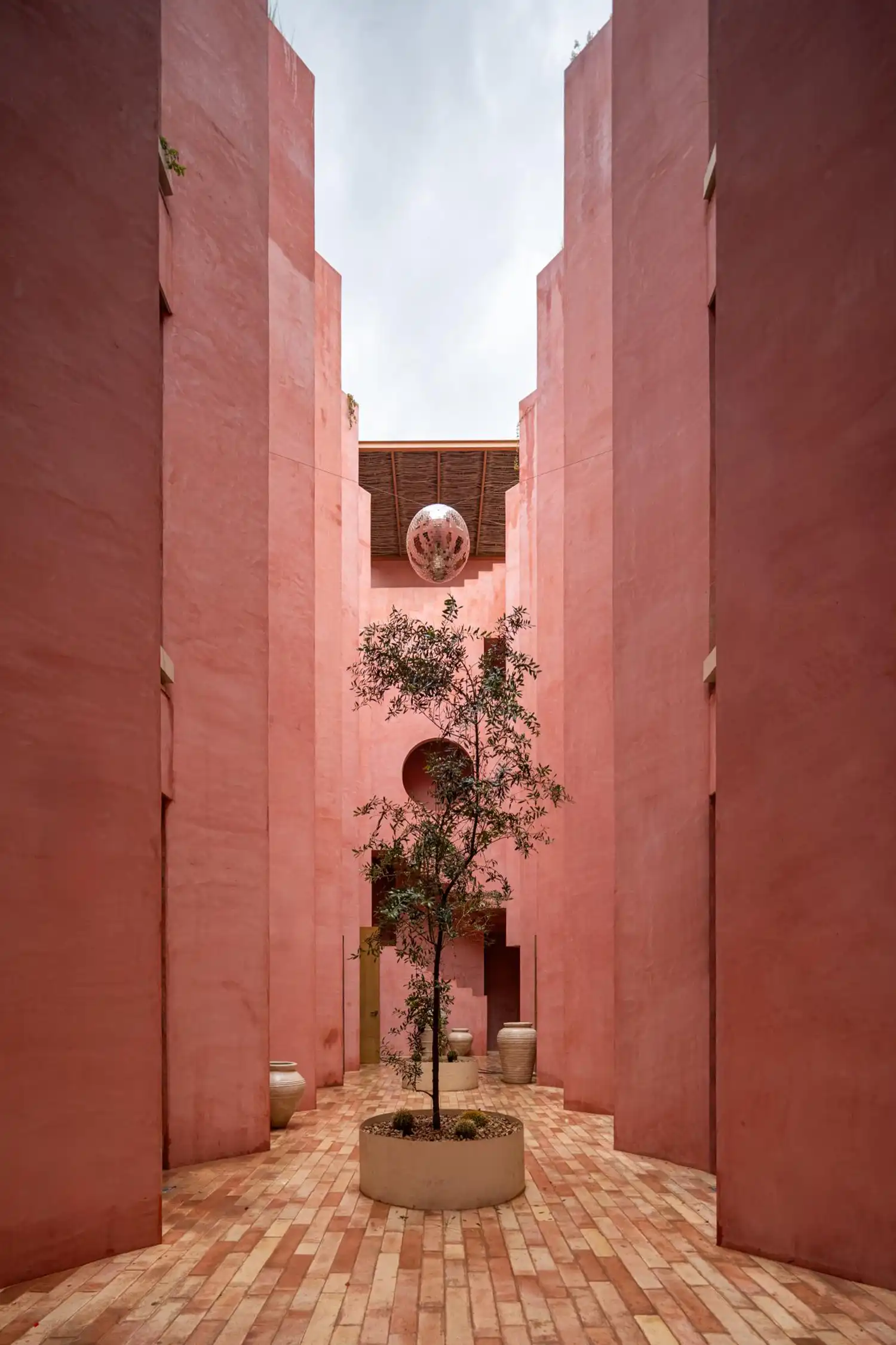
Centralized Serenity. At the heart of the plan lies a vertical central courtyard, a void that serves as the building’s lungs. This internal plaza organizes the circulation of the two levels of guest rooms, ensuring that every guest experience is anchored by natural light and fresh air. The atmosphere within this core is one of controlled luminosity, a sharp but welcoming contrast to the bustling activity of the historic center just steps away.
Geometric Continuity. The staircases and corridors are not merely functional paths but sculptural elements that engage with the central void through precise circular openings. These geometries reinforce a sense of transparency and connection, allowing guests to maintain a visual link with the courtyard at all times. This approach to spatial organization ensures that even the most private areas of the hotel feel intrinsically linked to the broader environmental context.
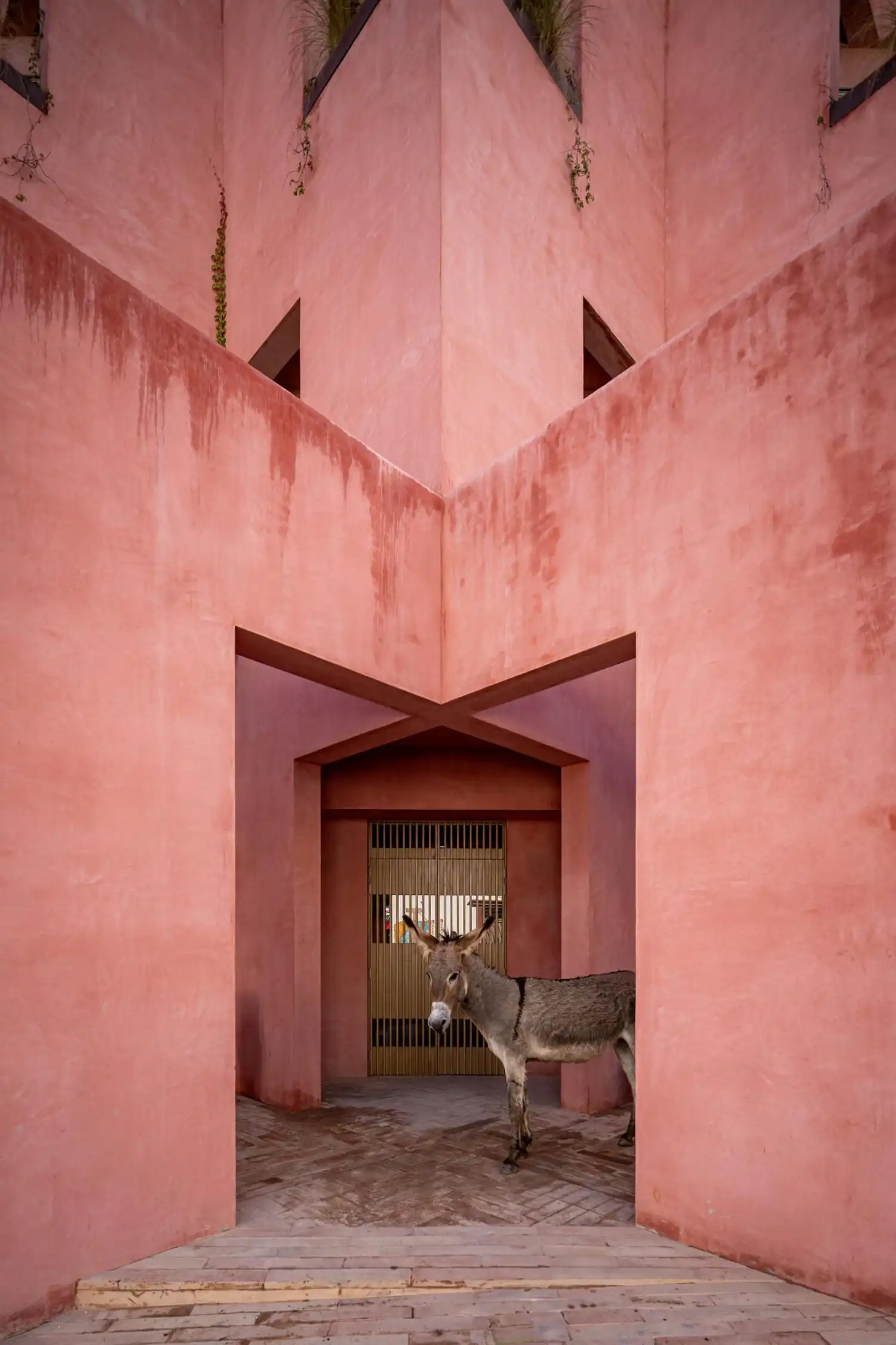
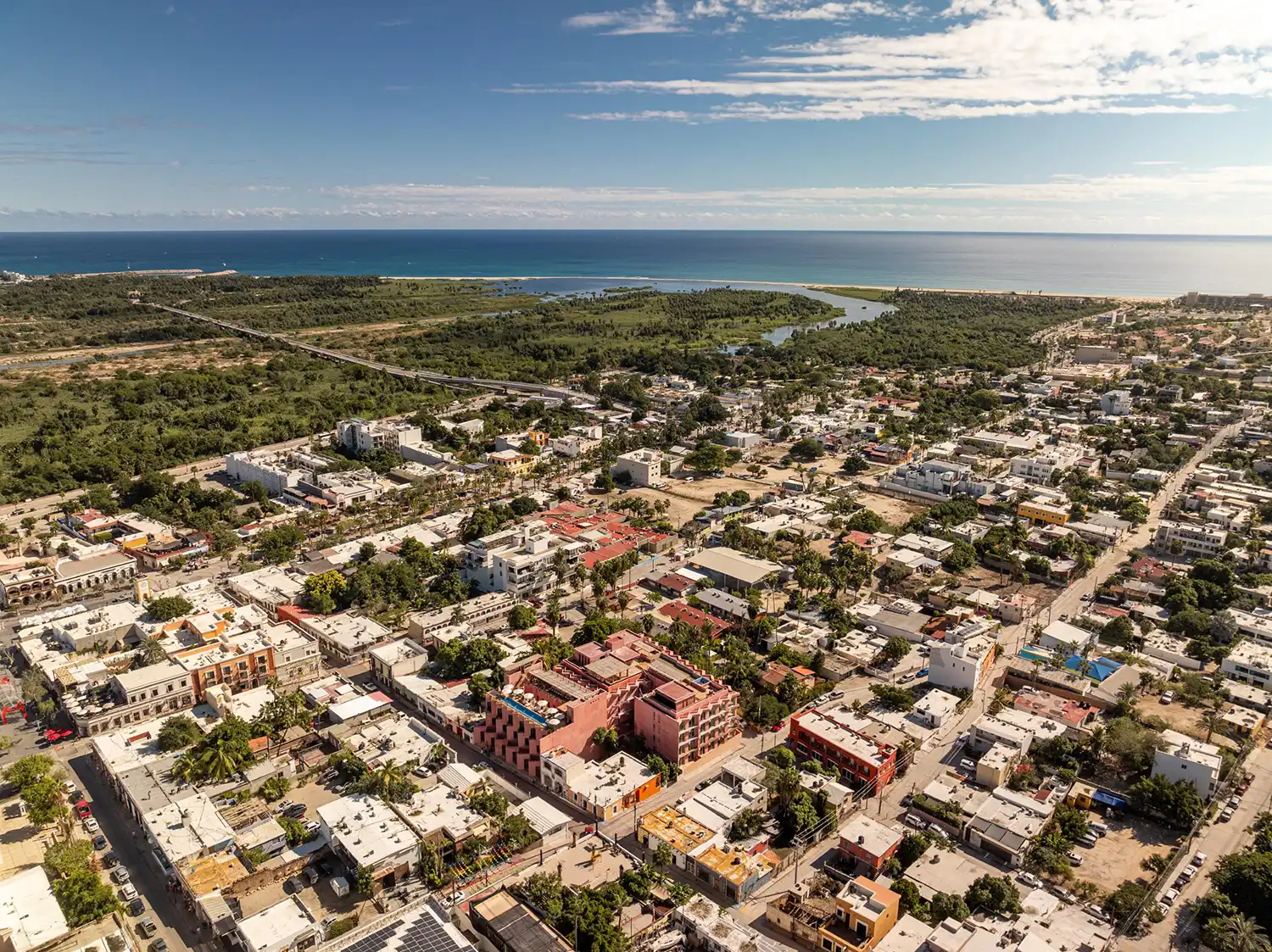
Material Honesty. The choice of a singular, earthy color palette and textured finishes creates a sense of timelessness. This monolithic approach is balanced by the progressive stepping of the volumes, a strategy employed to respect the low-rise scale of the neighborhood. Much like the urban integration seen in the Lamartine Hotel in Mexico City, where a metal mesh skin mediates between the interior and the street, the Laiva Hotel San Jose by Tasman uses its physical mass to negotiate the balance between privacy and the public realm.
Contextual Connectivity. There is a growing movement in Mexican hospitality that favors the “in-between” space—the threshold where the building meets the city. We see a similar exploration of domestic scale and neighborhood character in the Hotel Sevilla in Mérida, which, like this project, utilizes a series of courtyards and terraces to redefine the guest experience. Both projects move away from the idea of the hotel as a sealed box, instead treating it as a porous landscape that honors its specific topography.
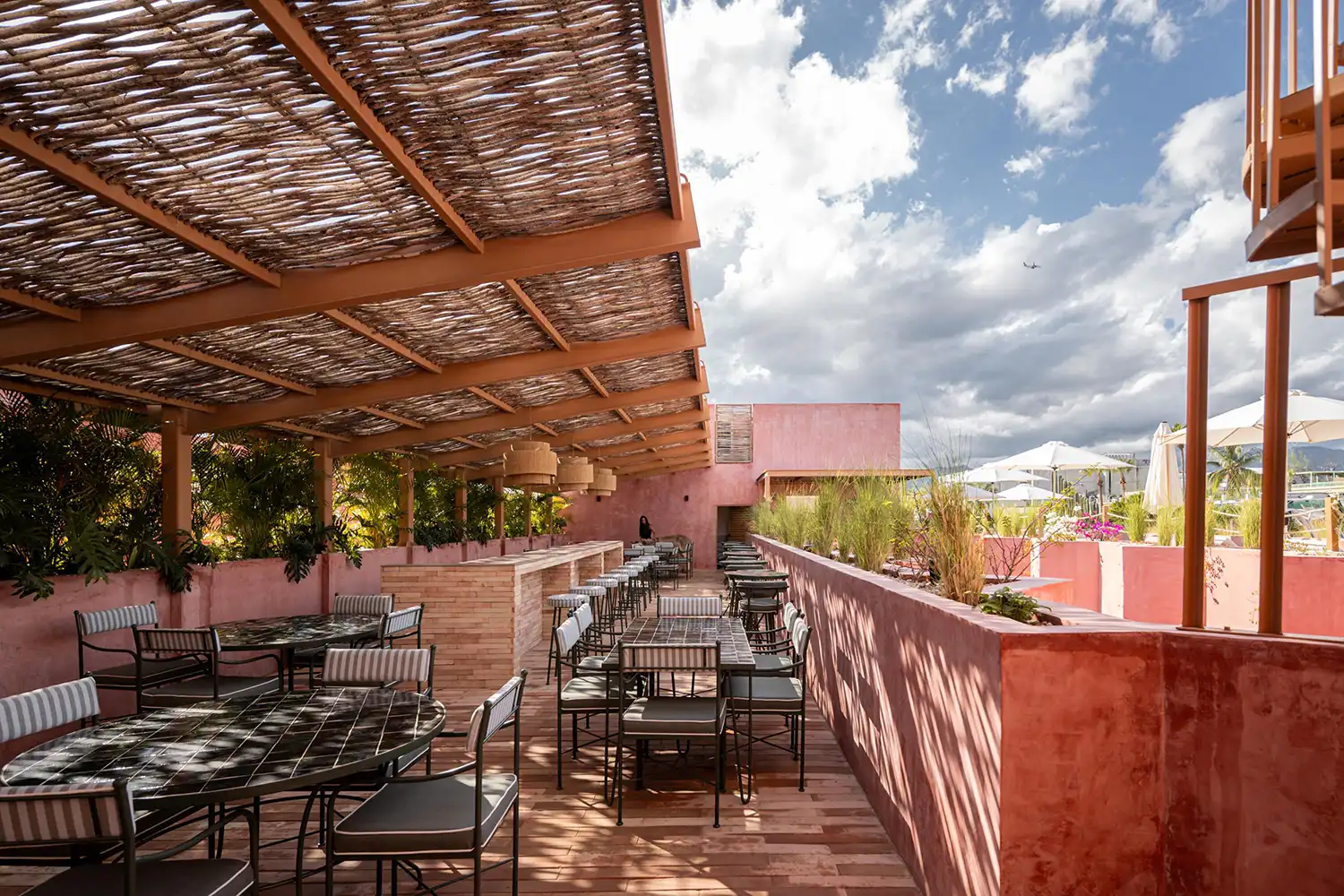
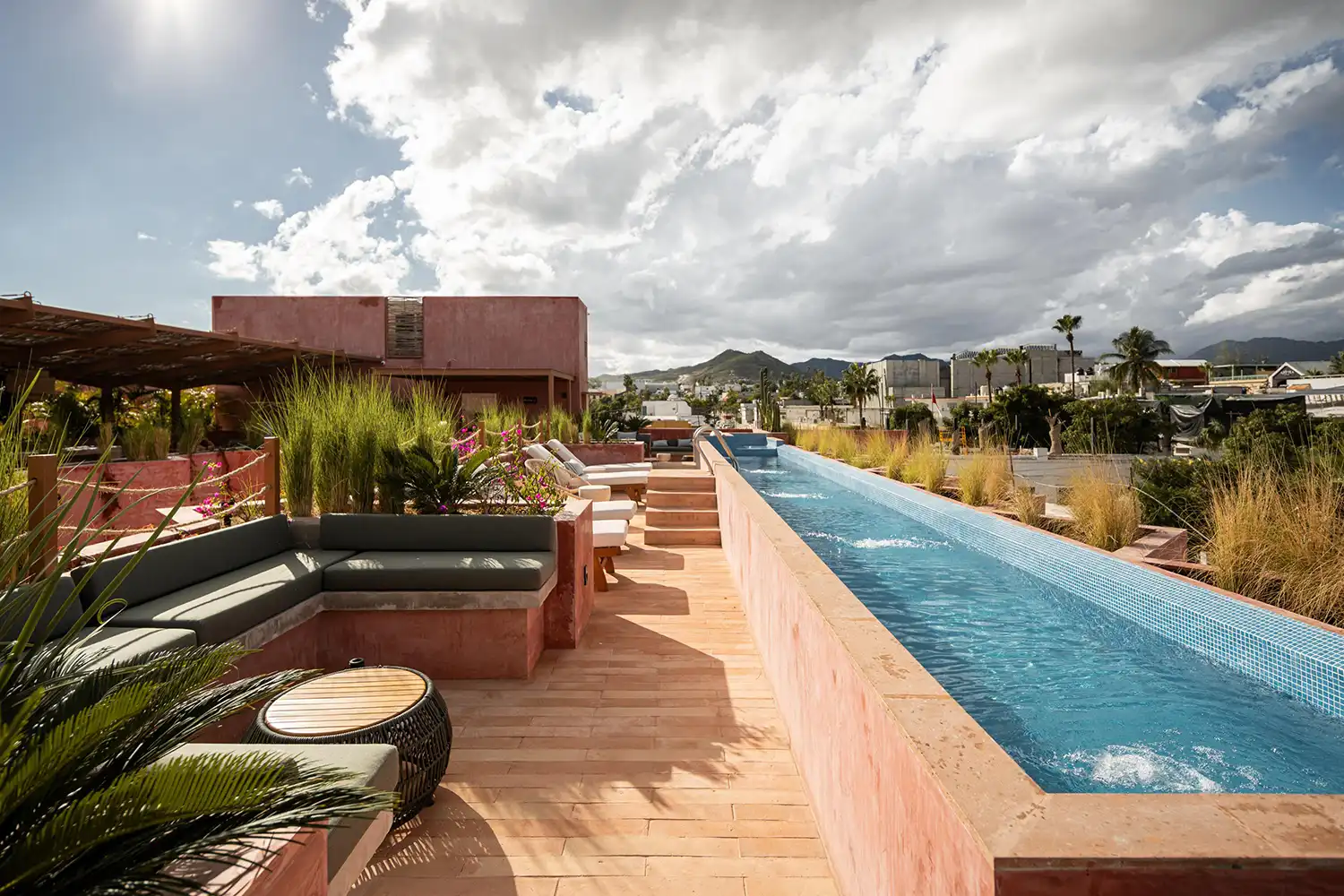
The Rooftop Horizon. The journey through the building culminates on the roof garden, a space dedicated to communal amenities and panoramic views. Here, the layout opens up completely to the urban context, providing a vantage point that places the guest within the wider geography of San José del Cabo. It serves as a reminder that the building is not an isolated object, but a participant in the ongoing history of its site.
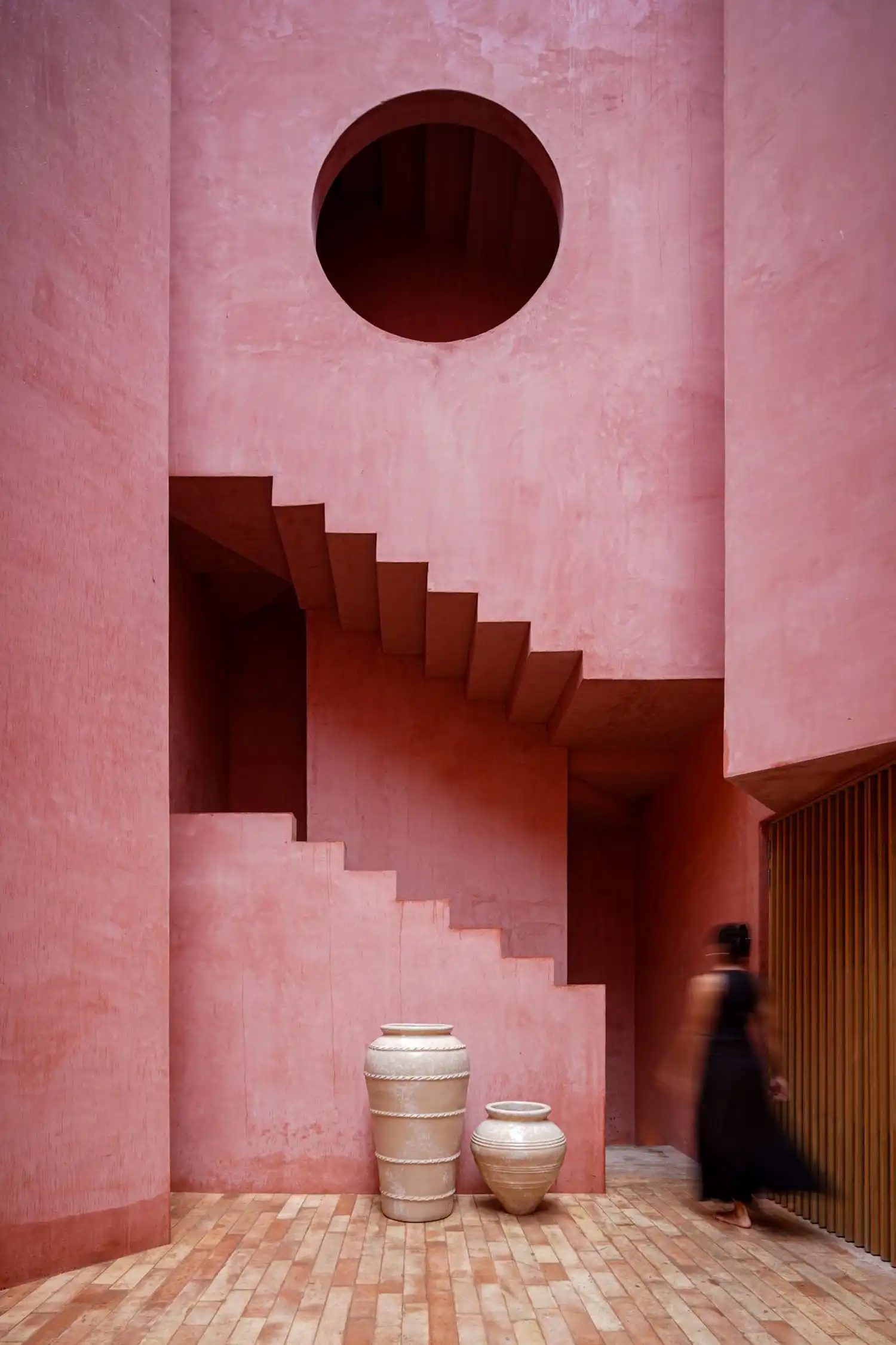
Sensory Materiality. Every corner of the hotel invites a tactile response, from the coolness of the stucco walls to the breeze channeled through the interwoven walls. By prioritizing the sensory experience of shade, air, and light, RA! has developed a hospitality project that feels deeply rooted. It stands as a testament to how contemporary interventions can enhance the walkable nature of a historic district while providing a sophisticated retreat for the modern traveler.