




The dramatic surge in urban property prices has turned the conversion of vacant ground-floor commercial spaces into residential homes from a desperate real estate compromise into one of the most exciting movements in modern architecture. What began as a pragmatic alternative for buyers priced out of traditional apartments has evolved into a sophisticated design trend. These former shops, workshops, and neighborhood offices are being reimagined not just as places to live, but as bespoke architectural statements filled with character, volume, and a distinct urban soul.
The Appeal of the Untraditional: Investment vs. Adaptation
For many urban buyers, the initial driver is purely financial. In high-density cities, buying a commercial space to live inoften presents a much lower entry price per square meter than standard residential units, leading many to ask: is it worth converting commercial property to residential? The answer lies in high-level adaptive reuse.
While the prospect of acquiring generous square footage in central, well-connected neighborhoods is highly attractive, the real value lies in the architectural freedom these structures offer. Unlike cookie-cutter apartments, former commercial units provide a raw canvas—often featuring structural concrete, exposed brick, and high ceilings—that allows architects to craft highly personalized layouts that celebrate the building’s previous life.
Navigating the Technical Threshold: Regulations and Spatial Solutions
One of the biggest hurdles of retail-to-residential conversions lies in strict local building codes. Understanding how to convert a shop into a house requires meeting specific legal standards regarding ceiling heights, ventilation, and natural light (often calculated through strict window-to-floor area ratios).
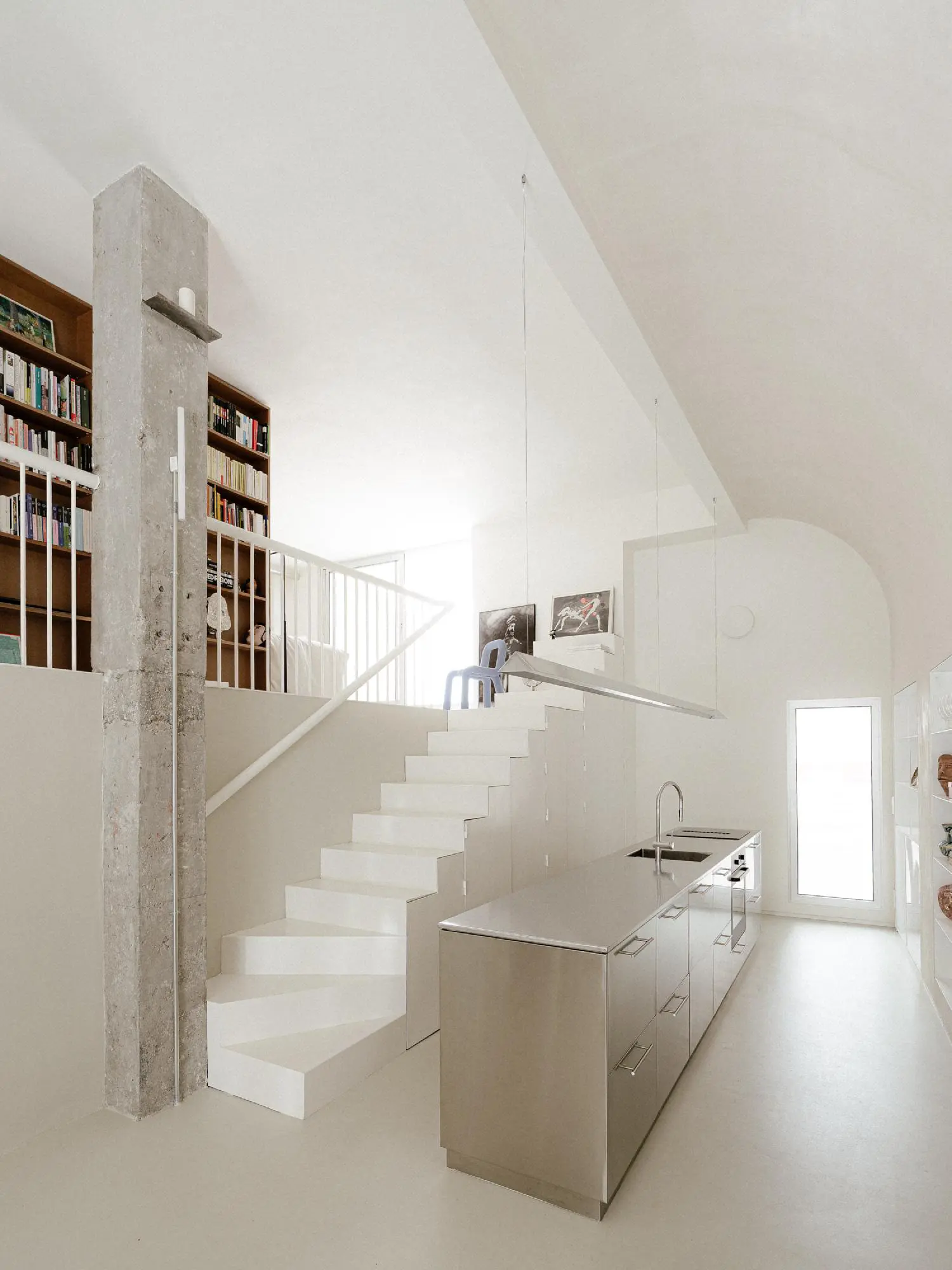
Where traditional layouts fail, modern architecture thrives by introducing innovative spatial strategies. This is particularly visible in projects where architects must work within highly compact footprints rather than massive, industrial warehouses where the scale of investment often detaches itself from residential reality. To maximize efficiency in restricted layouts, designers often treat the interior with the compact logic of a ship’s cabin, using integrated, custom-built furniture modules to optimize every single square inch (as seen in the Bonito compact home conversion in Madrid).
Squeezing the Vertical Dimension: The Mezzanine Strategy
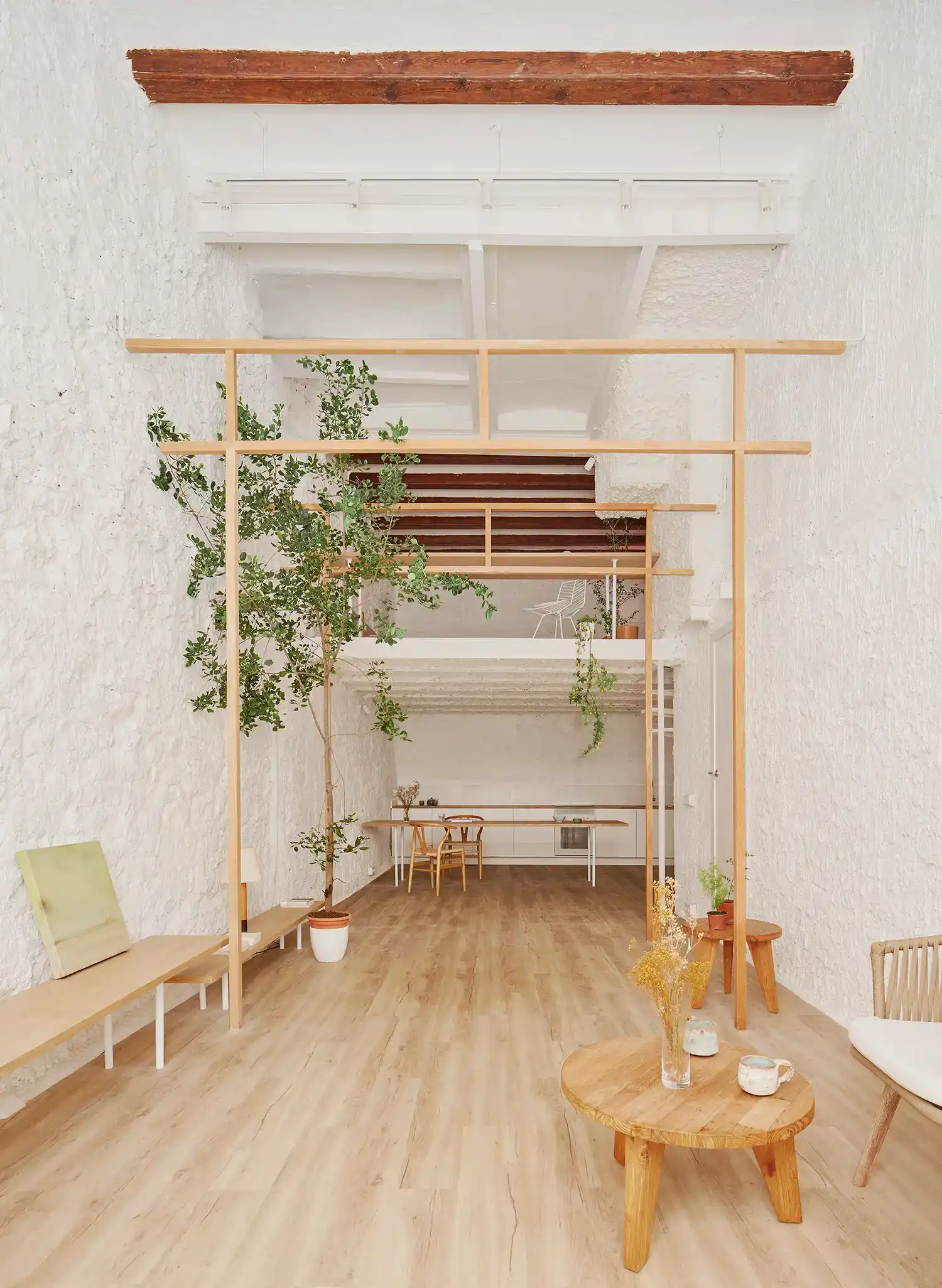
Since storefronts and old workshops often feature double-height ceilings but limited floor areas, architects frequently introduce lightweight steel or timber structures to organize the space vertically. This allows private zones like bedrooms or study areas to float above the open-plan social spaces, serving as excellent inspiration for loft open space interior design.
Rather than letting the mezzanine block the visual flow, contemporary design uses architectural rhythms to diffuse light. Introducing structural timber frames or light partitions can support the vertical mezzanine levels while acting as a visual guide that allows natural light to penetrate throughout the entire depth of the home (a technique beautifully executed in the El Born Loft in Barcelona).
The Privacy Paradox: Living Behind the Glass
Perhaps the most fascinating challenge of converting a ground-floor shop is the relationship with the street. How do you live behind a massive window designed to showcase merchandise without feeling like you are on display in an aquarium?
Rather than blocking out the street with heavy, dark curtains, architects use layered, creative filters that protect the domestic sphere while letting light flood in. When looking for ways on how to design a ground-floor shop conversion, establishing these layered thresholds is essential.
This delicate balance of ground-floor apartment privacy is achieved by creating physical and visual screens using warm, tactile materials. By mediating the transition from the street entrance to the heart of the home through strategic interior layouts and internal “filter” zones, architects can create a deeply intimate atmosphere that feels entirely disconnected from the sidewalk just a few steps away (such as the intimate space created in Casa Egle in Caserta).
Homes with an Identity
When we look at the landscape of modern housing, so much of it feels standardized and detached from its surroundings. Ground-floor conversions offer the exact opposite. They are deeply rooted in the history of the neighborhood, sitting flush with the sidewalk and the pulse of the city.
By preserving the industrial bones, the massive portals, and the generous volumes of their commercial past, these spaces emerge as authentic architectural statements. They prove that when limitations of light, privacy, and layout are met with creative, uncompromising design, the resulting home is far superior to any conventional apartment. It becomes a space with a history, a purpose, and a brilliant second life.