

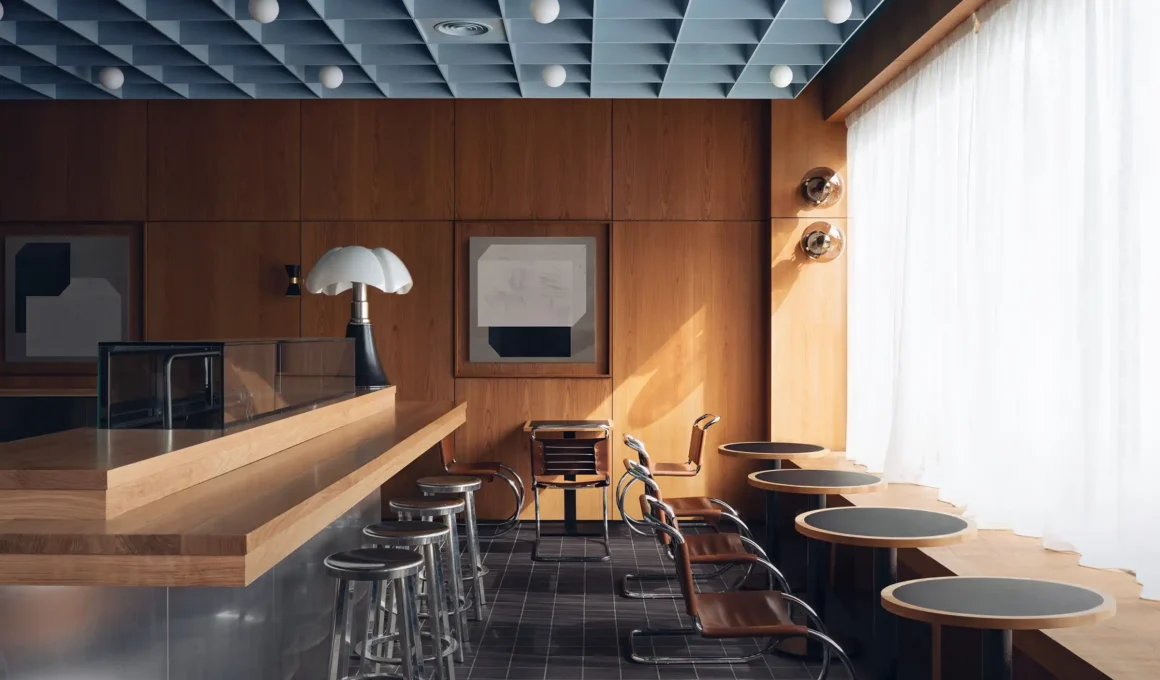
Retro-futurism has evolved from niche nostalgia to a pervasive design philosophy, redefining how we shape spaces, vehicles, and experiences. This movement—where past visions of the future collide with cutting-edge technology—now drives innovation across industries, blending emotional resonance with forward-thinking functionality. As architects reimagine space-age homes, car manufacturers revive angular automotive silhouettes, and hotels deploy sensory storytelling, retro-futurism emerges as the ultimate rebellion against sterile modernity.
Renault 4 Savane 4×4 Concept Debuts at Roland Garros: A Retro-Futuristic Off-Road EV
Automotive: The Resurrection of Angular Icons
The automotive sector is witnessing a boxy design renaissance, with manufacturers mining 1970s archives to create vehicles that fuse vintage aesthetics with electric propulsion. The Hyundai N Vision 74 epitomizes this trend, directly channeling the 1974 Pony Coupe Concept’s sharp lines and wedge profile, but with hydrogen-electric hybrid technology. Similarly, the Ford Bronco and Mercedes G-Class leverage their heritage—flat roofs, squared-off edges, and round headlights—while integrating AI-driven connectivity and autonomous capabilities. This isn’t mere replication; it’s a critique of today’s homogenized curves. As one designer notes, these designs “clash elegantly with modern vehicles’ sweeping silhouettes,” offering visual freshness in an era of aerodynamic sameness 1. Under the hood, software-defined vehicles (SDVs) enable over-the-air updates, allowing a 1970s-inspired coupe to evolve like a smartphone.
The BMW CE 02 x Vagabund: A Retro-Futuristic Electric Scooter
Architecture: Cosmic Dwellings and Neo-Space Age Interiors
Residential architecture is embracing California Space Age aesthetics, where homes resemble “cinematic 1970s apartments” with sunken conversation pits, elliptical windows, and biomorphic furniture. Celebrities like Kim Kardashian and tech moguls commission properties featuring Pierre Paulin’s Dune Ensemble seating—sculptural, planet-like forms that evoke lunar landscapes. This resurgence isn’t accidental: With NASA’s Artemis program aiming for 2027 moon landings, architects like Peng Zheng fuse Googie architecture’s atomic-age optimism with smart-home technology. Think brass-accented staircases echoing 2001: A Space Odyssey, paired with AI-controlled climate systems. Hospitality spaces like Loro Piana’s Milan Design Week installation amplify this with cuboid wall-lights and glossy red interiors, transforming lobbies into interstellar waystations.
Hospitality: Sensorial Time Travel and Legacy Rebirth
Luxury hotels are mastering evocative design—curating spaces that manipulate scent, sound, and texture to trigger nostalgia. Wimberly Interiors’ Paolo De Simone describes layering “polished marble, plush textiles, and signature fragrances” to craft narratives where guests “become part of a story”. Historic resorts like Lake Como villas now feature Modular Bellini sofas alongside AI concierges, blending 1970s glamour with predictive analytics that preempt guest requests. Crucially, this isn’t kitsch; it’s critical nostalgia. As Margaret McMahon notes, properties balance legacy preservation with contemporary luxury, using local artisan collaborations to embed cultural authenticity. For example, Fauchon l’Hotel Paris lets guests design menus—a retro-futurist twist on personalized service.
Severed Spaces: Decoding the Chilling Architecture of Control in Apple TV+’s “Severance”
Product Design: Tactile Tech and “Punk” Subgenres
Product designers are fragmenting retro-futurism into distinct “punk” movements, each tied to a specific era:
Atompunk (1950s–60s): Reissues of Eero Aarnio’s Ball Chair with embedded wireless chargers and voice-activated controls
Dieselpunk (1920s–40s): Steampunk’s grittier sibling, featuring typewriters with Bluetooth keyboards and vacuum tubes reimagined as smart speakers
Y2K Redux: Translucent gadgets echoing 1999 iMacs, like SMEG’s pastel kitchen appliances with touchscreen interfaces
UX leans into cassette futurism, where apps like BeReal use CRT monitor-inspired glitch art and VHS filter transitions to humanize digital interactions. Meanwhile, thumb-friendly navigation prioritizes one-handed usability—a nod to 1980s ergonomic pragmatism.
The Psychology: Why Now?
Three cultural currents fuel this revival:
Techno-Disillusionment: Amid AI anxiety and climate crises, retro-futurism offers comforting, tangible alternatives to an algorithmic present. The Hyundai N Vision 74’s manual dials (paired with hydrogen tech) provide tactile reassurance.
Generational Reclamation: Gen Z repurposes Y2K’s “failed futures” as ironic commentary. Think neo-vaporwave palettes (electric blues, magentas) in branding—a critique of 1999’s unfulfilled utopias.
Sustainable Circularity: Upcycled materials dominate: Mercedes G-Class interiors use reclaimed leather, while hotels incorporate artisanal upcycled furniture to reduce carbon footprints.
Tomorrow’s Retro-Futurism
The movement is already evolving:
Climate-Punk Architecture: Solar-paneled domes draped in solarpunk vines, merging 1950s atomic motifs with bioremediation
Deep-Time Relics: Designers like Eason Zhu conceptualize iPhones as “future archaeological fragments,” encasing them in corroded brass casings
Meta-Retro Retail: Virtual stores mimicking 1990s GeoCities sites, where holographic assistants guide VR shoppers
As Peter Martin, author of Space Age Design, observes: “Retrofuturism weaponizes faux nostalgia to rebuild tomorrow using yesterday’s blueprints”. For creatives, it’s a call to fuse audacity with empathy—proving that in design, time is the ultimate playground.