



For musicians, athletes, surgeons, and craftspeople, the pursuit of mastery is a lifelong journey. Years of dedicated practice hone skills to an exceptional degree, yet a frustrating plateau often emerges, a point where further improvement seems impossible. Traditional wisdom dictates more practice, but this often leads to diminishing returns and increased risk of injury. Now, researchers at Sony Computer Science Laboratories (Sony CSL) may have found a key to unlocking further potential, utilizing robotics to redefine the very limits of human skill.

Their groundbreaking research, published in Science Robotics, focuses on a novel training method using an exoskeleton robot. This device allows pianists to experience complex, high-speed finger movements far beyond their current capabilities. The robot moves each finger independently, executing sequences that a human could not physically perform. The results are remarkable. Pianists who trained with the robot showed significant improvements in their playing, even breaking through previously impenetrable plateaus. Intriguingly, the benefits weren’t confined to the hand that used the robot; the untrained hand also showed improvement, suggesting a deeper neurological shift.
This discovery challenges the conventional understanding of skill acquisition. It suggests that the “ceiling effect” – the point where skills seem to stagnate – may not be a true limit, but rather a barrier imposed by the limitations of traditional training methods. By experiencing movements beyond their current capacity, the pianists’ brains appear to rewire themselves, opening up new pathways for skill development.

The research team, led by Shinichi Furuya, meticulously investigated the mechanisms behind this breakthrough. They discovered that simply moving the fingers quickly or in complex patterns wasn’t enough. The key was the combination of both speed and complexity, creating a novel sensory-motor experience. Further tests ruled out improvements in muscle strength or basic dexterity, pointing to a more profound change within the central nervous system. Brain scans using transcranial magnetic stimulation revealed that the motor cortex, the area responsible for hand and finger movements, underwent plastic changes, adapting to the complex movements experienced through the robot. The brain essentially learned to execute movements it had never performed before.
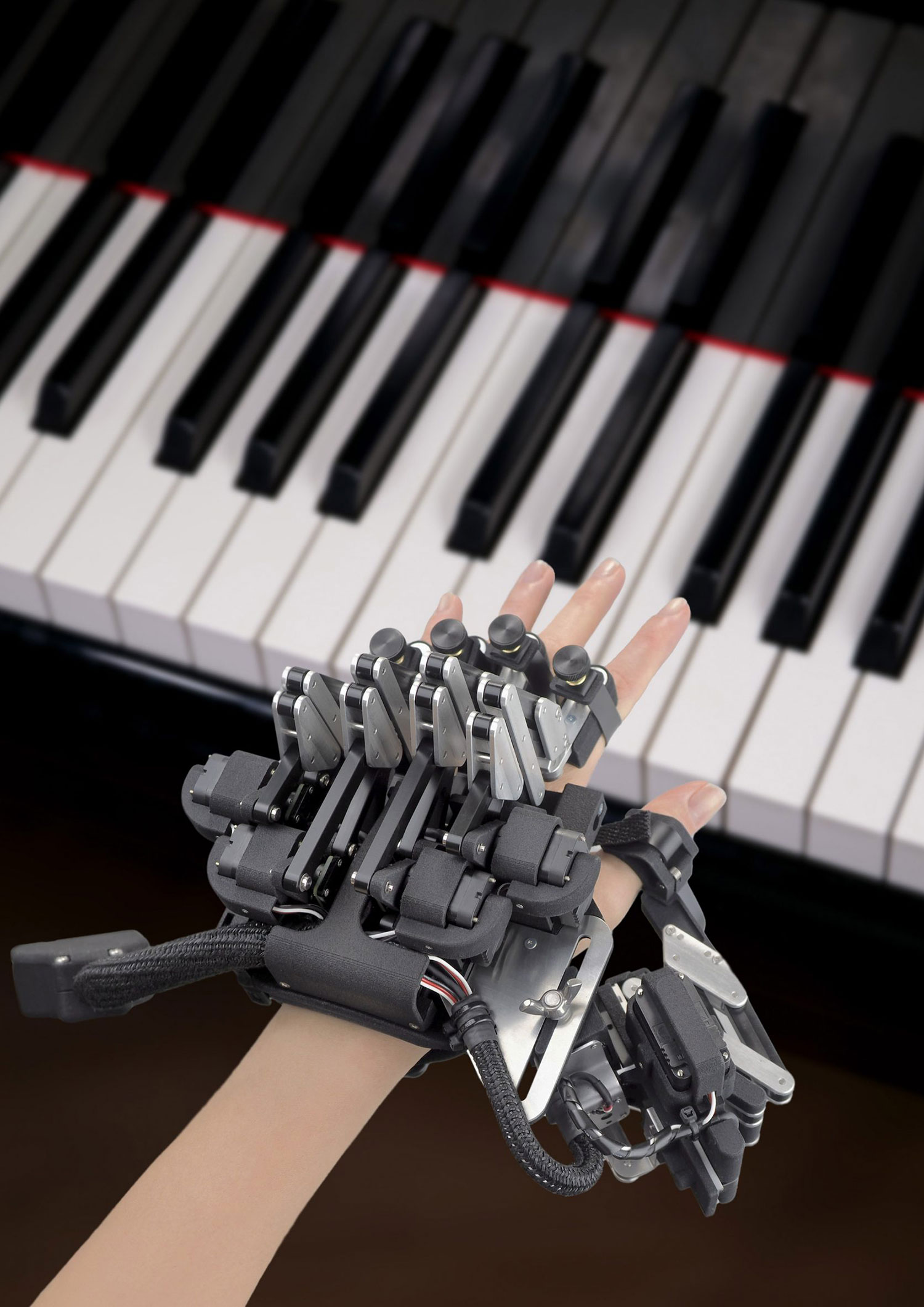
This research has profound implications, not just for musicians, but for anyone seeking to refine their skills. It suggests that targeted training with robotic assistance could unlock hidden potential in a wide range of disciplines, from sports and surgery to traditional crafts. Moreover, it offers a new perspective on the role of technology in human development. Rather than simply augmenting existing abilities, robotics can be used to push the boundaries of what’s possible, leading to the development of unprecedented human skills.
Beyond the immediate applications, this research opens up exciting new avenues for understanding the complexities of learning and brain plasticity. It underscores the importance of quality over quantity in training and offers a scientific basis for developing more effective and targeted training programs. In the long term, this could lead to a revolution in education and skill development, freeing individuals from the constraints of their perceived limitations and empowering them to achieve their full potential. The future of skill acquisition may well lie in the hands – and fingers – of robots.