



Society is more conscientious than ever. Sustainability. Inclusivity. Fiscal responsibility. Safety.
To this last point, there are more threats to commercial and residential properties than ever before. Natural disastersamid the unprecedented challenges wrought by climate change. Structural and stability considerations as buildings become increasingly mixed-use, with heavy machine traffic to boot. Human tragedy in which facilities are compromised by the heartbreaking actions of nefarious suspects. Technological breaches and data concerns.
Clearly, architects need to use every trick in the toolbox to meet these diverse demands. Increasingly, this means embedding safety by design principles into projects from the earliest conceptual phases rather than treating safety as a final compliance checklist.
The exciting news is that there are a variety of building materials that can give them a head start. Keep reading as we explore the ways that designers can conform to modern safety standards without sacrificing aesthetics.
Composite Roofing: Premier First Line of Protection
Many residential properties employ an asphalt or cedar shake roof. The reason? They tend to be among the best options for balancing the lines between economy and aesthetics. The trouble lies with durability.
Asphalt can begin to raise and blister in as little as 10 years when exposed to excessive UV or precipitation. Wood shakes dry and crack without meticulous cleaning and preservative application. This is less than ideal, especially in the era of extreme weather events.
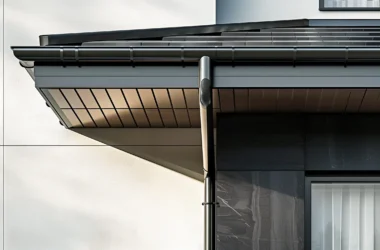
As such, architects and designers are increasingly exploring the benefits of innovative composite roofing. It offers fire and moisture resistance similar to metal with a far wider range of aesthetic choices. These performance attributes help projects align with modern commercial building standards that increasingly emphasize fire resistance, climate resilience, and lifecycle durability. Lightweight and easy to work with, composite roofing can be used for hip, gable, or any other roofing style for premier design congruency.
Bamboo Decking: Rustic Fire Resistance
Functional exteriors are all the rage in modern design. Occupants want an area where they can escape their daily four walls. It is borderline essential for professionals who are “plugged in” to online business from dawn to dusk.
A finished deck is a straightforward means of accomplishing this. A smooth transition between interior and exterior spaces, decks are much easier to use than detached exterior hangouts.
The problem? Most traditional decking (cedar, redwood) is quite fire prone. Without regular staining, it will dry out and be a prime target for errant sparks. When exploring more robust class A fire resistant decking options, many people turn to composite deck boards. While definitely better in terms of fire resistance than natural timber, composite decking can give off a rather “synthetic” aspect that not all residents love.
As such, consider innovative bamboo deck boards. Thermally treated for elite stability, bamboo decking is highly resistant to fire and moisture absorption. It also comes with the classic rustic charm of wood that so many love in their outdoor hangouts.
Low-Profile Railings: Fall Protection with Architectural Congruity
Railings have always had a role in commercial design. Can’t have a multi-story facility without them. However, they have come a long way from basic grab bars and fall protection.
The best commercial railing systems complement design schemes without sacrificing their primary role in fall protection. Hardwood railings work well in professional office spaces that don’t see heavy amounts of traffic. Black metal railings provide stunning elegance for areas that want both modernity and durability.
With that said, low-profile options (glass, tensioned cable) are among the most popular choices in commercial buildings. Why? They provide unencumbered sight lines for seamless integration with the open concept. Fall protection. ADA compliance. Flowing daylight. Crystalline elegance. Low-profile railings have it all.
Quartz Countertops: Low Maintenance Hygiene
Countertops unsafe? Isn’t that a bit of a stretch?
Well, anyone can fall and gash their head on sharp countertop edges. Or have an accident as a result of improper installation of heavy products. But the real threat lies in the form of bacterial contamination. As countertops age, porous materials such as granite and marble begin to lose their resistance to moisture absorption. This is especially true if they have not been regularly sealed and maintained.
When this happens, toxins and bacteria may nest. Mold may form. Given the recent salmonella scandal from Costco chicken, this is not a consideration to take lightly. Therefore, choose engineered quartz countertops for unmatched protection from moisture-related damage. Fabricated in a solid, one-piece design, they do not need to be sealed to maintain their stain resistance. Easily cleaned with a wipe of a rag, they offer the same stately stone aspect of marble and granite with fewer of the ongoing maintenance concerns.
Recycled Denim: A Leader in Healthy Insulation
Human-centered design is a powerful framework in the contemporary design industry. Architects and designers consider the ways that the built environment will promote the daily rituals of its human occupants. They consider how it will meet their physiological and psychological needs from the very beginnings of the design process.
One top consideration for human-centered design is indoor air quality. Many paints and insulation materials are known for their potential to off-gas. The toxicity can trigger a variety of respiratory episodes for occupants. This makes recycled denim a top choice among healthy insulation materials. In addition to its non-toxicity, it is an extremely quiet insulation product, making it a premier option for tranquil, productive interiors.
Design with the Big Picture in Mind for Safe and Stunning Spaces
Modern structures wear a lot of hats, not the least of which is safety. From composite roofing to denim insulation, consider any of the materials listed above for design that stuns safely. For more of the latest trends in contemporary architecture, explore the content at urdesign for ideas and inspiration today!
AUTHOR
Natalie Akins is a freelance writer that loves sharing her knowledge and expertise in interior design and remodeling. She also has a background in the Hospitality and Real Estate Industry. She lives in her hometown of Austin, Texas where she enjoys spending time with her husband and decorating with her children. Natalie’s work as a freelance writer can be found on Building Product Advisor, a construction industry resource site.