


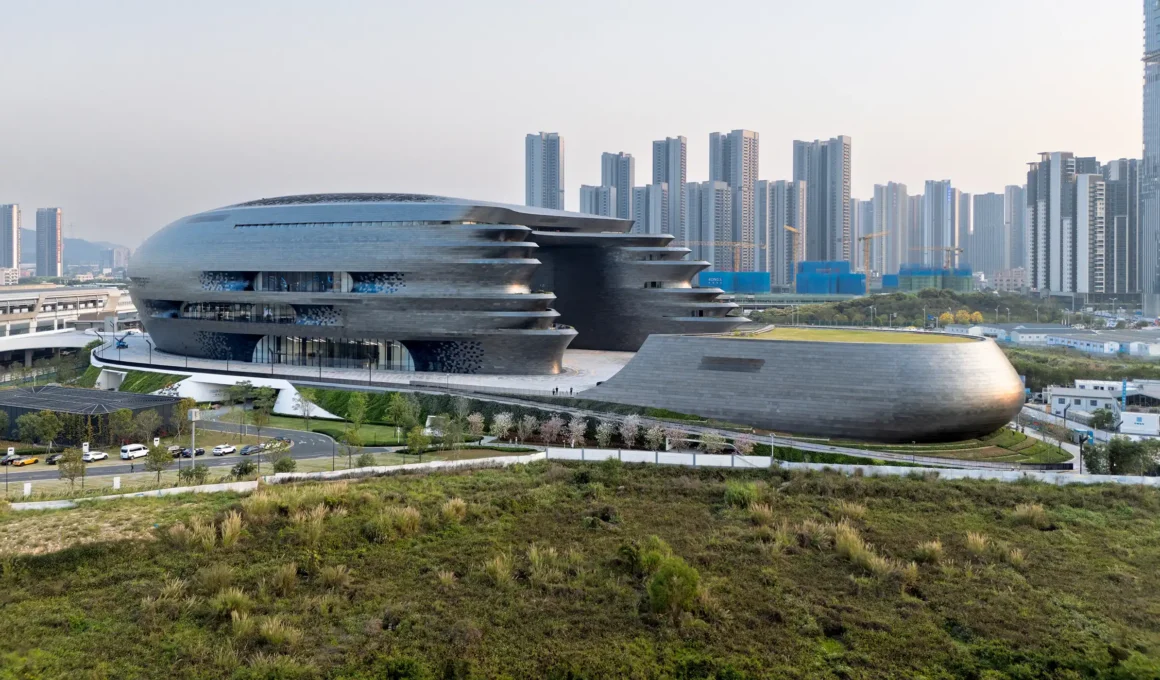
The Shenzhen Science & Technology Museum, designed by Zaha Hadid Architects, has officially opened in the Guangming District, marking a bold new landmark for China’s Greater Bay Area. As a hub for scientific innovation and technological advancement, the museum showcases groundbreaking research while fostering collaboration with the region’s leading tech industries, universities, and research centres.
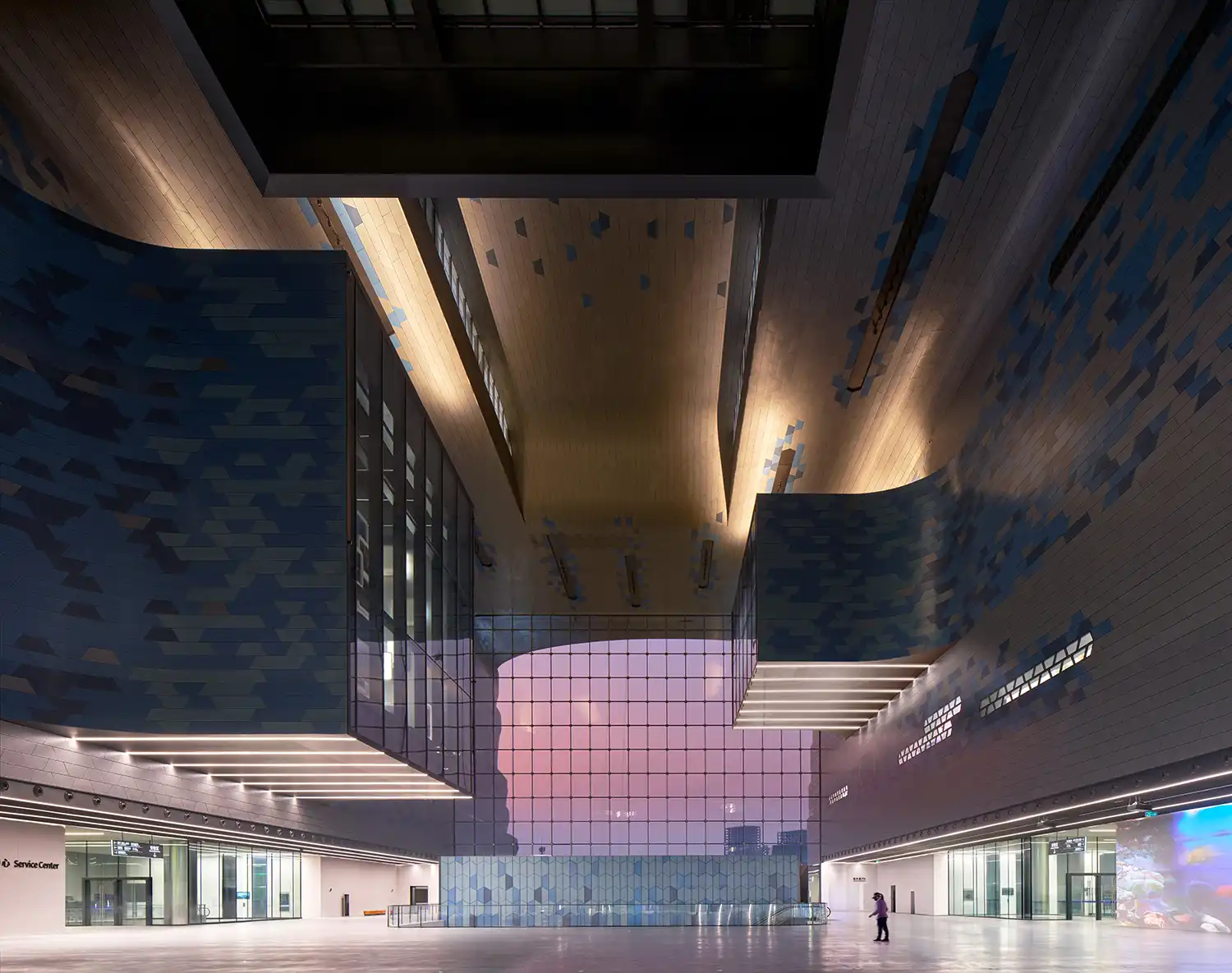
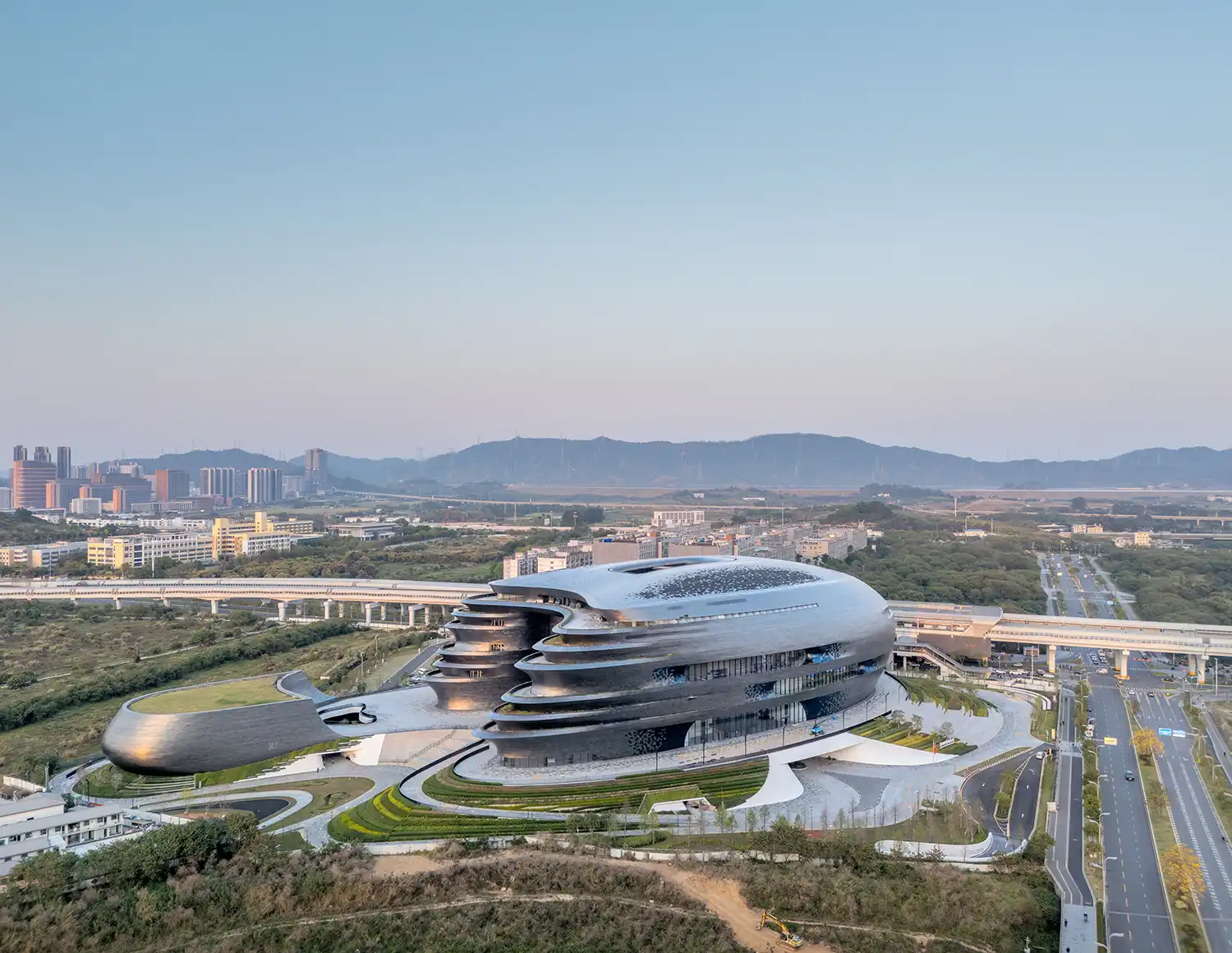
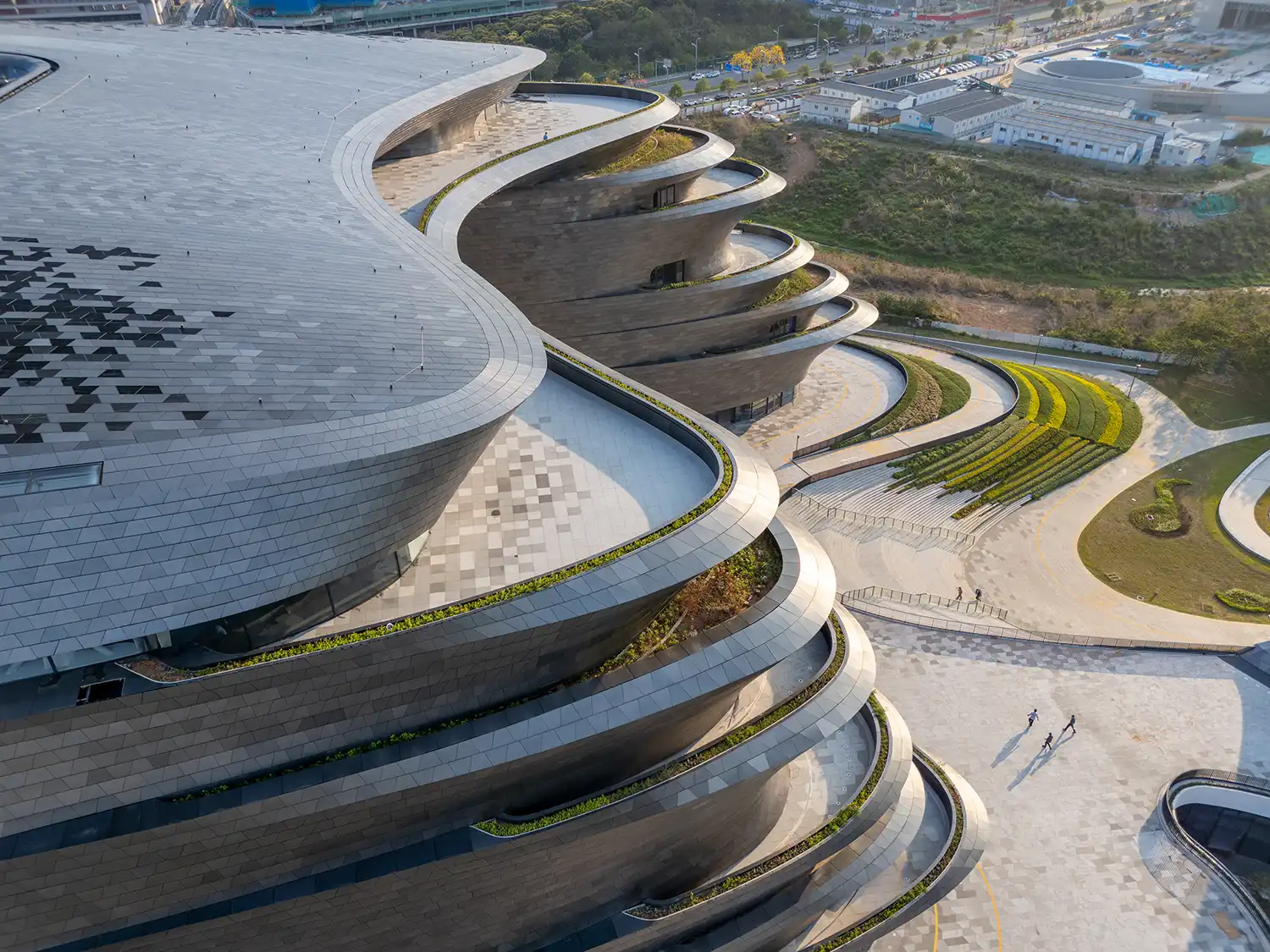
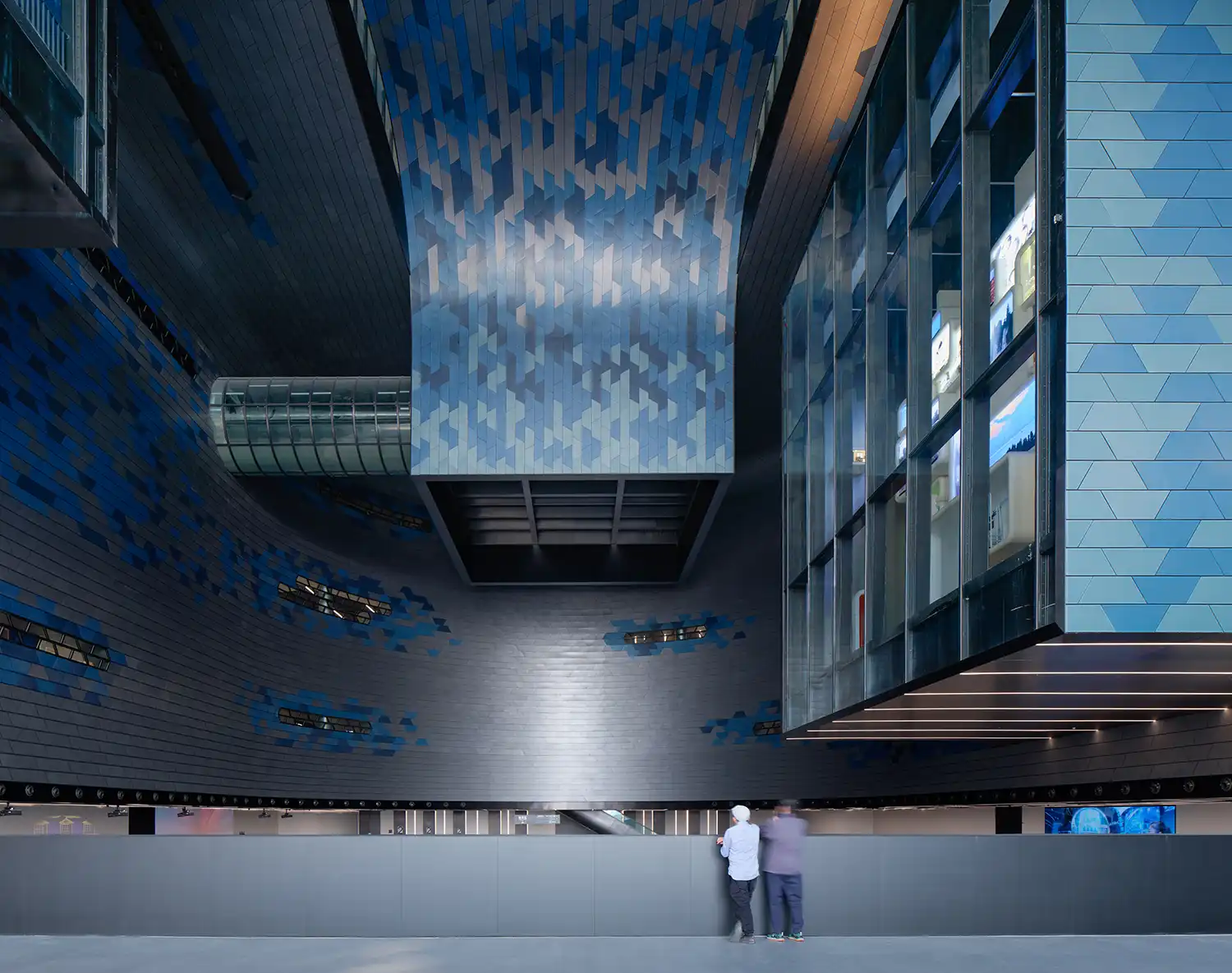
Positioned near Guangming Station, the museum’s design features a striking spherical volume that anchors the southeast corner of the Science Park. The structure stretches dynamically westward, transforming into cascading outdoor terraces that blend seamlessly with the surrounding landscape. These terraces serve as extensions of the interior galleries, framing a grand central atrium that acts as a vibrant civic space for Shenzhen.
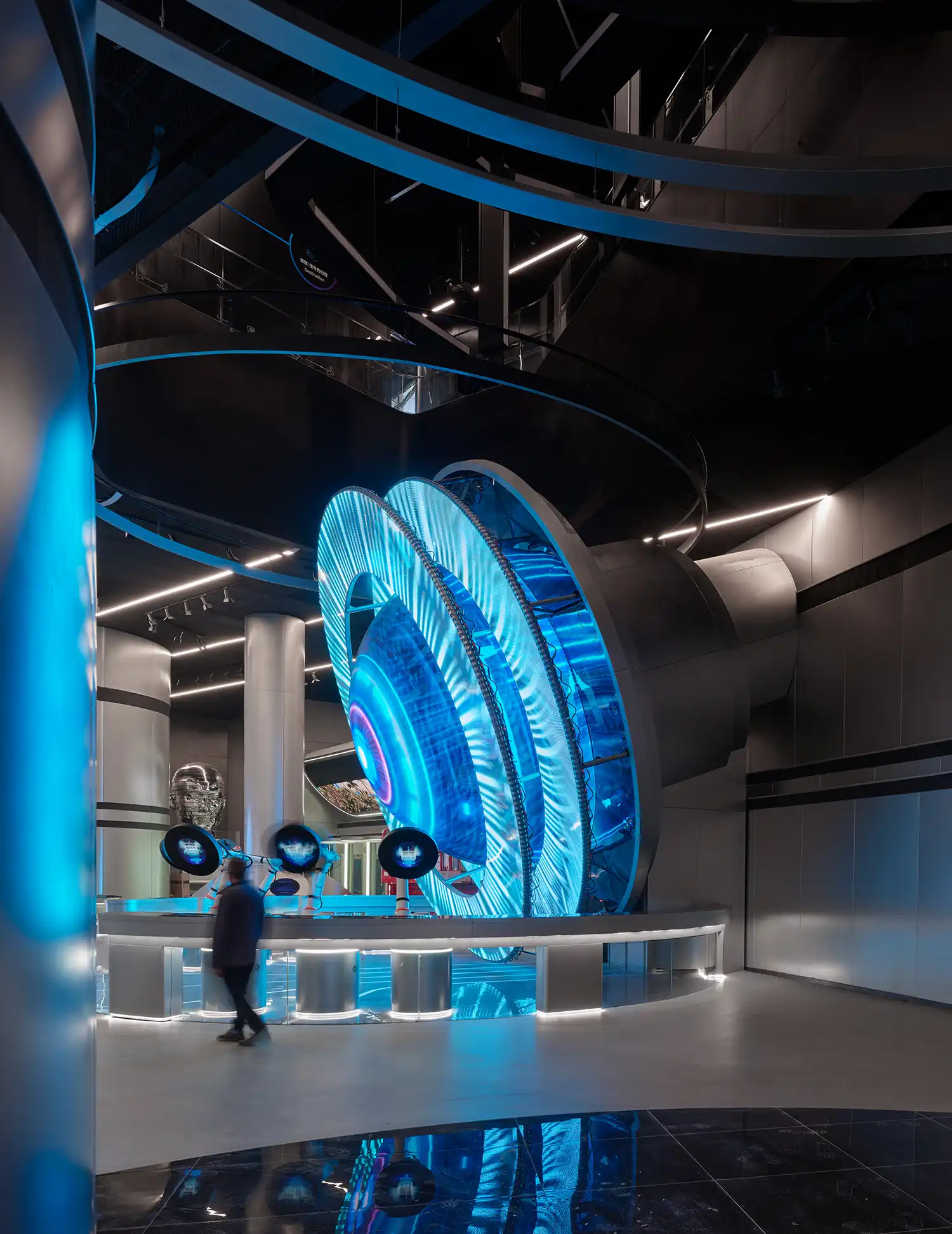
Inside, the museum spans 128,276 sq. m, housing 35,000 sq. m of exhibition halls, 6,000 sq. m of immersive theatres, and 5,400 sq. m of research labs and educational facilities. The floating galleries emerge from the atrium’s walls and floors, intuitively guiding visitors through interconnected spaces. A glazed façade dissolves the boundary between indoors and out, flooding the atrium with natural light while offering panoramic views of the park.
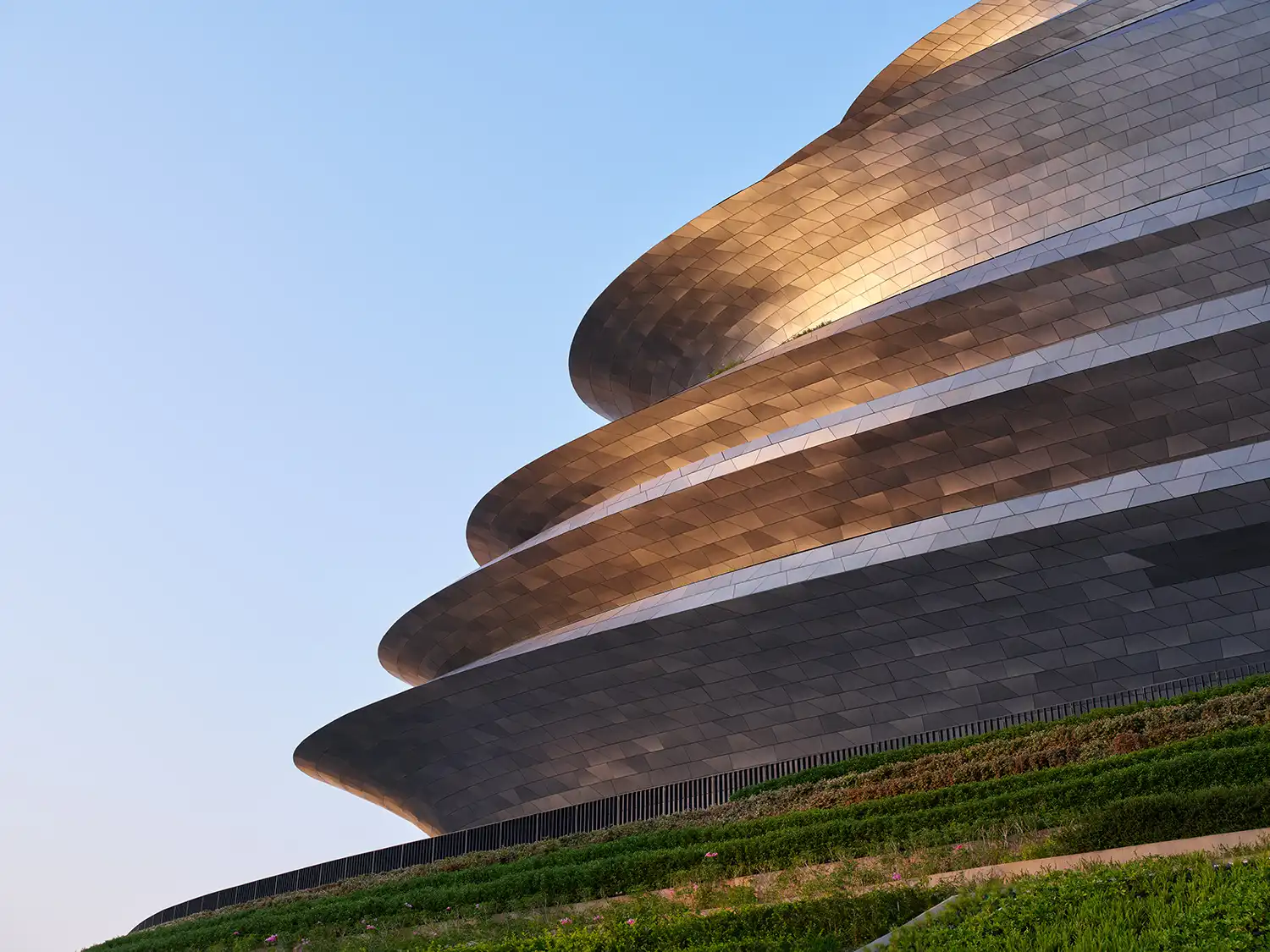
Designed to meet China’s highest three-star Green Building Evaluation Standard, the museum employs passive environmental strategies to optimise energy efficiency. Advanced computer simulations refined the building’s form to mitigate solar heat gain, while stainless-steel ventilated façades reduce exposure to Shenzhen’s subtropical climate. The roof integrates photovoltaic panelsfor on-site energy generation, and a grey-water recycling system minimises water consumption.
A standout feature is the dual-colour INCO technology applied to the façade—a first-of-its-kind large-scale use in China. This self-cleaning, corrosion-resistant surface transitions from deep blue to grey, evoking the motion of celestial bodies in space.
The museum’s construction leveraged BIM and 3D scanning to achieve millimetre-level precision in its complex geometries. Robotic multi-point forming technology ensured the exact execution of ZHA’s visionary design, while a digital twin system enabled real-time verification of construction accuracy.
As a beacon of architectural innovation, the Shenzhen Science & Technology Museum not only celebrates scientific discovery but also sets a new benchmark for sustainable, tech-driven design in one of the world’s most dynamic metropolitan regions.