

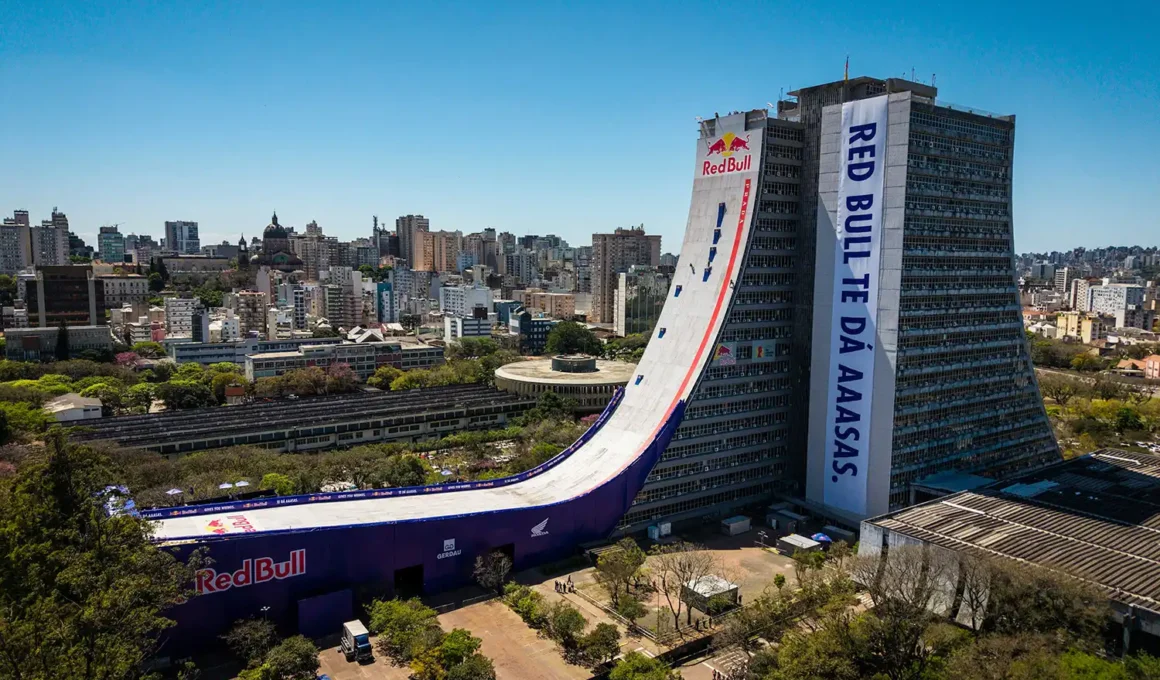
In a stunning fusion of extreme sports and high-altitude architecture, the facade of a Brazilian government skyscraper has been radically reimagined. The Administrative Center of Porto Alegre, a towering pillar of bureaucracy, has become the canvas for one of the most audacious urban activations in recent years. A colossal, gleaming white ramp now cascades down the full height of the building’s central void, transforming the austere structure into the world’s most improbable skateboarding ramp.

This unprecedented project is the result of a surprising and powerful collaboration between energy drink giant Red Bull and luxury fashion house Prada. The partnership demonstrates a shared ambition to push boundaries beyond their core industries, venturing into the realm of experimental public art and architecture. The installation serves as a prelude to a major skateboarding event, but its impact is far more profound, challenging conventional perceptions of what our built environment can be.

The engineering behind the curved skate ramp is a feat of precision and temporary structural integrity. Designed to fit seamlessly within the building’s existing 16-story atrium, the ramp features a seamless surface that allows skaters to achieve incredible flow and speed. Its flawless white finish, a signature of the Prada and Red Bull collaboration, creates a stark, beautiful contrast against the raw concrete of the 1970s brutalist architecture, highlighting the dialogue between old and new, rigid and fluid.

For the inaugural event, a select group of the world’s top professional skateboarders were invited to conquer the vertiginous structure. The spectacle was a display of pure athleticism and courage, as riders dropped in from the highest points, carving lines down the continuous curve. The event was not merely a competition but a breathtaking performance, turning the act of skateboarding into a public art performance against a backdrop of dizzying heights and architectural grandeur.

Beyond the spectacle, the project raises compelling questions about the use of urban space. It demonstrates how underutilized or rigidly formal architecture can be temporarily reprogrammed for dynamic, public-facing purposes. This architectural intervention goes beyond simple branding, acting as a catalyst for conversation about creativity, accessibility, and the potential for play in our cities. It is a powerful example of how corporate influence can be channeled to create culturally significant moments.

While the ramp is a temporary installation, its legacy will linger. The project successfully merges the worlds of extreme sports innovation, luxury fashion, and civic architecture in a way that feels both disruptive and inspired. It stands as a bold statement that the most exciting design frontiers exist not just in building new structures, but in creatively re-engaging with the iconic ones we already have. This is more than a ramp; it is a vision of a more audacious and playful urban future.