

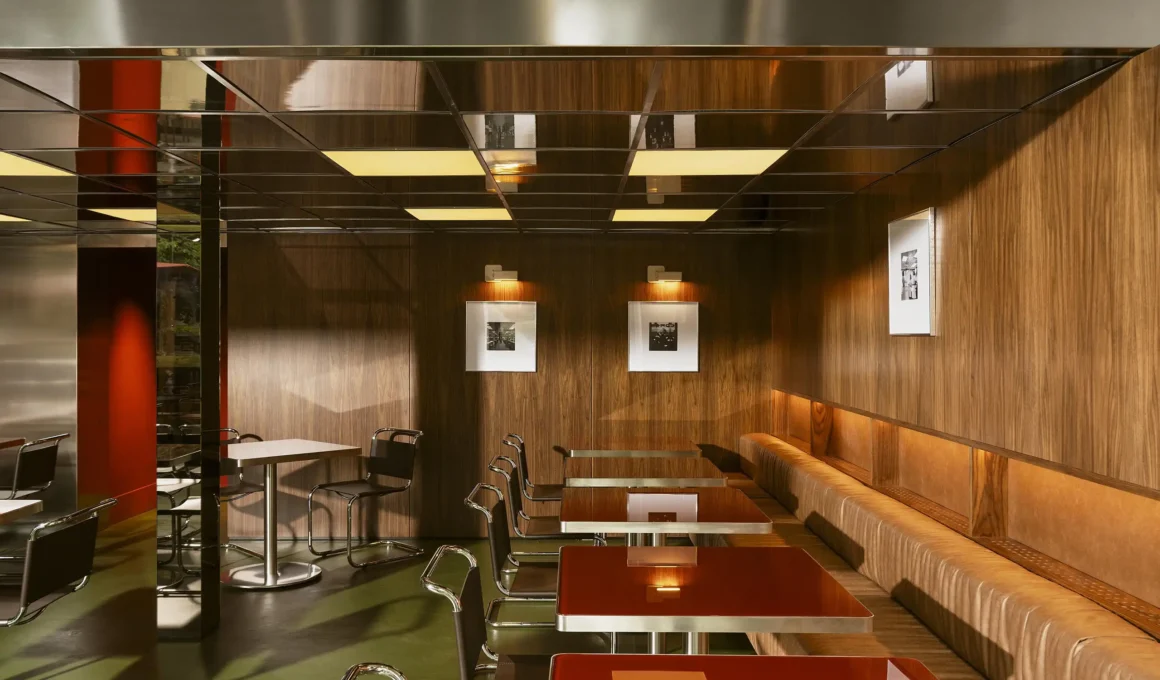
In Turin, overlooking a secluded city center garden, Studio Fabio Fantolino has completed Lève Office Bar, a fluid hospitality space that rejects nostalgic mid-century replication to reinterprets the rigorous composition and high-material quality of 1960s corporate interiors.
Spatial choreography and material contrast establish the primary narrative of the project. During the 1960s, workplace environments placed a premium on structural clarity and lasting material integrity. The design team uses this historical framework to build a contemporary vernacular where chrome-plated metal, stainless steel, and deeply saturated color fields generate a precise system of reflections. The result balances structural discipline with tangible hospitality, ensuring the environment remains welcoming from morning coffee through to late-night cocktails.
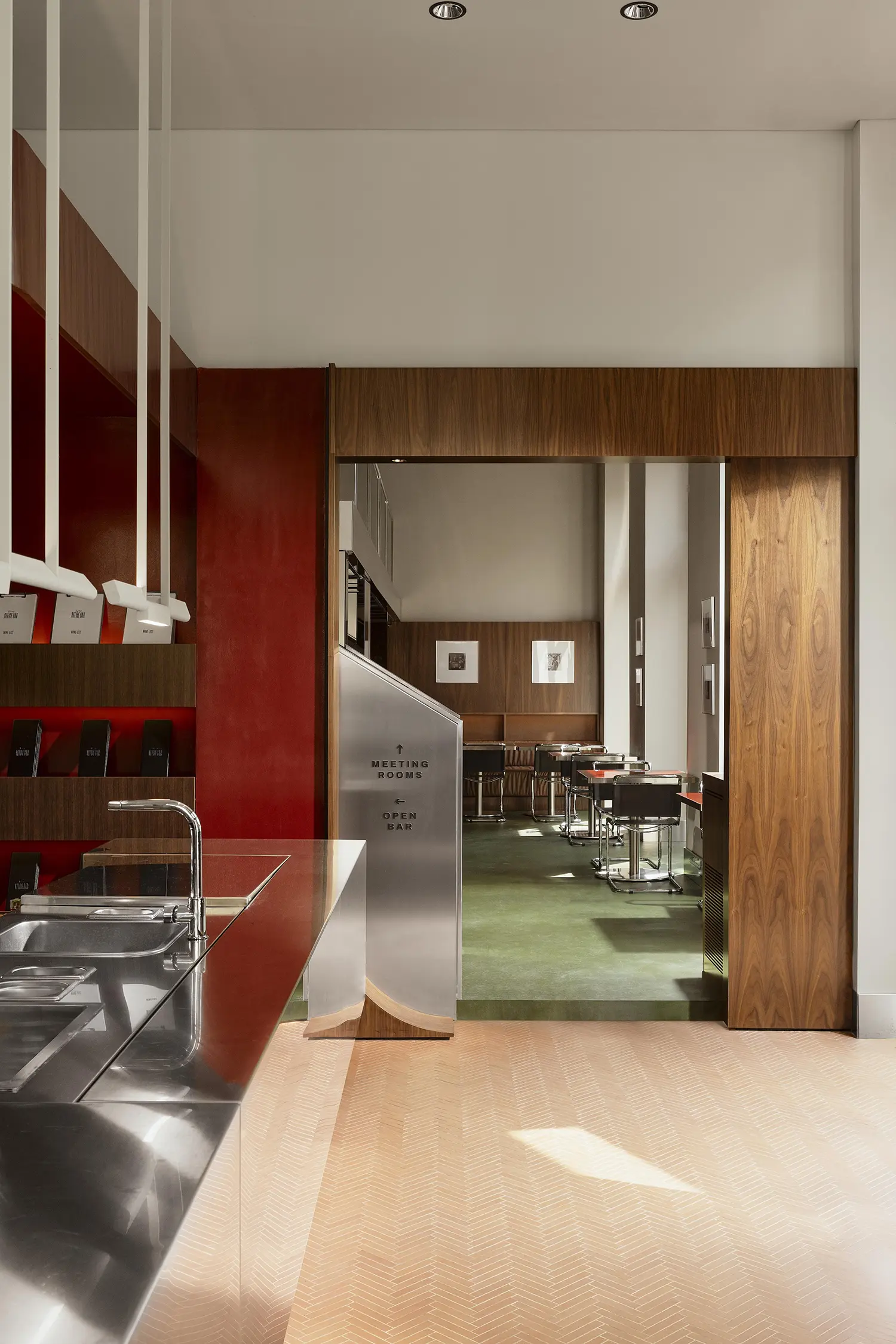
The interior layout unfolds across three distinct functional and perceptual sequences, each calibrated to respond to the changing rhythms of the day. Guests enter into a linear room dominated by an expansive stainless steel counter that stretches along the primary wall, culminating in an assertive block of deep red enamel. Custom-engineered for versatility, this monolithic volume maintains a sleek, minimalist presence during daytime service before transforming mechanically into an active cocktail station as dusk approaches.
A domestic warmth anchors the industrial sharpness of the main entrance. Beneath the gleam of the polished metal, a classic herringbone floor executed in brick tones introduces a grounding, residential element. This tactile surface choice effectively softens the perceptual tension between the highly reflective overhead planes and the saturated pigments, anchoring the visitor experience in an environment that feels both sophisticated and inherently comfortable.
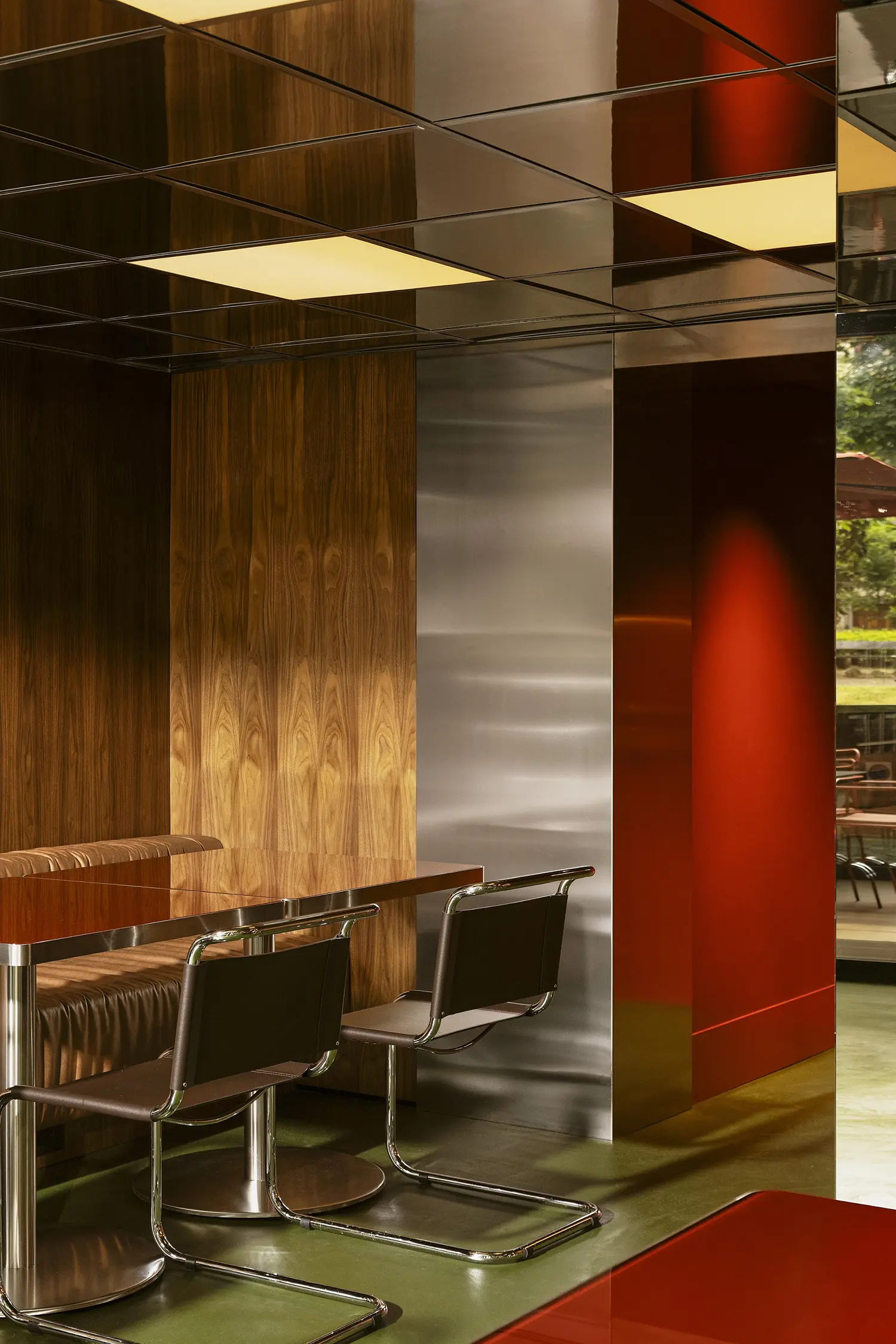
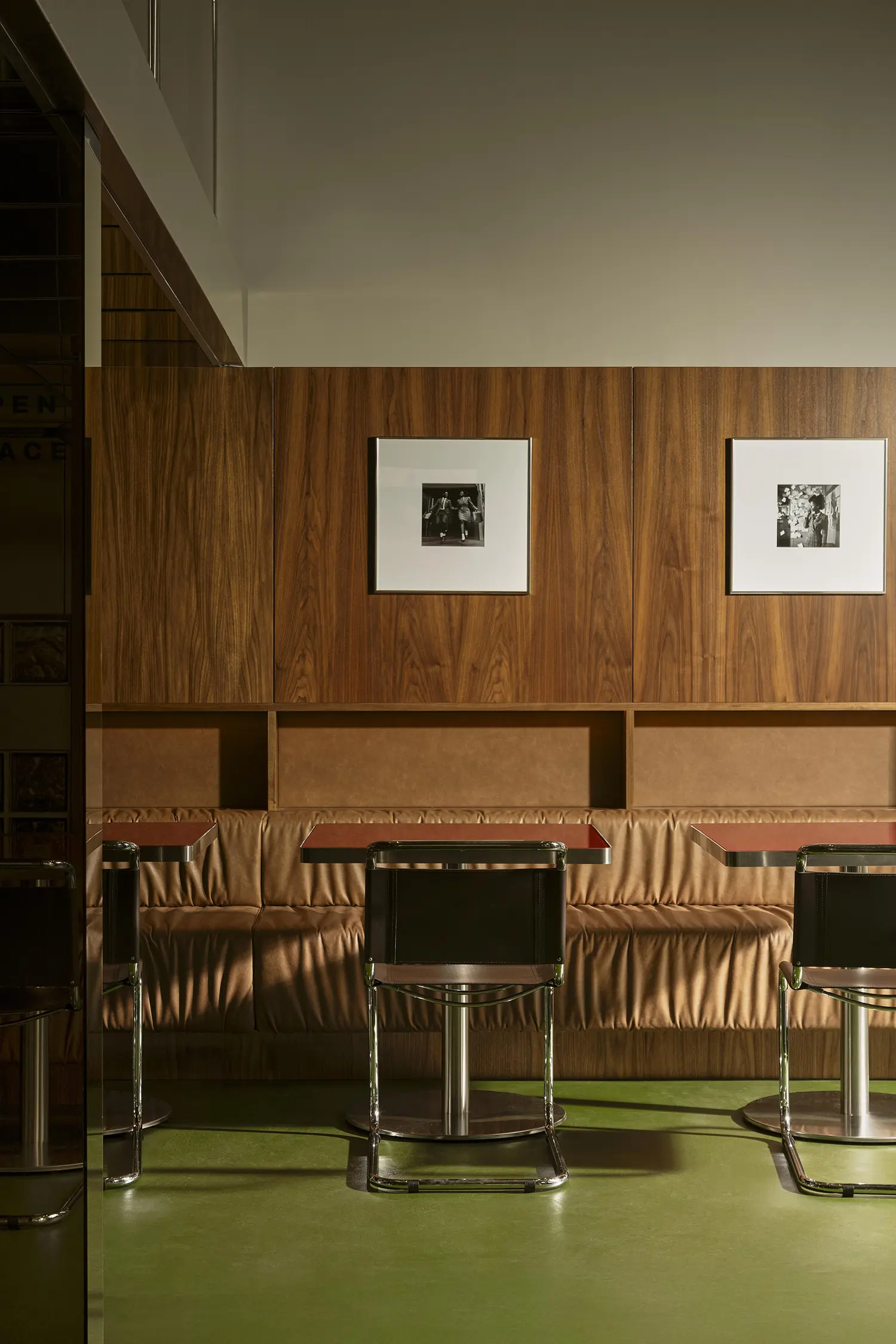
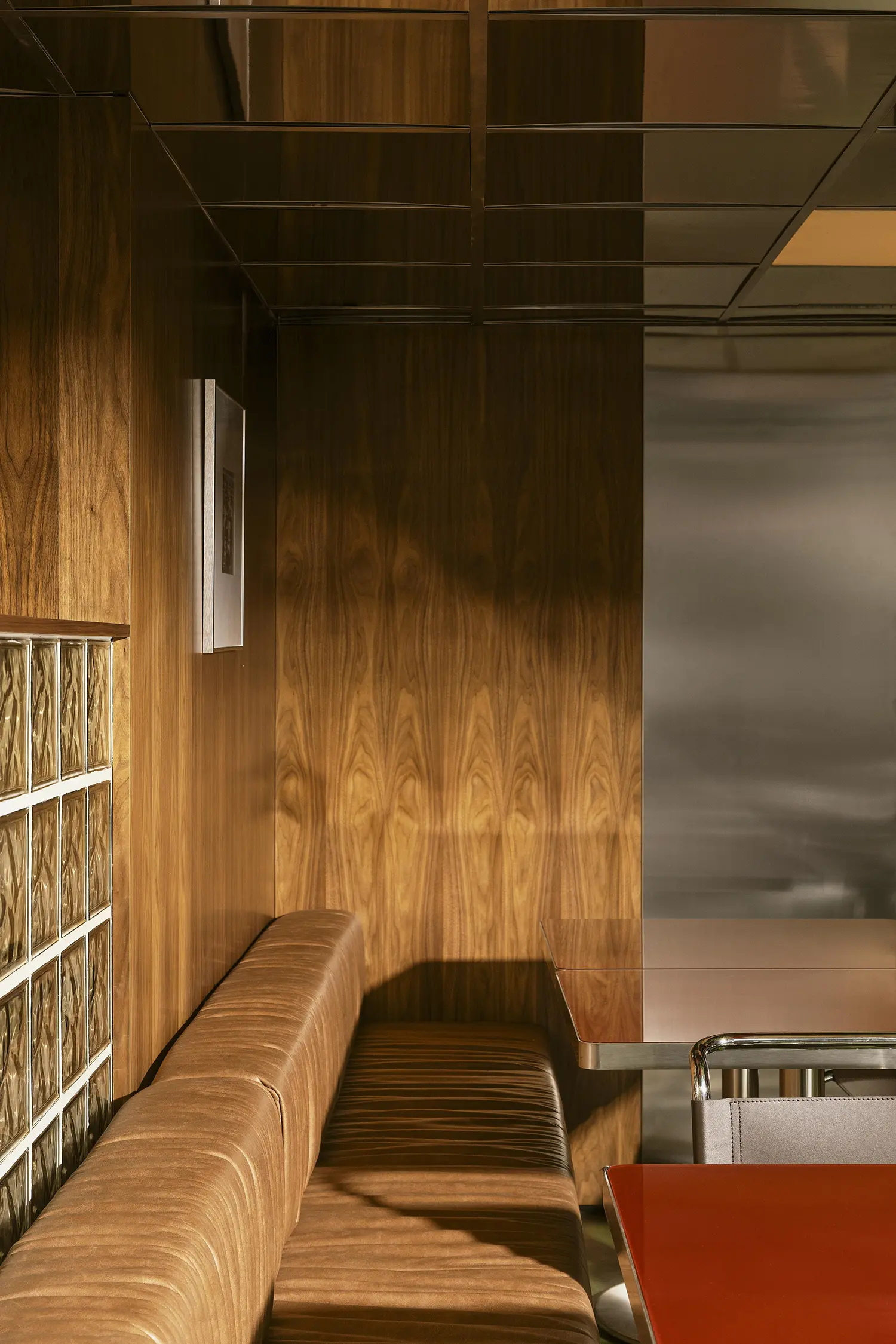
An expansive double-height volume marks the transition into the second zone, where the imagery of the mid-century workplace becomes more pronounced. Here, a green resin floor establishes a vibrant, continuous color field that unifies the lower level. Against this vivid backdrop, a calculated juxtaposition of cool surfaces—including mirror panels and chrome details—contrasts with the organic warmth of solid wood and rich leather upholstery, achieving a harmonious spatial equilibrium.
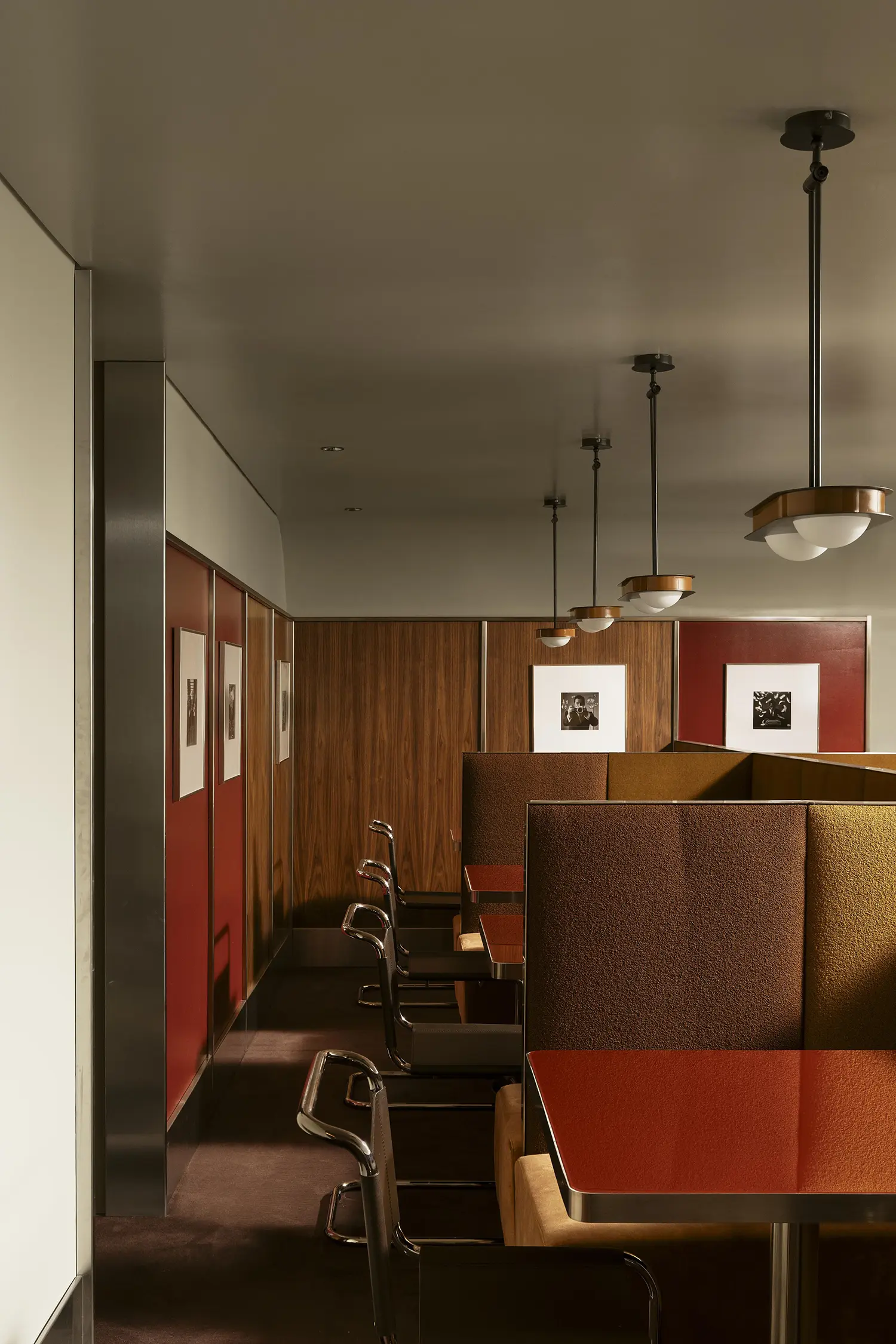
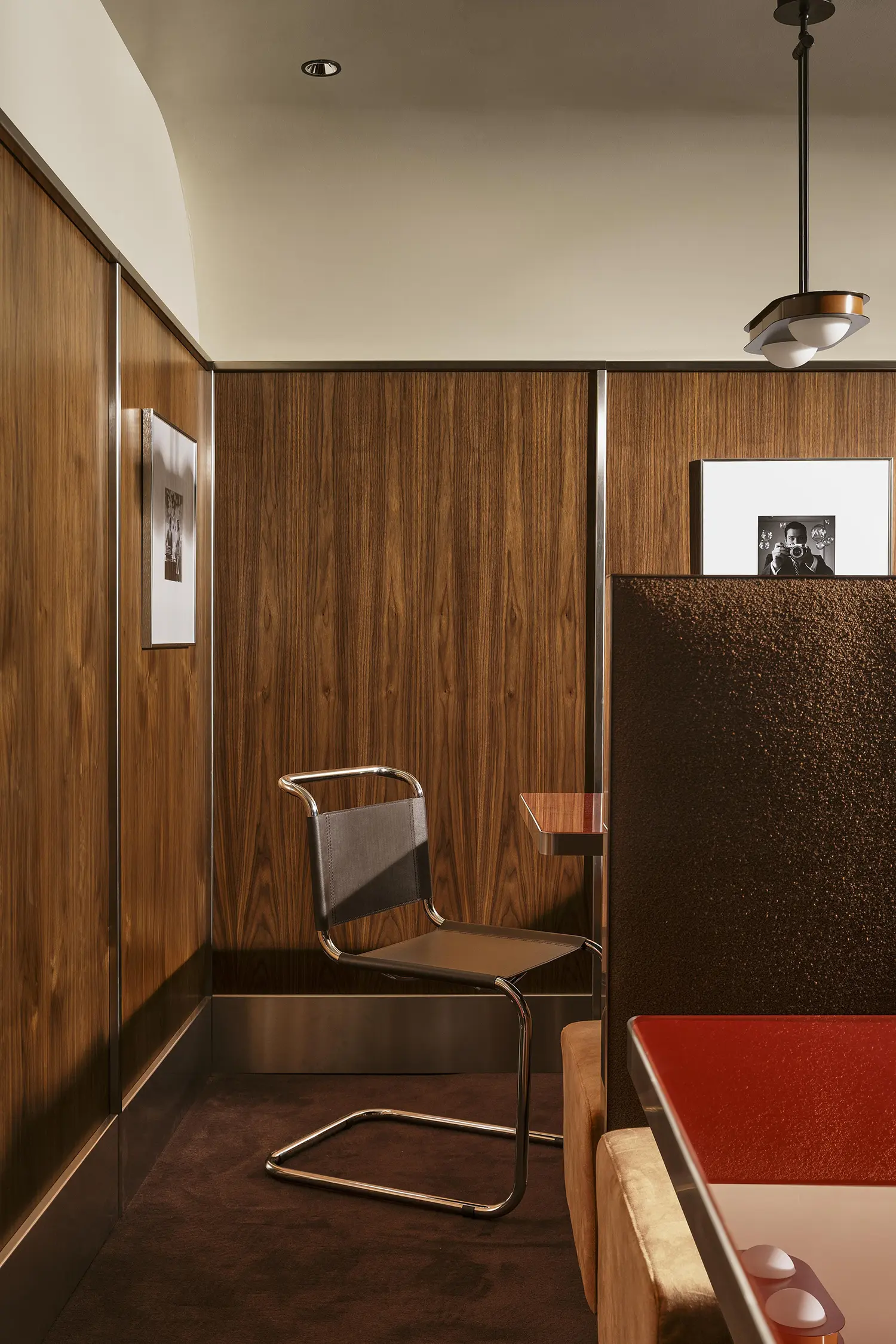
The upper mezzanine levels shift the typology toward the collaborative dynamics of the historic American open-plan office. Light partitions are formed by the strategic arrangement of custom sofas, featuring smooth leather seats paired with textured bouclé-covered backrests. This clever layout structures the elevated lounge without compromising the visual connection to the floor below, allowing patrons to feel simultaneously tucked away and connected to the broader social energy of the venue.
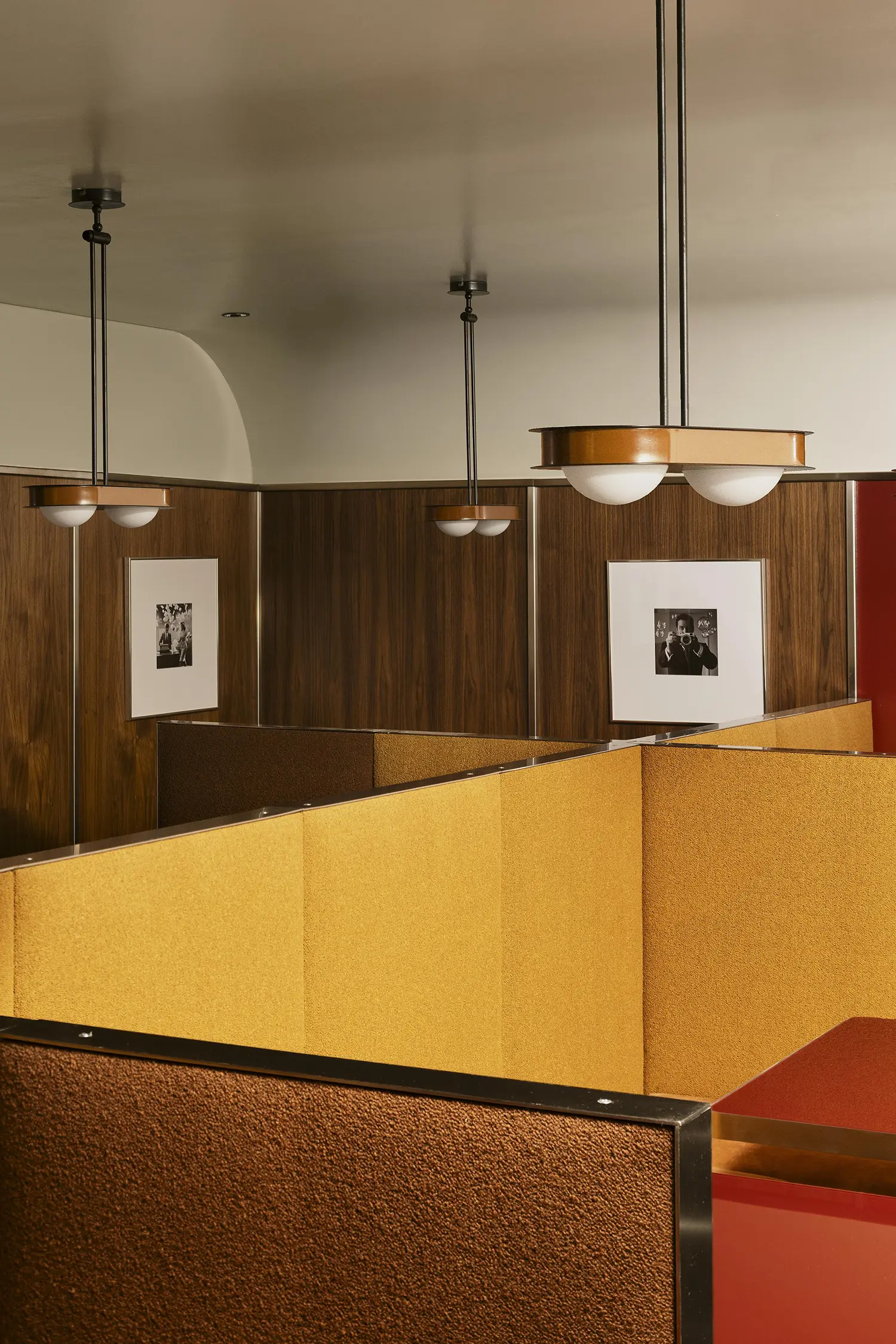
Architectural woodwork and geometry frame the upper perimeter, where a meticulous red wood and laminate boiserielines the walls. Subtly punctuated by thin metal trims, this wall paneling reinforces the structural rhythm of the mezzanine. Every element of the custom furniture works in tandem with this architectural envelope, enhancing the volumetric perception of the interior and encouraging natural interaction between the guests and their physical surroundings.
An integrated lighting matrix acts as a crucial spatial coordinator throughout the day and night. Within the double-height volume, a suspended luminous grid defines the ceiling plane of the lower level, visually multiplying the geometric lines through its interaction with nearby mirrors. Overhead on the upper level, a disciplined sequence of retro-style pendant lamps tracks the seating arrangement, casting targeted pools of light that emphasize the geometric layout of the lounge.
Iconic design fixtures provide the final narrative accents to the interior composition. Atop the primary service counter, the sharp silhouette of the Ipoli 06 lamp by Lambert & Fils introduces a clean graphic gesture, while the cashier station benefits from the softer, diffused glow of Santa & Cole’s classic Maija fixture. Augmented by the companion Ipoli 01 lamps, this layered illumination strategy completes a highly coherent project that firmly establishes Lève Office Bar as a compelling new anchor in Turin’s contemporary hospitality landscape.