




In an era where luxury retail often equates to hushed minimalism, H.Lorenzo Archive in Los Angeles’ Arts District defiantly asks: Why so serious? Italian designer Olivierio Baldini of Studio O has reimagined the concept of high-end archival shopping, transforming the 40-year institution’s treasure trove of fashion history into a playground of material experimentation and spatial wit. Located at 605 S. Santa Fe Avenue, this avant-garde boutique merges museum gravitas with circus-like spontaneity, proving that reverence for design need not stifle imagination.
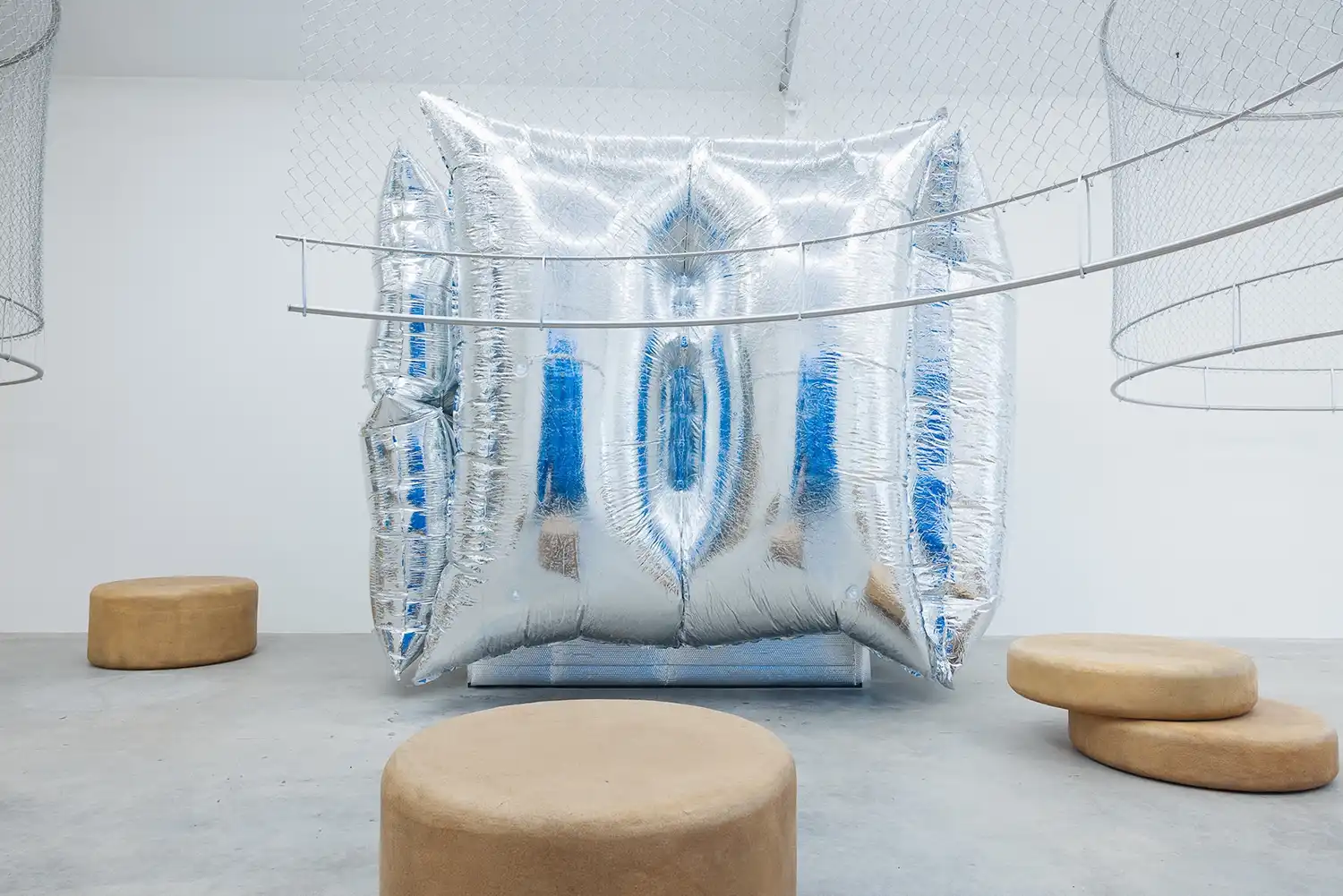
Baldini’s intervention begins with a raw, industrial shell—concrete floors, exposed ducts, and chain-link fencing repurposed as improvised garment racks. Yet within this stripped-back gallery-like frame, Studio O inserts surreal, joyful disruptions. Foiled inflatable structures, recalling the studio’s 2020 Mode Shanghai installation, serve as fitting rooms, their silver and blue surfaces shimmering like interstellar bubbles. Nearby, chromed cardboard masquerades as luxury shelving in a checkerboard grid, elevating a mundane material through alchemical surface treatment. The pièce de résistance? Tan fiberglass boulders scattered like alien landforms, inviting visitors to perch or ponder amidst Raf Simons relics and Helmut Lang archives.
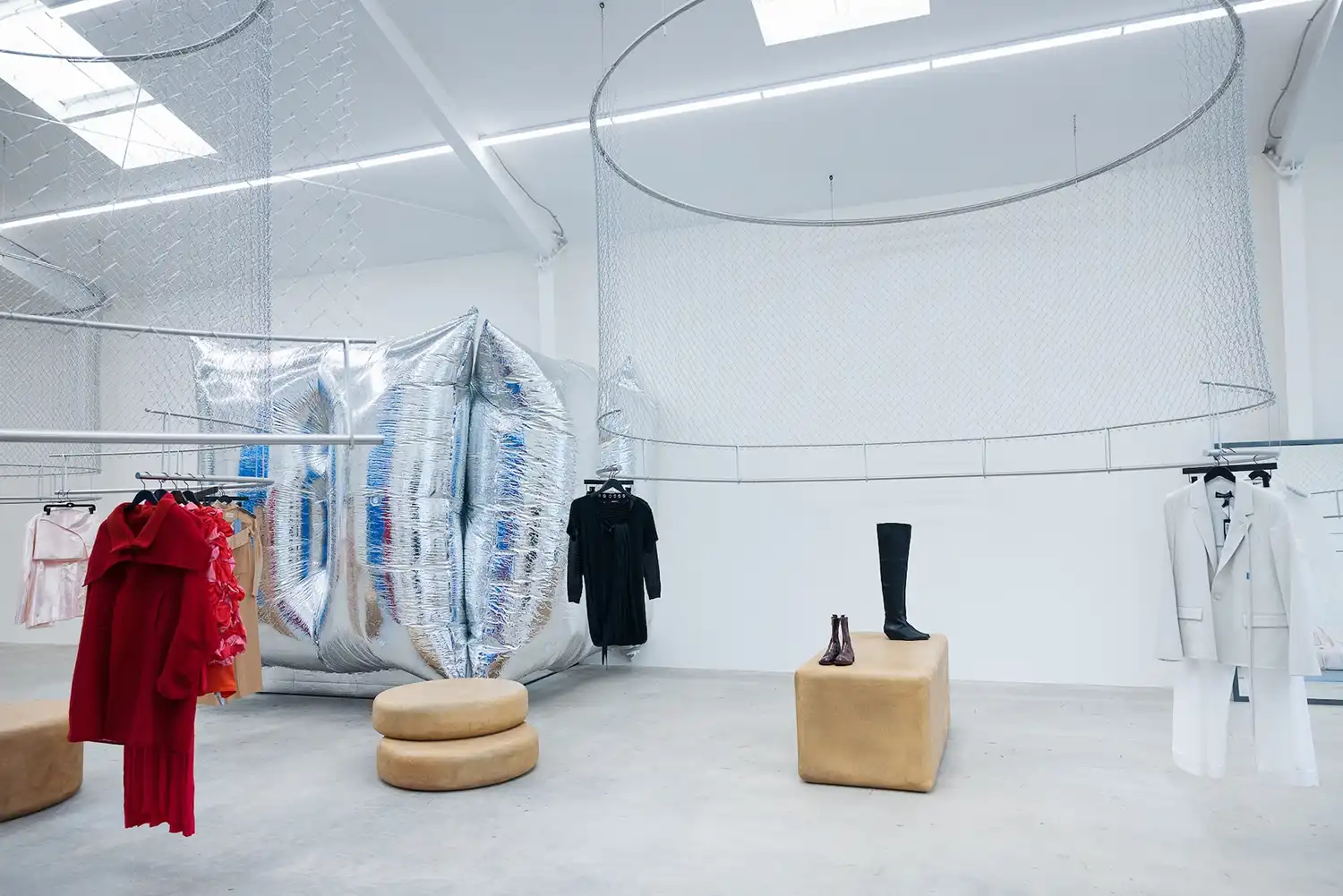
Lighting orchestrates the experience: skylights wash vintage pieces in Californian sun while snaking LED strips cast nocturnal drama onto Jean Paul Gaultier corsets. Merchandising director Aria Daniella Clemente curates garments as sculptural objects, allowing a Rick Owens leather jacket to command space like a Brancusi bronze. This dialogue between austerity and exuberance mirrors H.Lorenzo’s own legacy—a retailer that championed Comme des Garçons and Yohji Yamamoto in LA decades before their global canonization.
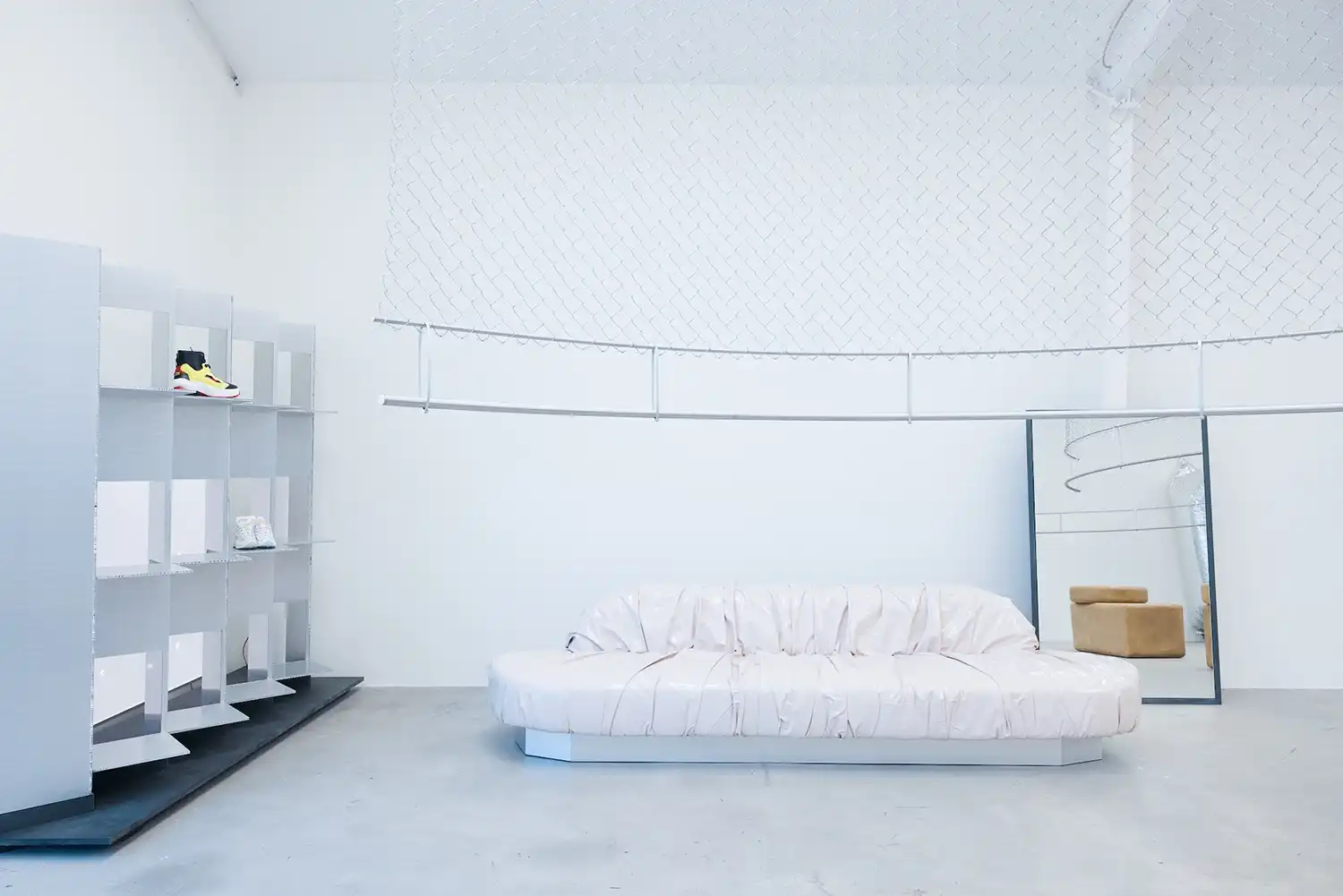
The project taps into broader shifts in experiential retail, joining spaces like Dover Street Market LA (a converted meat warehouse nearby) and Bodega’s hidden sneaker speakeake. Yet Studio O’s irreverence feels radical precisely because it targets archival fashion—a realm often mummified in white-cube solemnity. By pairing pneumatic structures with raw industrial elements, Baldini argues that preserving fashion’s heritage demands not hushed tones, but audacious reinvention.
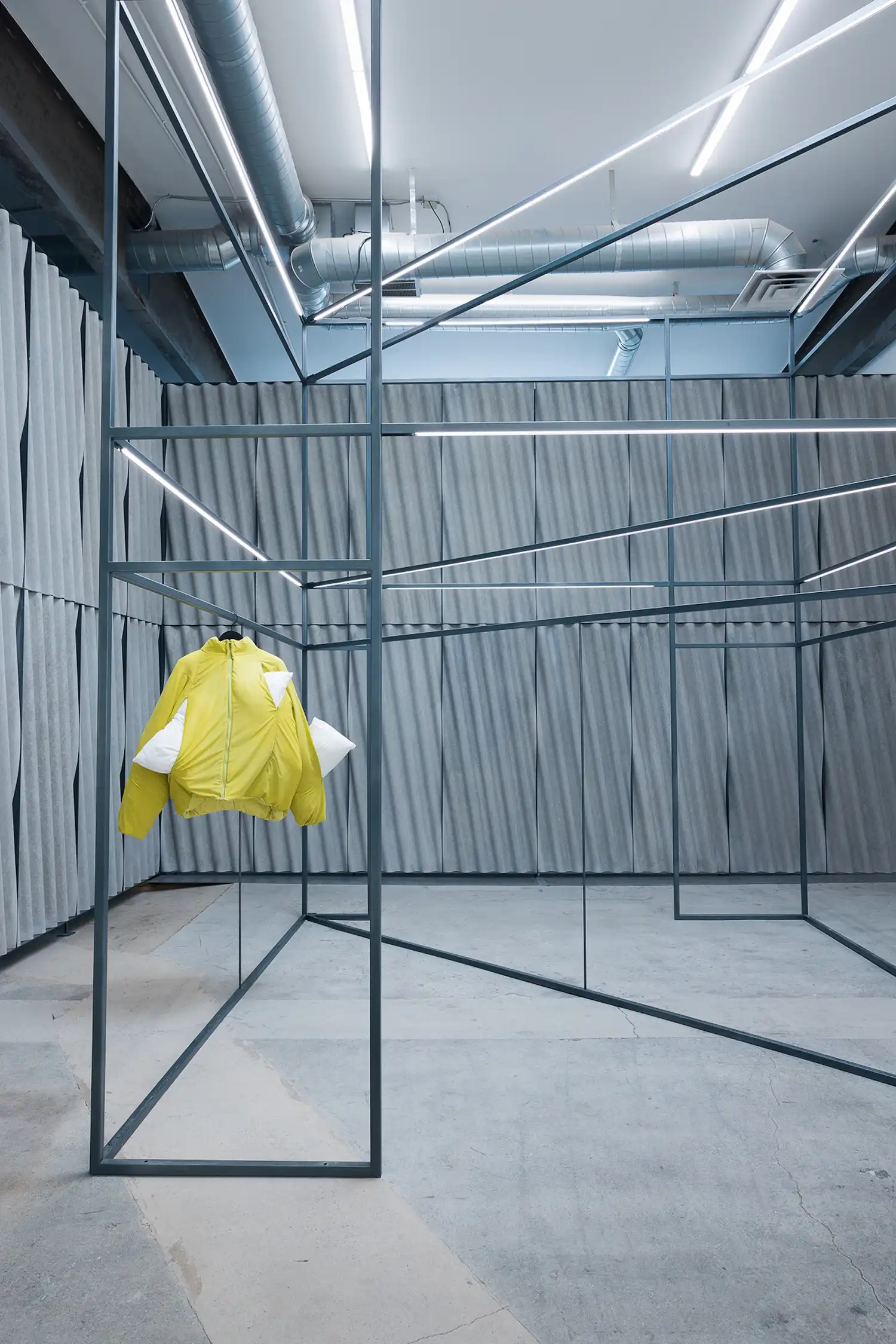
As Lorenzo Hadar, the store’s founder, reflects: “For over 40 years, we’ve championed boundary-pushing design.” Studio O’s intervention embodies this ethos, proving that the future of retail lies not in sterile exclusivity, but in spaces where playfulness and provocation share a fitting room.