


A Brussels apartment has been transformed into a vivid and soulful universe by TINE LONCIN, a Belgian design studio known for its expressive, layered approach. This kitchen renovation, titled ‘Where East meets West,’ is a masterclass in highly personalised interior design, moving away from prevailing minimalism to embrace a rich tapestry of cultural references and collected treasures. The resulting atmosphere is one of warmth, joyful imperfection, and palpable history, defined by a curated assembly of objets trouvés, folkloric treasures, kitsch, and personal curiosities.
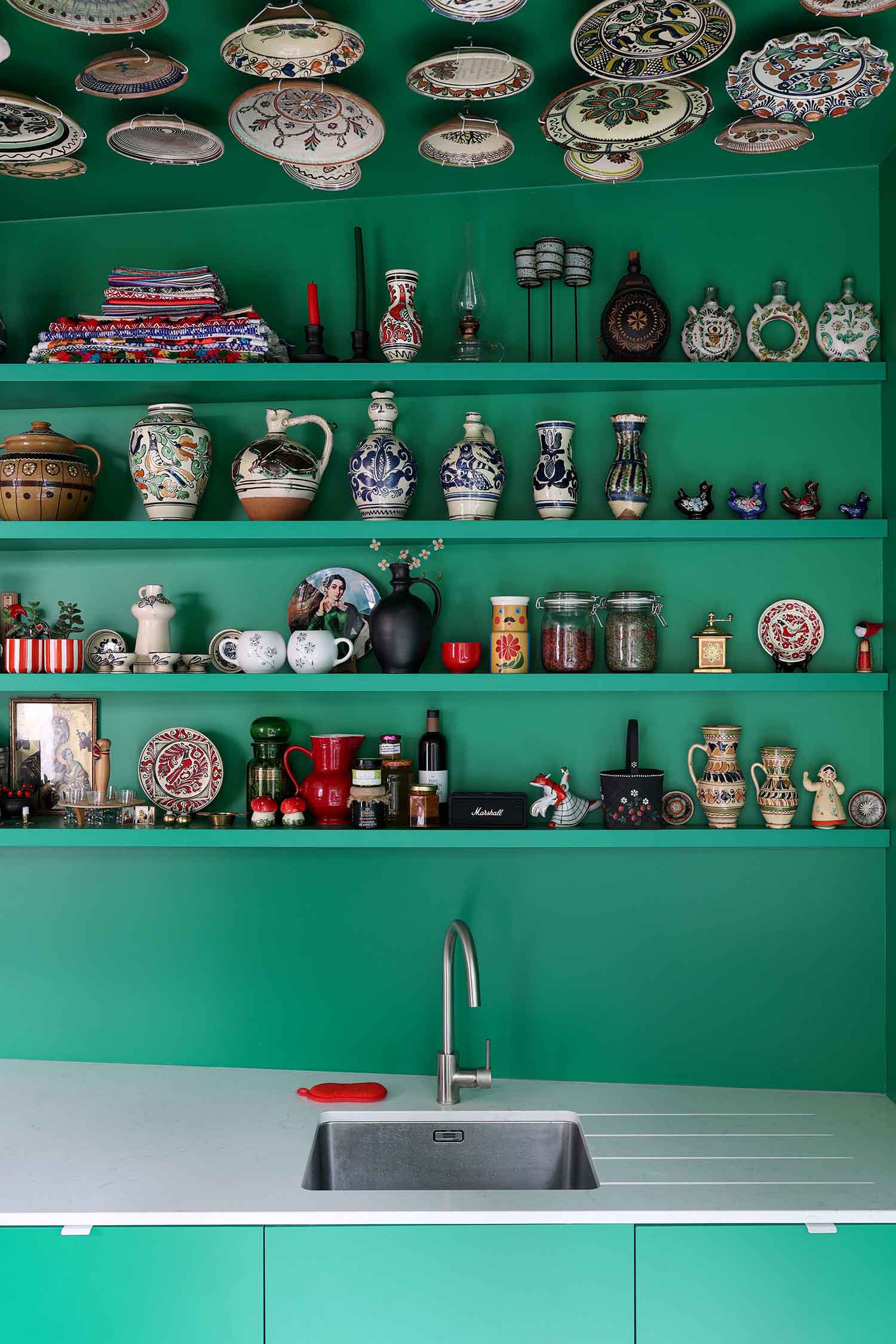
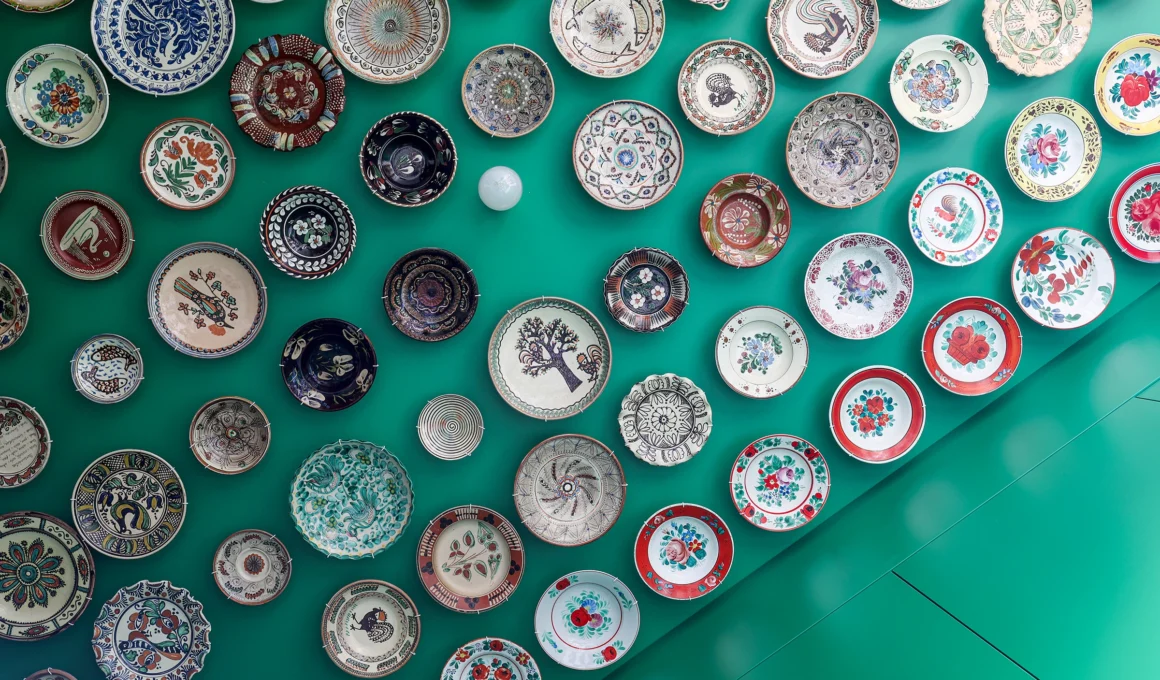
The concept’s strength lies in its foundation: the clients themselves—a Romanian-Belgian couple—whose dual heritage provided an immediate richness to the brief. The wife, Nicoleta, is an avid collector of traditional Romanian jugs and plates. Her love for bold colours and deeply personal folkloric references became the central pillar shaping the kitchen’s entire identity. The mandate for Tine Loncin was clear: create a space that feels authentic, lived-in, and quietly inspiring, honouring and amplifying this strong spirit of tradition within a modern, functional shell.
Loncin’s conceptual work began with a visual dialogue, translating the complexity into an inspiration collage and moodboard. The pivotal creative breakthrough, and the source of the project’s name, came from the world of fine art. Loncin drew specific design inspiration from Henri Matisse’s La Blouse Roumaine, a renowned series sparked by the painter’s long-standing fascination with Eastern European motifs and his friendship with Romanian artist Theodor Pallady—a true historical representation of Where East meets West in the 20th century.
Beyond the vibrant emotionality of folk art, the project’s underlying structure was guided by the elemental principles of Romanian sculptor Constantin Brancusi. His unwavering search for essence, articulated through pure lines and elemental, geometric forms, deeply resonated with Loncin’s methodical approach to spatial design. This duality—the emotional warmth of tradition balanced by the intellectual rigour of modernist form—ensured the new kitchen achieved a dynamic harmony between soul and structure. This solid framework allows the contemporary design elements to subtly support the weight of the historical objects.
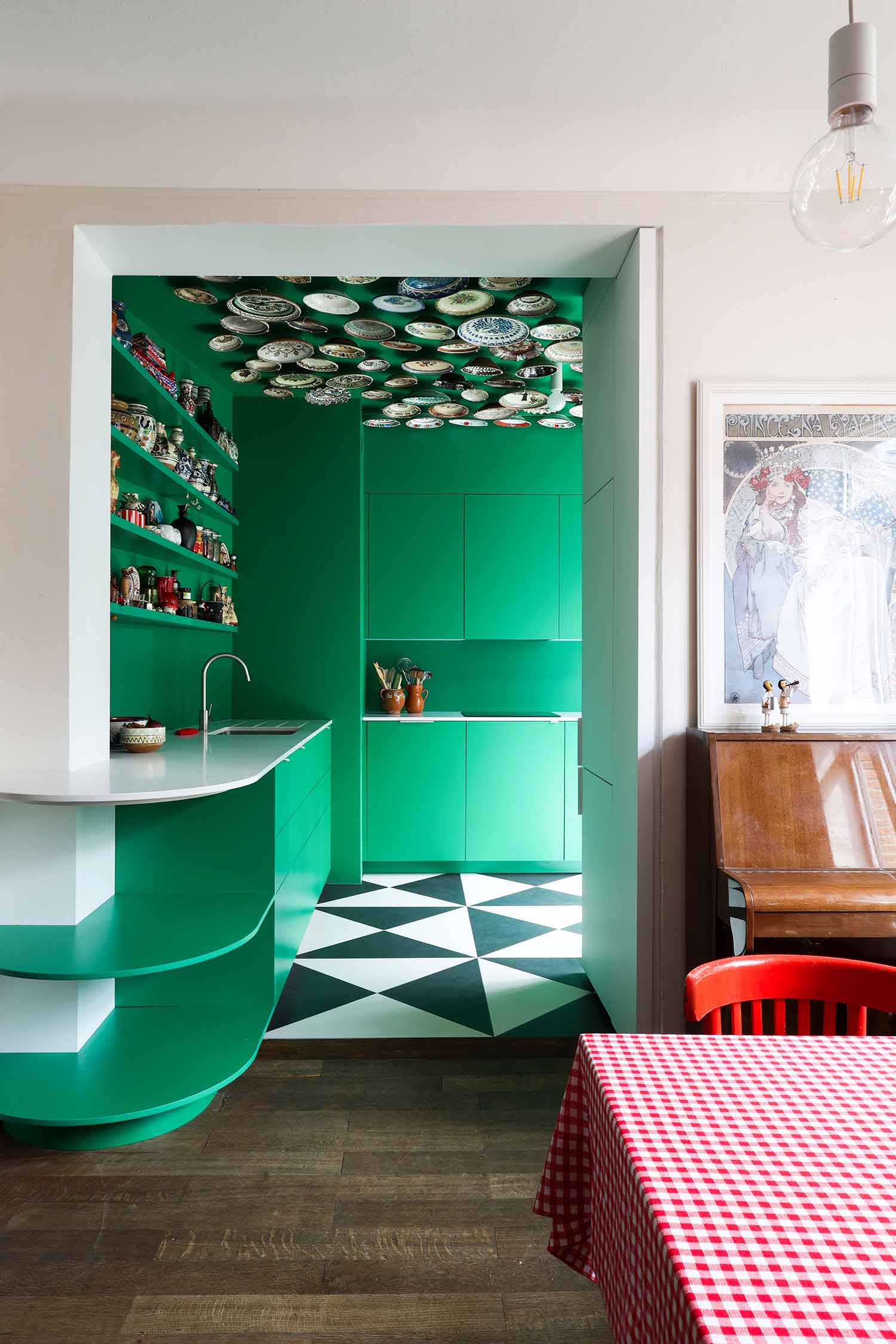
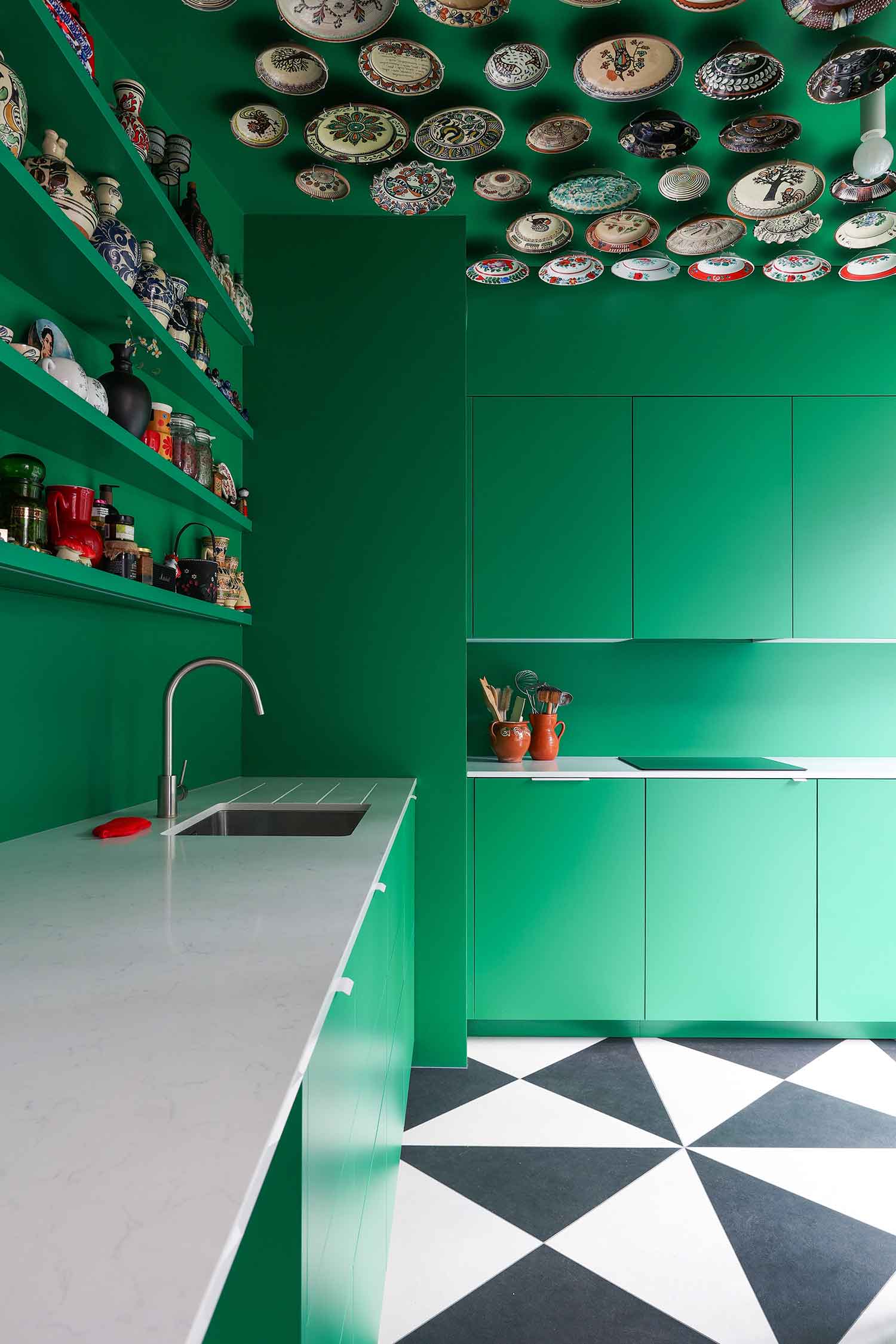
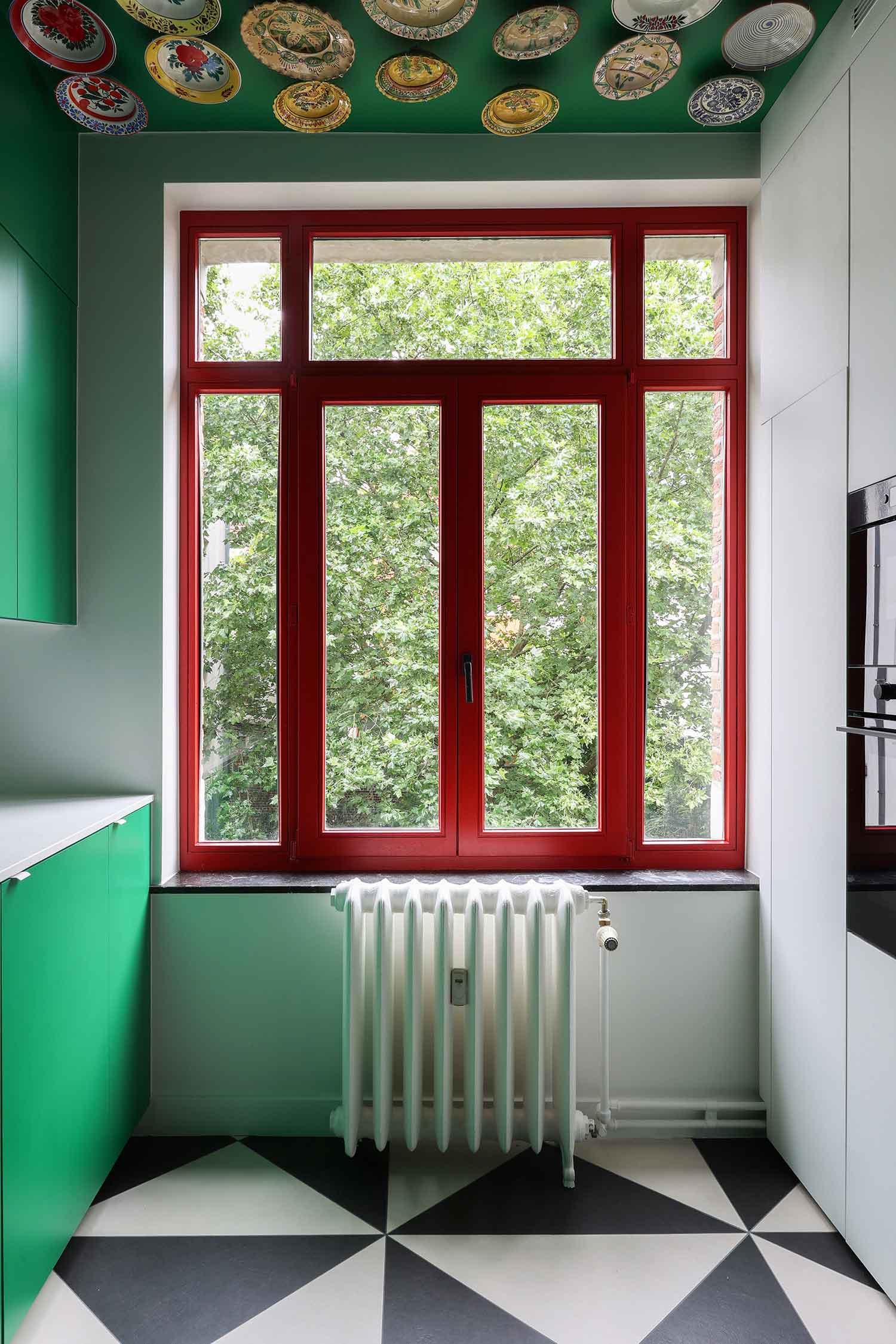
The chosen material and colour palette creates the perfect stage for the clients’ collected pieces to shine. In this Brussels apartment, TINE LONCIN selected deep green kitchen cabinetry as the dominant hue. This calming hue was chosen specifically to reflect and amplify the space’s natural brightness, providing a sophisticated yet unassuming backdrop. This rich shade is dramatically contrasted by a bold black-and-white tile pattern on the floor, which introduces a rhythmic energy and further underscores the playful intersection of culture and modernity.
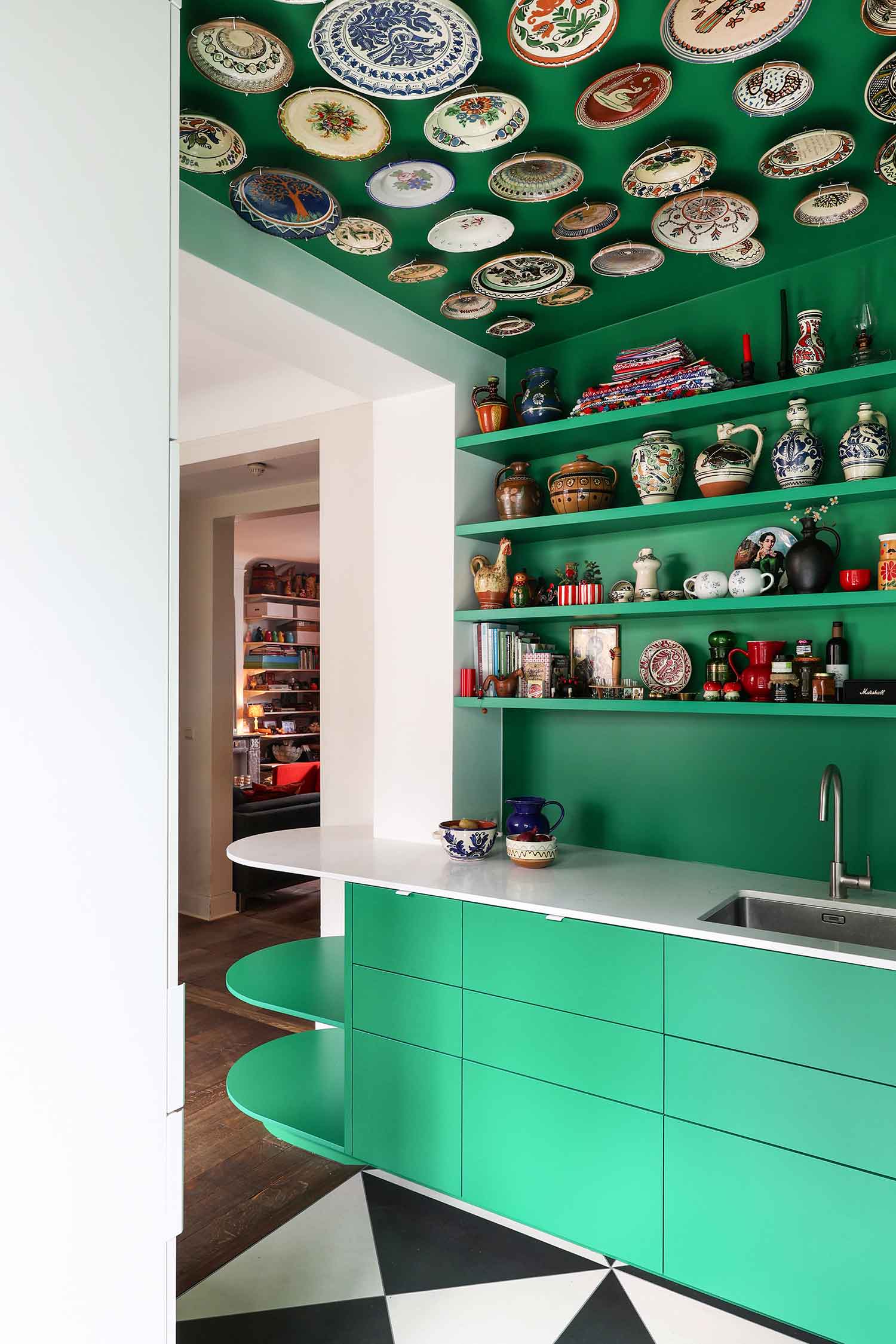
The final kitchen renovation is a quiet connector of different worlds, where Romanian folk art meets sleek, understated contemporary design. The dynamic interplay between tradition and modernity, East and West, is no longer a conflict but a cohesive, layered statement. Through mindful sourcing and a deeply referential approach, Tine Loncin has successfully created a functional and inspiring domestic space that beautifully encapsulates the complex, joyful identity of its occupants, solidifying its place as a standout piece of Belgian design.