



At the intersection of biotic architecture, ecological repair, and post-human design, Andrés Jaque / Office for Political Innovation has unveiled the Transspecies Palace, a radical new work commissioned for We The Bacteria. Notes Toward Biotic Architecture at the 24th International Exhibition of La Triennale di Milano. Curated by Beatriz Colomina and Mark Wigley, the exhibition challenges conventional notions of architecture by foregrounding microbial life as a co-creator of space.

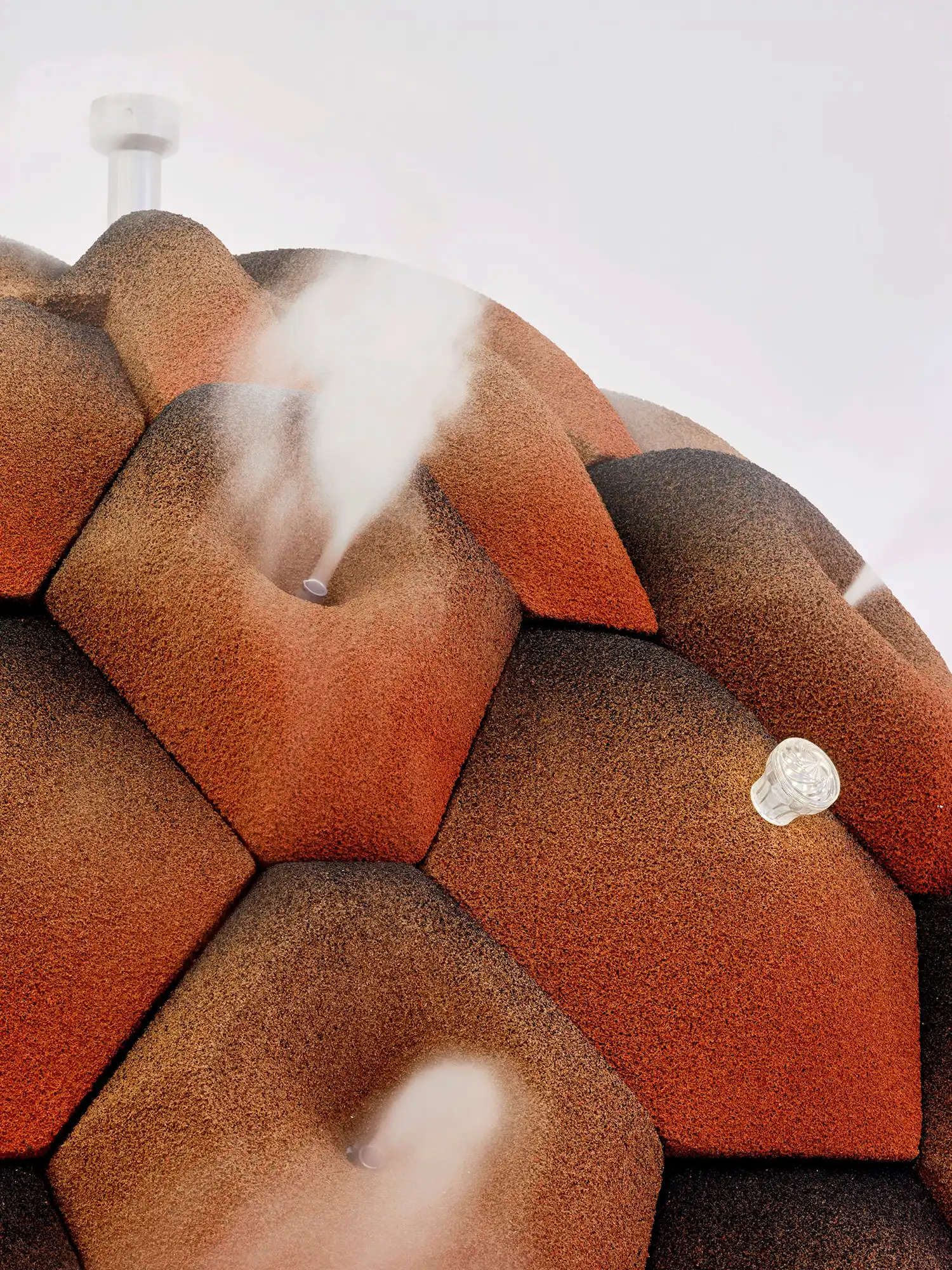
The Transspecies Palace is not a building in the traditional sense but a living, breathing structure designed to cultivate a microbial community capable of metabolizing environmental toxicity. Composed of a thick cork crust—a material previously tested in the facade of Reggio School in Madrid—the palace acts as a scaffold for bacteria, fungi, and cyanobacteria to thrive. The porous cork structure is meticulously engineered to retain mineral, sucrase, and lipid particles, creating an ideal habitat for fungi hyphae to grow. These fungal networks serve as highways, enabling bacteria to colonize the structure and form an exopolysaccharide matrix, a natural biofilm that enhances carbon sequestration and oxygen production.

What sets this project apart is its transspecies approach, which reimagines architecture as a collaborative effort between humans and non-human organisms. By integrating DNA fragments of selected microbes, the Transspecies Palace accelerates ecological repair, transforming damaged environments into thriving ecosystems. This marks a decisive shift from extractive architecture—rooted in carbonization and environmental sacrifice—toward a model of mutual care and multispecies coexistence.
For Andrés Jaque, founder of Office for Political Innovation, the project underscores how human life extends beyond individual bodies, entangled with more-than-human networks. “Life and societal interaction are distributed and transscalar enactments,” Jaque explains, “where the microbial, the bodily, and the planetary coproduce each other.”

The Transspecies Palace builds on OFFPOLINN’s legacy of innovative sustainable architecture, which includes the Reggio School, Babyn Yar Museum of Memory and Oblivion, and COSMO MoMA PS1. Recognized with prestigious awards such as the Frederick Kiesler Prize and the UNESCO Global Award for Sustainable Architecture, the studio continues to push the boundaries of ecological design and political activism through architecture.
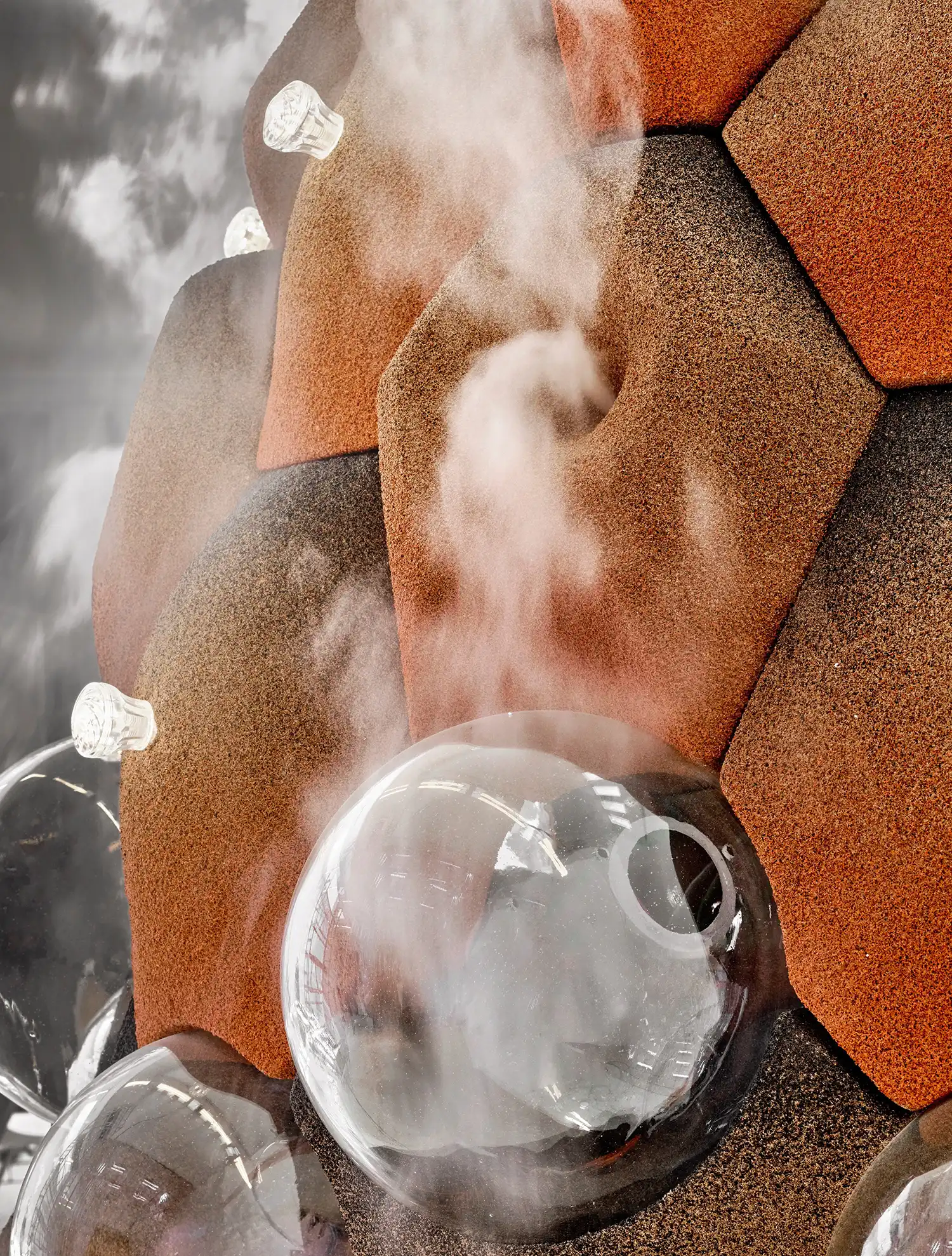
As climate crises intensify, projects like the Transspecies Palace offer a provocative vision for the future—one where buildings are not just shelters but living systems that heal the planet. By embracing microbial intelligence and biotic collaboration, Andrés Jaque and Office for Political Innovation are redefining what it means to design for a post-anthropocentric world.
The 24th International Exhibition of La Triennale di Milano, running until November 9th, 2025 , presents this groundbreaking work alongside other explorations of biotic architecture, reinforcing the urgent need for ecological interdependence in design.