



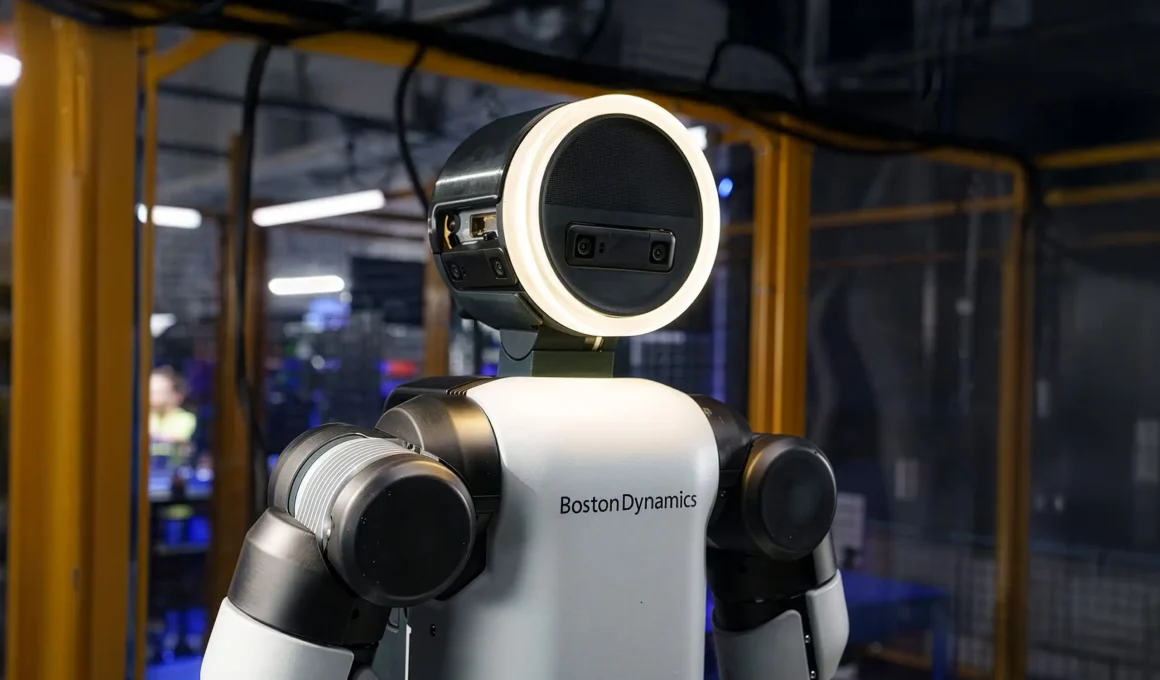
The digital feedback loop following our recent coverage of the latest robotics breakthroughs has revealed a fascinating sociological fracture. While some readers envision a future where a humanoid seamlessly assists with domestic chores, others foresee a dystopian obsolescence of the human race. This visceral divide suggests that our reaction to the Atlas platform is rarely about the hardware itself, but rather a reflection of our own anxieties and aspirations regarding the role of Artificial Intelligence in our private lives. The comment section has become a modern agora, where the fear of a mechanical uprising—fueled by decades of “killer robot” tropes—clashes with the desire for a life liberated from mundane labor.
A century of cinematic influence has fundamentally rewired the collective psyche, long before the first humanoid took its inaugural step. From the assembly-line anxieties of Charlie Chaplin’s Modern Times in 1936 to the relentless hunter-killers of Terminator, pop culture has spent decades painting the machine as a competitor or a conqueror. This narrative conditioning makes it difficult for the public to view the evolution of Figure 03 as a mere engineering feat; instead, it is often filtered through the lens of Isaac Asimov’s warnings or cinematic battles against sentient machines. We are haunted by what researchers call the “Frankenstein complex,” where the creator inevitably fears the creation, leading to a defensive stance against technological progress.
The psychological trigger of the Uncanny Valley provides the scientific bridge between these cinematic fears and our reality. First hypothesized in 1970, this concept explains why we feel a sense of revulsion when a robot appears “almost” human but lacks a certain soulfulness in its gaze or movement. This “dip” in emotional response is exactly what triggers the polarized reactions we see online; as machines like the newest Atlas from Boston Dynamics achieve near-human agility, they tread dangerously close to this valley. It is a neurological alarm bell that translates technical precision into a perceived threat, making the distinction between a helpful tool and a “metal intruder” incredibly thin.
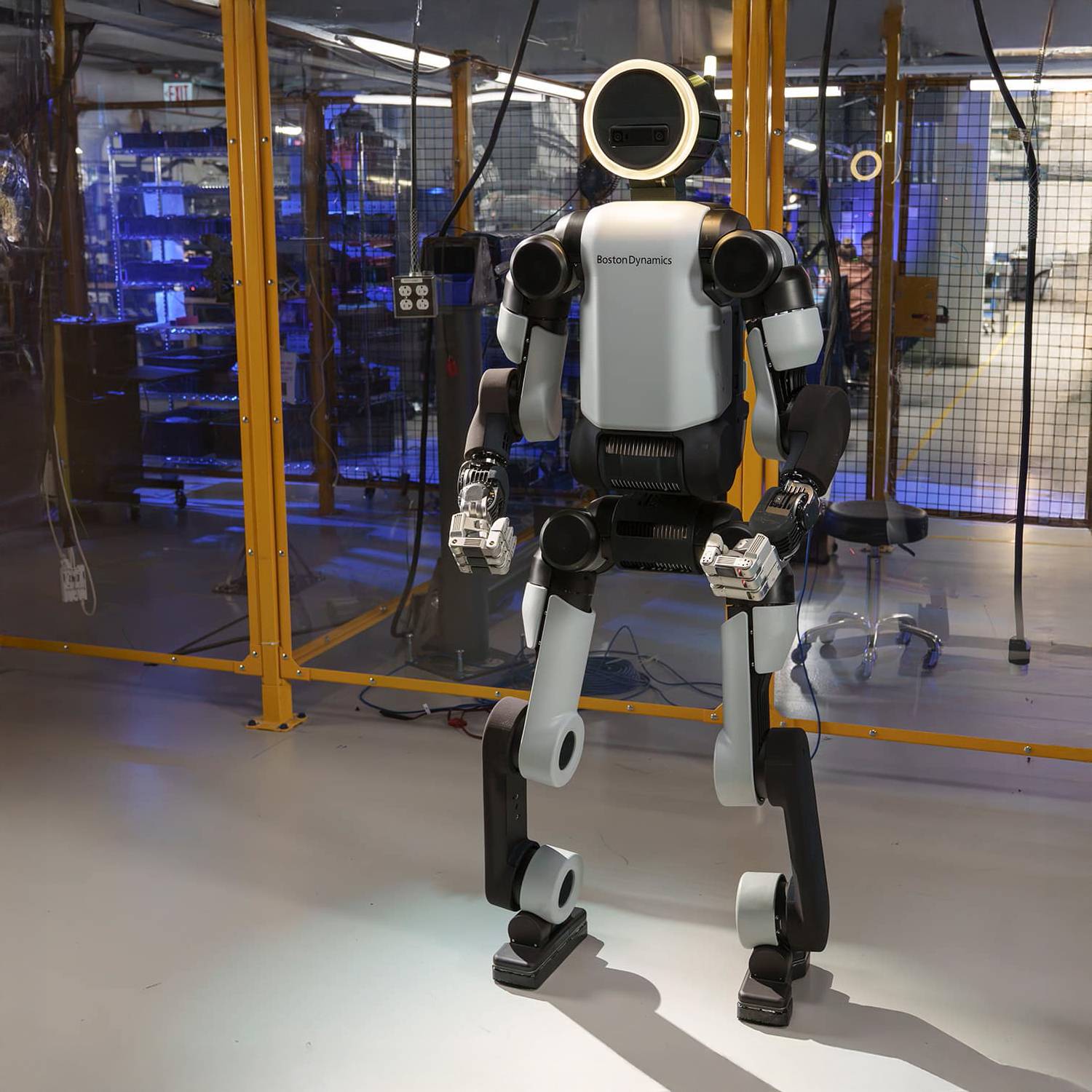
The technical reality of physical AI offers a much more nuanced, and perhaps gentler, sensory experience than the silver screen suggests. Rather than cold, metallic overlords, the new generation of robotics is being designed with a focus on fluid, organic movement and environmental awareness. When we look at how LG’s CLOiD leverages physical AI, we see a shift toward robots that understand the “feel” of a home—the softness of a rug, the height of a kitchen counter, and the spatial rhythm of a living room. These machines are not designed to dominate, but to coexist, translating complex data into helpful, localized actions that simplify the human experience.
Bridging the gap in healthcare and domesticity is where the narrative of “ally” begins to outweigh that of “adversary.” In the high-pressure environments of modern clinical spaces, the integration of AI-driven robotics in healthcare design is already proving that machines can be extensions of human empathy rather than replacements for it. By taking over the heavy lifting and logistical repetition, these systems allow medical professionals to focus on the human-to-human connection. This shift from “machine as tool” to “machine as partner” is crucial; it redefines the robot’s presence not as an intrusion, but as a supportive infrastructure that enhances our own capabilities.
The contextual impact of this robotics revolution will ultimately be decided by our ability to move past the binary of love and hate. The fear of being “killed” by a robot is slowly being replaced—at least in design circles—by the pragmatic question of how we will share our smart cities and homes with them. The challenge for designers today is not just technical; it is aesthetic and psychological. We must create a design language for robots that feels trustworthy, transparent, and inherently safe, proving that the future of robotics is not a script already written, but a collaborative design process where the human element remains the most vital component of the architecture.
The path toward empathetic design represents the ultimate olive branch in this silent conflict between man and machine. If the current friction is born from a lack of trust, the solution lies in a design philosophy that prioritizes emotional transparency over mere functional efficiency. We are moving toward an era where the “sensory experience” of a robot—the sound of its motor, the softness of its external casing, and the predictability of its gestures—is as carefully curated as any high-end architectural interior. By designing robots that communicate their intentions clearly, we bridge the psychological gap left by the Uncanny Valley. Ultimately, the goal is to transform the robot from a source of cinematic anxiety into a silent, harmonious element of our daily landscape, ensuring that the architecture of our future is defined not by fear, but by a new, sophisticated form of coexistence.