


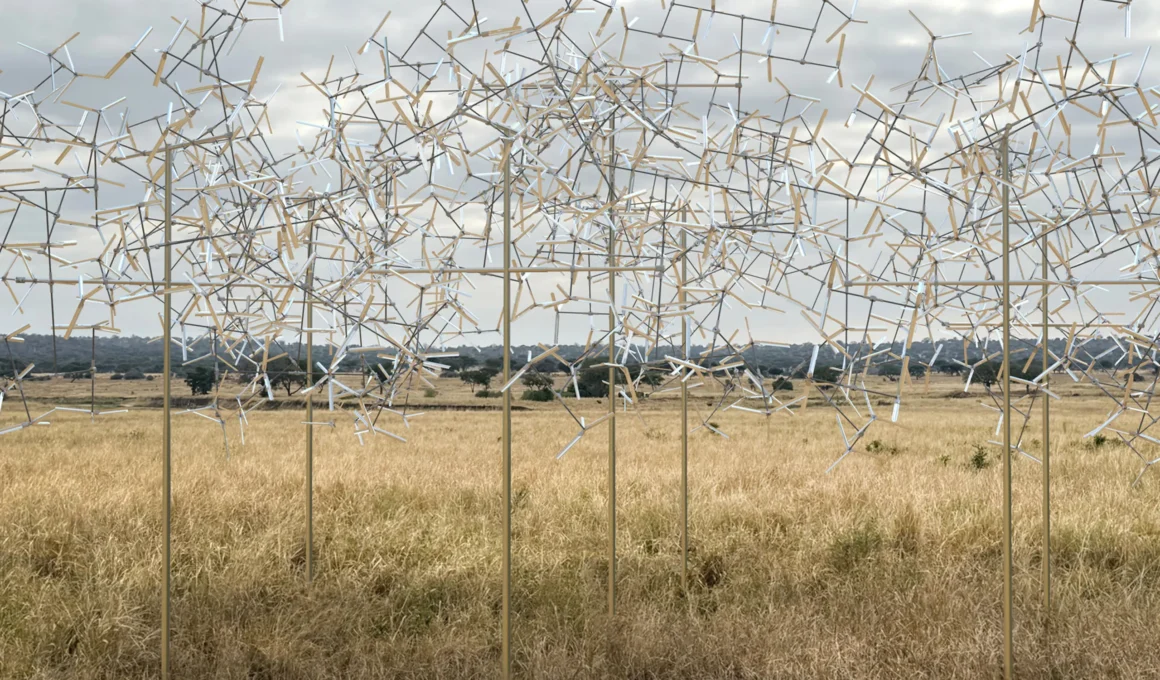
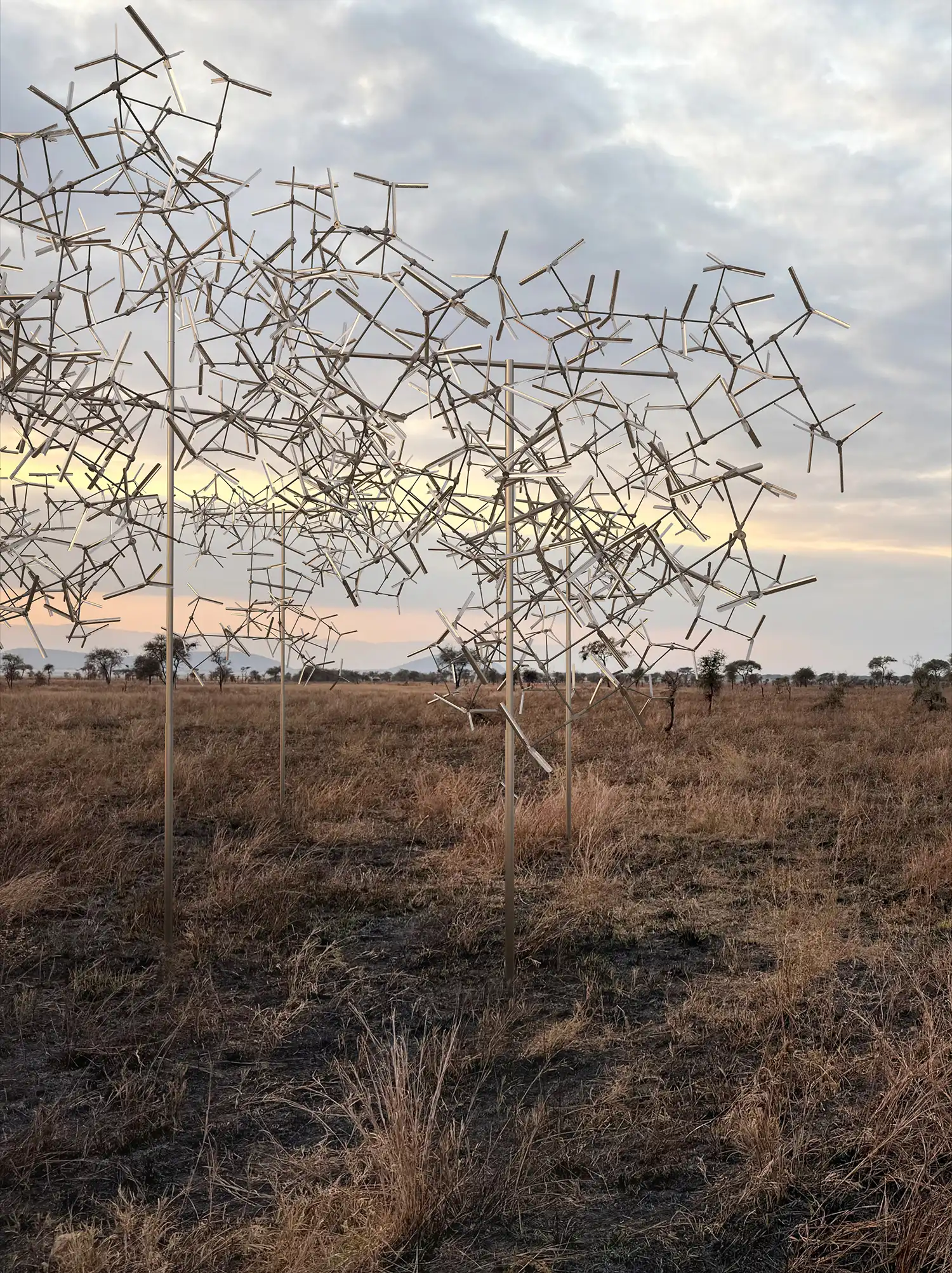
In the vast, sun-drenched expanse of the Tanzanian plains, where the horizon feels less like a boundary and more like an invitation, French artist Vincent Leroy has introduced a new protagonist to the landscape. Fractal Swarm is not merely a static object placed upon the earth; it is a kinetic dialogue between mathematical precision and the unpredictable whims of the African sky. By distilling the complexity of fractal geometry into a lightweight, modular system, Leroy has created a work that feels as much a part of the atmosphere as it does the terrain.
A geometric pulse in the wild. The installation begins with a rigorous logic—a series of repeated modular elements, partially realized through advanced 3D printing, that adhere to the principles of self-similarity. In its resting state, the structure presents an abstract, almost clinical appearance that contrasts with the raw vitality of the savannah. However, this architectural rigidity is fleeting. As the first breeze catches the assembly, the mathematical system surrenders to the environment, transforming the stiff geometry into a fluid, organic entity that mimics the pulsing rhythm of a living organism.
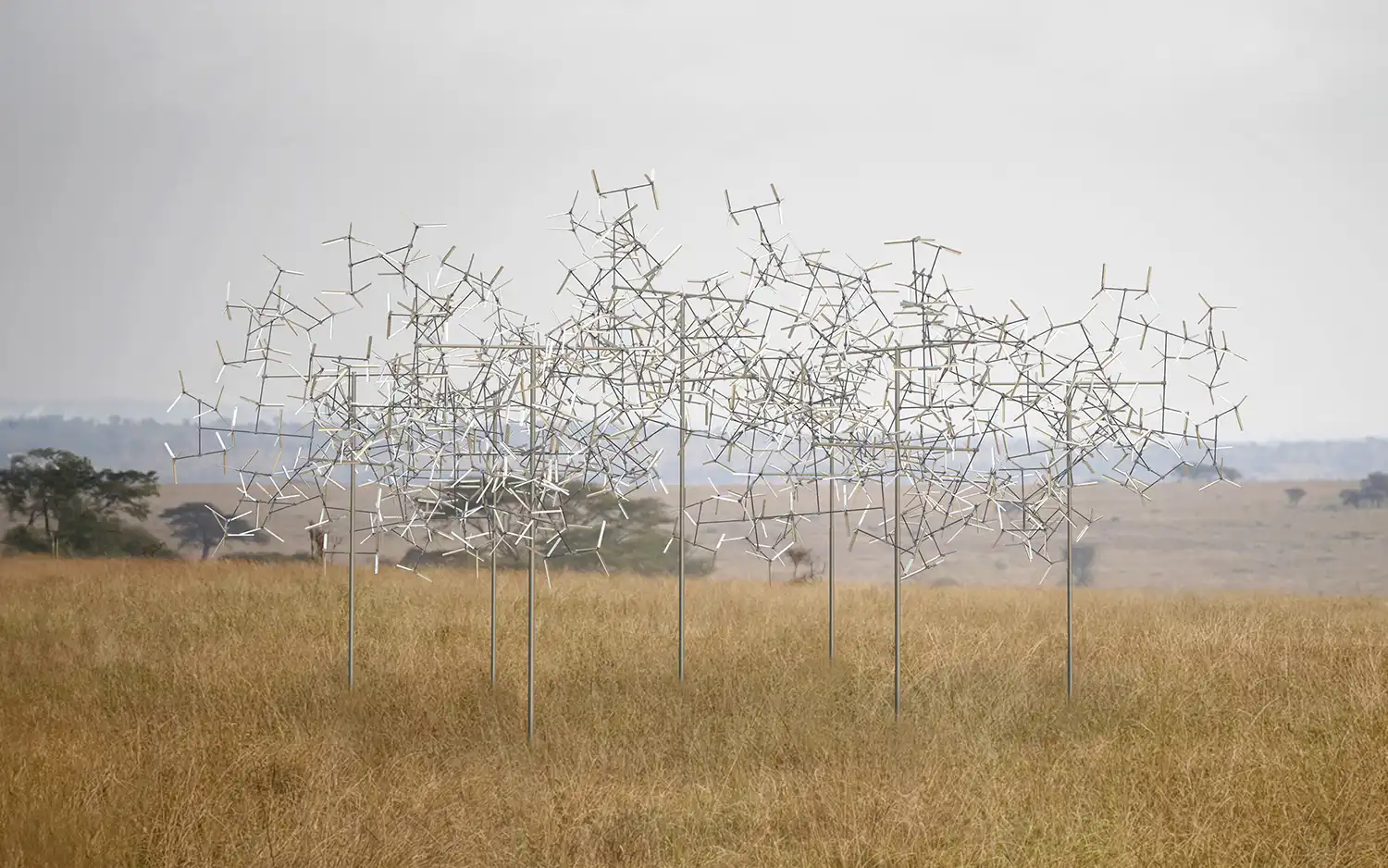
Reflecting the arid vernacular. There is a profound visual synergy between the Fractal Swarm and the local flora. The skeletal framework of the installation mirrors the desaturated, jagged profiles of leafless acacia trees and the fragmented textures of sun-scorched vegetation characteristic of the dry season. This alignment ensures the intervention does not feel like an imposition; rather, it acts as a spatial extension of the territory’s existing patterns. The work occupies a unique threshold between the artificial and the natural, appearing as a digital ghost haunting a primordial landscape.
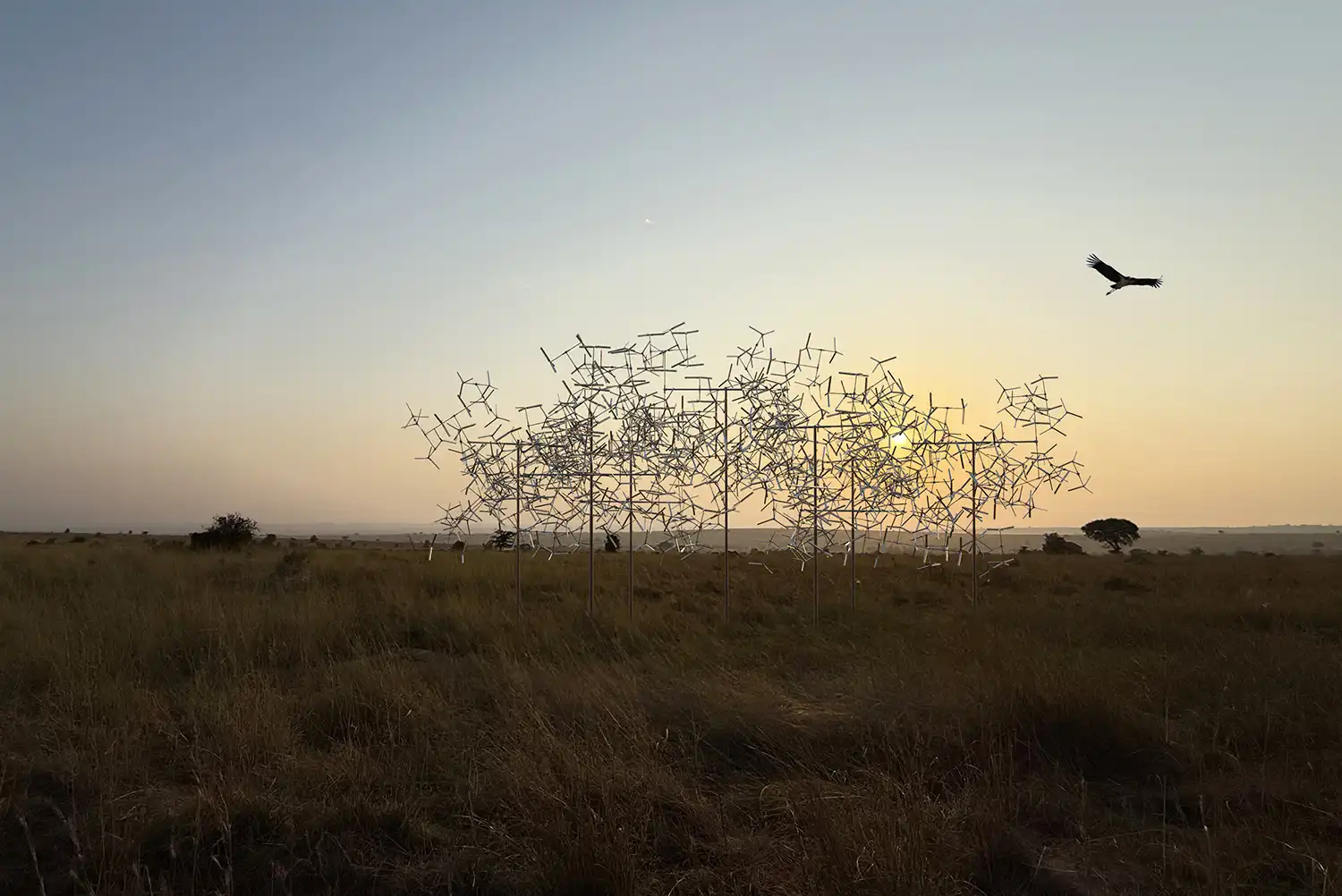
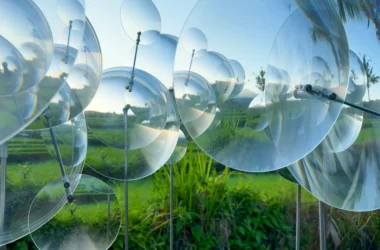
The sensory dance of light. To experience the work in person is to witness a constant state of flux. Thin, mirrored fins are integrated into the structure to capture and diffract the punishing intensity of the equatorial sun. As the earth rotates, these surfaces cast shimmering splinters of light across the dust, causing the installation to oscillate between a sharp, metallic presence and a ghost-like transparency. At certain hours, the light-play is so intense that the physical boundaries of the sculpture seem to dissolve, leaving only a shimmering vibration against the heat haze.
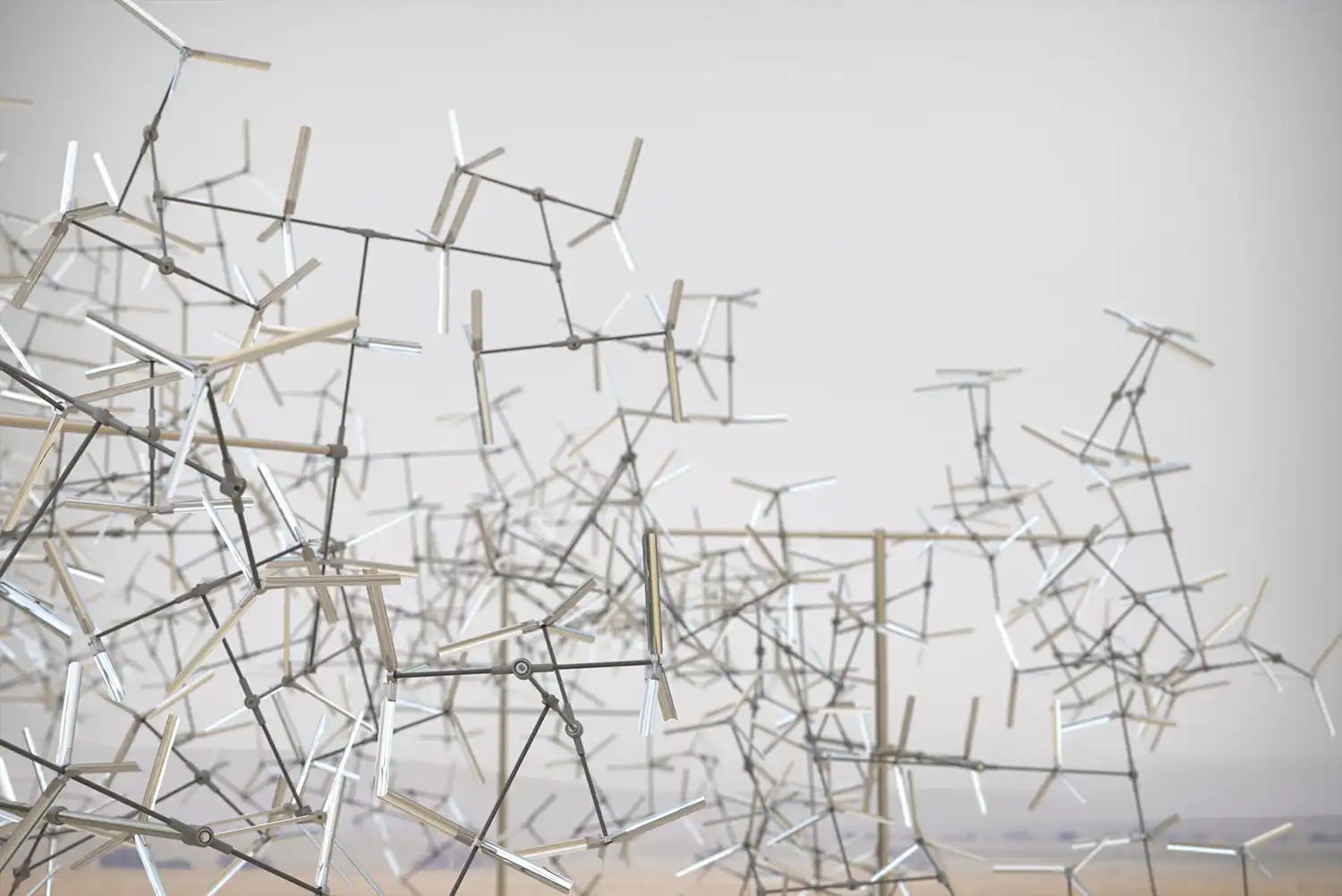
Atmospheric choreography. Activation is provided entirely by the wind, ensuring that Fractal Swarm is never the same sculpture twice. Each individual module is designed to rotate and tremble autonomously, yet they are bound by a collective physical logic. From a distance, this decentralized motion evokes the mesmerizing “murmuration” of bird flocks or the shifting clouds of insects common to the plains. It is a masterstroke of kinetic art—a delicate balance where the weightless components fight against gravity to create a “spatial drawing” that is written and erased by the wind in real-time.
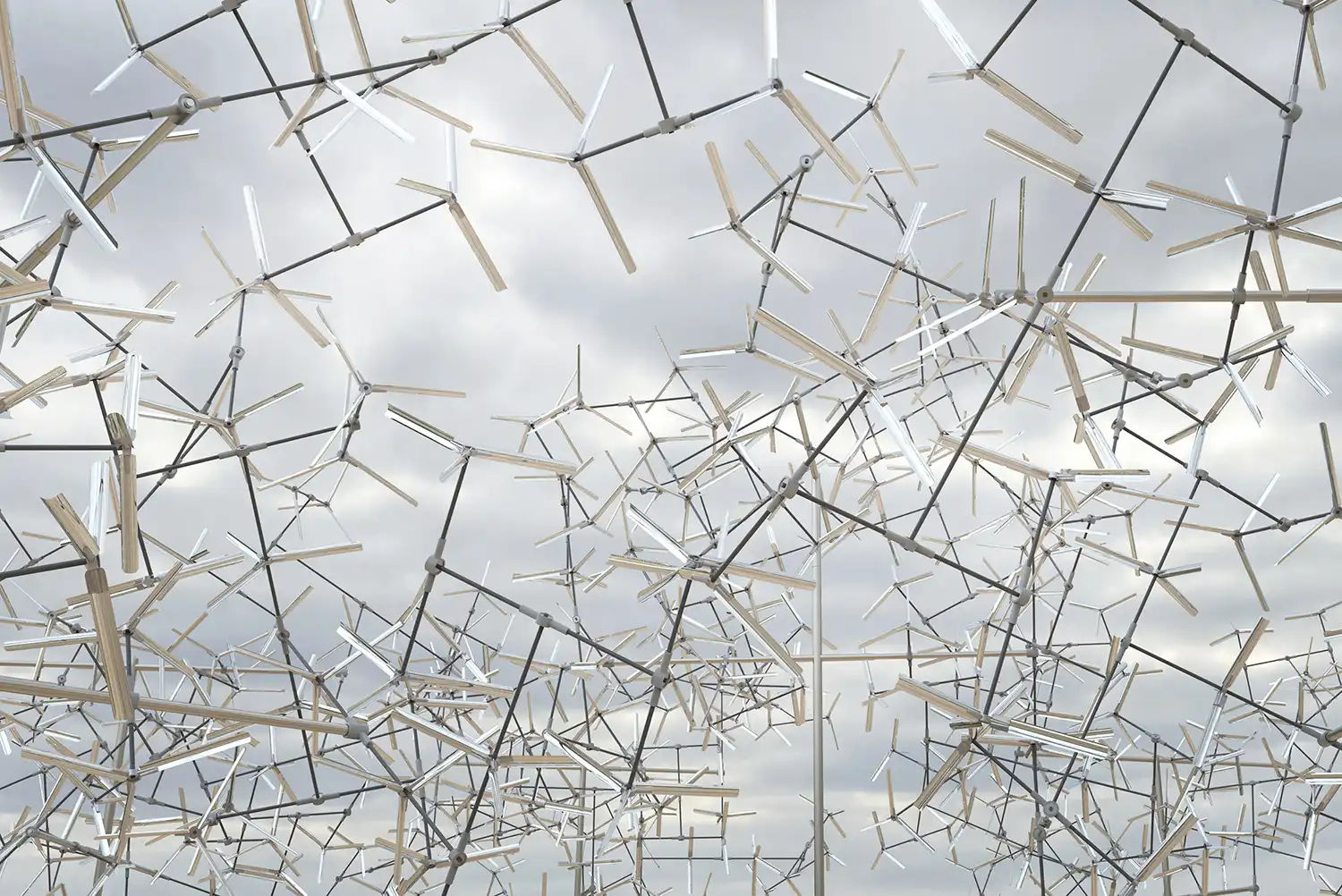
A trajectory of molecular exploration. This Tanzanian intervention represents a sophisticated evolution of Leroy’s ongoing fascination with modularity and environmental translucency. It follows the ethereal footsteps of his previous works, such as the Molecular Cloud at DDP Seoul, which brought a similar sense of weightlessness to an urban context, and the Molecular Cloud in Normandy, where the artist explored the intersection of public art and coastal light. In each instance, Leroy manages to strip away the density of traditional sculpture, replacing it with a rhythmic transparency that honors the site’s specific spirit.
The artist’s evolving vision. Through this latest installation, Leroy continues to refine a signature language that bridges the gap between digital fabrication and natural phenomena. For those following the artist’s journey, his Instagram offers a window into the meticulous testing and prototyping required to achieve such effortless motion. By revisiting the core tenets of his practice in such a remote and powerful setting, Vincent Leroy reinforces the idea that technology, when handled with sensitivity, can become a lens through which we better perceive the invisible forces of our world.