

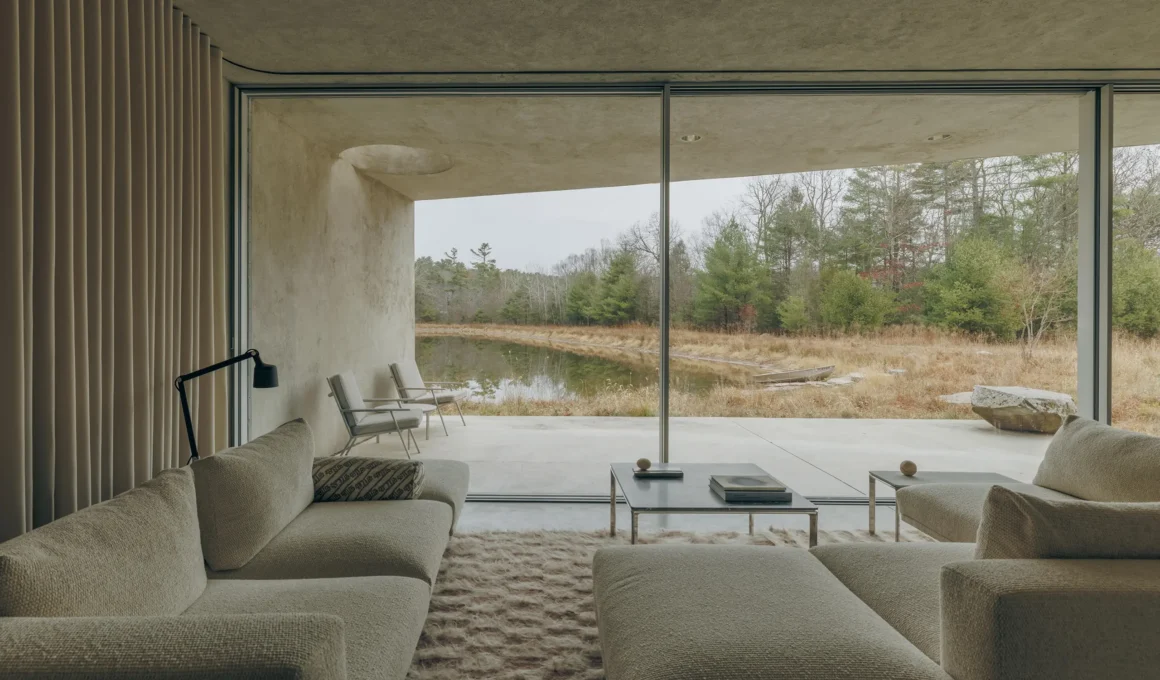
In the quiet expanse of Lumberland, New York, the newly unveiled Vipp Pavilion by Johnston Marklee emerges as a sculptural guesthouse that translates the Danish brand’s minimalist ethos into a site-specific dialogue with the Hudson Valley landscape.
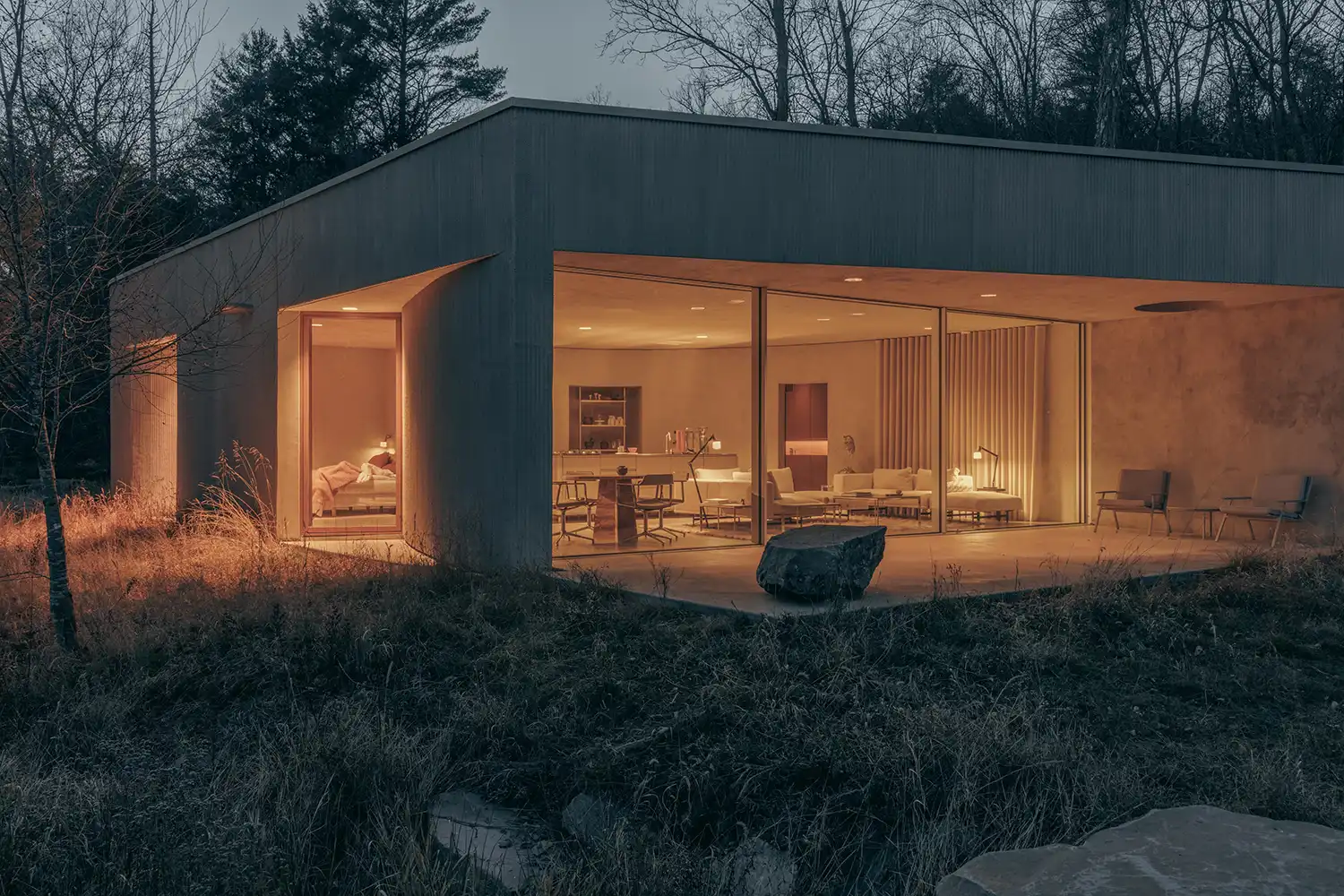
A conceptual resonance. The structure, situated two hours outside of Manhattan, was envisioned by co-founder Sharon Johnston as a “stone in a pond.” This metaphorical weight is felt upon approach; the building initially appears as a solid, monolithic volume that gradually reveals its intricate geometry. The plan is defined by two intersecting ellipses that mirror the organic contours of the adjacent water, encased within a rectangular envelope that negotiates the transition between the wild forest and the curated interior.
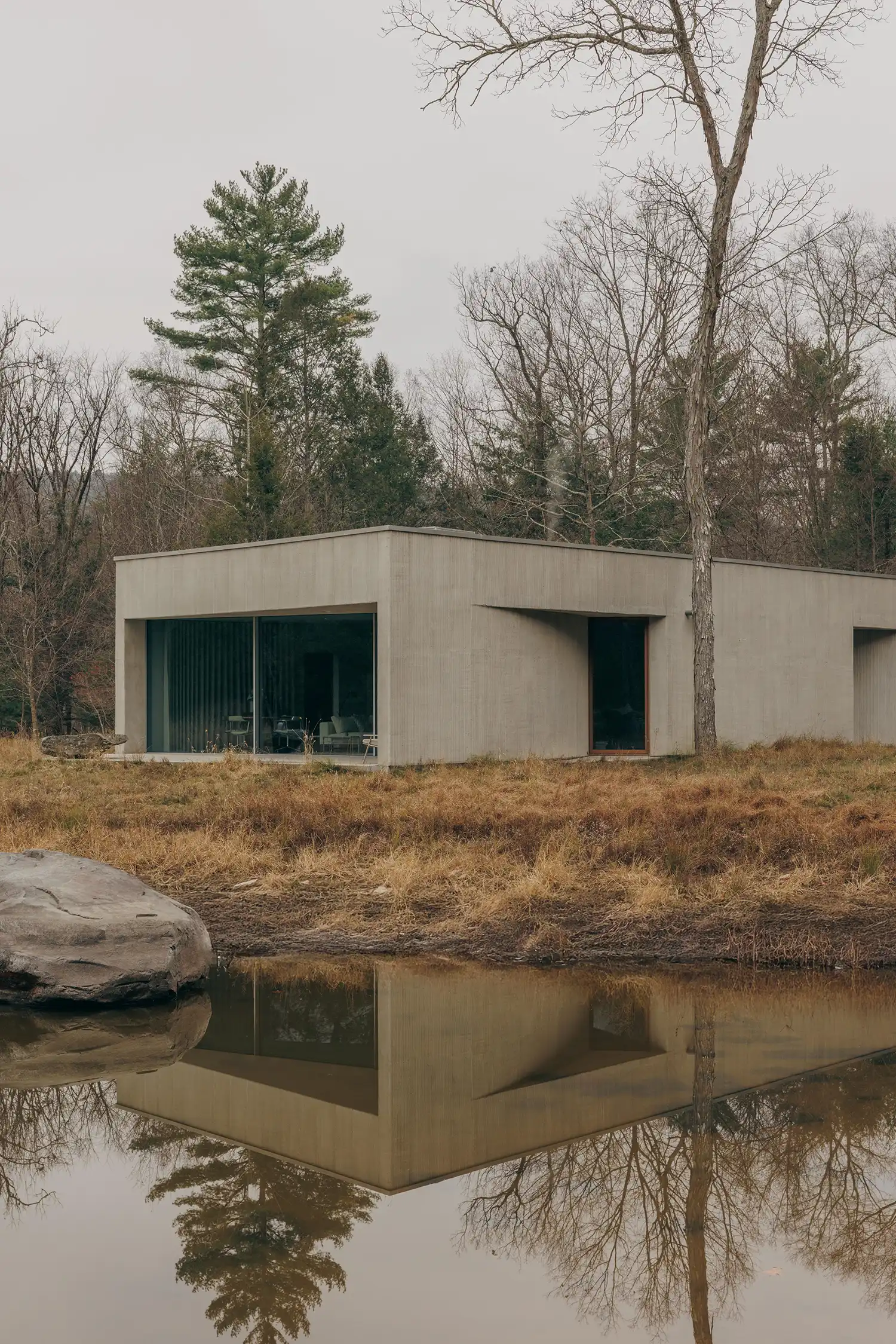
Textural duality. The exterior skin is a study in subtle contrast, clad in greige stucco that alternates between ribbed and smooth finishes. This tactile rhythm allows the pavilion to assert its presence against the dense woodland while simultaneously softening its edges. To further ground the 1,200-square-foot retreat, Larry Weaner Landscape Associates integrated a green roof, ensuring that from higher elevations, the structure effectively disappears into the canopy, blurring the boundary between the built environment and the New York wilderness.
The inward journey. Entry is gained through the side facing away from the lake, where two tall portals lead into a semi-circular gravel courtyard. This transitional space serves as a sensory palate cleanser, directing the gaze upward toward the sky before one moves into the wood-clad hallway. The interior logic is governed by the elliptical cores, creating a fluid layout where communal and private zones are delineated not by rigid walls, but by the graceful sweep of the building’s internal curves.
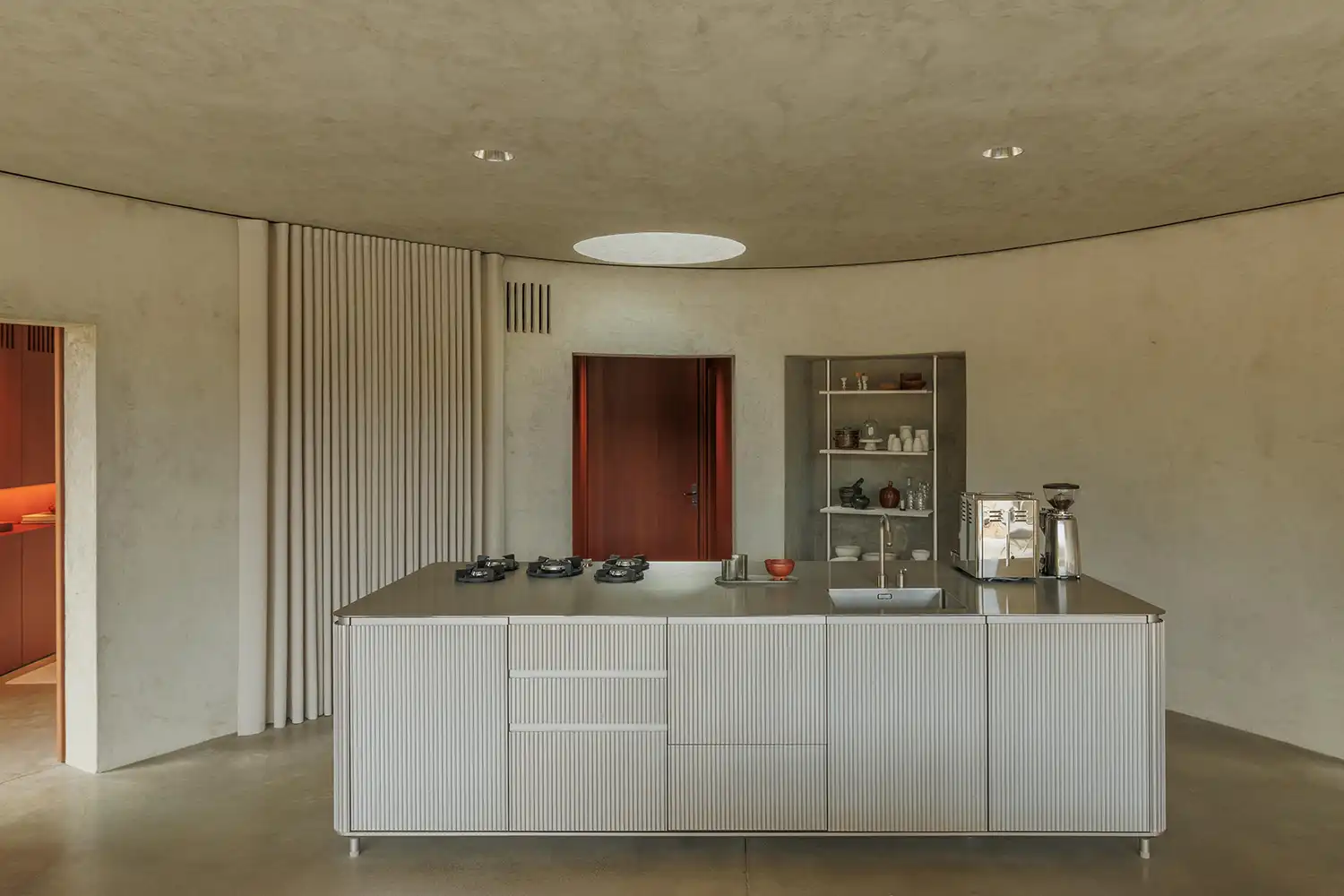
Material synergy. Within the main living area, the anodised-aluminium V3 kitchen by Vipp serves as the functional heart. Its ribbed body is a deliberate material echo of the exterior’s fluted stucco, creating a cohesive aesthetic thread that runs through the entire project. Positioned directly beneath a large skylight, the kitchen is bathed in shifting natural light, emphasizing the industrial precision of the furniture against the warm, organic backdrop of the Sapele wood casework found in the adjacent bedrooms.
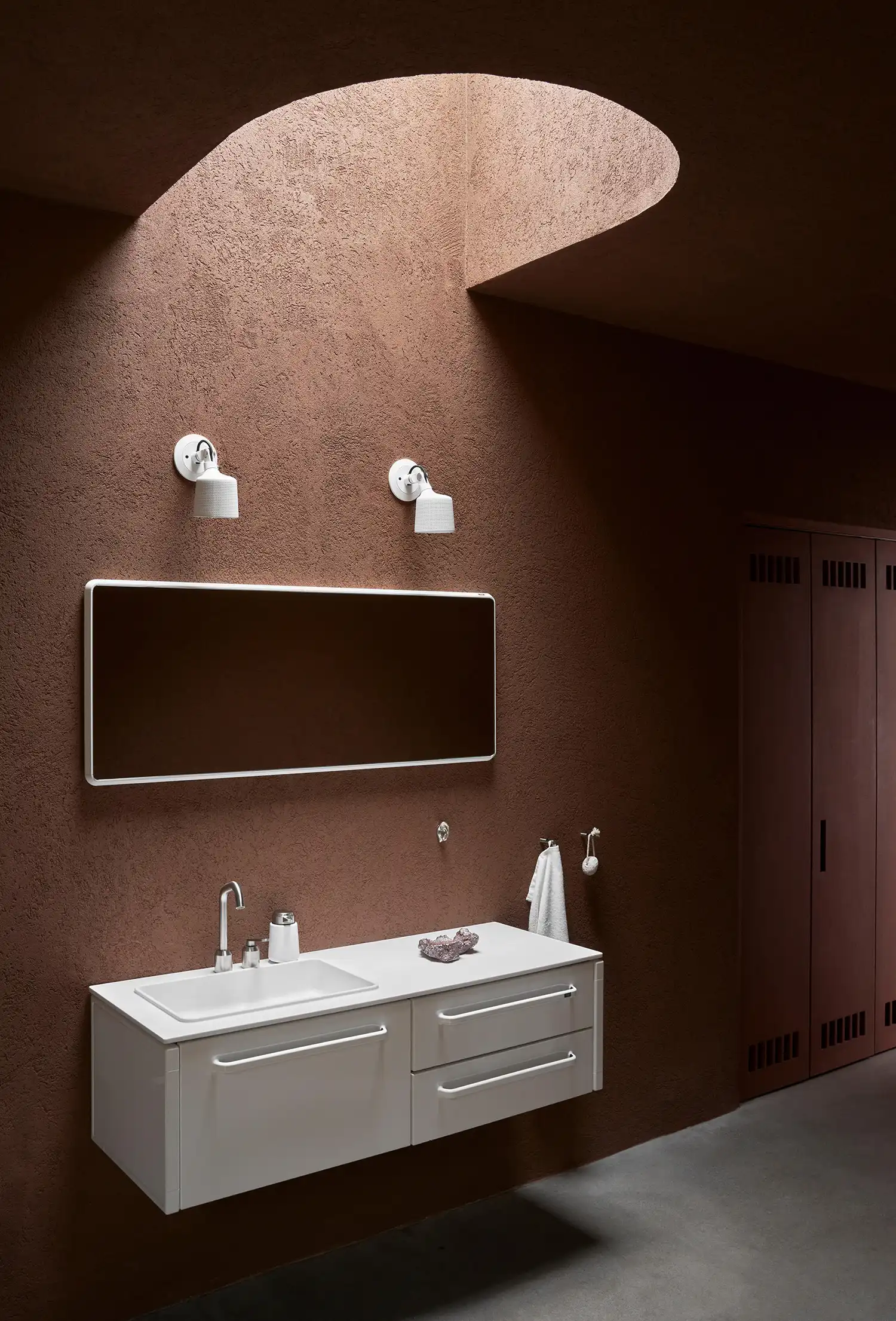
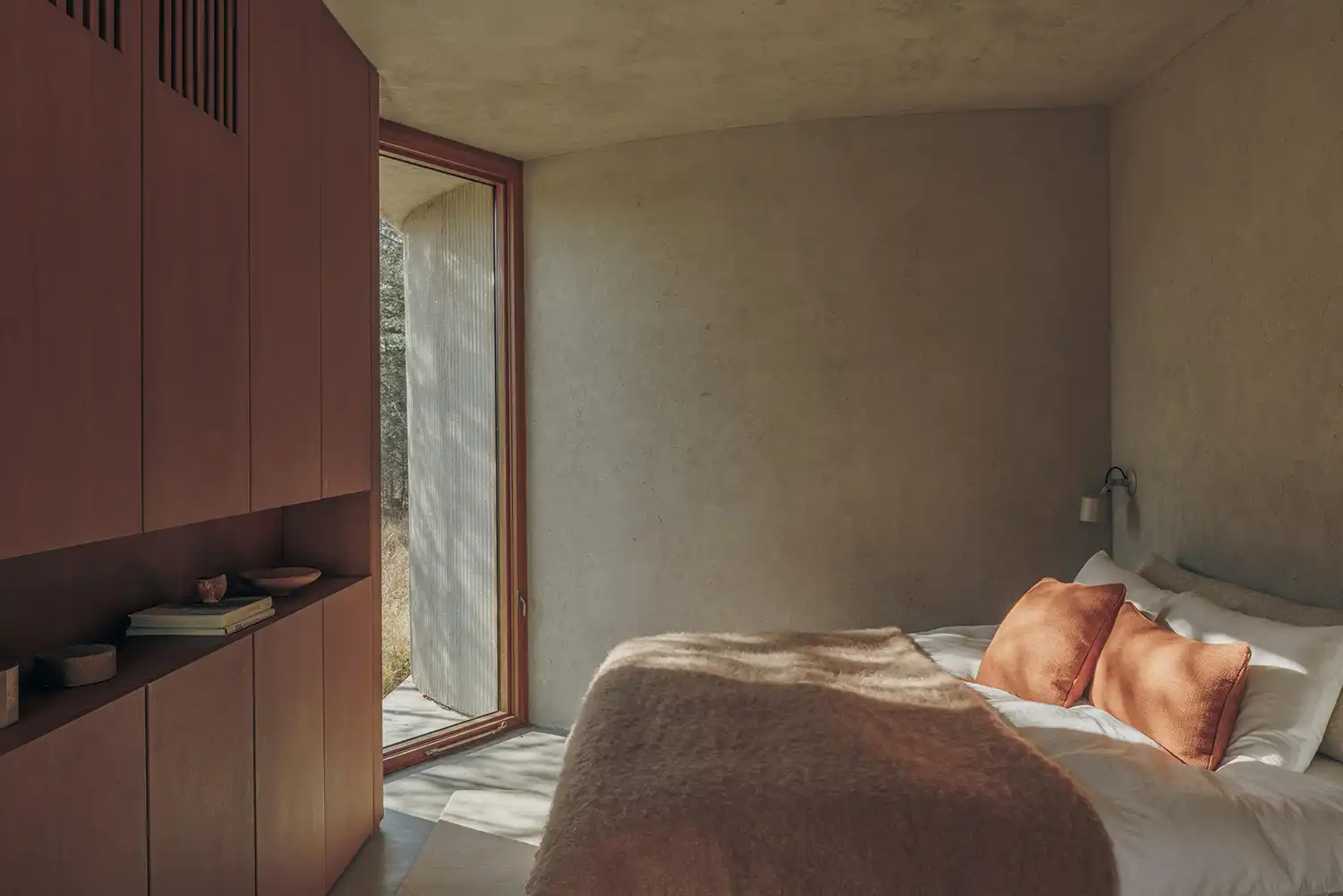
Chromatic depth. While much of the pavilion favors a muted, ethereal palette, the bathroom offers a sudden, deliberate departure with walls painted in a rich ochre. This bold use of color, paired with dual-aspect windows and strategically placed skylights, ensures that even the most functional spaces feel connected to the shifting light of the Upstate New York seasons. The bedrooms utilize sliding doors that follow the elliptical arc, allowing for a seamless transformation from private sleeping quarters to an open, communal pavilion.
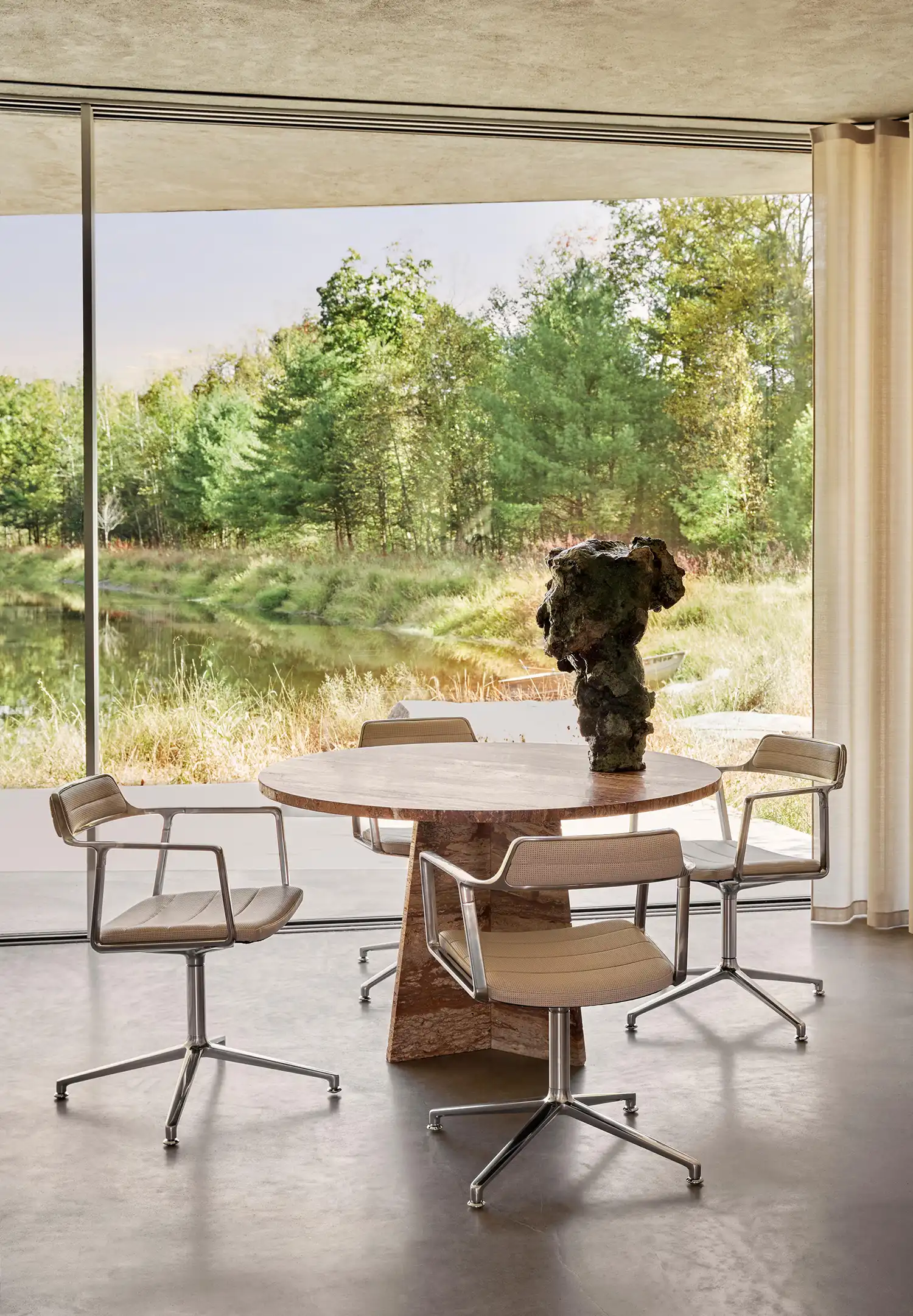
Telescopic perspectives. The spatial sequence culminates in a dramatic “telescopic” effect. As the interior flows toward the water, the semi-circular walls give way to a massive, floor-to-ceiling window wall. Here, a curated selection of Vipp Swivel Chairs and a travertine table are positioned to frame the view of the pond, extending the living space onto a covered patio. This transparency transforms the guesthouse into a sophisticated lens through which to observe the surrounding ecosystem.
Global hospitality. The Vipp Pavilion marks a significant milestone as the brand’s first ground-up structure in the United States, expanding a hospitality portfolio that prioritizes high-end industrial craft in unique locations. For those seeking to explore how this minimalist philosophy adapts to different climates, one might compare this woodland retreat to the Mediterranean warmth of Villa Vipp in Puglia, where the brand’s signature aesthetic is reinterpreted through the lens of Italian vernacular. In New York, however, the result is a quiet, profound portal into nature that encourages visitors to shape their own unique experience.