



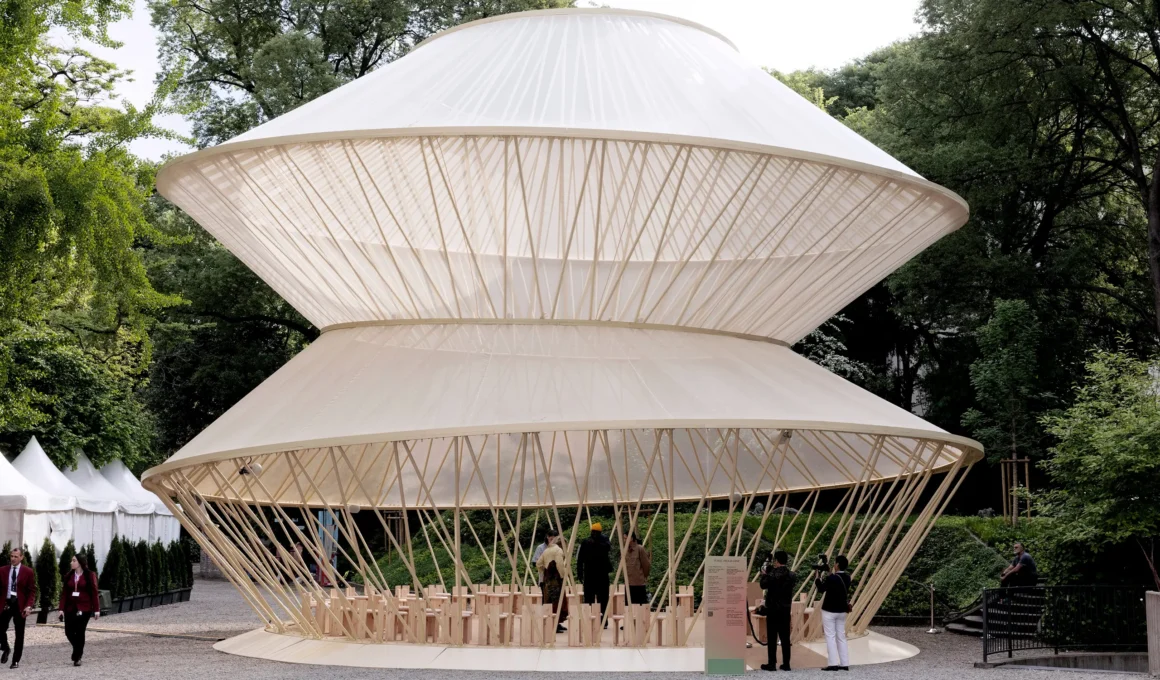
Commissioned by the Uzbekistan Art and Culture Development Foundation (ACDF) and curated by Kulapat Yantrasast of WHY Architecture, “When Apricots Blossom” transforms Milan’s Palazzo Citterio into a sensory landscape where Karakalpakstan’s nomadic heritage meets contemporary ecological inquiry.
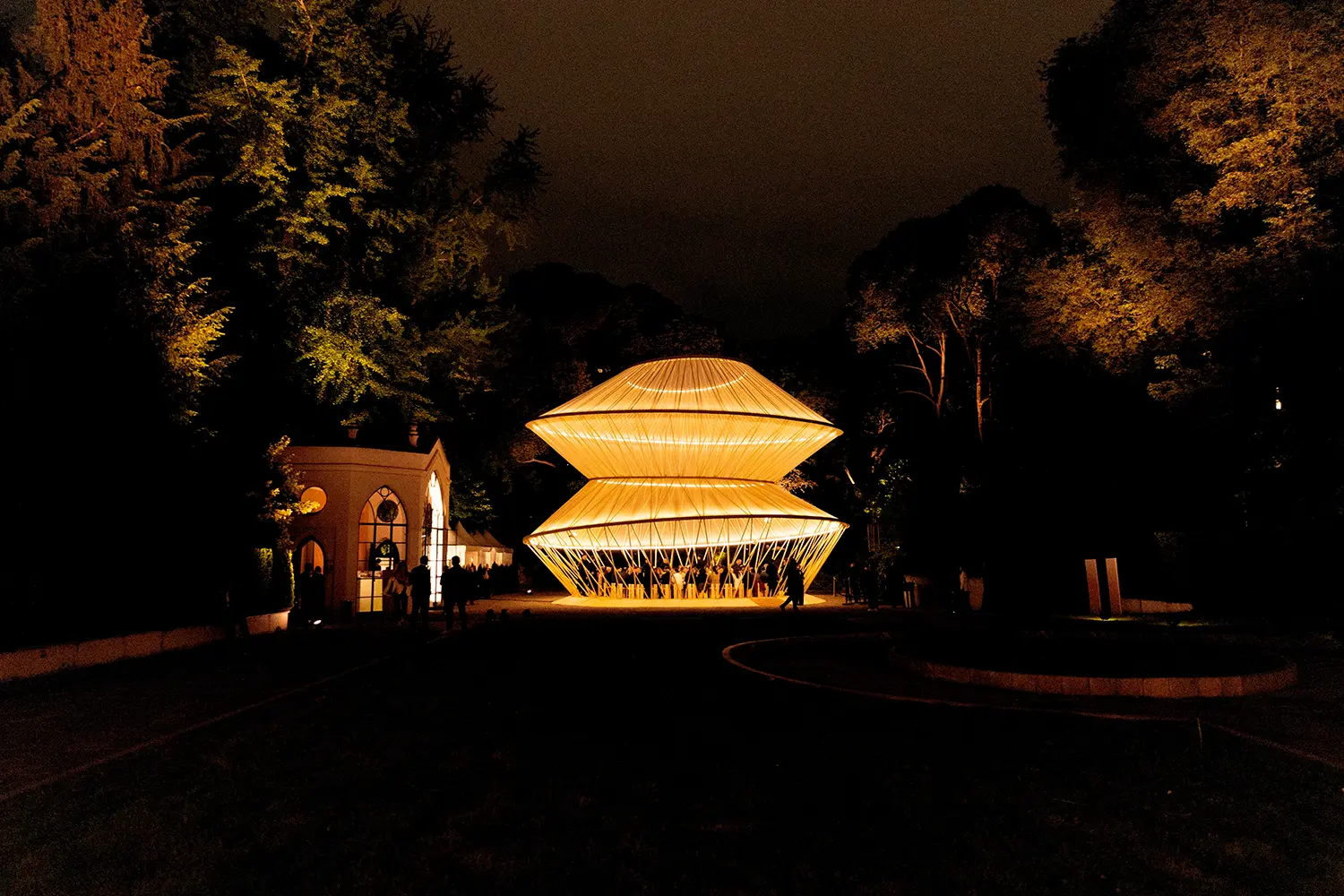
The nomadic blueprint. At the heart of the historic Brera district, the garden pavilion stands as a skeletal, evocative tribute to the traditional yurt. Unlike the enclosed, felt-lined structures of the Karakalpak steppe, Yantrasast’s interpretation is an ethereal framework that “holds absence,” serving as the social nucleus for the Milan Design Week 2026 installation. It invites visitors to congregate within a structure that feels both ancient and temporary—a physical manifestation of resilience in the face of the Aral Sea environmental crisis, transitioning from the rigid stone of the Palazzo to organic, flowing lines.
Craft as a tool for regeneration. Moving through the Palazzo, the exhibition unfolds via undulating, reed-like formsthat mimic the parched textures of the Uzbek landscape, where the visual narrative shifts from receding shorelines to the tactile warmth of bread-making traditions. By collaborating with twelve international designers, ACDF has produced limited-edition chekich (bread stamps) and silk objects that bridge the gap between historic ritual and contemporary functionalism. These artifacts explore how local materials like felt, ceramics, and reeds can offer sustainable alternatives to globalized production.
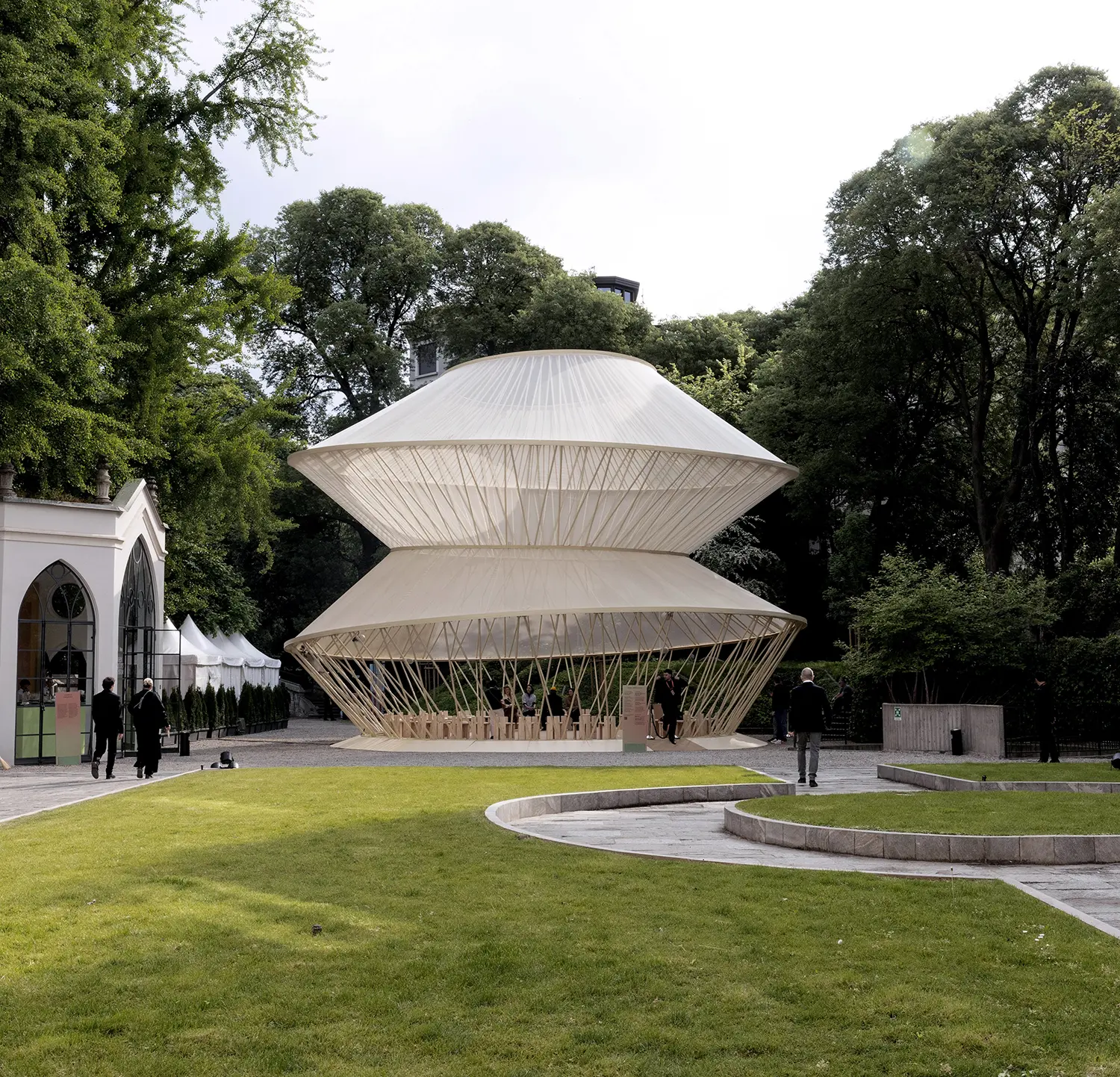
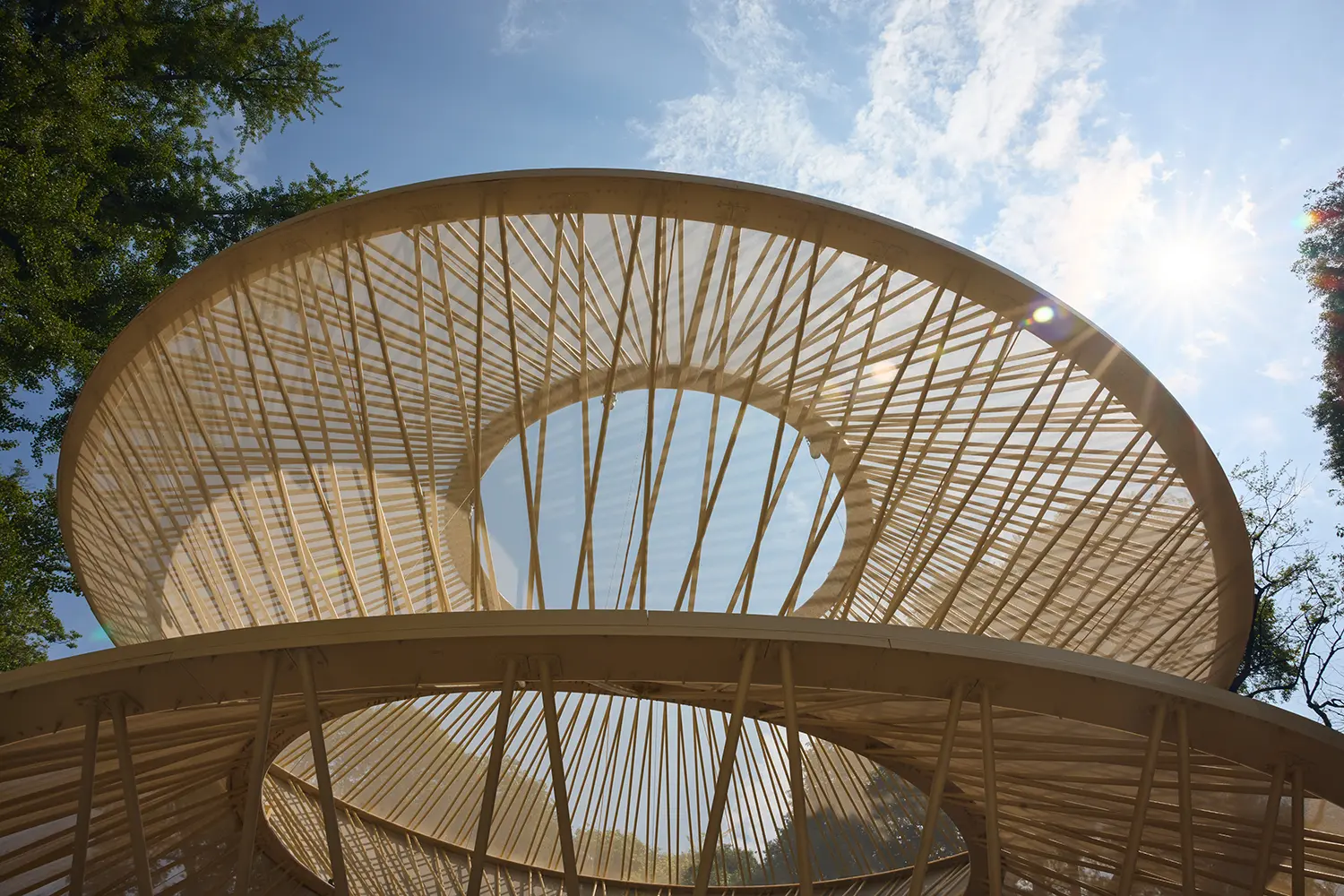
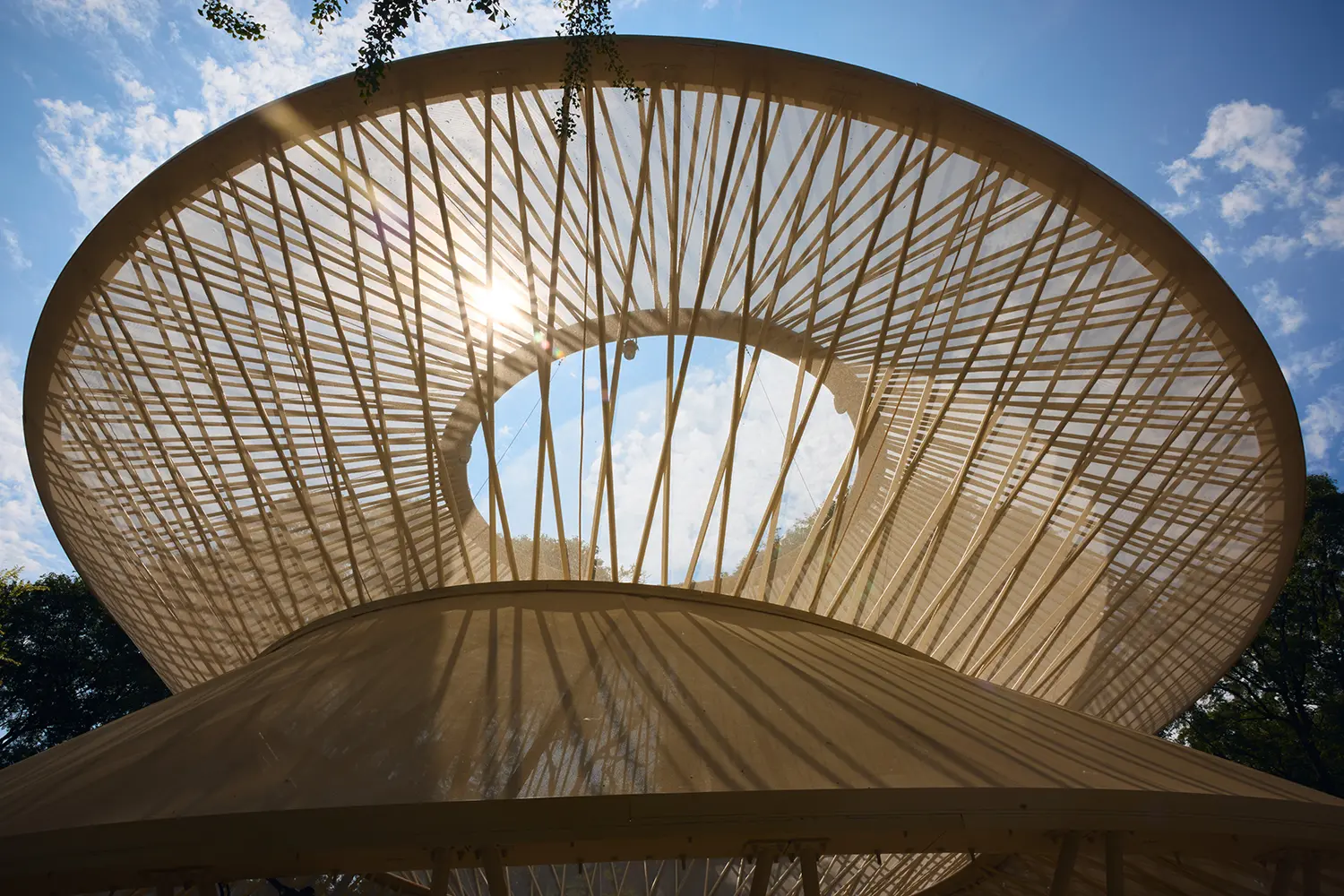
Technical ingenuity. The garden pavilion itself is an exploration of lightweight, deployable construction. By deconstructing the latticed framework of the yurt, WHY Architecture emphasizes the “honesty” of nomadic engineering—a system designed to be transported, repaired, and reassembled. This architectural proposal suggests a future where our built environment is as fluid as the communities it serves, moving away from permanence toward a more responsive, ecological adaptability that mirrors the shifting landscapes of Central Asia.
The Aral School perspective. Integrating academic rigor with creative output, the exhibition features findings from the Aral School, a multidisciplinary programme focusing on Nukus and the wider Karakalpakstan region. The inclusion of the film Where the Water Ends provides a stark, cinematic contrast to the tactile beauty of the objects on display, grounding the immersive experience in the lived reality of those surviving the shrinking of the Aral Sea. This ensures that the aesthetic beauty of the pavilion is always tethered to its urgent environmental context.

A cultural driver. Gayane Umerova’s vision for the ACDF goes beyond mere exhibition; it is a ten-year strategic roadmap for the revitalization of Uzbekistan. By bringing these perspectives to Milan, the foundation positions culture as the primary engine for social and economic change. The pavilion acts as a platform for daily tours and workshops, where master artisans share the rhythmic geometry of tassel-making, turning a high-profile design event into a site of genuine intergenerational knowledge exchange and community building.
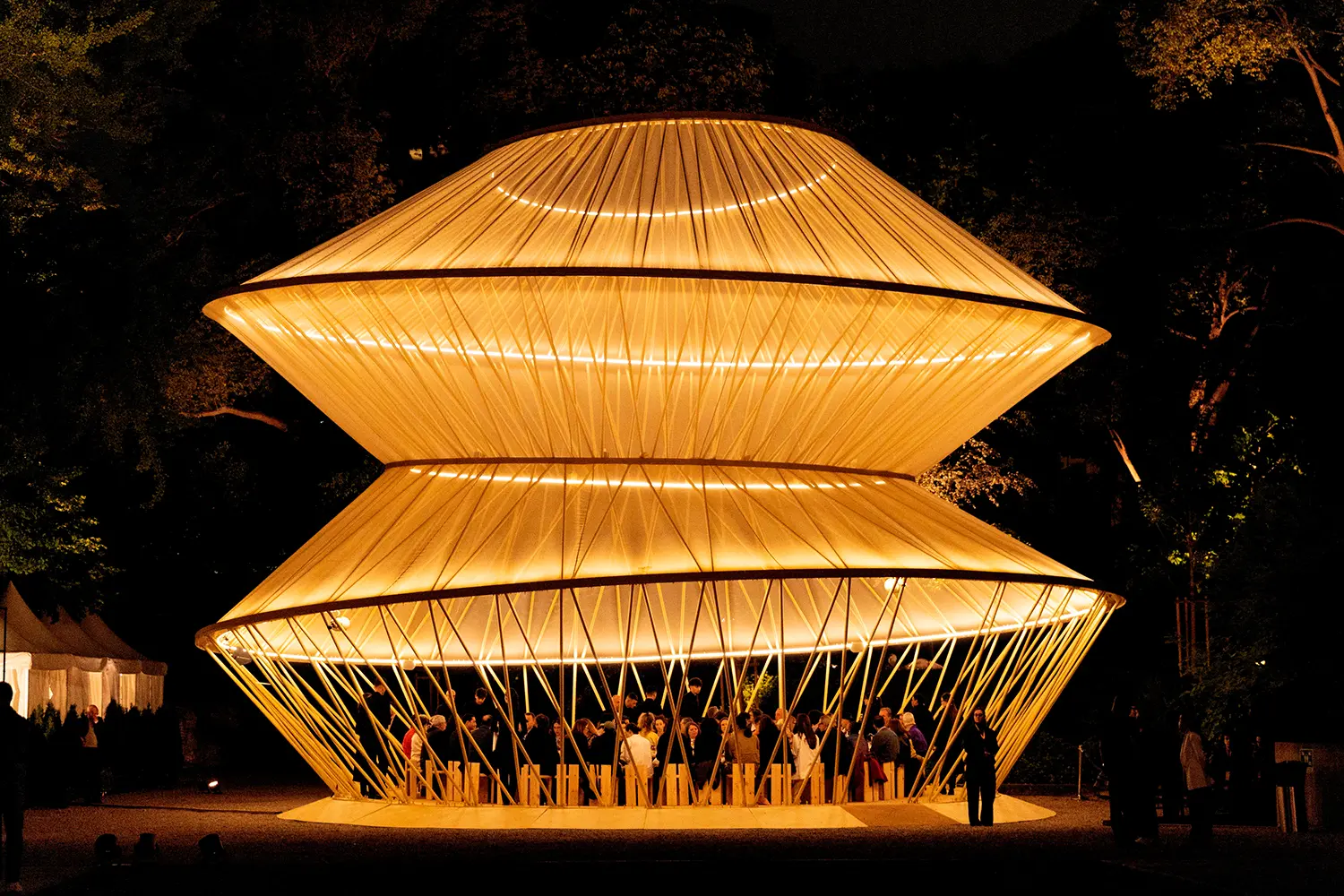
Global dialogues. The pavilion’s presence in Milan serves as a prelude to the next Aral Culture Summit, scheduled for September 2026. Within the quietude of the Palazzo Citterio garden, the structure fosters a dialogue between the specific challenges of Karakalpakstan and the universal anxieties of the climate crisis. It is a space for contemplation, where the “blossoming” of the apricot tree—a symbol of hope—is reflected in the potential for design to heal fractured landscapes and restore cultural continuity through shared human experience.
Milan’s landscape of ideas. As visitors navigate the city’s dense program, “When Apricots Blossom” joins a series of high-impact installations that redefine our relationship with materiality. From the exploration of modularity in Snøhetta and USM’s “Renaissance of the Real” to the poetic geometry of Lina Ghotmeh’s “Pink Labyrinth” at Palazzo Litta, and the luminous precision of Lee Broom’s “Beacon” with Brokis, the 2026 edition of the Salone is characterized by a deep turn toward human-centric narratives. Within this context, WHY Architecture’s pavilion remains a poignant reminder that the future must be rooted in the wisdom of the past.
When Apricots Blossom by WHY Architecture | Where: Palazzo Citterio, Via Brera 12, Milan – When: April 20 – 26, 2026 | 10 AM – 6 PM