


The archipelago of Fiji stands at a precarious crossroads, where the idyllic beauty of the South Pacific Islands meets the harsh reality of the climate crisis. For the more than 300 islands comprising the Republic of Fiji, the challenges are systemic: chronic energy shortages, a fragile power grid, and the encroaching threat of saltwater intrusion. In response, MASK Architects has unveiled FIJI SOLAR CROWN, a project that transcends traditional architecture to become a self-sustaining infrastructural organism. By merging high-tech kinetic engineering with local vernacular, the firm proposes a modular living system designed to provide total energy and water independence for one of the most vulnerable regions on Earth.
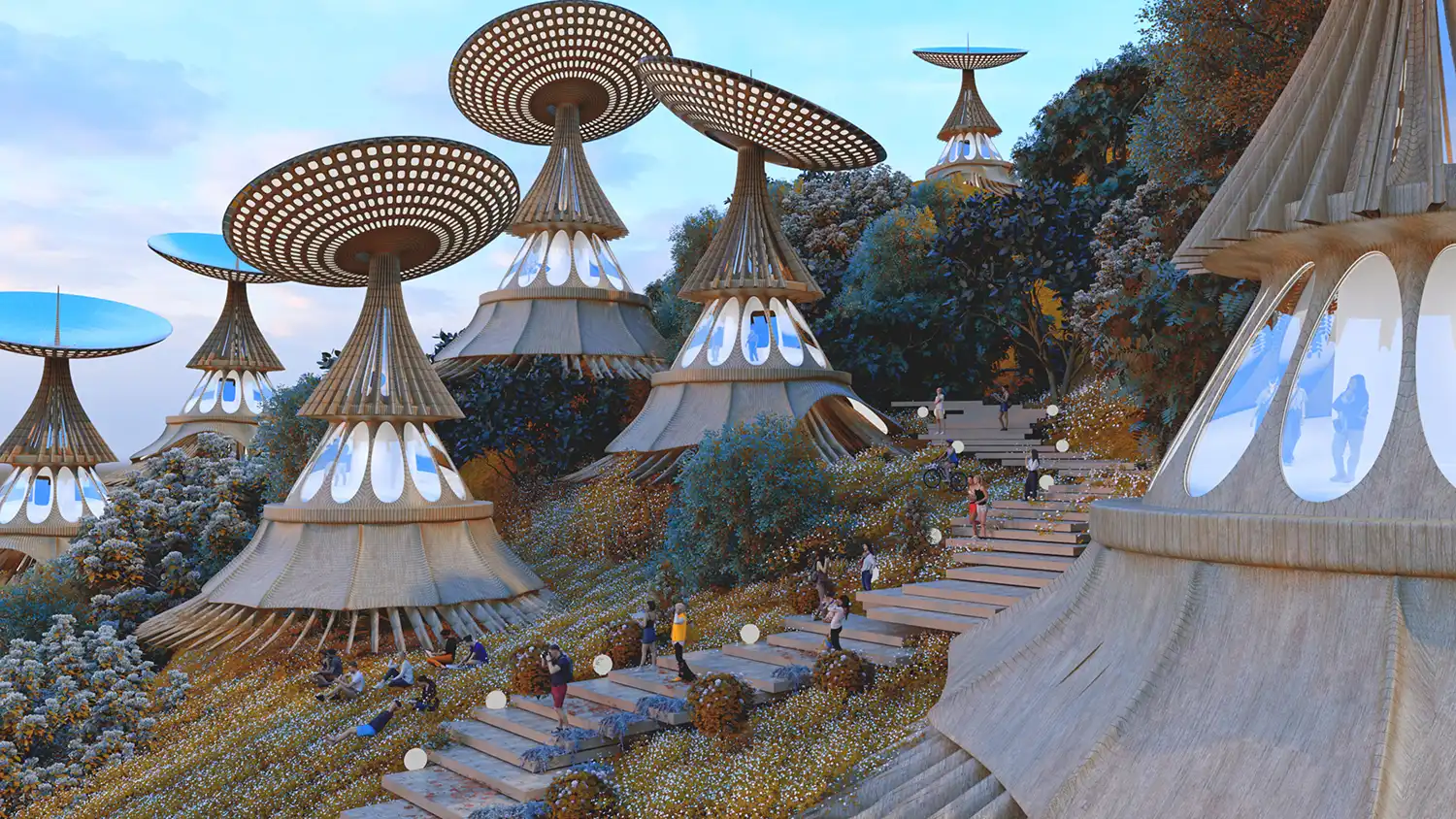
A technological evolution from mobility to territory marks the core of this intervention. The project follows the firm’s recent disruption of the transportation sector with Solaris, the world’s first self-charging motorcycle, which proved that architectural thinking could reinvent energy systems for individual mobility. With the FIJI SOLAR CROWN, founders Oznur Pinar CER and Danilo PETTA scale this logic up to the territorial level. The formal language of the modules—characterized by their soaring, organic silhouettes—draws a clear aesthetic lineage from their previous work, such as the Baobab Luxury Safari Resort, where the integration of community-centric design and ecological sensitivity first took root.
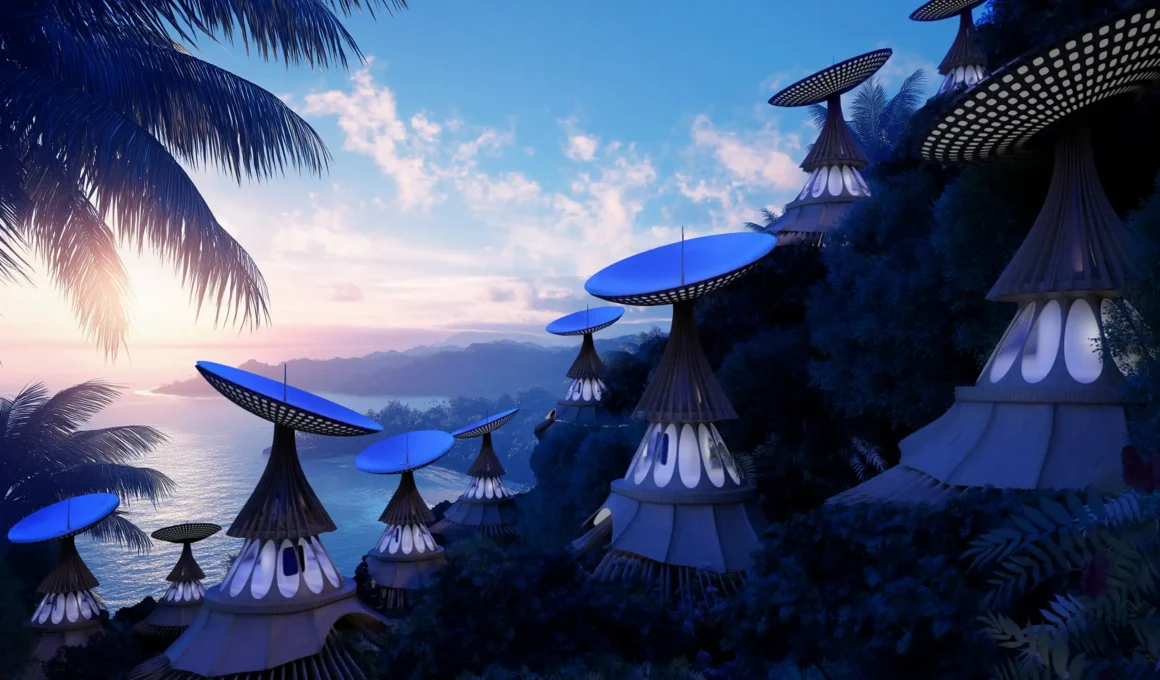
The kinetic crown as an environmental engine serves as the project’s primary innovation. Developed in partnership with TesserianTech in Italy, the system features a dual-axis concave parabolic mirror that acts as a solar concentrator. Capable of rotating 360 degrees and tilting to track the sun’s trajectory, this “crown” focuses radiation onto high-performance photovoltaic receivers. Beyond electricity, the geometry of the mirror serves a dual purpose: its rim acts as a catchment for rainfall, channeling water through a central core for filtration and storage, while its physical presence creates a cooled micro-climate in the tropical heat.

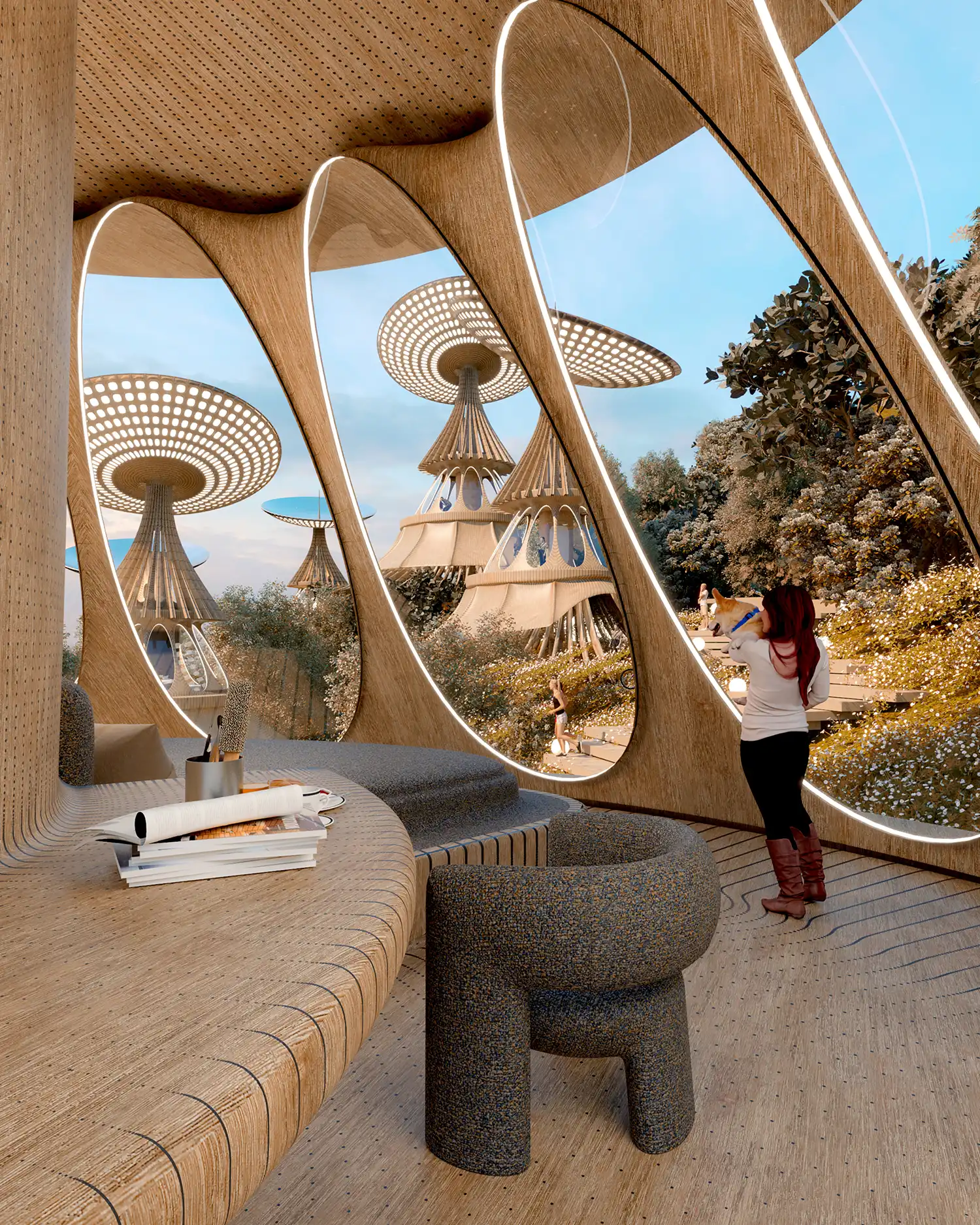
A sensory experience of climate-resilient luxury defines the interior life of the 7-metre flagship module. Beneath the shimmering anodized aluminum of the crown, the air is naturally significantly cooler, filtered through the shade of the parabolic roof. Inside, the living program is vertically organized around a central axis of basalt-fibre. The ground level offers a shaded terrace for communal life, while the main floor features panoramic glazing that provides a continuous horizon line of the Fijian coast. As night falls, an integrated under-glow lighting ring transforms the structure into a luminous halo—a beacon of light powered entirely by the day’s captured energy, turning the module into a “stargazing platform” suspended between the sea and the sky.
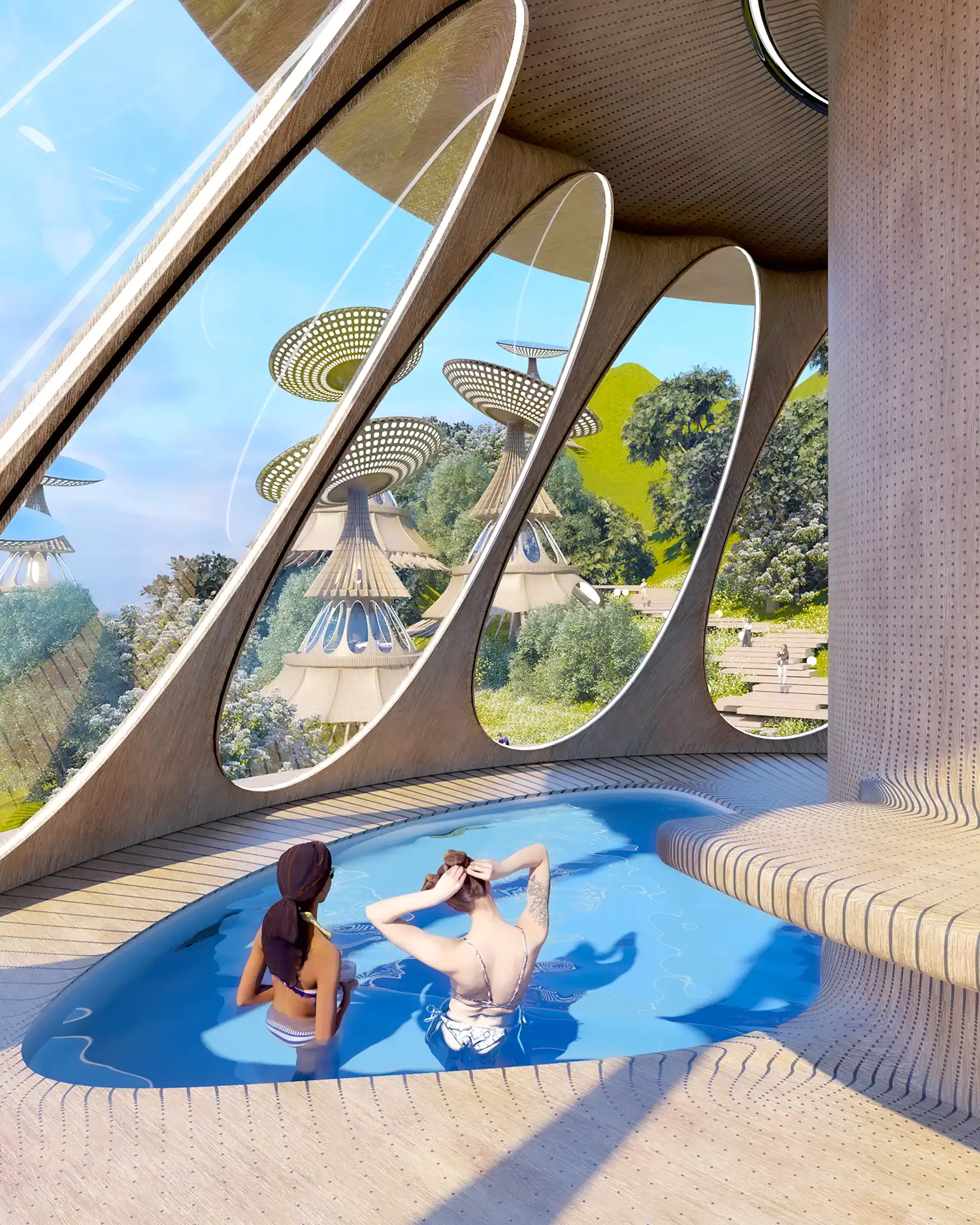
Modular scalability and cultural integration ensure that the project is not a singular monument but a flexible ecosystem. The system is organized into three scales—3, 5, and 7 metres—allowing for a variety of applications, from off-grid agricultural nodes to floating eco-resort suites. Materially, the structures honor the traditional Fijian bure. By utilizing laminated bamboo, indigenous hardwoods like Vesi and Dakua, and geopolymer eco-concrete, MASK Architects ensures that the high-tech energy axis is anchored in local craftsmanship. This “living architecture” is designed to be deployed across mountain slopes and lagoons, replacing costly diesel dependence with a distributed network of renewable power.
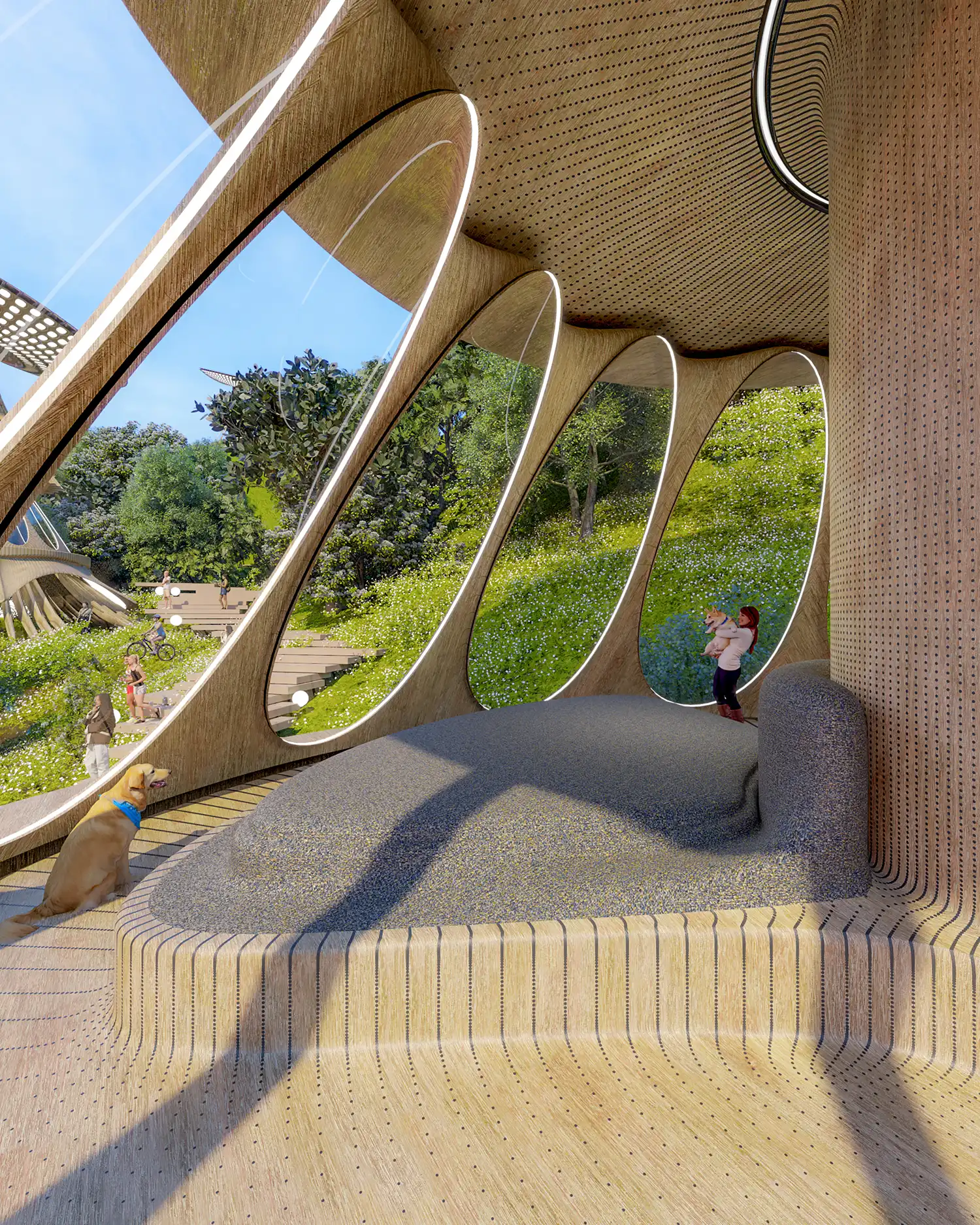
Towards a new territorial infrastructure, the impact of the FIJI SOLAR CROWN is calculated in its ability to foster economic and environmental resilience. A single 7-metre module can produce up to 80 kWh per day, and when clustered, these “radiant crowns” can power entire village-scale micro-grids. By stabilizing water access and mitigating the heat-island effect, the project positions Fiji as a global model for solar-driven innovation. It is an architectural manifesto that views the climate crisis not merely as a problem of shelter, but as an opportunity to invent a symbiotic relationship between technology, heritage, and the natural world.