


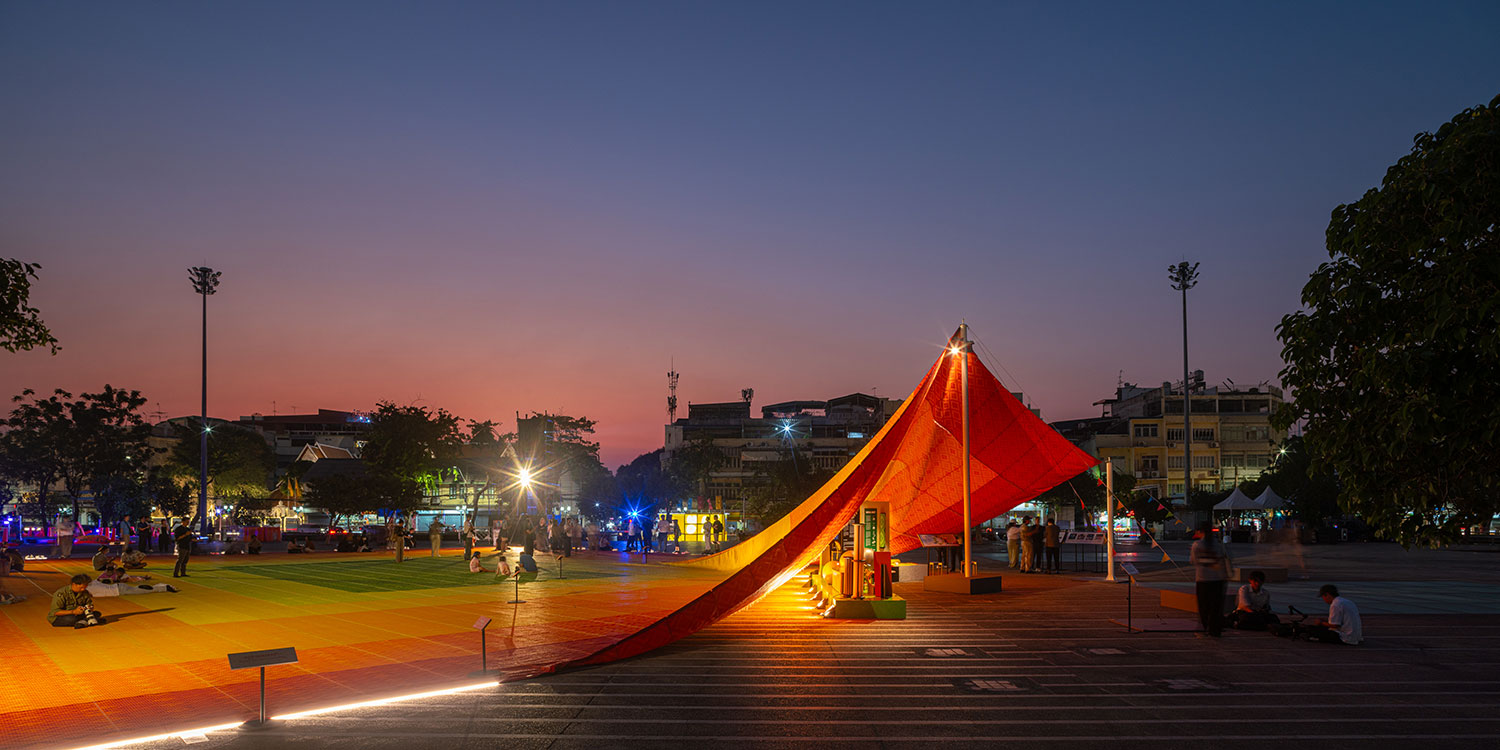
Bangkok Design Week played host to a striking intervention this year, a vibrant public space that simultaneously served as a powerful infographic. MVRDV‘s “Mega Mat,” installed on the Lan Khon Mueang Town Square, transformed recycled plastic into a compelling story about waste and recycling in Thailand. More than just a visually arresting installation, the Mega Mat offered a tangible experience, inviting visitors to engage with the very material at the heart of the discussion.
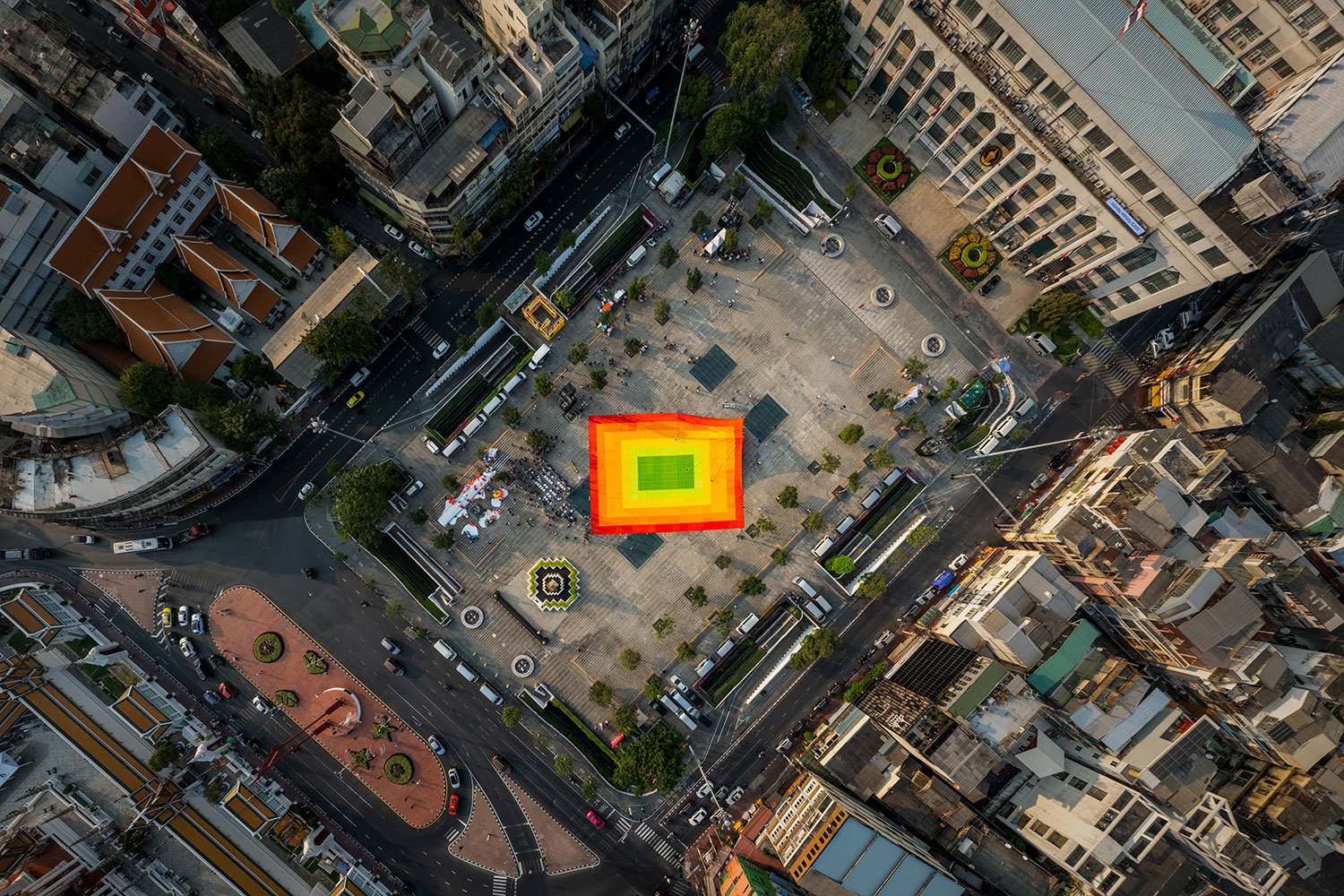
Thailand faces a significant challenge with its annual production of approximately two million tonnes of plastic waste. This issue has spurred national dialogue and prompted both industry and government to implement strategies for waste reduction and increased recycling. MVRDV’s contribution to Bangkok Design Week builds on this momentum, celebrating the potential of recycled plastic as a versatile material for everyday use.
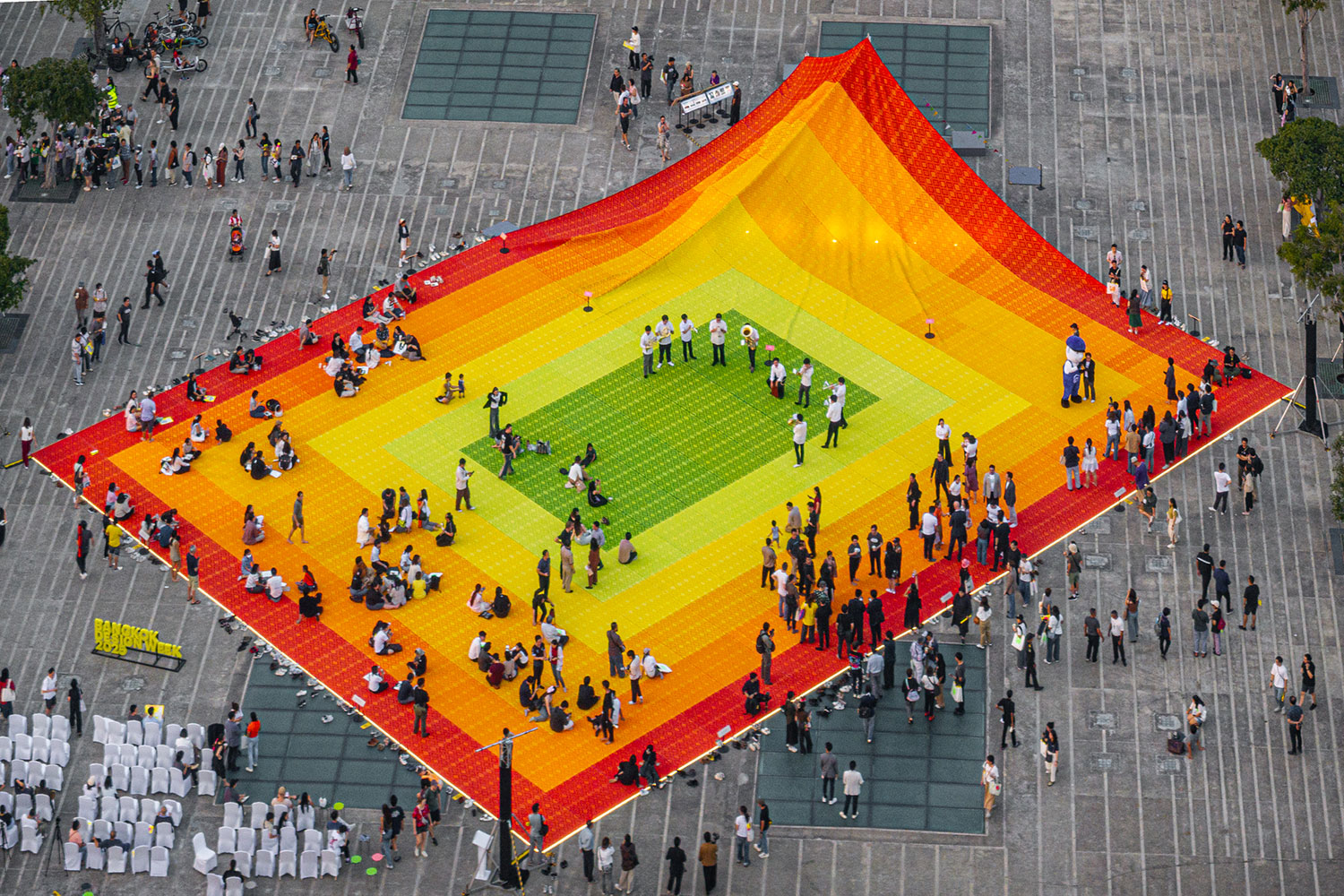
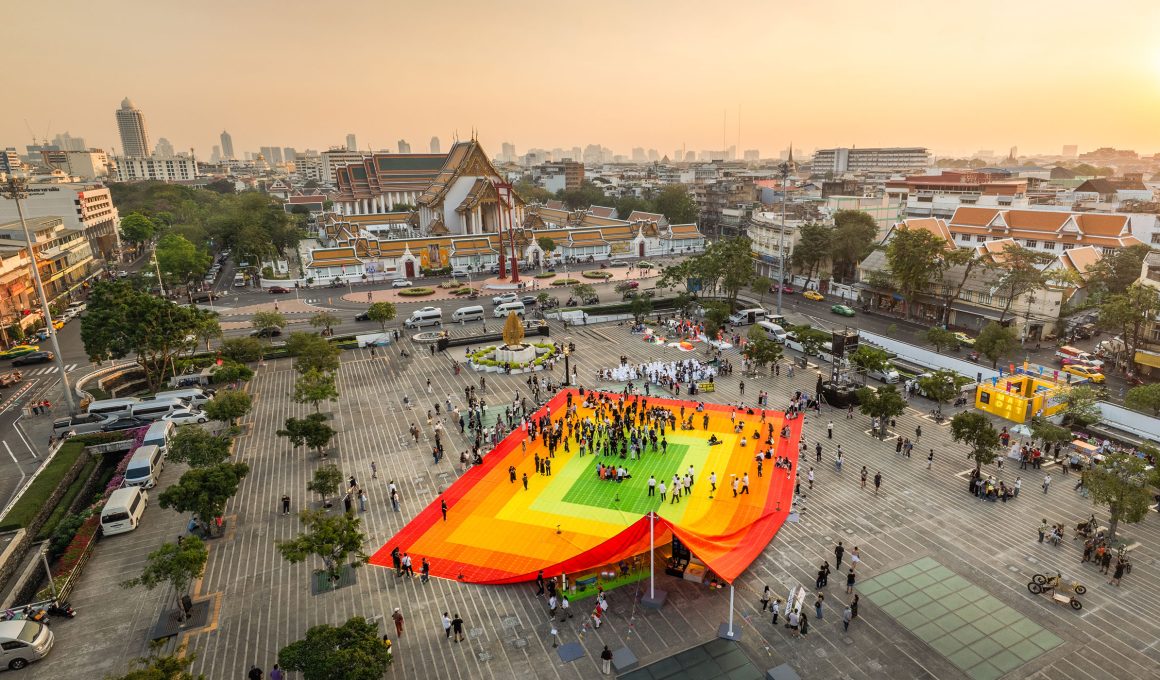
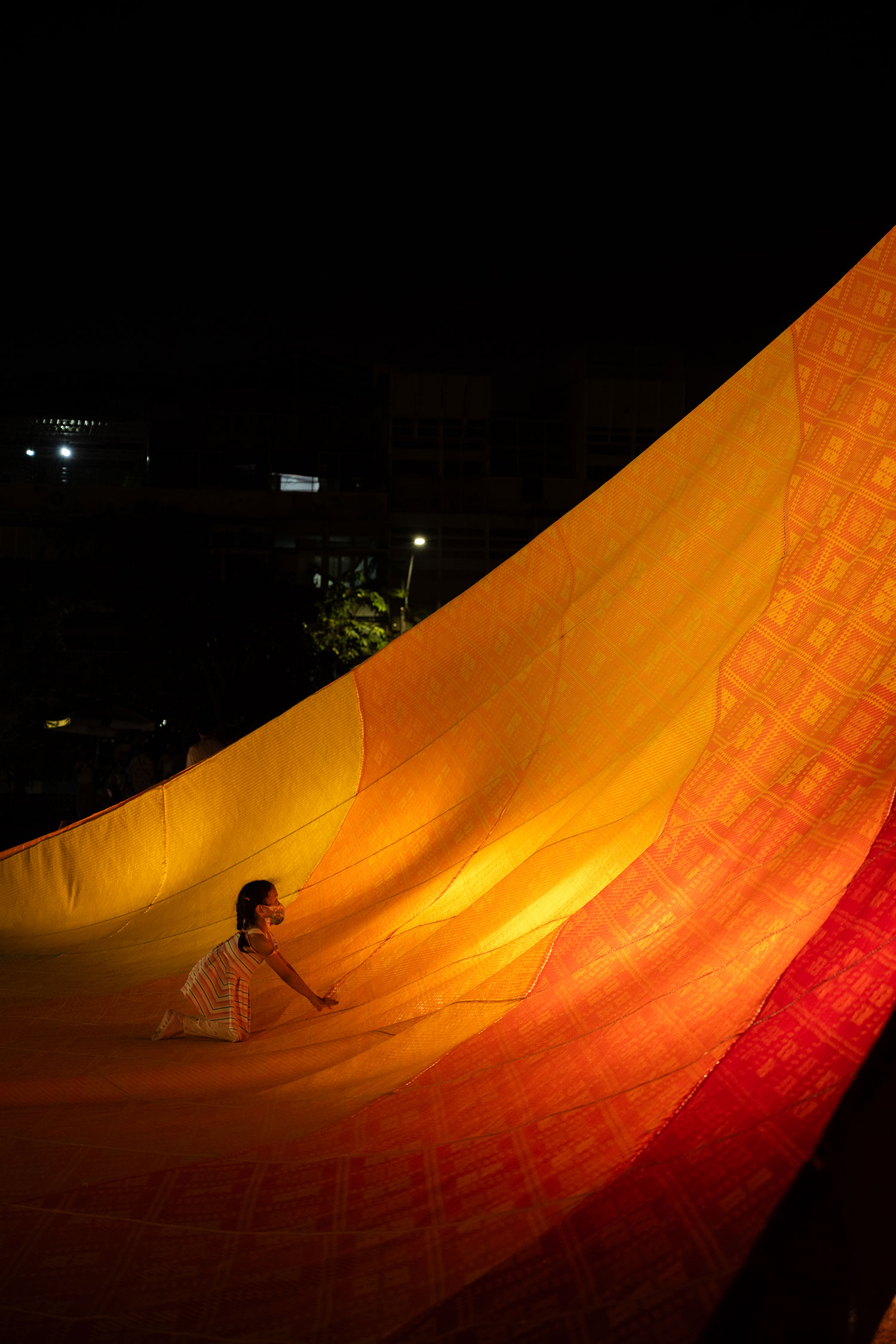
The Mega Mat reimagines the traditional Thai “Sua,” a mat used for generations by families, on a monumental scale. 532 modular pieces, each woven with a traditional Thai pattern, form a supersized Sua for the entire city. These modules, each measuring 1.8 by 0.9 metres, are made entirely from recycled plastic. This transformation of a familiar object into a public platform underscores the accessibility and potential of recycled materials. Adding another layer of ingenuity, the mats will be repurposed after the event, finding a third life as donations to local temples, yoga mats, or upcycled products like bags.

The vibrant colours of the Mega Mat aren’t merely decorative; they form a gradient that visually represents Thailand’s plastic waste processing. Red signifies the percentage of waste sent to unsanitary landfills, while orange denotes waste going to sanitary landfills. Yellow represents uncollected waste, and the central green hues symbolize the portion that is recycled. This concentric arrangement of colours, echoing the vibrant roofs of the nearby Wat Suthat Thepwararam temple, transforms the mat into a large-scale infographic, educating visitors in an engaging and accessible way.
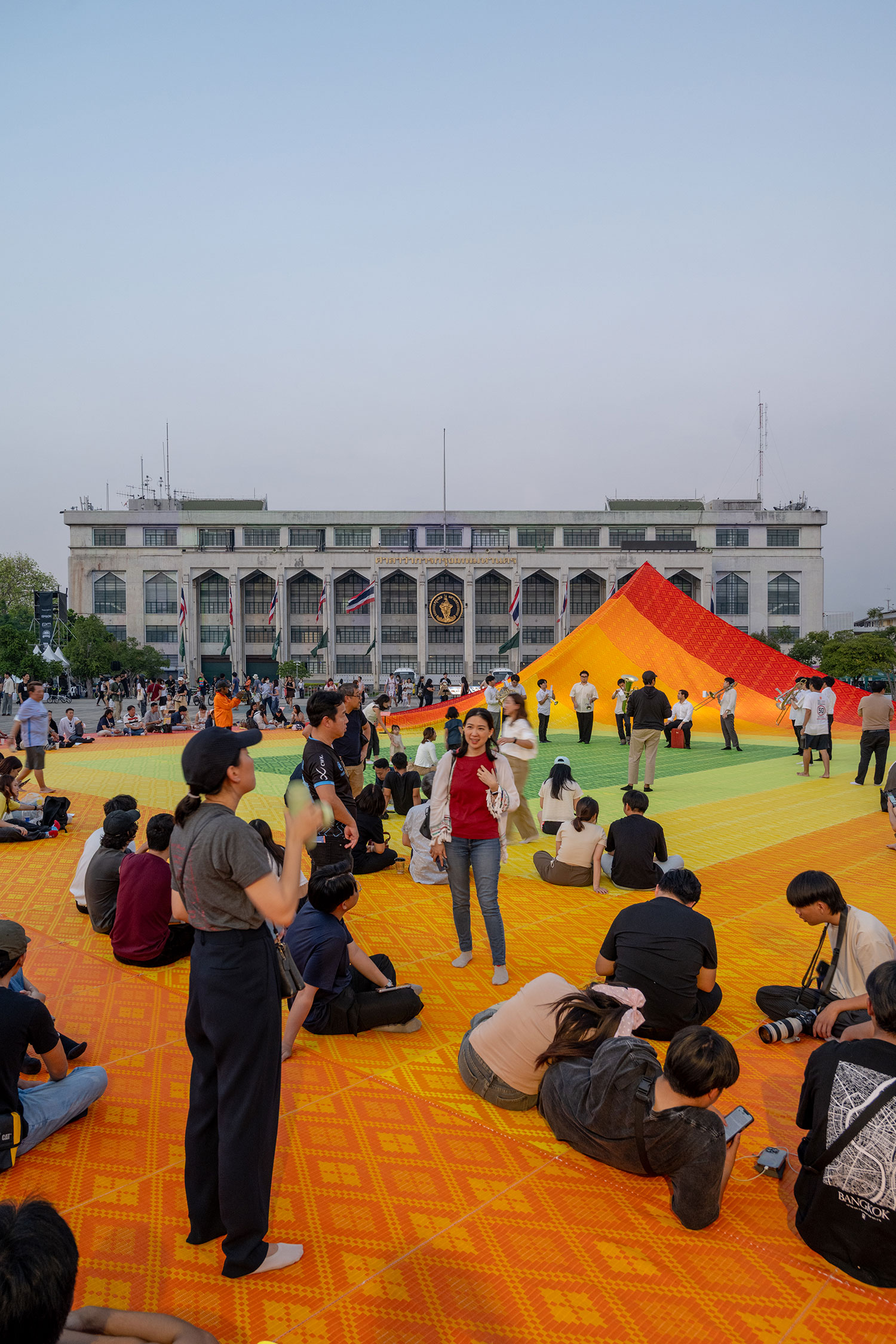
“Around the world, people are understanding the need to think more about the objects they use, and to see products as part of a connected ecological web,” says MVRDV founder Winy Maas. “In Thailand this conversation is already well underway. I encourage that. With our design of the Mega Mat, we also wanted to celebrate it as an opportunity, to see the possibilities that are created by putting an emphasis on recycled materials. In a city dominated by concrete, this mat creates a soft space where you can take off your shoes, sit, lie down, read, and play.”
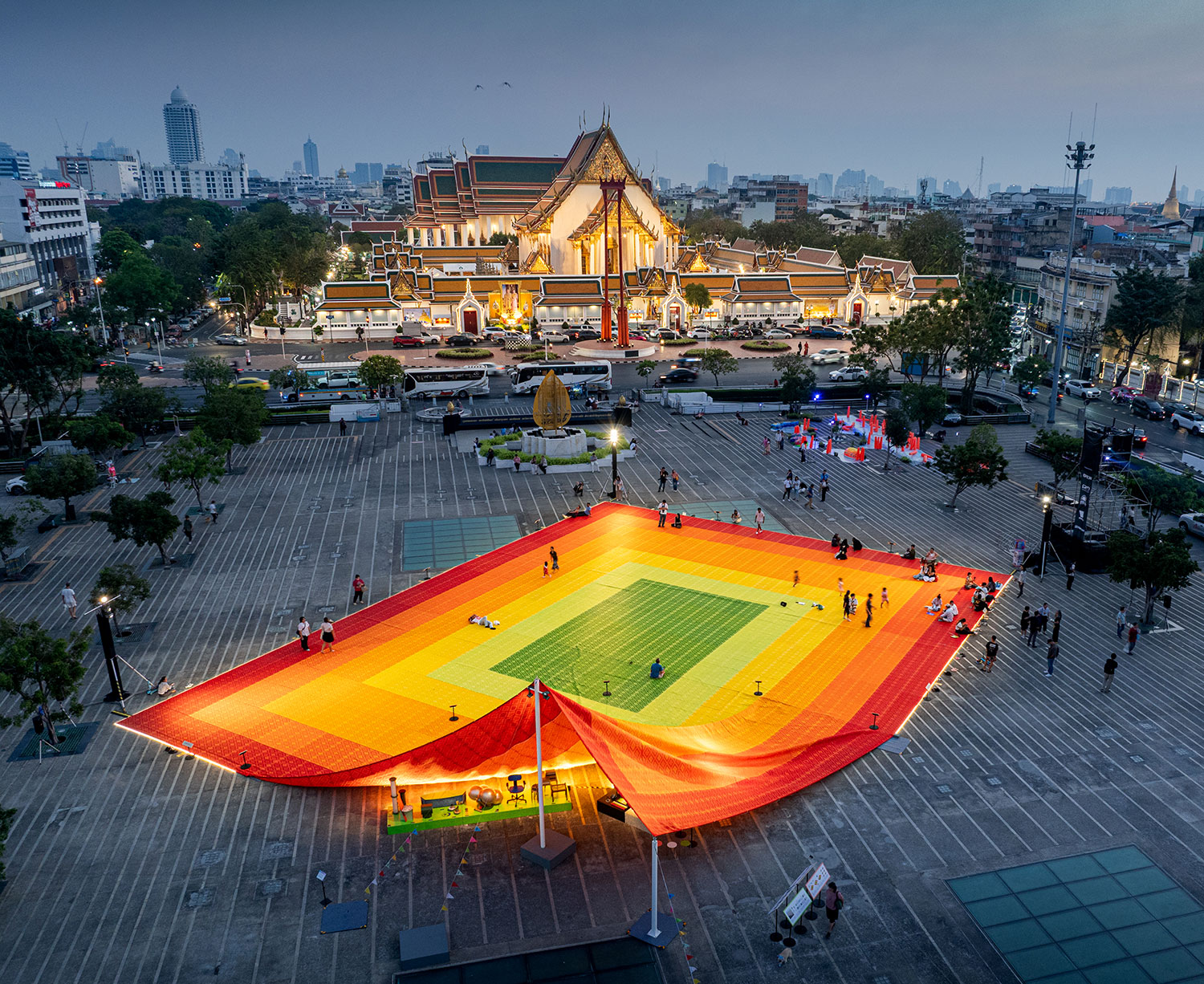
A raised corner of the Mega Mat, reminiscent of the Wat Suthat Thepwararam’s roofs, houses an exhibition further detailing the story of plastic waste and recycling in Thailand, and the meaning woven into the recycled plastic of the mat itself. This sheltered space provides a moment for reflection and deeper understanding, complementing the experiential aspect of the installation. The remaining area of the mat invites visitors to relax and enjoy the Lan Khon Mueang plaza as an outdoor living room, fostering a sense of community and shared responsibility.
MVRDV’s commitment to recycling at Bangkok Design Week reflects the firm’s broader dedication to sustainability. Their pursuit of a low-carbon, “Paris-proof” paradigm is evident in initiatives like the Carbon Confessions exhibition in Munich, the CarbonScape software, and The Green Dream Foundation.
The Mega Mat, a collaboration with the Creative Economy Agency, PTT Global Chemicals, and the Embassy of the Netherlands, is just one facet of MVRDV’s presence at Bangkok Design Week. In addition to the Mega Mat, MVRDV engaged with the public through PROMPT PARK, a participatory AI project in collaboration with We!Park, which explored the potential of reimagining underutilized urban spaces. Furthermore, Winy Maas, a founding partner of MVRDV, delivered a lecture titled “People, Places, and Architecture,” further emphasizing the firm’s dedication to fostering dialogue and knowledge-sharing in the field of sustainable design.