


Where do you go after driving a decade of innovation in collaboration with Ikea? That was the challenge facing Kaave Pour, co-founder and head of Space10, the independent think tank and satellite design agency that worked alongside the Swedish furniture giant for ten years until August 2023.
To channel his talent for design and cultural networking, Pour set up a new agency, also in Copenhagen, intended to take the unifying power of design to a whole new level. That agency, 21st Europe, is now premiering its first project, Starline, and this article presents an exclusive preview of this proposal for a highly ambitious, trans-continental transport infrastructure.

Developed in close collaboration with digital design and branding studio Bakken & Bæck, alongside Parisian design studio Culte Commun, Starline is a vision for a trans-European high-speed rail network. It’s a unifying concept that brings together disparate transportation systems to create the TEN-T, the Trans-European Transport Network.
Pour describes the project as “an opportunity to apply Space10’s way of working to something more systemic”, and hopes the agency will evolve into “one of the most defined voices of design in Europe, through alliances and partnerships with schools, events, and companies”.
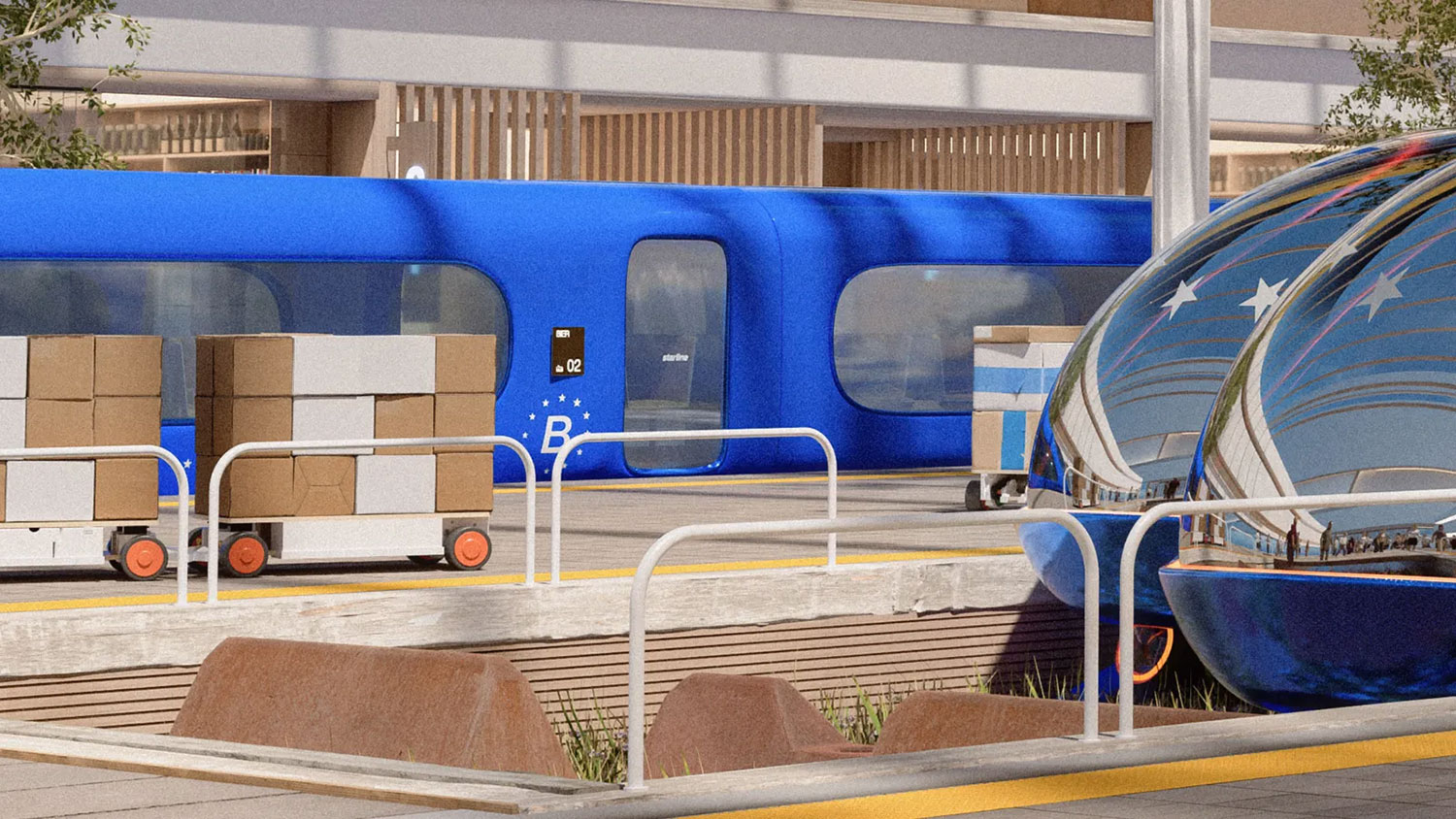
“We want to address the major issues facing Europe, especially in terms of infrastructure,” he says, explaining that Starline is about opening up a dialogue with the key players, long before tackling the necessary lobbying and legislation to bring it to reality.
It was an approach learned at Space10, and one that Pour believes can have a wider application, just as design needs to break out of its corporate, marketing, and branding silos. ‘Design will support new aspects of society, and fulfil its true potential,’ he says.

“Trains are back in business in many people’s minds,” Pour says, stressing that the benefit of bike transit in cities and trains between cities has so much more potential than the current narrative about autonomy and self-driving cars. “The current imagery of trains is so dusty,” he adds, pointing to China’s enormous cross-country investment in high-speed rail. China’s rapid expansion of high-speed rail serves as an inspiration for what’s possible.
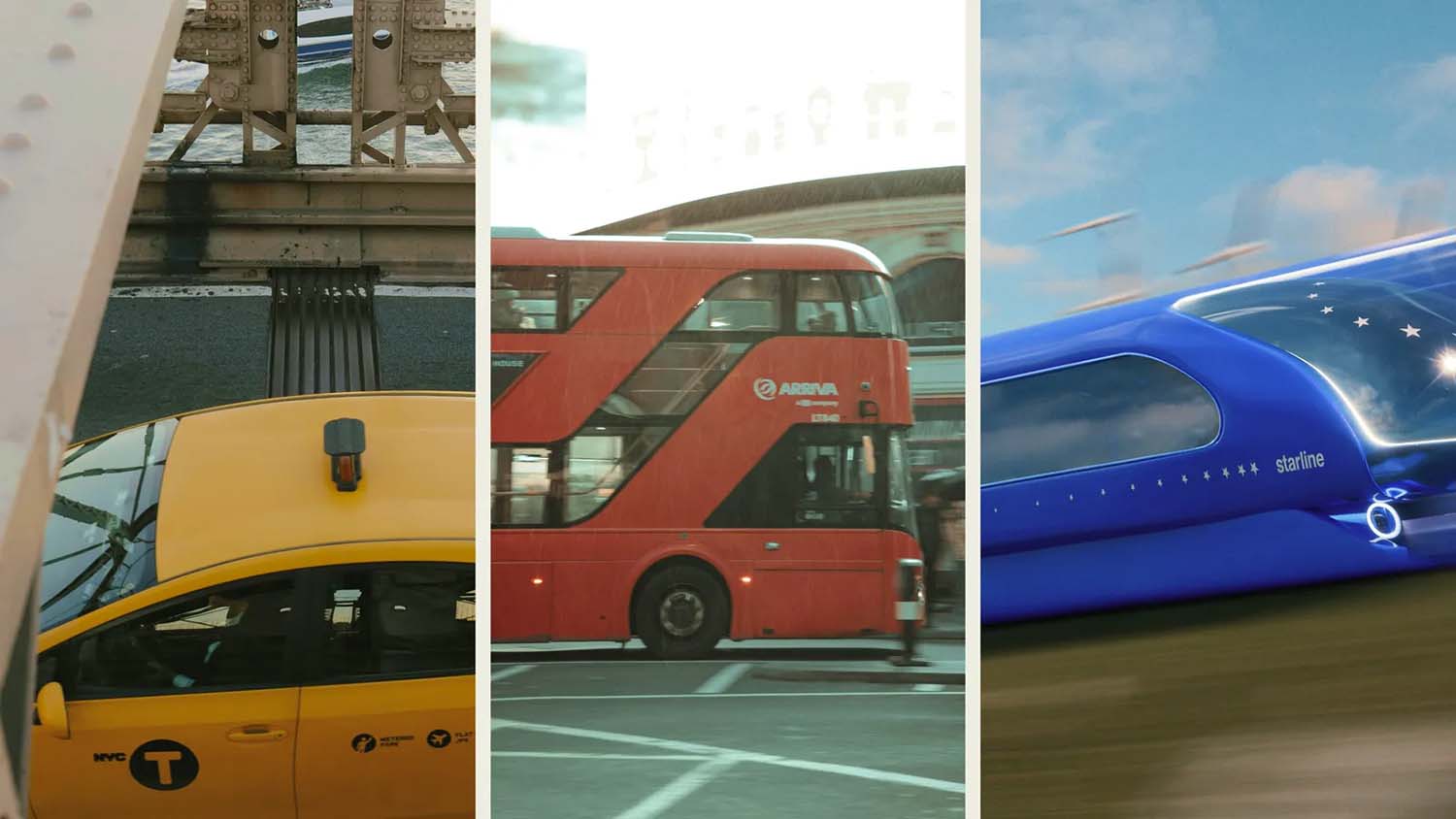
Design and storytelling are the key weapons in 21st Europe’s arsenal, a grand ambition for a soft power revolution that unites and advances a sustainable, social agenda through design-led infrastructure. Citing New York’s yellow cabs or London’s red buses as successful examples of infrastructural visual communications, Pour believes the EU could step up its game. “In Europe we’ve always been quite bad [at visual communications] – the EU has been afraid of encroaching on national sovereignties.”
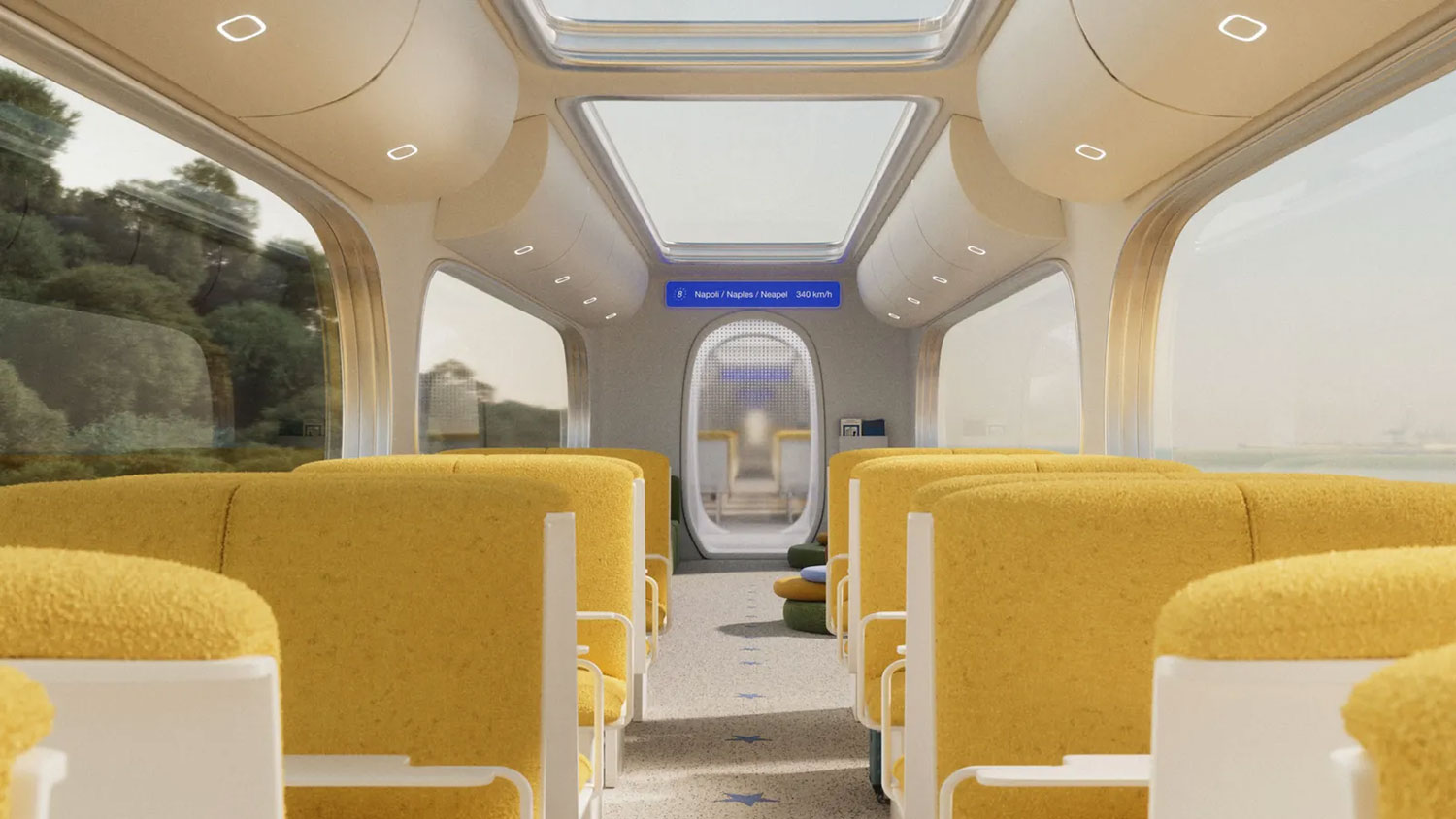
According to the team assembled by 21st Europe, key factors at play are both geopolitical (a network that exploits and benefits from Europe’s open borders) and cultural (shifting people and goods from aviation and road). The vision is for a high-speed rail network that’s as simple to navigate and use as a city metro line, using a combination of existing and new infrastructure. Reaching deep into Eastern Europe, including Kyiv, Bucharest, and Sofia, it envisages a world of fast, reliable connectivity, shrinking borders, increasing trade, and bolstering security and cooperation.
Projected speeds for the network are in the range of 300-400km/h, velocity that puts it on par with Japan’s Shinkansen, as well as France’s TGV and Germany’s ICE. As a result, Helsinki to Berlin would take just over three hours. The Milanese could commute to Munich. Kyiv and Berlin would have a direct, rapid link. The network would completely transform the way people, goods, and produce travel around the continent.

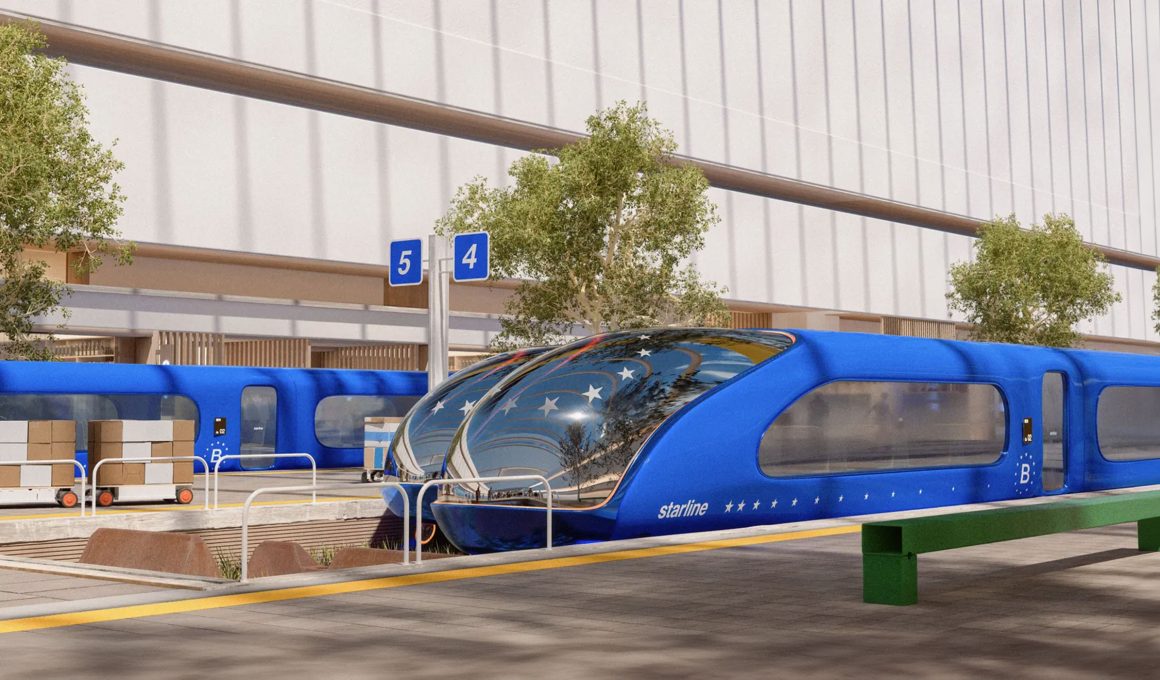
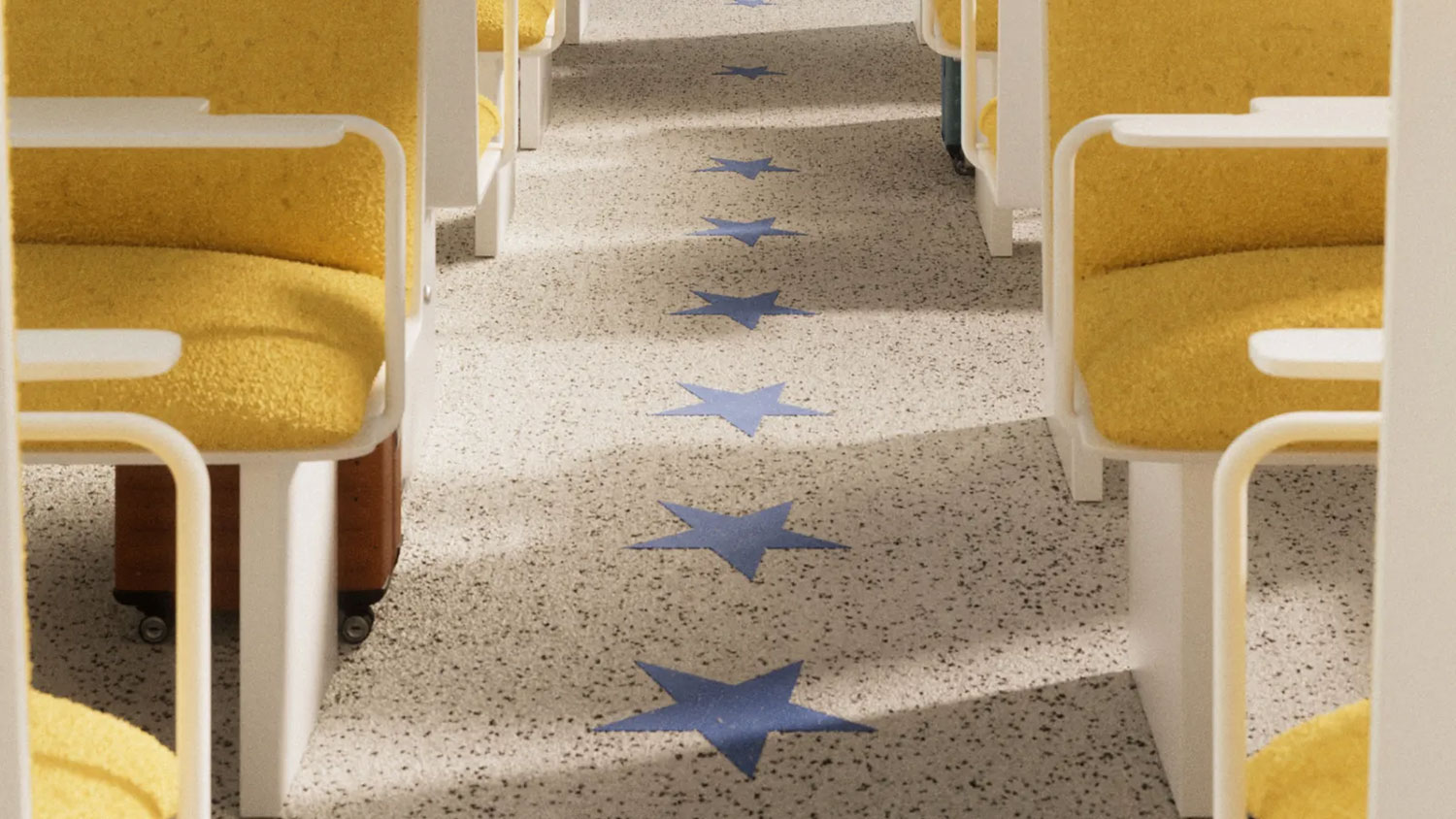
From the rich blue of Starline’s carefully crafted identity, through to the spacious, light-filled trains and an eco-system that extends to apps, signage and, perhaps most importantly of all, the deployment of train stations as new national landmarks, this wilfully optimistic project is huge in scope but can’t be faulted for its ambition and basic humanity. Every box that can be ticked must be ticked, from renewable power sources to intelligent security systems, unified ticketing and, crucially, public funding. 21st Europe suggests the creation of a new European Rail Authority (ERA), set up within the EU.

Arguably, it’s never been a better time to find an ambitious, ultra-unifying pan-European project. Starline is 21st Europe’s blueprint for a ‘rethink of how design, technology, and culture can create infrastructure that is seamless, sustainable, and exciting’, Pour says. ‘Imagine blue high-speed trains gliding effortlessly across borders, transforming a patchwork of national lines into a single, unified experience.’