



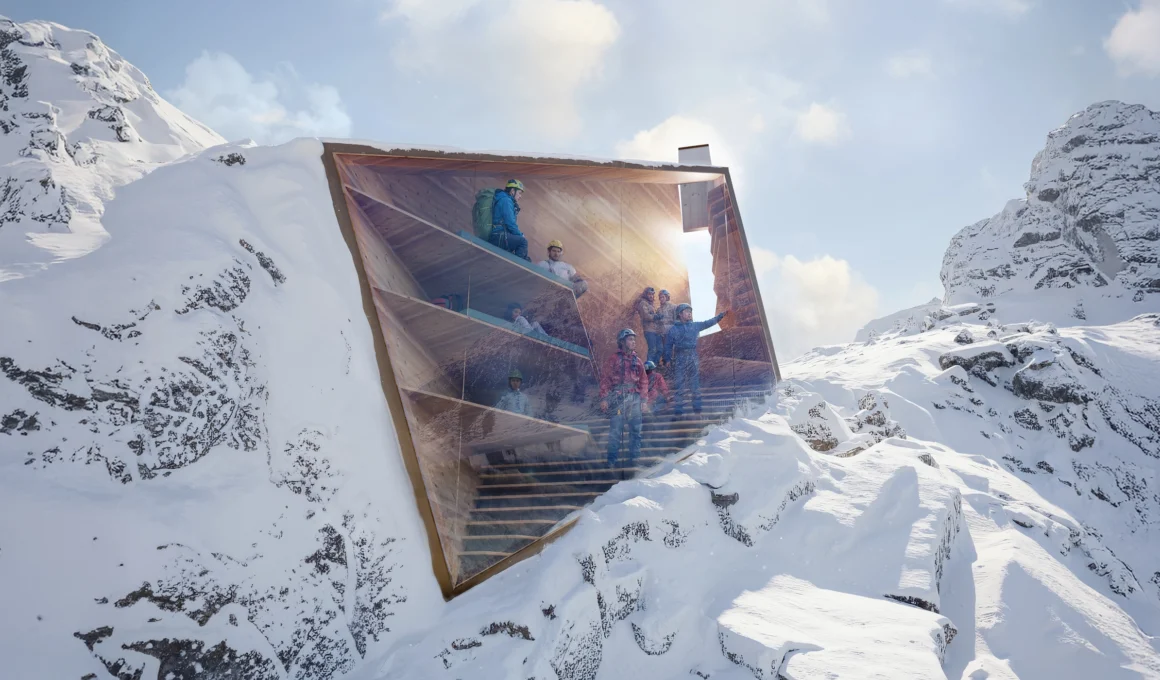
In a forward-thinking collaboration with Salone del Mobile – Milano, CRA-Carlo Ratti Associati has unveiled the design for a new digitally fabricated bivouac that seeks to dissolve the boundary between nature and human-made structures, harmonizing with the rugged Alpine landscape. This innovative project is poised to debut as an urban pavilion during the 2026 Winter Olympics in Milan before being airlifted to its permanent, high-altitude position as a lasting refuge for mountaineers. CRA’s approach to this sustainable design challenges traditional notions of mountain shelters, which often use bright colors to stand out, opting instead for a subtle form that blends seamlessly into the scenery.
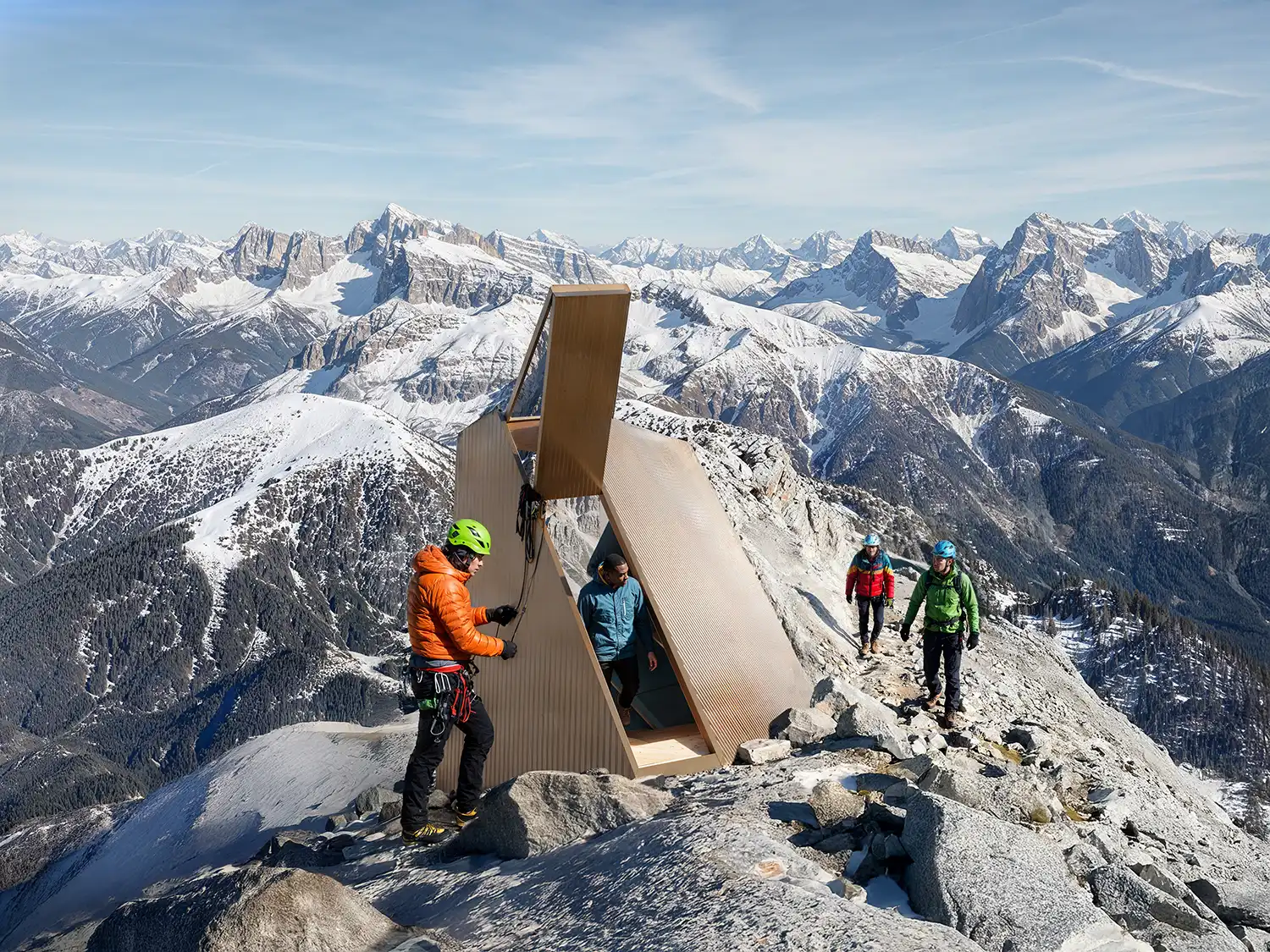
The genesis of the structure’s unique form began with a 3D scan of rock formations in the Alps. This digital mapping process informed the shelter’s precise design, creating a shell structure that minimizes visual impact while maximizing functionality. The resulting bivouac, inspired by the crystalline formations of the Alps, is constructed from cross-laminated timber (CLT), aerogel, and metal. According to Carlo Ratti, “We took that literally in this design, using digital fabrication to design a bivouac as if it were part of the natural rock formations that shape the Alps”.
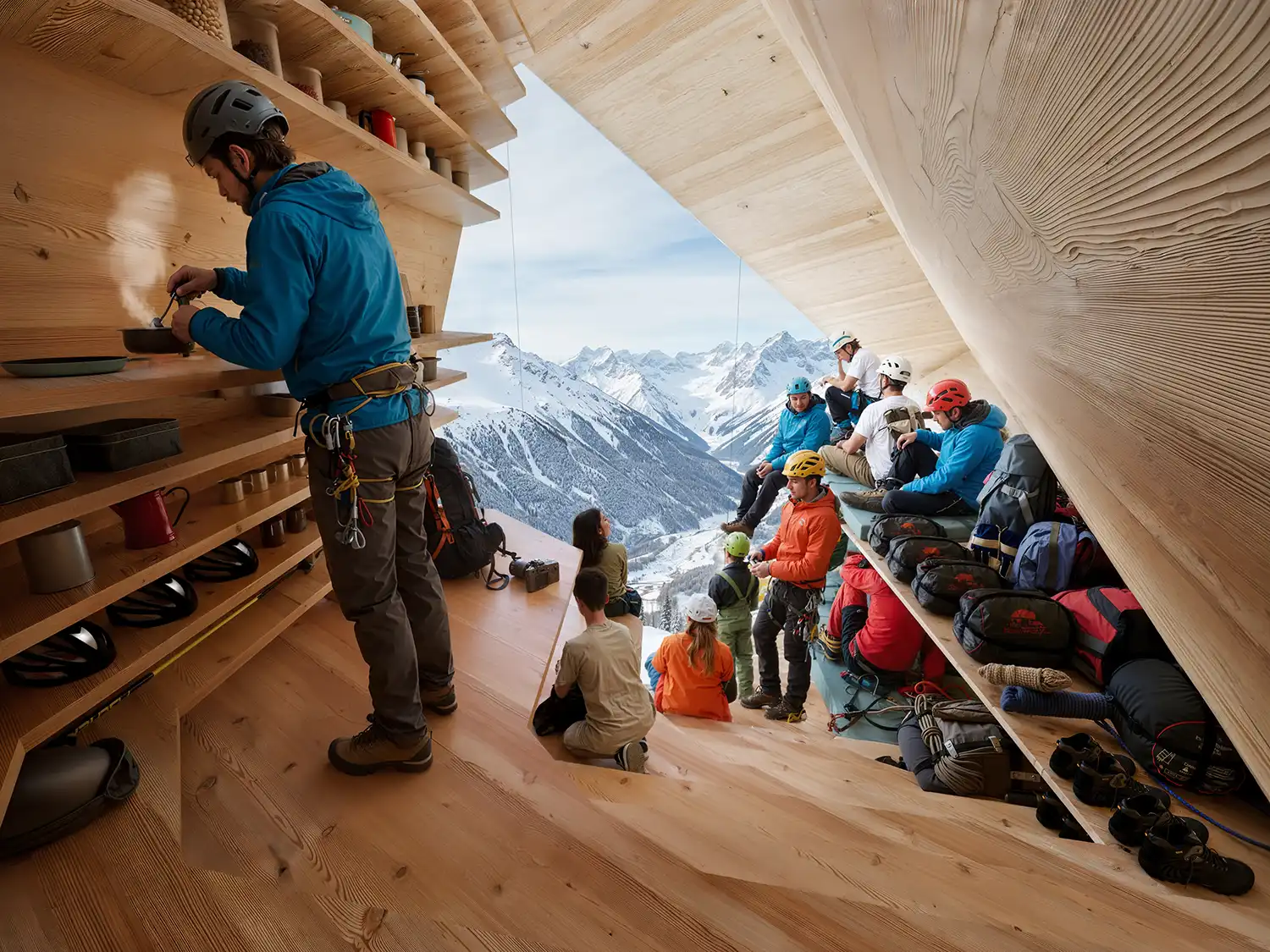
Designed with self-sufficiency at its core, the bivouac is a model of autonomous sustainable architecture. It features a robust 5KW peak photovoltaic system with storage to power all its needs, including network connectivity. Critically, in an area often lacking natural water sources, the design incorporates a clever water harvesting system that uses air condensation to produce several liters of potable water per day, ensuring trekkers and climbers always have access to clean water, even in emergencies.
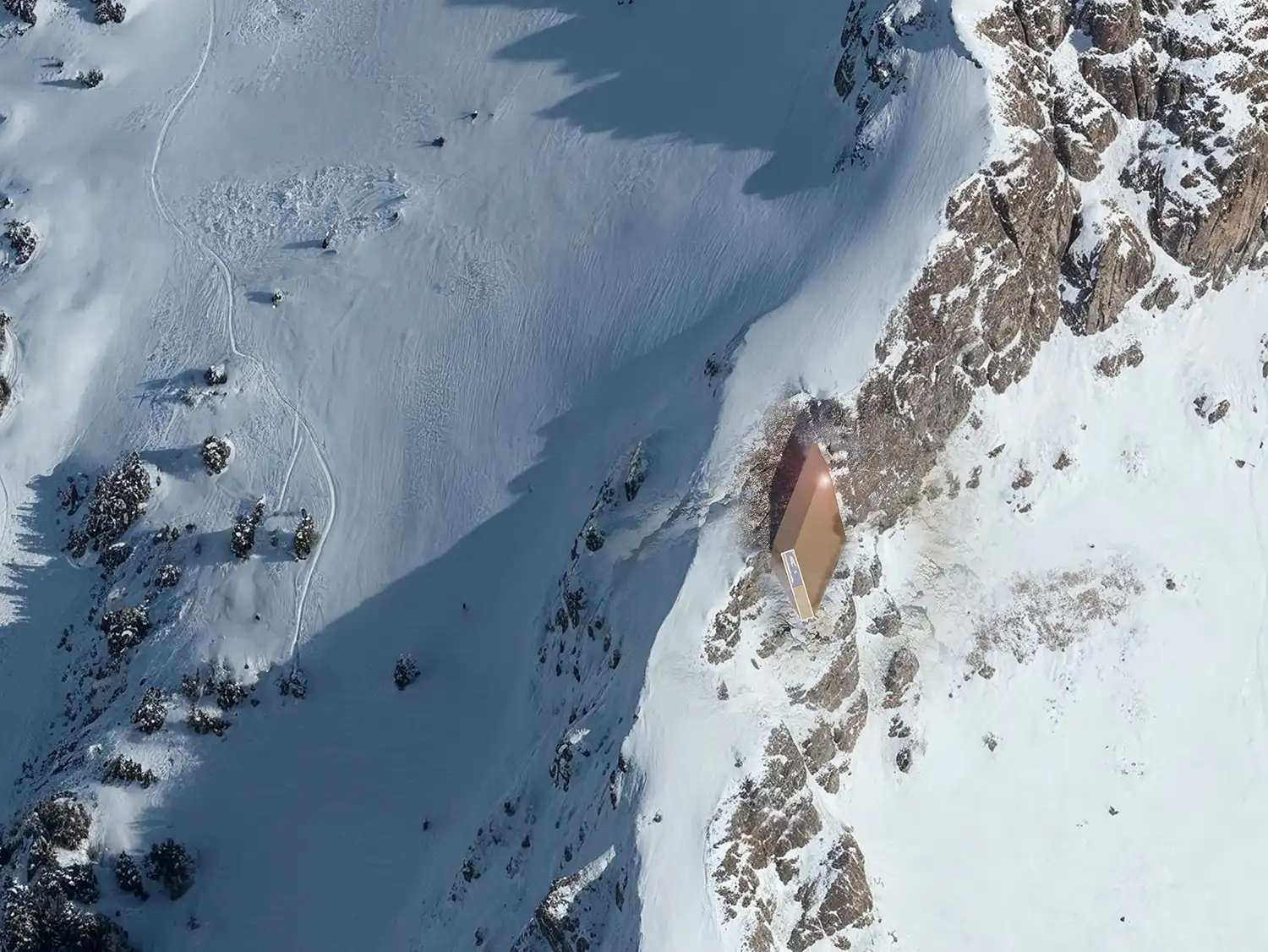
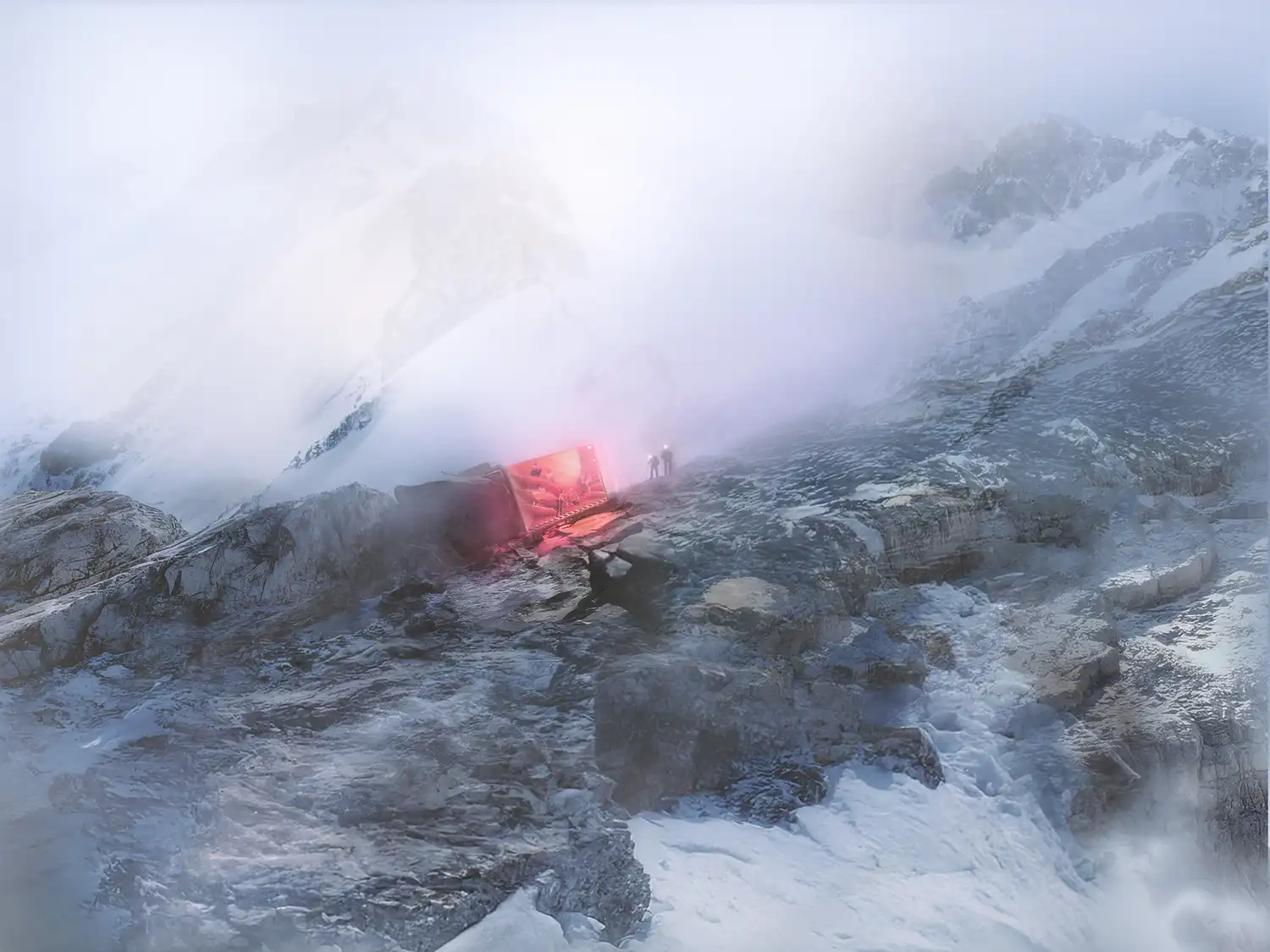
Instead of relying on the high-visibility colors of traditional bivouacs, which can appear as “airships that have landed on our beautiful alpine landscapes” , this minimal visual impact shelter employs a more sophisticated safety measure. A bright red light will activate only when conditions call for it, such as in fog or limited visibility, thereby maintaining a low profile in clear weather while still ensuring the safety of those seeking sanctuary.
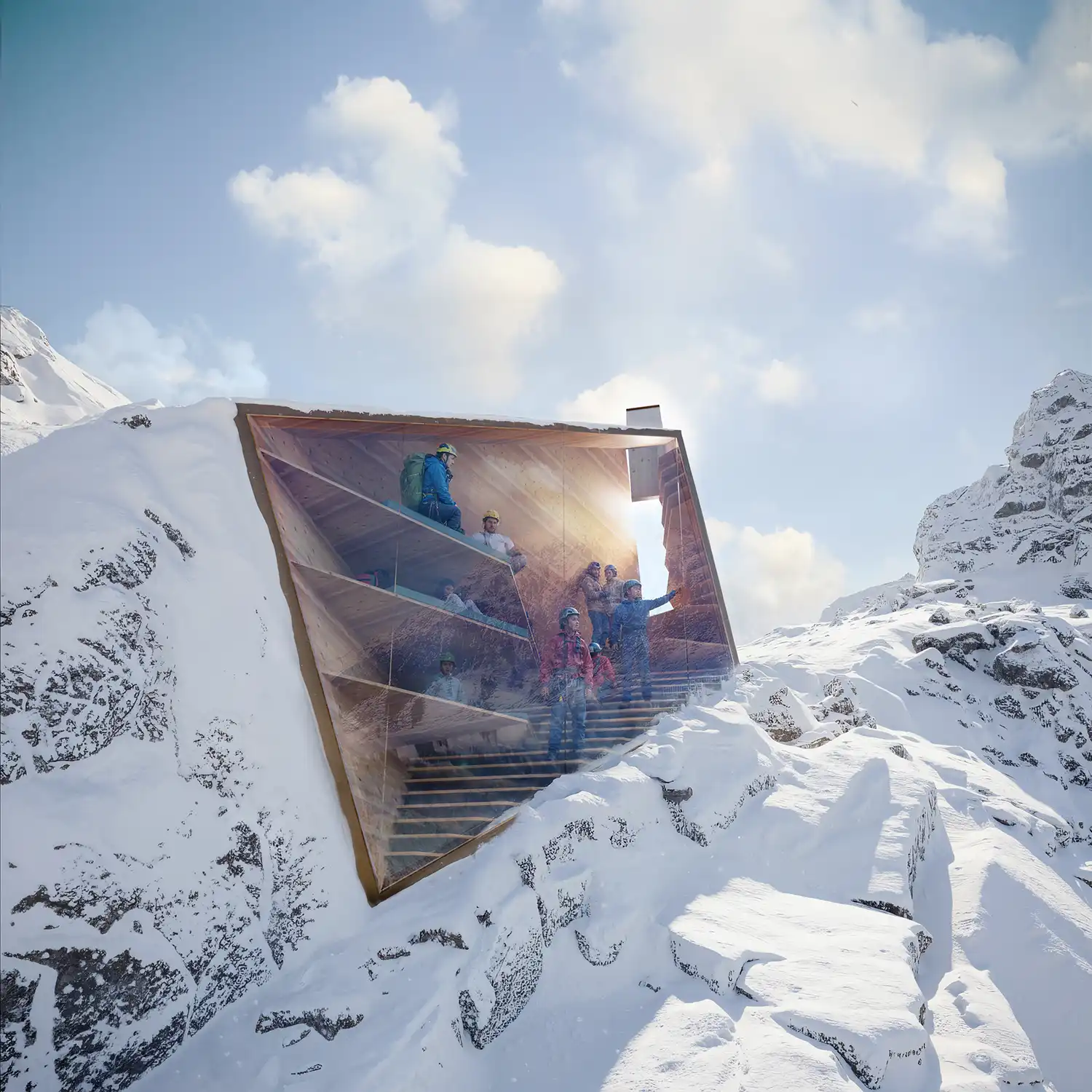
The structure’s aesthetic and function are further elevated by its large glass wall, which offers a meditative view of the surrounding Alps. More than just a shelter, the bivouac is intended as a temporary sanctuary—a space for rest, reflection, and connection to nature. Its dual existence, first as an urban pavilion in Milan for the 2026 Winter Games and later as an alpine refuge, embodies the principles of circular design. This two-phase lifecycle sustainably bridges urban culture and mountain heritage.
This project is the latest from CRA, an international design and innovation practice based in Turin and New York , which consistently blends the artificial and natural worlds. It follows in the footsteps of their award-winning Olympic torches for the Milano Cortina 2026 games , reaffirming their commitment to creating architecture that works with nature, not against it. This new Alpine bivouac sets a new standard for mountain infrastructure, offering a lasting sanctuary that respects and reflects its breathtaking environment.