



The city of Hamburg, a port long defined by the intricate relationship between its maritime history and cultural life—from the historic Speicherstadt warehouses to the dramatic profile of the Elbphilharmonie—is set to redefine its cultural waterfront with a major new architectural landmark. Replacing the venerable 1950s structure on Dammtorstraße, the visionary proposal for the new Hamburg State Opera by BIG – Bjarke Ingels Group is a colossal 45,000-m² venue meticulously engineered to meet demanding contemporary standards for Acoustics, spatial layout, and technical capacity. This bold piece of civic architecture is situated on an island at the heart of the burgeoning HafenCity, continuing the city’s rich dialogue between monumental design and the water’s edge.
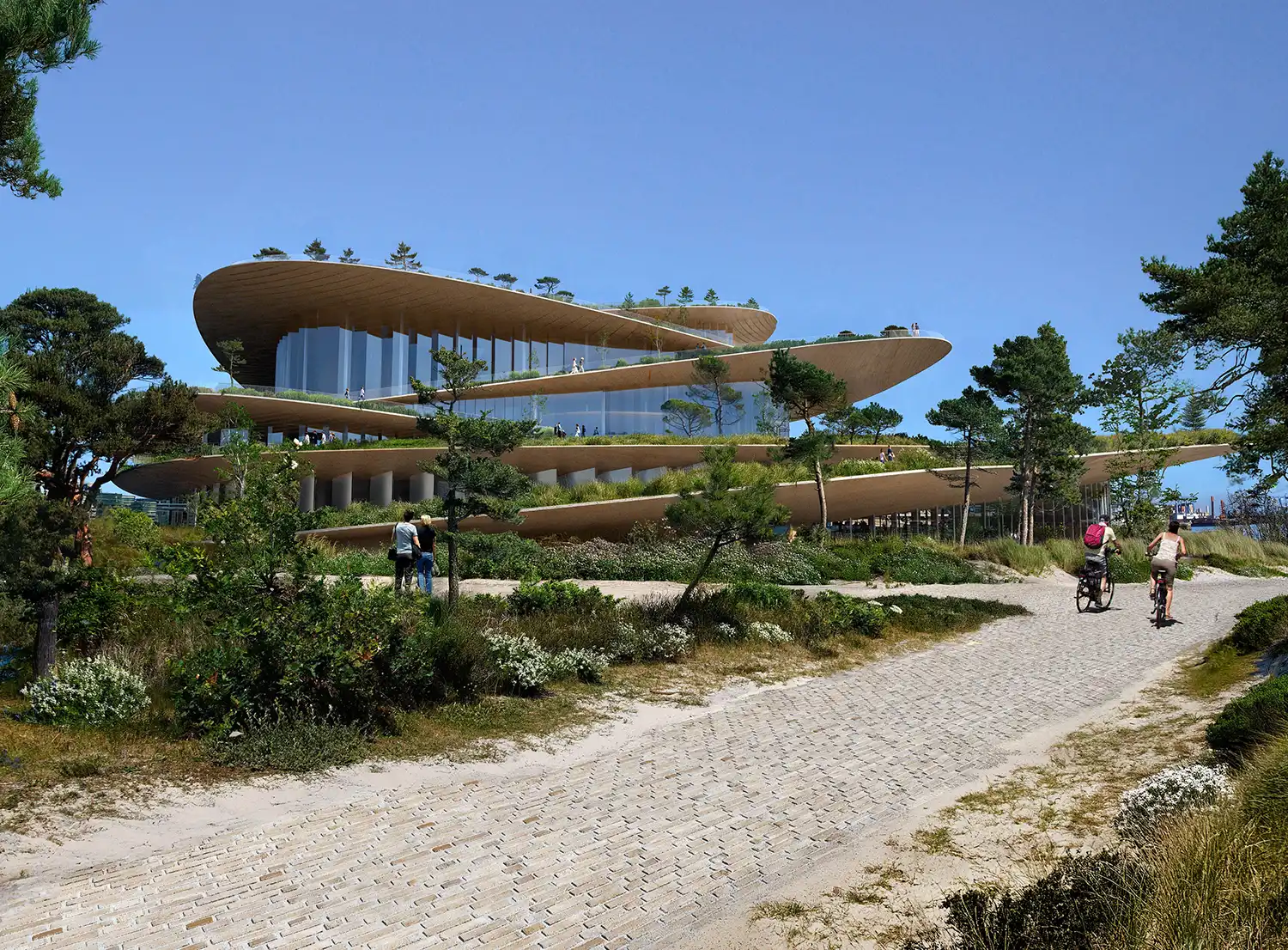
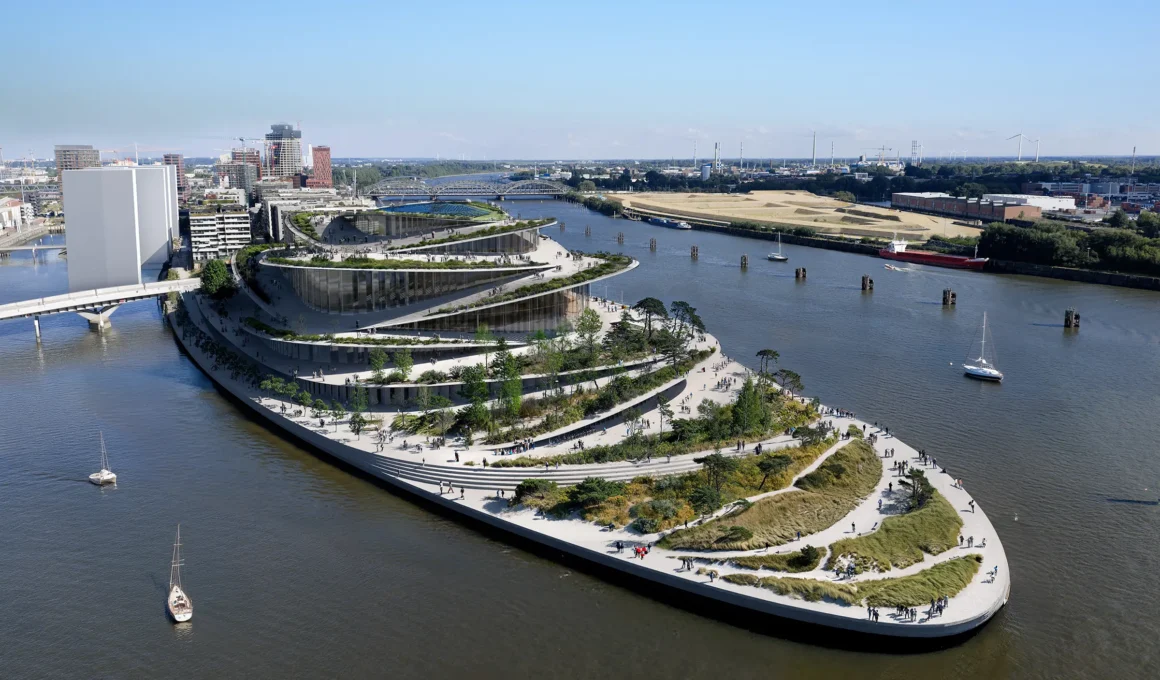
The core concept for the new opera house is nothing short of poetic. Envisioned as a ‘landscape of concentric terraces,’ the building’s Architectural Design seems to emanate from a central, musical heart, expanding outward like soundwaves or gentle ripples on the surface of the harbor. This dynamic, rising form results in a breathtaking three-dimensional Public Park, fully open and accessible from all sides. It is a genuine urban gesture, offering expansive, panoramic views that sweep across the old city and the new, reaching out to Lohse Park and the industrial port—a truly accessible sculpted topography.
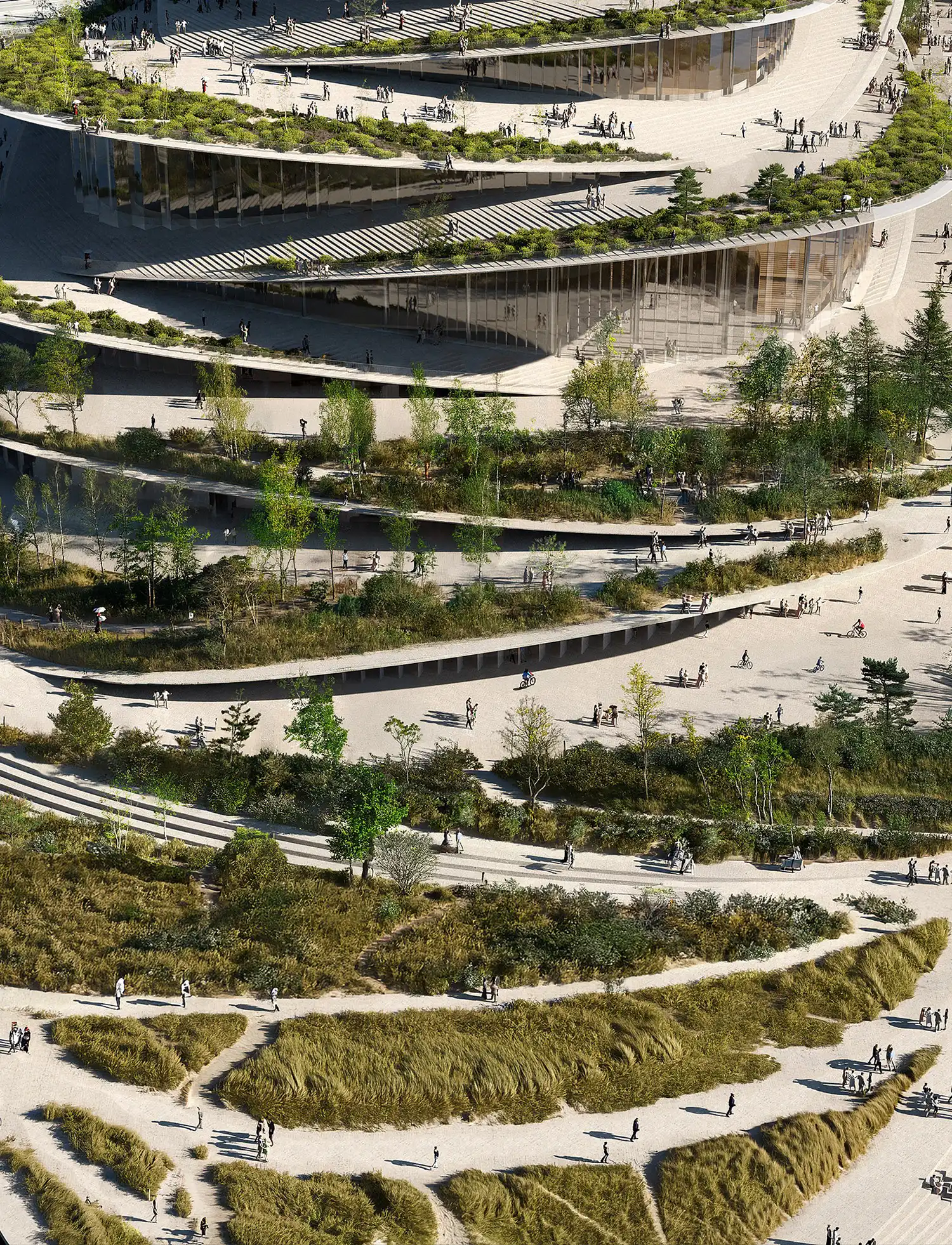
Conceived intentionally as a public building within a park setting, the opera house unfolds as a seamless series of terraced landscapes that gently ascend from the water’s edge. When viewed from above, the roof traces a continuous circular form that dramatically opens toward the harbor. This thoughtful approach creates designated pathways for visitors, moving them effortlessly from the quay to elevated gardens, thereby establishing a critical new public link connecting the established city with the Elbe river. The Waterfront Design ensures the building is not merely beside the water, but of it.
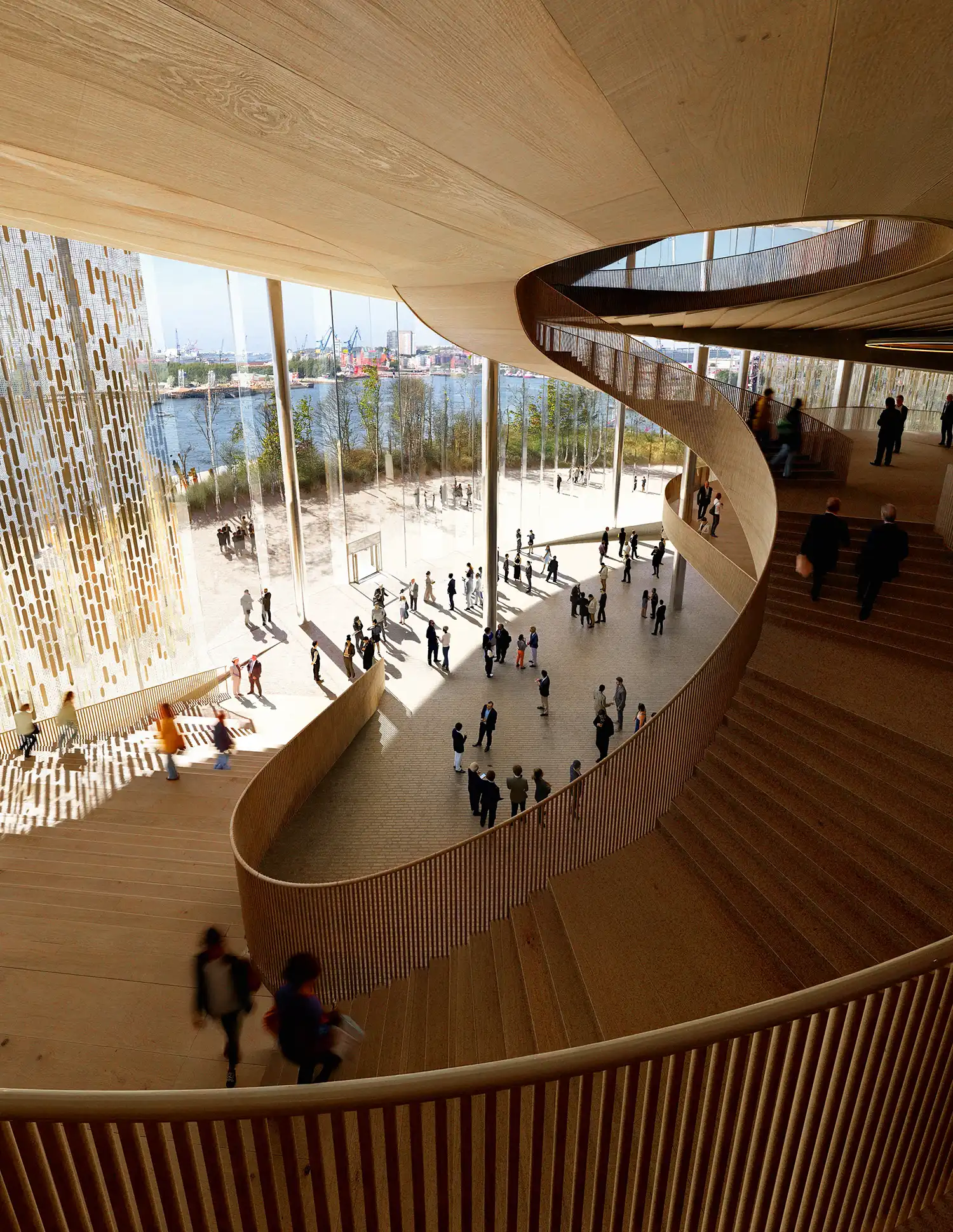
Whether approaching on foot, via bus, or by taxi, the structure’s multiple points of entry reinforce its identity as an open, welcoming cultural hub. Visitors can enter from several directions—through the surrounding Public Park, directly from the pier, or via the ‘opera street’ near Baakenhafenbrücke. The transition from exterior to interior is fluid, with stone pavements continuing into the main foyer, which BIG – Bjarke Ingels Group has deliberately styled as an urban living room. Inside, two commanding central staircases crafted from warm Timber guide guests through the building, with all main floors offering direct access to outdoor terraces, ready to transform into flexible arrival points or elegant gathering spaces for both performers and patrons.
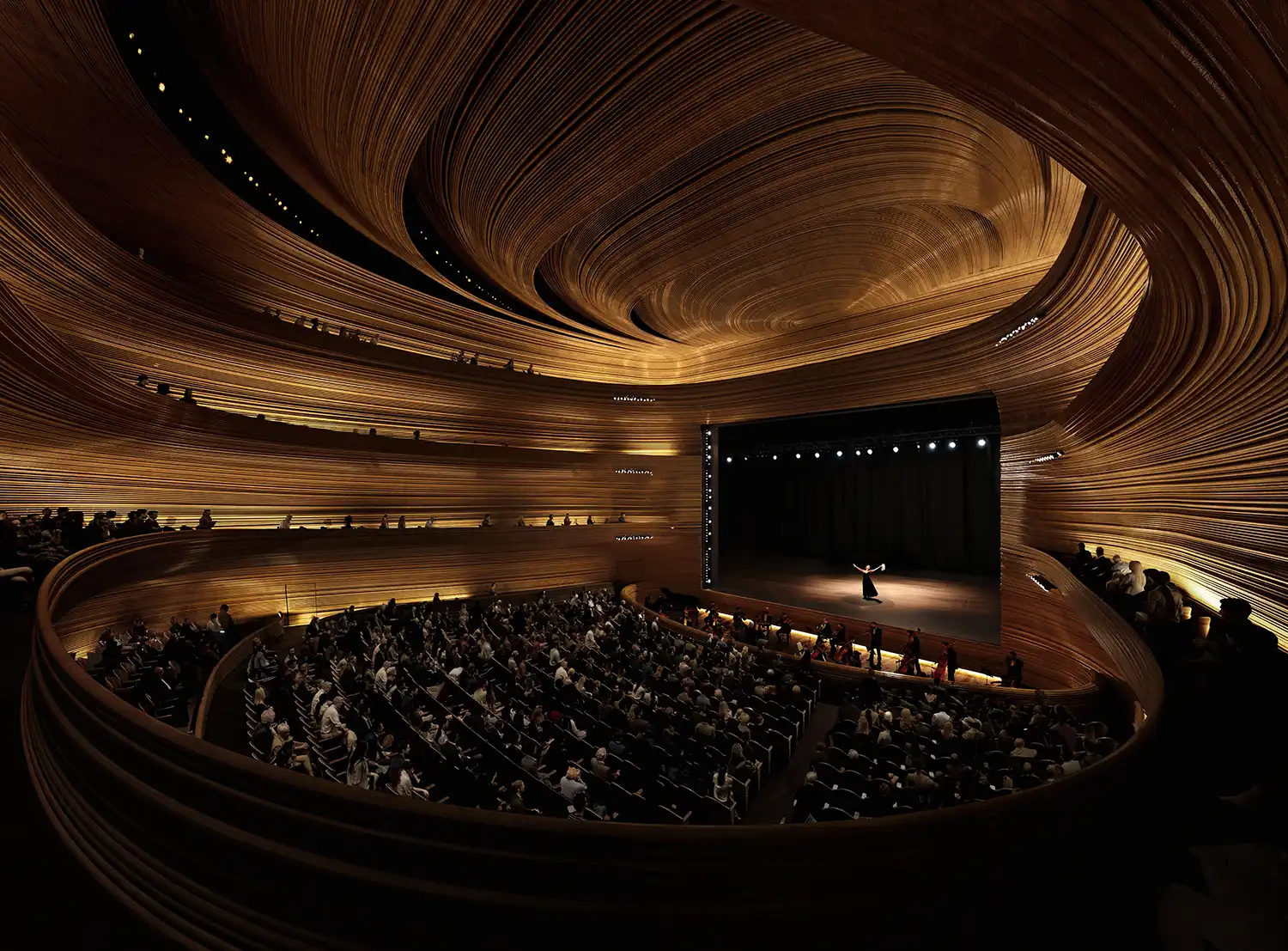
At the epicenter of the facility is the main hall, a space designed to gather audience and artists within a room defined by gently curved balconies. Here, bands of horizontally layered Timber meticulously wrap the interior, creating a continuous, visually striking surface. This material choice and geometric arrangement are essential to the building’s function, carrying sound evenly and ensuring superb Acoustics throughout the space, upholding the opera’s technical requirement for a modern performance venue. Behind this central beating heart, the essential back-of-house areas, including a smaller studio stage and rehearsal rooms, are arranged for direct, efficient connection to the main stage, guaranteeing a smooth flow of activity for artistic teams.
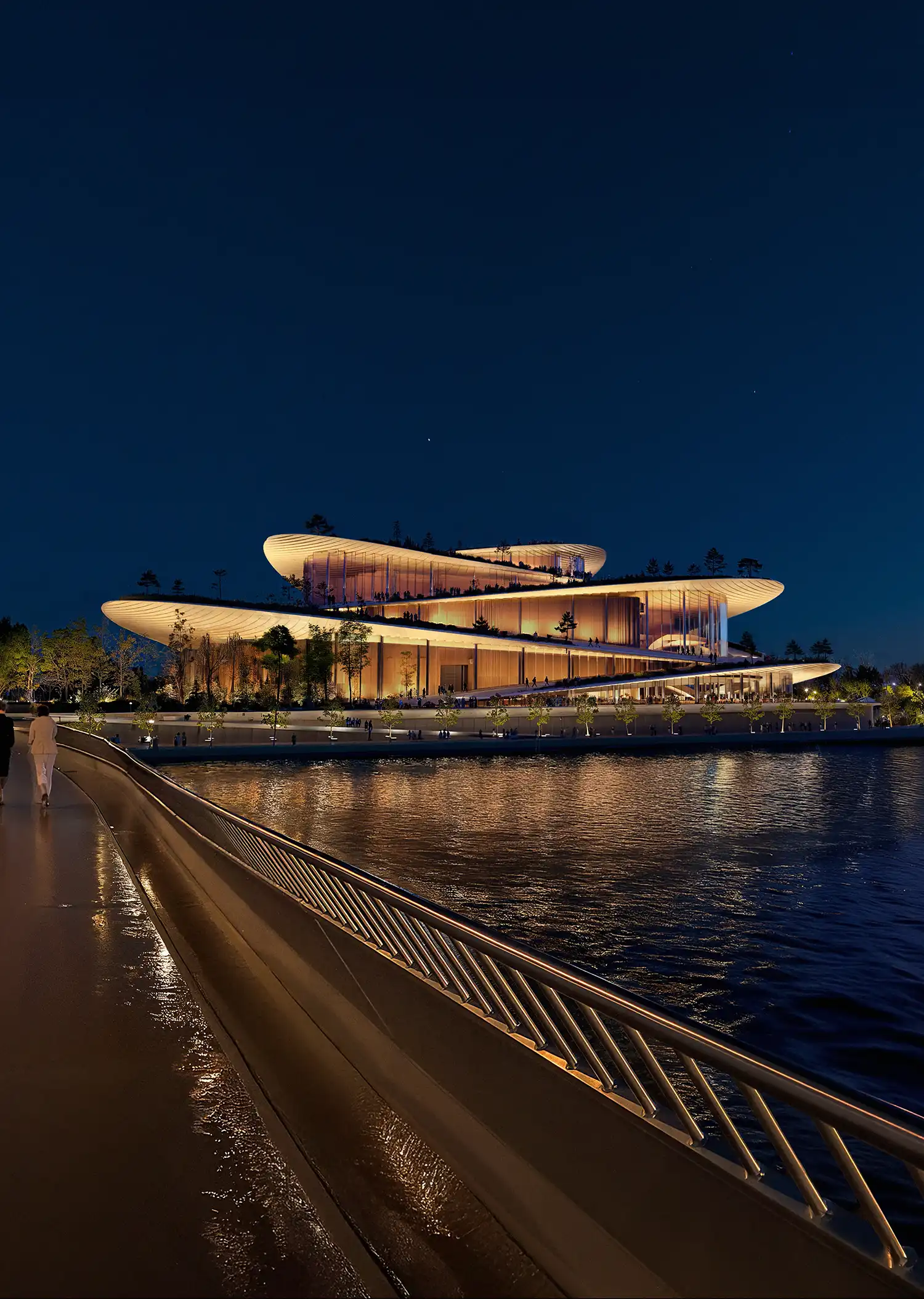
The genius of the project extends beyond the facade and main hall into the surrounding environment. The park, designed by BIG Landscape, is ingeniously shaped by the movement of the water itself and integrates crucial infrastructure for managing storm surges. This is achieved through sloping terraces, vegetated dunes, and wetland gardens that work in concert to slow and absorb water flow. Rainwater is collected and retained in basins, fostering habitats for amphibians, aquatic plants, and local species. This combination of resilient vegetation, tidal zones, and permeable surfaces epitomizes true Sustainable Design, forming a living landscape that dynamically adapts to the ever-changing rhythms of the Elbe river.