


KIDZ Studio has unveiled the latest outpost for Daikan RAMEN in Dubai, UAE, a design that carefully amplifies the brand’s distinct, democratic character while charting a course for future scalability. The brand, which began as a modest ramen shop in 2017, has evolved into a significant gastronomic concept, necessitating a clear visual distinction between its intimate, evening-focused Izakaya format and the daytime, quick-visit ramen eatery. The core challenge for KIDZ Studio was maintaining the beloved “Daikan vibe”—a unique feeling of cultural transport out of the bustling Dubai environment—while establishing a robust and adaptable restaurant design identity.
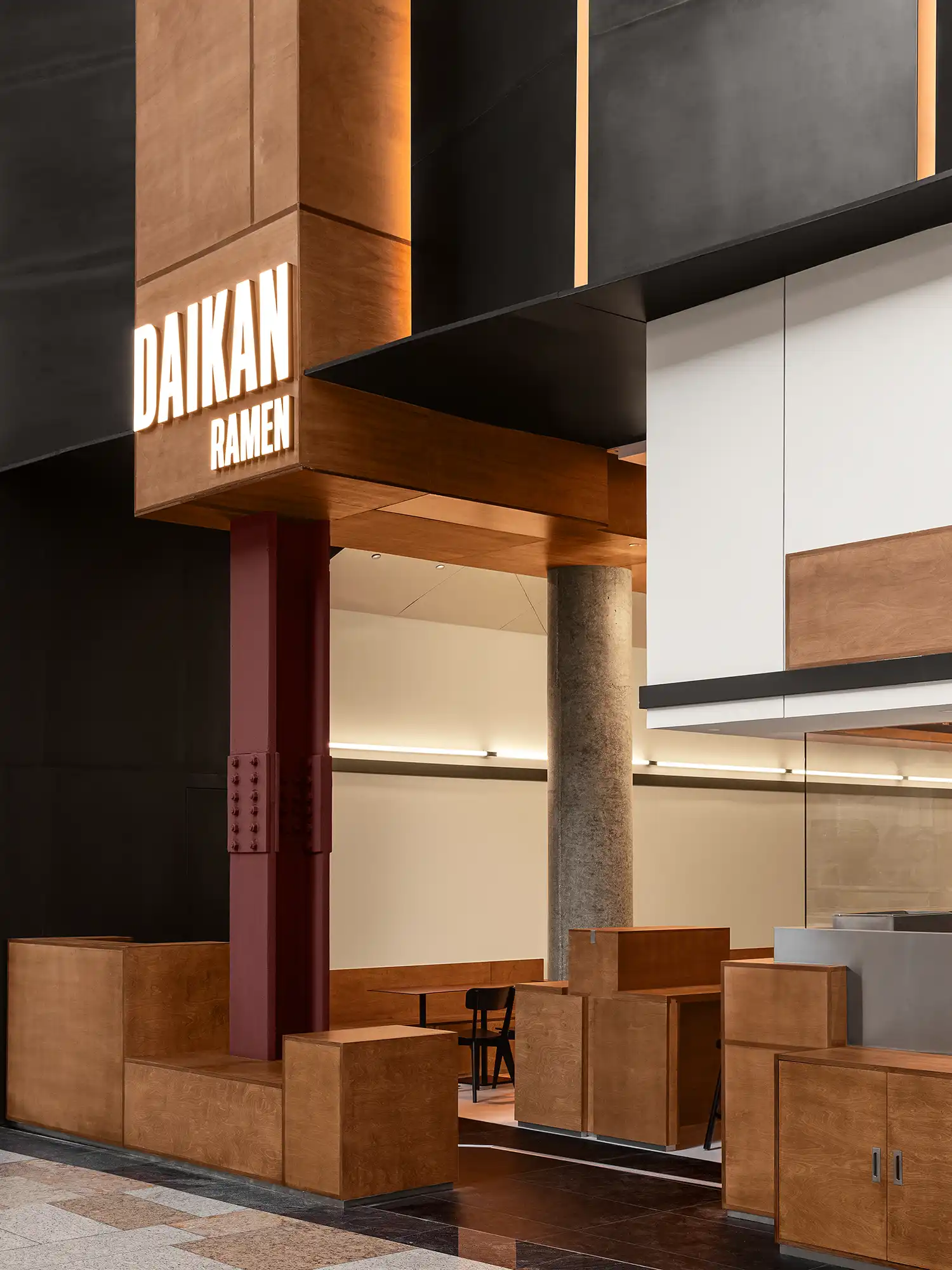
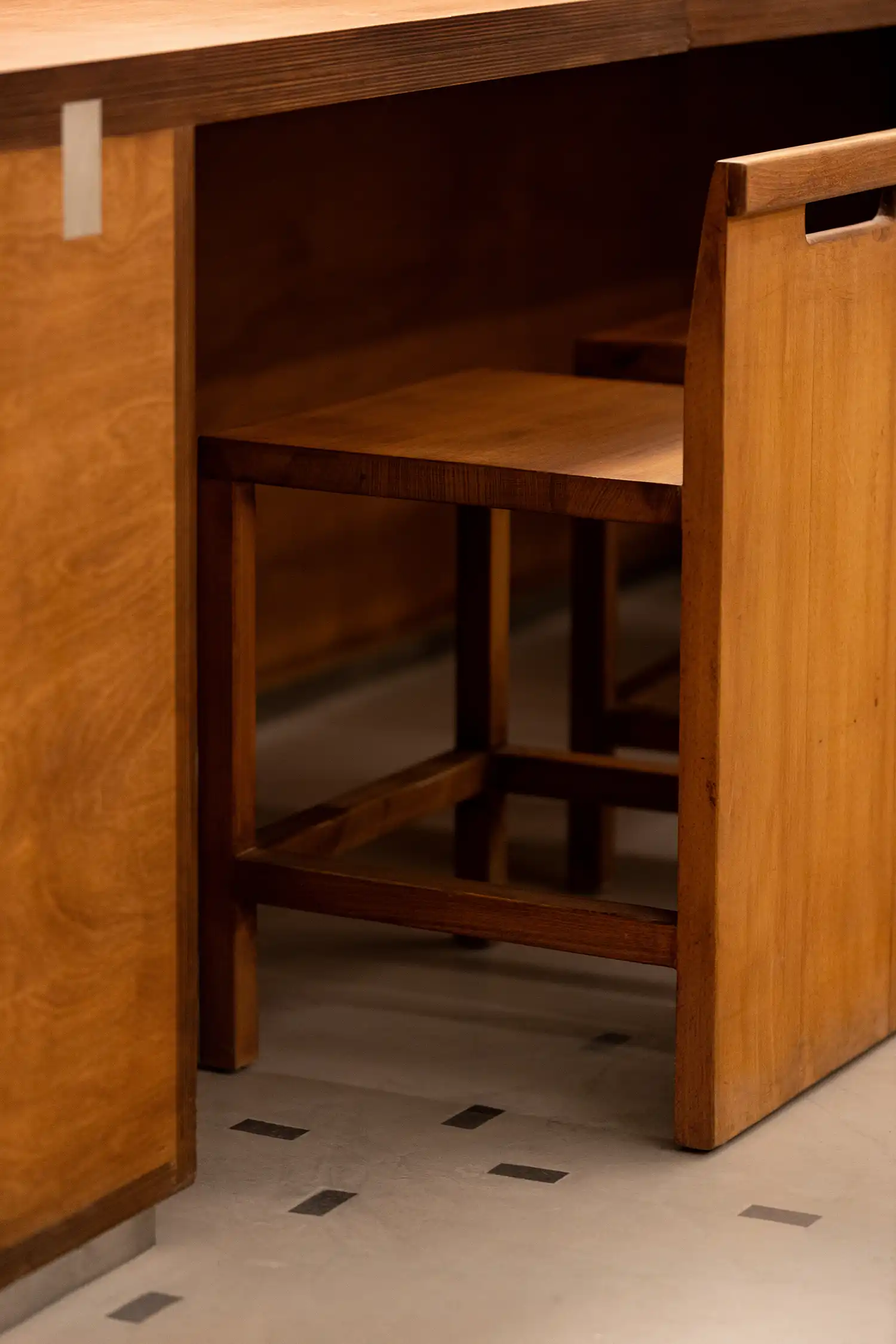
To achieve this, the studio drew heavily on the fundamental principles of Japanese architecture, specifically focusing on concepts of modularity, functionality, and inherent adaptability. This search for a cohesive architectural device led the designers to the complex and beautiful system of traditional Japanese joinery. Notches, mortise-and-tenon elements, and interlocking details became more than just a decorative motif; they were transformed into a large-scale construction set that dictates the logic of the entire interior design, defining both the spatial layout and the bespoke furniture.
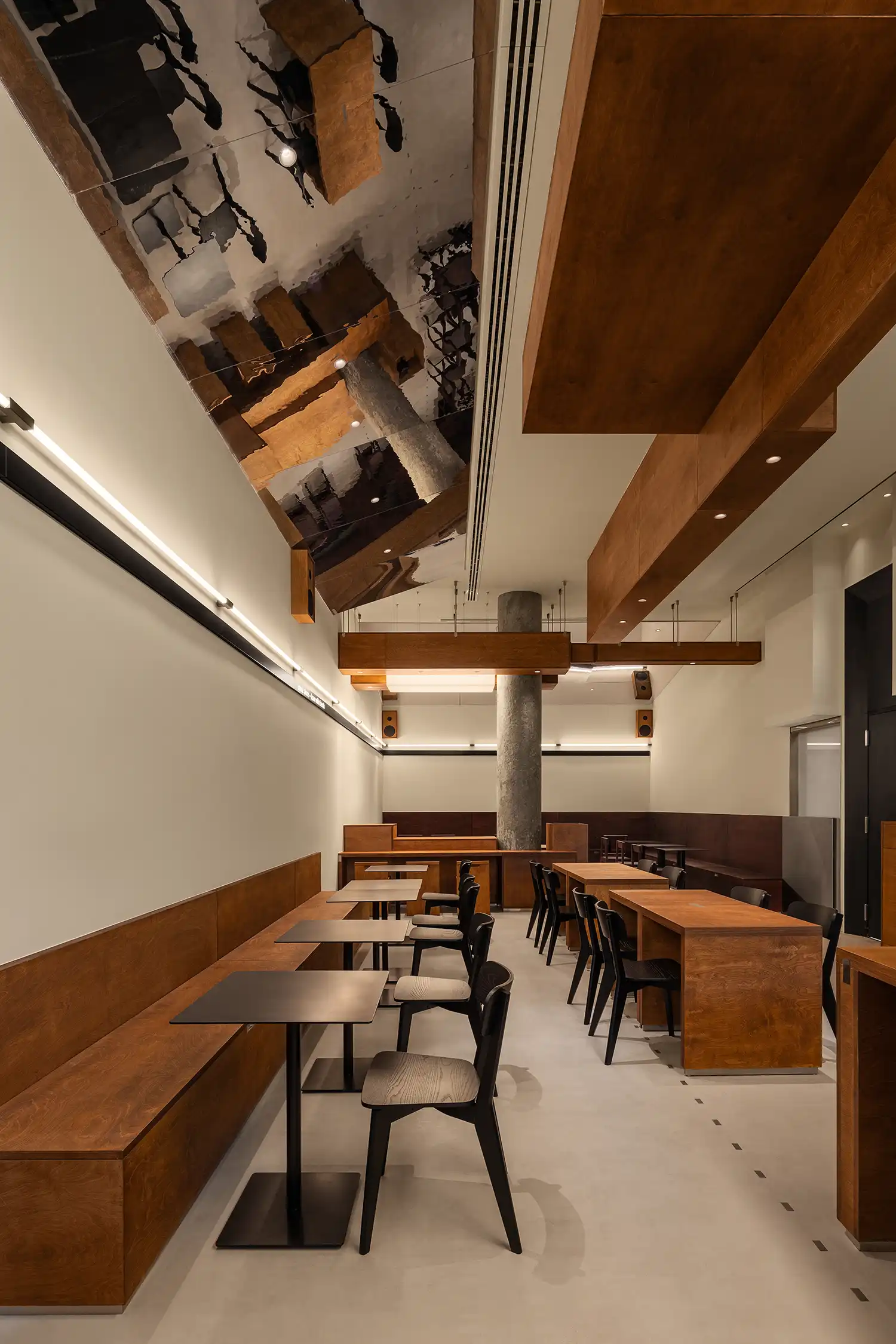
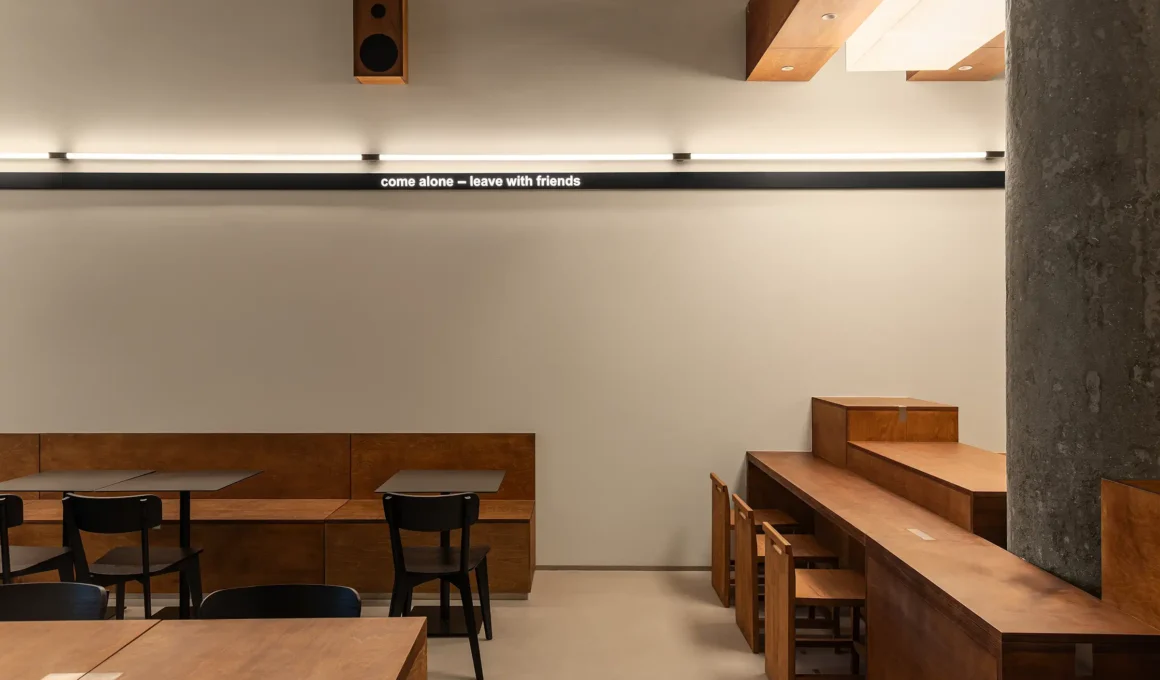
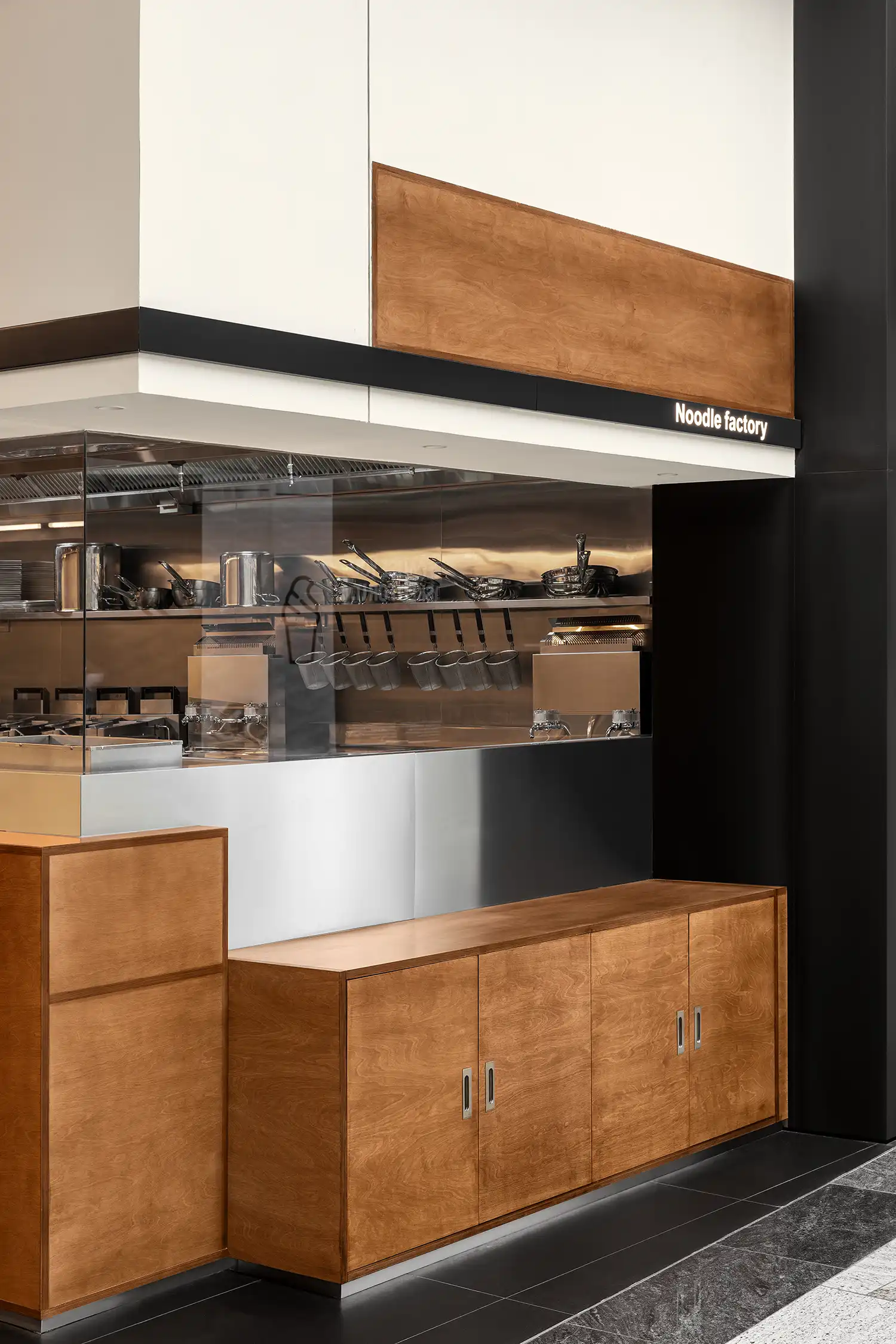
The application of this joining principle is explicit and structural, shaping the internal composition where elements appear to meticulously “slot” into one another, creating a kind of spatial Jenga at an architectural scale. This bold, graphic identity is reinforced by the material palette and geometry. The space is built on a strict orthogonal geometry, a precise pairing of raw plywood and stainless steel that sets a rigorous, utilitarian tone. This deliberate material rawness, along with the strict forms, reinforces the inherent, bold character of the brand.
Notably, the existing features of the site, such as a large concrete column and a structural beam, are not masked but are instead integrated directly into the visual and structural composition. Setting the rhythm for the entire interior, a key wooden connector element is positioned to hover dramatically above the pickup station, where its structural lineage continues into the ceiling composition, successfully linking the building’s facade with the inner sanctum of the Daikan RAMEN shop.
An additional layer of conceptual depth is introduced by evoking the atmosphere of genuine Japanese street food. This is achieved through carefully considered dimmed lighting, bespoke branded wayfinding signage, and the striking use of mirrored ceiling panels. These panels intentionally distort light reflections, producing a flickering effect reminiscent of street lamps casting shimmering reflections on rain-slicked urban landscape puddles. This street theme is further echoed by subtle metal inlays on the floor, which trace trajectories resembling road markings, and similar details on the furniture, which symbolically “connect” their parts, weaving the two conceptual lines—traditional Japanese joinery and the modern urban landscape—together.
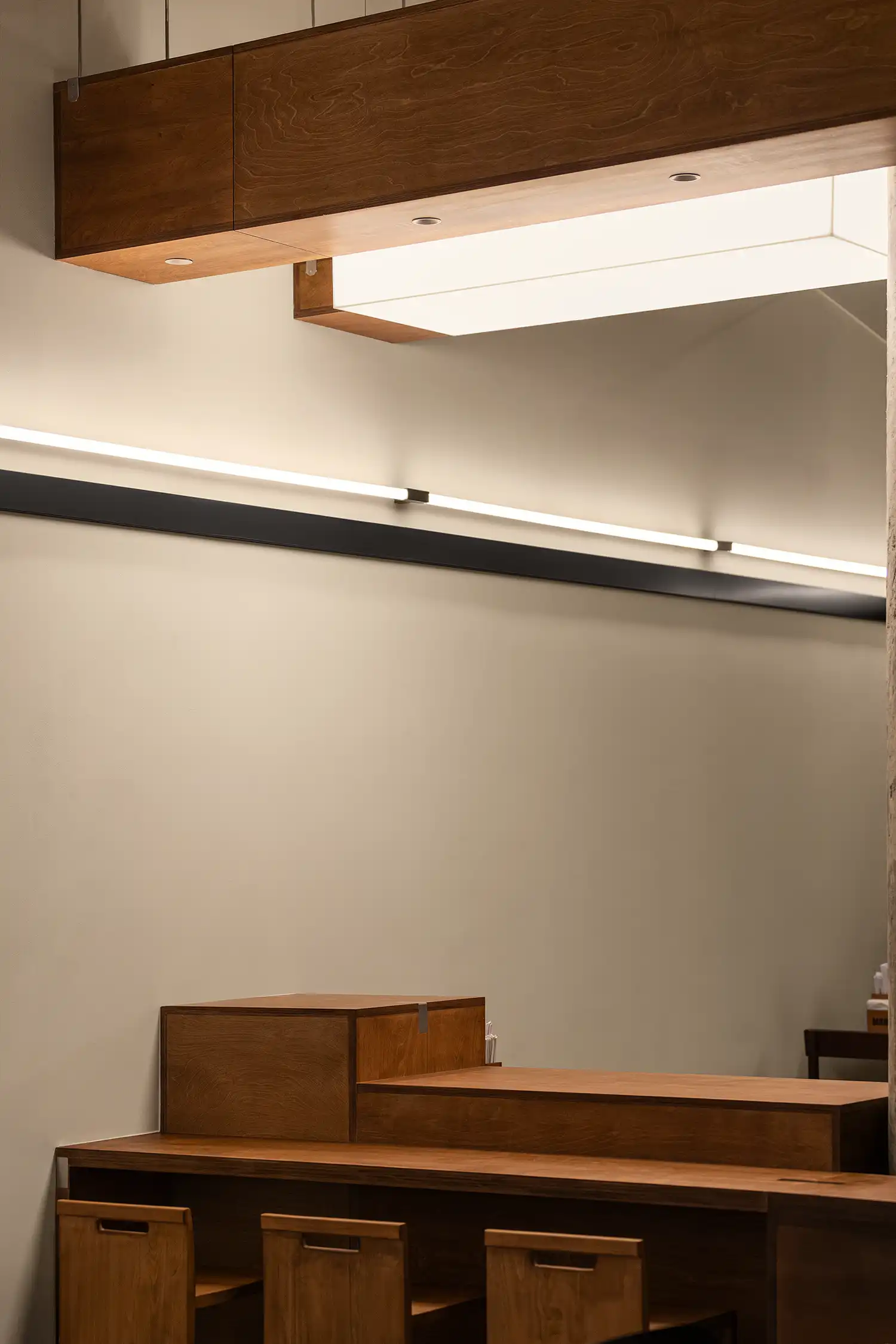
The entire project consciously resists a reliance on excessive technological sleekness, instead prioritizing tactility and a material honesty that elevates the dining experience. Materials like concrete, expressive-grain plywood, robust stainless steel, and blackened steel were chosen for their sensory qualities. The facade serves as a structural and engineering centerpiece: a nine-meter-long metal structure that combines large black steel blades and a complex, highly-precise wooden element, which was meticulously developed and assembled in close collaboration with structural engineers, serving as the definitive statement of this innovative restaurant design.