


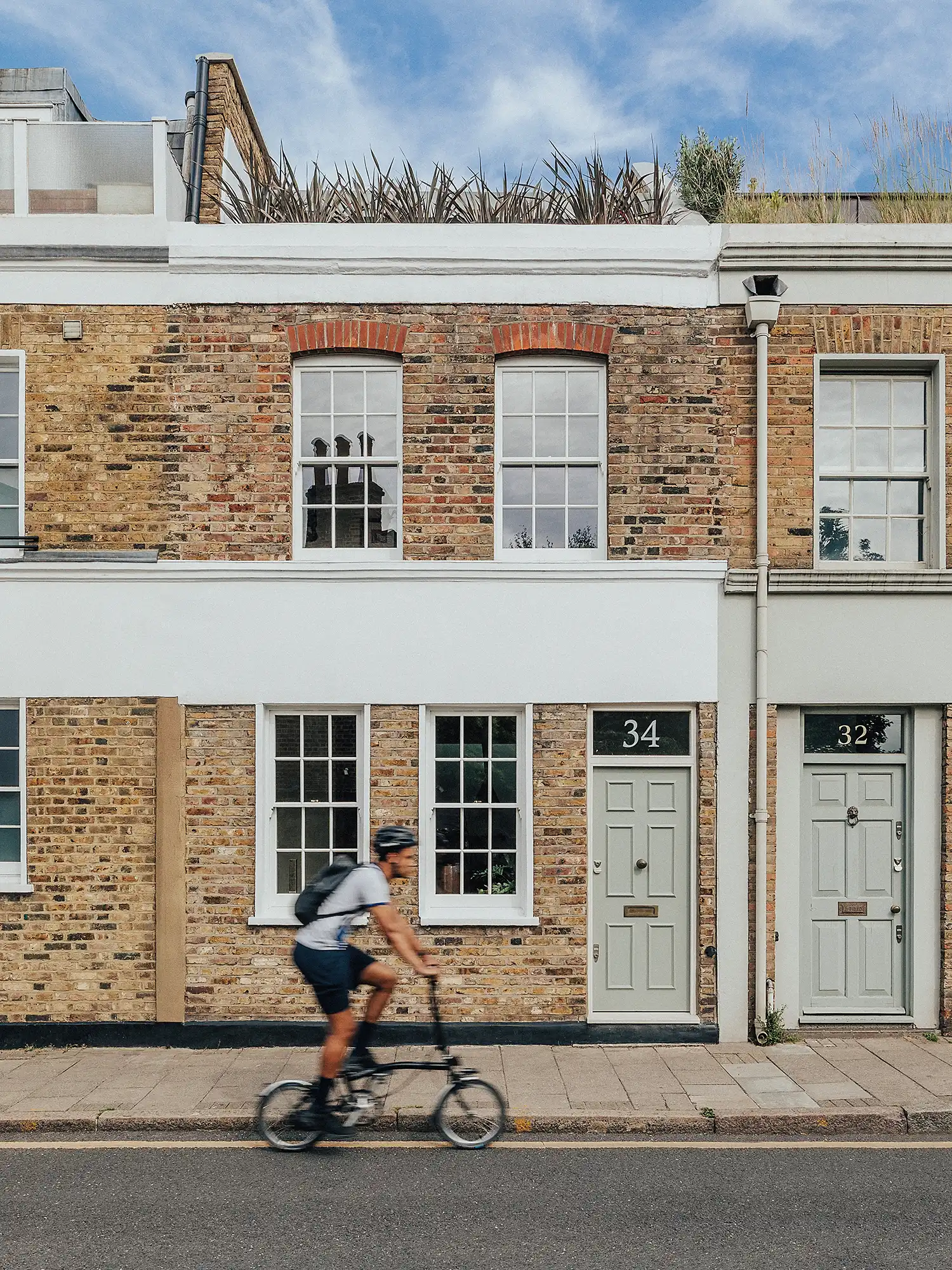
In the heart of North London’s Barnsbury Conservation Area, Emil Eve Architects has completed the transformative Thornhill Road project, turning a formerly cramped nineteenth-century townhouse into a luminous, art-filled home. Originally constructed as commercial premises in the late 1800s, the building had long suffered from a restrictive single-aspect layout that left the rear of the property dark and disconnected from the outdoors. Through a series of clever structural interventions, the studio has unlocked the potential of the modest site, creating a contemporary home that feels far more expansive than its 70-square-meter footprint.
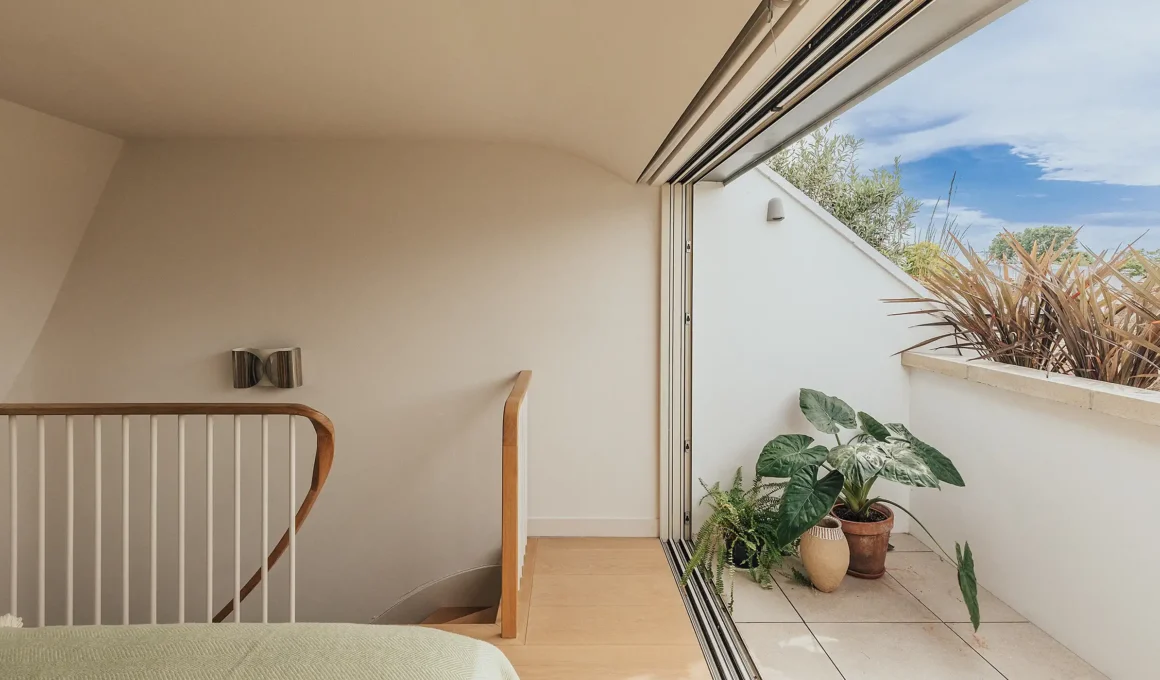
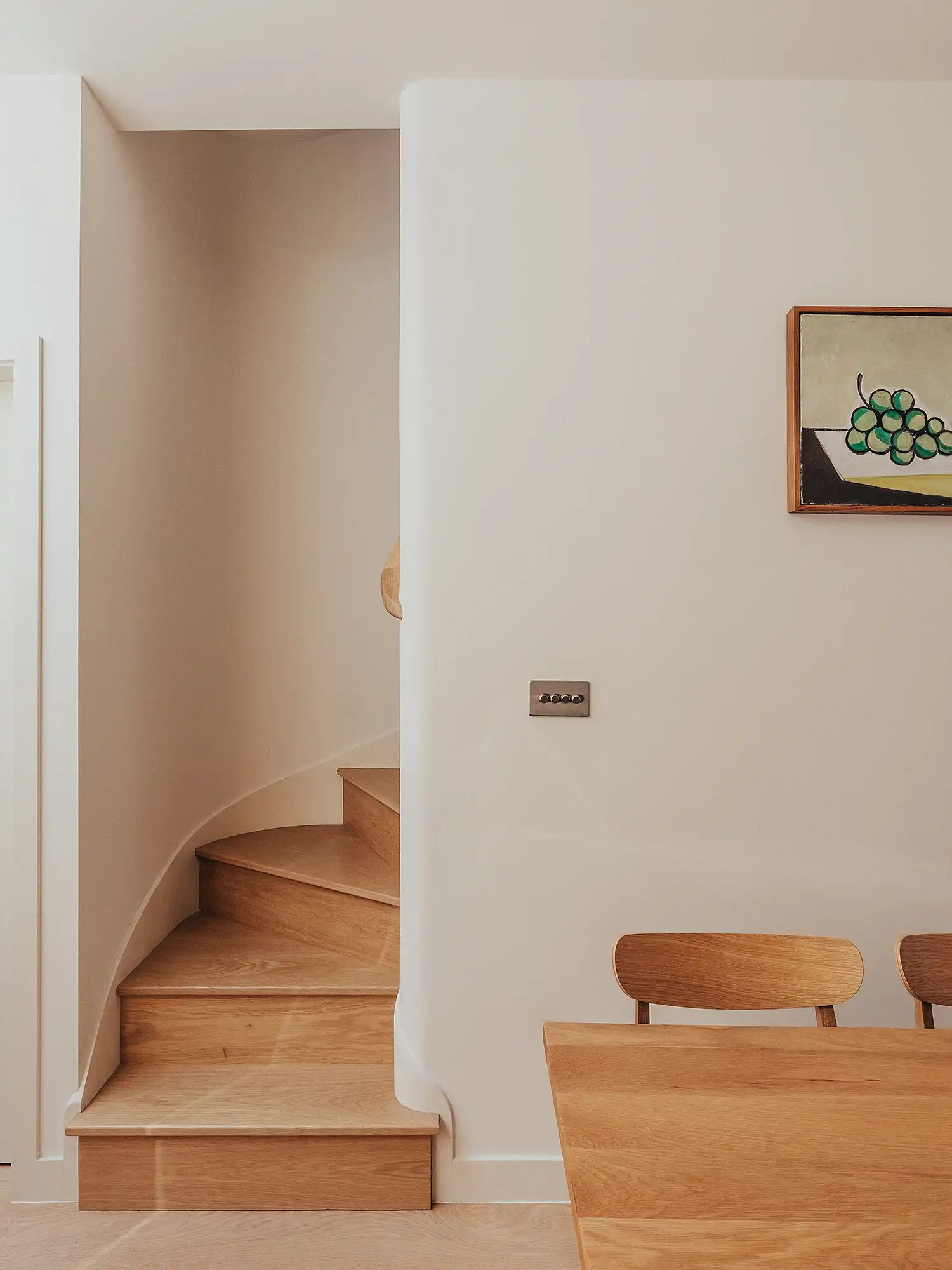
The interior design was heavily influenced by the client’s personal collection, specifically a pair of 1960s Foglio wall lights by Tobia Scarpa for Flos. These iconic fixtures, with their distinctive curved geometry, served as the aesthetic catalyst for the entire scheme. The architects translated these sinuous lines into the very fabric of the building, introducing bespoke joinery and a sculptural oak staircase that winds through all three levels, softening the transitions between living spaces.
At the ground level, the floor plan was entirely reimagined to prioritize light and social interaction. What was once a “dark and damp” bathroom at the rear of the house has been reborn as a bespoke oak kitchen. This new culinary hub is flooded with natural light from a triangular walk-on rooflight, which cleverly doubles as the base for a new outdoor terrace on the floor above. This vertical connection not only brightens the interior but also establishes a visual link to the lush gardens beyond.
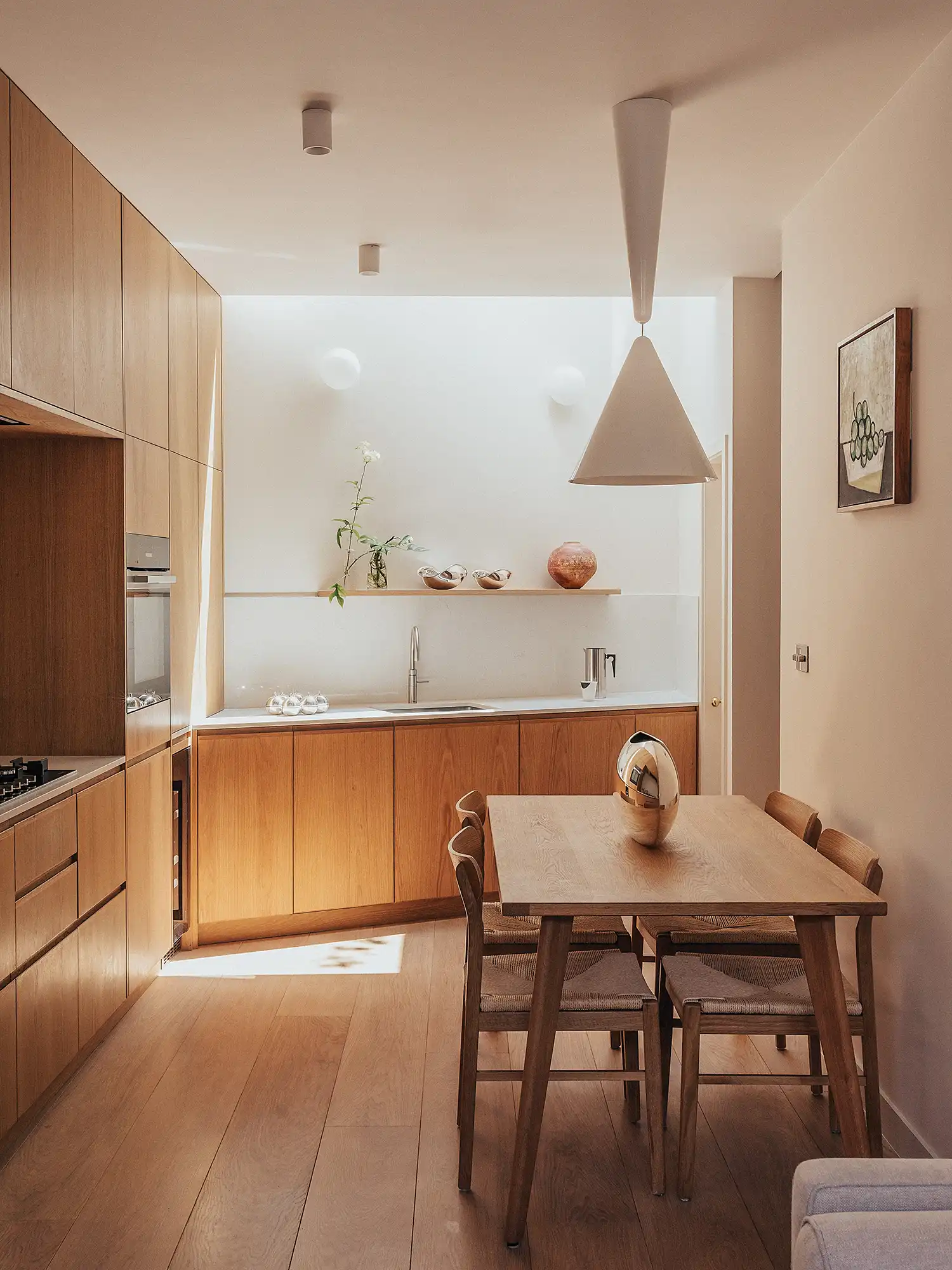
The material palette is purposefully restrained, emphasizing the minimalist architecture and providing a neutral backdrop for the owner’s art. Natural oak is the dominant material, used for everything from the wide floorboards to the floor-to-ceiling cabinetry and storage solutions integrated into the roof slopes. This warmth is balanced by soft white walls and a sophisticated use of terrazzo tiling in the bathrooms, which are finished in contrasting tones of creamy white and deep, rich green.
One of the project’s most significant achievements was the integration of external space where none previously existed. Through careful negotiation with the local planning department, Emil Eve secured permission for two new roof terraces. The front terrace, which serves the main bedroom, is tucked behind a full-width integrated planter, offering the owner a private retreat with views across the Islington skyline without compromising the historic character of the conservation area.
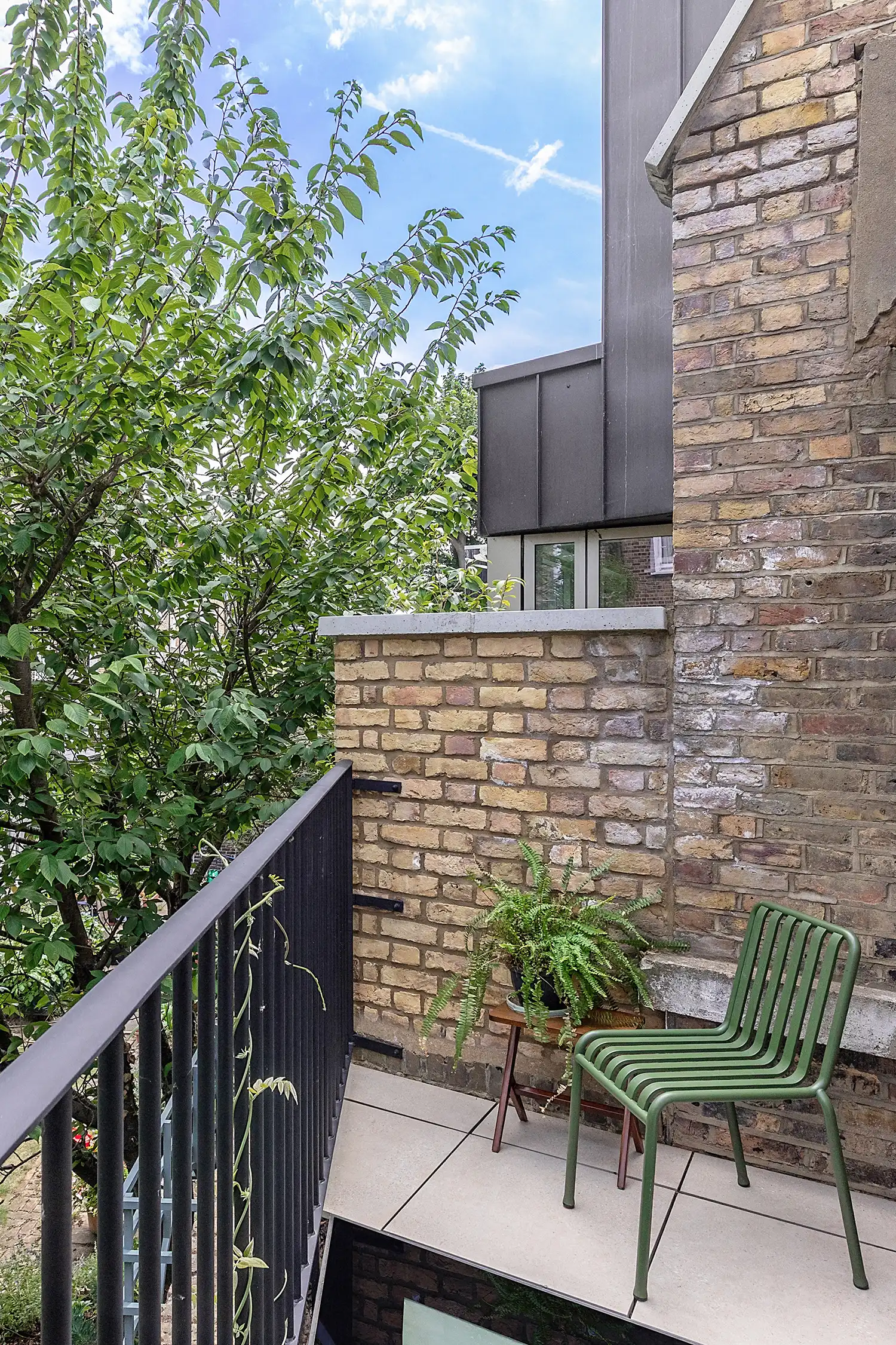
The architectural renovation also addressed long-standing environmental issues within the original structure. By implementing a considered ventilation strategy, including both cross and stack ventilation routes, the architects ensured the home remains cool and fresh throughout the year. Additional energy-saving measures, such as new double-glazed sash windows and high-performance thermal insulation, have significantly improved the building’s efficiency and comfort.
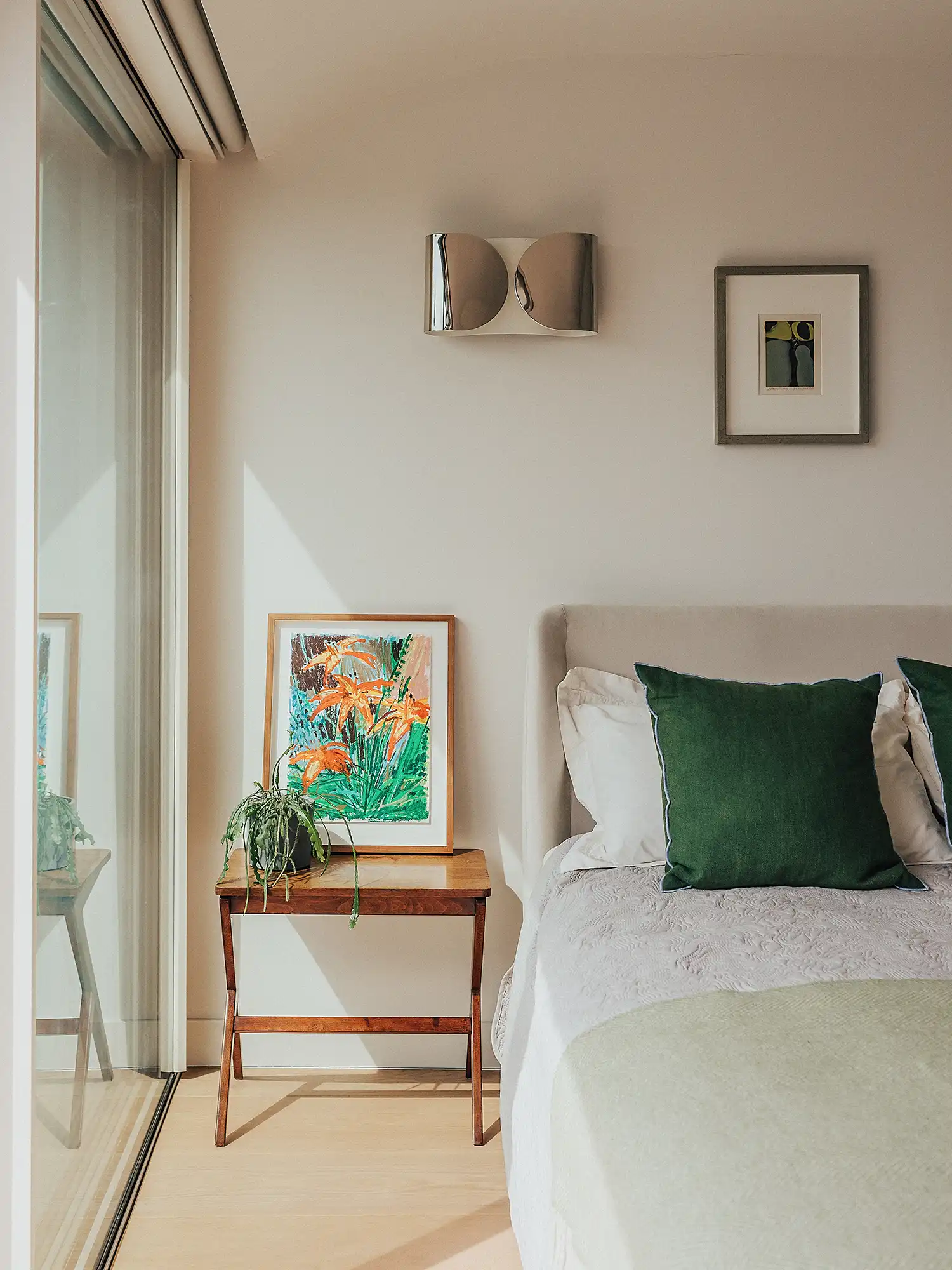
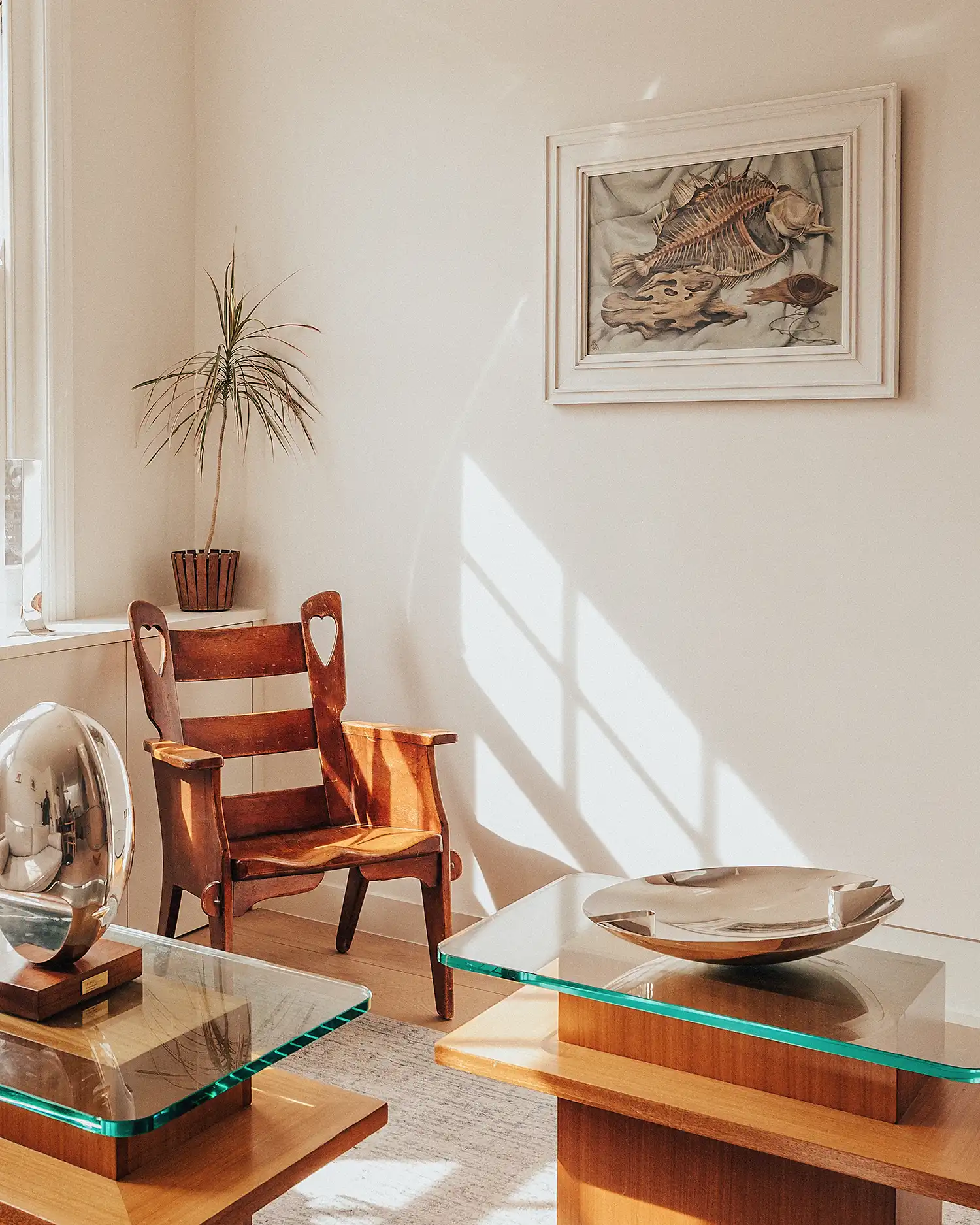
Throughout the home, the curated spaces reflect the owner’s Italian heritage and passion for mid-century design. Silver sculptural pieces by Lino Sabattini and abstract paintings by Gino Gregori are thoughtfully placed alongside modern furniture, such as a 1933 Maple ‘Heart’ Armchair. These pieces are not merely decorative but are integral to the storytelling of the home, harmonizing with the sweeping lines of the architecture.
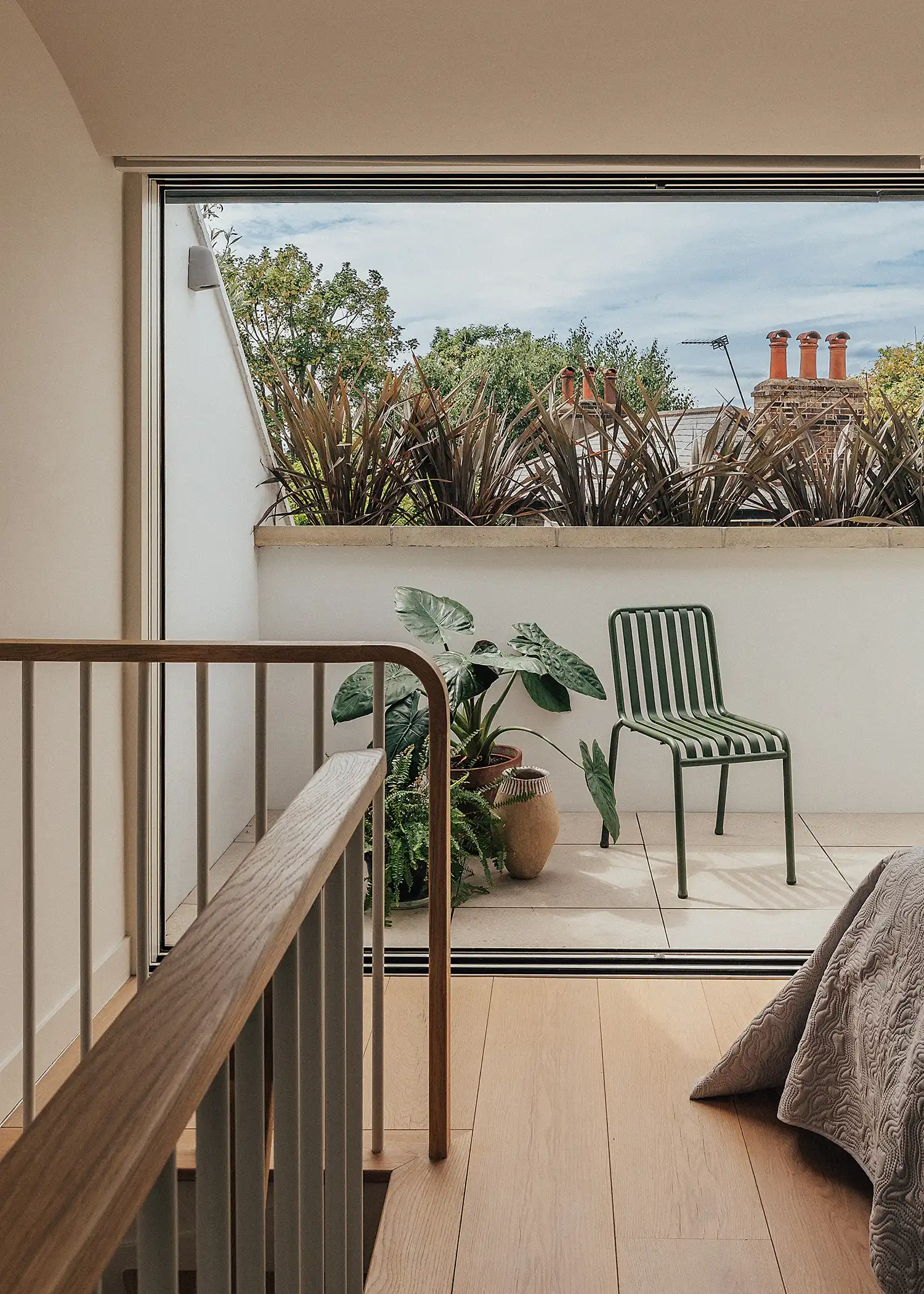
Despite the project’s unassuming street presence, the Thornhill Road renovation was a feat of technical precision. The staircase alone was meticulously modelled in 3D to ensure the unique curves of the treads and handrail fit perfectly within the tight constraints of the Victorian shell. The result is a modern townhouse that feels both timeless and innovative, proving that even the most awkward historical buildings can be reimagined for a sophisticated urban lifestyle.