



A dialogue between heritage and light defines the latest intervention by midori arquitectura in the heart of Madrid. Nestled within the vibrant, narrow arteries of the Malasaña neighbourhood, a century-old attic apartment of barely 30m²has been reimagined not through the lens of limitation, but through the strategic exploitation of its verticality. The original site, though compact, possessed a rare urban luxury: its position on the top floor of a historic building provided a unique relationship with the sky, previously obscured by a restrictive spatial configuration of false ceilings and fragmented partitions.

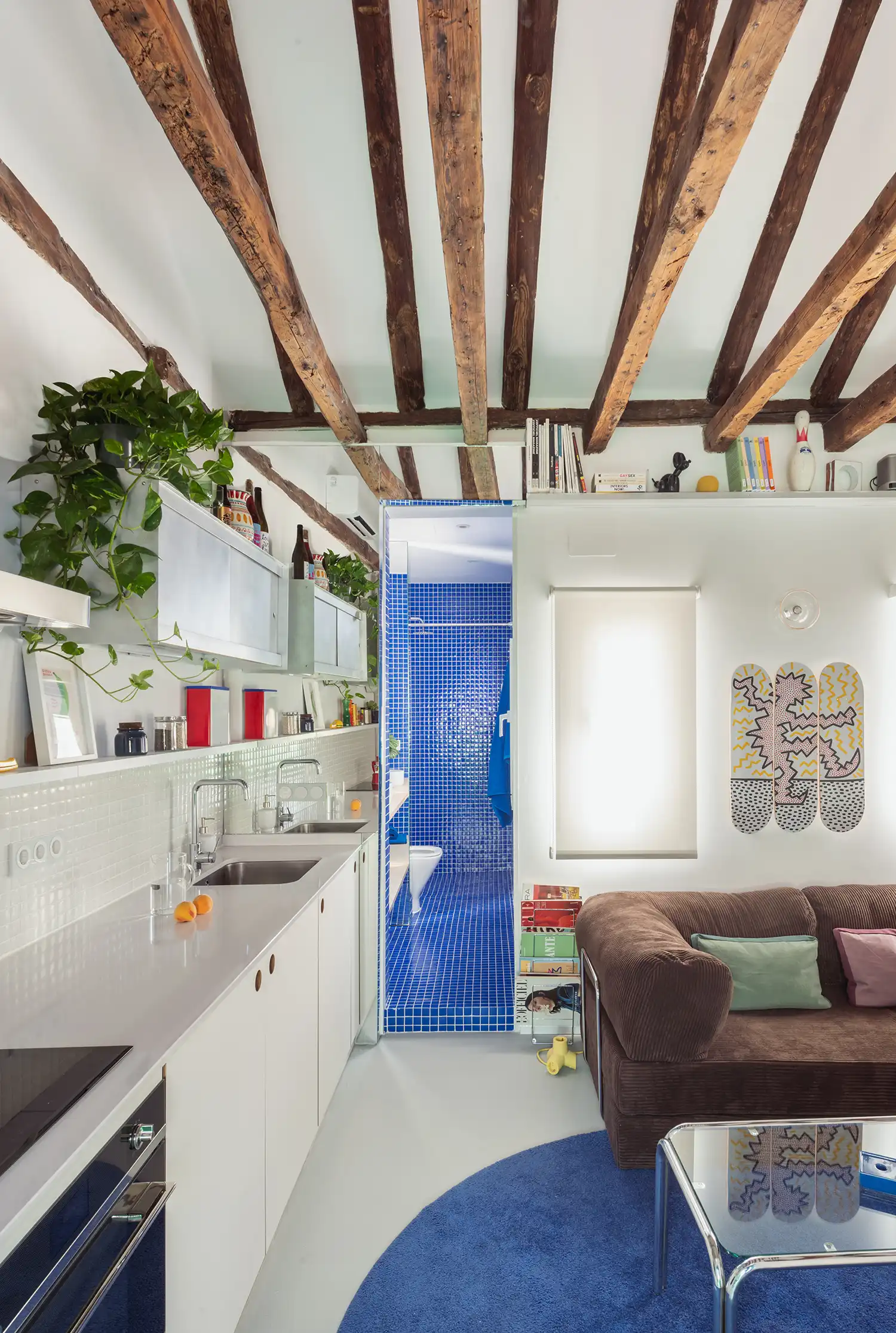
The conceptual vision for this refurbishment centers on the liberation of volume. By demolishing the existing false ceilings, the studio has performed a celebratory unveiling of the vernacular timber framework. These spectacular wooden beams now crown the living area, providing an immediate sense of materiality and history that compensates for the footprint’s modest dimensions. This structural honesty serves as a rhythmic backbone for the home, drawing the eye upward and transforming a once-cramped attic into a cathedral-like sanctuary of light.
Strategic structural interventions have completely altered the home’s internal logic, moving away from a series of claustrophobic corridors toward a singular, generous living space. By eliminating the narrow kitchen access, the architects achieved a regular geometry that allows the interior courtyard to flood the social heart of the home with natural light. The kitchen itself is no longer a peripheral utility but has been integrated into the room with the precision of a bespoke piece of furniture, maintaining a minimalist juxtaposition against the rugged, aged texture of the roof’s structural skeleton.
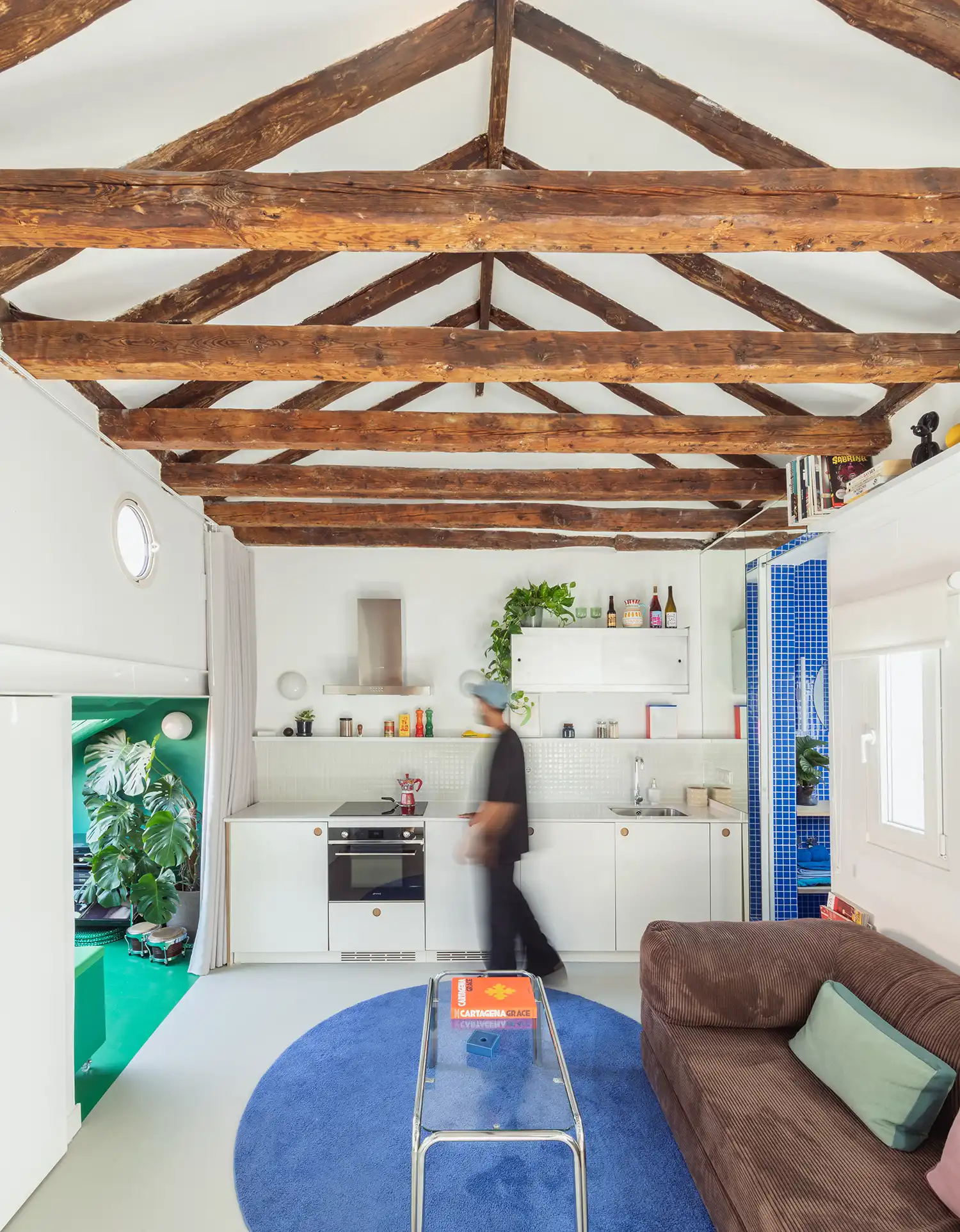
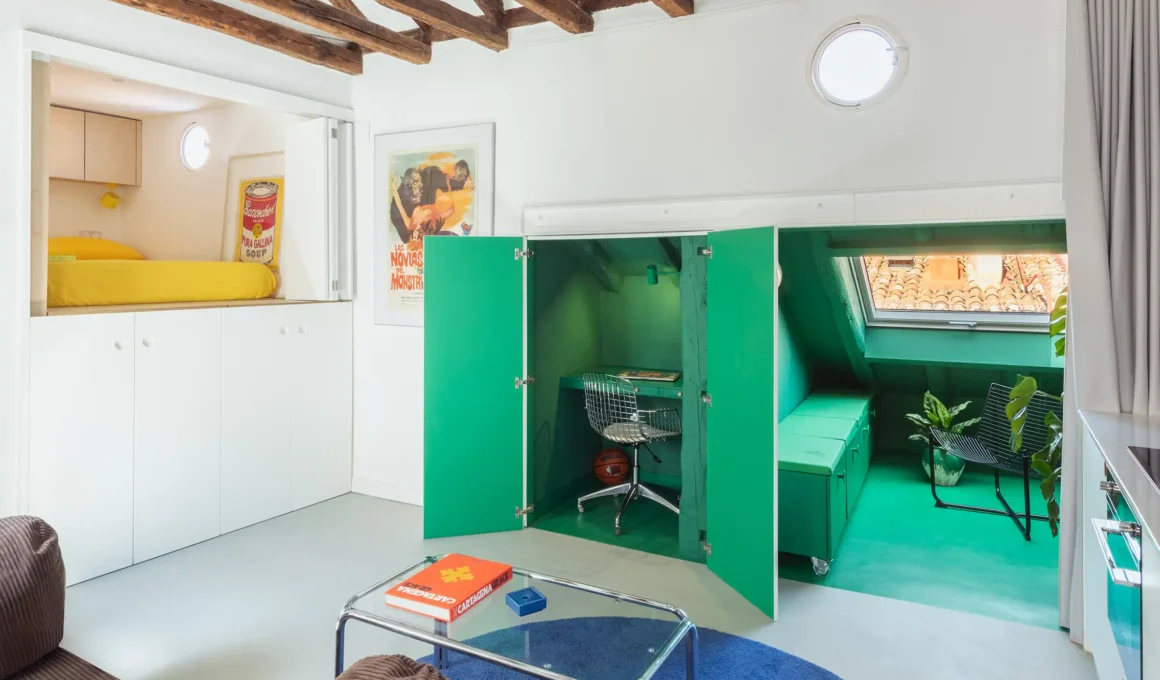
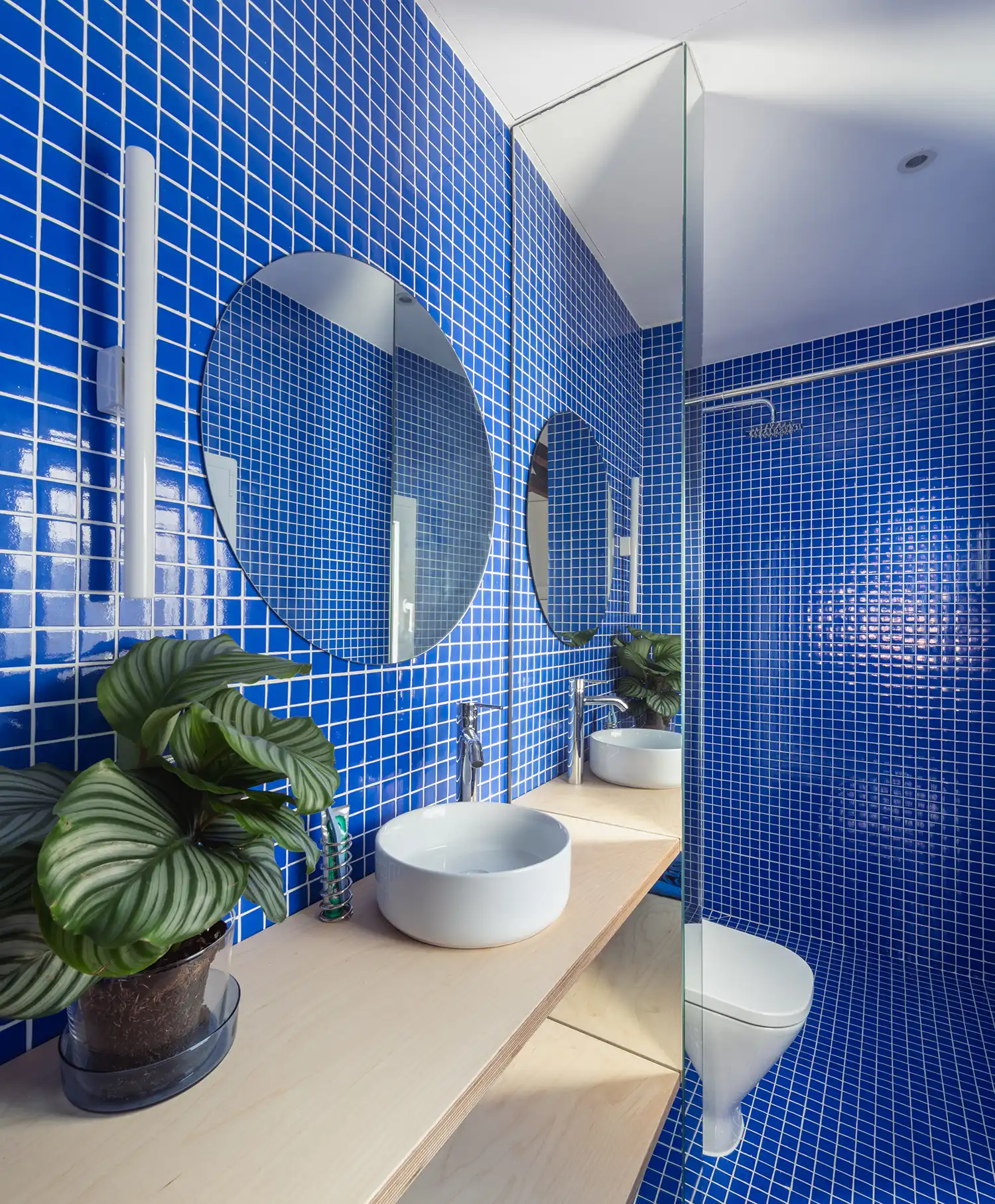
The sensory experience of the dwelling is defined by a sophisticated “hide and reveal” chromatic strategy. While the central living area is finished in serene, neutral tones to prioritize the architectural timber, the peripheral “satellite” rooms—the bathroom, bedroom, and study nook—are concealed behind a series of sliding and folding panels. Upon opening these thresholds, the neutral palette is punctuated by a sudden, vibrant spatiality: a brilliant blue mosaic in the bathroom, a luminous yellow storage system beneath the elevated bedroom, and a lively green that defines the upper attic extension.
Technical ingenuity is most evident in the bedroom’s clever use of height. To maximize the utility of every square meter, the sleeping quarters are elevated on a wooden platform, creating a cavernous storage volume beneath the mattress. This allows the room to remain uncluttered and breathable, functioning as a private retreat that can be seamlessly unified with the living area through folding partitions. It is a masterclass in spatial optimization, ensuring that the functional requirements of modern living do not compromise the aesthetic clarity of the home.
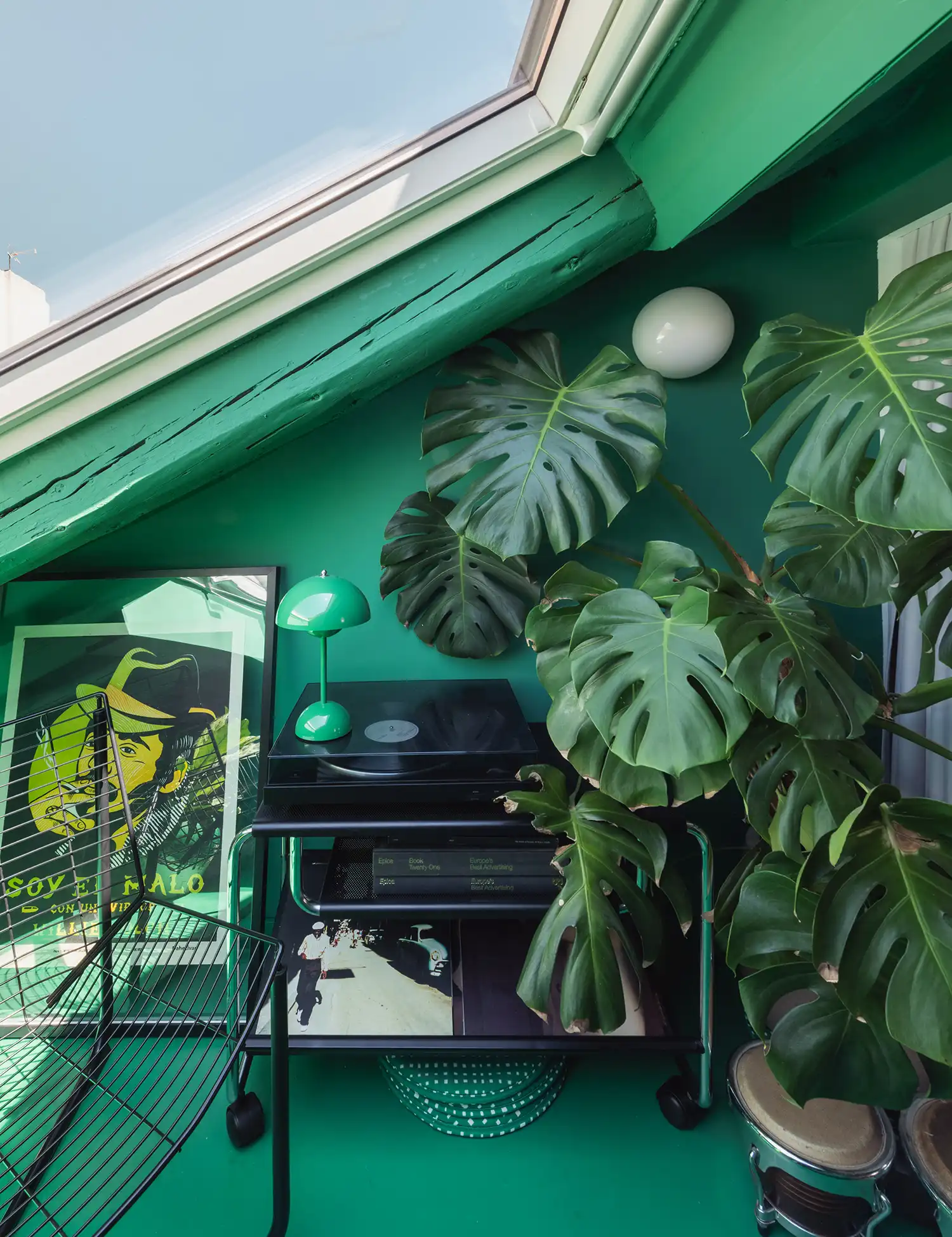
A profound contextual impact is achieved in the transformation of the previously neglected under-roof annex. Once a wasted, low-ceilinged closet, this volume has been opened to the main floor to act as a versatile study and lounge. By widening the existing skylight, midori arquitectura has turned this nook into a metaphorical terrace; the green hues of the interior and the framed views of the Madrid sky create an atmospheric connection to the outdoors. This final gesture turns the apartment’s highest point into its greatest asset, offering a tranquil vantage point above the bustling streets of the Spanish capital.