


In the rugged, salt-sprayed landscape of West Jutland, architecture often finds itself in a physical dialogue with the elements. Near the village of Klegod, Denmark, where the North Sea exerts a constant pressure on the terrain, Spant Studio has completed a summer house that refuses to compete with its environment. Instead, the project acts as a quiet, long-lasting refuge, conceived not as a static object but as a vessel for the shifting light, wind, and seasonal rhythms of the Danish coast. The commission, a private retreat for a couple designed to accommodate a multi-generational family, balances the intimacy of a secluded hideaway with the spatial capacity required for communal gatherings.
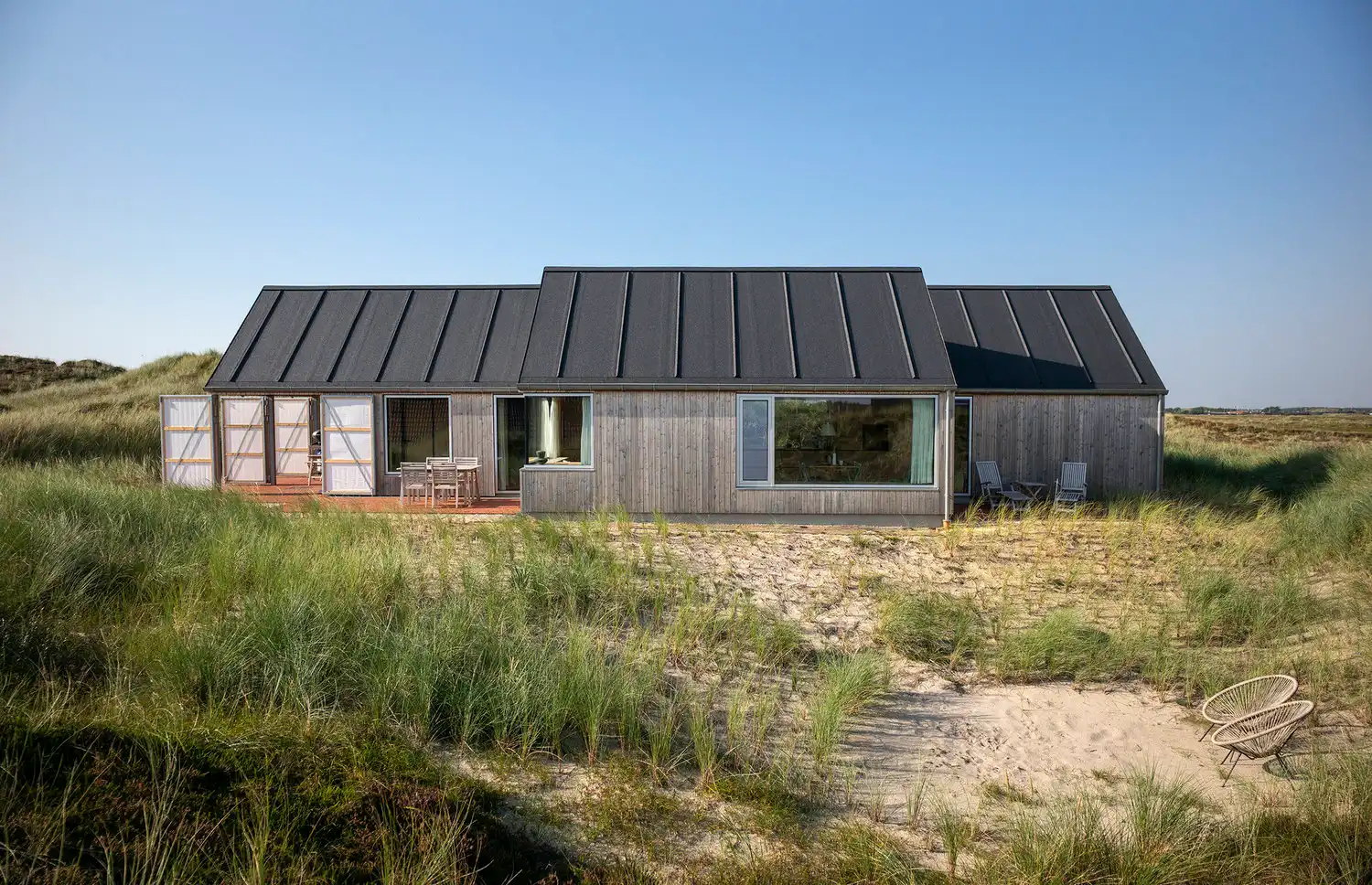
The conceptual vision is rooted in a philosophy of restraint and permanence. In an era of expansive holiday homes, Spant Studio opted for a footprint that honors the existing dune vegetation rather than displacing it. The house is positioned with surgical precision to minimize its visual impact on the skyline, allowing the building to settle into the topography. This architectural humility ensures that the house feels like a natural extension of the Danish moorland, where the primary objective was to create a robust, understated structure that responds to the site’s specific microclimate, balancing a sense of absolute protection with an uninhibited connection to the horizon.

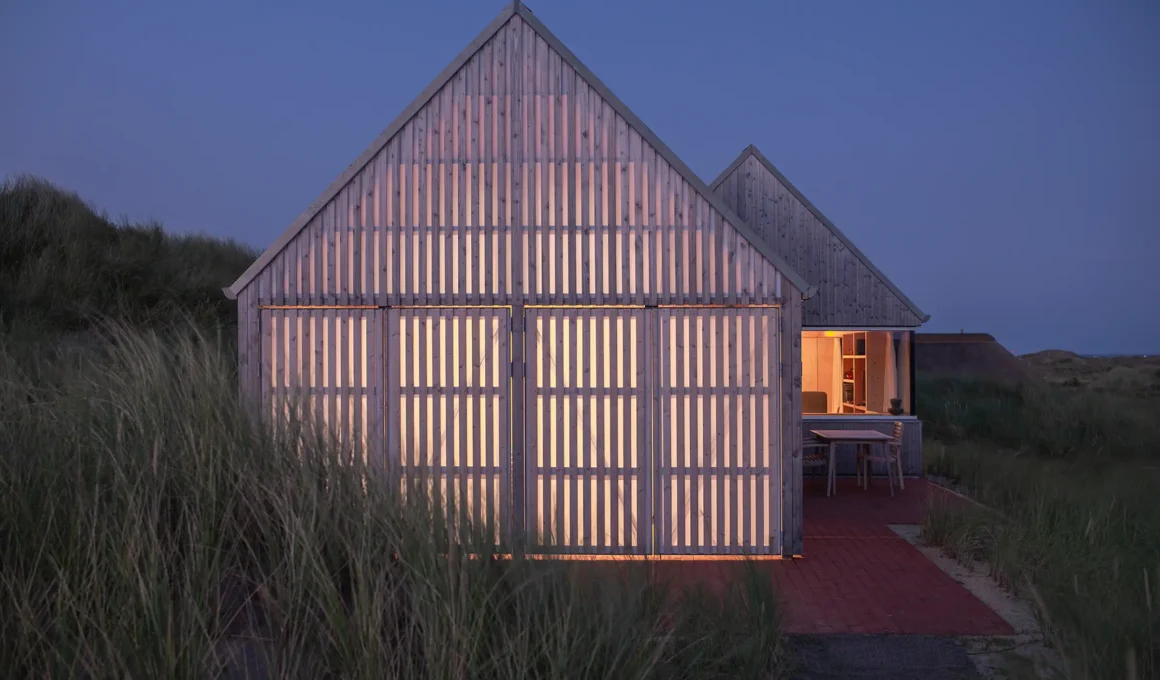
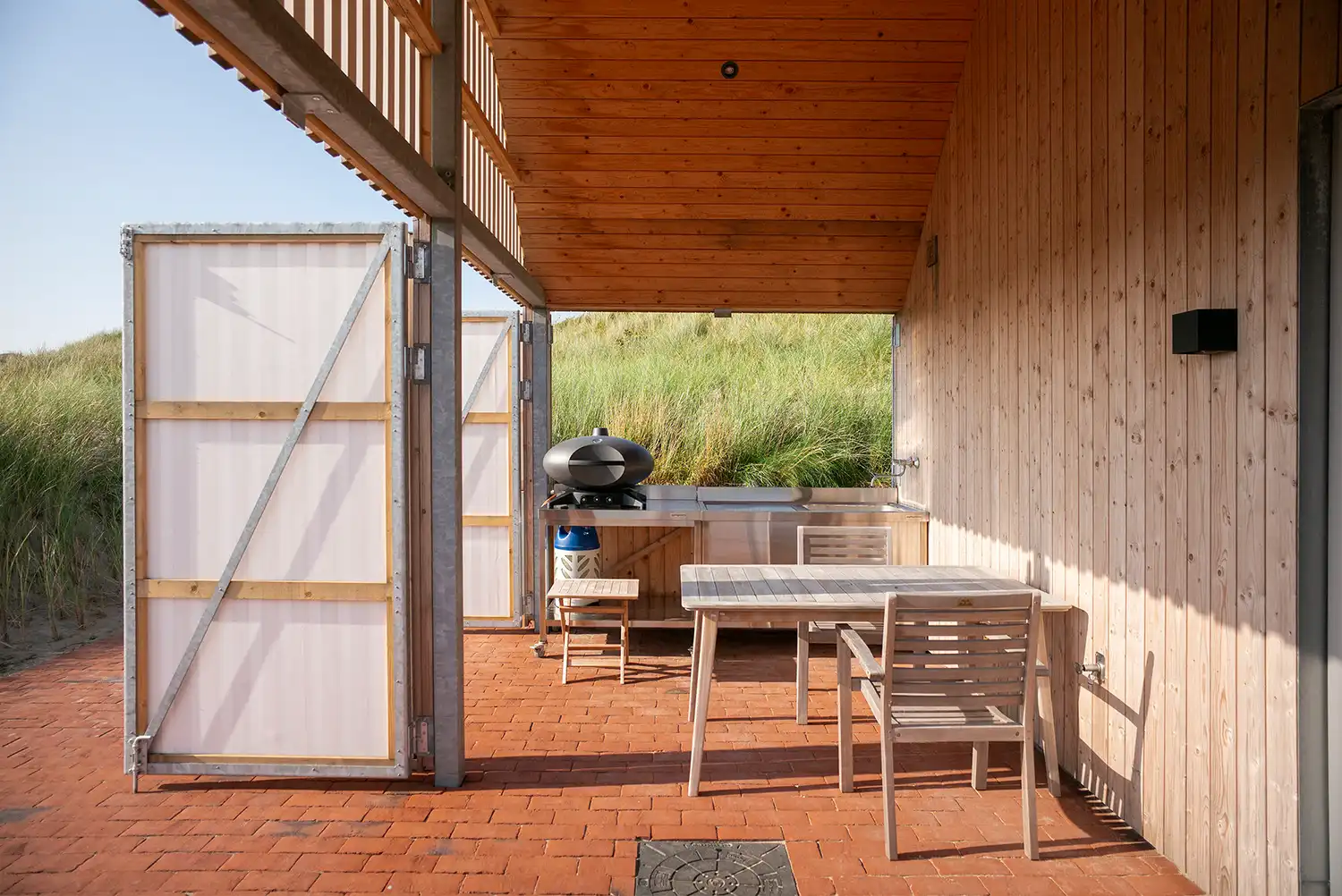
At the heart of the sensory experience is an ingenious approach to the “outdoor room.” Recognizing that the West Coast wind can be both a blessing and a burden, the architects integrated a covered terrace toward the southwest that serves as a transitional sanctuary. Equipped with adjustable wind screens crafted from translucent sailcloth, this space becomes a kinetic element of the architecture. During the day, it filters the harsh coastal sun; by night, when the screens are closed and the interior lights are dimmed, the terrace transforms into a soft, glowing lantern. It is here that the house most effectively mediates between the domestic and the wild, providing a sheltered pocket from which to observe the stormier moods of the North Sea.

The technical execution relies on the synergy between structure and interiority. Rather than treating the internal layout as a separate discipline, the architecture is conceived as a coherent whole where fixed furniture and spatial proportions are inextricably linked. The floor plan follows a clear hierarchy: central, open-plan living areas serve as the social hearth, while sleeping quarters are tucked away at the periphery to ensure privacy for guests. Throughout the interior, light is treated as a tactile material. Carefully framed apertures act as living canvases, capturing the movement of the clouds over Klegod and ensuring that even on the most introspective, wintery days, the residents remain tethered to the landscape.
Material honesty defines the building’s longevity and aesthetic evolution. The construction utilizes a traditional timber frame, detailed with a level of craftsmanship that elevates simple junctions into architectural moments. The exterior is clad in untreated timber, a deliberate choice intended to weather into a silver-grey patina that mimics the muted tones of the surrounding dunes. This commitment to “aging gracefully” mirrors the ethos of other notable coastal projects in the region, such as the Light House in Agger, which similarly explores the intersection of light and local materiality. In both instances, there is a profound respect for the Scandinavian tradition of building for the long term, prioritizing the tactile quality of honest materials over fleeting trends.
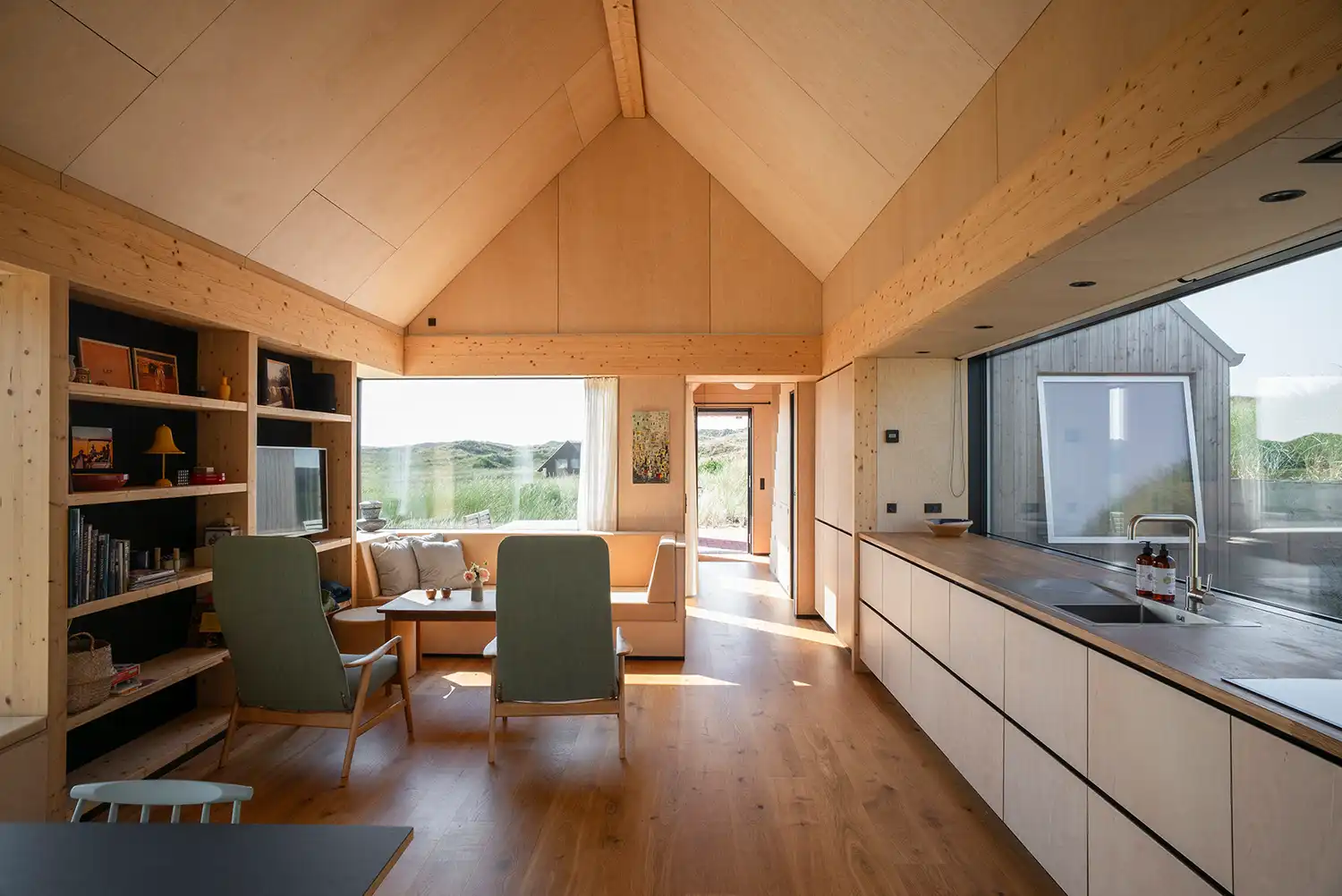
Ultimately, the Klegod Summer House is an exercise in atmospheric belonging. It is a structure that understands its place in the world, leaning into the wind and welcoming the salt air. By integrating the furniture into the very bones of the building and allowing the façade to evolve through natural weathering, Spant Studio has created a home that feels as though it has always been part of the Jutland coast. It stands as a testament to the idea that architecture is at its most powerful when it stops shouting, choosing instead to listen to the landscape and the families that inhabit it.