

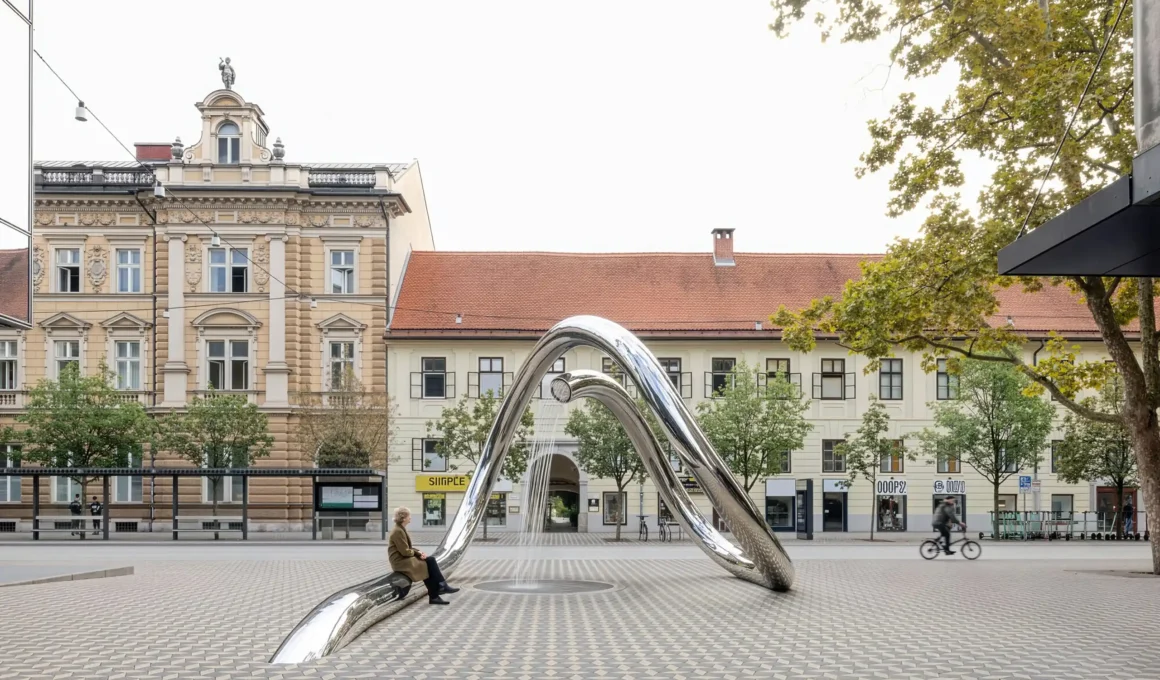
In the heart of the Slovenian capital, a long-awaited intersection of art and urban infrastructure has finally come to fruition. Nearly a decade after winning a public competition, Water Sculpture LJ has been realized at the junction of Slovenska cesta and Tomšičeva ulica in Ljubljana. Designed by M.KOCBEK architects and P PLUS arhitekti, the installation is far more than a decorative object; it is a “spatial loop” that redefines the pedestrian experience within the city’s dense urban fabric. By introducing a distinct micro-ambient, the project successfully carves out an intimate refuge amidst the constant flow of one of the city’s most vital thoroughfares.
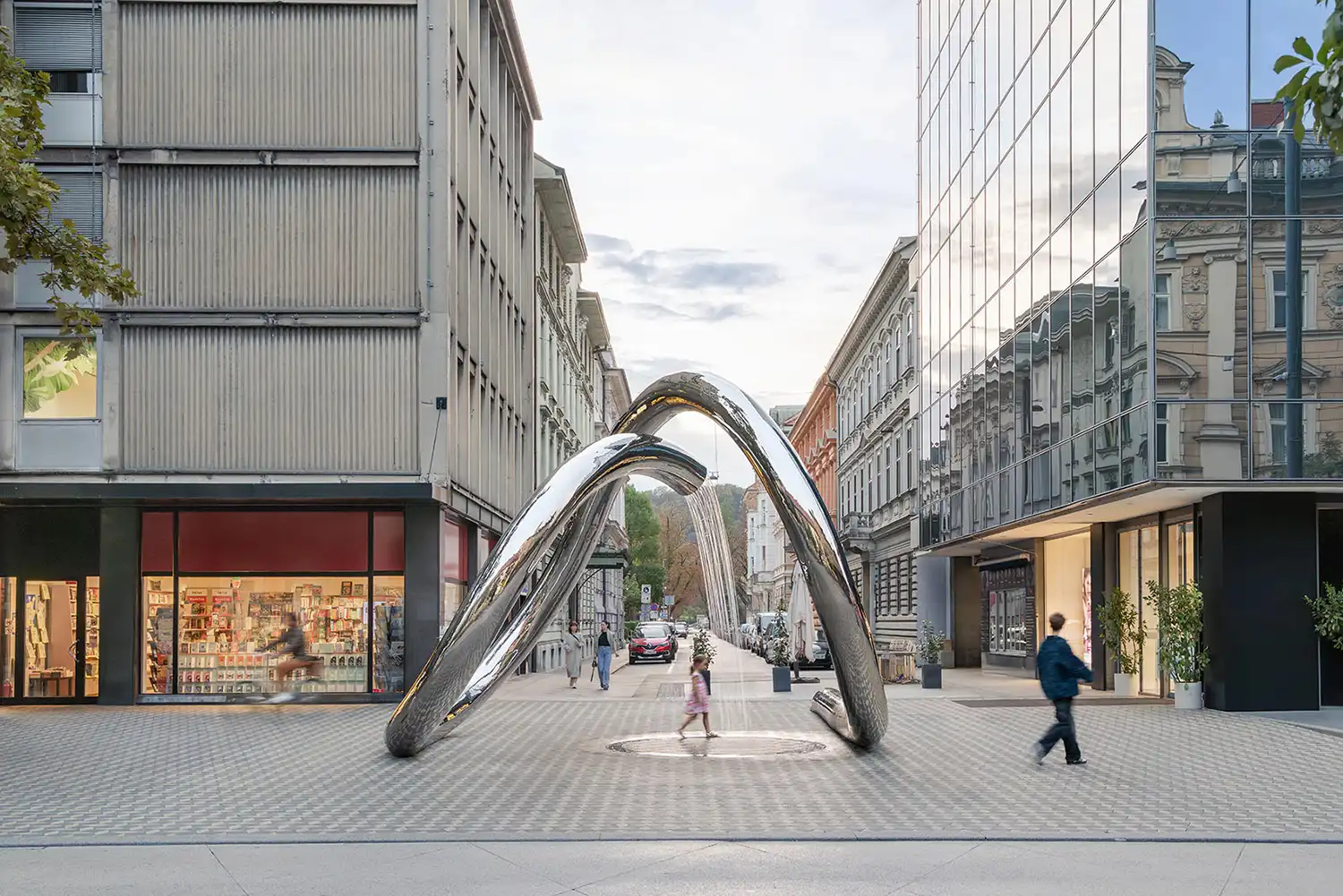
A conceptual vision of circularity and connection guides the sculpture’s form. The architects, Mojca Kocbek and Primož Boršič, conceived the structure as a continuous spatial gesture that avoids the traditional boundaries of public art. Rather than creating a barrier or a static monument to be viewed from afar, the sculpture invites a tactile, human-centric interaction. It functions as a programmatic node, channeling the bustling energy of Ljubljana‘s main street into a more contemplative sequence of views. This “urban platform” encourages passers-by to sit, touch, and inhabit the space within its lines, effectively blurring the distinction between the observer and the artwork.
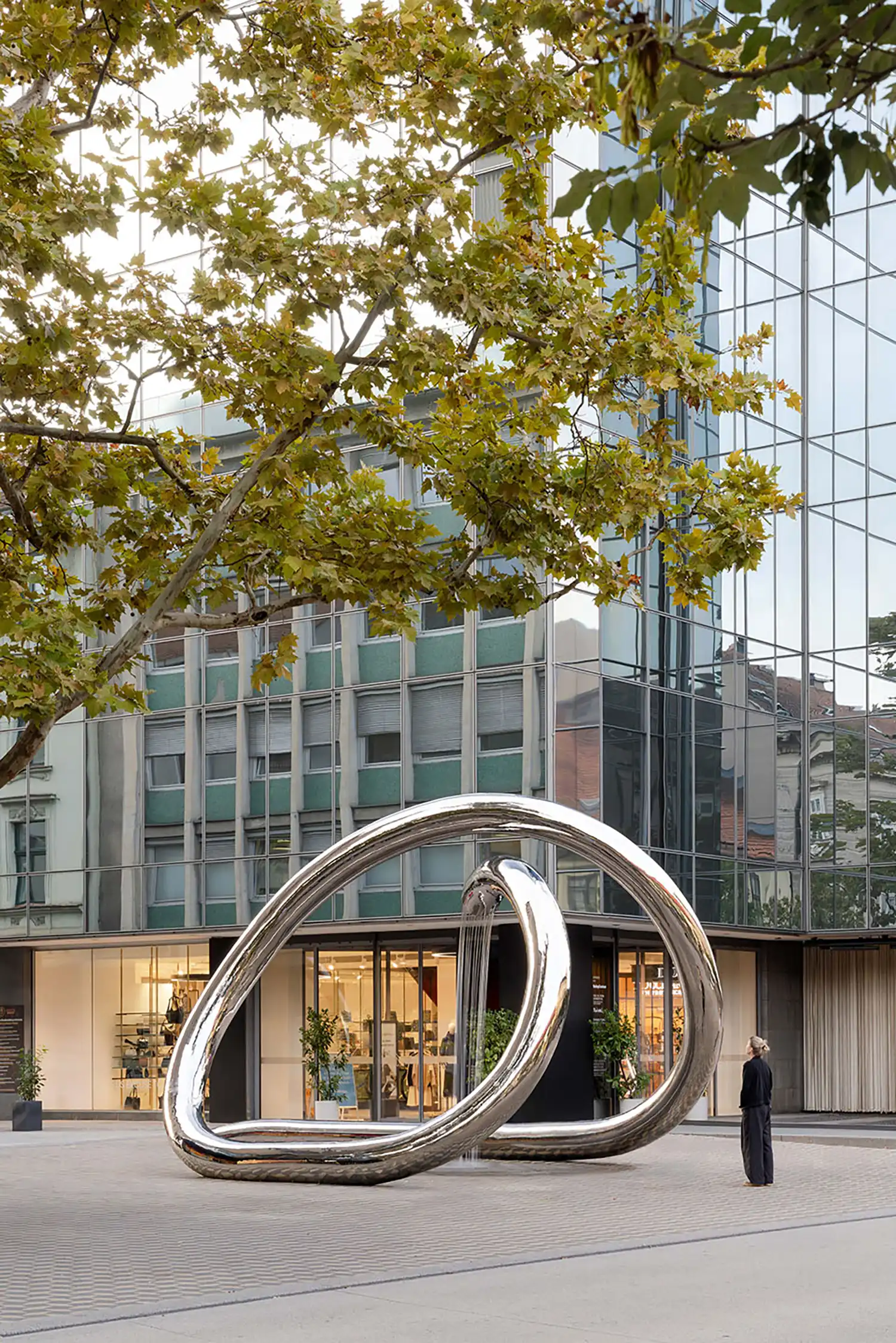
The technical execution in stainless steel serves as a deliberate sensory catalyst. The choice of polished metal allows the sculpture to mirror its surroundings, shifting its character in response to the Slovenian light and weather. Under the western sun, the surface glows with warm orange hues, while a rainy afternoon lends it a muted, almost ethereal quality. This materiality ensures that the sculpture is never the same twice; it dematerializes into the blue of a clear sky or sharply reflects the movement of the city’s green buses and pedestrians. At its core, the installation is a tribute to drinking water—a metaphor for the eternal cycles of nature where the visible flow within the tube mirrors the invisible infrastructure beneath the pavement.
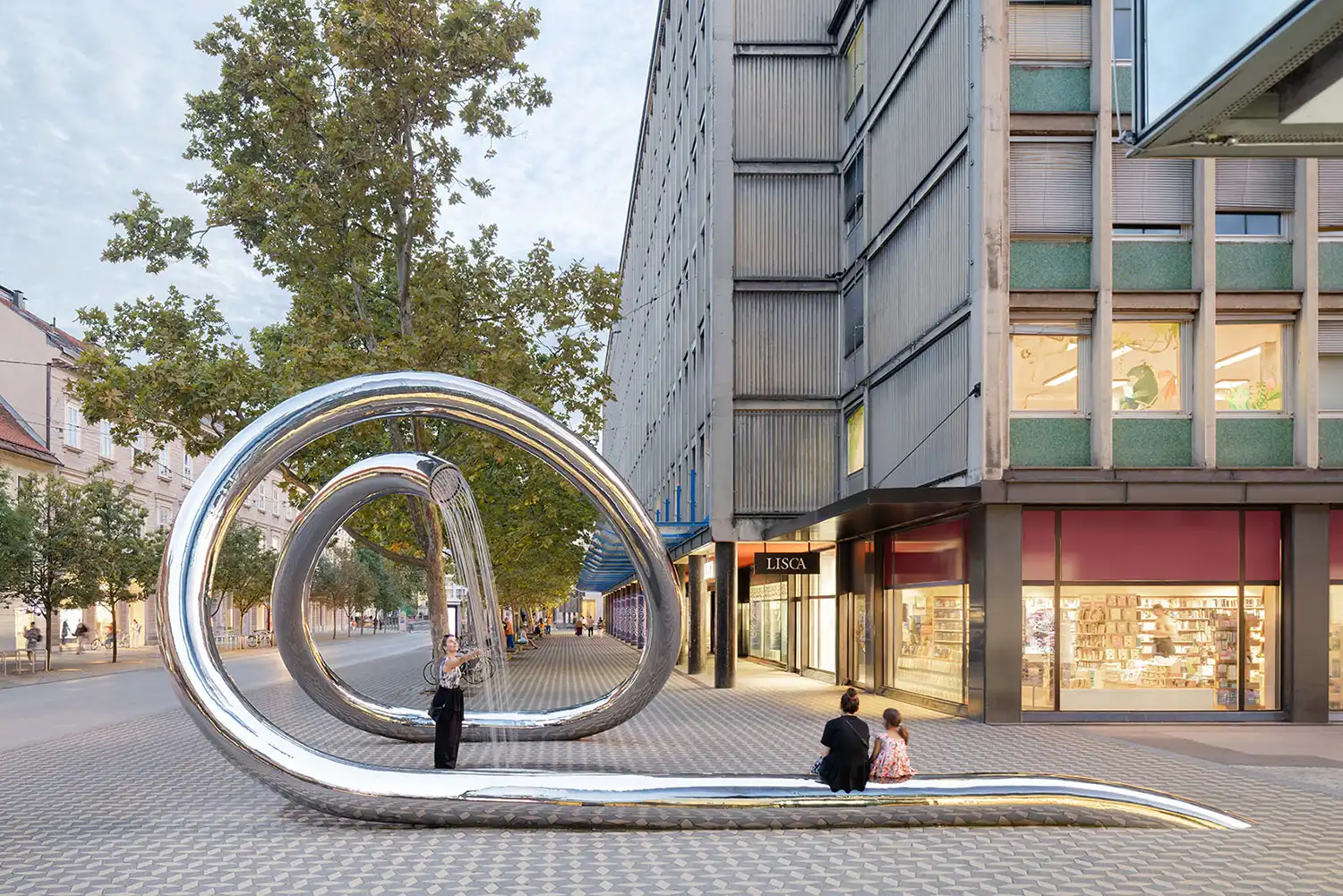
A contemporary dialogue with urban heritage emerges through this intervention, signaling a shift in how we perceive public water features. For centuries, fountains were the static, monumental centerpieces of European squares—such as the Baroque Robba Fountain located just a few streets away in Ljubljana. In contrast, this new steel loop represents a transition toward “inhabitable” art that prioritizes fluidity and movement. This evolution from monumentalism to interactive sculpture reflects a broader trend in global urban design, where the focus has moved from the purely aesthetic to the experiential and functional.
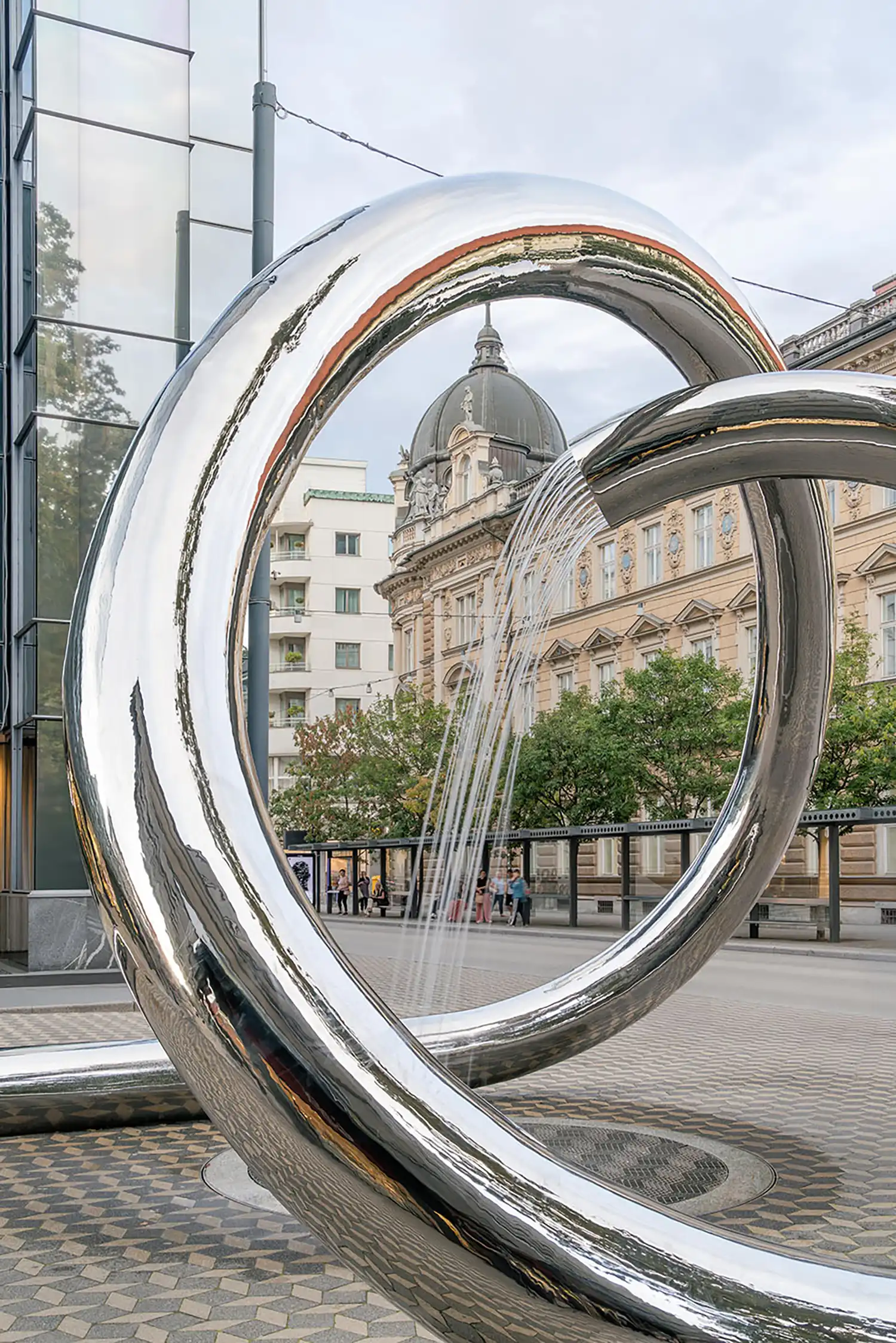
This shifting paradigm in public space can be seen in other recent projects that merge sculptural calm with playful interaction. A notable example is Neons’ The Fountain, which, much like the Ljubljana installation, acts as a functional hub for social gathering while maintaining a high level of artistic integrity. Both projects illustrate how modern architecture is moving away from the “look but don’t touch” philosophy, instead creating landmarks that live and breathe with the residents who use them. They serve as reminders that water, whether in the heart of the Balkans or in a modern London development, remains the ultimate social glue.
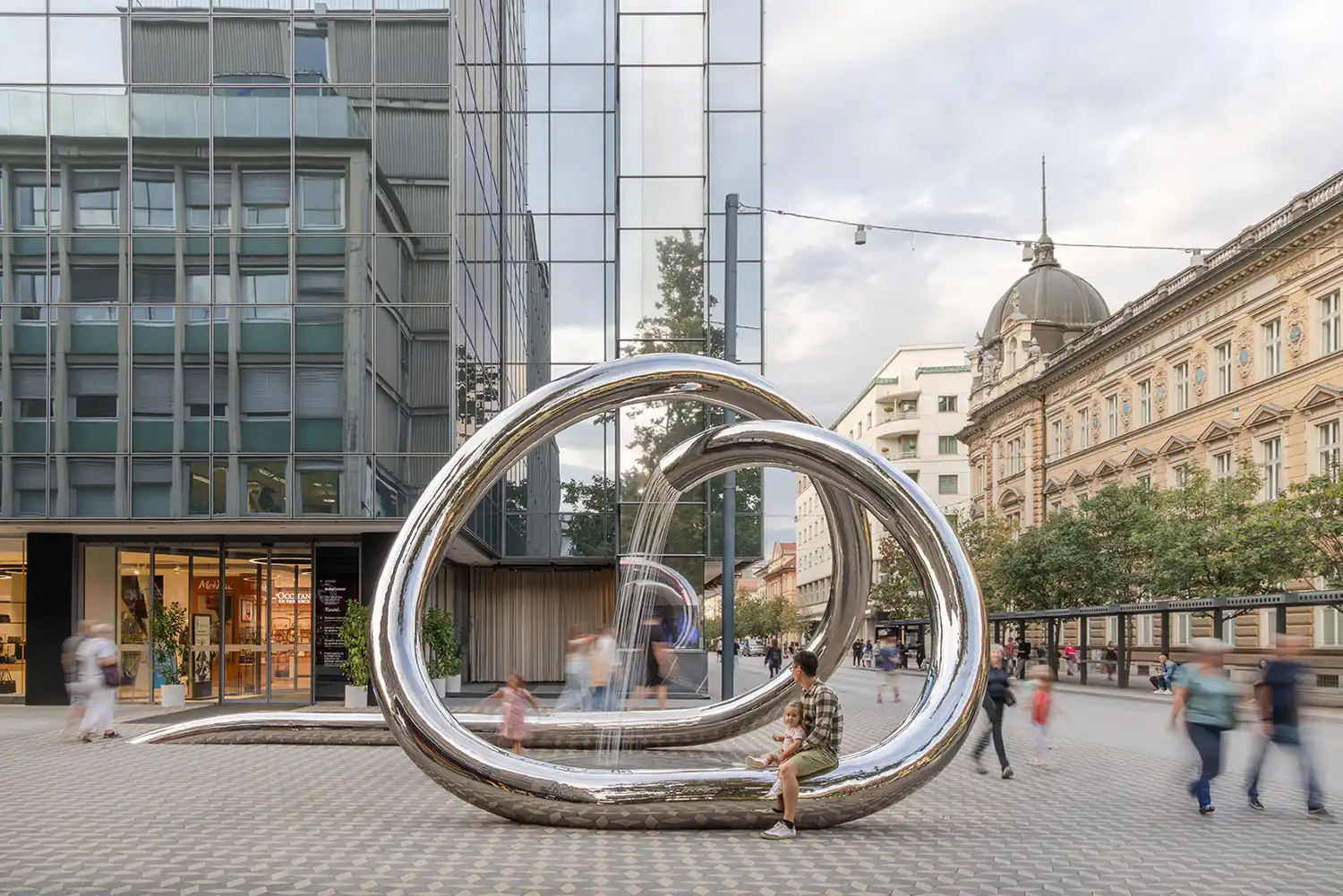
The contextual impact of Water Sculpture LJ is already being felt as it establishes itself as a new spatial landmark. By re-channeling movement and offering a place for rest, it has transformed a once-transitional corner of Slovenia‘s capital into a destination in its own right. The project stands as a testament to the power of patience in public design—nine years in the making—proving that when an intervention is deeply rooted in the symbolic and physical needs of a city, it does not just fill a space; it completes it. Through its reflective surfaces and continuous flow, the sculpture remains an uninterrupted link between the individual and the whole, a silent guardian of the city’s most precious resource.