



In the vibrant, historic heart of Madrid‘s Lavapiés district, where nineteenth-century “Corralas” whisper tales of a bygone era, a remarkable transformation has taken place. Extrarradio Studio, a firm quickly gaining recognition for its thoughtful and context-aware interventions—much like their intriguing TET. House project in Madrid previously featured on urdesign—has once again demonstrated their prowess with Casa Rivet. This project is not merely a renovation; it’s a profound reinterpretation of urban dwelling, skillfully balancing historical resonance with contemporary needs, and creating a dialogue between past and present.
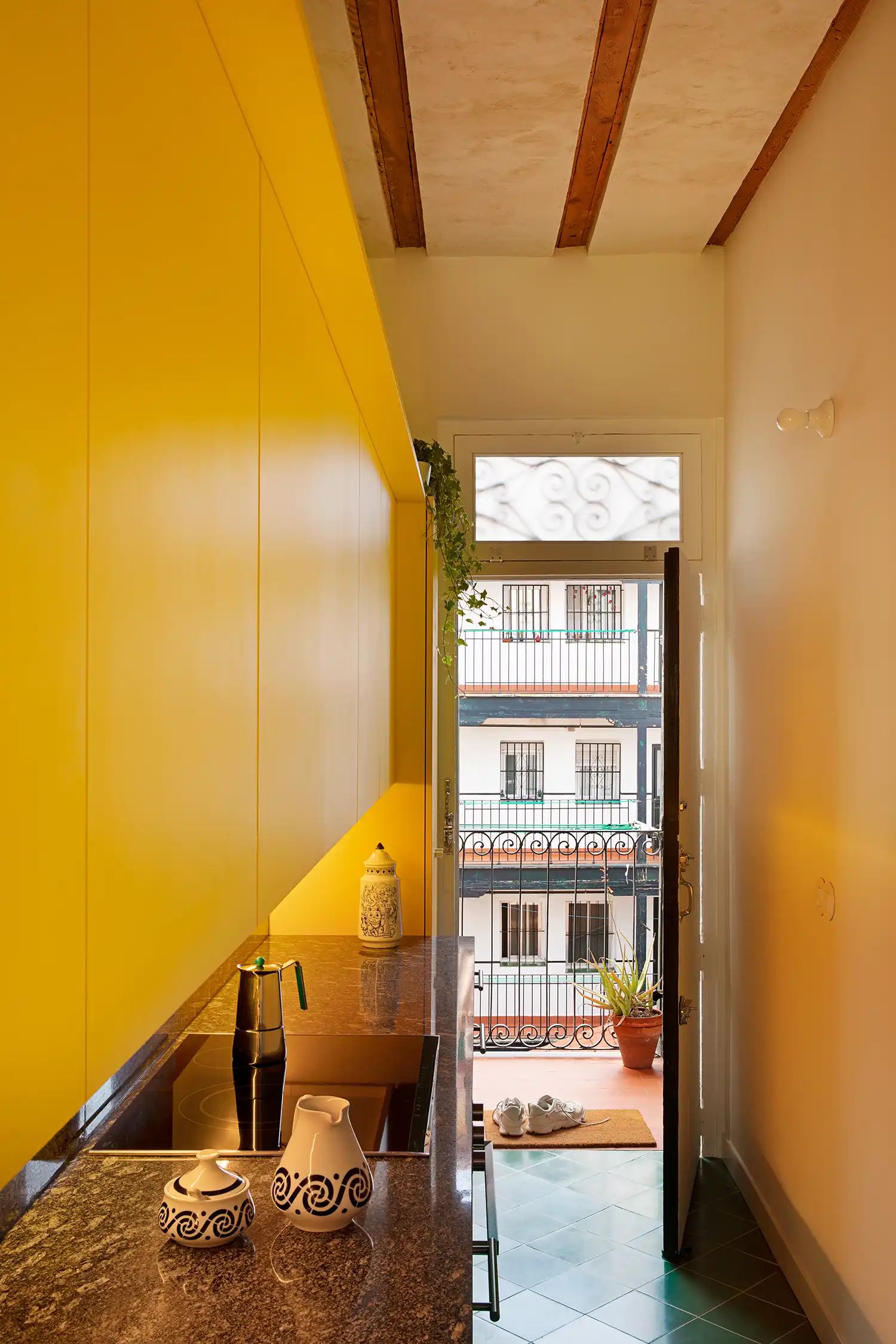
Unlocking potential in a historic shell Casa Rivet is nestled within one such traditional Corrala, a building type characterized by a large communal courtyard and corridors leading to numerous, often compact, individual flats. Originally, Casa Rivet comprised a series of concatenated rooms, a modest kitchen, and a small toilet, its layout practically untouched since its nineteenth-century inception. However, the flat possessed inherent strengths: impressive high ceilings and an east-west orientation, granting it abundant natural light throughout the day. Crucially, its balconies offer sweeping views over the lively Plaza de Agustín Lara and beyond, capturing not just the energy of Lavapiés but also the iconic Madrid skyline. Extrarradio Studio recognized this latent potential, embarking on a mission to elevate these intrinsic qualities.

The dual philosophy: spaciousness and identity Extrarradio Studio’s design philosophy for Casa Rivet crystallized around two core concepts: achieving an expansive sense of spaciousness and reinforcing a distinct Spanish identity. The first aim was not to create a singular, undifferentiated space, but rather to maximize the perception of openness. This was achieved by stripping back the existing structure to its bare essentials, essentially creating a void. Within this liberated volume, programmatic elements are introduced as sculptural objects, meticulously placed to serve specific functions while maintaining visual porosity.
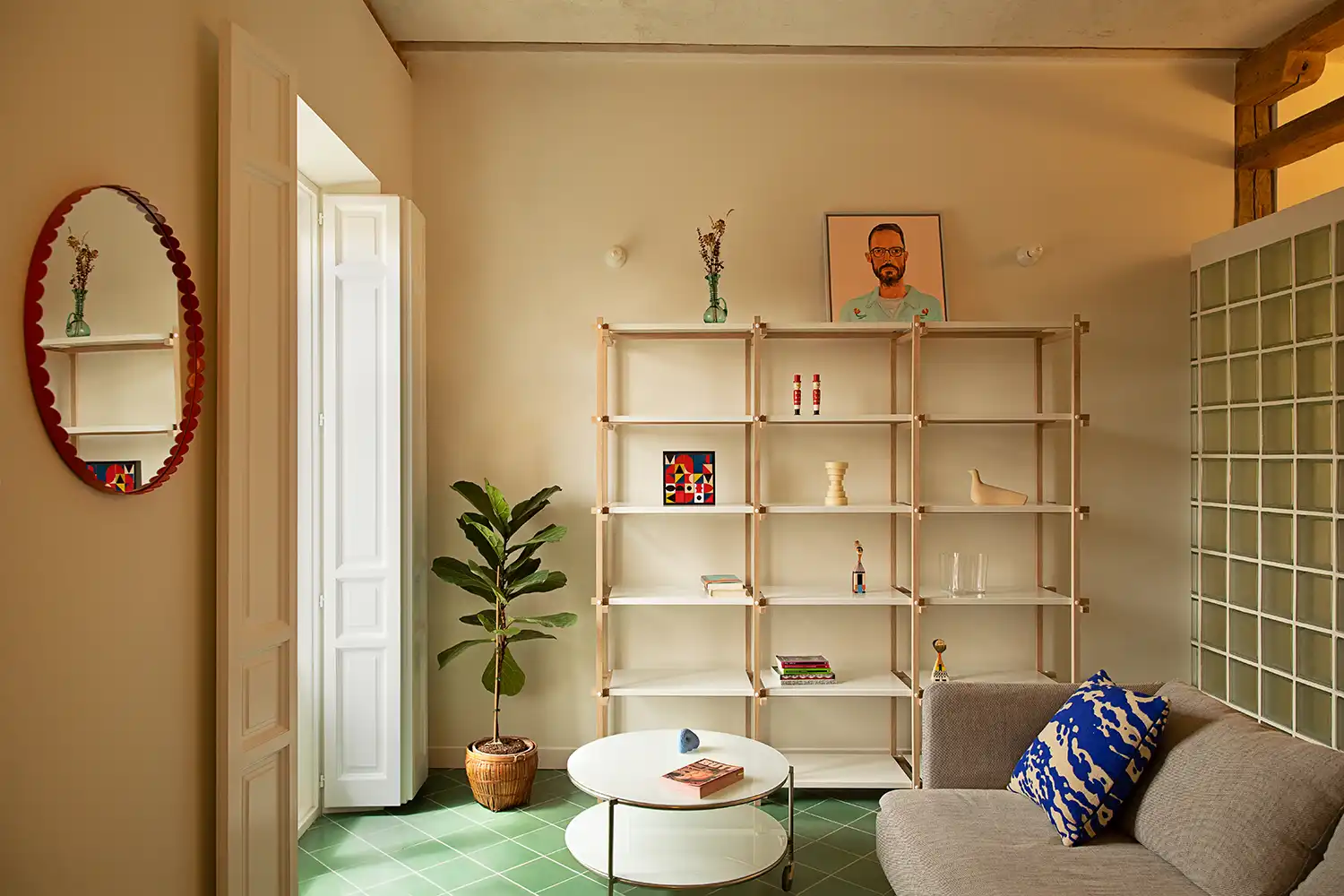
Architectural interventions: the “boxes” that define space Central to this strategy are two distinct “server spaces” – a bold yellow box and a translucent glass brick volume. The yellow box, a vibrant and unmistakable focal point, cleverly integrates all the home’s wardrobes and the kitchen, acting as a soft separator between the living area, bedroom, and culinary zone. Its strong, modern aesthetic contrasts beautifully with the building’s historic fabric. Complementing this is the glass brick box, which discreetly houses the bathroom. The inherent translucency of the glass bricks, combined with its deliberate detachment from the ceiling, works in concert to reinforce the overarching concept of spaciousness, allowing light to filter through and maintaining an airy, open feel without sacrificing privacy.
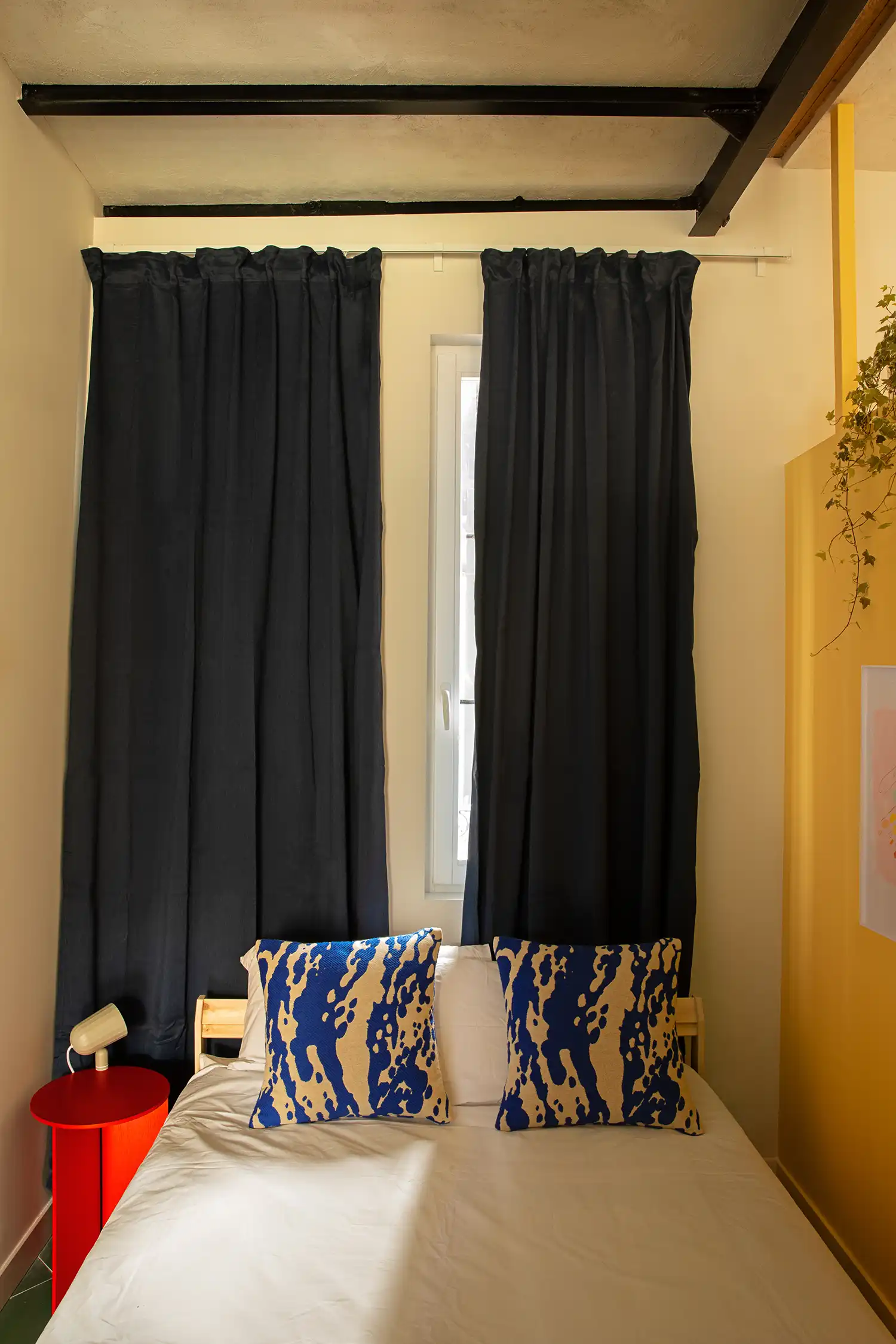
A symphony of materials: celebrating Spanish heritage The material palette chosen for the shell of Casa Rivetconsciously echoes and celebrates a quintessential Spanish identity. Traditional hydraulic flooring, with its intricate patterns and cool touch, grounds the space in history. Exposed wooden structural elements, lime mortar finishes, and other vernacular materials weave a rich tapestry that speaks to the building’s heritage. This respectful nod to tradition creates a compelling counterpoint to the contemporary insertions.
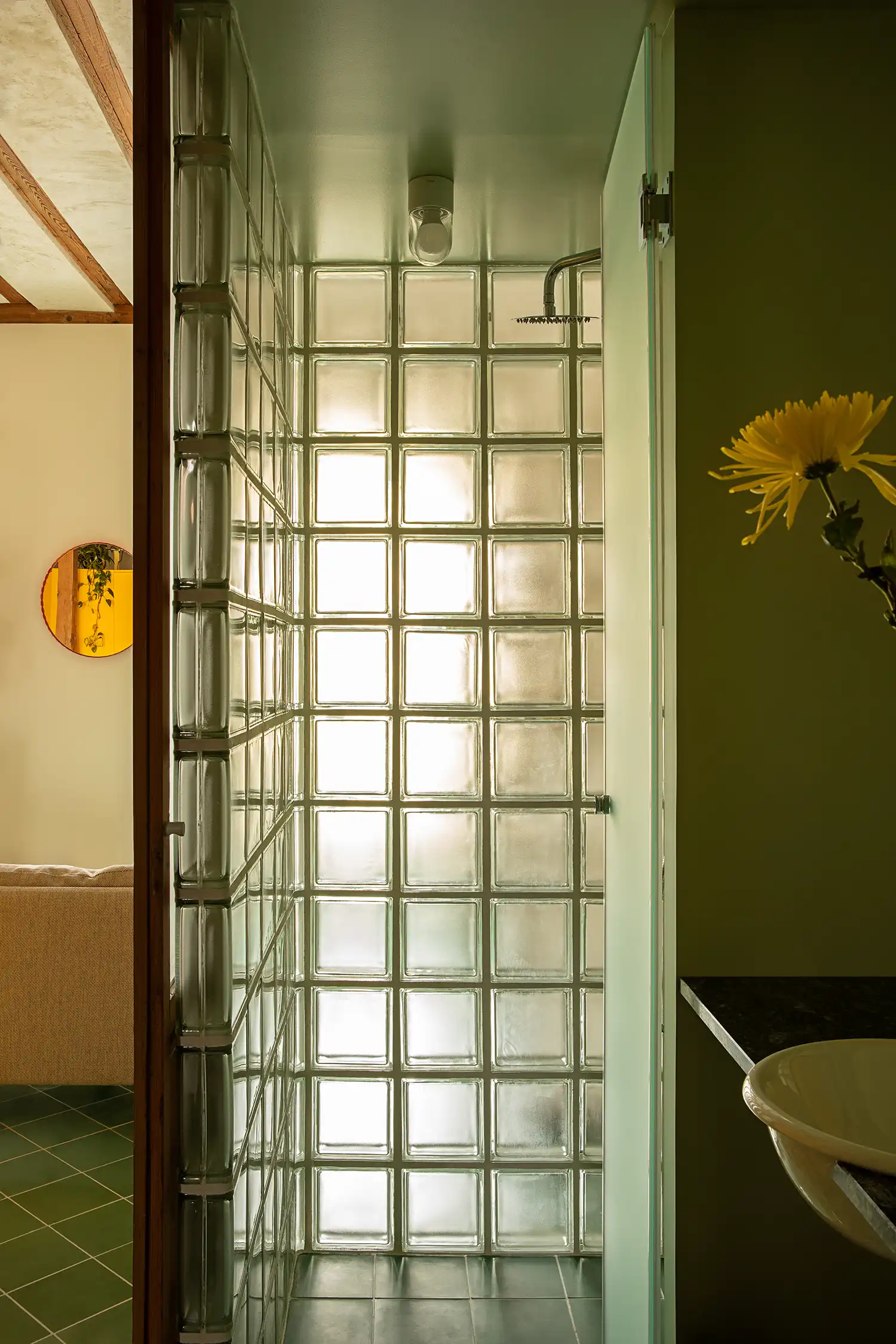
Modernity meets tradition: a sensory experience The interplay between these material choices—the historic shell and the modern interventions—is where Casa Rivet truly shines. The smooth, vibrant yellow melamine of the kitchen box and the ethereal glow of the glass bricks in the bathroom provide a striking contrast against the rustic warmth of the exposed wood and the earthy tones of the lime mortar. This sophisticated dialogue between old and new not only defines the visual aesthetic but also contributes to the sensory experience of the home, offering residents a unique blend of comfort, functionality, and a profound connection to Madrid’s architectural legacy. It’s a masterful example of how thoughtful design can transform the familiar into something extraordinary.