



In the rapidly evolving landscape of contemporary urbanism, the reclamation of neglected infrastructure has become a vital tool for social cohesion. While large-scale cultural centers often dominate the headlines, a more intimate revolution is taking place through the repurposing of “micro-architectures”—the small, often overlooked kiosks and towers that define our streetscapes. This global trend of revitalizing small-scale urban artifacts is perfectly captured in the transformation of a Roman newsstand into a cultural hub, where a redundant kiosk was reimagined as an “urban altar” for the community. In Hefei, SZ-Architects follows a similar restorative logic, proving that even a seven-square-meter footprint can hold the weight of a neighborhood’s collective memory.
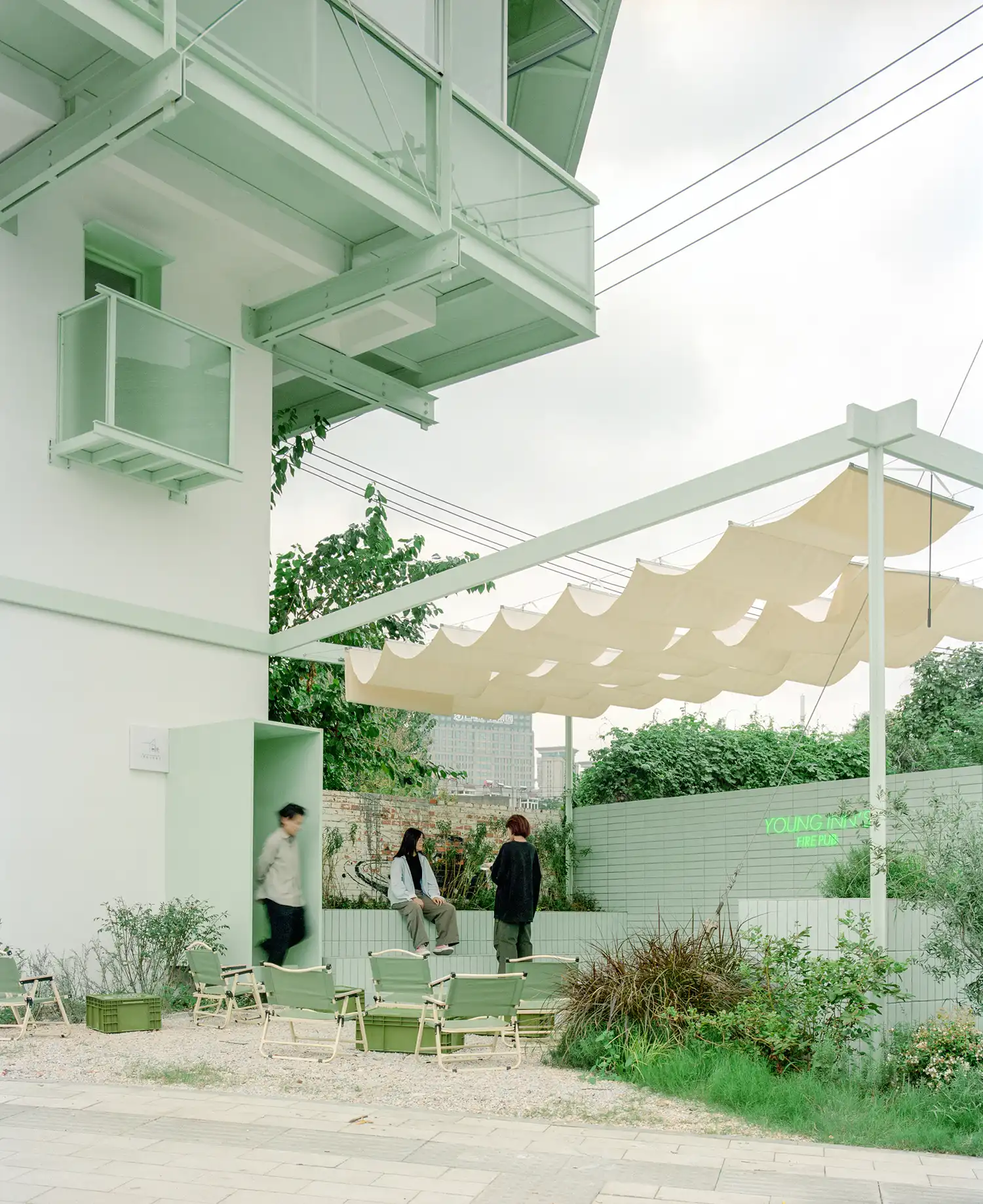
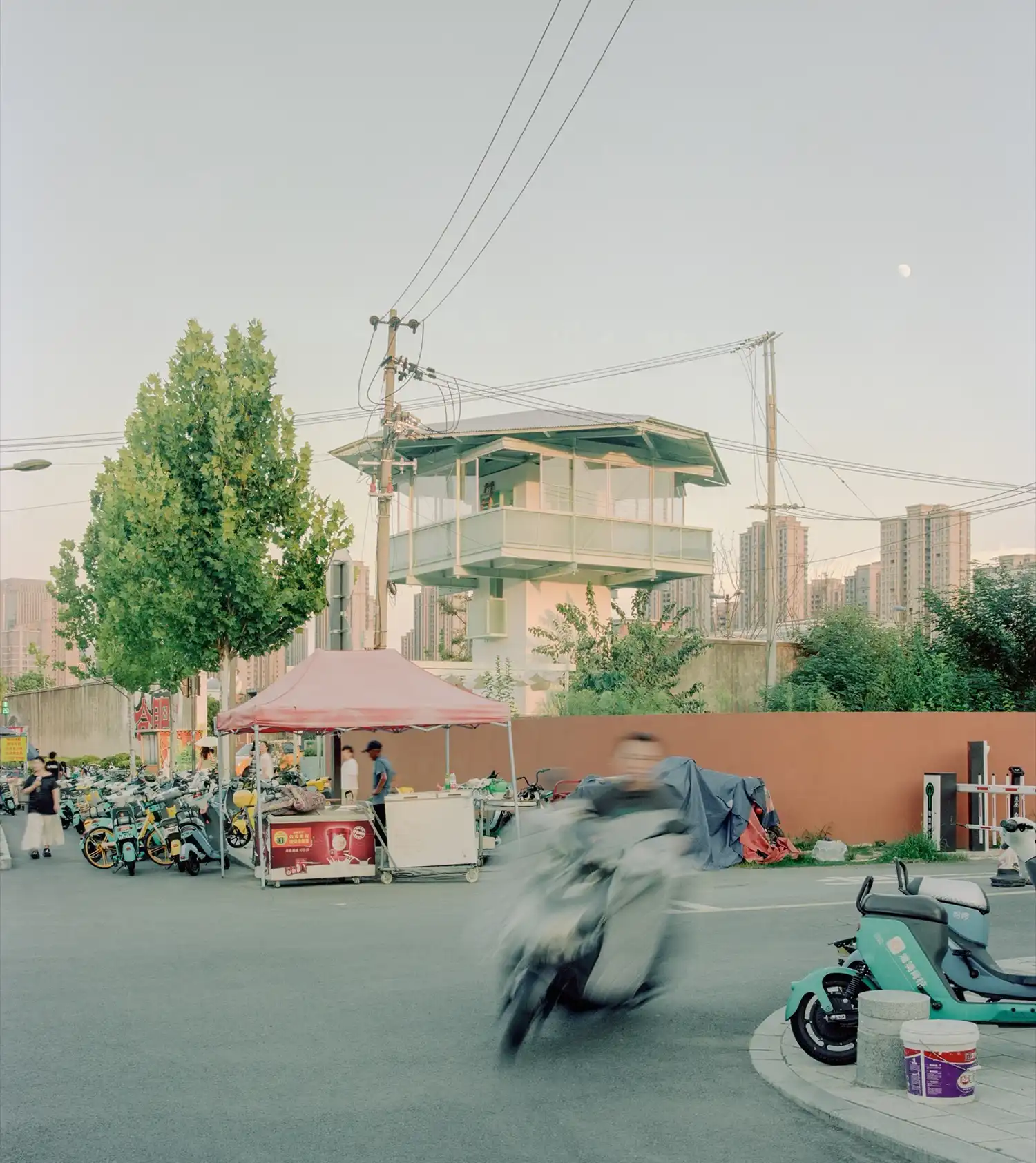
A serendipitous discovery within the Hechai 1972 Creative Park served as the catalyst for this architectural rebirth. Located on the grounds of the former Anhui Provincial Hefei Prison, the park is a testament to industrial and institutional repurposing. During a routine site visit for a separate project, the architects encountered a derelict guard tower—a relic of the 1990s that had been excluded from the initial park renovation. Its original purpose was singular and austere: surveillance. Yet, in its weathered concrete and narrow observation ports, the team saw the potential for a “very small bookstore” that could offer the neighborhood a warm, 24-hour sanctuary.
The sensory experience of the compact ground floor is one of profound compression and subsequent release. Upon entering, visitors are met with a space that feels more like a private study or a communal living room than a commercial shop. The staff—four adopted stray cats—roam between walls destined to be covered in handwritten postcards, echoing the owner’s original shop by the Qinhuai River in Nanjing. This human-centric philosophy prioritizes the “traces” left by guests over rigid architectural perfection. The scent of old paper from donated collections mingles with the industrial memory of the site, creating an atmosphere that is both nostalgic and hopeful.
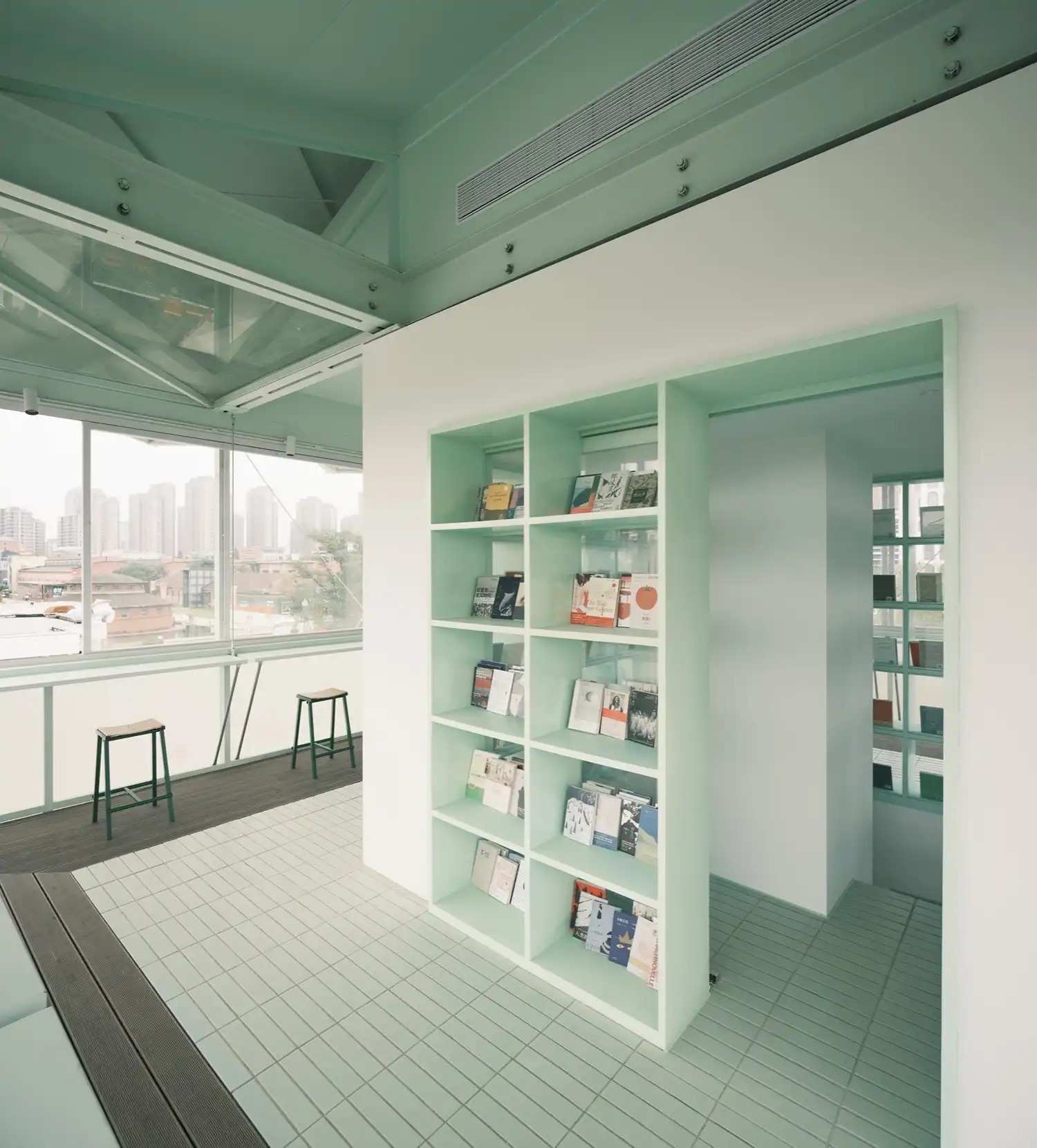
A sophisticated suspended structural system was required to breathe new life into the 1997-built tower without compromising its fragile integrity. Because original blueprints were lost to time, the architects performed a rigorous geotechnical assessment before wrapping the corner columns in reinforced steel hoops. To expand the usable area of the second floor—originally a cramped patrol platform—the team implemented a clever “hanging” logic. Eight C-shaped channels were laid across new roof beams, from which solid steel hanger rods extend downward to support a new floor slab. This move allowed the architects to extend the floorplan outward, creating enough width for two-way circulation and a seated reading area that seems to hover within the original shell.
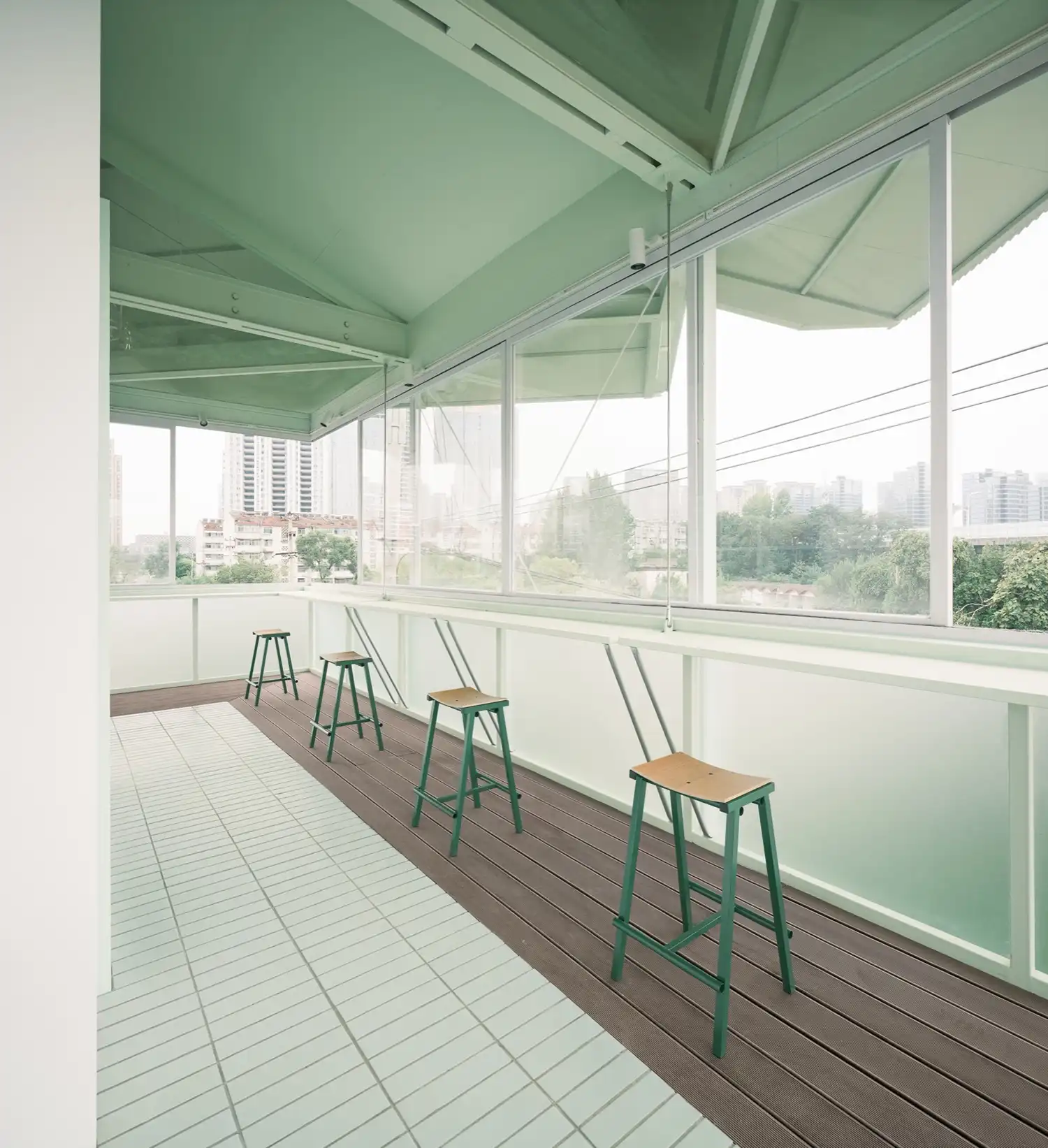
The technical choreography of the roof design was dictated by the site’s invisible constraints, specifically two high-voltage cable lines on the west side. To maintain a safe distance, the roof was rotated and its four corners trimmed, resulting in a distinctive four-leaf clover silhouette. This geometry isn’t just aesthetic; it’s a pragmatic response to the Hefei urban grid. Inside, the design strategy leverages every millimeter. Bookshelves are integrated into the four walls after the removal of original low sills, while the reading desks utilize a hybrid system of scaffolding “props” and stainless-steel hangers. Operable sliding windows at the corners erase the boundary between the interior and the Hechai 1972 landscape, offering panoramic views where machine-gun mounts once stood.
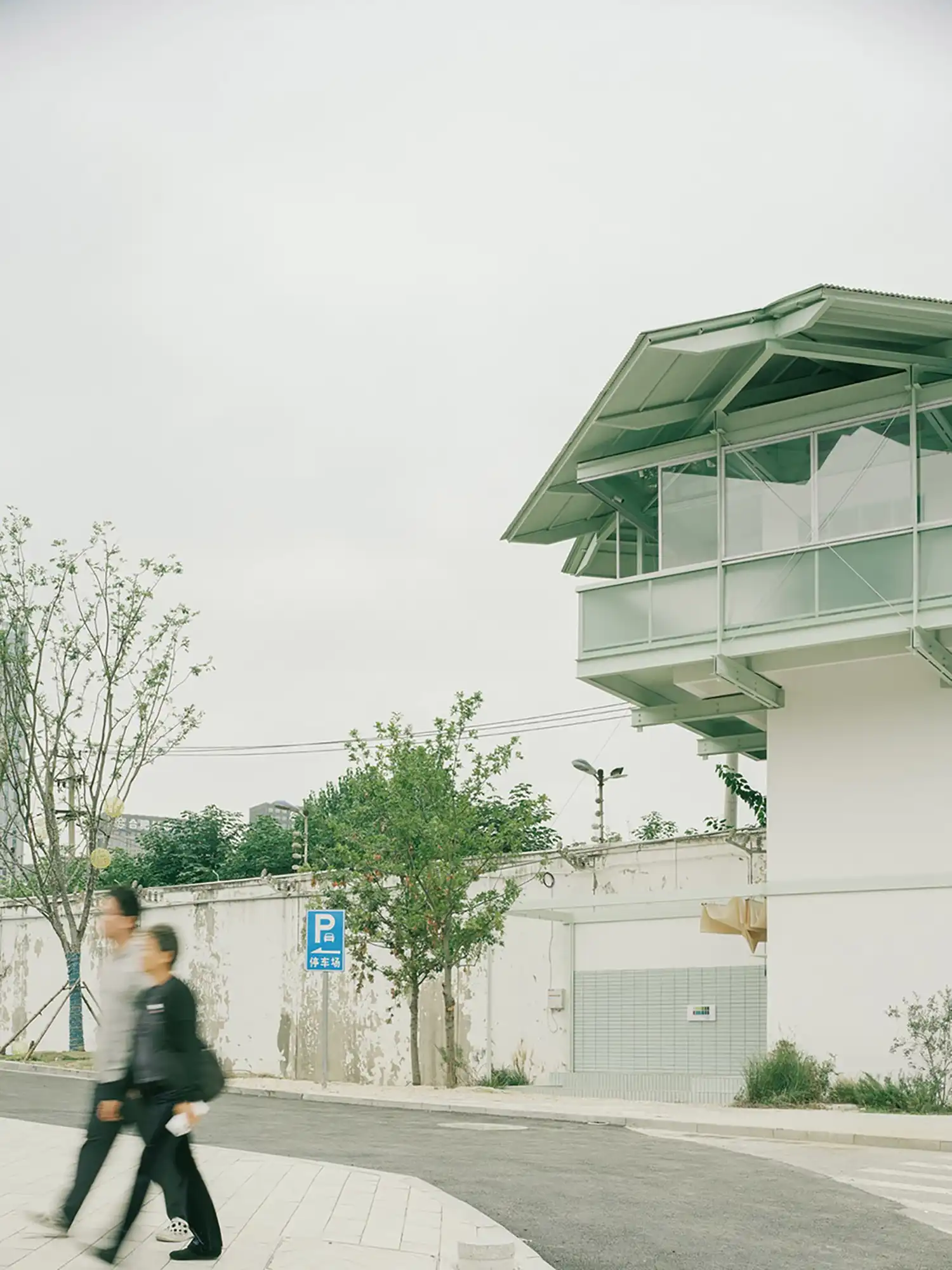
The contextual impact of this micro-intervention extends far beyond its modest footprint. By enclosing the original staircase in a service shaft that doubles as a message wall, the architects have created a vertical archive of local sentiment. Outside, new platforms on the north and south sides facilitate coffee sales and community events, anchoring the bookstore as a social node within the creative park. In an era where cultural spaces are often defined by their square footage, this tiny bookstore in China stands as a poignant reminder that architecture’s true value lies in its ability to foster sincerity. It is a quiet, 24-hour invitation to pause, read, and reconnect.