



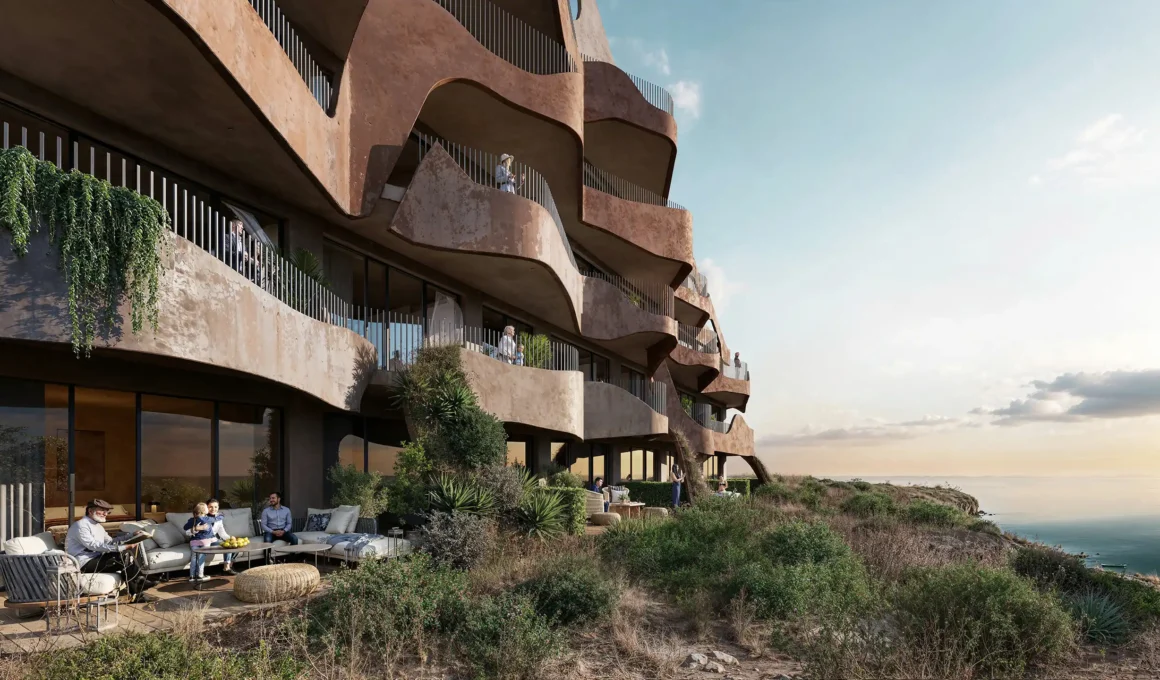
In the rugged coastal landscape of Southern Albania, where the Ionian Sea meets a jagged topography of limestone and Mediterranean scrub, Italian architecture firm NOA has unveiled a vision for a new “contemporary citadel.” Following their recent vertical exploration with the “Puzzle” tower in Tirana, the studio has shifted its gaze toward Saranda, proposing Berdenesh Hills—a residential and hospitality development that eschews the typical high-rise typology in favor of a terraced, human-centric ecosystem.
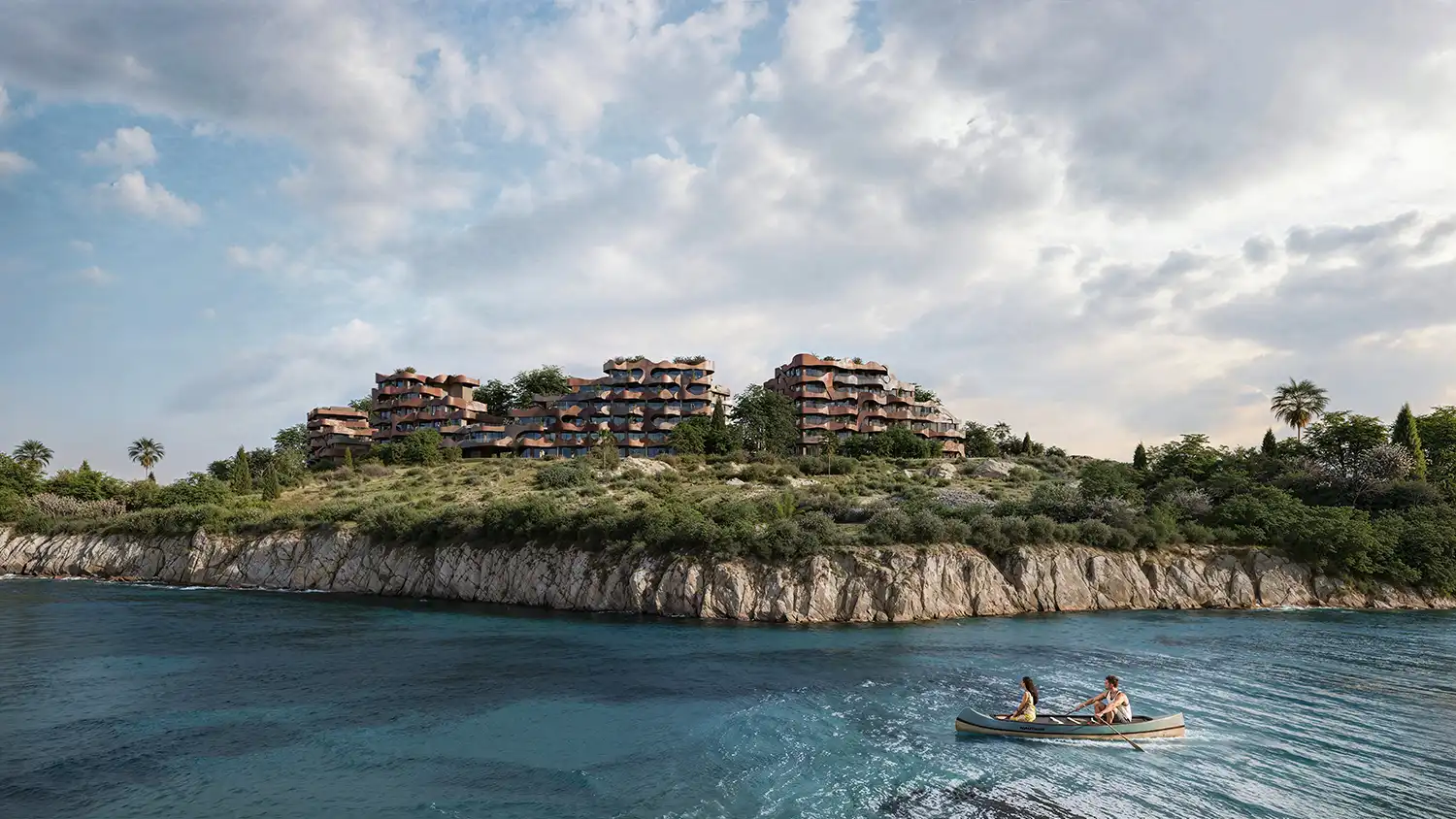
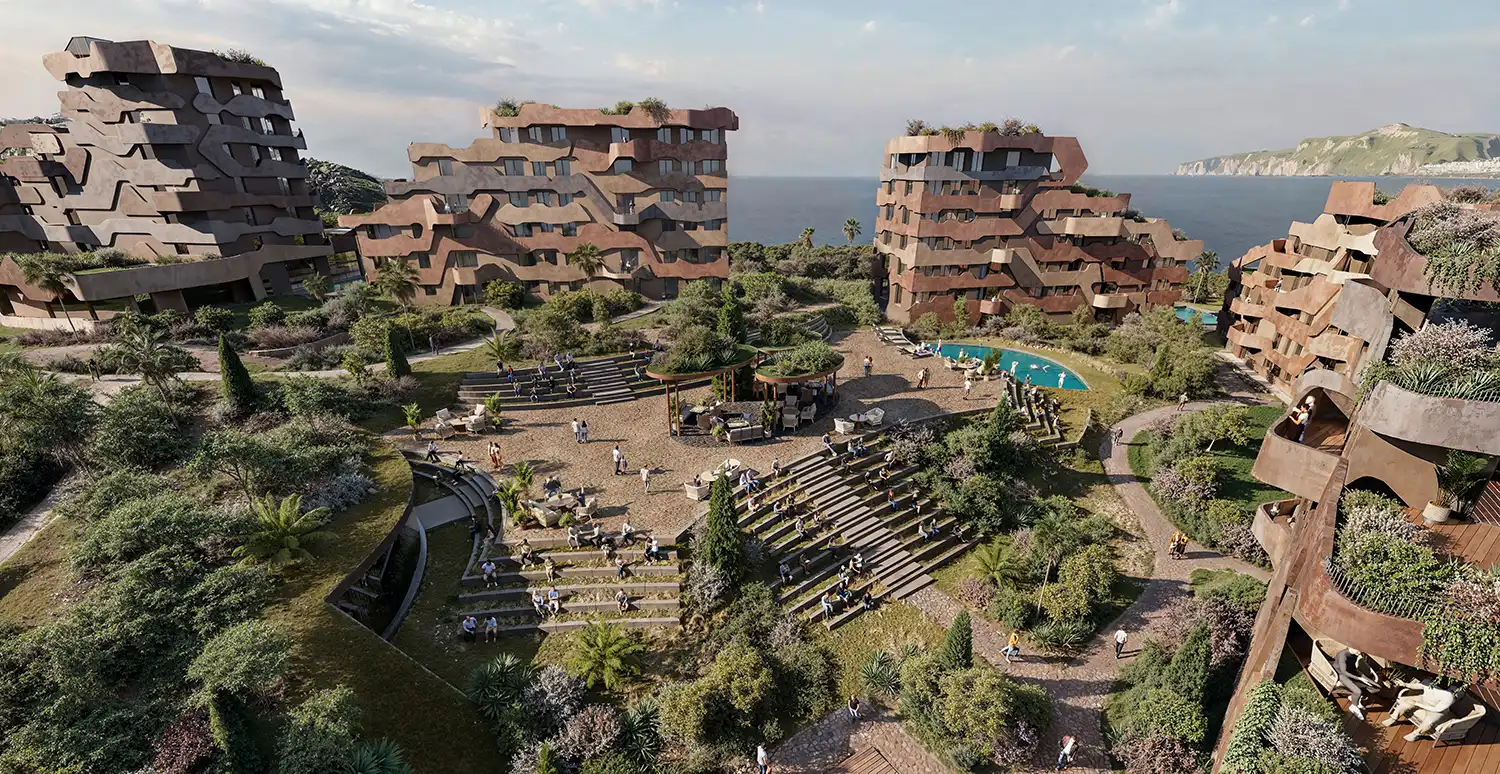
A tectonic response to the Mediterranean horizon defines the project’s formal language. Inspired by the “inward-turning spline” of the coastline and the constant presence of Corfu on the horizon, the architects sought to translate the physical tension of the site into stone and plaster. Unlike the dense, vertical construction boom that has characterized Saranda since the 1990s, Berdenesh Hills is conceived as an organic extension of the cliffside. The design team, led by Lukas Rungger and Andrea Dal Negro, analyzed the ancient fortresses and bastions that dot the region, such as the historic Gjirokastër (Argirocastro), to create a settlement that feels both protective and permeable.
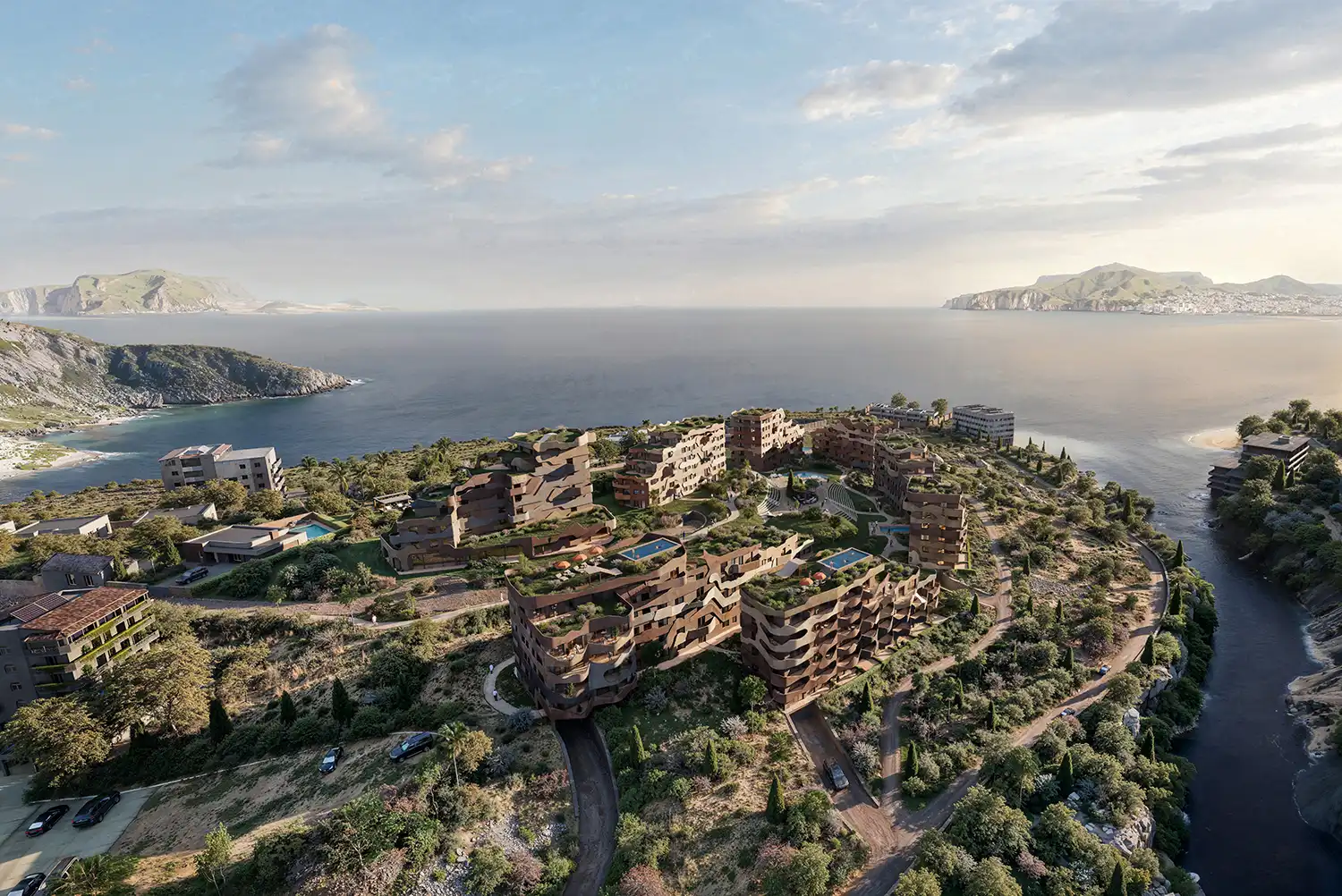
The reimagining of the citadel typology manifests as a central piazza distributed across five terraced levels. This public heart acts as a social anchor for the 250 apartments and hotel units, totaling 26,000 square meters of built space. While traditional fortresses were designed to exclude, this modern iteration opens outward through a series of “soft” perimeters. This shift toward a more integrated, landscape-driven luxury reflects a broader architectural evolution currently sweeping the Albanian Riviera. We are seeing a move away from generic Mediterranean blocks toward site-specific interventions, much like the Zig-Zag sustainable luxury resort in Himarë, where the architecture similarly submits to the natural slope to preserve the visual integrity of the coastline.
Earthy materiality and rhythmic facades break the visual monotony often associated with multi-storey developments. NOA utilized raw plaster in warm, terrestrial tones to echo the surrounding geology, creating bands that wrap around the volumes. These organic forms generate a play of projections and recesses that obscure the horizontal slabs of the floors, resulting in a facade that feels carved rather than constructed. The sensory experience is dictated by the transition from the “tectonic” exterior to the lush, interior Mediterranean park, where the scent of local flora meets the salt air, grounding the residents in the specific microclimate of the Berdenesh region.
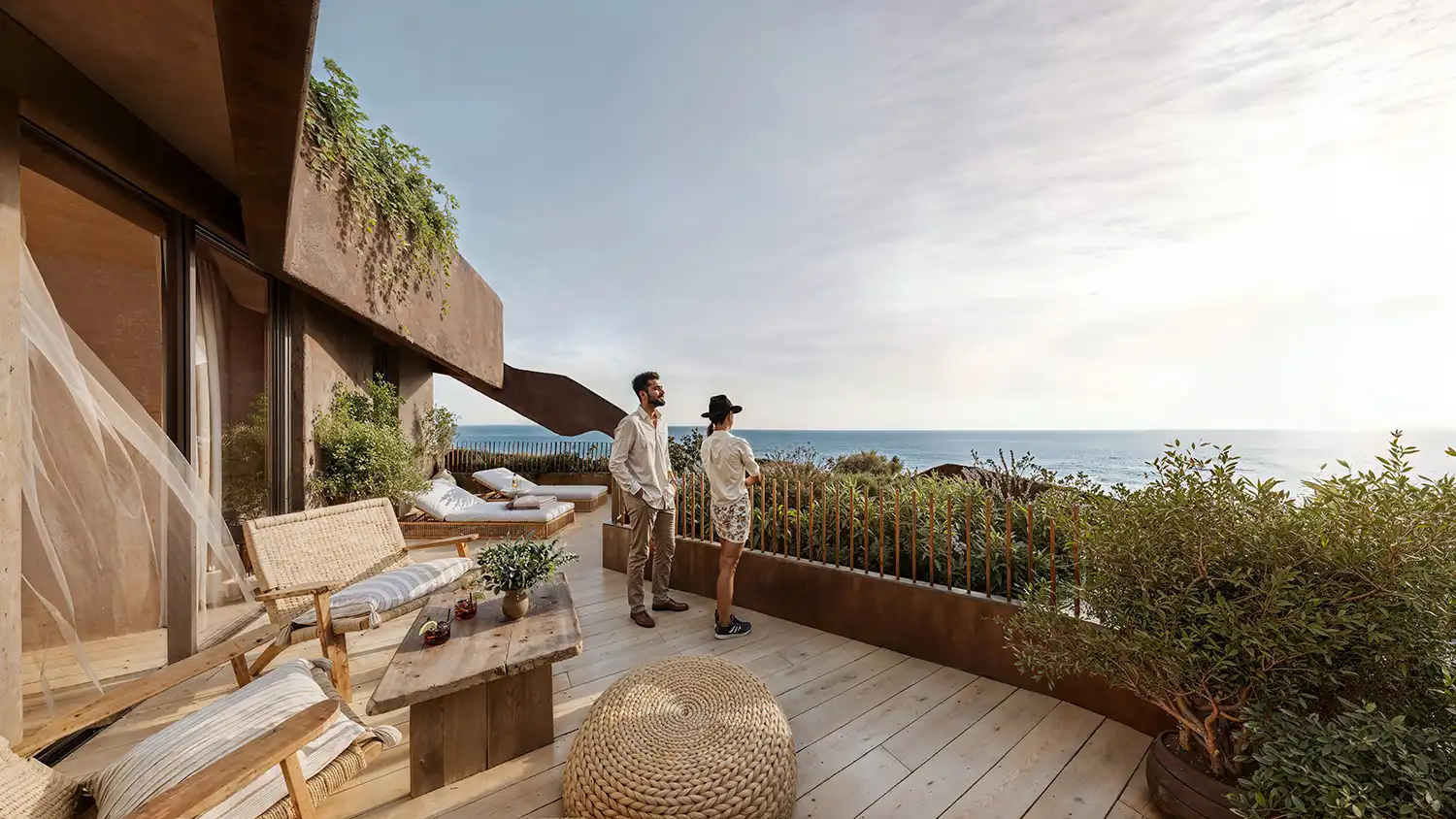
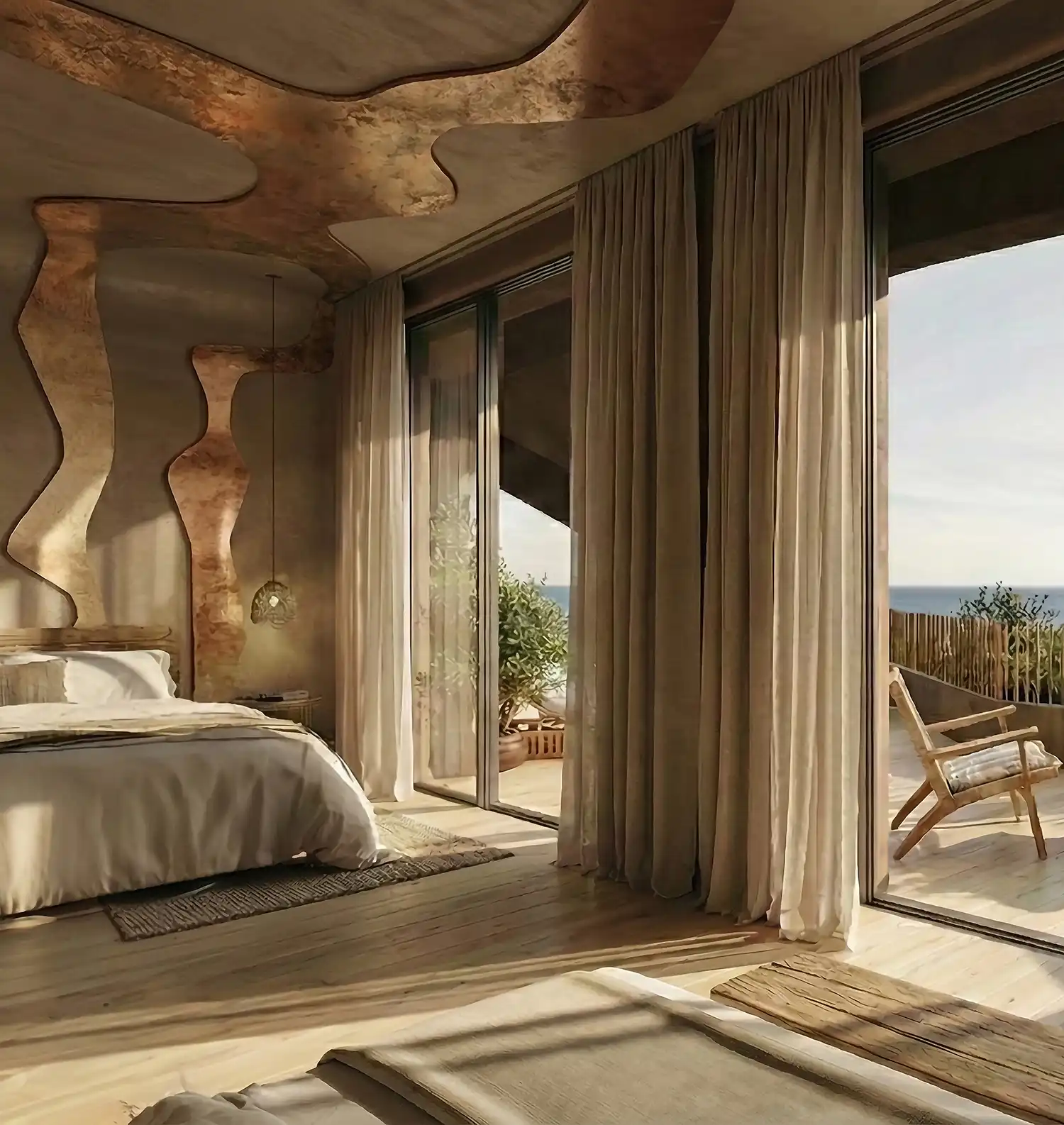
The choreography of light and views ensures that the sea remains the undisputed protagonist of the interior life. Every apartment is equipped with private outdoor space, but the design goes further by tapering the six-story volumes at their edges to create expansive, stepped terraces. To ensure an uninterrupted connection with the water, the architects lowered opaque parapets to the level of the living room seating, replacing them with slender metal rods. This meticulous attention to the “seated view” transforms the horizon into a living canvas. This sophisticated approach to Albanian hospitality is part of a growing trend of high-profile international commissions in the country, ranging from coastal retreats to bold urban statements like the MVRDV-designed Grand Ballroom and spherical hotel in Tirana, which further cements Albania as a primary laboratory for contemporary European architecture.
A future-facing commitment to contextual harmony marks Berdenesh Hills as a pivotal project for NOA, set to break ground in 2026. By choosing to build a “neighborhood” rather than a mere collection of units, the studio addresses the complexities of a territory in transition. The project does not simply sit on the land; it participates in it, using the ancient logic of the citadel to solve modern urban density. The result is a balanced dialogue between the weight of history and the lightness of Mediterranean living, offering a blueprint for how the Balkan coastline might evolve without losing its soul.