

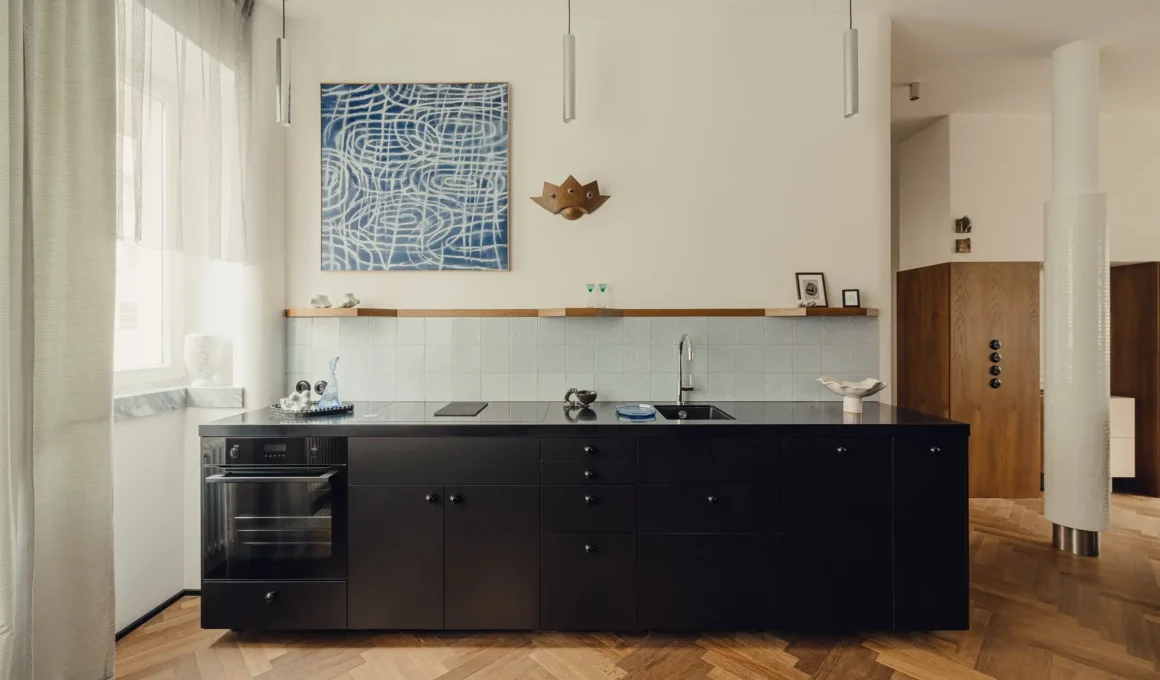
In the heart of Warsaw, within the storied walls of a 1930s modernist tenement building, Katarzyna Baumiller Studio has orchestrated a renovation that defies the conventional boundaries of residential planning. Spanning 71.5 square meters, this apartment—known as A 75—is not merely a collection of rooms but a sophisticated spatial system where the traditional hierarchy of domestic life is replaced by a fluid landscape of vistas and functional layers.
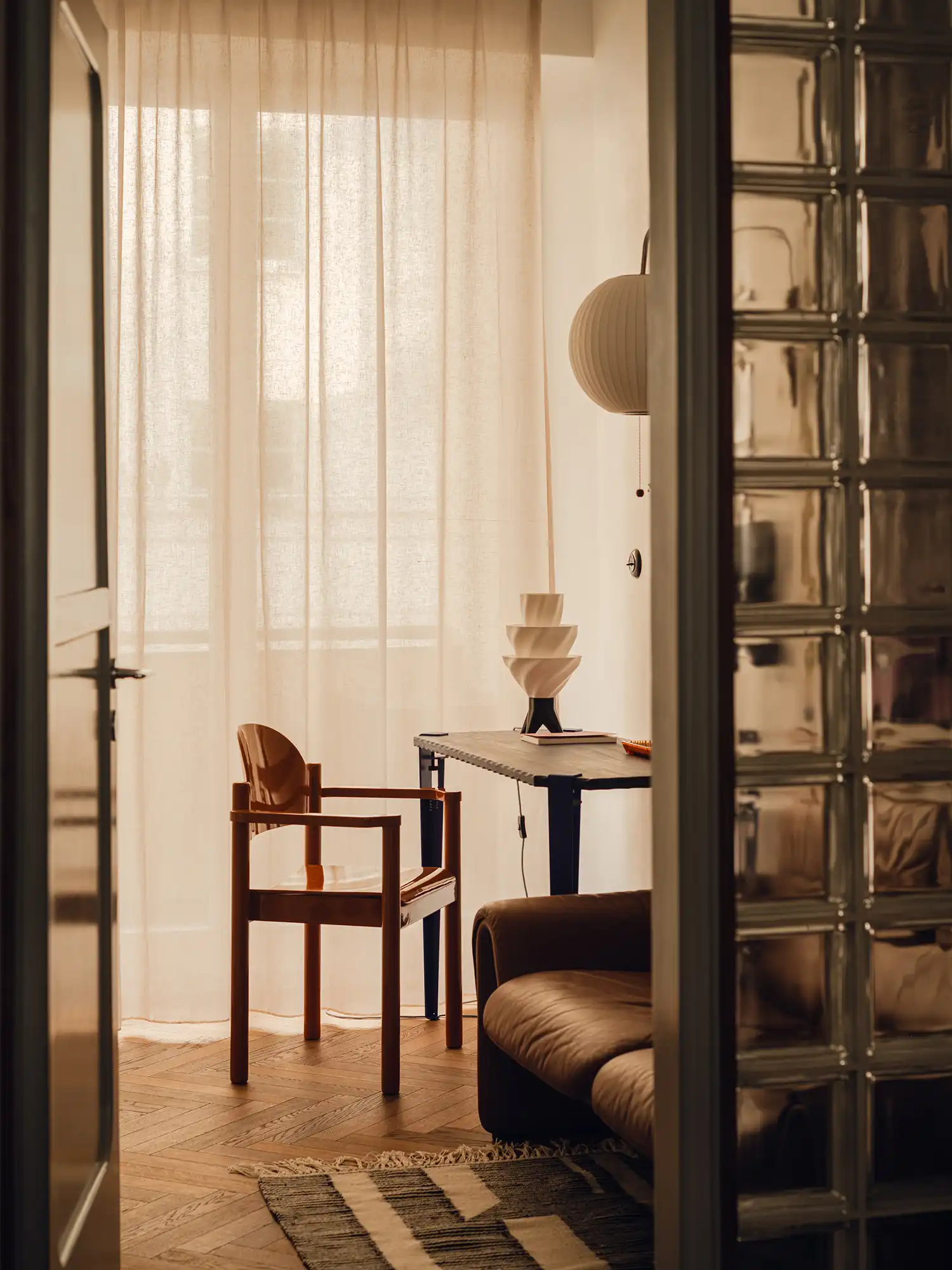
The architectural philosophy underpinning the project moves away from the static division of space toward a dynamic experience of rhythm and proportion. By stripping the interior to its essence and reimagining the wall layout, the studio has allowed the apartment’s internal geography to become legible in both section and elevation. This approach transforms the dwelling into a series of interconnected zones, where the eye is constantly drawn toward new axes and unexpected intersections of light and material.
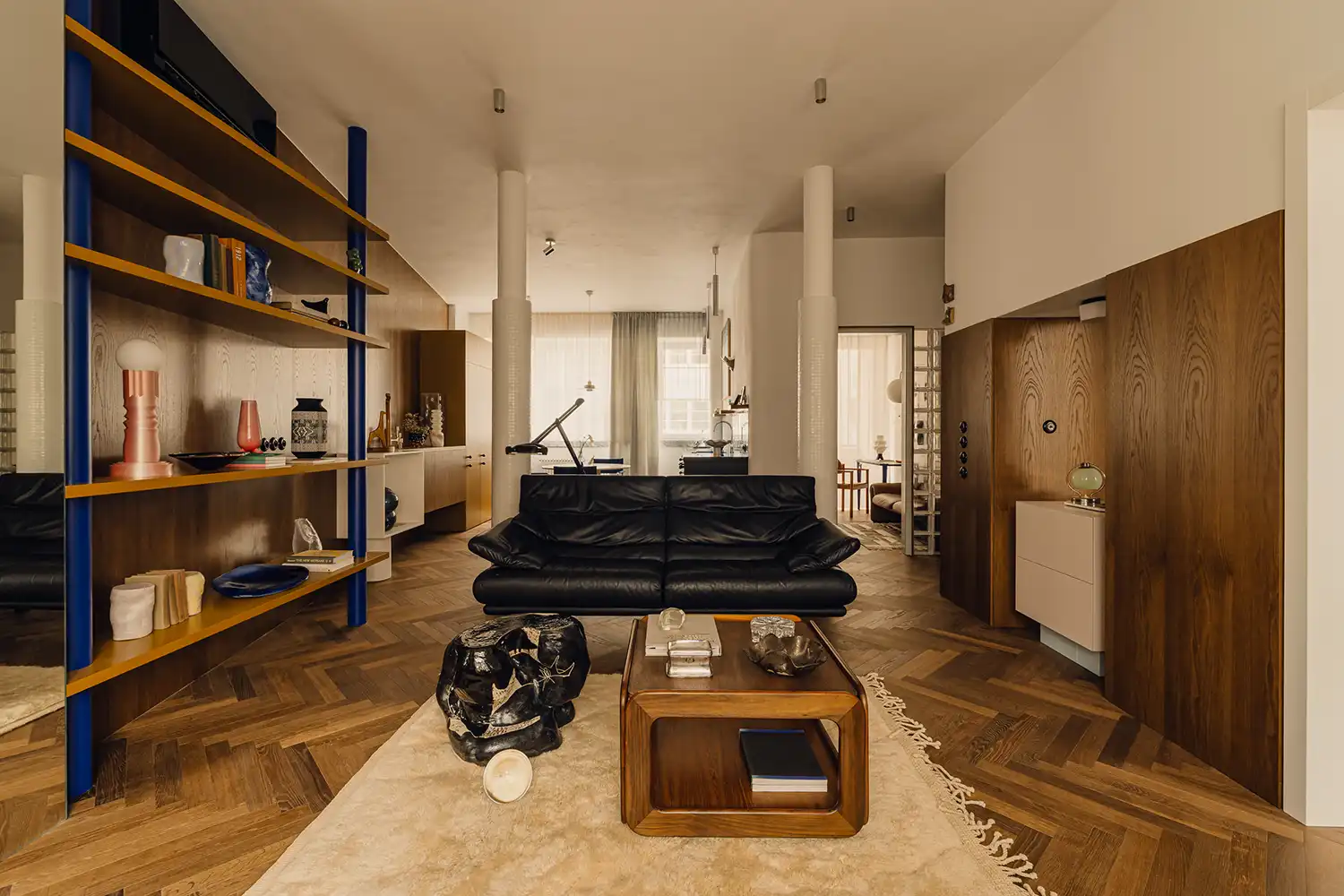
A sculptural intervention serves as the literal and metaphorical anchor of the living area: a pair of decorative columns. Replacing a former load-bearing wall, these elements—one a bold, blue-shelved vertical and the other a white-tiled cylinder—do more than just support the ceiling. They introduce a vertical rhythm that plays against the horizontal expanse of the herringbone oak floors, grounding the open-plan layout while subtly demarcating the transition between the social and private spheres.
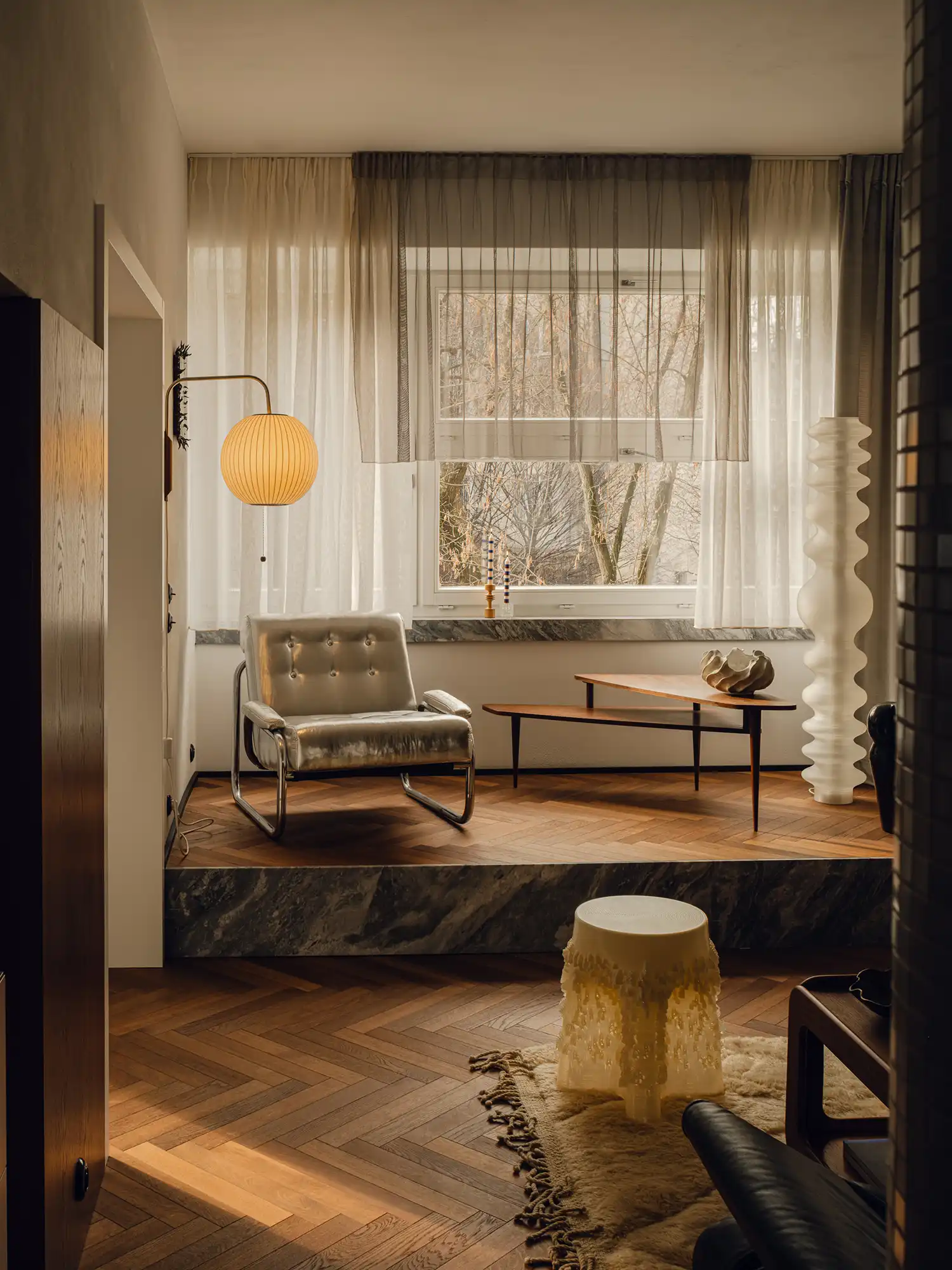
The sensory experience of the interior is heightened by an ingenious response to the building’s original anatomy. Faced with unusually high window sills, the designers introduced a raised marble-clad platform in the living room. This architectural “stage” elevates the inhabitant, physically bridging the gap between the indoor sanctuary and the lush treetops of central Warsaw. Resting in a vintage armchair on this pedestal, one feels a direct, tactile connection to the urban greenery that was previously obscured.
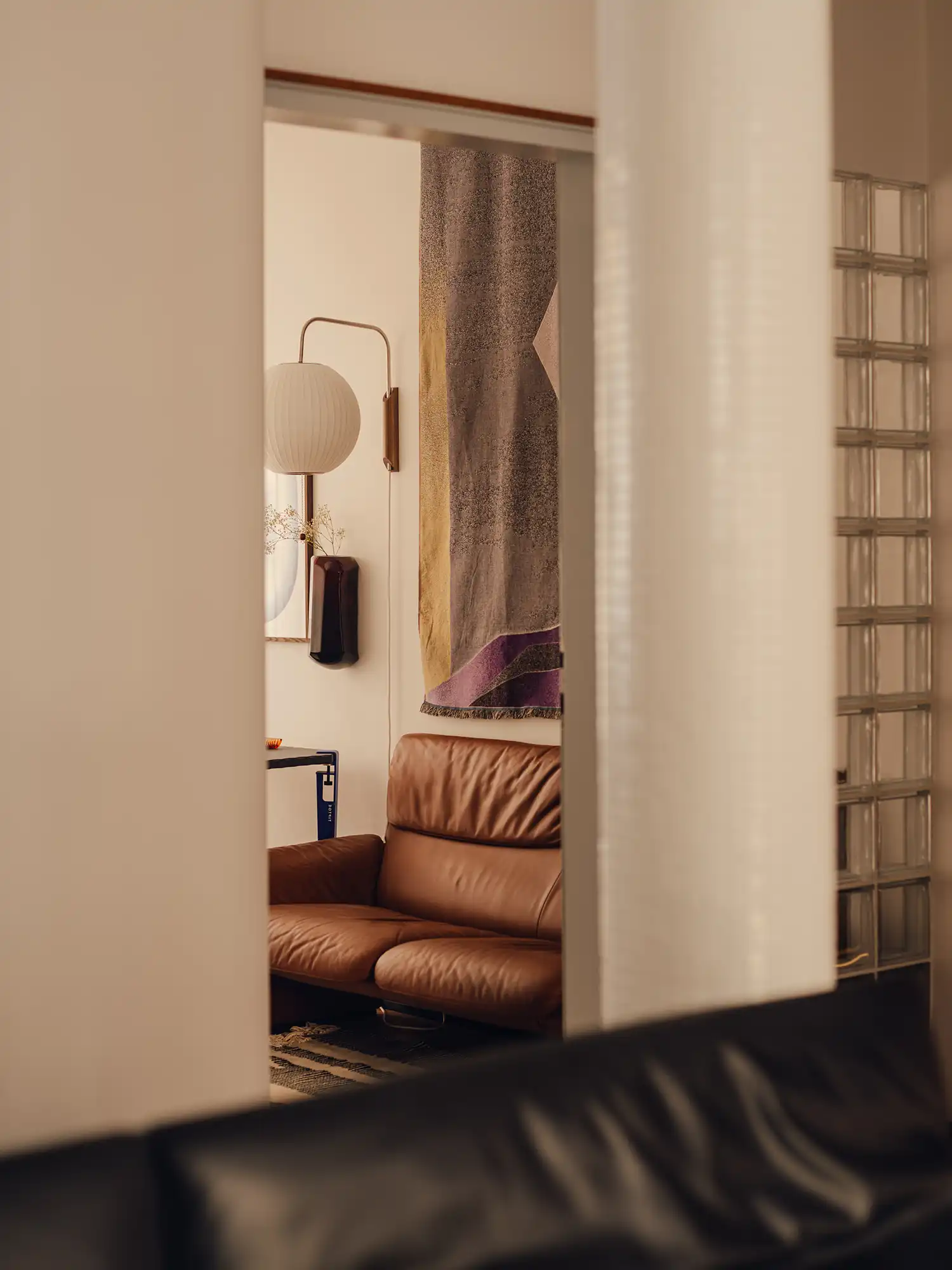
Materiality and color play a decisive role in defining the apartment’s identity, oscillating between the rigor of modernism and the playful irony of postmodernism. The palette is rich yet controlled—warm wood paneling meets cool stone and vibrant primary accents. This balanced approach to tonal warmth reminds one of the minimalist maple surfaces seen in a recent Krakow apartment, where wood is used not just as a finish, but as a primary tool for defining the volume and soul of the home.
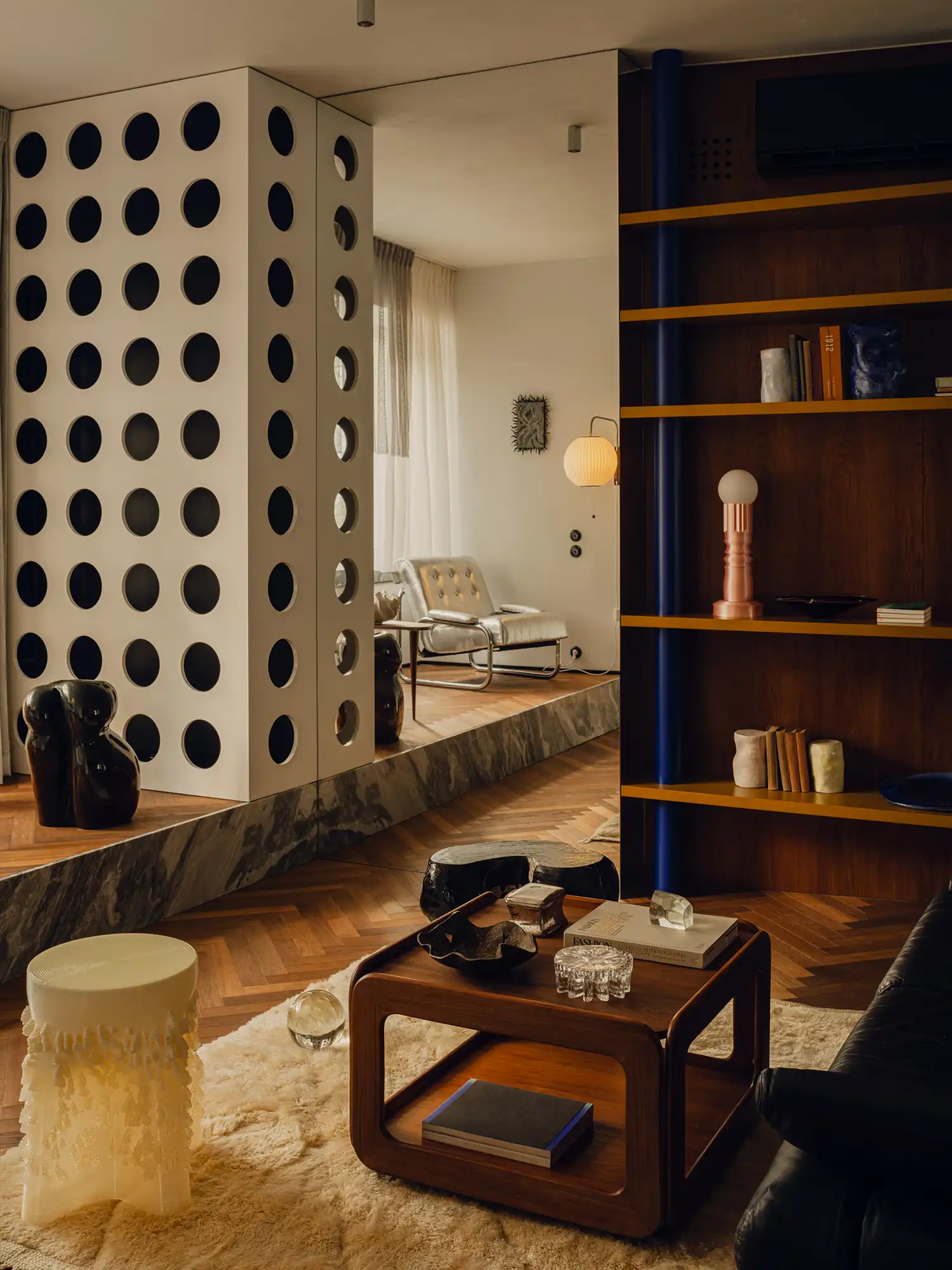
Bespoke craftsmanship is evident in every corner, from the perforated white cabinetry that mimics a giant architectural model to the ceramic relief tiles and handcrafted light fixtures. These are not mere decorations; they are fixed points within a meticulously designed structure. The integration of vintage furniture adds a layer of “lived-in” history, ensuring that the precision of the geometry is softened by the patina of time and the emotional weight of iconic design pieces.
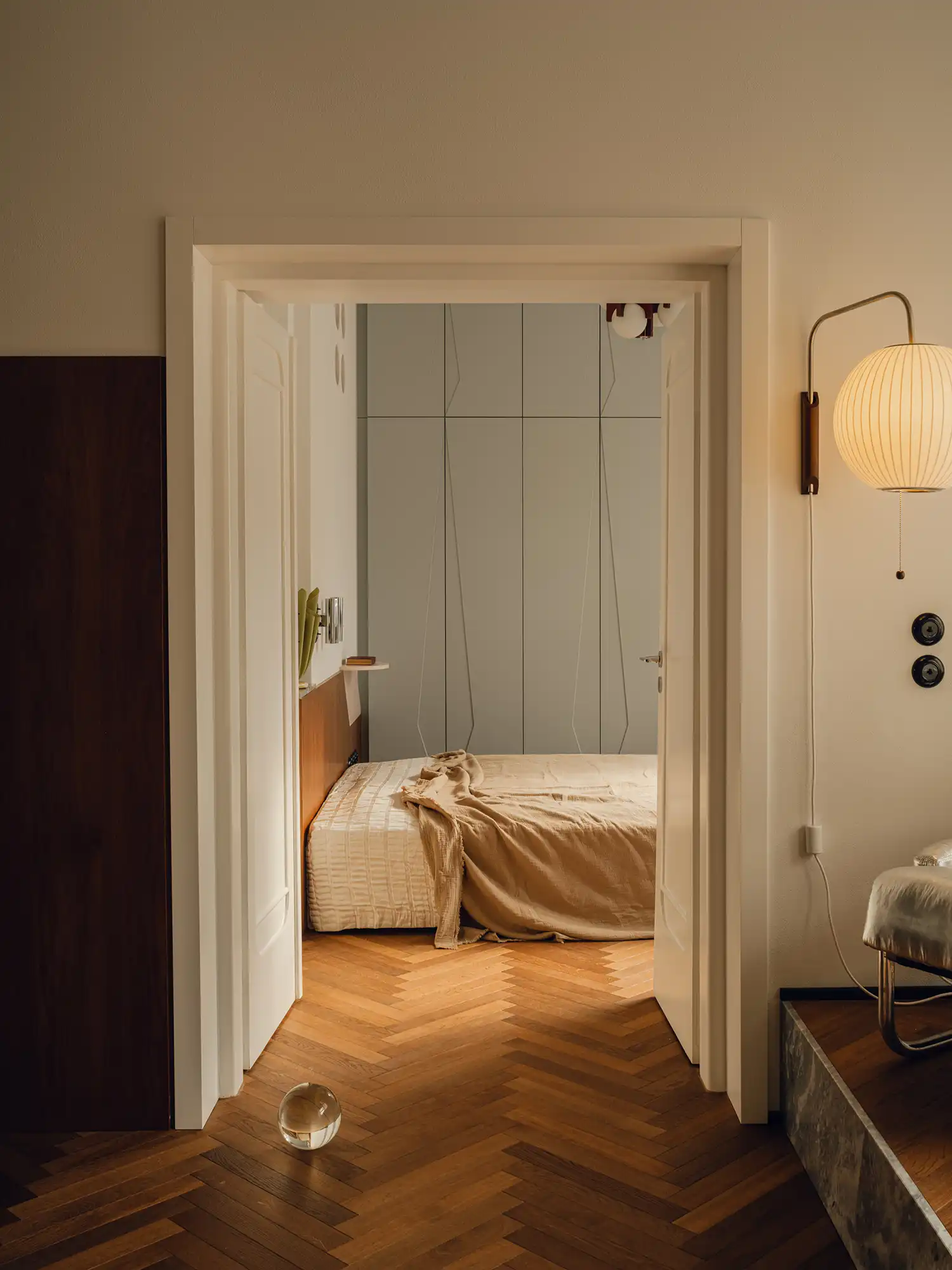
The private quarters maintain this dialogue of transparency and texture. Through wide doorways, the bedroom reveals a continuation of the herringbone flooring and a custom-designed wardrobe featuring delicate, geometric incisions that echo the apartment’s overall graphic language. The lighting, often sculptural and low-slung, creates a series of intimate “islands” within the larger open plan, allowing the atmosphere to shift from gallery-like clarity during the day to a moody, cinematic sanctuary at night.
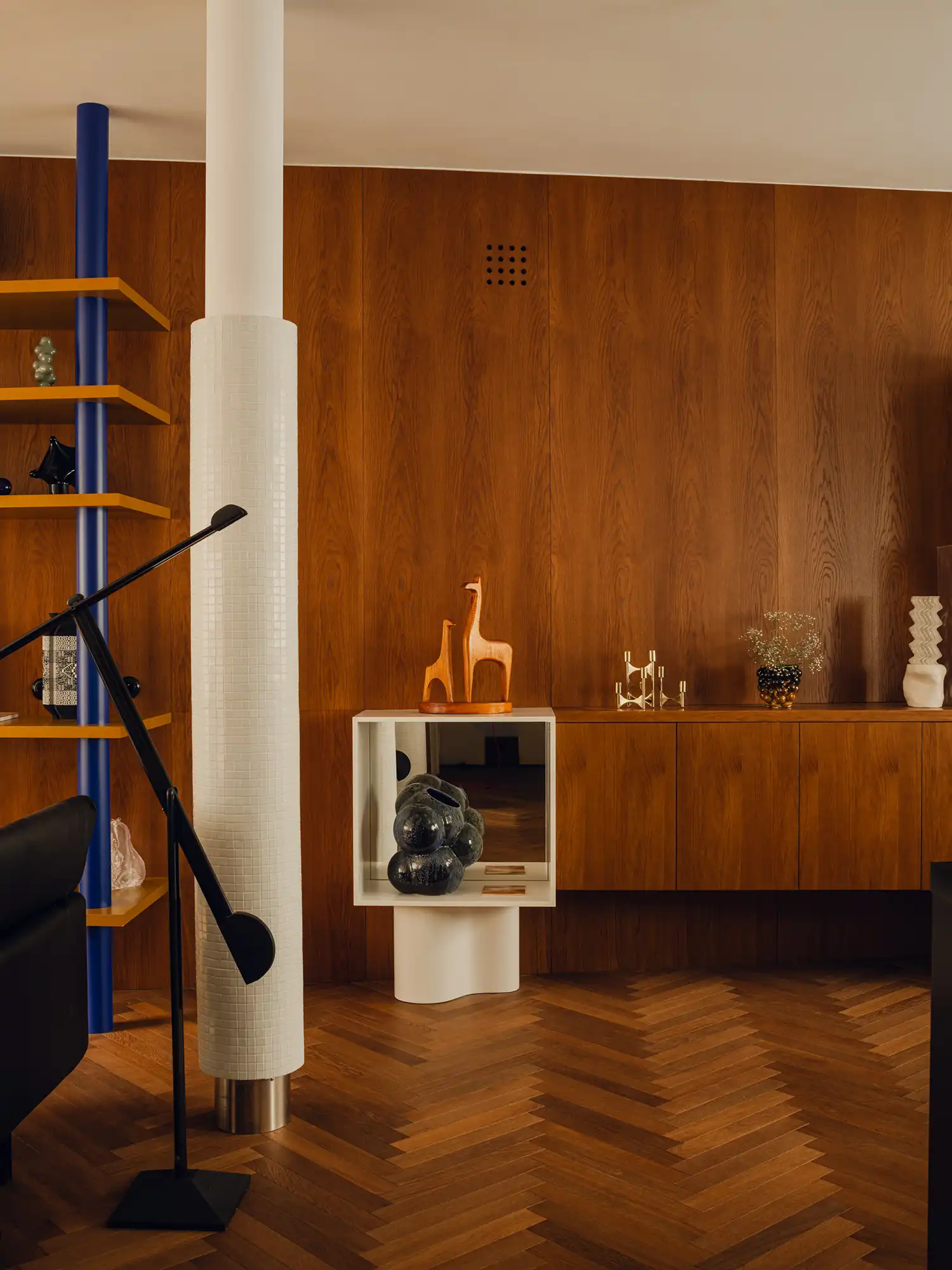
Contextual resonance is what truly defines the success of A 75. While the project avoids a literal replication of its 1930s heritage, it honors the spirit of its era through its dedication to functionalism and material honesty. By blending these modernist roots with a contemporary sense of volume and a hint of postmodernist wit, Katarzyna Baumiller Studio has created a residence that is deeply rooted in the history of Poland’s capital while pointing toward a more fluid, expressive future of urban living.