

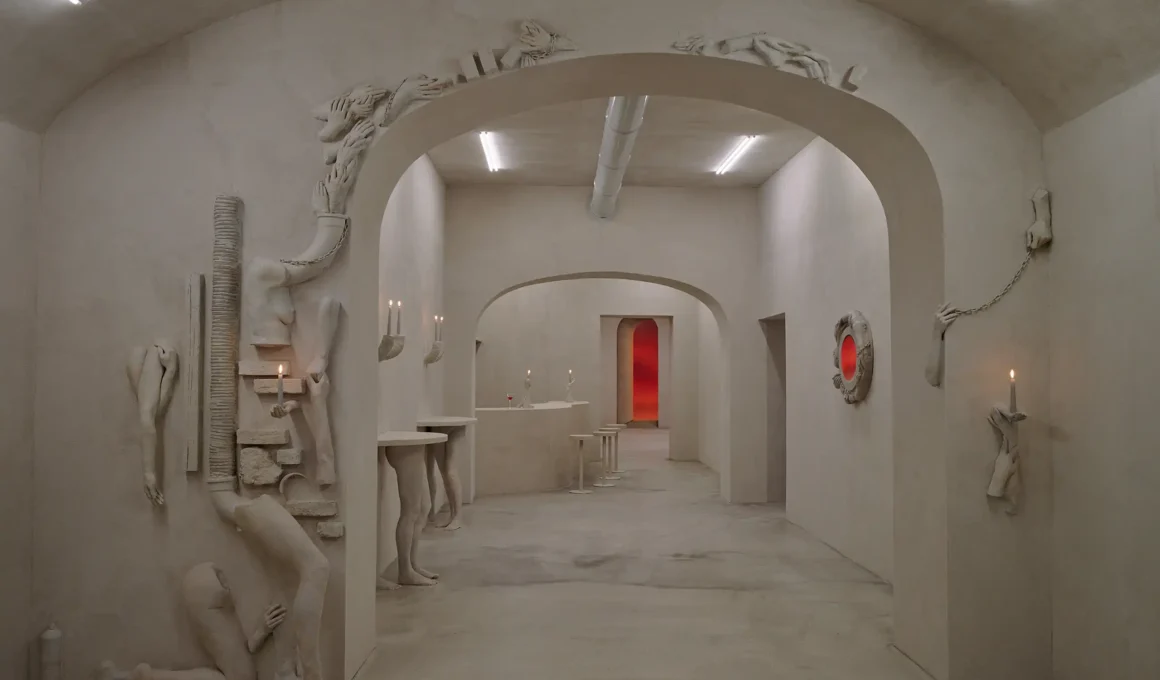
In the heart of Rome, where the weight of antiquity often dictates the pace of modern intervention, a new project emerges that defies the conventional boundaries of preservation. Bar Far, located in the historic neighborhood of Trastevere, is not merely a hospitality space but a temporary art exhibition that functions as a bar. Renovated by Studio Strato, the space houses an immersive installation created by artists Clementine Keith-Roach and Christopher Page, serving as the new outpost for Villa Lontana. While the institution’s primary headquarters sit north of the city walls, this urban expansion translates physical distance into a metaphysical journey, inviting visitors into an environment that feels simultaneously like a prophecy and a ruin.

A dialogue between restoration and subversion defines the architectural approach. Unlike more traditional interventions that seek to isolate the old from the new, Studio Stratoo has created a shell that allows for a dense, paradoxical layering of history. This sensitivity to the existing fabric, while pushing for a contemporary narrative, recalls other significant Italian projects that balance heritage with a bold new identity. For instance, the meticulous revitalization of historic social hubs often requires a delicate hand to ensure the soul of the original architecture remains legible beneath the new layers of function and form. In Trastevere, however, the goal isn’t just to restore, but to provide a stage for artistic provocation.

The sensory experience of the interior is driven by the blurring of disciplines within the exhibition. Clementine Keith-Roach, a sculptor, has integrated plaster cast reliefs directly into the walls, where body parts emerge from construction materials like brick, timber, and piping. These “infrastructural Caryatids” appear to be both supporting the building and being consumed by it. The tactile nature of these surfaces creates a haptic tension—the eye expects the cold rigidity of stone, but the mind registers the warmth of plaster and the intimacy of the human form. It is a space that breathes, transitioning from the austerity of contemporary design to the lavishness of the Baroque era.
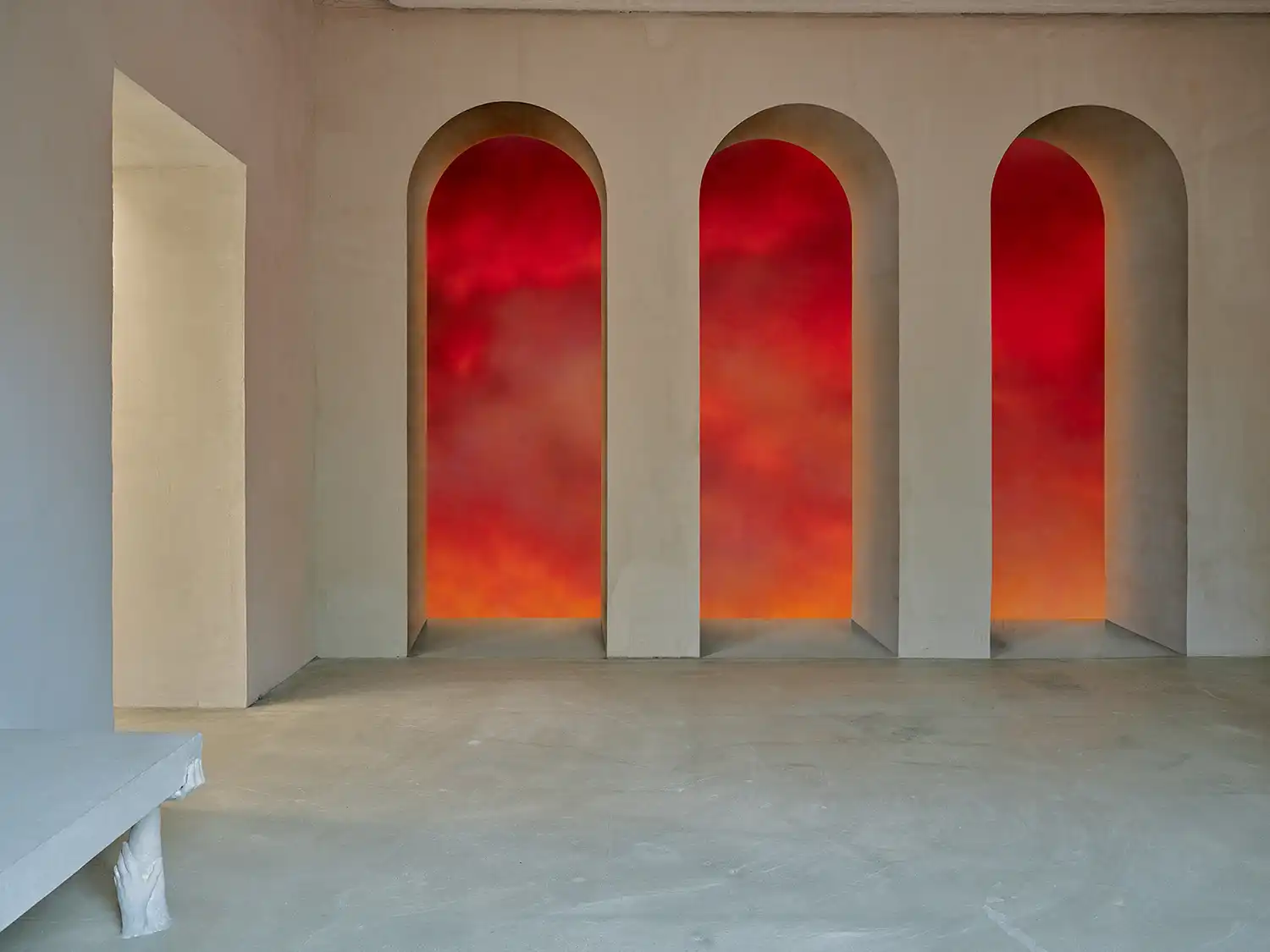
Optical illusion as a spatial strategy is further explored through the work of painter Christopher Page. His use of trompe l’oeil transforms the final room into an illusory cloister, but instead of the traditional views of paradise, the perspective looks out onto an ominous, glowing infinity. While recent critiques have focused on the project’s theatricality, the true depth of Bar Far lies in the intentional failure of its illusions. As visitors move through the space, the perspectives warp and distort, forcing a conscious realization of the artifice. This isn’t just decoration; it is a subversive tool that questions the permanence of the world around us.
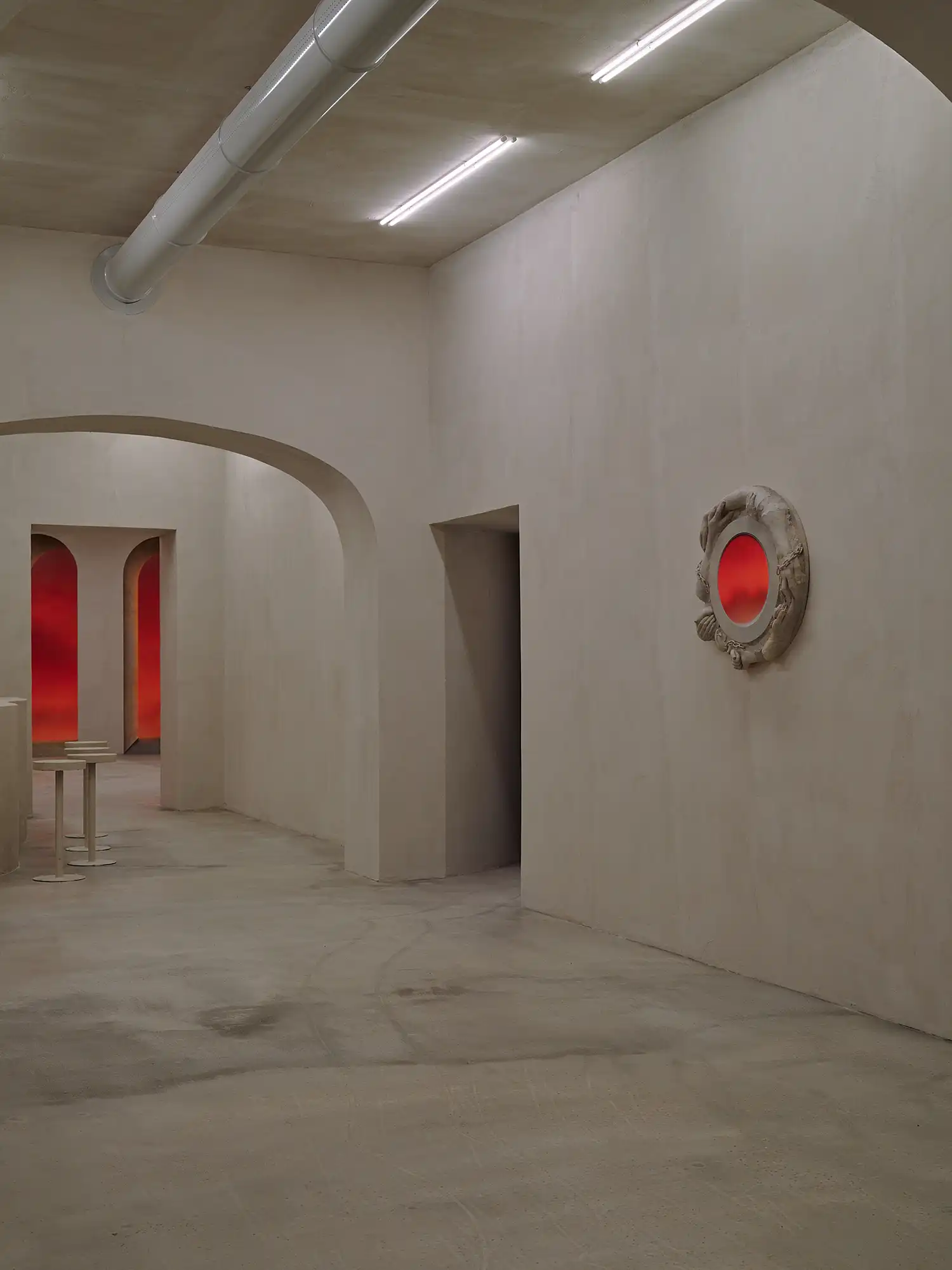
Echoing the legacy of historic art-bars, such as Rome’s famous Caffè Greco or the Cabaret Voltaire, Bar Far positions itself as a sanctuary for intellectual and political discourse. These spaces have historically emerged during times of upheaval, providing a refuge for experimentation. By blending the sacred atmosphere of a church with the eerie stillness of a tomb, the installation—which will be on view until March 14—crafts a venue where the act of drinking and talking becomes a philosophical exercise. The flashes of color—some seemingly pulled from a distant future—interrupt the monochromatic palette of the Roman masonry, signaling that this is a place of transition.
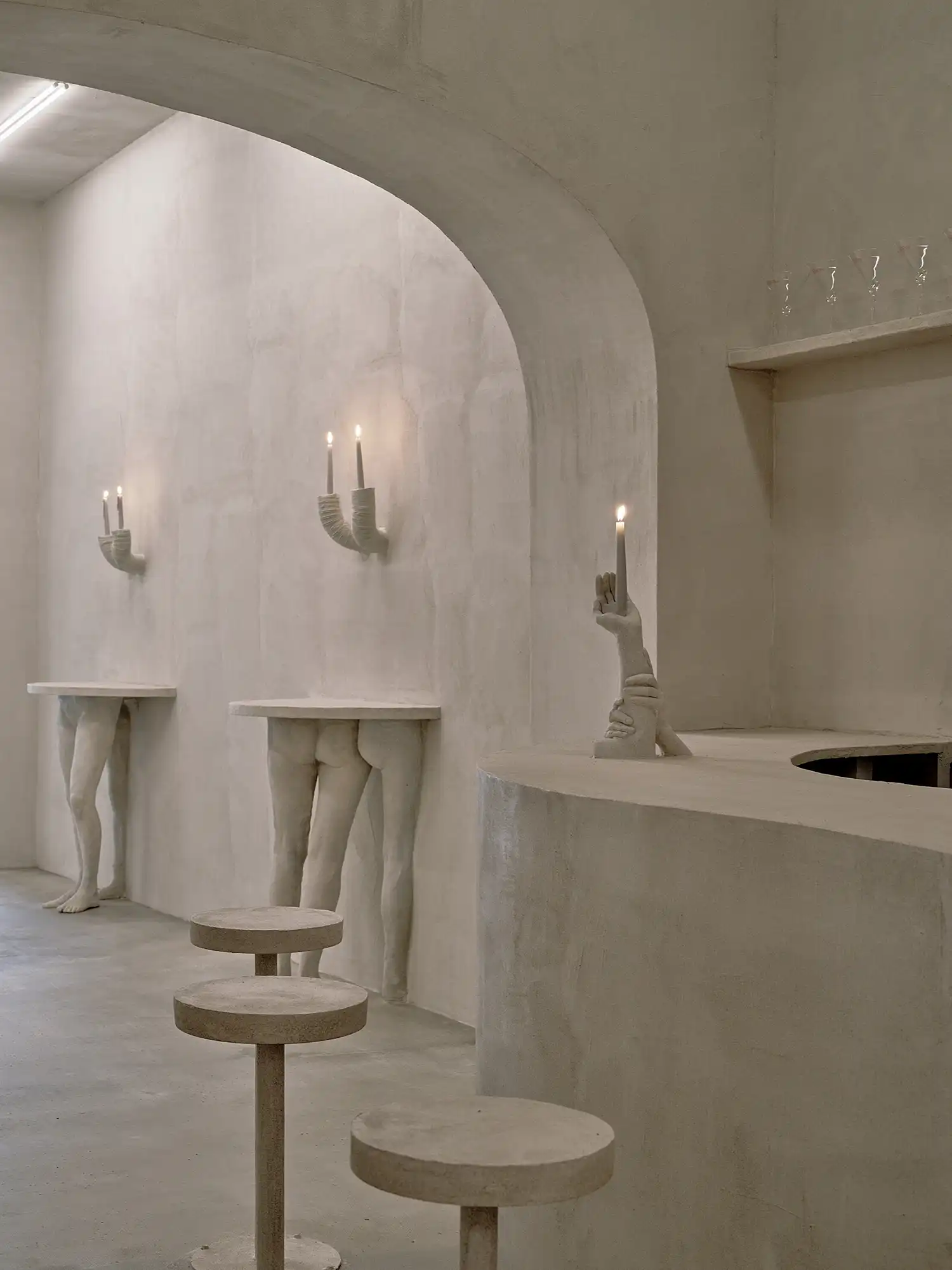
The contextual impact of Villa Lontana’s expansion into the city center marks a significant moment for the Roman art scene. Under the direction of Vittoria Bonifati, the project continues to leverage the archaeological heritage of the Santarelli Foundation to spark contemporary dialogue. Bar Far stands as a testament to the idea that architecture does not have to be a static backdrop. Through the architectural renovation by Studio Strato and the visionary work of Keith-Roach and Page, the space becomes a living entity—a playful yet profound exhibition to contemplate the destruction of old worlds and the uncertain beauty of those yet to be built.