



A radical inversion of domestic priorities defines the latest intervention by Faye + Walker Architecture in Austin, Texas. In a city where the relationship between indoor comfort and the rugged Texan landscape is often mediated by rigid, traditional floor plans, the Coffered House emerges as a study in spatial reorganization. The project began with a common urban predicament: a family of four possessing a generous rear yard that remained largely ornamental, disconnected from the daily rhythms of the home. To solve this, the architects opted for a bold “program flip,” migrating the private master suite to the street-facing front and reclaiming the rear for a sprawling, light-filled social core.
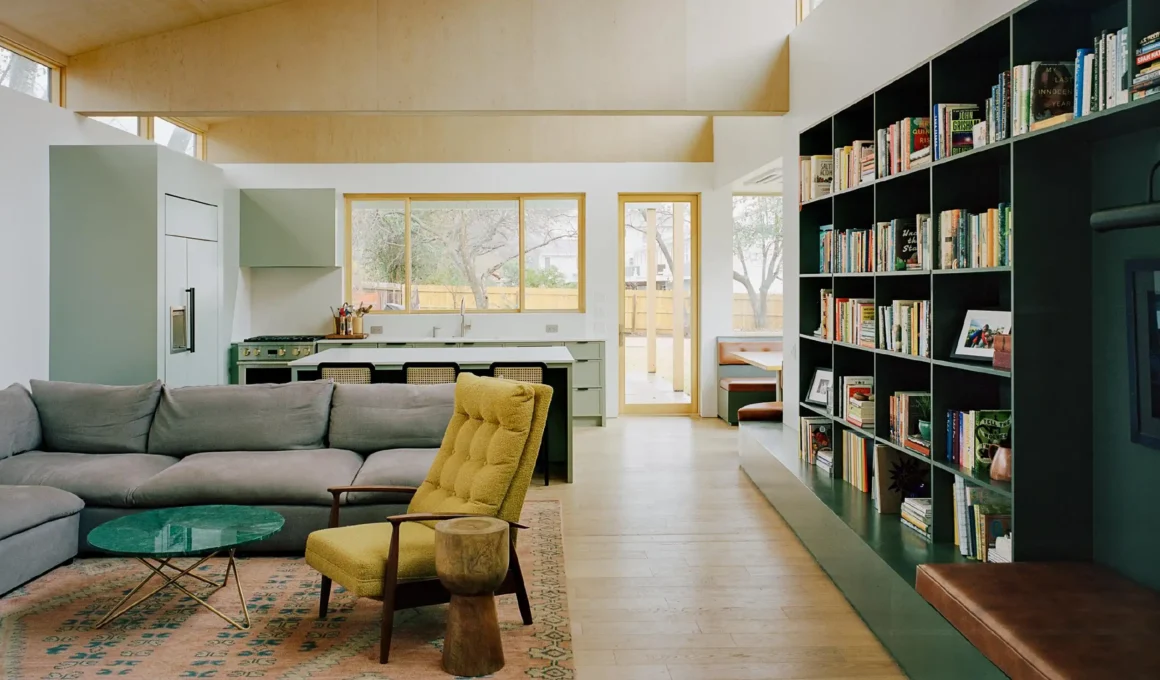
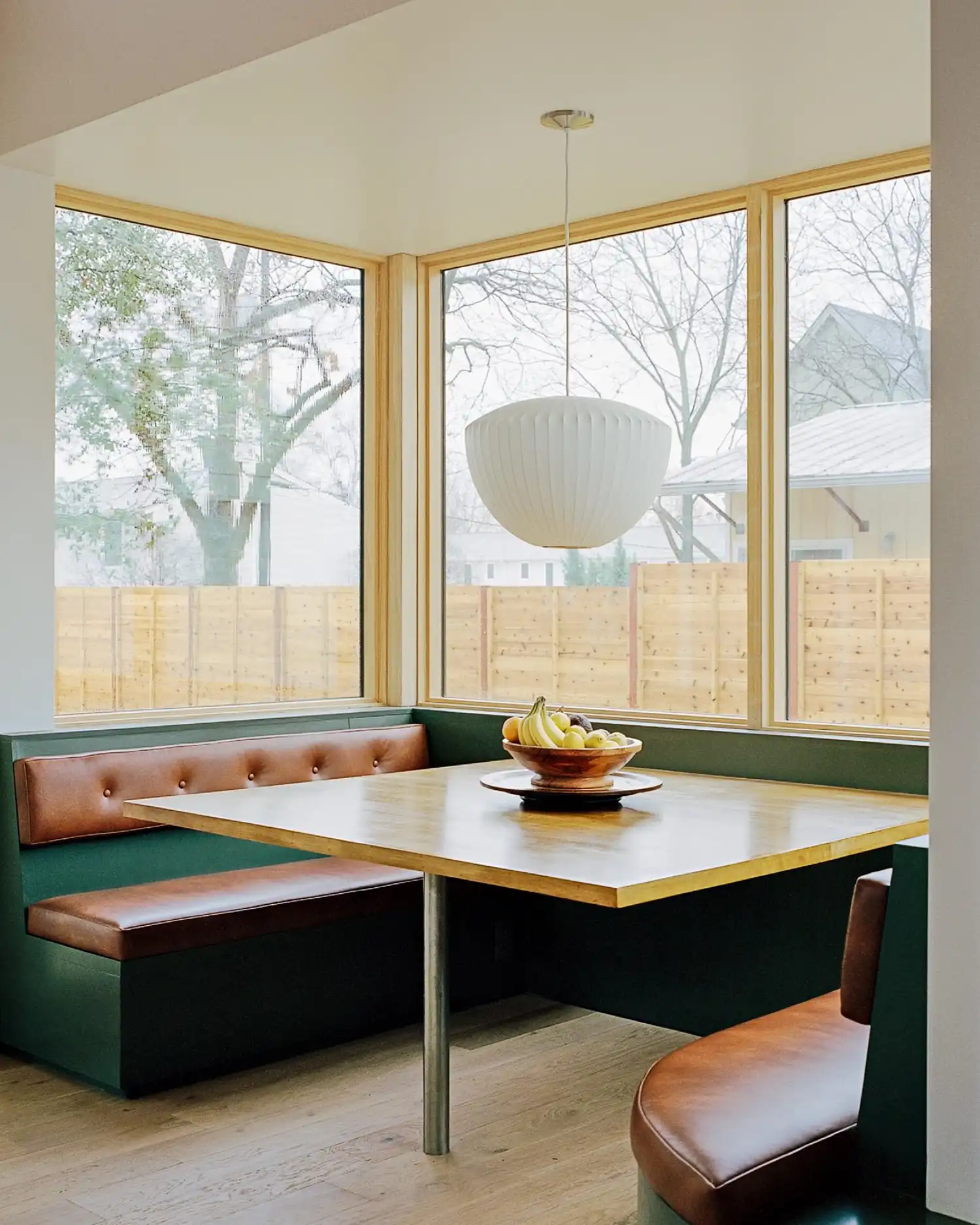
The choreography of the new interior centers on the seamless transition between the kitchen, dining, and living areas. By relocating these high-traffic zones to the back of the property, the design team established a direct, visual, and physical dialogue with the outdoors. This isn’t merely a functional shift but a psychological one; the home now breathes with the backyard, turning a neglected patch of green into an essential extension of the living room. The atmosphere is one of airy transparency, where the boundaries of the 20th-century shell are dissolved to accommodate a contemporary lifestyle that prioritizes communal gathering and environmental connectivity.
Structural honesty meets rhythmic geometry in the home’s defining feature: the plywood-clad coffered ceiling. Conceived through a clever manipulation of standard building components, the architects ganged trusses together to create deep, tectonic beams. This structural “tricked-out” grid does more than support the roof; it provides a rigorous organizational framework for the entire addition. The warmth of the wood grain against the crisp, white interior palette creates a sensory experience that feels both industrial and artisanal—a tactile reminder of the home’s assembly that adds a layer of sophisticated texture to the overhead plane.
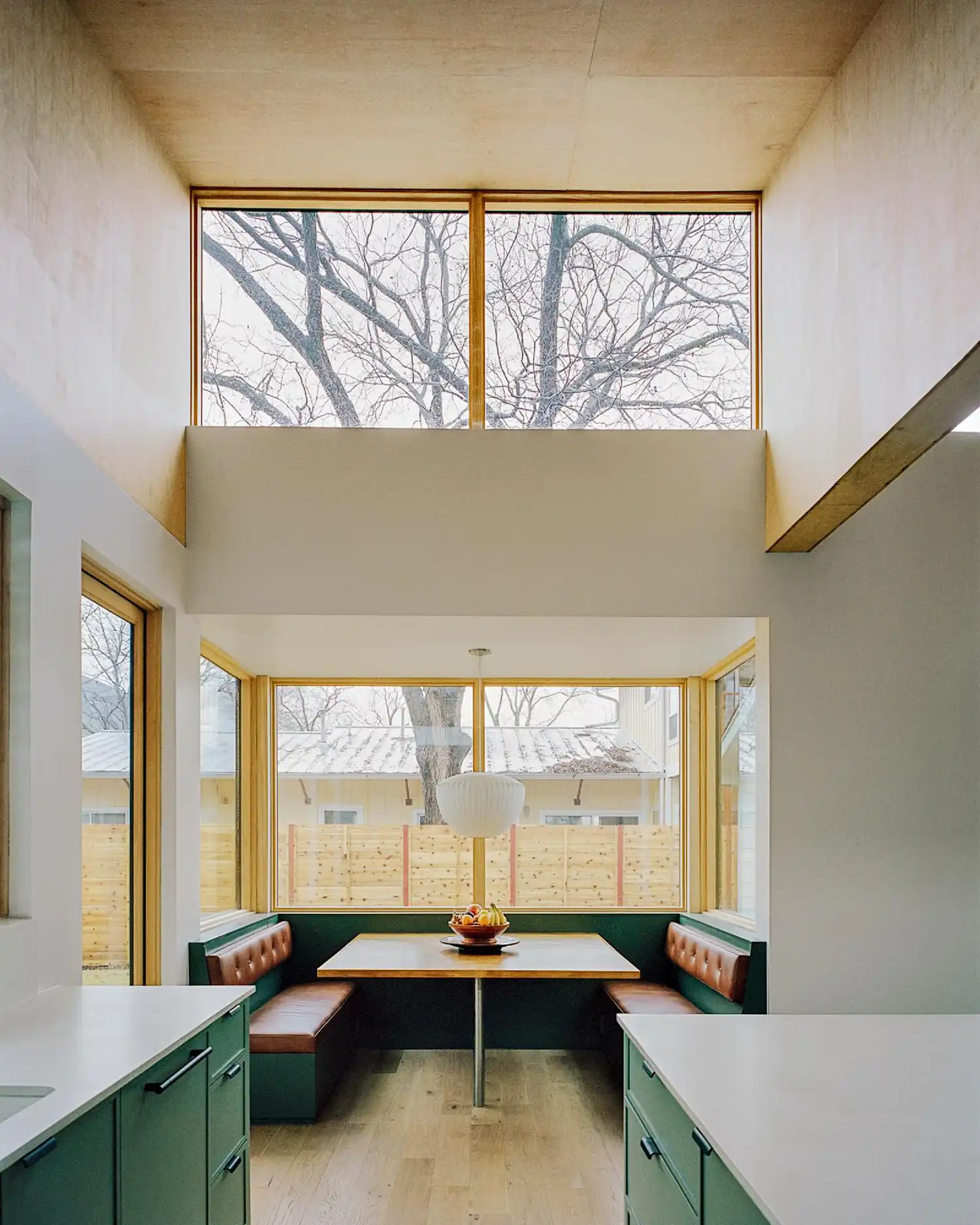
The manipulation of natural light is handled with surgical precision through the integration of high north and south-facing windows. Nestled within the depths of the coffered ceiling, these apertures act as light cannons, capturing the harsh Texas sun and diffusing it into a soft, dramatic glow that shifts throughout the day. This strategic placement ensures privacy from neighboring lots while maintaining a constant connection to the sky. The result is a space that feels perpetually illuminated yet thermally protected, where the play of shadows across the plywood beams adds a cinematic quality to the simple act of preparing a meal or lounging in the living area.
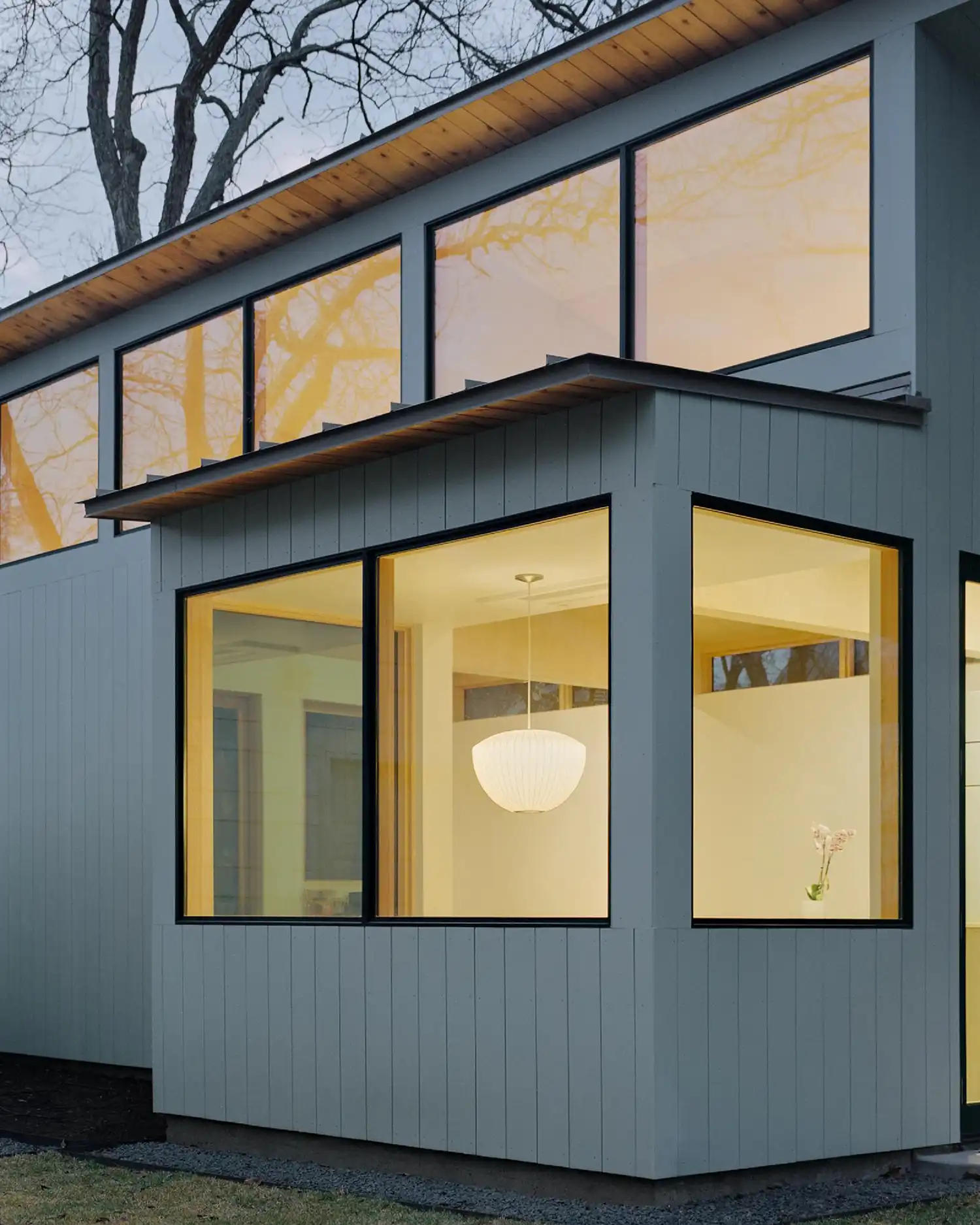
This approach to revitalizing the local vernacular reflects a broader trend in Austin’s residential architecture, where firms are increasingly looking for ways to adapt aging housing stock to modern ecological and social demands. The project echoes the sensitive yet transformative spirit seen in other local works, such as the reconstructed Austin bungalow by Side Angle Side, which similarly balances historical context with bold, geometric interventions. In both cases, the success of the project lies in the ability to identify the untapped potential of a site and use structural innovation to unlock a more fluid way of living.
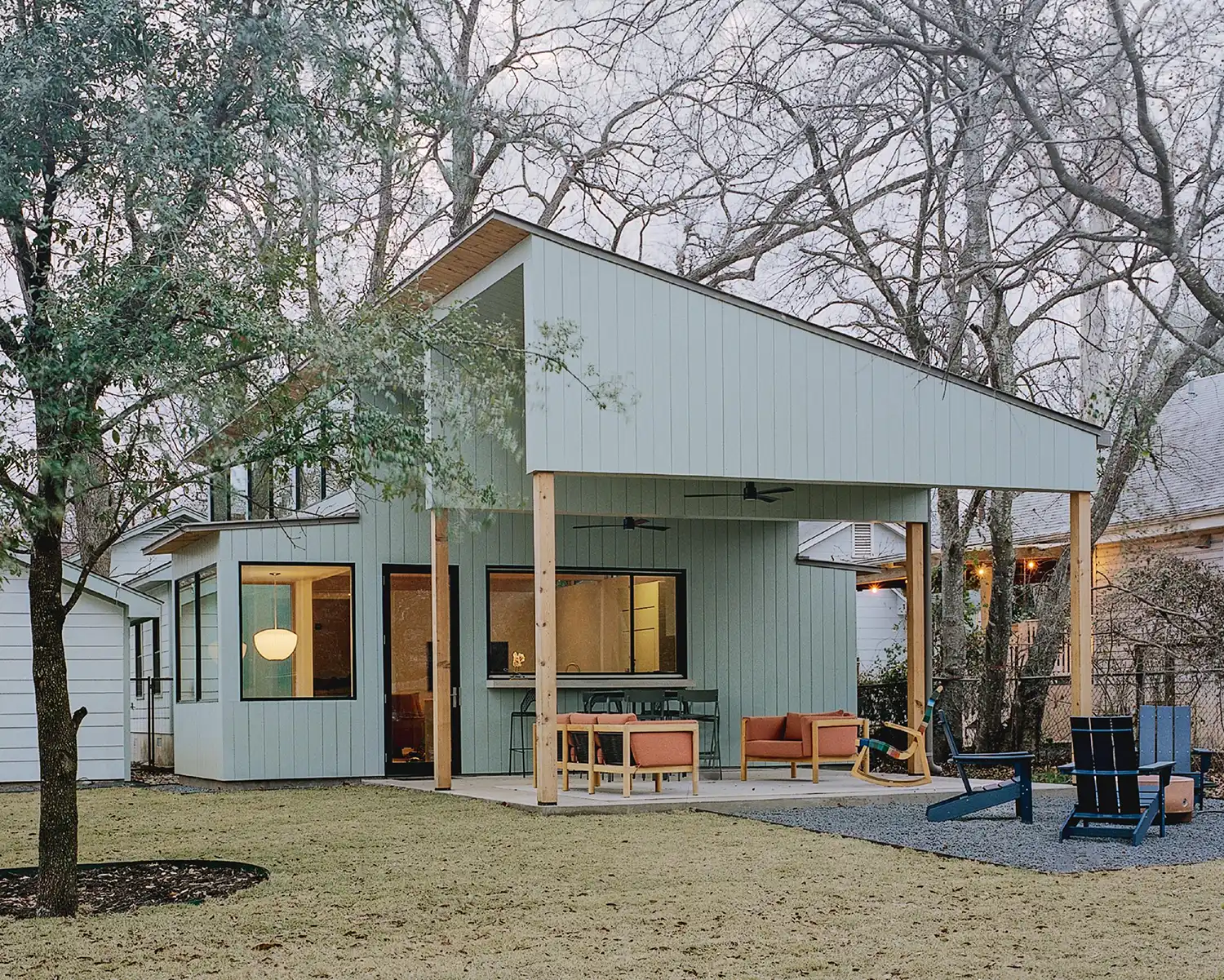
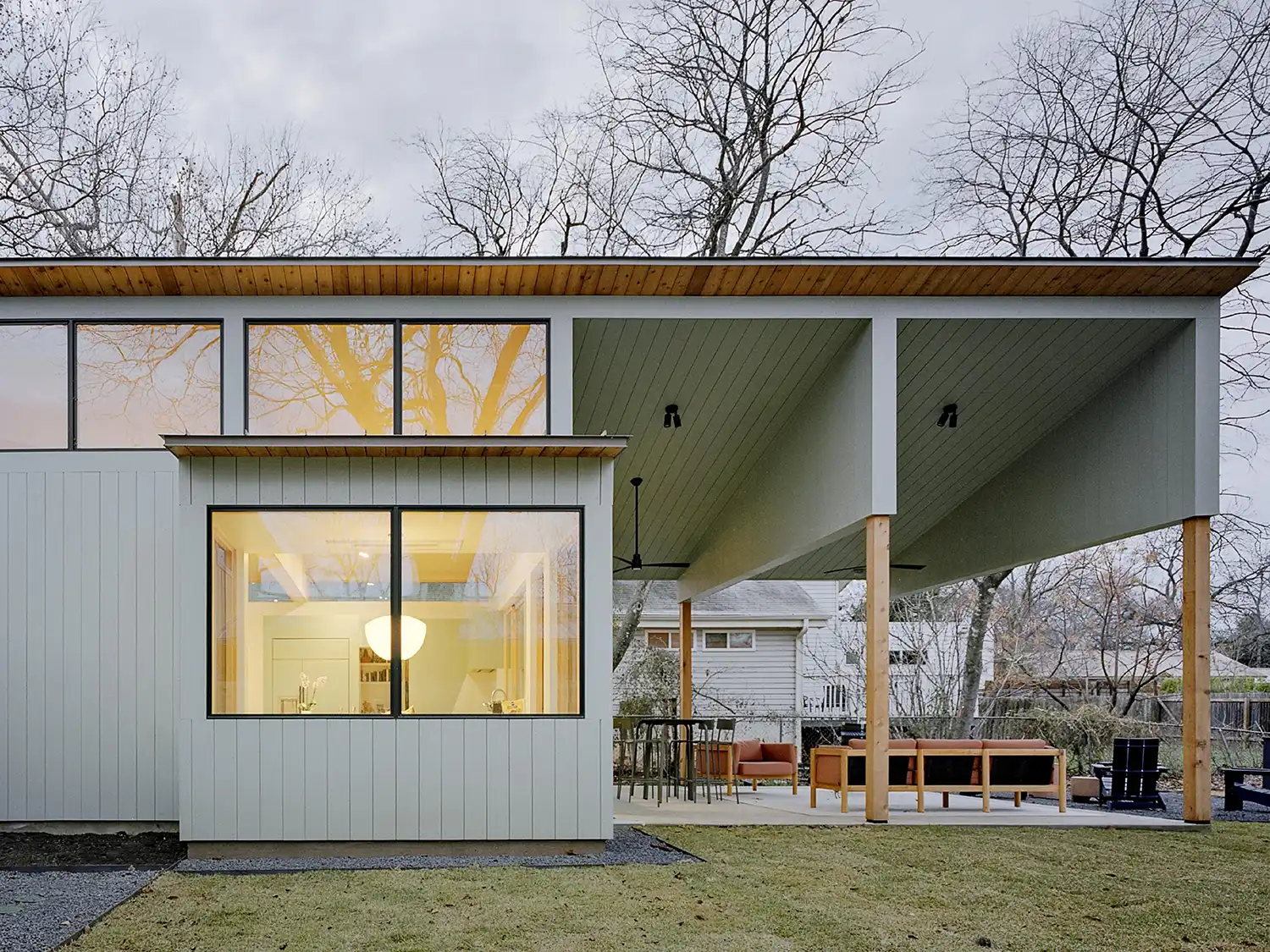
The transition to the outdoors culminates in a deep, covered terrace that serves as a vital “third space” for the family. This sheltered threshold mitigates the heat of the USA‘s southern climate, allowing the doors to remain open and the interior to spill out onto the deck. By treating the addition as a simple, trussed rectangle, Faye + Walker Architecturehas managed to create a complex series of experiences within a modest footprint. The Coffered House stands as a testament to the power of programmatic bravery, proving that sometimes, to move forward, a home must first be turned inside out.