



The dawn of a new era in Maranello arrives not with a roar, but with a silent, illuminating clarity. Ferrari has unveiled the interior and the evocative name of its first full-electric sports car: the Ferrari Luce. Developed over a five-year collaboration with LoveFrom, the creative collective led by Sir Jony Ive and Marc Newson, the project represents a philosophical shift for the Prancing Horse. Hosted in San Francisco, a global epicenter for user experience innovation, the launch signals that electrification is merely the medium for a deeper exploration of human-centric design. The name ‘Luce’—Italian for light—eschews technical jargon in favor of a vision that is transparent, pure, and uncompromisingly forward-thinking.
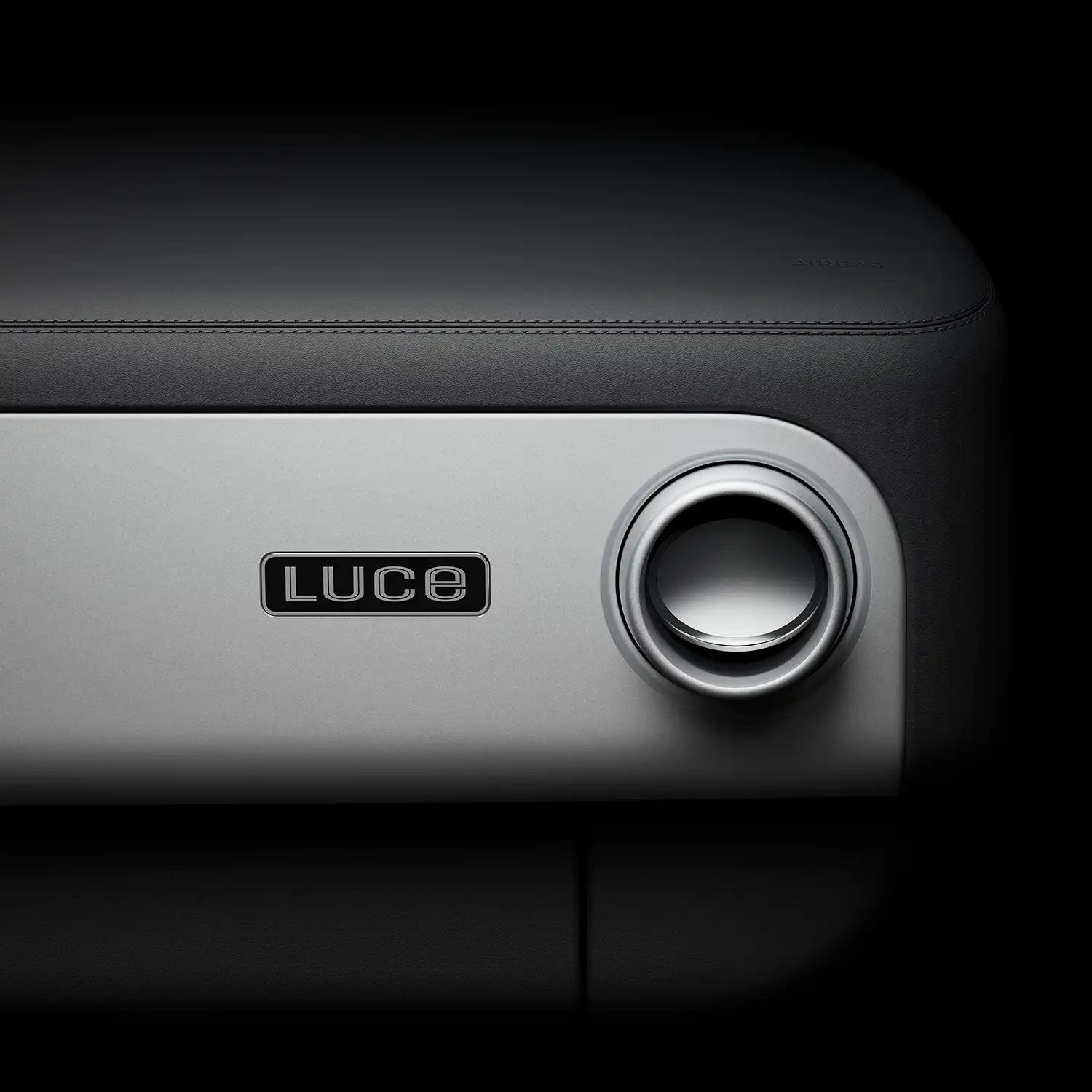
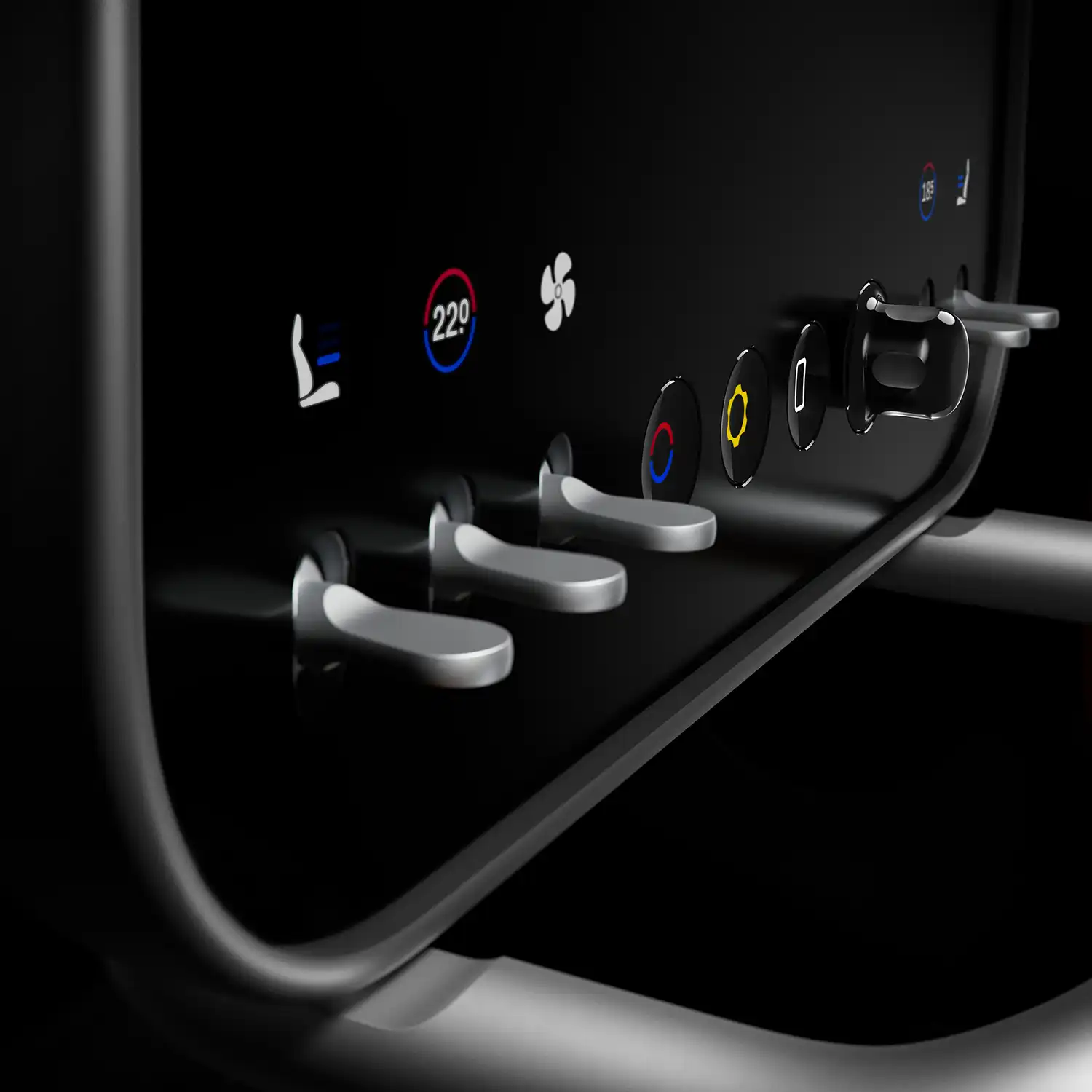
The conceptual vision behind the cabin prioritizes a “single, clean volume” that rationalizes the driving environment into a state of focused calm. Unlike the industry’s current obsession with sprawling, distracting digital canvases, Ive and Flavio Manzoni, head of the Ferrari Styling Centre, have pursued a holistic harmony between hardware and software. The interior architecture is organized around a strict logic of inputs and outputs, where physical controls are treated with the same reverence as the digital interface. This transition into the electric realm feels like a natural evolution of the brand’s DNA, much like how the Ferrari 12Cilindri Tailor Made explored the intersection of traditional Korean craft and modern performance.
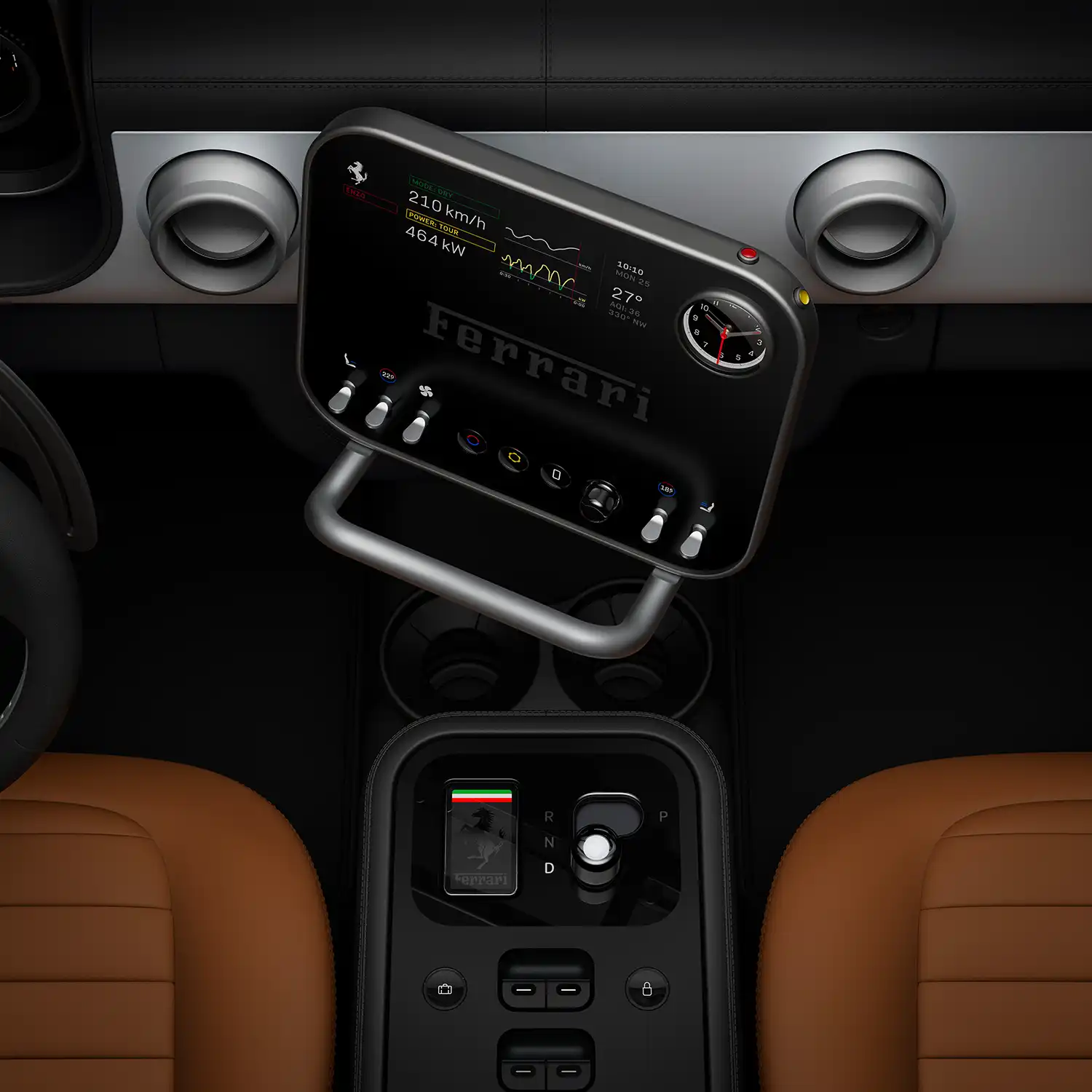
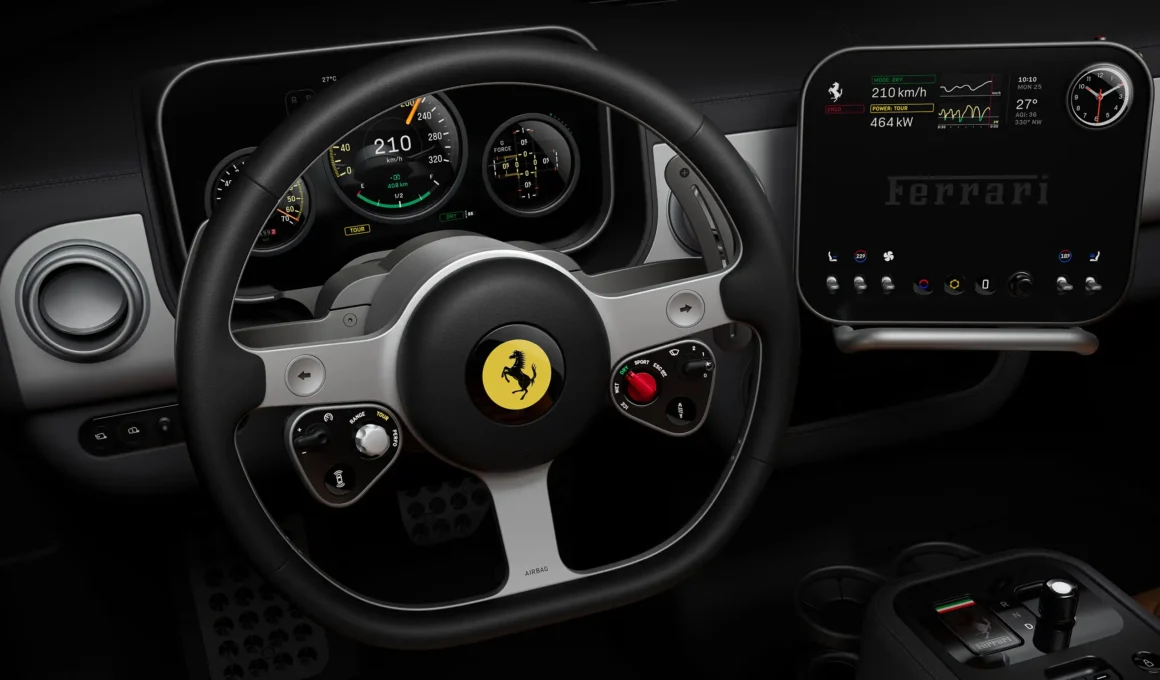
Technical precision meets material integrity in the Luce’s structural components. The steering wheel is a reductive, three-spoke homage to the 1950s Nardi wheels, yet it is executed in 100% recycled aluminium alloy. This structure, composed of 19 CNC-machined parts, weighs 400 grams less than a standard Ferrari wheel, showcasing a commitment to lightweight engineering that is essential for the electric age. The tactile experience is further heightened by the use of Corning Gorilla Glass for the shifter and central console. To achieve Ferrari’s exacting standards, lasers were used to bore holes half the width of a human hair into the glass to deposit ink for the graphics—a level of micro-engineering that rivals the meticulous restorations seen in icons like the Ferrari 849 Testarossa Spider.
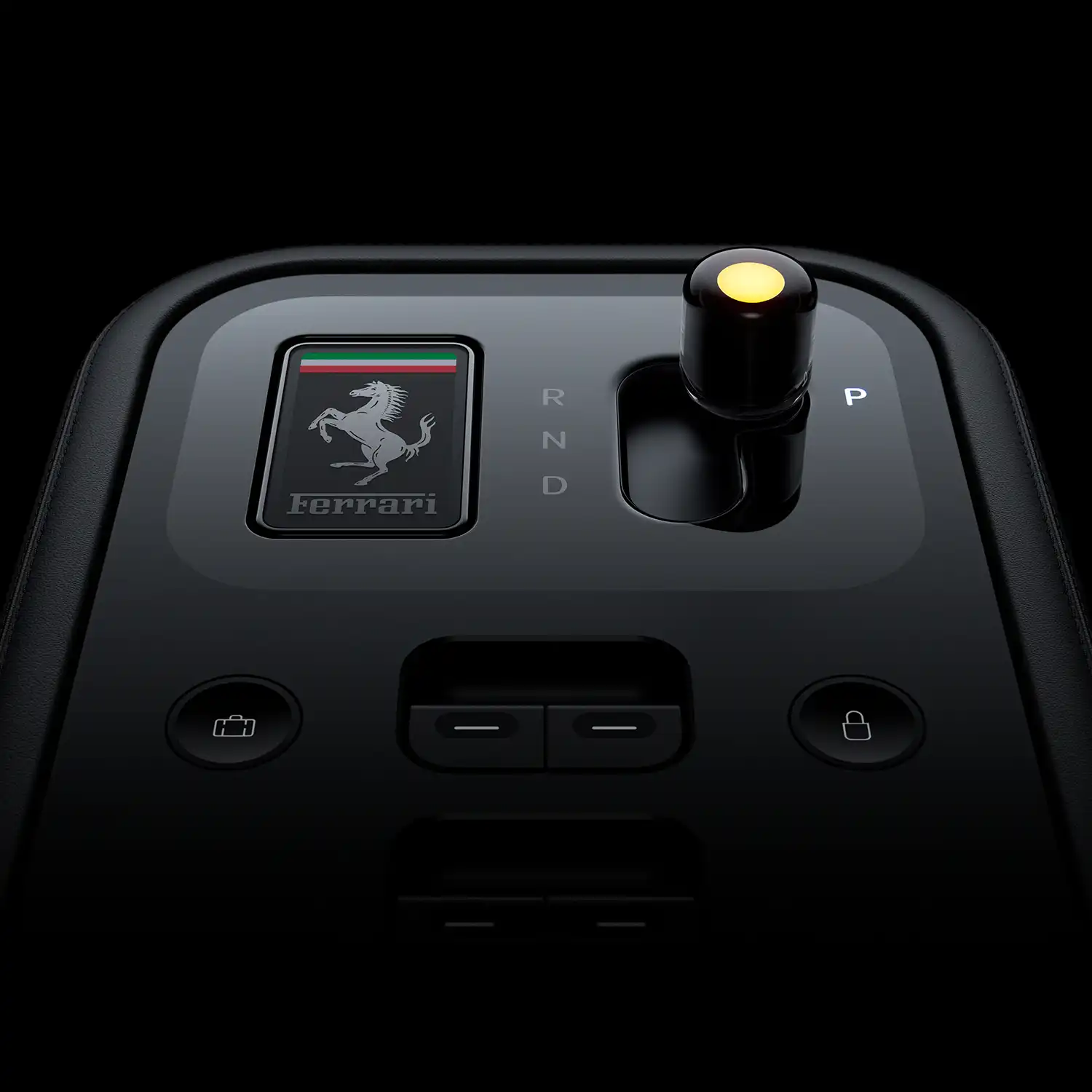
A choreographed ritual of engagement defines the user’s first interaction with the vehicle. The key itself is a sculptural object made of Gorilla Glass, featuring an automotive-first E Ink display that consumes power only when changing state. When docked in the central console, the key undergoes a visual transformation from yellow to black, triggering a lighting sequence across the binnacle and control panel. This theatricality ensures that the transition from stillness to motion remains an emotional event, preserving the soul of the marque even in the absence of a combustion engine’s internal vibrations.
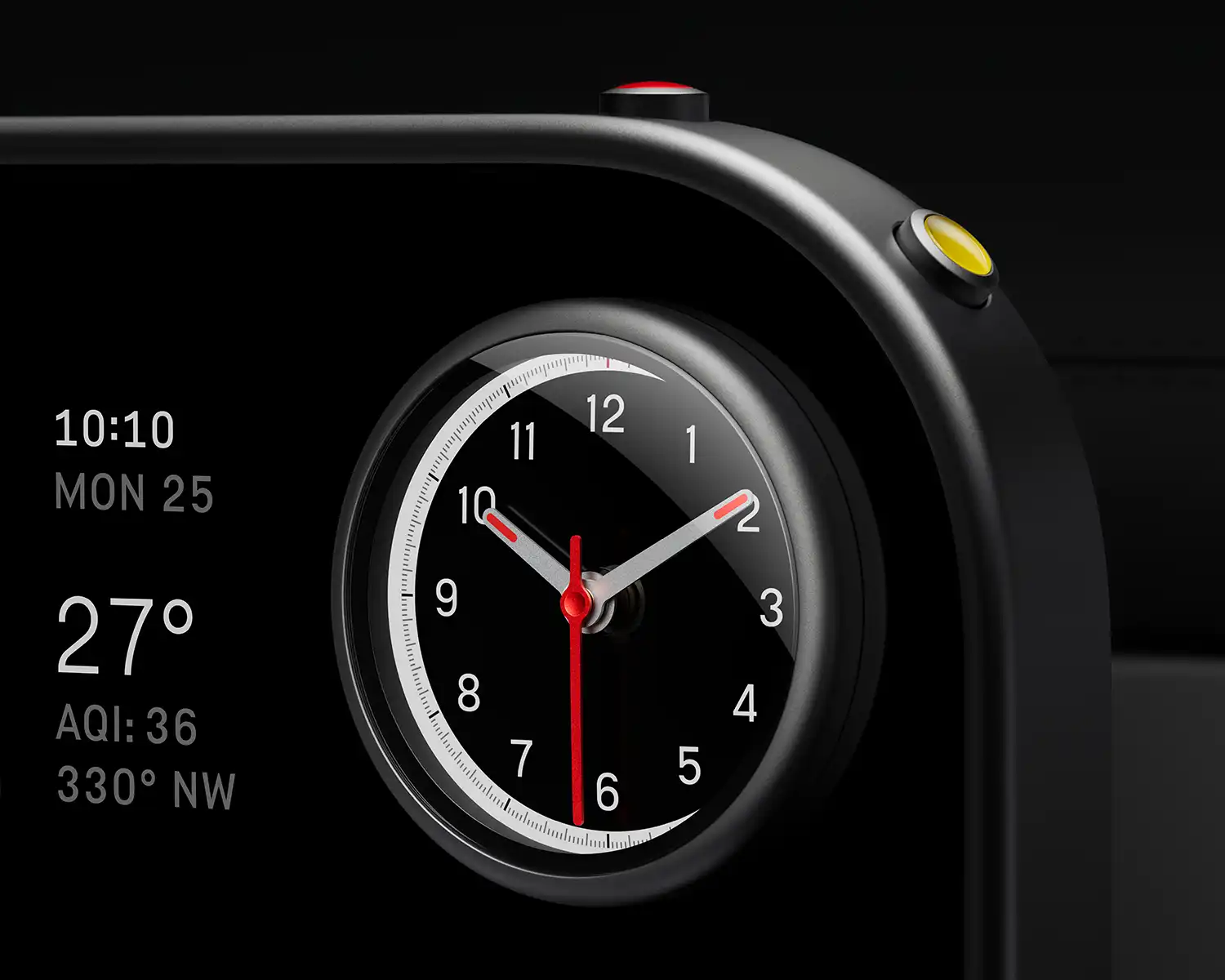
The sensory experience of the interface draws heavily from aviation and high-end horology. The driver’s binnacle, which moves in sync with the steering column, utilizes two overlapping OLED displays developed with Samsung engineers. These panels feature strategic cutouts that reveal a second layer of information, creating a three-dimensional depth reminiscent of a mechanical watch face. This “multigraph” approach—incorporating three independent motors to move physical aluminium hands over a digital dial—allows the screen to function as a clock, chronograph, or compass with a fluidity that feels organic rather than synthetic.
Contextual impact and cultural significance are woven into every choice of the Ferrari Luce. By referencing the legibility of historic Veglia and Jaeger instruments, LoveFrom has reduced the cognitive load on the driver, ensuring that technology serves the human experience rather than overwhelming it. The result is a cockpit that feels both modern and timeless, proving that Ferrari’s foray into electrification is not a departure from its heritage, but a refinement of it. Through this collaboration, the Luce becomes more than a car; it is a statement on the enduring value of craftsmanship in a digital world, illuminating a path where high-technology and human emotion finally converge.