


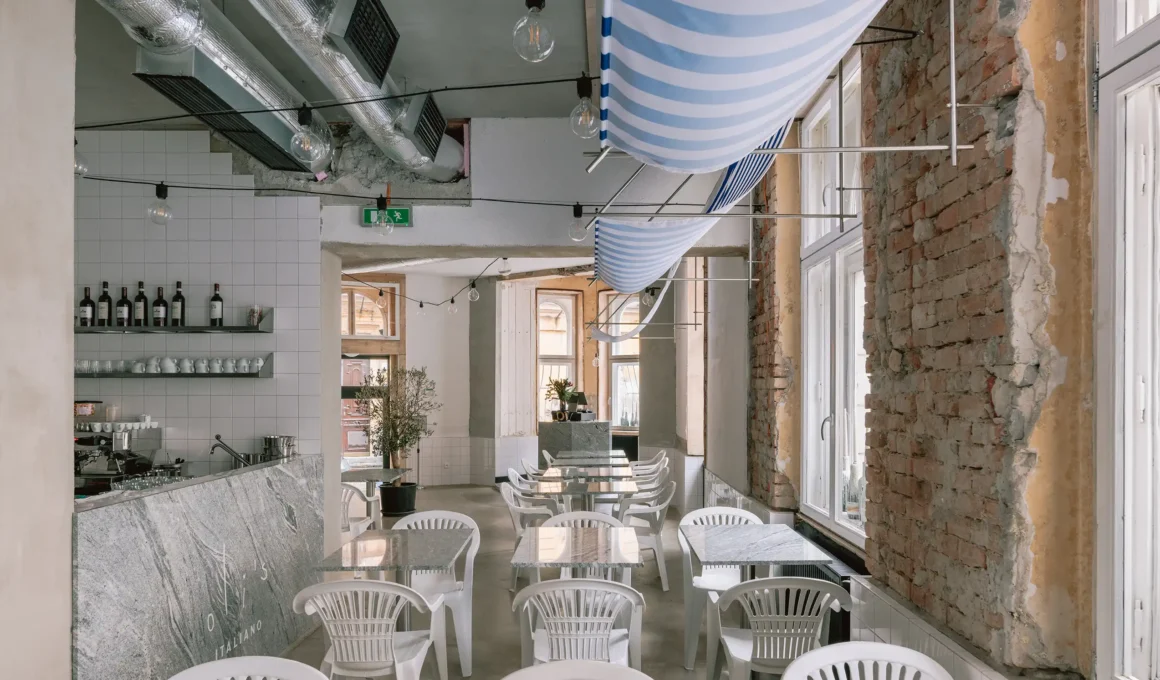
There is a specific moment during the stripping of a building when the space stops being a container and returns to being structure. For the realization of oli’s ITALIANO in Bratislava, architect Alan Prekop chose to halt the process at exactly that point. Rather than applying decorative layers to evoke a Mediterranean cliché, the project proceeds through subtraction, scraping away the superfluous until the original brickwork and concrete are exposed. This material honesty does not aim for a generic industrial look, but functions as a tabula rasa for a precise conceptual maneuver: turning the spatial logic inside out.

The logic of inversion transforms the restaurant’s floor plan into an imagined urban veranda. Prekop does not attempt to recreate a traditional pizzeria; instead, he captures the sensory experience of sitting in a narrow historic alley where the boundaries between public and private realms are intentionally fluid. The rhythm of the space is defined by a series of abstract awnings positioned within the window apertures. Composed of slender stainless-steel rods, these structures play with natural light, casting linear shadows that mimic the atmosphere of an outdoor terrace in Rome or Naples.
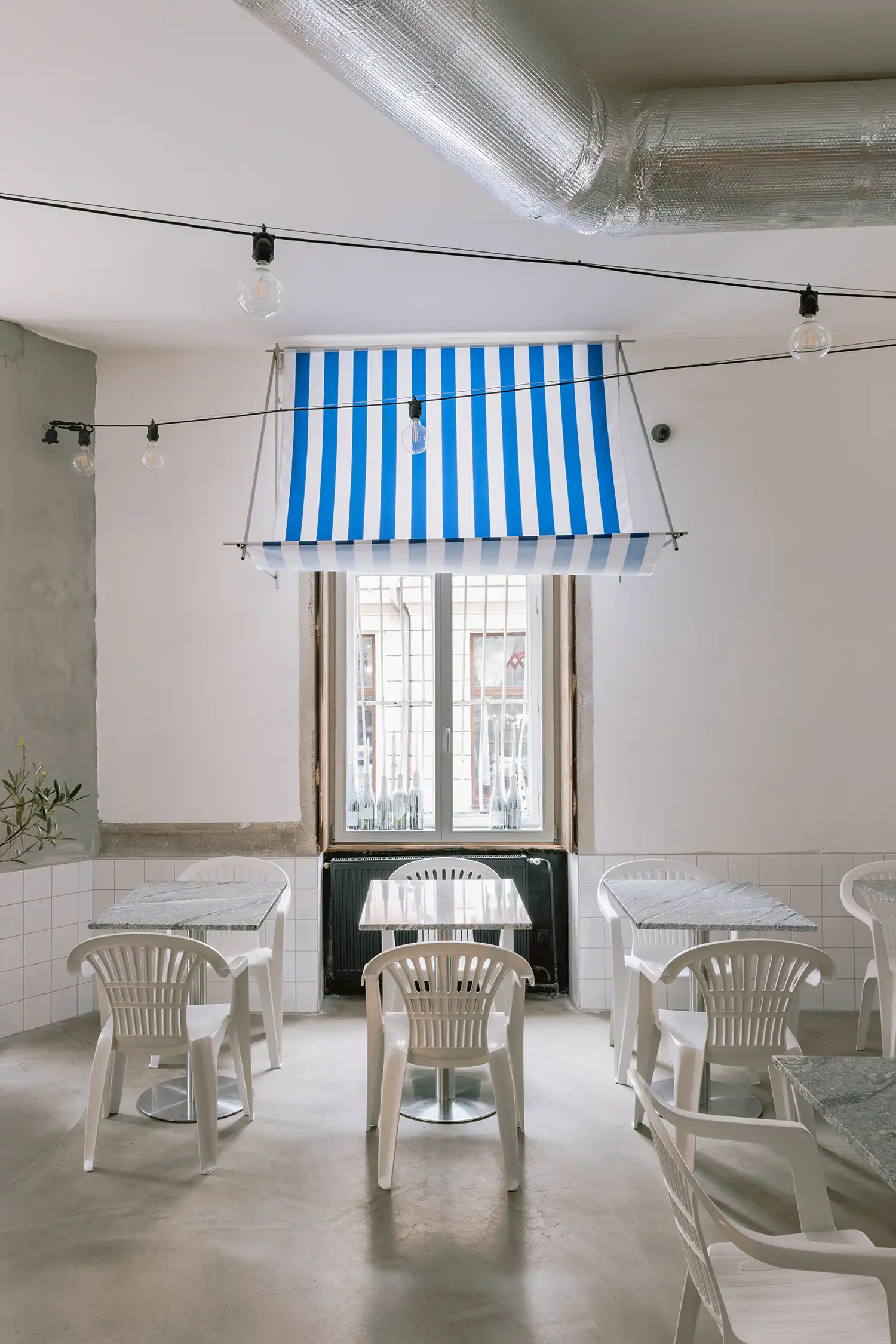
A tectonic dialogue emerges between the weight of architectural memory and the lightness of contemporary interventions. The bare walls, which retain the scars of previous uses, engage with the surgical precision of the new steel elements. This approach mirrors how modernity can reinterpret tradition without betraying its soul, a theme we previously observed in the visual identity of a Milanese restaurant by Velvet Studio, where material research becomes the primary brand narrative.

The lighting strategy eschews technical recessed fixtures in favor of the informal language of garden garlands. By draping strings of light across the interior, Prekop transforms the room into a permanent nocturnal piazza, instilling a sense of collective intimacy. This strategy aligns with the vibrant Italo-disco aesthetic seen in Bad Gastein, where light defines the social function of the venue, transporting the guest into a dimension that feels more like a street festival than a closed room.

The global conversation regarding the “new pizzeria” sees oli’s ITALIANO joining an international movement that celebrates pure geometry and raw materiality. From the sculptural use of glass blocks in Abu Dhabi to the rigorous craftsmanship showcased in projects across India, it is clear that contemporary Italian aesthetics are now defined by transparency and tactile surfaces. In Slovakia, Prekop translates this trend into a warm minimalism, where the “terrace” is not an added feature, but the fundamental condition of the space.

The contextual impact of this intervention in Bratislava lies in its ability to offer an escape without relying on scenographic artifice. By stripping the space and allowing light and structure to speak for themselves, the architect has created a fragment of Mediterranean urbanity perfectly integrated into the Eastern European fabric. oli’s ITALIANO proves that true Italian spirit in design lies in fostering informal encounters, transforming a simple meal into a shared act of city life.