

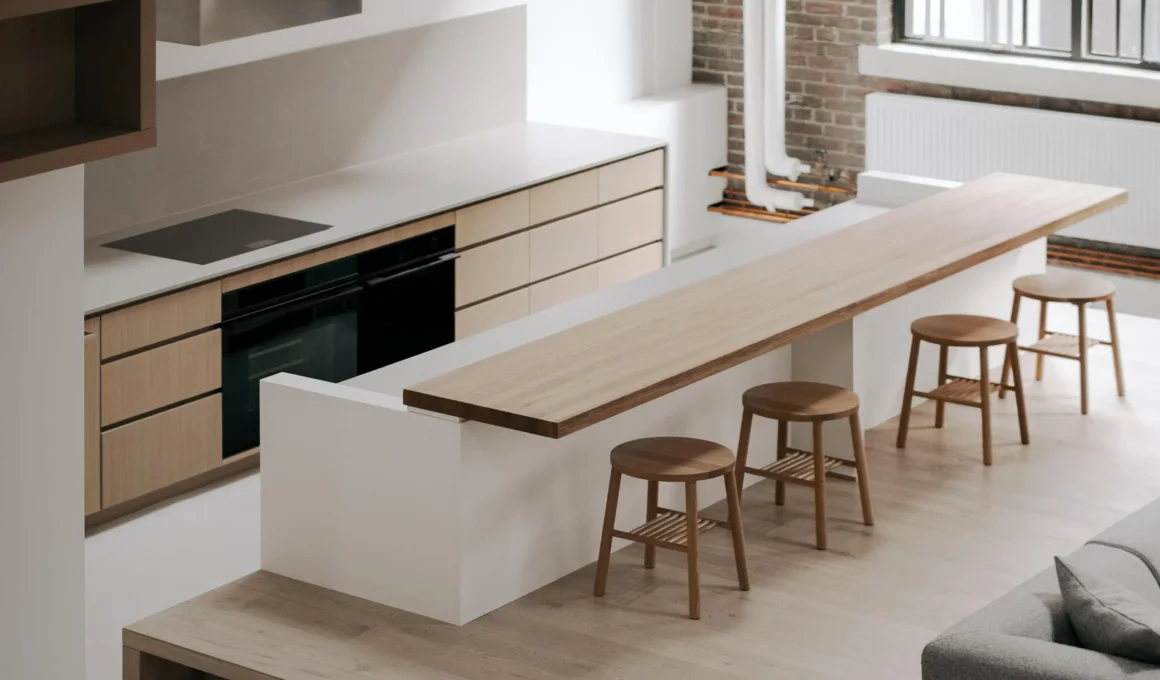
The industrial bones of Leslieville tell a story of Toronto’s manufacturing evolution, where the red-brick remnants of the 20th century have found new life as high-volume residential sanctuaries. Within a former toy and bottling factory, the Dollhouse Loft represents a sophisticated evolution of the live/work typology. Commissioned to refresh a space that had grown weary since its initial early-2000s conversion, StudioAC approached the renovation not as a decorative overlay, but as a structural dialogue between the building’s rugged history and a new, refined interior logic.
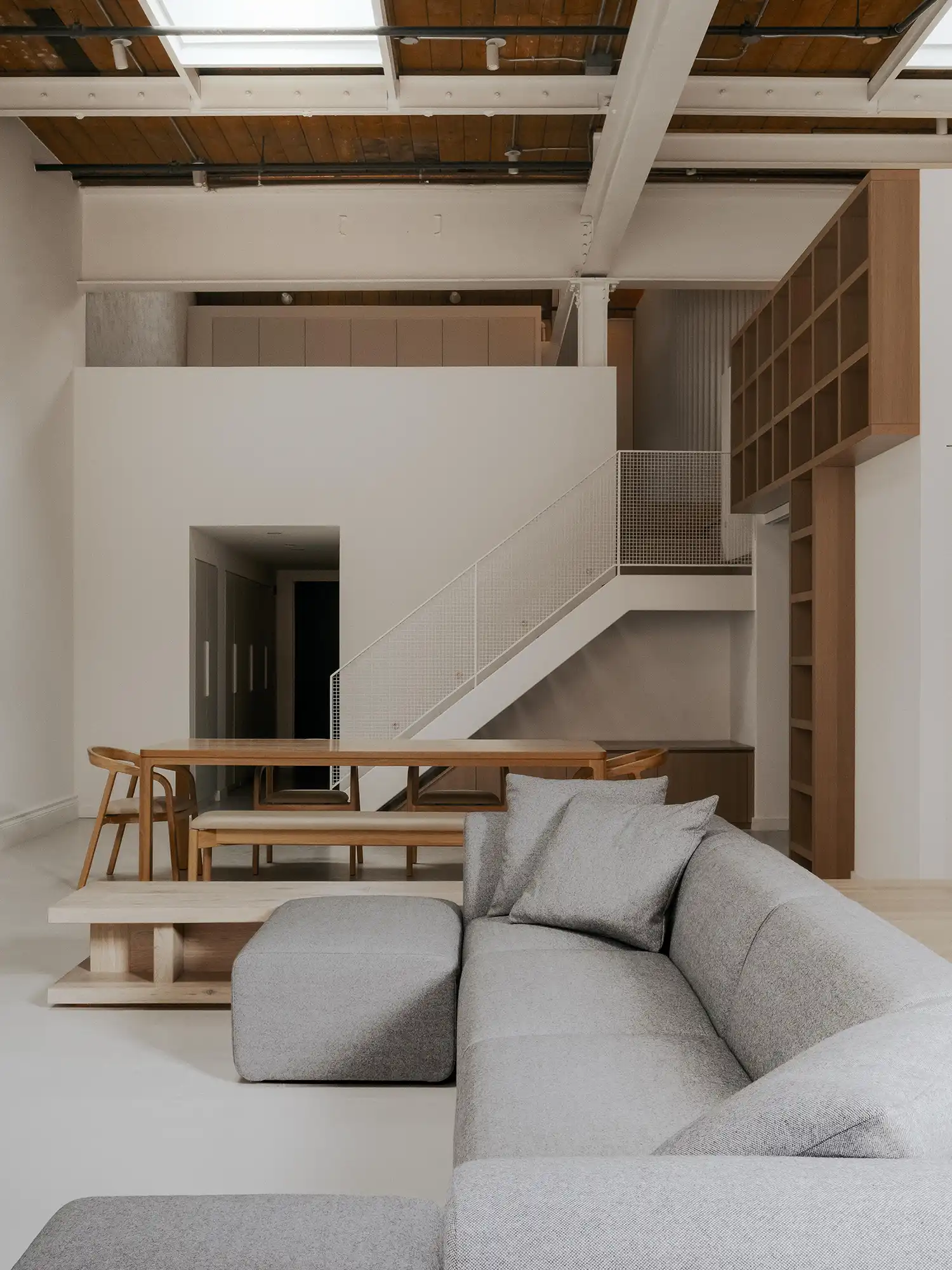
A threshold of compression and release defines the initial sensory experience of the unit. Upon entering, the ceiling height is intentionally constrained, creating a momentary pause before the floor plan explodes into a soaring double-height volume. This architectural “clearing” is flooded with natural light from four expansive skylights and a series of south-facing windows that frame the urban canopy of Toronto, Canada. The challenge for the designers was to maintain this sense of boundless airiness while carving out the intimacy required for a contemporary home—avoiding the coldness often associated with cavernous industrial shells.
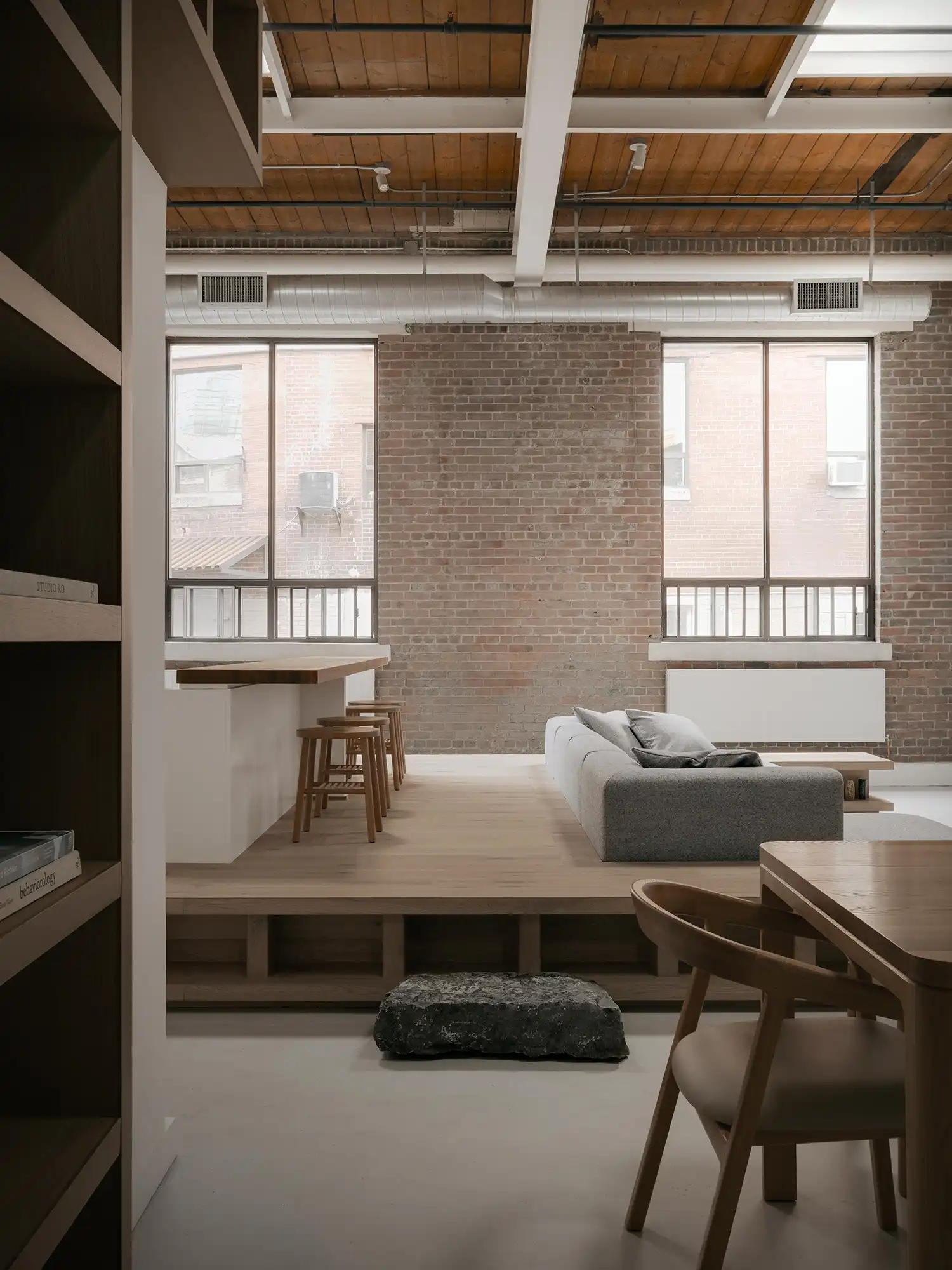
The central architectural device is a multifunctional custom platform that acts as the home’s social anchor. Eschewing traditional walls, StudioAC utilized this elevated plane to delineate the living quarters from the kitchen and dining zones. The platform draws inspiration from the Japanese Engawa—a transitional porch that blurs the line between inside and out—and the Greek Agora, serving as a communal gathering point. This intervention feels consistent with the studio’s ability to manipulate volume, a trait previously seen in their Junction Semi-house church conversion, where historical scale was met with precise, modern geometry.
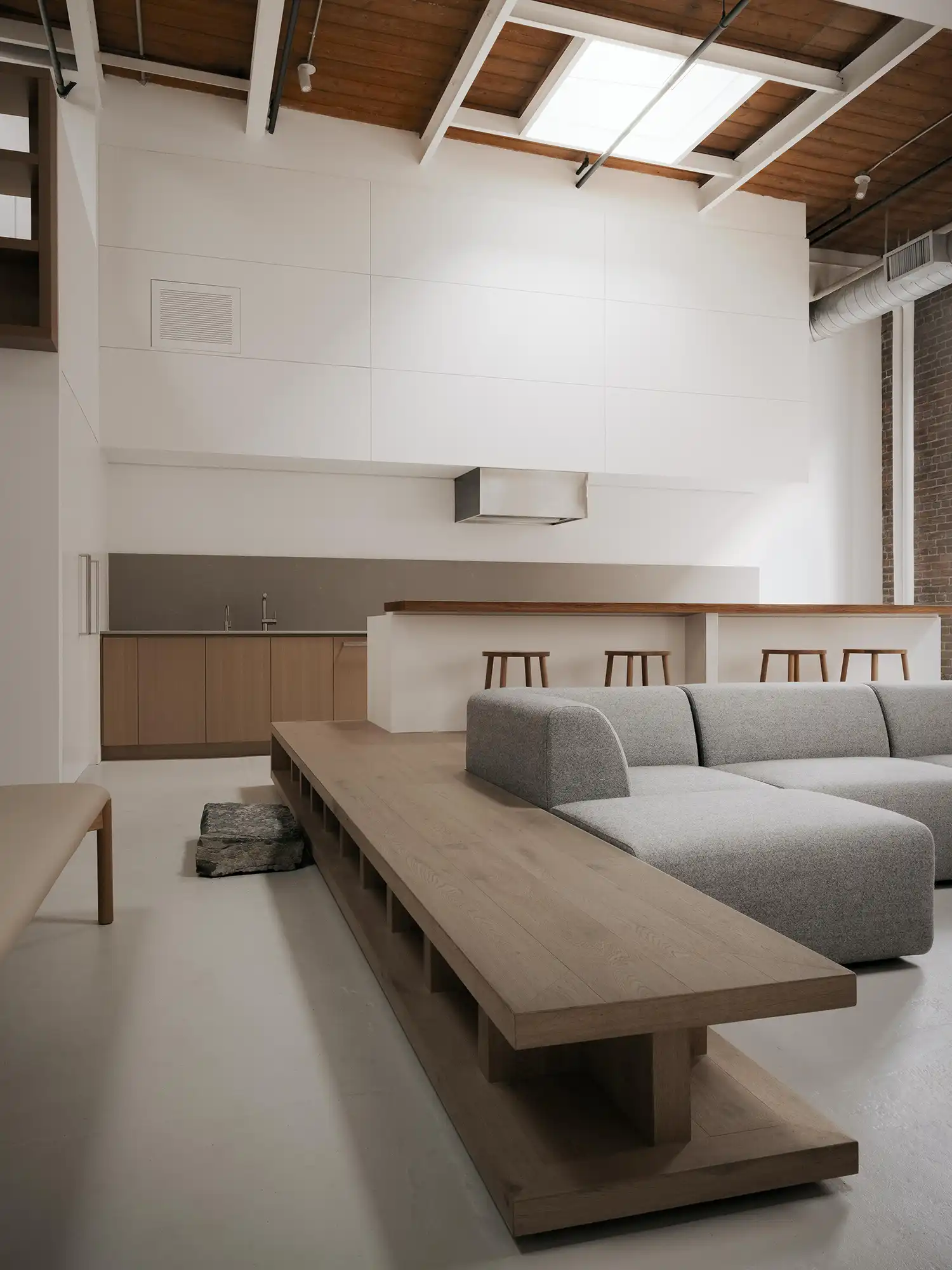
Materiality plays a dual role in grounding the loft’s ethereal proportions. The palette is a deliberate conversation between the “found” and the “fabricated.” Raw, exposed brickwork and heavy timber ceilings serve as a textural backdrop to the new interventions: white oak joinery and concrete-toned stone. By integrating the kitchen island directly into the elevated platform, the designers created a continuous topographical surface that encourages movement and interaction. This tactile approach to residential warmth is a hallmark of the firm, reminiscent of the clean lines and landscape-driven ethos of their South Bay Residence in Prince Edward County.
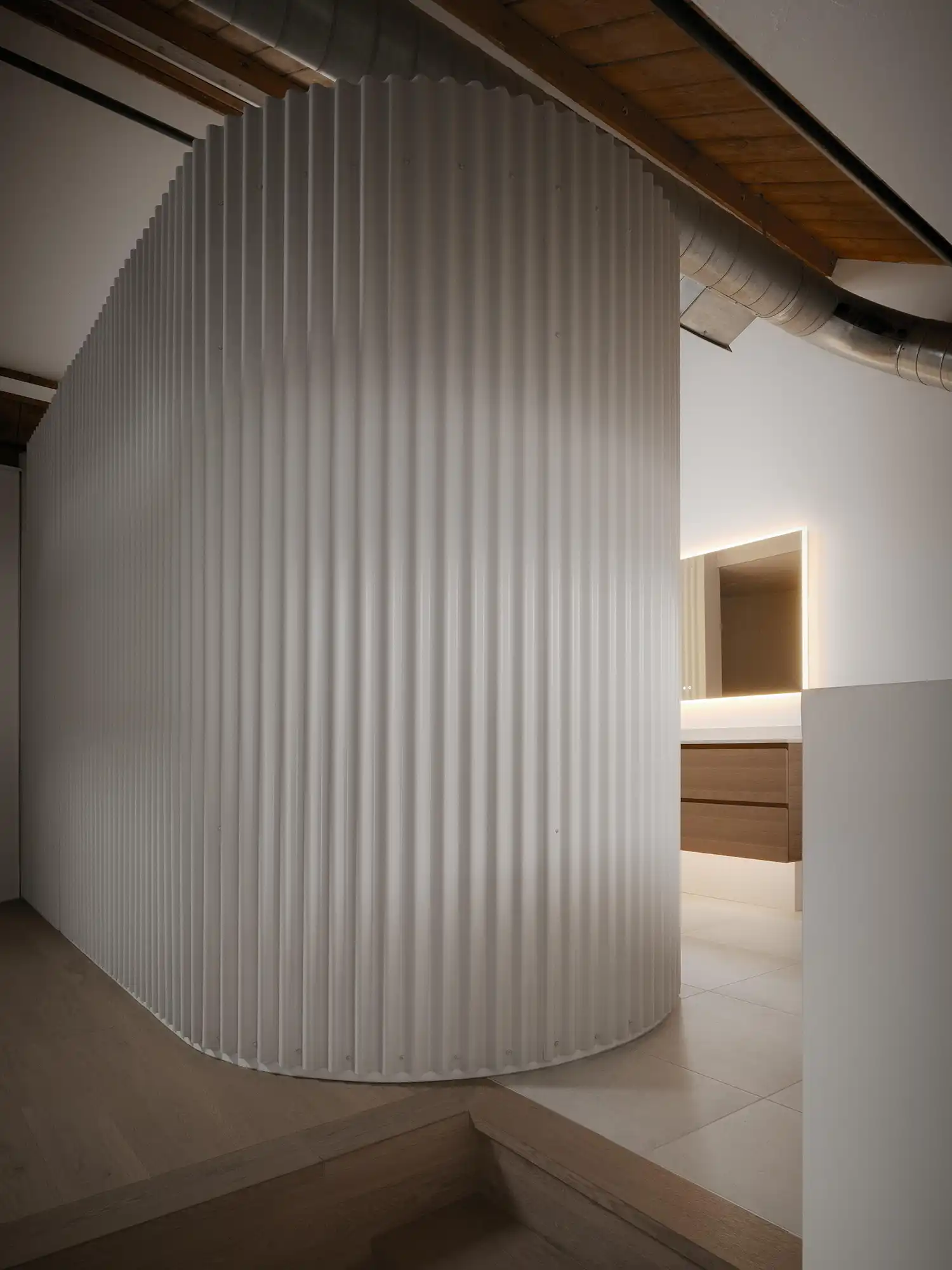
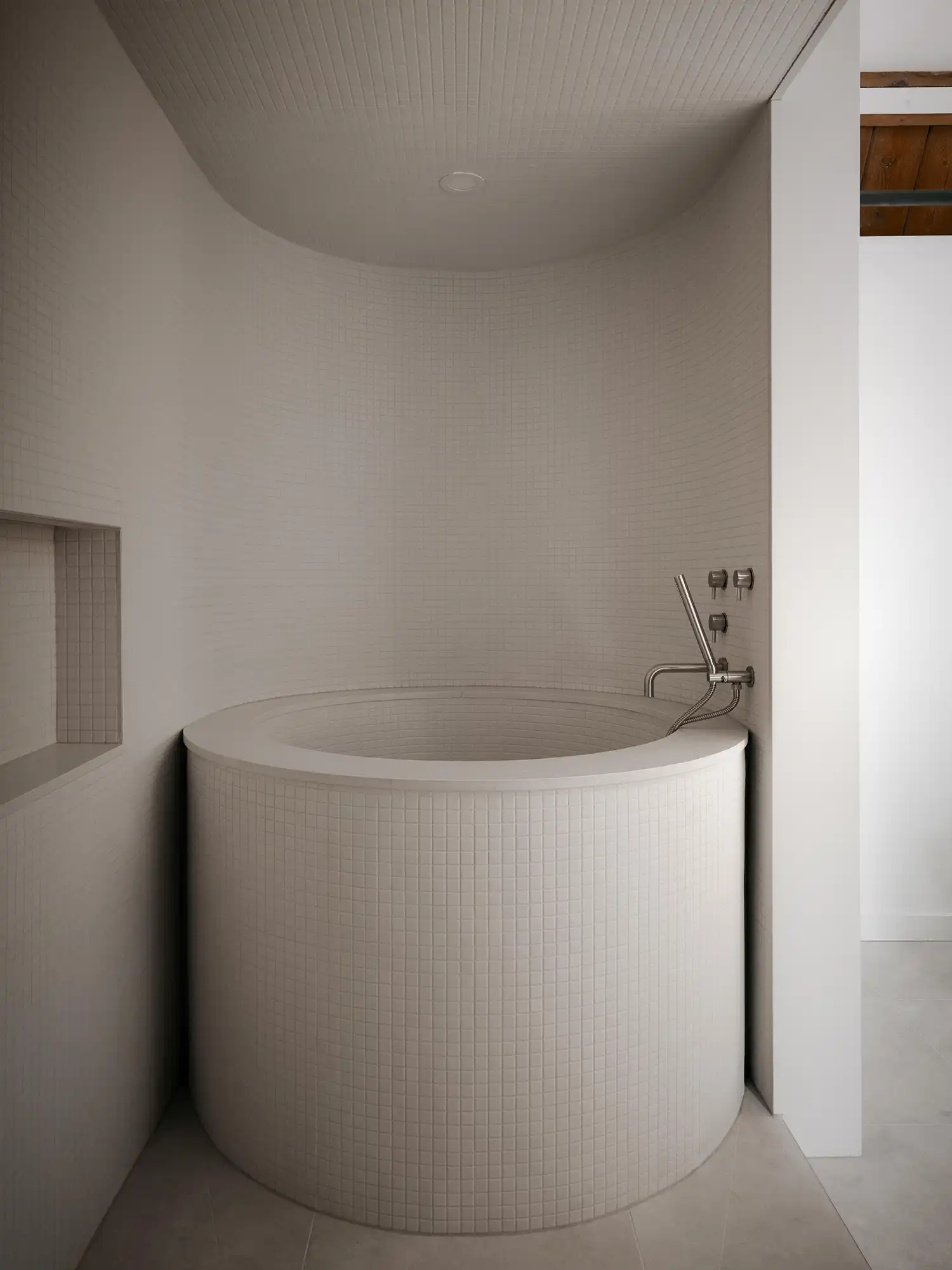
On the mezzanine level, the private quarters are defined by a singular, sculptural “bath pod.” Clad in corrugated metal—a subtle nod to the building’s factory origins—this volume functions as a spatial divider between the primary bedroom and the ensuite. Inside, it houses a secluded soaker tub and shower, offering a sense of enclosure within the wider loft. Flanking this pod, integrated open shelving creates a porous wall for the owner’s library, providing a visual screen for the home office without severing the connection to the void below.
The resonance of the Dollhouse Loft lies in its refusal to over-complicate the interior. By focusing on a few high-impact gestures—the platform, the pod, and the library—StudioAC has transformed a generic industrial conversion into a bespoke dwelling that feels both monumental and intensely personal. It is a project that understands the value of negative space, ensuring that even as the loft gains functional complexity, it never loses the clarity of its original, expansive vision.