



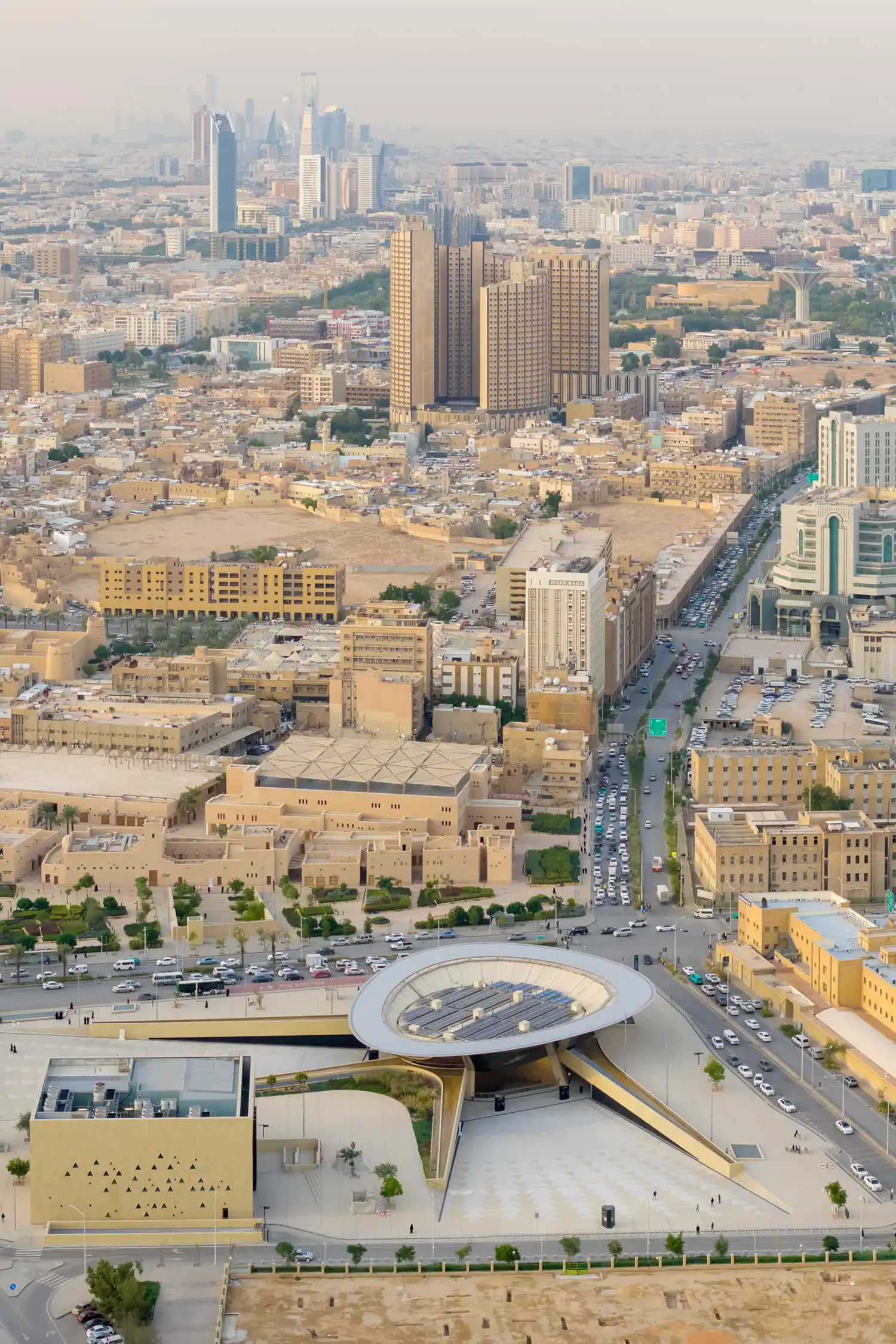
The transformation of from a car-centric sprawl into a connected global metropolis finds its most poetic expression at the Qasr Al Hokm Metro Station. Designed by Norwegian practice Snøhetta, this subterranean interchange is far more than a functional node The integration of the Qasr Al Hokm Metro Station into the fabric of Riyadh marks a technical shift in the Saudi Arabian capital’s approach to urban mobility. Designed by Snøhetta, the interchange serves as a critical junction for two primary lines, transitioning the city from a car-dependent infrastructure toward a high-capacity, low-emission transit model. Rather than a standalone monument, the project is conceived as an extension of the urban floor, utilizing a large-scale pedestrian plaza to bridge the gap between the historic district and the rapid expansion of the modern metropolis.
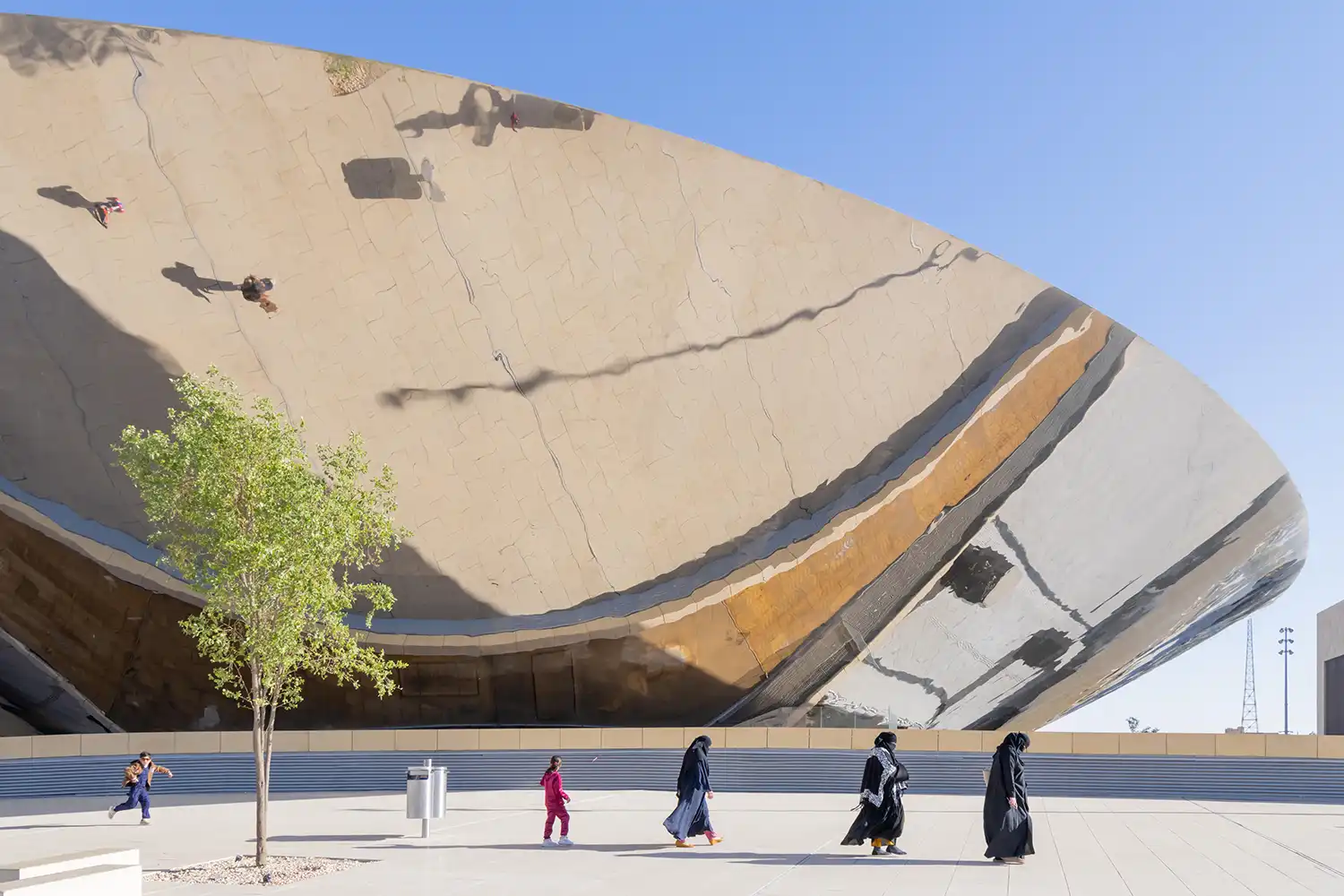
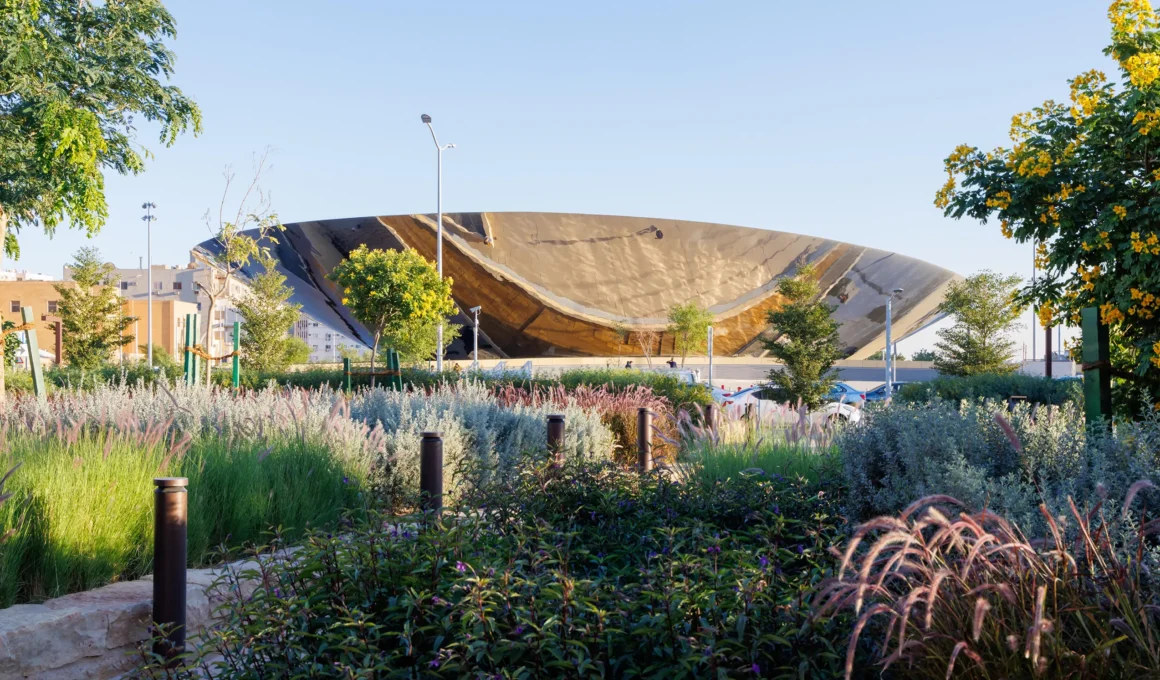
A high-performance stainless-steel canopy defines the station’s entrance and its environmental strategy. The structure, composed of 8 mm double-curved panels, is fully welded to create a seamless, mirror-like finish that reflects the surrounding city. Functioning as a large-scale periscope, the canopy’s geometry is engineered to bounce natural light into the subterranean levels, reaching depths of 35 metres. This reflective system reduces the reliance on artificial lighting during daylight hours while providing essential shading for the public plaza, where a supporting steel spaceframe allows the roof to cantilever significantly beyond its concrete base.
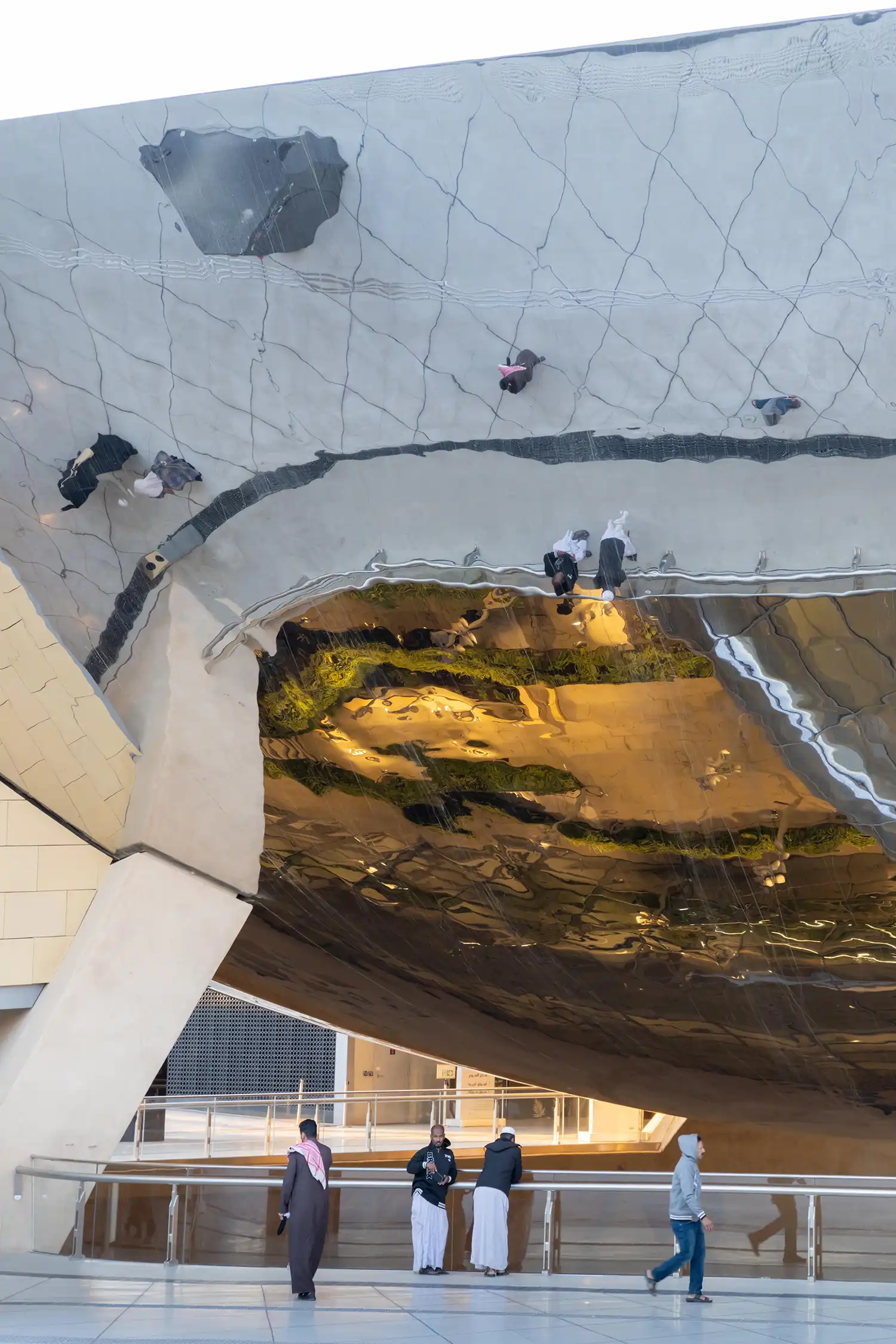
The intersection of civic and religious space is managed through a continuous terrazzo ground plane. Located adjacent to the original royal palace and an important Eid prayer field, the site is designed to accommodate the massive surges in foot traffic during annual gatherings. The plaza’s layout incorporates the reconstruction of a mosque, integrated into the station’s structural grid. To facilitate the site’s dual function as a transit hub and an outdoor prayer space, illuminated drainage channels are precisely aligned with Makkah, creating a functional and visual link between the interior of the mosque and the exterior urban surface.
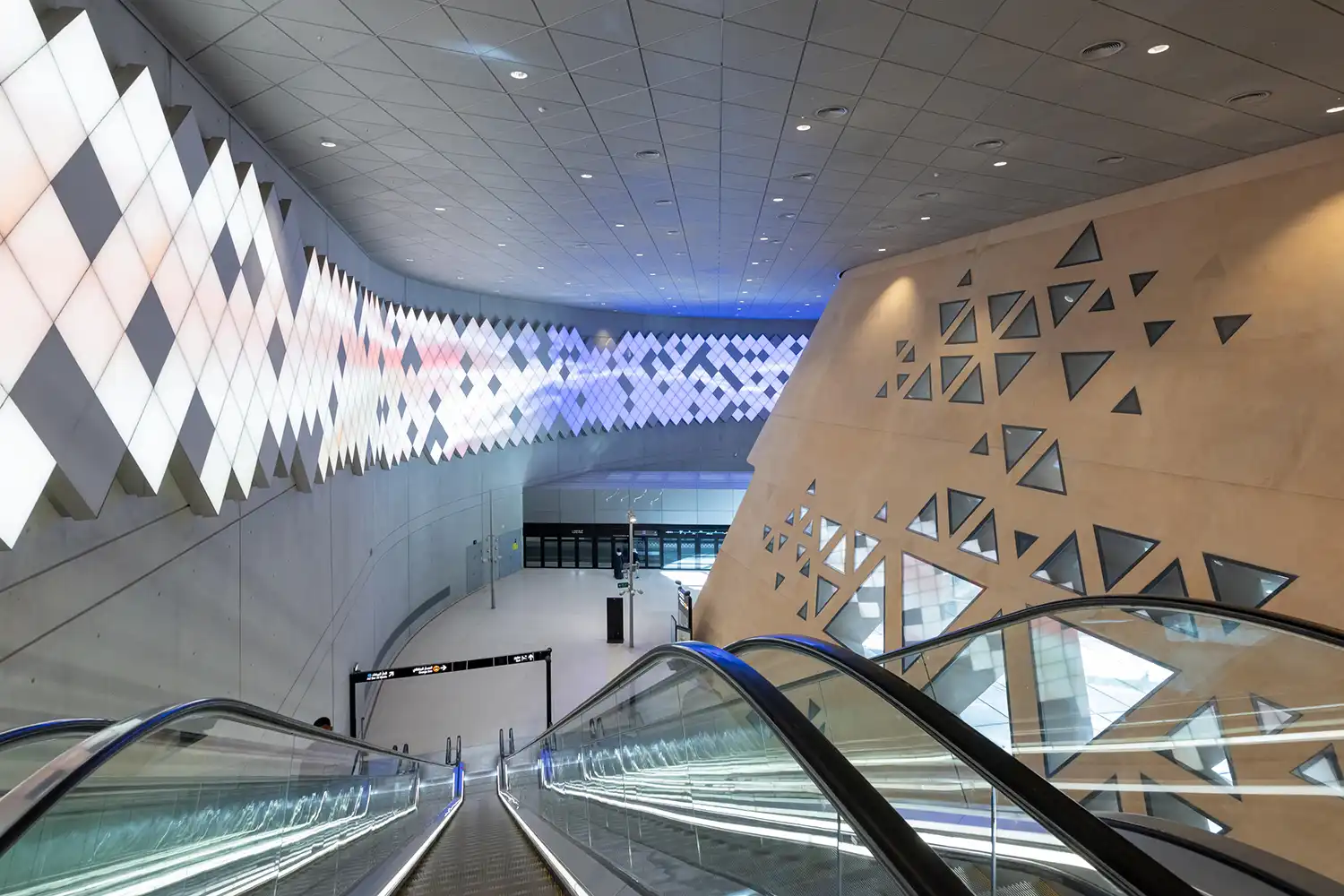
Subterranean climate control is achieved through the creation of a tempered garden at the base of the central atrium. This green space serves as a thermal buffer, maintaining a stable environment for passengers even when surface temperatures in Saudi Arabia exceed 40°C. Irrigation for the garden is sustained through a gravity-fed water collection system that harvests runoff from the canopy and the paved plaza. The interior walls of the concrete cone are punctured by 326 triangular openings of varying scales—a reinterpretation of traditional Najdi motifs—which filter light and provide acoustic dampening within the cavernous circulation volume.
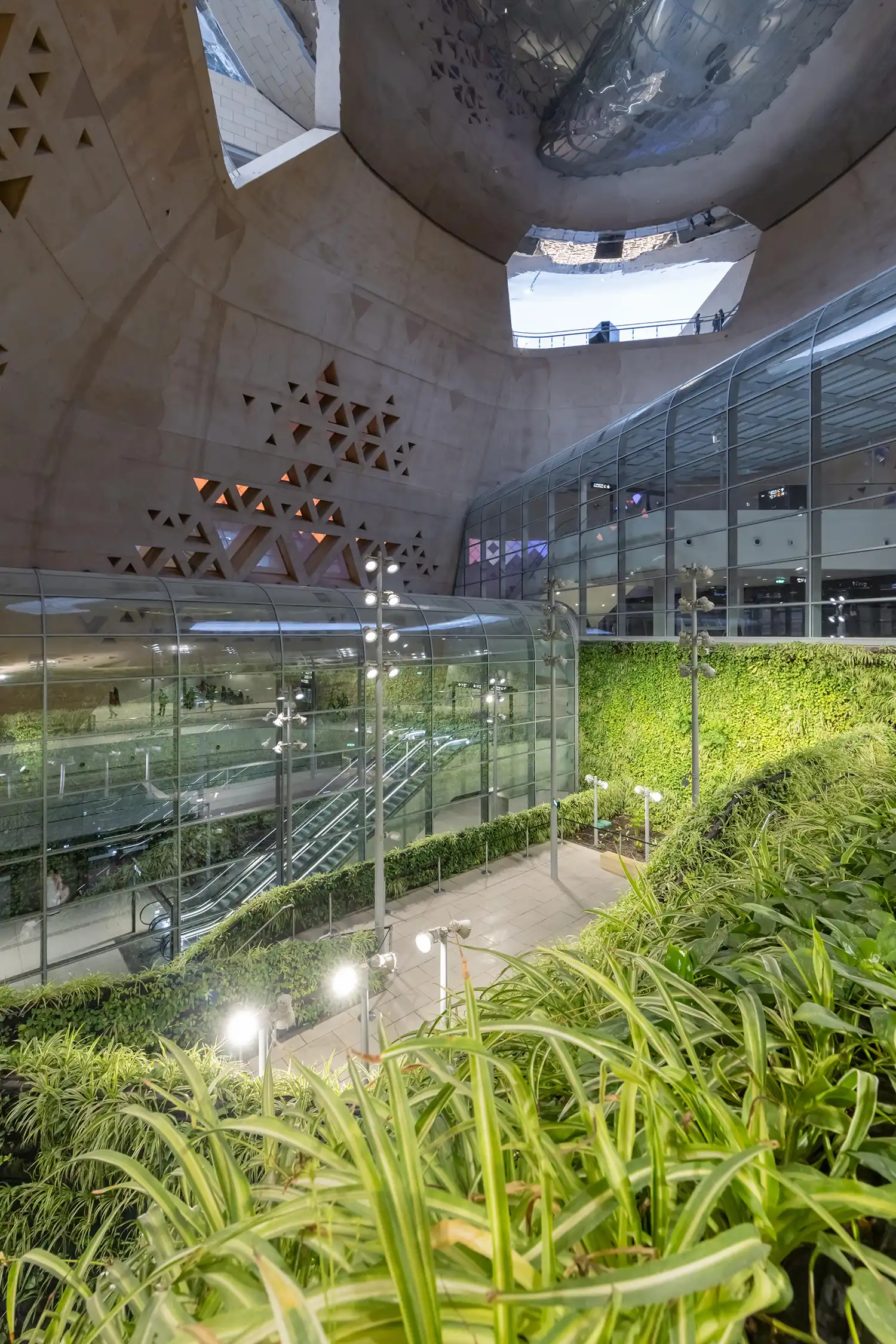
The technical choreography of movement is visible through the use of transparent glass tubes that house the metro platforms. By encasing the train lines in glass as they traverse the atrium, Snøhetta has prioritized intuitive wayfinding; passengers can visually track their arrival and departure points from multiple levels. This transparency is contrasted by a 100-metre-long media art installation on the perimeter wall. Composed of 879 acoustic and lighting units, the wall functions as a dynamic backdrop that uses light sequences to convey the scale of the space, providing a controlled visual rhythm that balances the high-speed transit environment.
The global expansion of Snøhetta’s civic portfolio continues to challenge the boundaries between infrastructure and landscape. The completion of the Qasr Al Hokm station serves as a precursor to the firm’s major upcoming projects, including the Shanghai Grand Opera House with its spiraling rooftop, where a similar strategy of accessible, sculptural surfaces is used to activate the building’s exterior. In both Riyadh and Shanghai, the architecture functions as a programmable surface, shifting the focus from the object itself to the quality of the public experience it facilitates.