

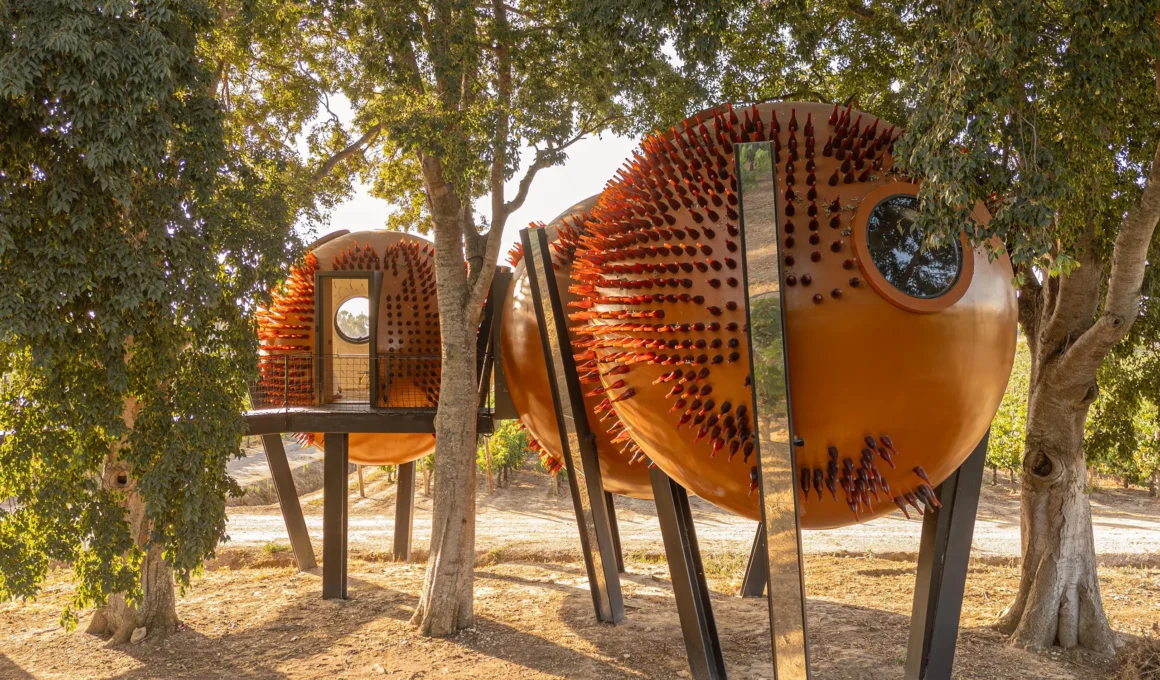
The conceptual vision behind Átomos, a striking new intervention in the wine-growing landscape of Setúbal, Portugal, transcends the traditional boundaries of residential form. Designed by the visionary studio Rebelo de Andrade, the project is conceived as a “habitable sculpture”—a trio of interconnected spheres that mimic the fundamental building blocks of the universe. These three “atoms” are not merely structural shells but symbolic vessels intended to awaken the senses. Dressed in vibrant copper and orange tones, the volumes evoke a sense of kinetic energy, standing as a bold, chromatic contrast to the emerald rows of the surrounding vineyards.
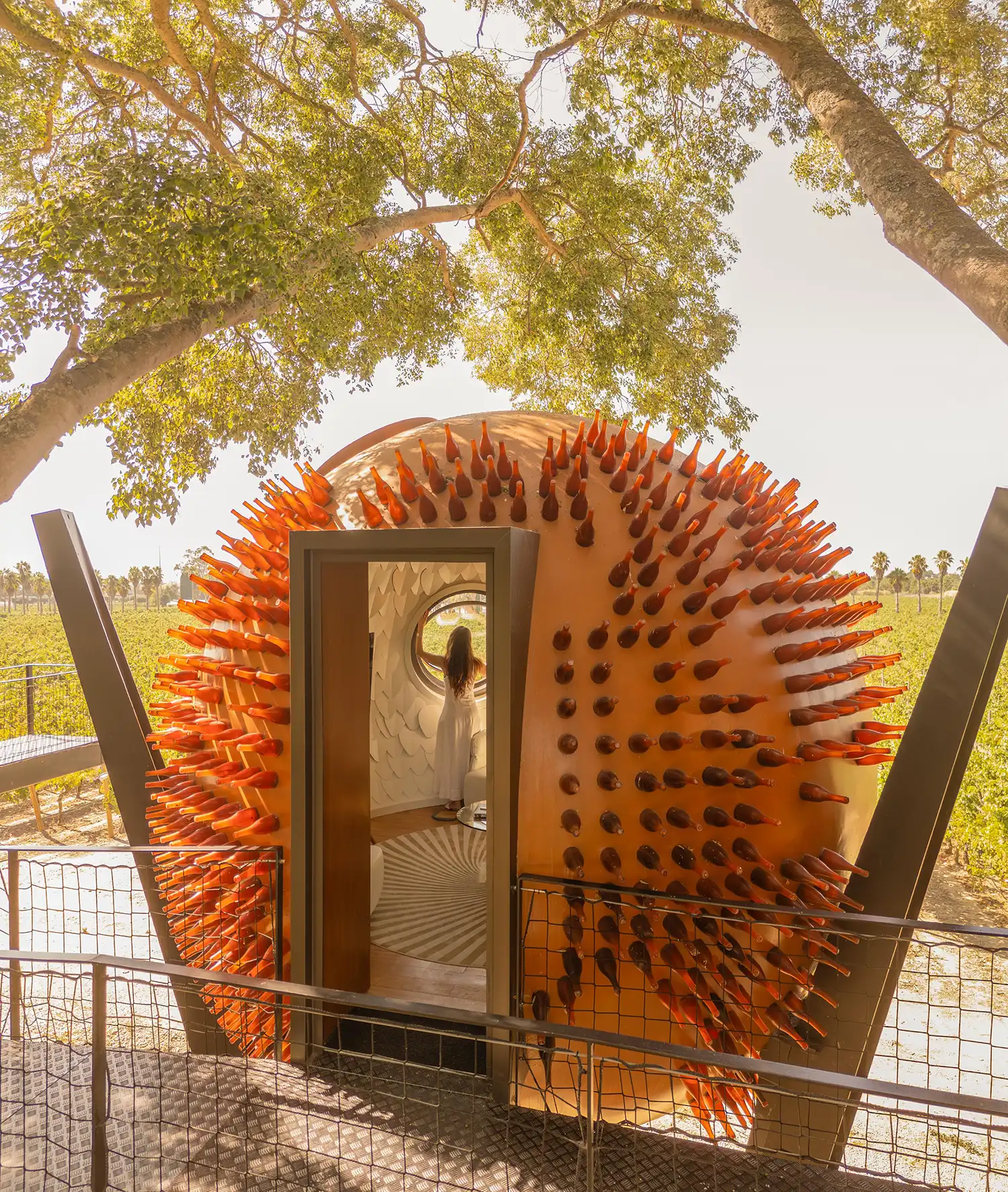
The material narrative is defined by a deep commitment to ecological responsibility and artisanal innovation. The exterior skin of the spheres is clad in a unique texture composed of repurposed industrial glass waste, forming an abstract world map that wraps around the curved surfaces. This choice of cladding serves a dual purpose: it reinforces a global vision of sustainability while creating a shimmering, tactile interface that catches the shifting Portuguese light. This focus on raw, reclaimed materials and a harmonious connection to the landscape echoes the philosophy seen in other global retreats, such as the timber-clad Earthboat Cave in Japan, which similarly prioritizes a haptic connection between the inhabitant and the natural environment through thoughtful materiality.
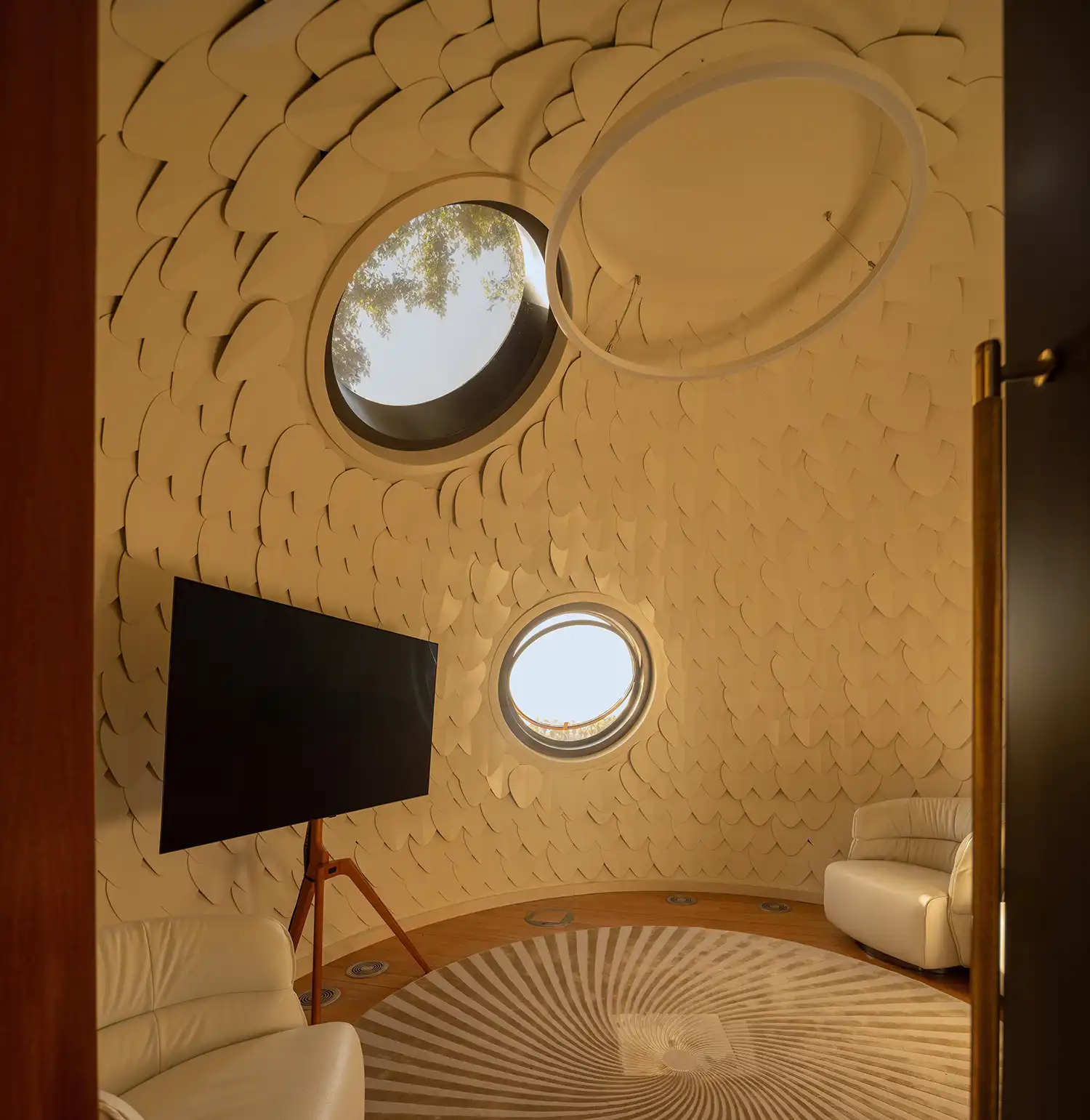
Spatial choreography within the three volumes is organized around the distinct rhythms of human experience. The first sphere acts as the “nucleus of encounter,” a collective heart designed for social intersection and the exchange of ideas. In contrast, the second volume offers a more introspective creative retreat, providing a sanctuary of silence and reflection where productivity is fueled by isolation. The third sphere completes the cycle, dedicated entirely to contemplation and the “interval” between thinking and doing. Together, these spaces create a fluid transition between the social and the solitary, allowing the architecture to dictate the pace of daily life.

Technical precision and organic form converge where the project meets the soil. Planted firmly among the vines, Átomos celebrates the ancestral bond between human intervention and the cultivation of nature. The placement is a deliberate metaphor for the winemaking process—the transformation of matter into experience. Just as wine evolves from the earth through time and alchemy, these copper-toned volumes emerge from the terrain as a poetic manifesto. The architecture does not merely sit upon the land; it dissolves into the horizon, responding to the seasonal cycles and the ripening of the grapes that surround it.

The sensory experience of inhabiting Átomos is defined by a constant dialogue between light, sound, and movement. As the sun traverses the sky, the glass-flecked surfaces create a vibrant field of energy, casting complex shadows that animate the interior voids. The transition between the spheres requires a conscious movement of the body, making the observer an active participant in the artistic cycle. It is a new grammar of inhabiting where the space is felt rather than just traversed, absorbing the memory of the territory and the quiet resonance of the landscape.

A philosophical statement on the future of art as a living organism, the project positions itself as a three-dimensional essay on perception. By utilizing primordial geometries, Rebelo de Andrade recalls the creative impulses that structure the universe, offering a space that simultaneously inhabits the dweller. Átomos stands as a testament to the power of sustainable innovation and poetic design, proving that the built environment can serve as both a functional shelter and a profound source of inspiration. It is a body of work that restores to art its most essential vocation: the ability to move, to transform, and to reconnect the human spirit with the earth.