

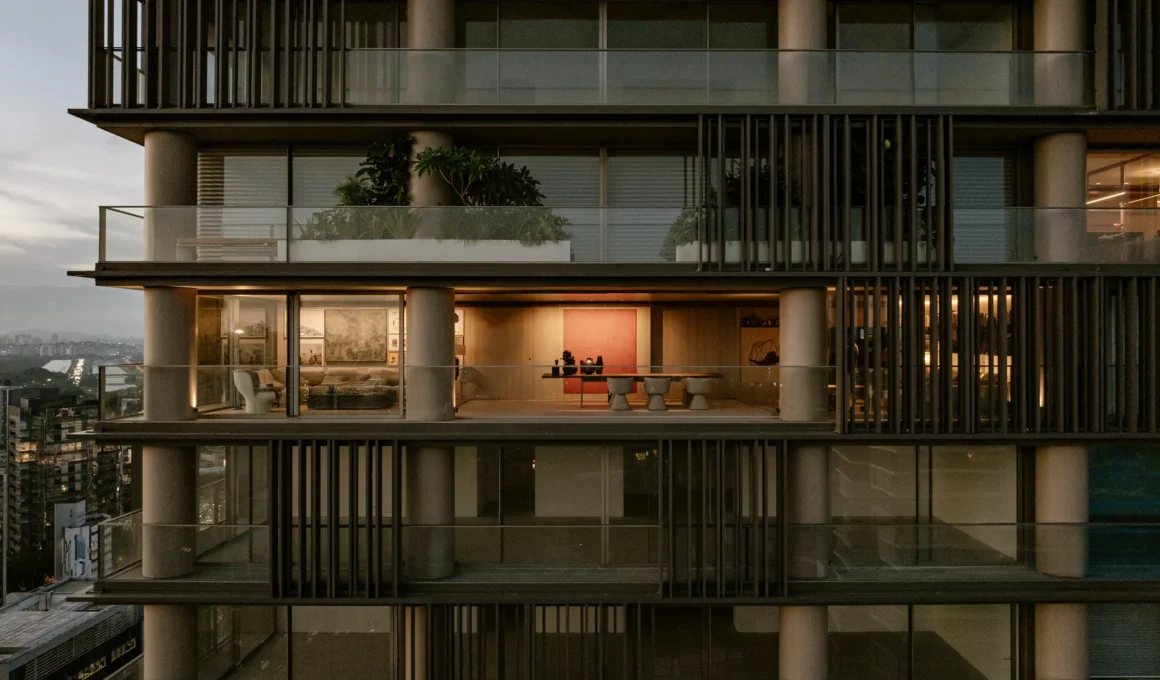
The shift from a sprawling 1940s modernist house to a sleek, 300-square-metre apartment in the heart of Pinheiros marks more than just a change of address for Arthur Casas. It represents a distilled evolution of a career spent refining the boundary between the rigorous and the lived-in. Located within Praça Henrique Monteiro—a mixed-use complex of his own creation—the AC Apartment serves as a physical manifesto of urban density, where the architect finally steps into the role of the inhabitant to test his own theories on a 1:1 scale.
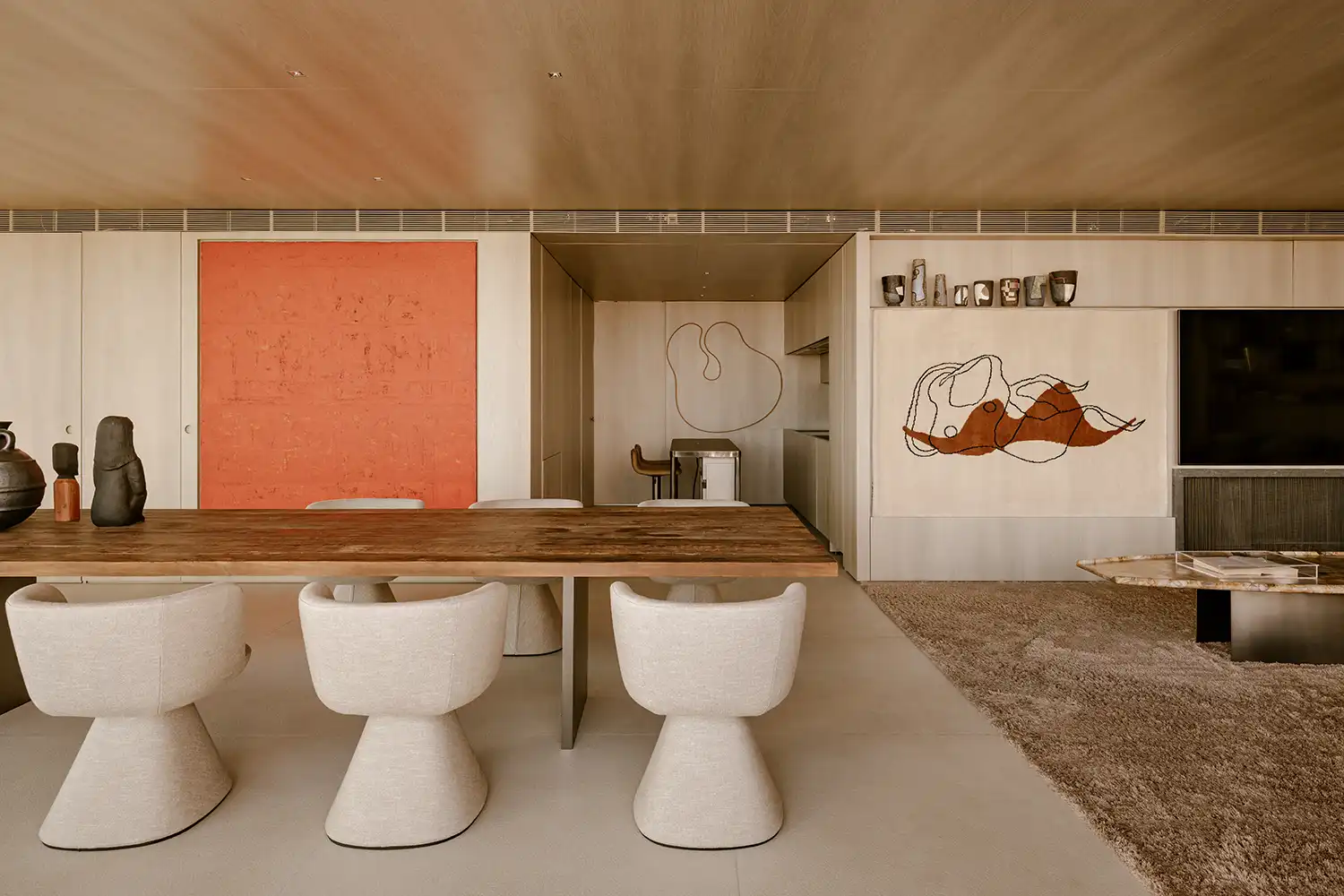
A transition from heritage to high-performance living defines the narrative of this residence. After thirty-five years in a house designed by the legendary Vilanova Artigas, Casas sought a more pragmatic, “compact” existence that aligned with the pulse of contemporary São Paulo. The result is a space that sheds the excess of traditional layouts in favor of direct circulation and absolute spatial fluidity. “I had long envisioned living in a more compact apartment than my old house,” Casas explains. “When the Praça project came along, it was what I was hoping for in this new model of multifunctional buildings. You can imagine an entire life within this place.”
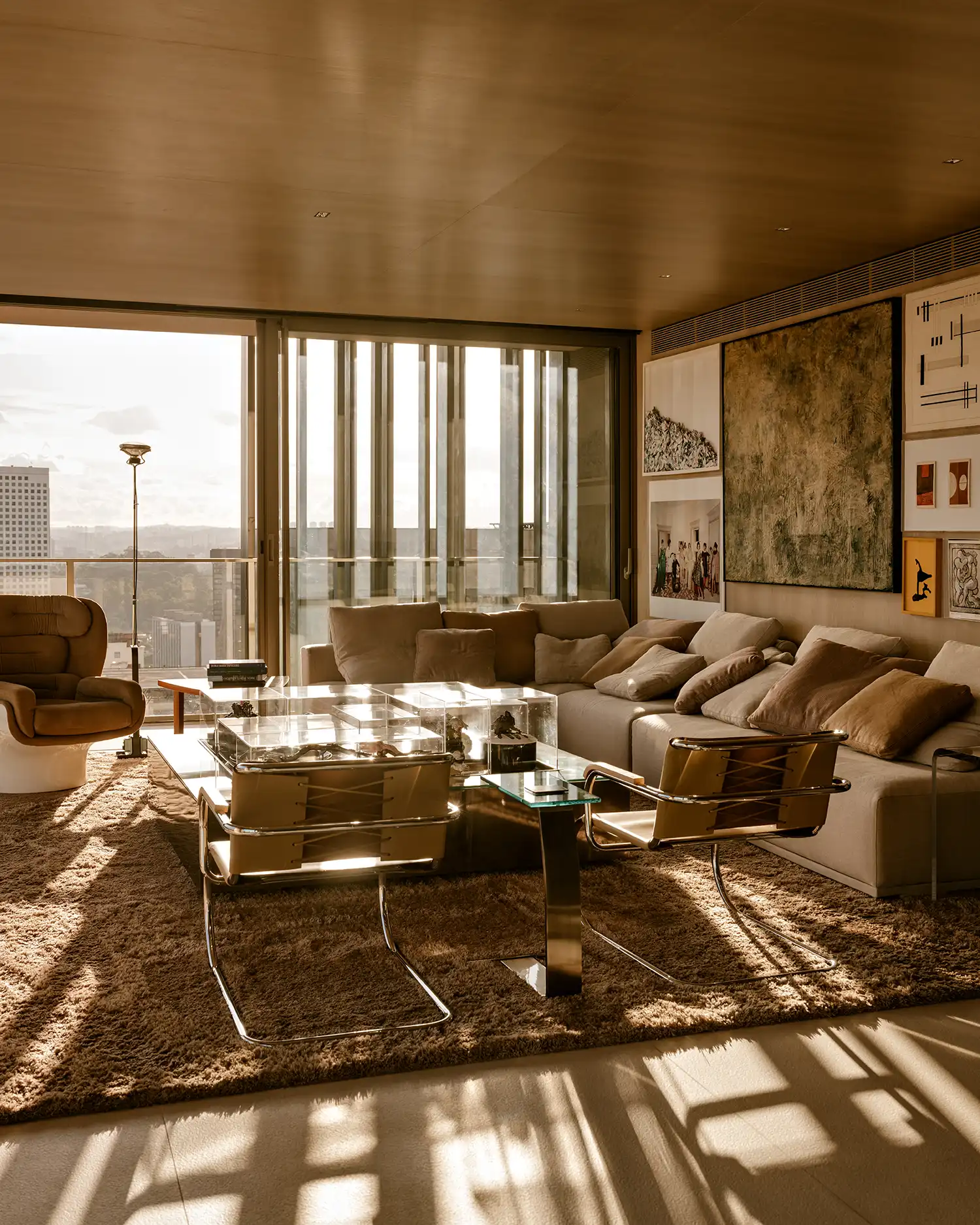
The sensory experience of the social core is immediate upon entry, where the walls seem to dissolve into a continuous architectural gesture. Clad in a warm, persistent wooden ceiling that spans the entire floor plan, the living and dining areas feel less like a series of rooms and more like a curated gallery for daily life. The air is still, governed by invisible climate systems and acoustic precision, allowing the tactile quality of the canela wood and the smooth Neolith Basalt Grey countertops to ground the atmosphere. Here, the Fusca sofa and Elda armchair aren’t just furniture; they are sculptural anchors within a sea of art featuring Mira Schendel and Carlito Carvalhosa.
Technical precision meets personal history in the way the apartment handles its internal mechanics. Every system, from the central vacuum to the XAL technical lighting, is embedded to the point of disappearance, ensuring that the “machine for living” never distracts from the soul of the home. This obsession with a unified language extends from the building’s facade down to the custom carpentry that hides kitchen appliances. “Designing for myself is very easy,” notes Casas. “I’m the best client for myself because I know what I like and how I live.” This self-knowledge results in a home that functions with the efficiency of a cockpit but feels like a private museum.
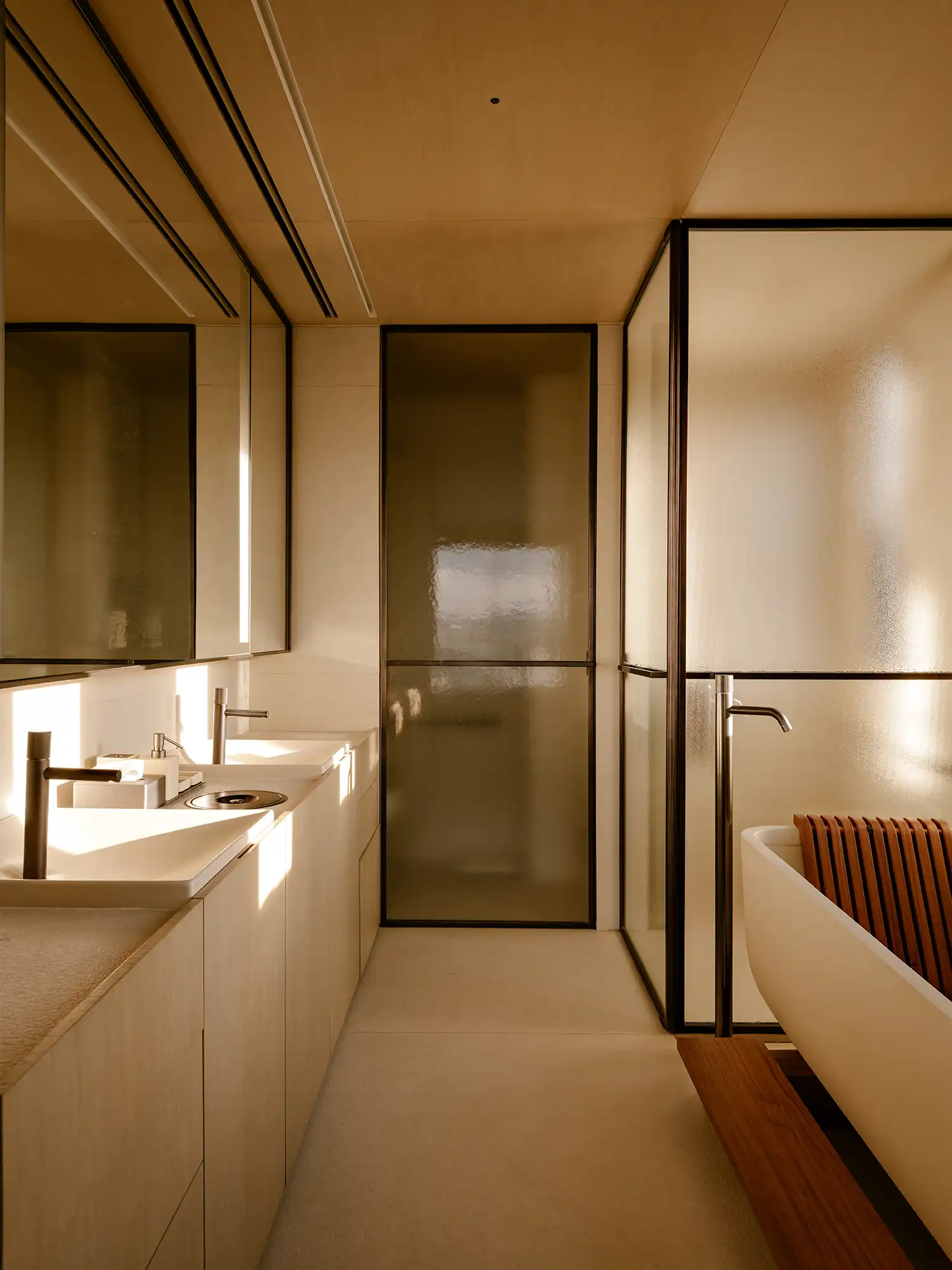
A dialogue between Brazilian Modernism and global design is staged within the living room and home theater. The furniture selection acts as a timeline of Casas’ influences: the Bauhaus chairs by Franco Albini and Joe Colombo’s Elda armchair sit alongside his own designs, such as the Rino dining table. This eclectic mix is further enriched by a selection of Bordallo Pinheiro ceramics, featuring collaborations with contemporary titans like Ai Weiwei and Rosângela Rennó. On the shelves, sculptures by Livia Gorka and plates by Pablo Picasso coexist with personal objects, creating a visual neutrality that allows the collection to breathe.
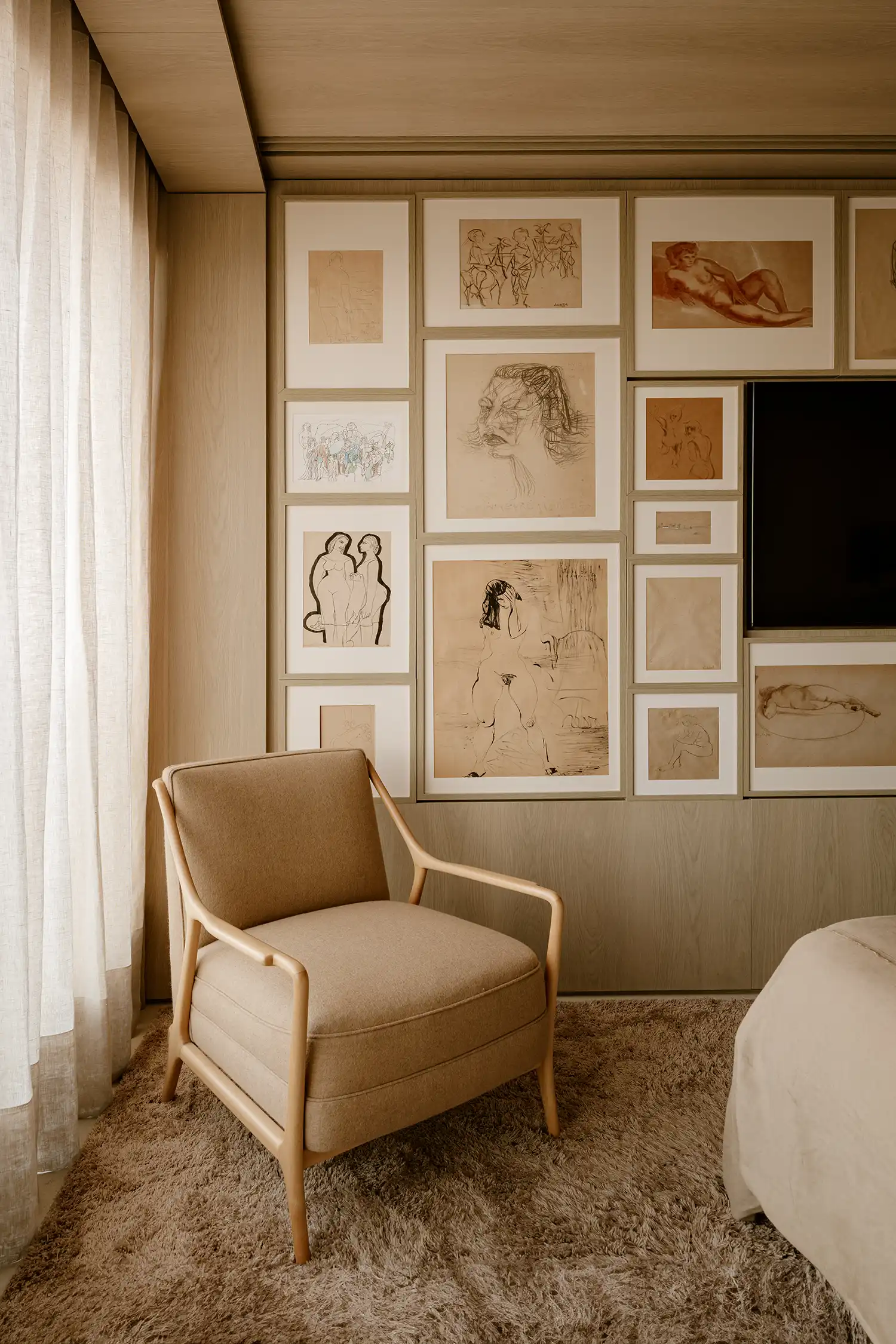
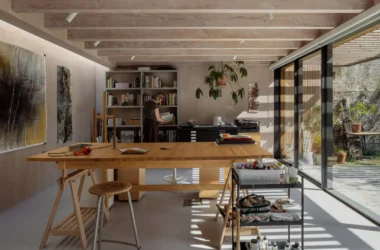
The home office as a versatile domestic hub occupies a strategic position between the social and intimate zones. Far from being a rigid workspace, this area reflects the fluidity of modern life; it houses a bed to accommodate visiting children, transforming from a studio into a guest room in moments. Custom niches display Casas’ miniature car collection, adding a playful, intimate layer to the architectural rigor. It is a space designed for focus, anchored by the Pivot High stool from Vitra, yet it remains fully integrated into the apartment’s overall aesthetic flow.
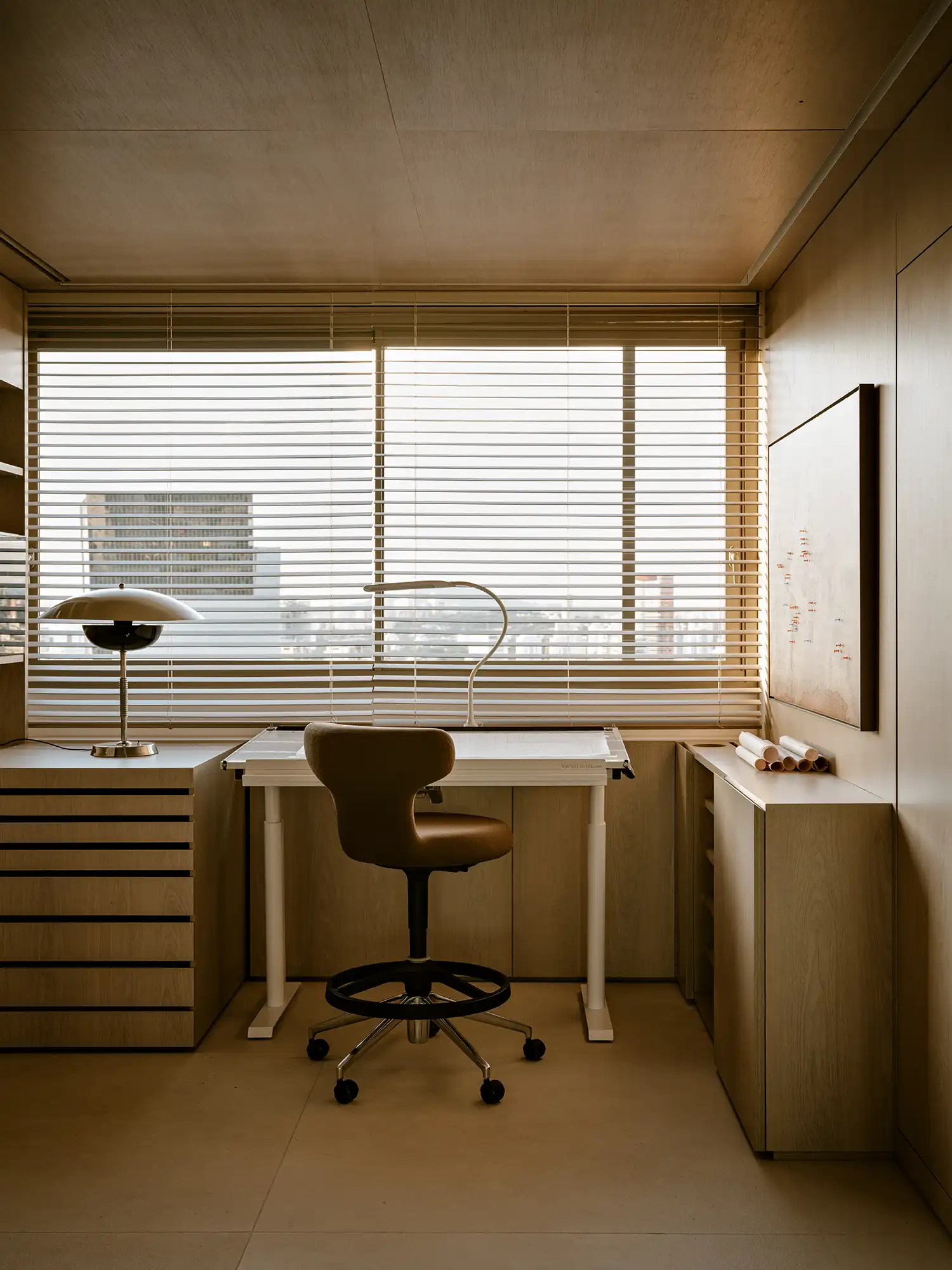
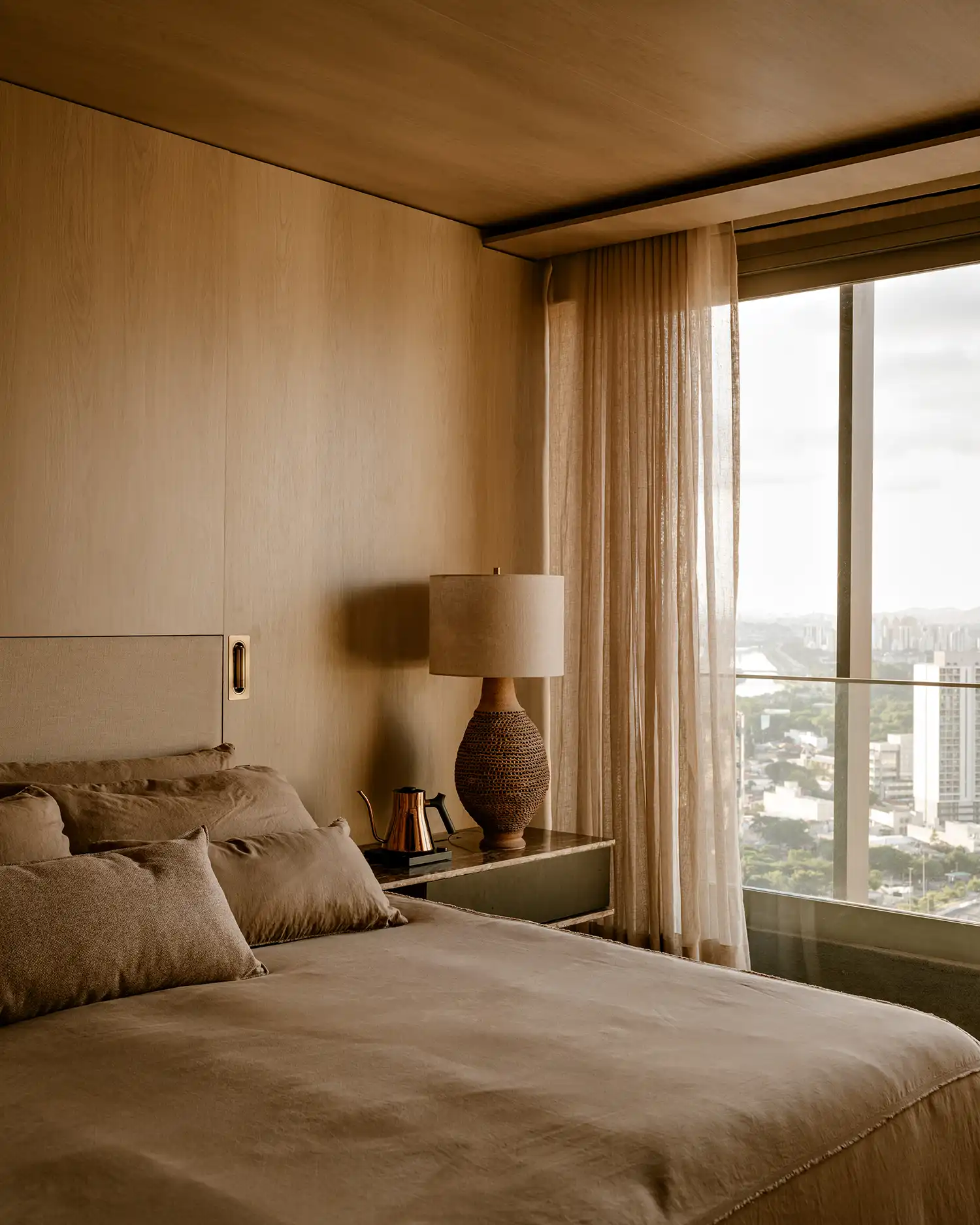
A private passage of light and memory unfolds along the wood-lined corridor leading to the bedrooms. This transition is marked by a deep-dive into the architect’s personal collection, where photographs by Pierre Verger and Mario Cravo Neto line the path to the master suite. In a manner reminiscent of the fluid design and art collection seen in the Sete Apartment, Casas uses the domestic interior as a canvas for a life’s work. In the bedroom, vintage 1960s lamps and Tarsila do Amaral paintings coexist with high-tech Ledtube fixtures, proving that modern living doesn’t require the abandonment of the past.
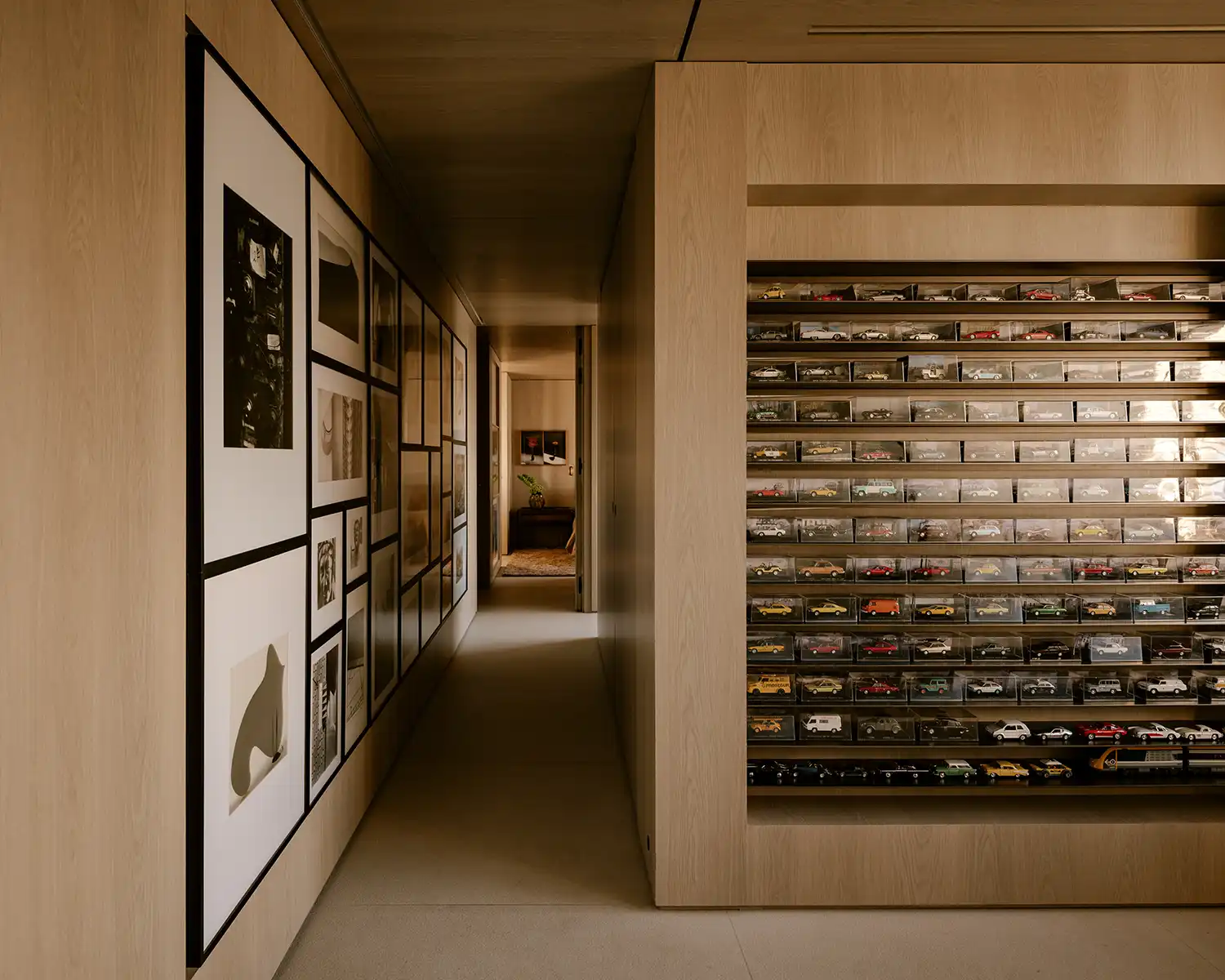
The realization of a holistic urban vision concludes at the intersection of the individual unit and the city. By living within a complex that integrates a hotel, jazz club, and restaurant, Casas has created a lifestyle that is “inhabited from the inside out and from the outside in.” It is a rare moment in contemporary practice where the creator becomes the critic. “I couldn’t design my apartment without also designing the other components of the building,” the architect concludes. This seamless integration of the private cell into the larger urban organism confirms that, for Casas, the goal of a home is to serve as a perfectly calibrated lens through which to experience the world.