




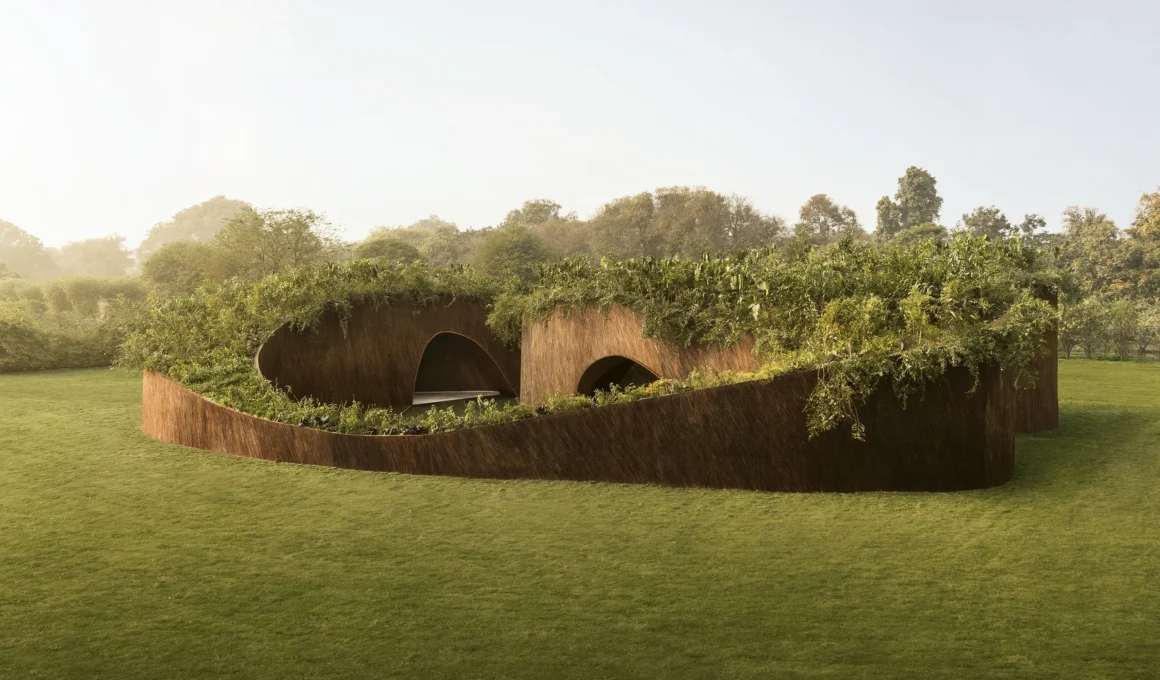
Invasive species are typically marked for eradication, yet in the hands of T__M.Space, they become the structural soul of a new vernacular. The Aranyani Pavilion doesn’t just sit in New Delhi; it grows from a paradox. By utilizing Lantana camara—a plant that stifles India’s native biodiversity—the design team has turned an ecological burden into a refined spatial medium. This isn’t merely an exercise in green building; it is a manifesto on how architecture can act as a tool for environmental repair, transforming a “waste” product into a sophisticated, woven skin.
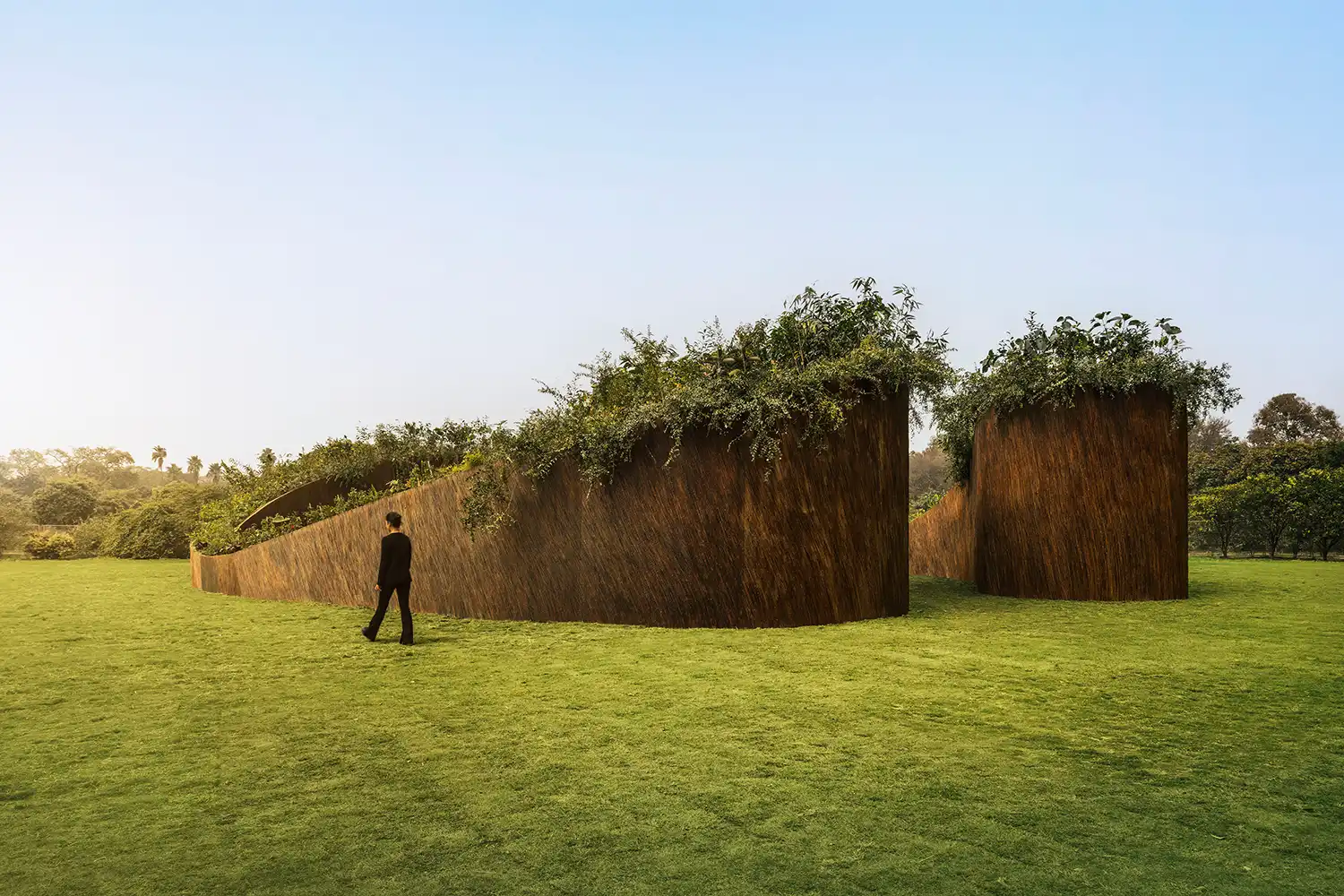
A structural logic inspired by the organic defines the pavilion’s silhouette. Rather than imposing a rigid geometric order, the design team opted for a system that feels evolutionary. The primary framework, composed of sustainable bamboo, provides a lightweight yet resilient skeleton that honors regional building traditions while pushing the boundaries of modern assembly. This choice of material establishes an immediate dialogue with the environment, grounding the structure in a language of flexibility and strength that mirrors the very forests it seeks to emulate.
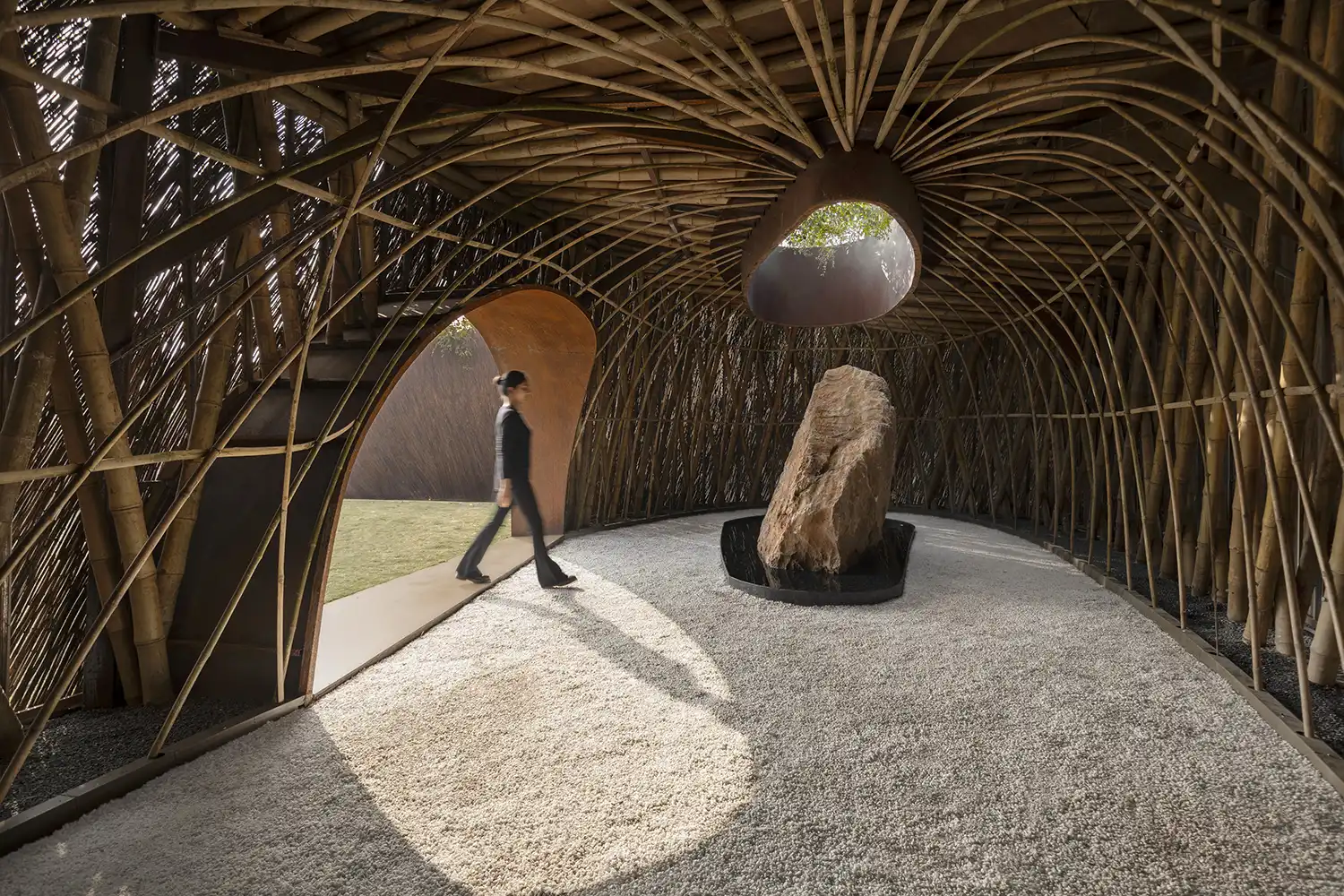
The material narrative of the Aranyani Pavilion is perhaps its most provocative feature. As Mario Serrano Puche explains: “We were interested in how architecture could embody the logic of a sacred grove, something that feels grown rather than assembled. Using bamboo alongside lantana allowed us to work with materials that are both ecologically and culturally charged. Lantana, in particular, carries a complex story as an invasive species that must be removed to protect native landscapes. Recasting it as a spatial material allowed the pavilion to become an exploration of balance, between removal and renewal, craft and computation, permanence and ephemerality.”
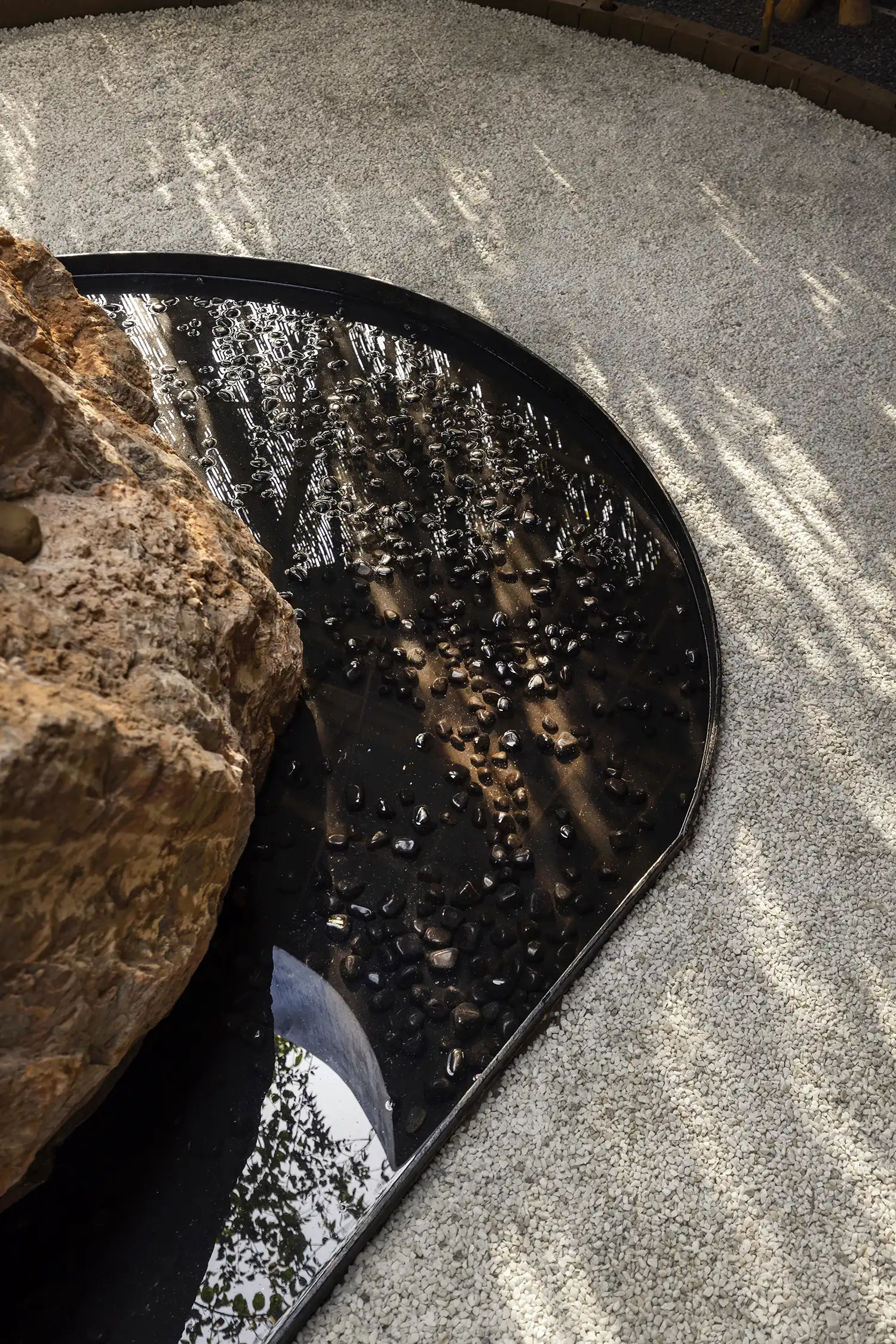
Digital design methodologies and traditional handcraft converge in the intricate weaving of the lantana infill. The result is a sensory experience defined by dappled light and complex textures. As one moves through the pavilion, the spatial trajectory encourages a deliberate slowing of pace. The air shifts as the woven skin filters the harsh Delhi sun, creating an internal microclimate where the tactile quality of the fibers engages the visitor on a visceral level. It is a space designed not just to be seen, but to be felt—a pause of shadow in a city of high-contrast glare.

The contextual impact of the project lies in its ability to marry environmental stewardship with high-level aesthetic expression. By utilizing a material that requires removal to protect native landscapes, the pavilion becomes a functional demonstration of a circular economy. It suggests that the future of the built environment may not lie in the extraction of new resources, but in the creative mitigation of existing ecological imbalances. The Aranyani Pavilion proves that high-performance spatial environments can be born from the very materials we often seek to discard.
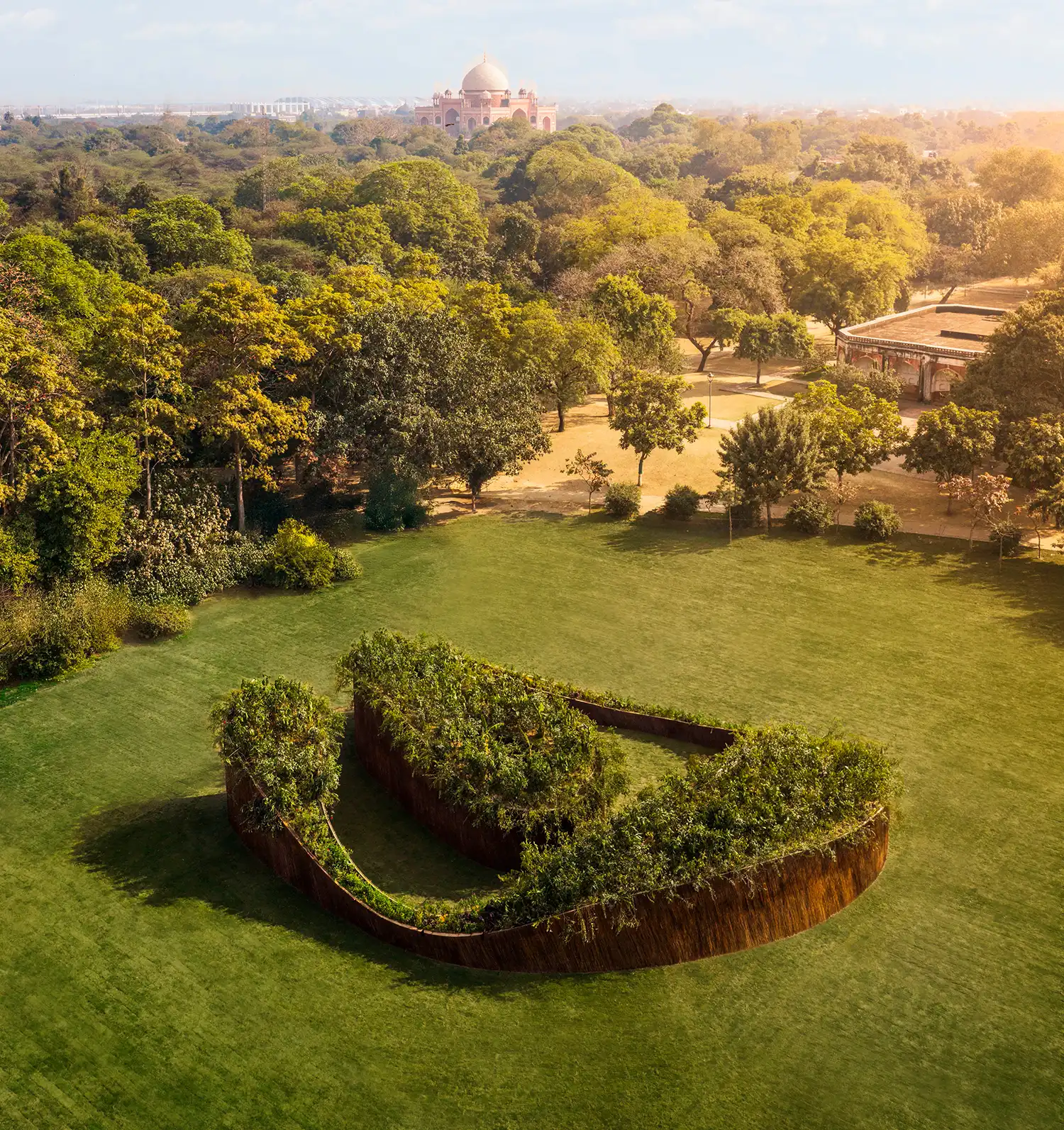
This exploration of ephemeral structures highlights a growing global trend where pavilions serve as testing grounds for radical sustainability. Whether it is the integration of landscape and flood protection in New York or the latest experimental structures for the Serpentine in London, these temporary works are increasingly defining the permanent values of the industry. The Aranyani Pavilion stands as a vital addition to this discourse, reminding us that the most profound innovation often stems from a humble return to the grove.