

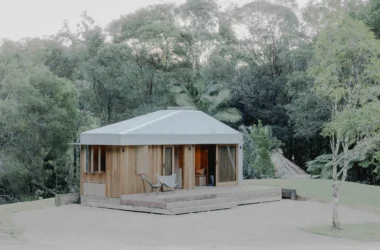
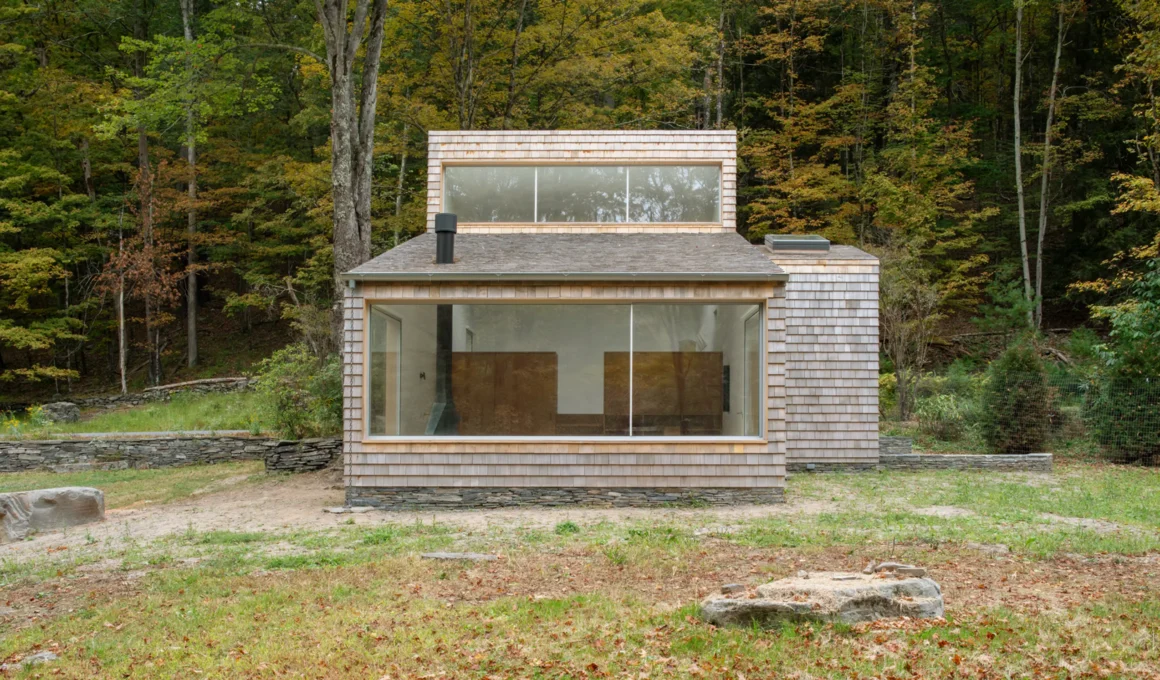
Architect Neil Logan has transformed a pair of existing structures in the wooded landscape of Accord, New York, into a refined studio and guest house that preserves the original footprints while completely reimagining their internal volumes and material presence.
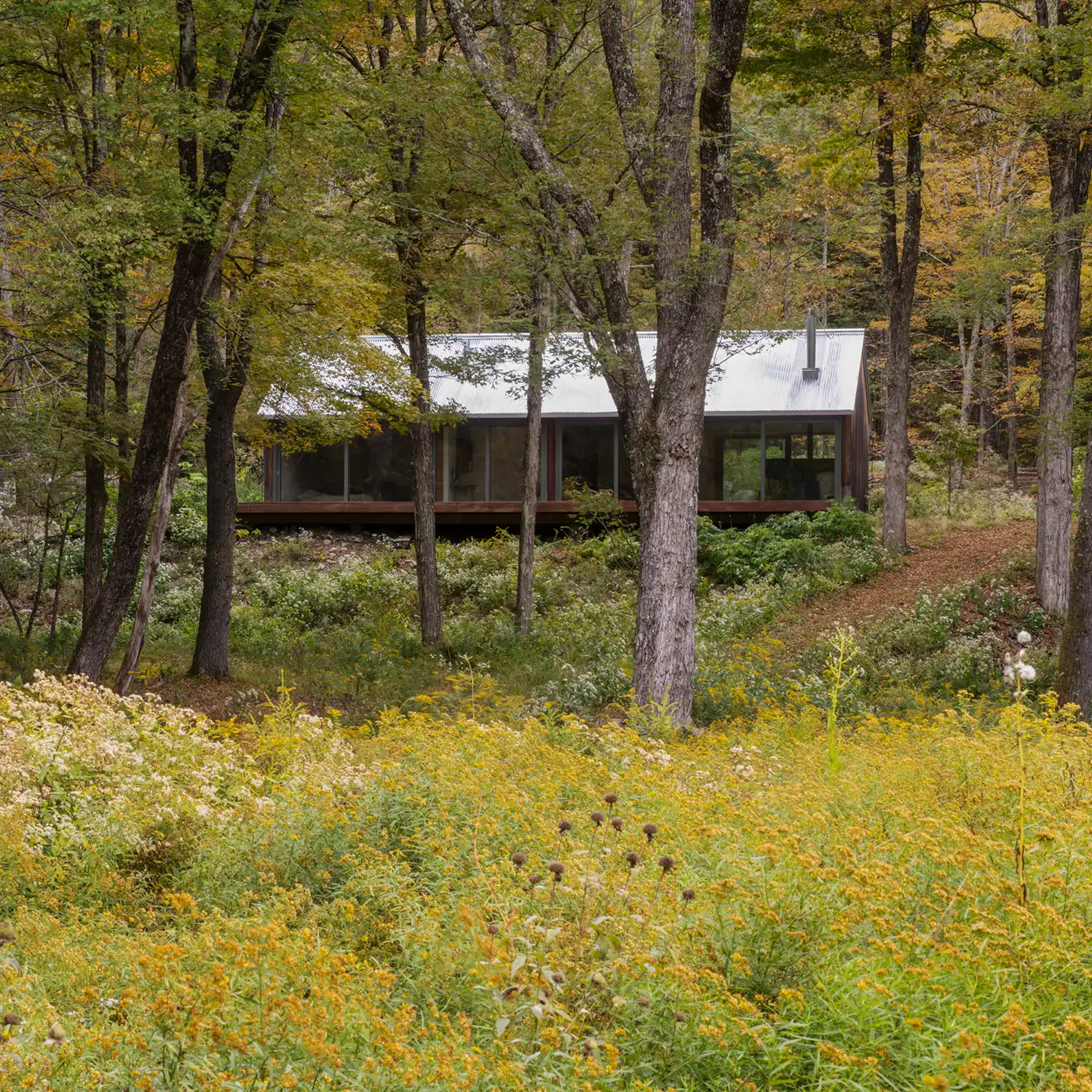
A reimagined footprint. The project, located approximately 100 miles northwest of New York City, navigates the delicate balance between preservation and total reconstruction. By adhering to the scale and siting of the former buildings, the intervention feels deeply rooted in its forested setting. The primary structure, once a house positioned near the road, has been stripped of its domestic partitions and second floor, resulting in an expansive, single-volume workspace that prioritizes light and spatial continuity.
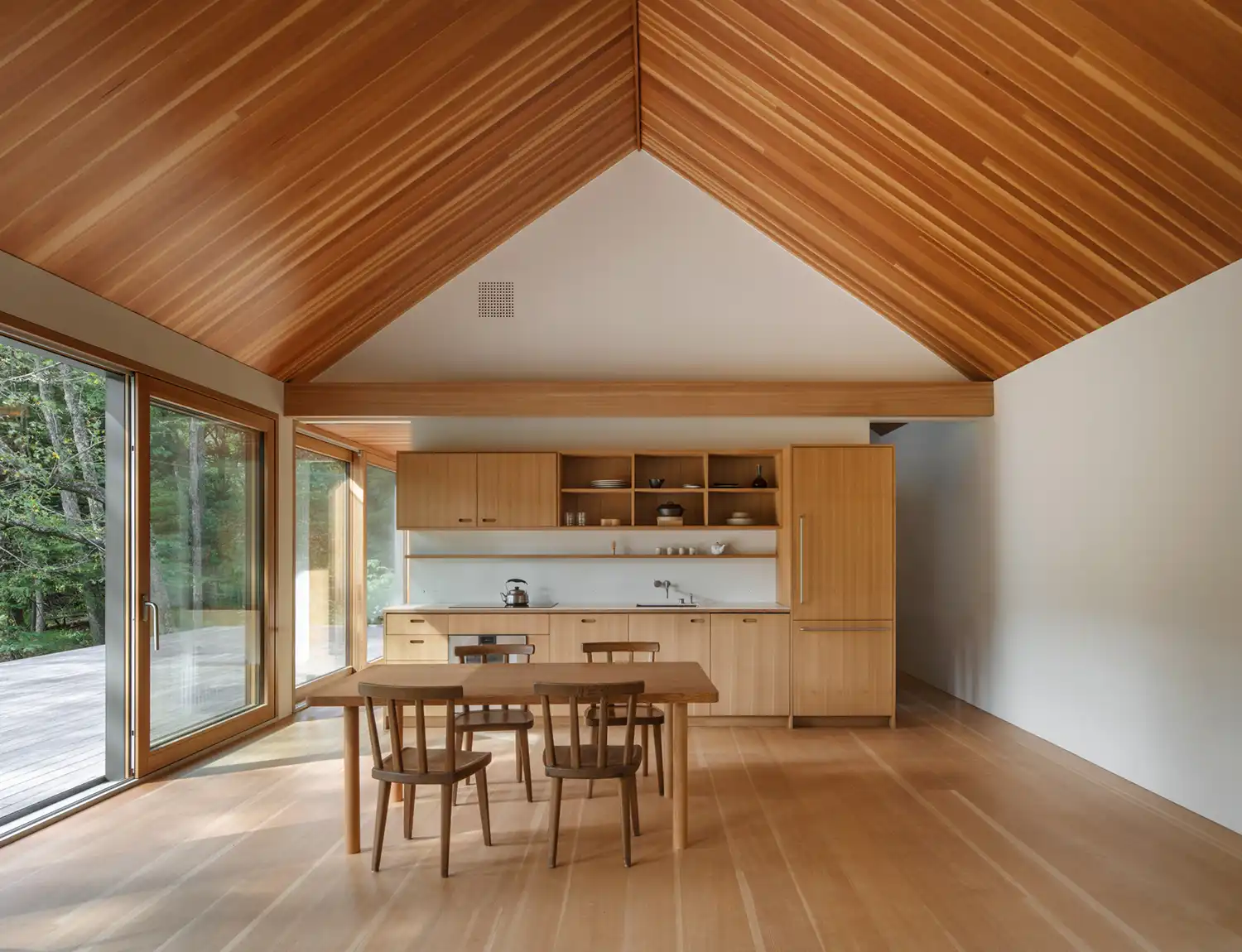
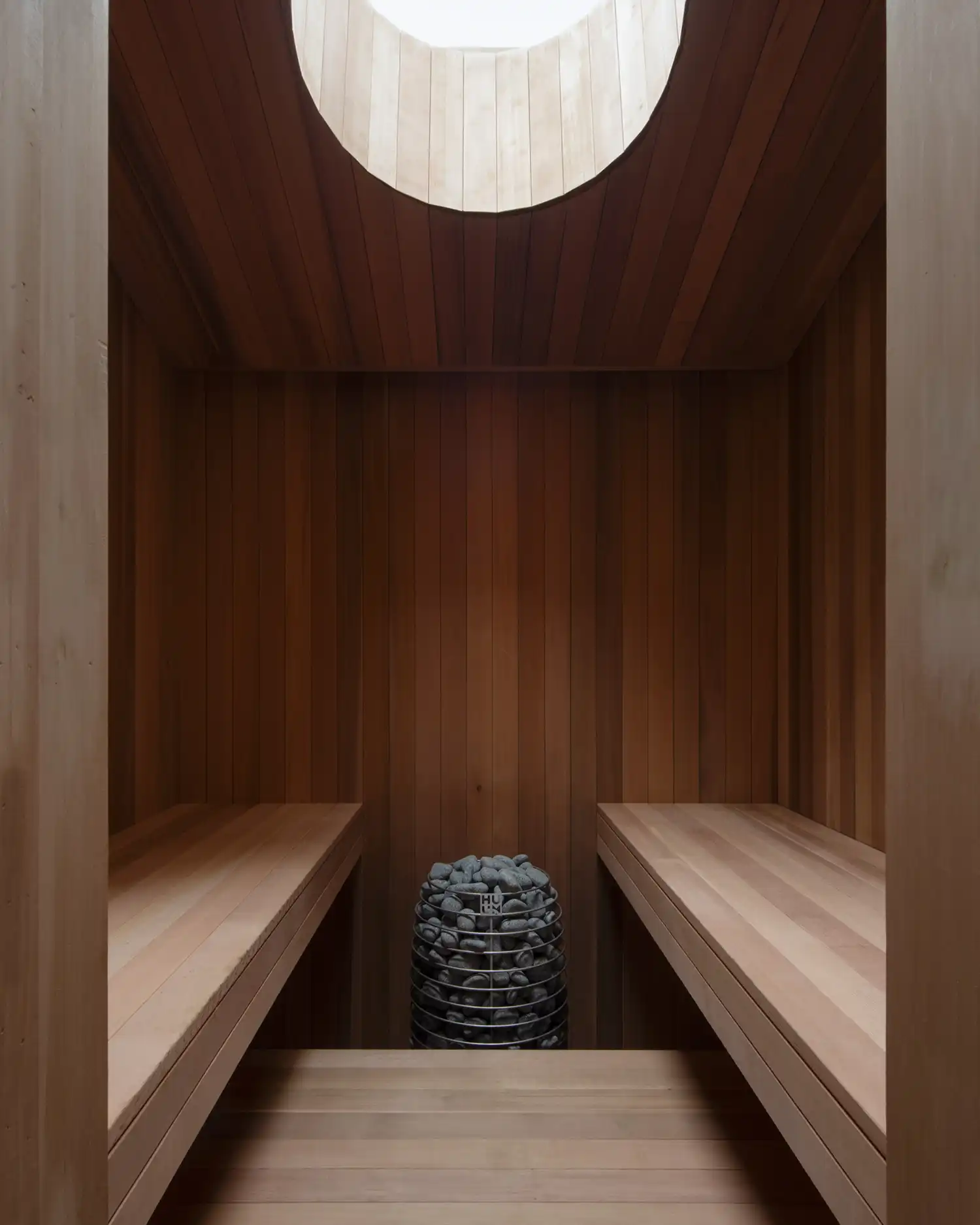
Volumetric clarity. To achieve this sense of openness, the interior was hollowed out to create a double-height void. A secondary, single-story entry structure was cleverly reconfigured to house the more utilitarian functions, such as the bathroom and sauna. This move allows the main studio area to remain uncluttered, functioning as a pure vessel for creative work. The strategic consolidation of service areas ensures that the primary living and working zones maintain a clear, unobstructed organization.
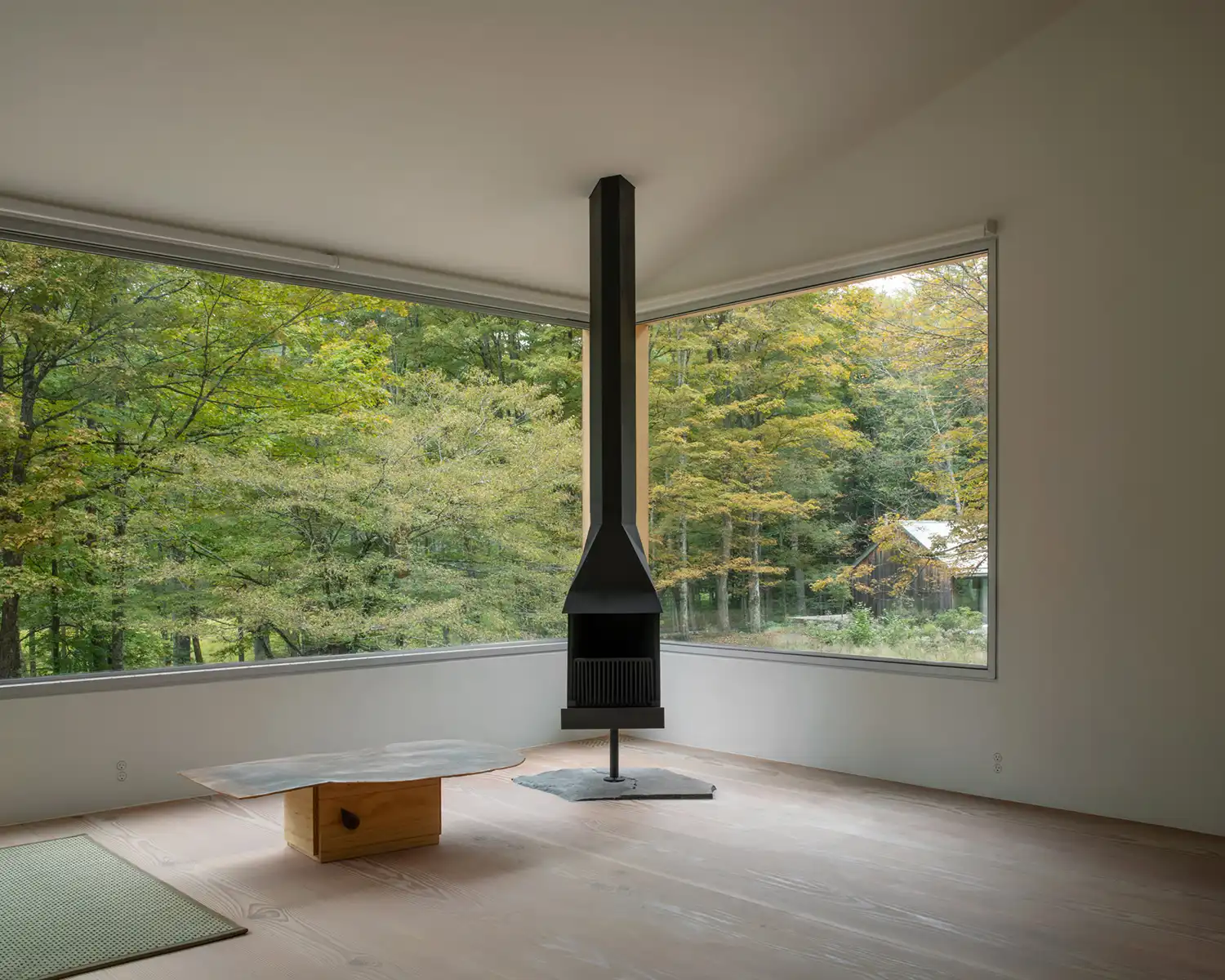
Light as a building material. The quality of the interior environment is defined by the way it captures the shifting Catskills sun. By replacing traditional roof dormers with high-level clerestory windows, Logan has introduced a consistent, soft daylight that eliminates harsh shadows. This overhead illumination is balanced by a new, large-scale panoramic window that frames the dense surrounding forest, effectively pulling the seasonal changes of the landscape into the room as a living backdrop.
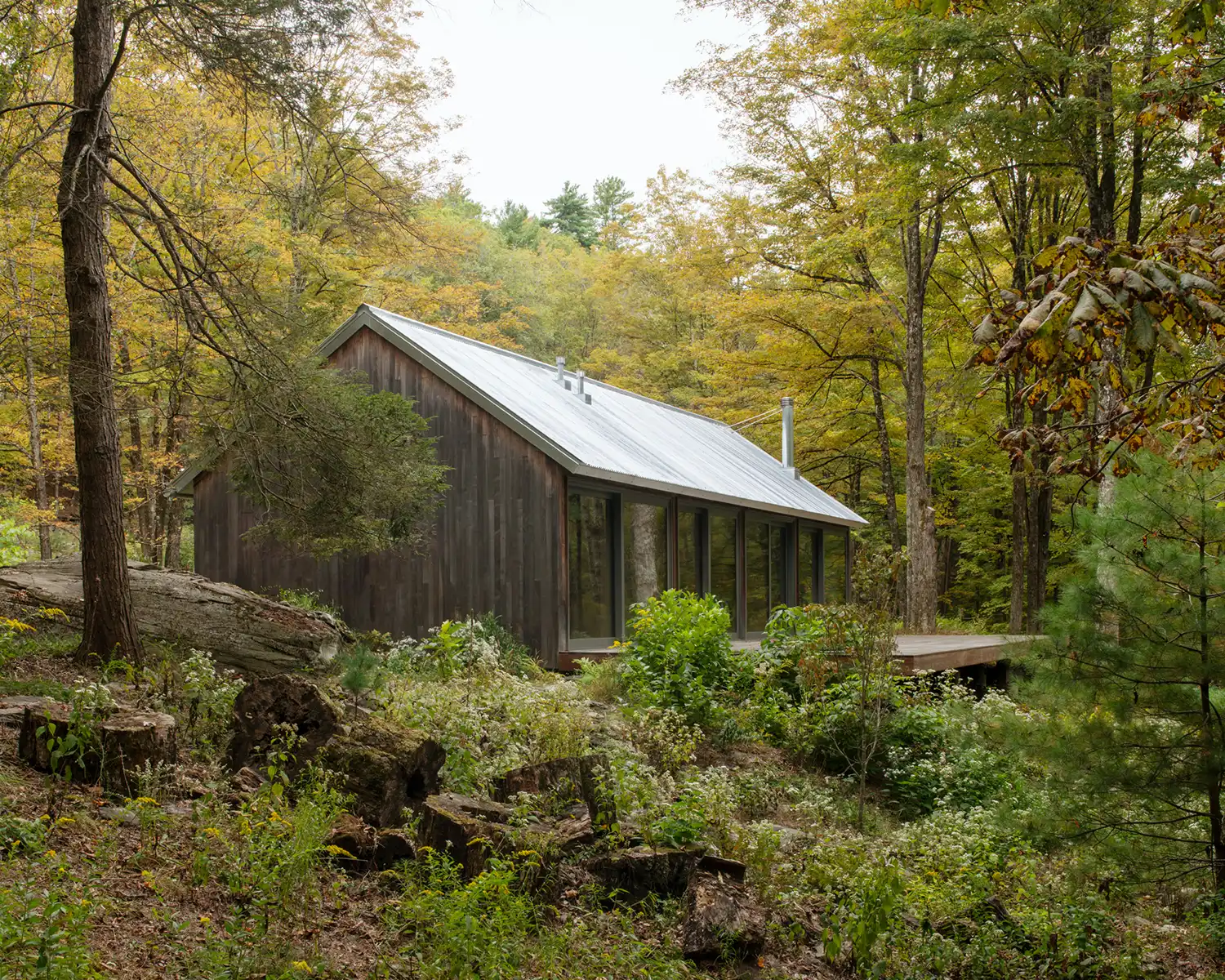
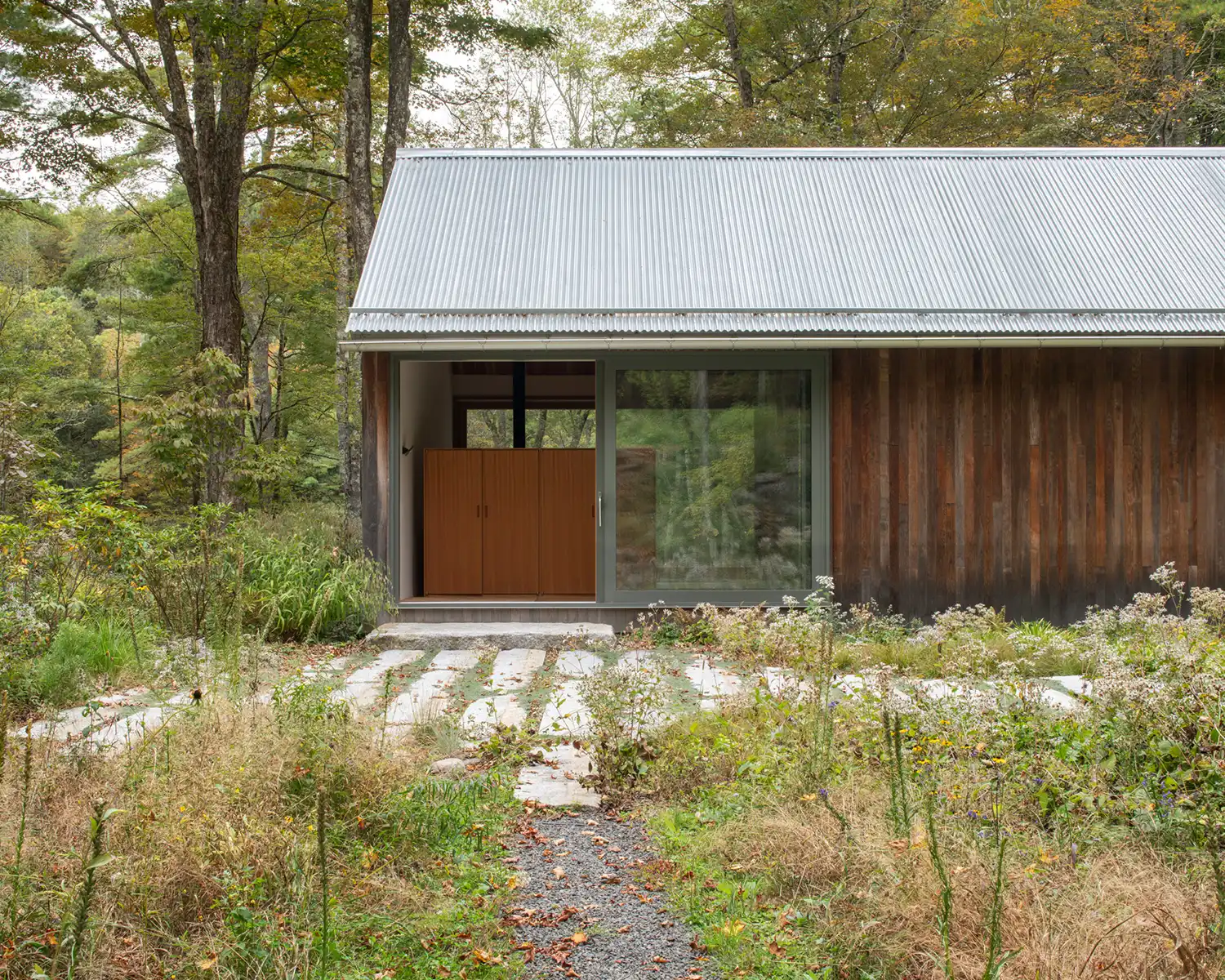
Material cohesion. On the exterior, a singular material language creates a quiet, monolithic presence among the trees. Both the walls and the pitched roof are clad in wood shingles, a choice that honors local vernacular while providing a contemporary, textured skin. This tactile continuity allows the buildings to recede into the shadows of the timberland, asserting their presence through form rather than decorative detail.
Internal landscapes. Inside, the transition between two subtly differentiated floor levels is managed through integrated custom cabinetry. Low-profile fir cabinets serve multiple roles, acting as spatial dividers while providing essential storage, from shelving and a pantry to a coat closet. This “furniture-as-wall” approach keeps the visual horizon low, emphasizing the height of the rafters and the airy quality of the rebuild.
Artisanal collaboration. The sensory experience of the space is further heightened by a collection of bespoke pieces created specifically for the project. Custom furnishings, including a primary desk, a central table, and matching stools, were designed by Minjae Kim. These elements, crafted with a shared sensitivity to texture and form, ground the airy volume, providing a human scale to the wide-open proportions of the studio.
A global dialogue. This approach to the creative workspace—where the boundary between the internal studio and the external environment is blurred—shares a common philosophy with other international projects, such as the Kim-Oflage garden studio in London, which similarly explores how compact, high-quality environments can foster artistic focus. By focusing on essential forms and honest materials, Neil Logan has created a retreat that feels both permanent and light, offering a quiet clearing for thought within the New York woods.