



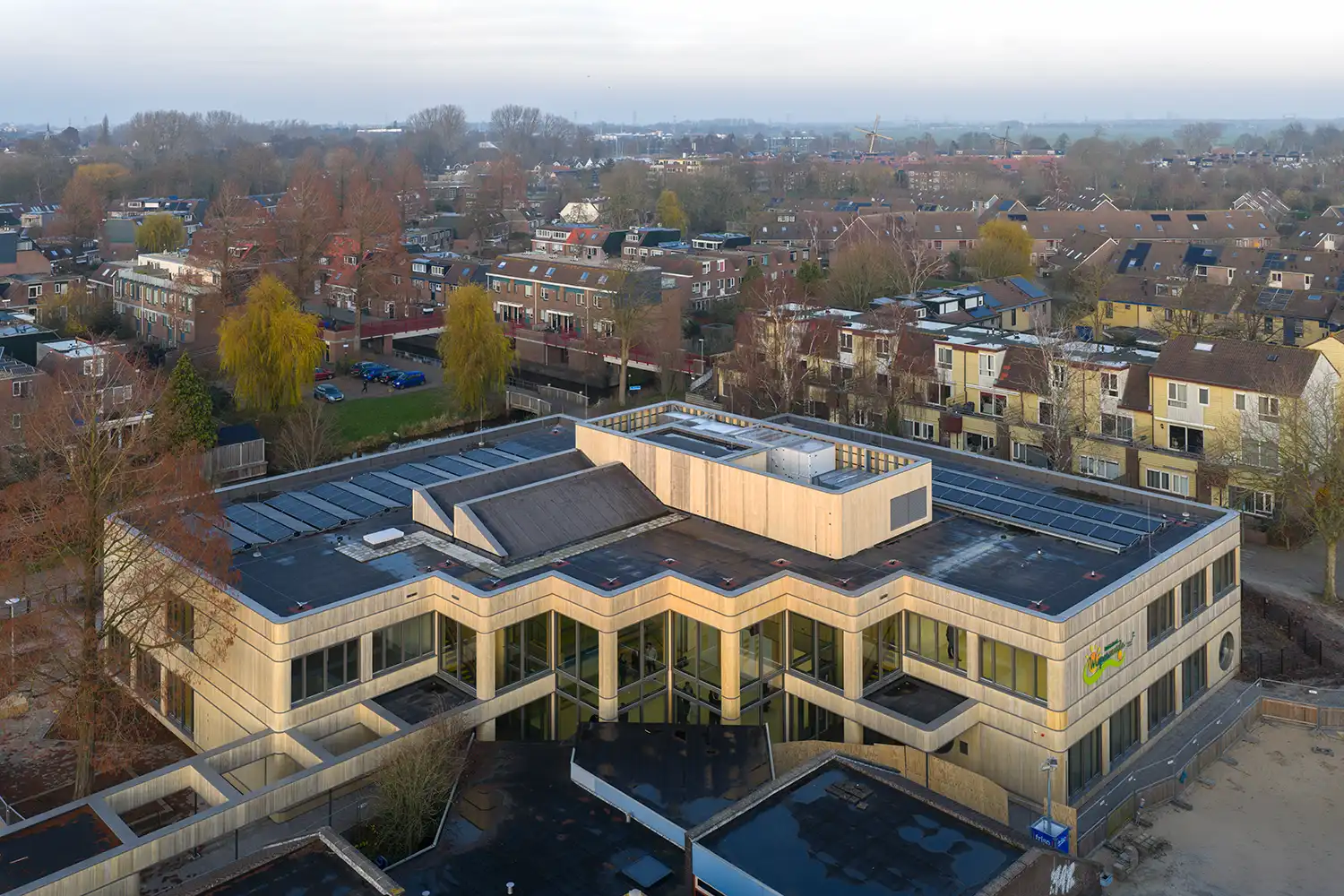
Basisschool Wisperweide emerges as a definitive shift in educational environments, marking the first completion under Amsterdam’s Innovation Partnership School Buildings program through a collaboration between Studio A Kwadraat, OMA, and the Schools by CircleWood consortium. Located in Amsterdam, the project utilizes a pioneering modular wood system to create a flexible, sustainable, and human-centric space designed to evolve alongside its students.
A Vision of Circularity. The completion of Basisschool Wisperweide is not merely the opening of a new primary school; it represents the first physical manifestation of a long-term strategy to reshape Amsterdam’s social infrastructure. Developed by Jimmy van der Aa of Studio A Kwadraat in tandem with OMA’s David Gianotten and Michael den Otter, the building serves as a prototype for a circular future. The modular framework, initially conceived for the Natural Pavilion at Floriade 2022, has been refined into a permanent system of standardized wooden columns and cross-laminated timber (CLT) floors, held together by smart steel joints that allow for easy disassembly and reconfiguration.
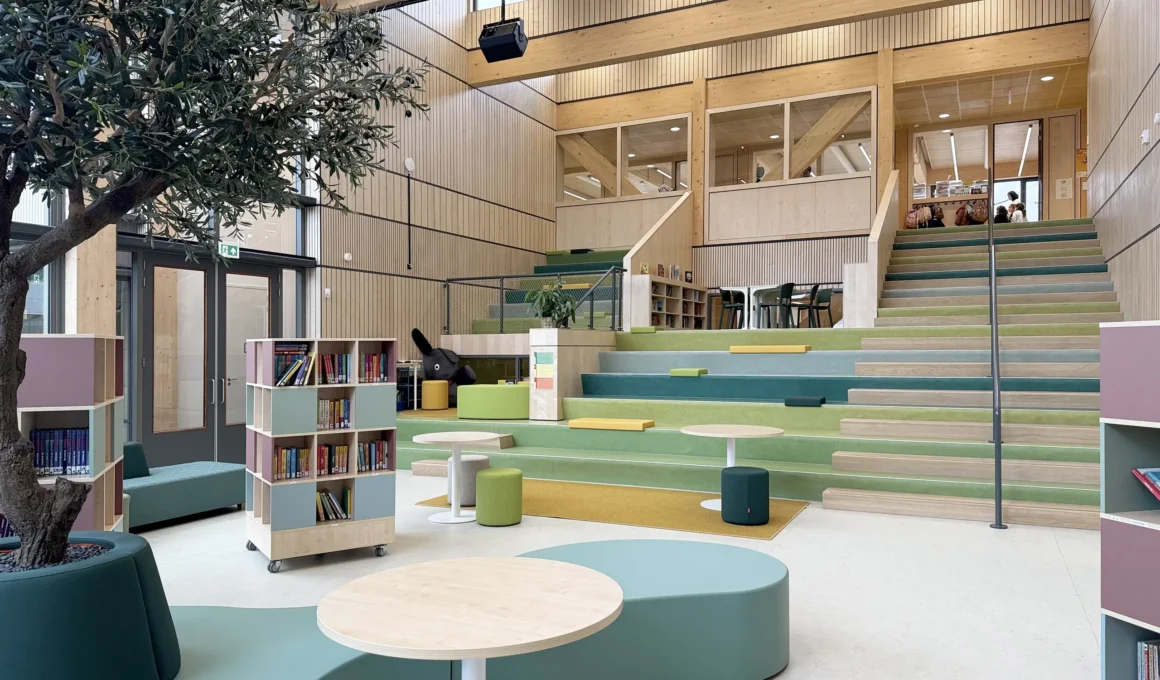
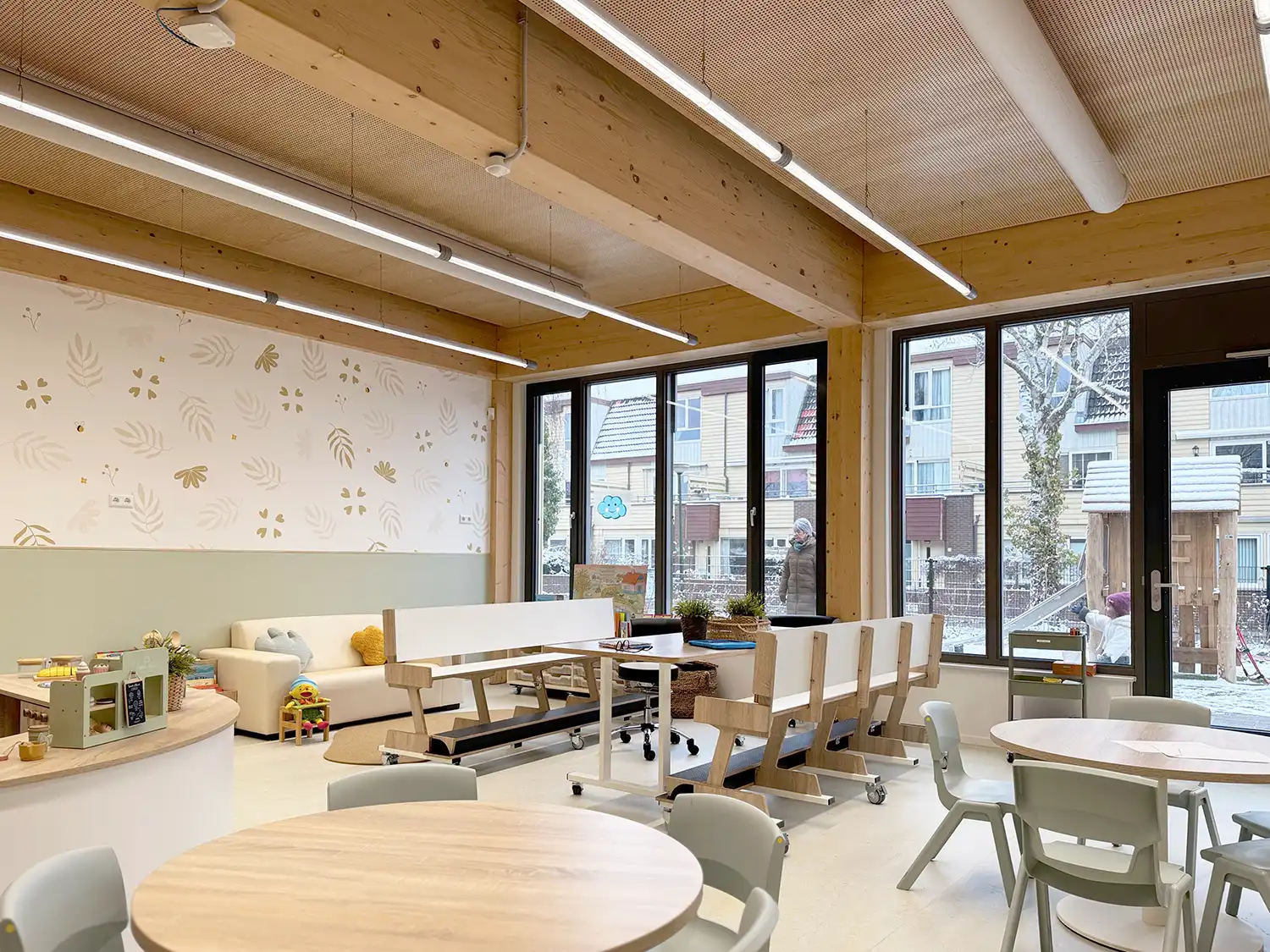
The Sensory Environment. Moving through the school, the typical institutional atmosphere is replaced by the olfactory and tactile warmth of bio-based materials. Large glazed facades and French doors dissolve the boundary between the interior and the green outdoor playgrounds, ensuring that children remain visually connected to the natural world. This transparency is mirrored internally, where sightlines cut across the building to create a sense of shared community. The air feels different here—calm, filtered, and softened by the extensive use of timber, which provides an acoustic and thermal comfort that hard-surface schools often lack.
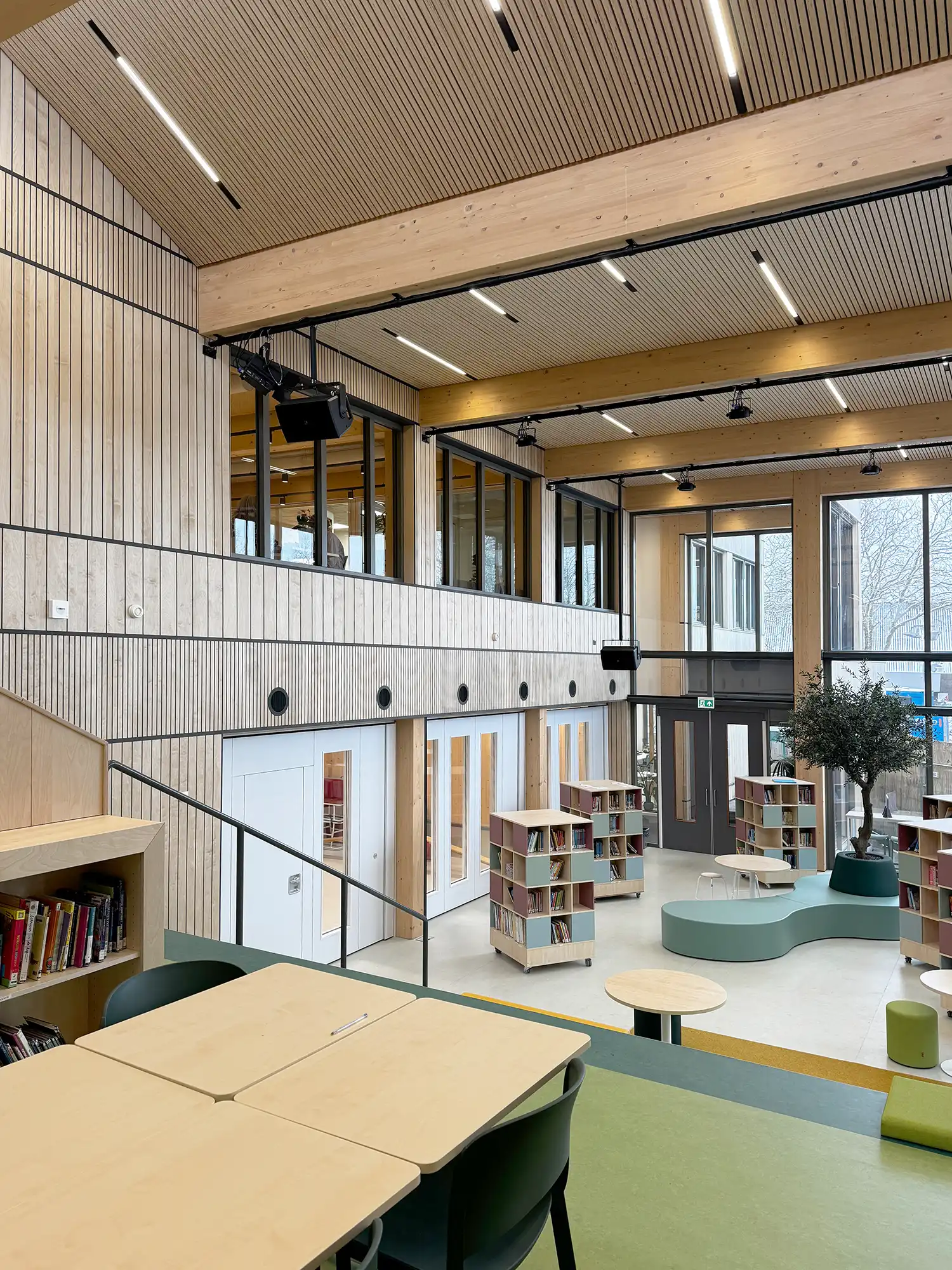
Strategic Spatial Flexibility. At the heart of the structure lies a central auditorium, acting as a social sun around which learning clusters orbit. This hub is designed for both school assemblies and broader community gatherings, emphasizing the building’s role as a neighborhood asset. Surrounding this core, the layout is divided into specialized zones for different age groups, each with its own entrance. The corridors, stretching over three meters wide, are far more than circulation paths; they are sun-drenched extensions of the classroom where collaborative work and spontaneous play occur simultaneously.
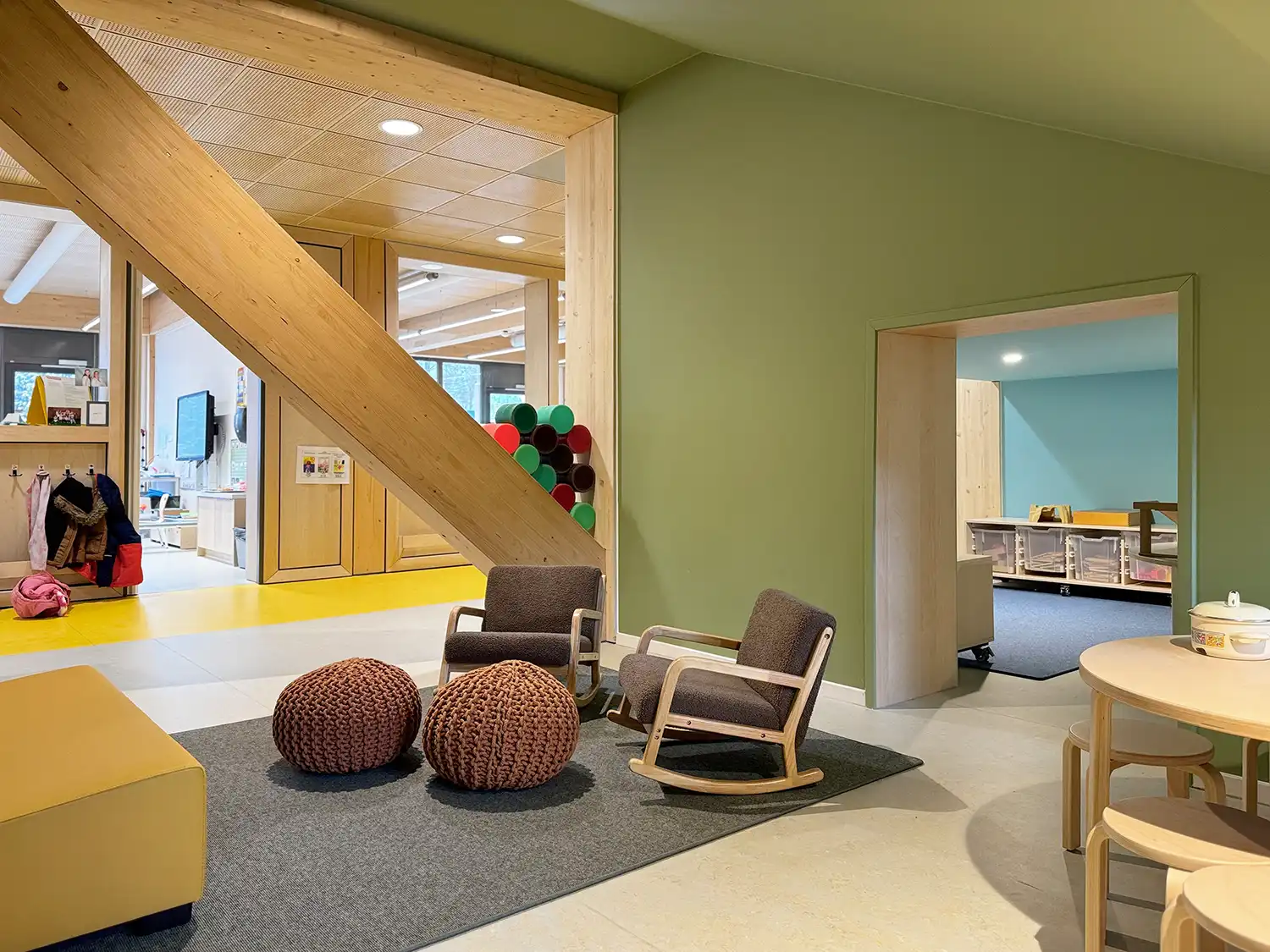
Adaptive Infrastructure. What distinguishes this project is its inherent capacity for growth. The modular structural framework is designed with a “plug-and-play” logic; should the student population increase, the northern facade can be removed to seamlessly append new classrooms. This technical foresight ensures the building never becomes obsolete. Inside, adaptable partitions serve dual purposes—functioning as storage lockers and coat racks on one side, and exhibition surfaces for student work on the other—allowing the architecture to be continuously redefined by those who use it.
Contextual Impact and Global Trends. This approach to sustainable educational facilities mirrors a growing international movement toward low-carbon, high-performance learning spaces. Similar to how practitioners are integrating passive house standards in school design to minimize environmental footprints while maximizing student well-being, Wisperweide prioritizes the lifecycle of its materials. By utilizing the CircleWood system, the project drastically reduces CO2 emissions while providing a healthy, off-gassing-free environment for children to grow.
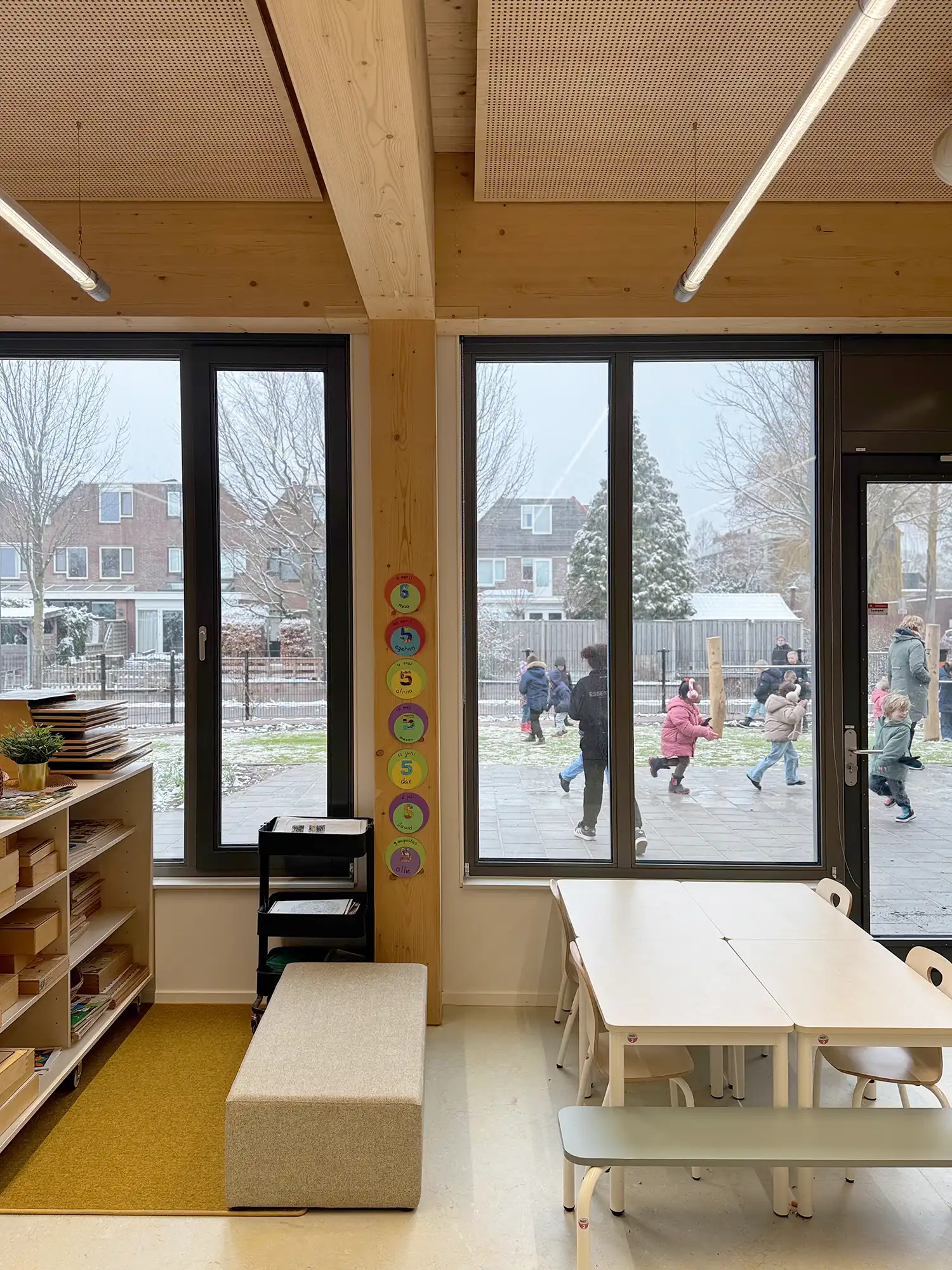
Precision Engineering. Beneath the aesthetic of warm wood lies a highly sophisticated technical core. Building services are tucked discreetly above the ceilings, maintaining a clean visual field and allowing the flexible wooden structure to remain the protagonist of the space. The precision of the prefabricated elements, constructed by Friso Bouwgroep, allowed for a streamlined assembly process on-site, reducing noise pollution and neighborhood disruption—a critical factor for urban infill projects in dense European cities.
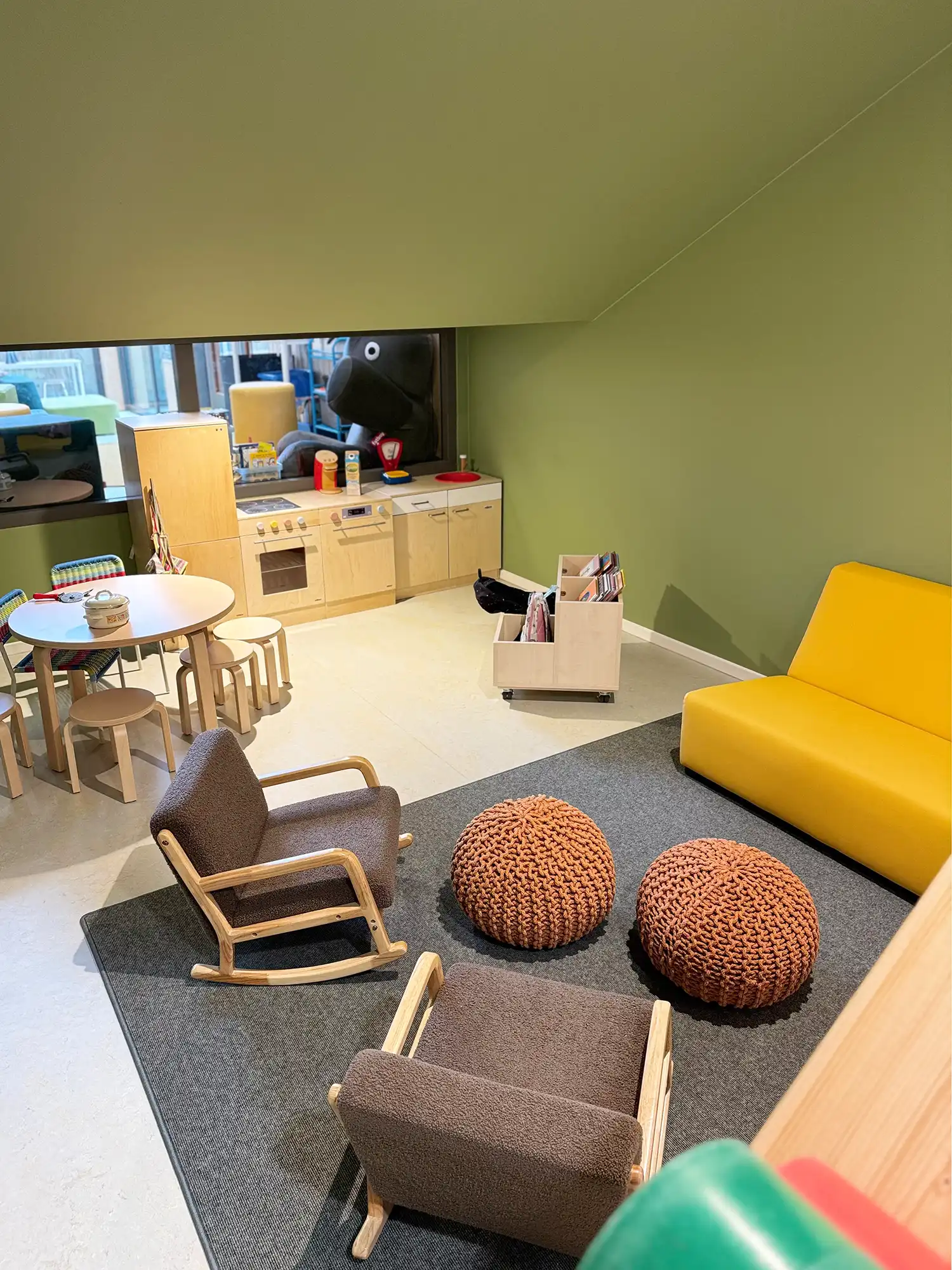
A Living Laboratory. As the first of potentially thirty schools to be built under the 2023 Innovation Partnership, Wisperweide is a living laboratory for the city. It proves that circular construction can be both aesthetically sophisticated and highly functional. The success of the project lies in its ability to feel personal and vibrant despite its modular origins. It is a space where the rigidity of engineering meets the fluidity of childhood, resulting in a building that doesn’t just house education but actively participates in the pedagogical experience.