



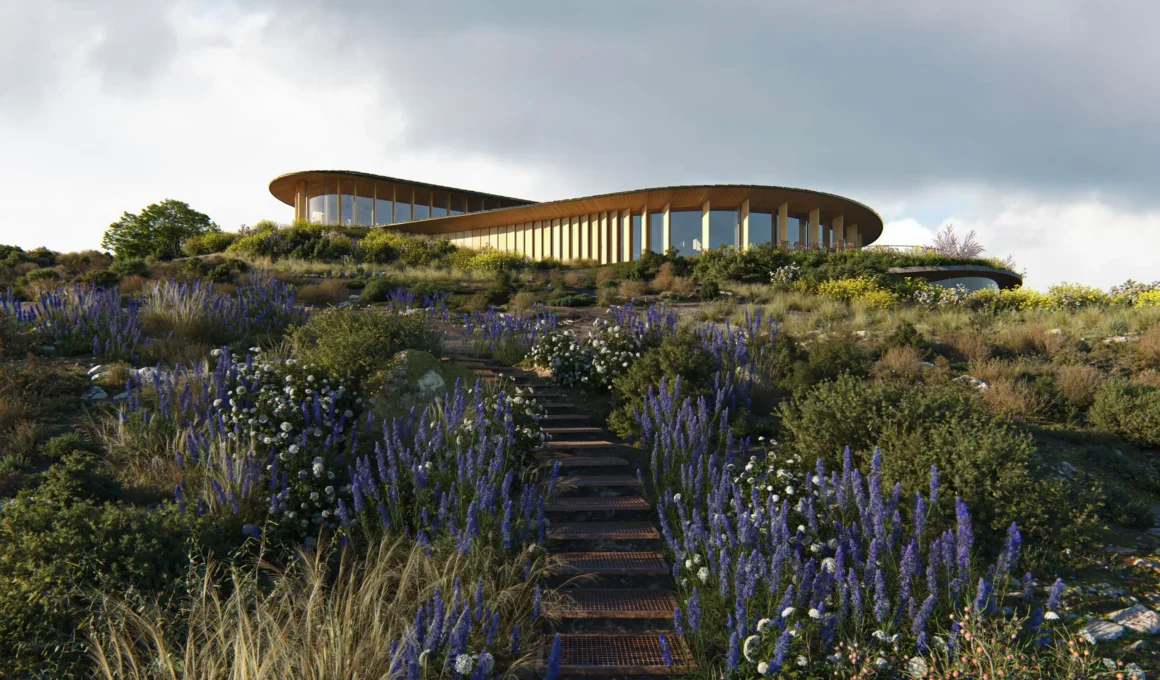
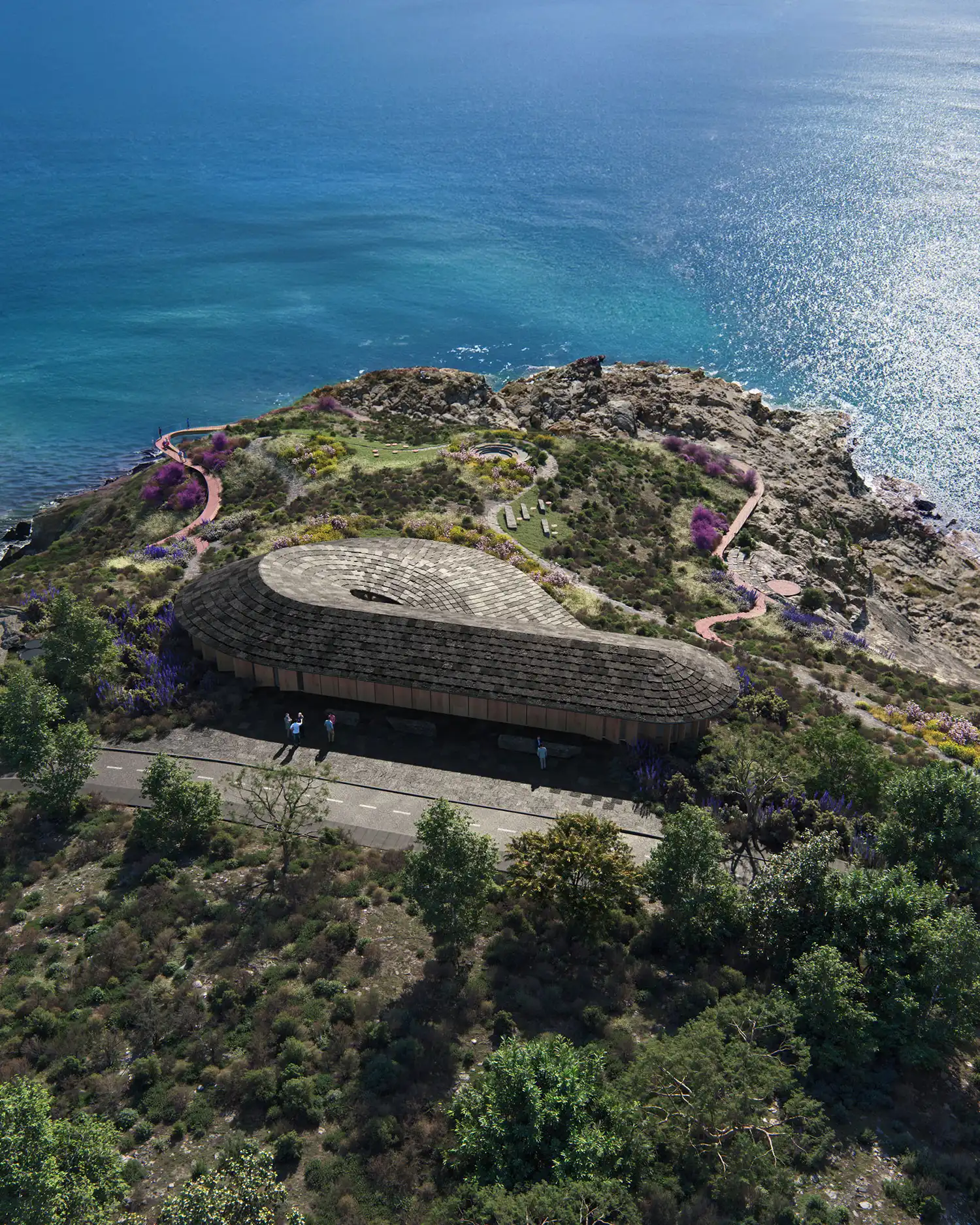
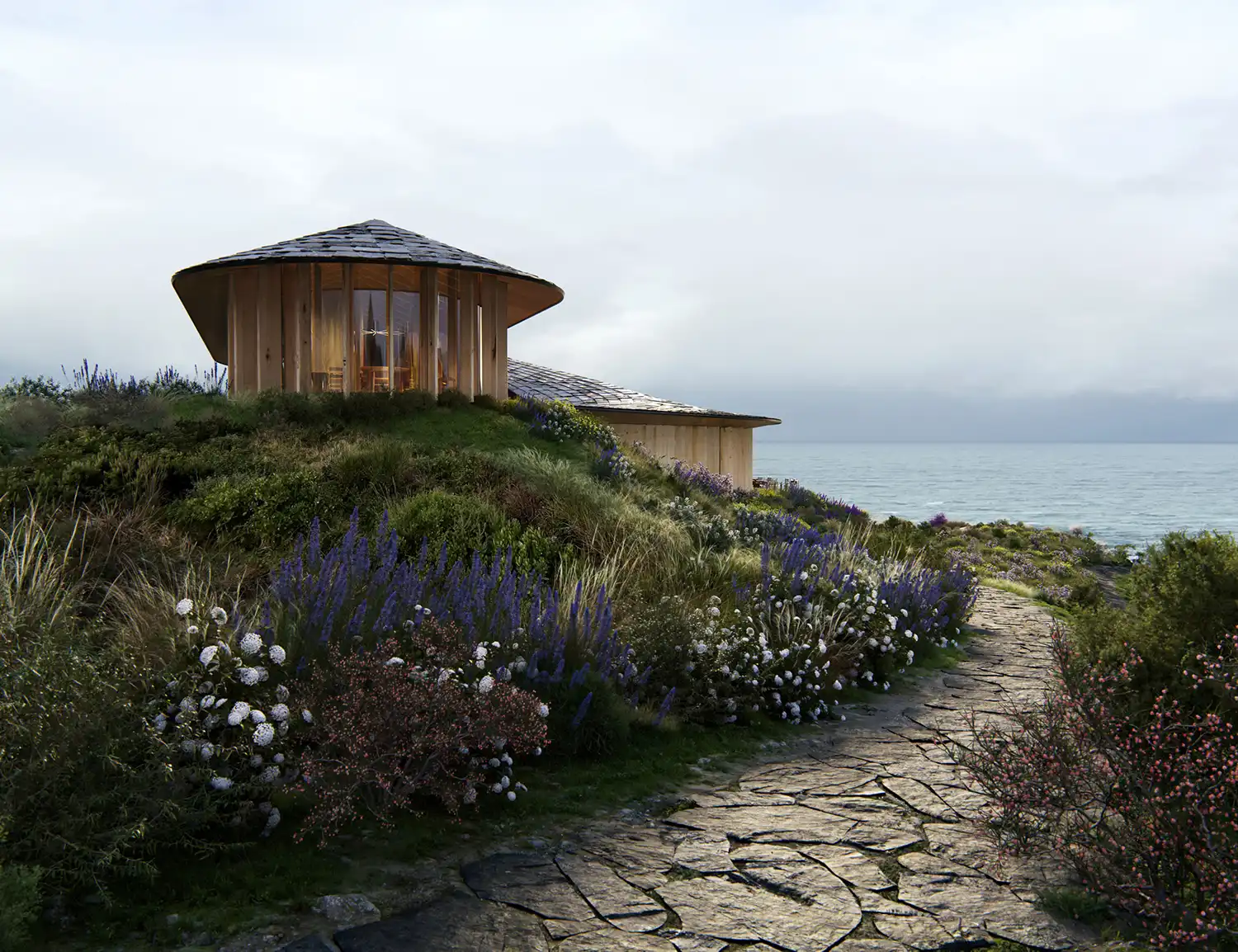
The Drop emerges as a sculptural threshold between the dense urbanity of Istanbul and the rhythmic expanse of the Black Sea, anchoring the Ion Riva masterplan with a form that translates topographical fluidness into a functional landmark. Designed by Bjarke Ingels Group (BIG), this coastal pavilion in the Riva neighborhood serves as a terminal point for the development’s central axis, mirroring the curvature of the shoreline while providing a multi-level social hub that integrates a café, restaurant, and subterranean spa into the rugged Turkish landscape.
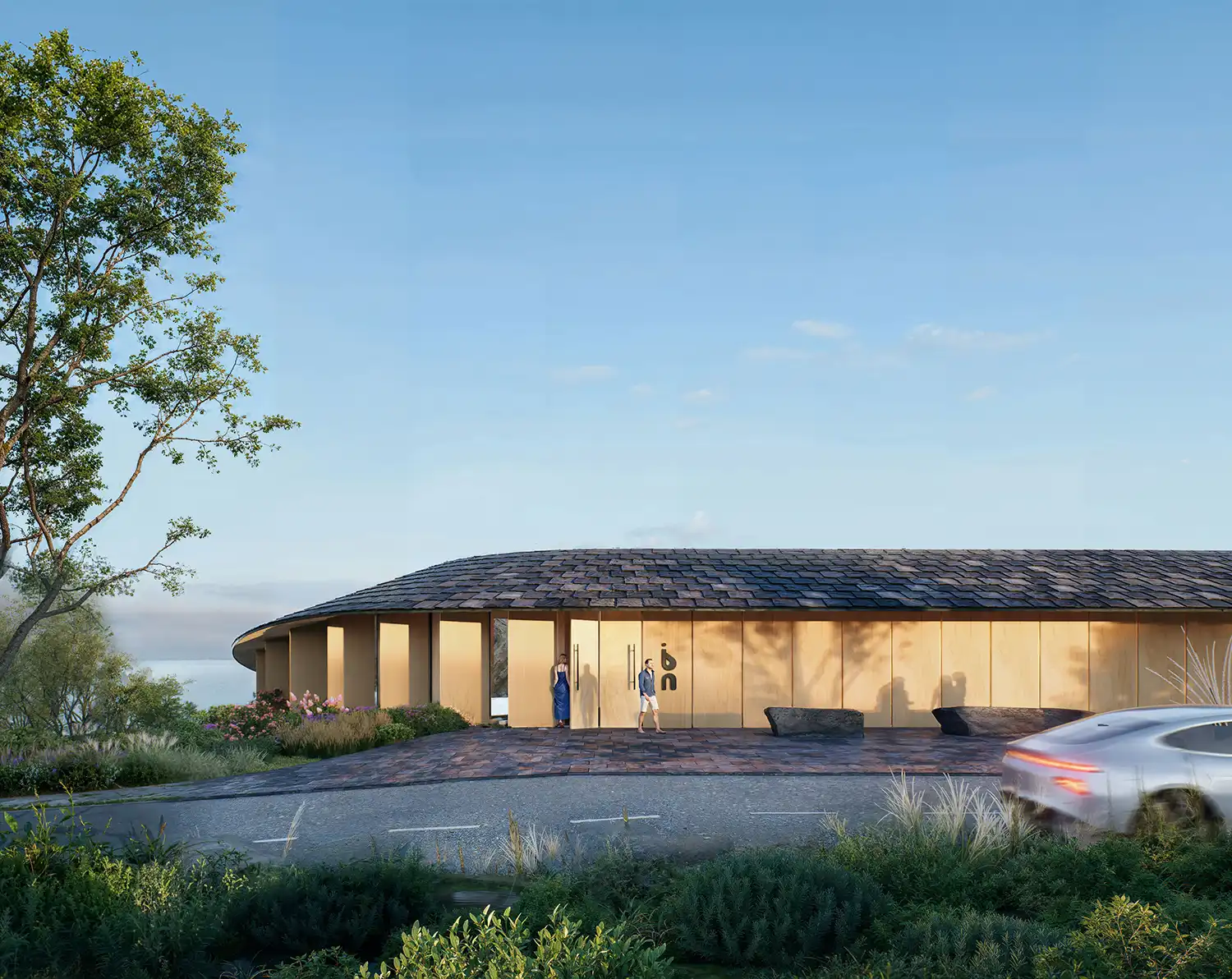
A conceptual bridge to the horizon defines the project’s dialogue between the structured grid of the new Ion Riva district and the organic uncertainty of the coastline. Positioned alongside future works by Snøhetta and MVRDV, the building adopts a dual personality: a linear, disciplined bar when viewed from the street, and a sweeping, hospitable curve when facing the water. This geometry creates a sheltered courtyard that protects visitors from the brisk northern winds of the Black Sea while framing a cinematic perspective of the water.
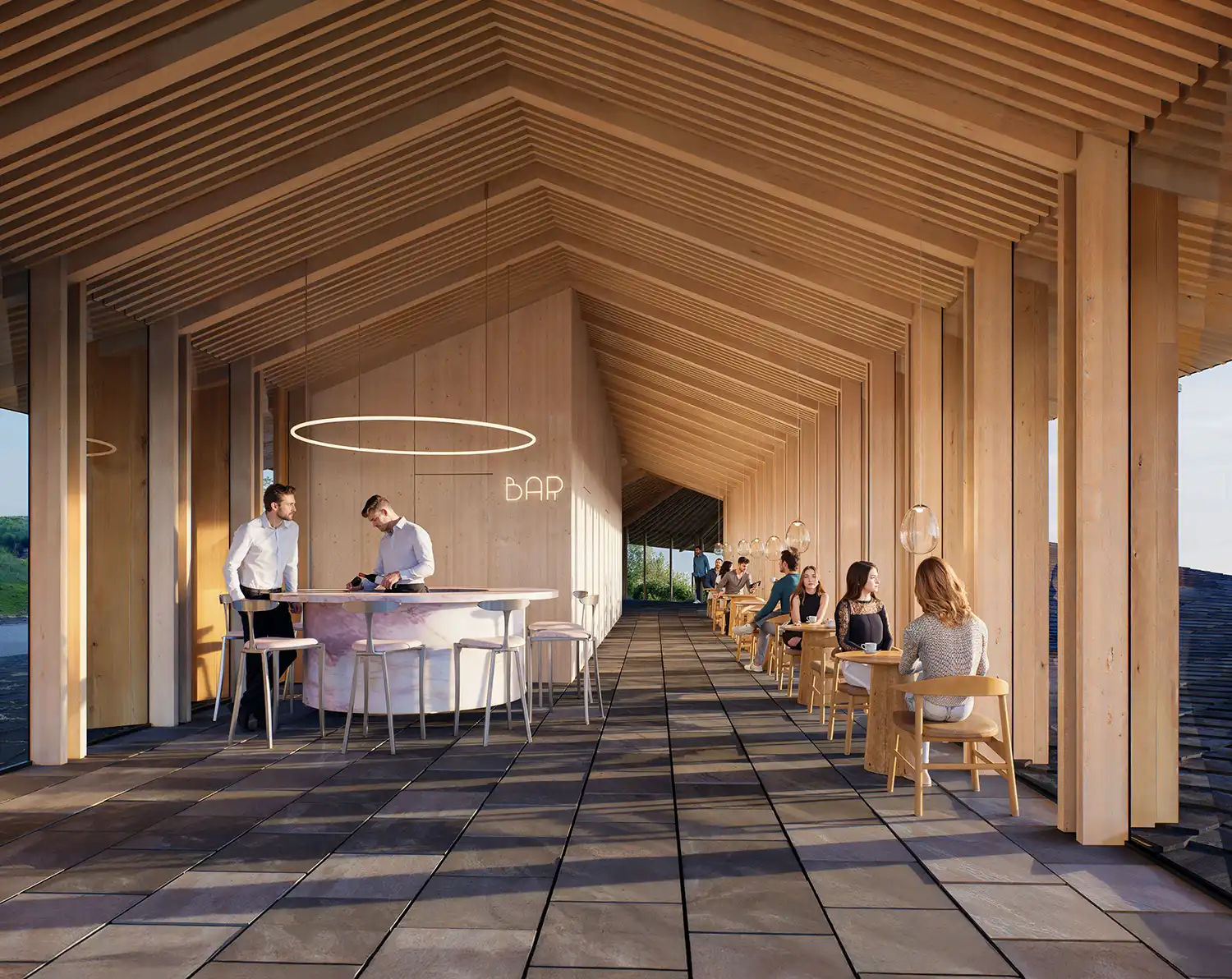
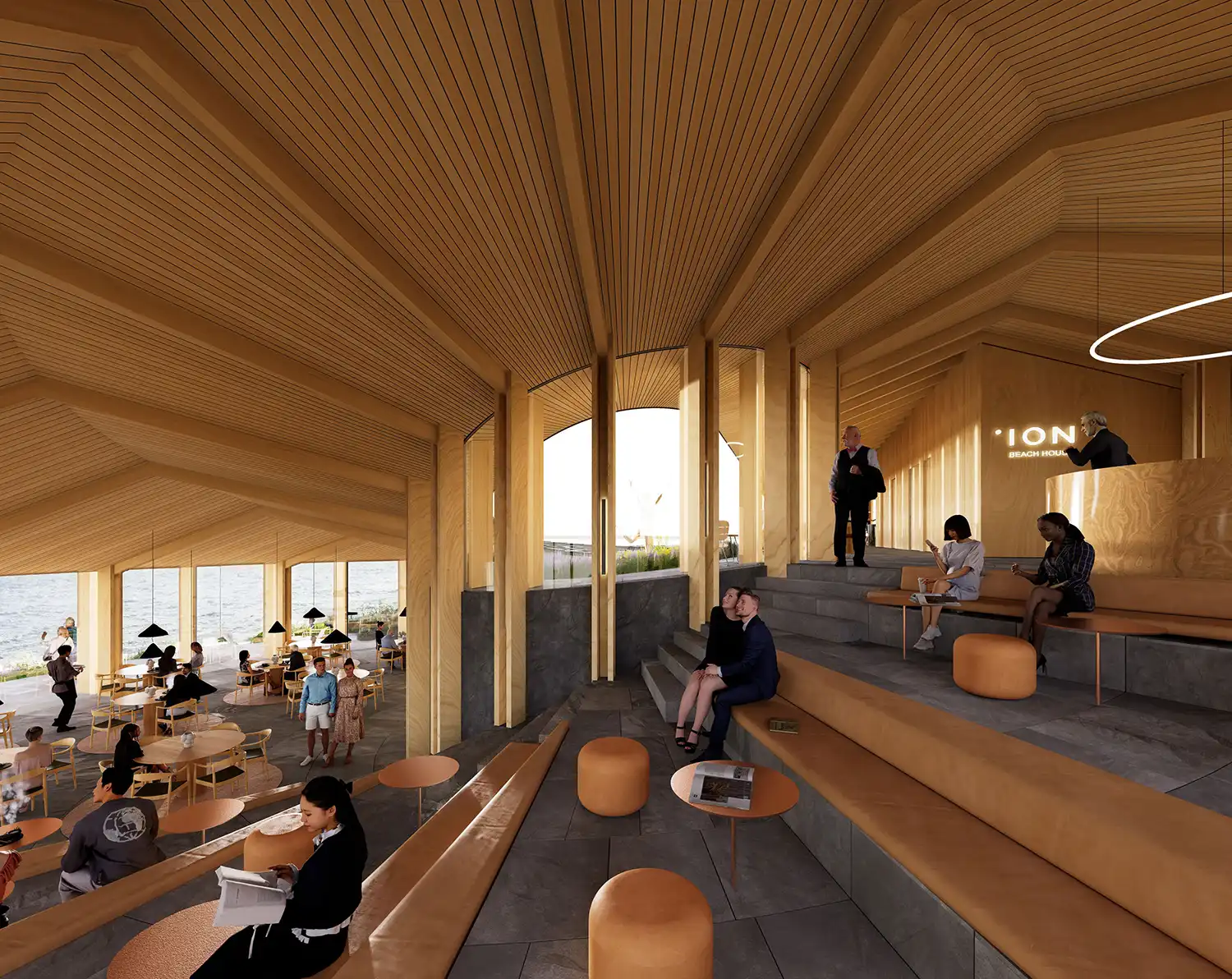
The sensory transition of the interior occurs at the highest point, where the street level gives way to a light-filled café overlooking the surf. The transition from the arrival point to the lower levels is handled through a terraced reading lounge, a stepped timber landscape that encourages lingering and informal interaction. Large-format glazing along the northern façade ensures that the interior is never divorced from the exterior; the sea is not just a view but a constant, oscillating backdrop that defines the atmosphere of the dining spaces below.
A materiality rooted in the Black Sea defines the internal environment through a tactile honesty that reflects the local geology. Warm, exposed timber structures and ceilings dominate the upper volumes, providing a sense of lightness that contrasts with the heavy coastal elements. In contrast, the ground is anchored by basalt stone flooring, a choice that mirrors the dark, volcanic tones of the surrounding rocky terrain. This material shift subtly signals the transition from the social, airy heights of the café to the more grounded, intimate experience of the restaurant.
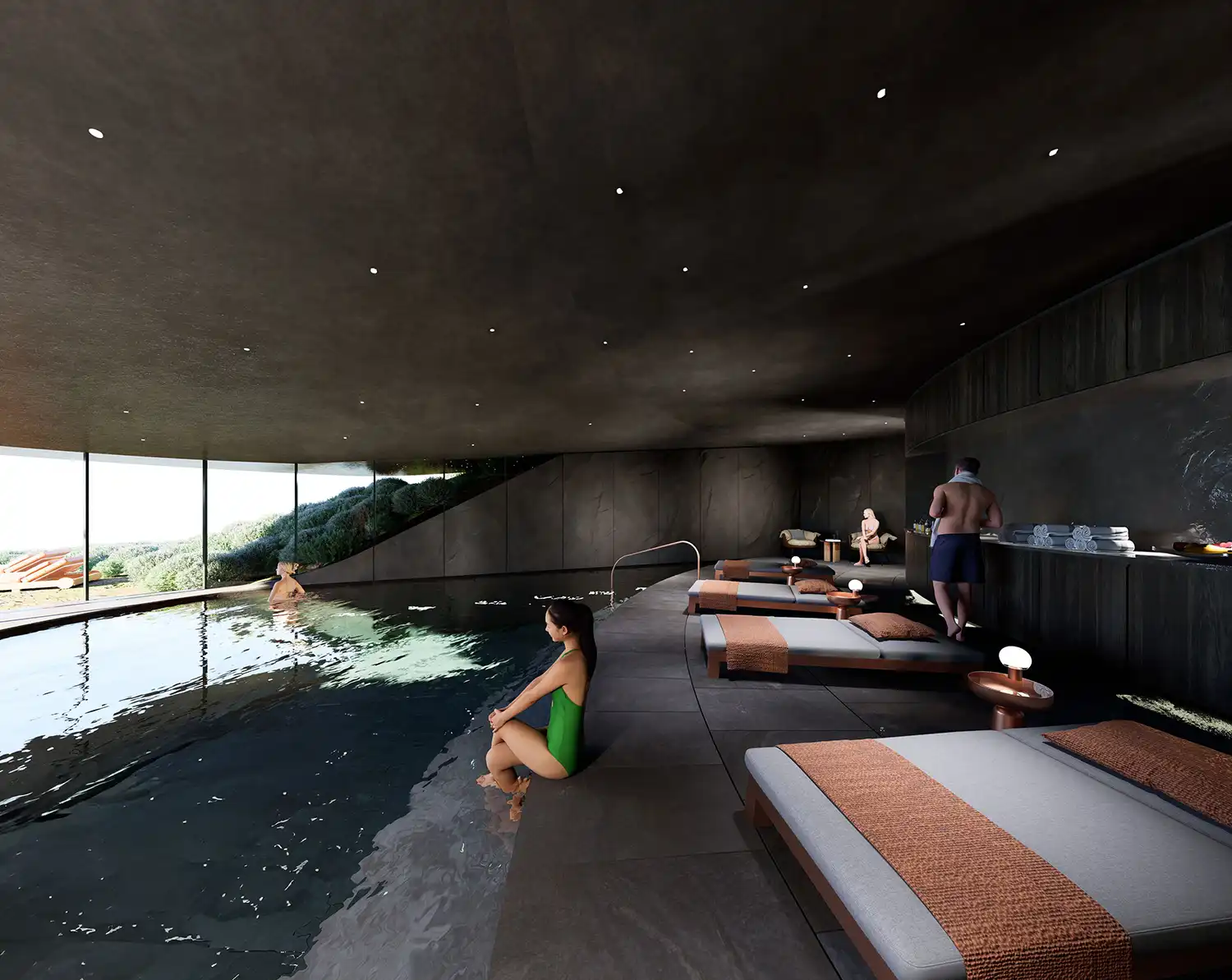
Subterranean stillness and thermal craft characterize the lower level, where a spa is carved directly into the hillside to appear as a natural extension of the cliffside. Here, the architectural language shifts toward enclosure and reflection. Indoor and outdoor pools are positioned to extend toward the coastline, blurring the boundary between the chlorinated water and the salt spray of the sea. By tucking these functions into the slope, the studio utilizes the earth’s natural thermal mass to create a temperate environment that feels distinct from the wind-swept levels above.
Environmental performance and facade rhythm are integrated via a functional skin that acts as a light filter. A slate roof protects the structure, while a series of vertical timber lamellas wrap the facade. These fins are subtly rotated at varying angles—a move designed to mitigate solar gain while maintaining visual transparency. It is a technical solution that yields a moiré effect as one moves around the building, making the structure appear to breathe and shift in density depending on the observer’s vantage point.
A landscape of discovery extends beyond the glass and timber via a corten boardwalk and winding stone paths. The journey to the beach is punctuated by a series of outdoor “rooms”: a small amphitheater for community gatherings, fire pits for cooler coastal evenings, and lookout points that jut out toward the water. These elements ensure that the project is not a static object but a connective tissue that draws the community down to the water’s edge, integrating art and nature into the daily routine of the neighborhood.
The evolution of the BIG aesthetic showcases a nuanced maturation in the studio’s approach to coastal development, favoring site-specific textures over purely formal gestures. Those interested in how the firm continues to reshape global topographies can explore more projects by Bjarke Ingels Group to see how these principles are applied across different scales. Within the context of Riva, the building stands as a quiet protagonist, proving that the most impactful interventions are often those that allow the landscape to speak the loudest.