


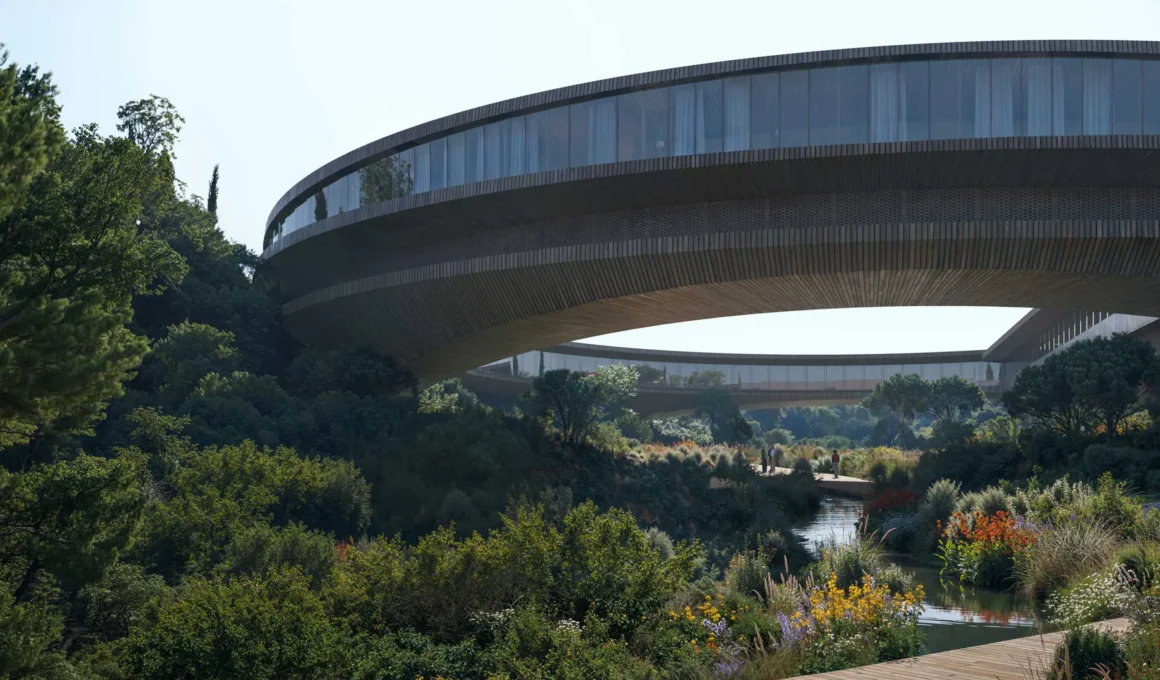
Snøhetta has unveiled The Ring and Greenhouse, a visionary residential district and circular landmark spanning a river gorge within the 84-hectare Ion Riva masterplan on Istanbul’s Black Sea coast.
A collective vision for the Beykoz district defines the character of this new community, where Snøhetta joins forces with global practices to redefine the intersection of urban living and ecological preservation. In this collaborative effort, the studio is part of a high-caliber design collective: while Snøhetta introduces The Ring, the Dutch firm MVRDV has designed The Lantern, a vibrant performing arts center and gallery that serves as a cultural beacon. Together with Bjarke Ingels Group, the practices have shaped a biodiverse green space that integrates the rugged beauty of the forest,river, and sea into the daily lives of its 1,000 inhabitants.
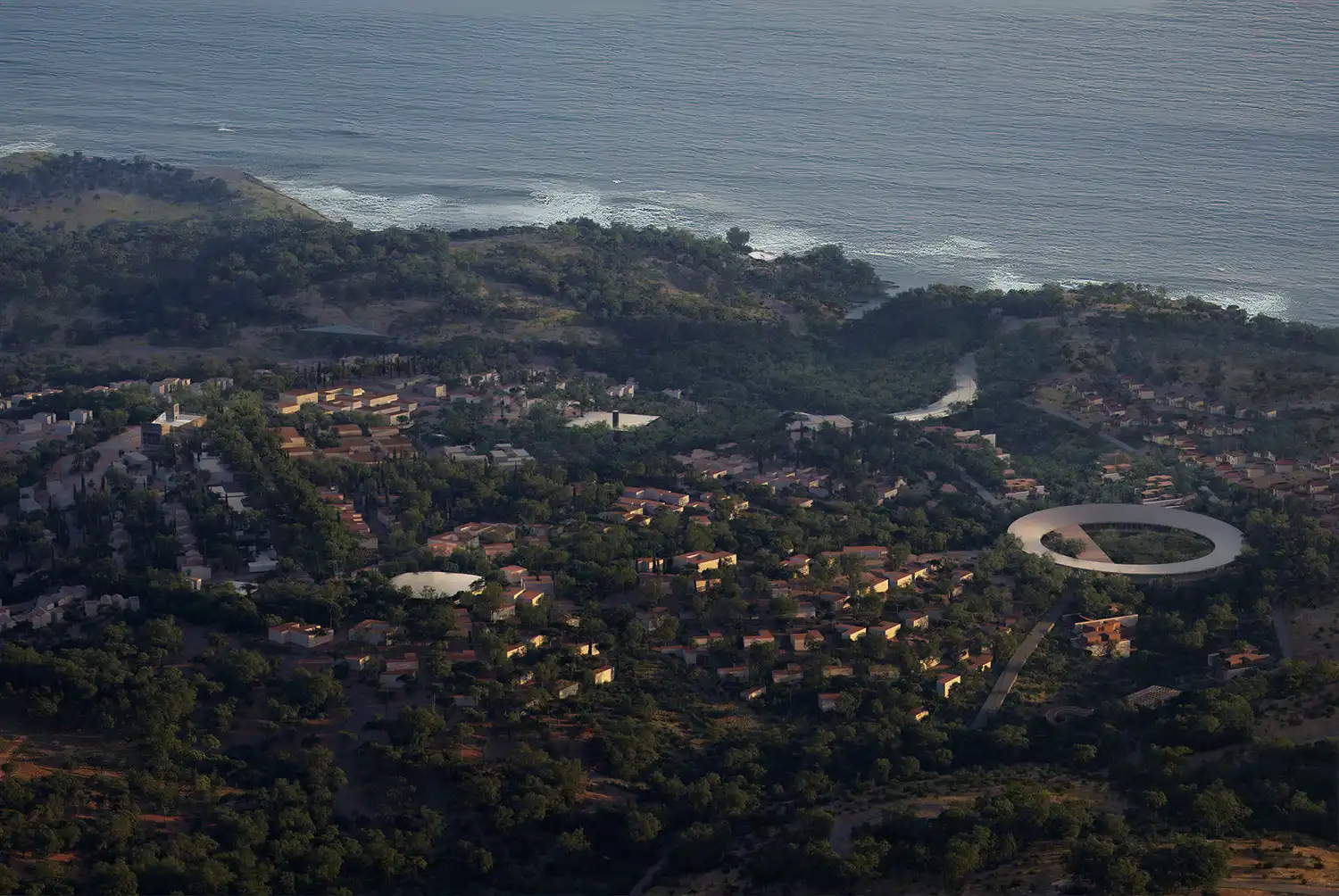
The Ring as a structural orbit serves as the gravitational center of the Greenhouse area. This dramatic circular form appears to float effortlessly across the valley, bridging the river gorge while acting as a dedicated hub for wellness and nature immersion. Housing a specialized Longevity Center, the building utilizes its unique geometry to offer 360-degree views of the surrounding terrain. It functions as a living threshold where the built environment and the water system meet, supported by nearby stables and community allotments that encourage a hands-on connection to local food systems and ecological learning.
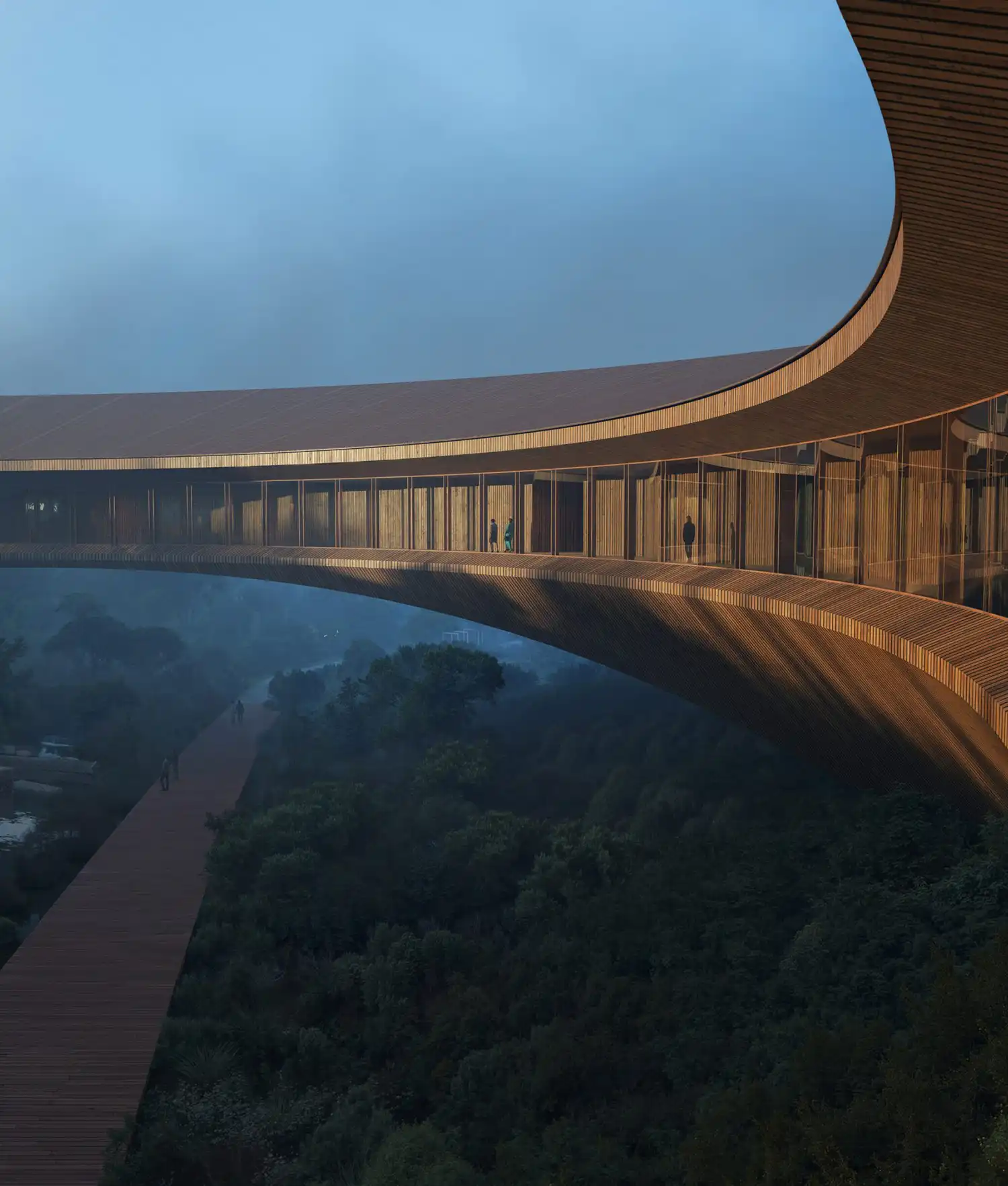
Residential typologies and heritage are woven into five distinct micro-communities, each containing between 50 and 80 homes. These clusters are designed to reflect the region’s vernacular through a contemporary lens, emphasizing layered relationships between private interiors and the communal outdoors. While the district is part of a larger, high-profile development—which includes The Drop pavilion by BIG, a striking social landmark located nearby—Snøhetta’s Greenhouse focuses on a modular logic. By utilizing locally sourced stone and timber, the construction process reduces embodied carbon while ensuring the homes follow the natural contours of the land to maximize coastal vistas.
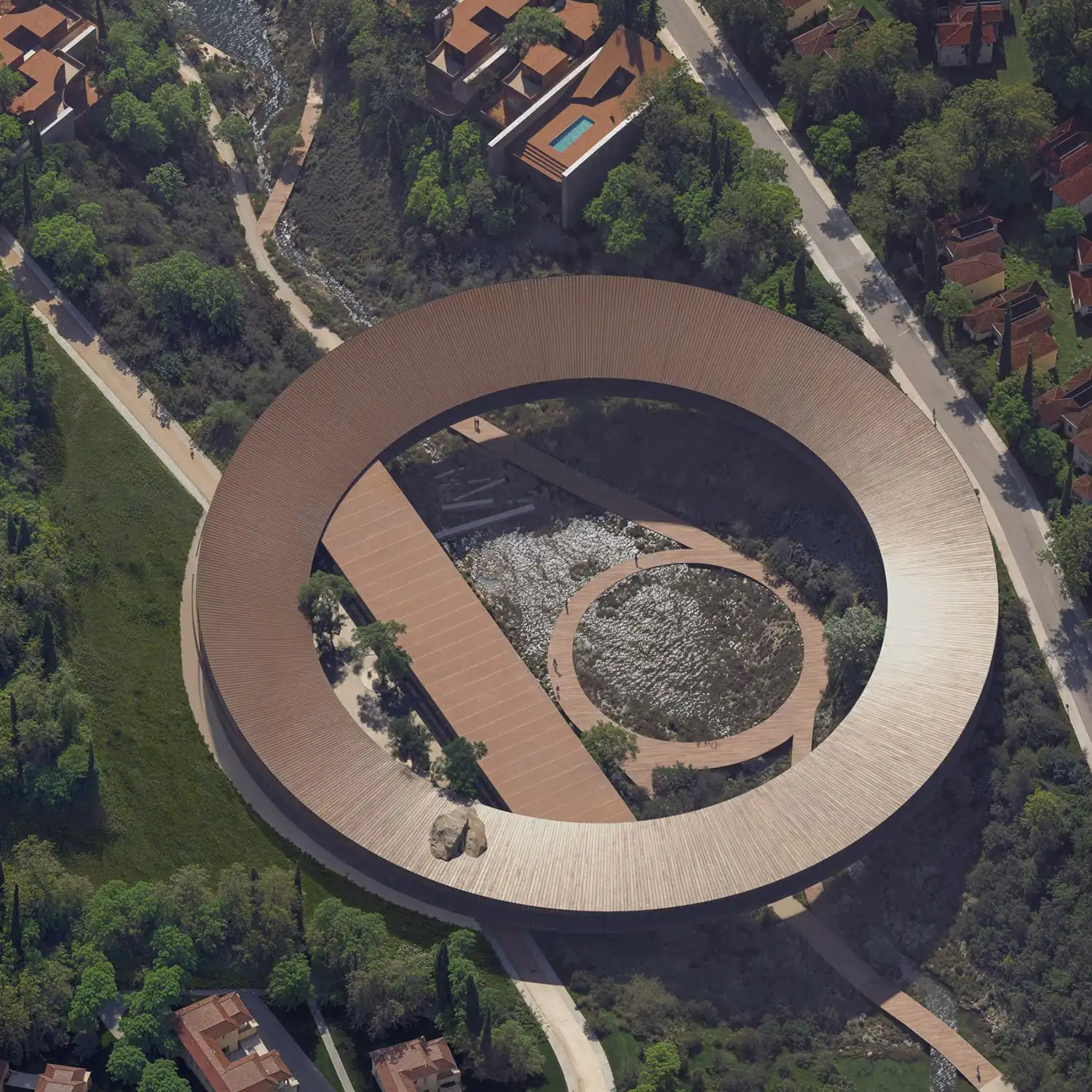
Sustainable infrastructure and digital integration ensure that the neighborhood operates with high efficiency without compromising the sensory quality of the space. The climate strategy includes on-site renewable energy via integrated solar arrays and a sophisticated greywater recycling system that cuts potable water demand by half. These technical systems are hidden within a landscape of low-irrigation flora and green corridors that naturally regulate the microclimate, filtering the Black Sea air and providing shaded retreats for residents moving through the site.
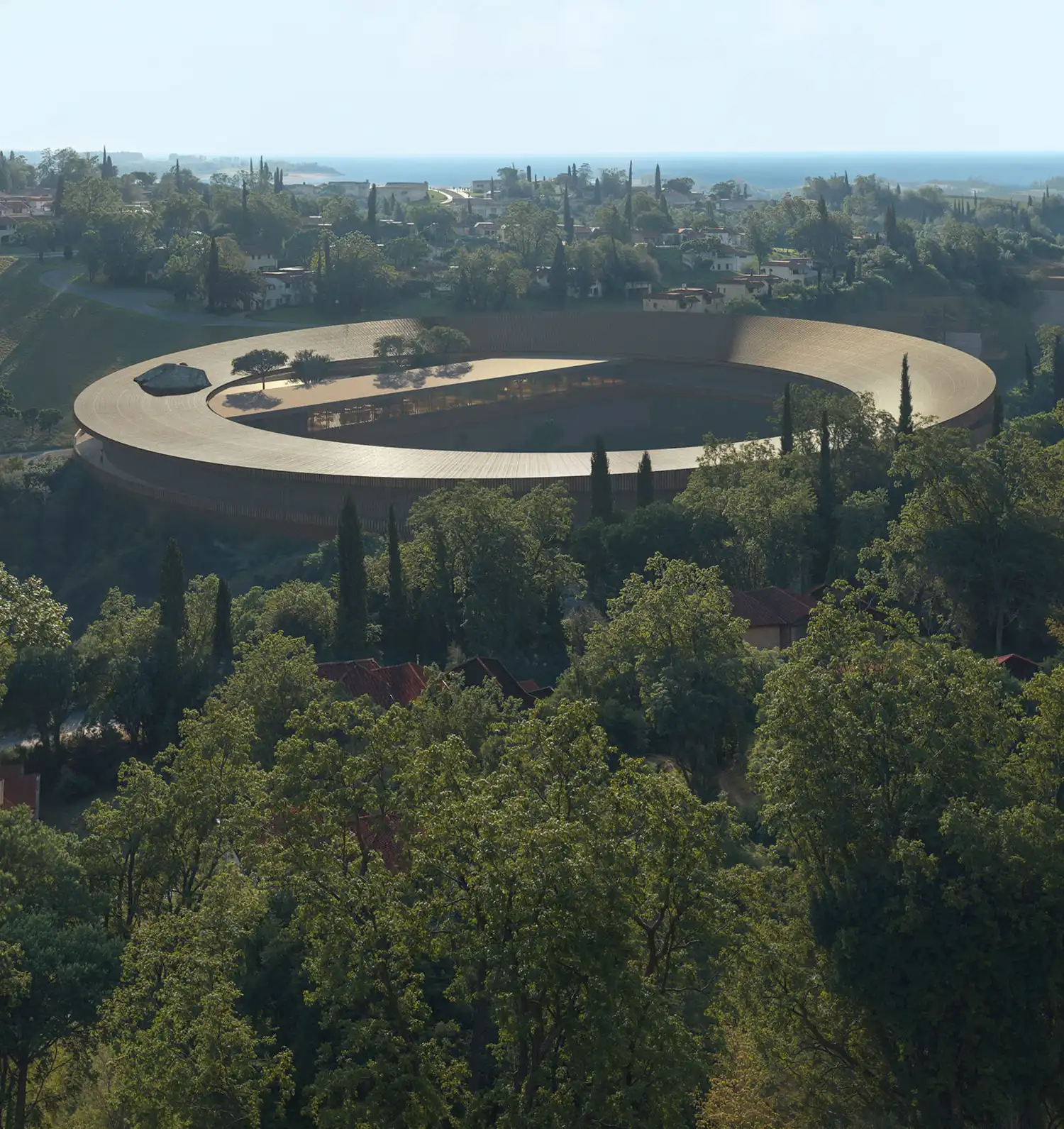
Movement and sensory connectivity underpin the final layout, prioritizing a pedestrian-first experience. A network of trails and biodiverse paths replaces the traditional car-centric grid, linking the residential clusters to cultural, retail, and hospitality facilities. The experience of walking through the Greenhouse is one of constant discovery, where the sound of the river and the scent of the forest are ever-present. By keeping physical intervention to a minimum, the project fosters a sense of belonging to the earth, proving that high-density residential development can coexist with the delicate rhythms of a coastal ecosystem.